Author: Dale
-
Culture of Magdalenian
LoreThe culture of Magdalenian, fused with the island nation’s core identity, traces its origins to the dawn of Saṃsāra’s chronicled past over four millennia ago, when the first teleported communities surfaced amid the glacial hollows and frozen valleys, uncovering ancient ice carvings and quartz relics that hinted at prior civilizations molded by resonant forces. These…
-
Lionewclambeet 56
The original life forms referenced were: lion (from Mammalia), newt (from Amphibia), clam (from Mollusca), and beetle (from Insecta). AppearanceThe Lionewclambeet 56 showcases a muscular, quadrupedal body reminiscent of a lion’s powerful build, encased in a hard, iridescent exoskeleton like a beetle’s carapace that shifts tones from metallic greens to bronzes for camouflage, with hinged…
-
Kangsalasquiant 29
The original life forms referenced were: kangaroo (from Mammalia), salamander (from Amphibia), squid (from Mollusca), and ant (from Insecta). AppearanceThe Kangsalasquiant 29 displays a bounding, pouch-bearing body akin to a kangaroo’s muscular frame, covered in slick, mucus-secreting skin that regenerates like a salamander’s and changes hue in mottled grays, blacks, and silvers for camouflage, with…
-
Lupembi
The common national language for the Major Island Country of Lupemban, which encompasses a vast expanse of dense rainforests, winding river networks, and elevated plateaus with a total population of 146,381,268 souls distributed across its vibrant trading hubs, fortified village clusters, and expansive communal farmlands, is known as Lupembi. Lupembi functions as the primary vehicle…
-
Culture of Lupemban
LoreThe culture of Lupemban, intertwined with the island nation’s very essence, traces its roots to the emergence of Saṃsāra’s documented annals over five millennia ago, when the first teleported communities materialized amid the fertile river basins and dense rainforests, discovering ancient remnants of clay drums and vine carvings that suggested even earlier civilizations shaped by…
-
Dolphfroctospid 84
The original life forms referenced were: dolphin (from Mammalia), frog (from Amphibia), octopus (from Mollusca), and spider (from Arachnida). AppearanceThe Dolphfroctospid 84 exhibits a sleek, hydrodynamic body reminiscent of a dolphin’s streamlined torso, covered in smooth, rubbery skin that shifts colors like an octopus for camouflage, ranging from mottled greens and blues in aquatic settings…
-
Nauchikrilbee 73
The original life forms referenced were: nautilus (from Cephalopoda), chimaera (from Chondrichthyes), krill (from Crustacea), and bee (from Insecta). AppearanceThe Nauchikrilbee 73 presents a chimeric fusion of its origins, featuring a compact, spiral-chambered shell reminiscent of the nautilus, but segmented like krill exoskeletons and adorned with iridescent, bee-like stripes in hues of deep blue, amber,…
-

Shanlong
The predominant avatars in Longshan are known as the Shanlong, a species of diminutive reptilian humanoids whose draconic heritage infuses every aspect of their existence, from their scaled hides to their innate affinity for intricate craftsmanship and communal hierarchies. Shanlong dominate the demographic landscape of Longshan, comprising approximately 55% of the island nation’s 144,088,000 souls,…
-
Longyu
The common national language for the Major Island Country of Longshan, which spans a vast archipelago of rugged mountains, terraced farmlands, and mist-shrouded valleys with a total population of 144,088,000 souls scattered across its bustling ports, fortified citadels, and serene monastic enclaves, is known as Longyu. Longyu serves as the primary means of communication for…
-
Culture of Longshan
LoreThe culture of Longshan, woven into the very fabric of the island nation’s existence, traces its origins to the dawn of Saṃsāra’s recorded history over five millennia ago, when the first teleported communities materialized amid the fertile river valleys and mist-shrouded mountains, discovering ancient ruins of black-glazed pottery and jade artifacts that hinted at even…
-
Marisal Species
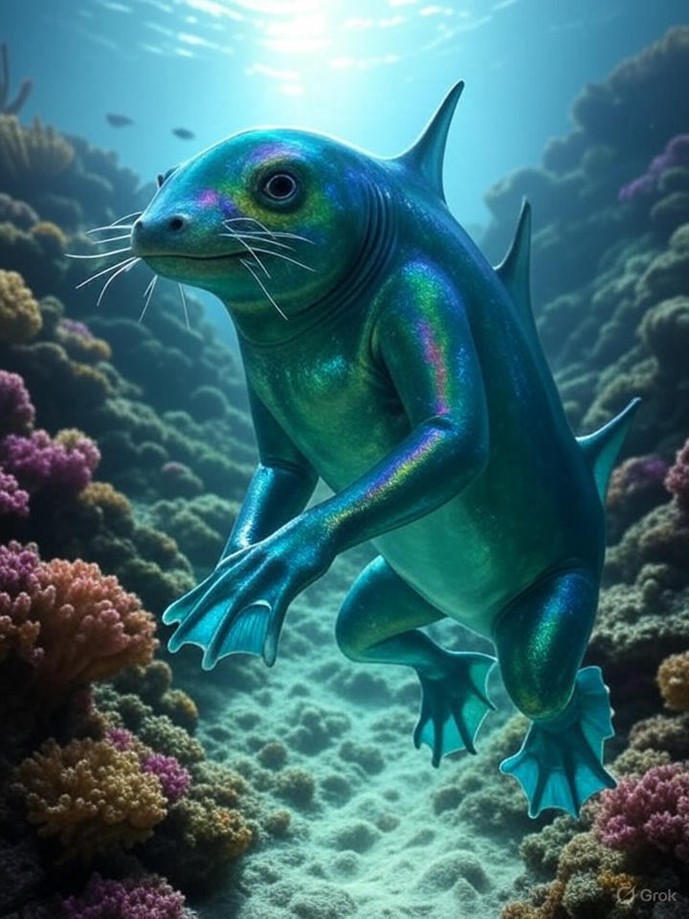
The predominant race of avatars on the Island Nation of Lapita is known as the Marisal. These amphibious humanoids are deeply tied to the ancient Lapita culture, embodying its seafaring and exploratory spirit. As the marginally dominant race, they constitute approximately 40% of Lapita’s 141,795,282 inhabitants, with their influence most pronounced in coastal cities, floating…
-
Lapitan
The common national language for the Major Island Country of Lapita is known as Lapitan. Lapitan serves as the official and predominant means of communication across the island nation, functioning as a unifying linguistic medium for governance, trade, education, and daily interactions among its diverse population of 141,795,282 souls. It encompasses a rich vocabulary for…
-
Culture of Lapita
The culture of Lapita in the Island Nation of Lapita is a vibrant, seafaring society deeply rooted in traditions of exploration, craftsmanship, and communal harmony, where avatars thrive amid the endless ocean’s embrace. This culture permeates every aspect of life on the nation’s expansive 708,976,410 acres, influencing architecture with swirling pottery-inspired motifs on skyscrapers and…
-

Ridge Grafted
SpeciesThe lineage ruling Kurgan identifies itself as the Ridge-Grafted, a people whose ancestors accepted meticulous bio-melding rites two millennia ago. Shaman-engineers wove mana-rich sinew from steppe fauna—eagle, aurochs, river eel, and dire crustacean—directly into human progenitors. Over generations these grafts stabilized, producing a true-breeding race whose living anatomy balances mammalian, avian, and aquatic traits without…
-
Kurgaanik
The national tongue of the Kurgan Island Nation is called Kurgaanik, a living descendant of the archaic speech once voiced by the continent-naming culture whose tumulus-cities still dot the central prairies. Kurgaanik belongs to the Steppe-Vast family of languages. It is a stress-timed, agglutinative–fusional hybrid: personal and evidential particles cling to verbal roots in long…
-
Culture of Kurgan
LoreKurgan emerged when nomad-forges wandering the central prairie belt settled around rising spiral mounds that sang hollow tones in the evening wind. Monarchs descended from the first mound-speakers codified ownership of every acre, granting lifetime use in exchange for annual breath-oaths and measured tribute. Copper veins threaded beneath the soil guided ridge-engineers to sink helical…
-
Batfrog Spidstar 912
The original life forms merged to create this feral life form are the bat from the class Mammalia, the frog from the class Amphibia, the spider from the class Arachnida, and the starfish from the class Echinodermata. These varied creatures, each refined by the world’s untold evolutionary pressures over millennia amid reincarnating souls and magical…
-
Veilstalkers
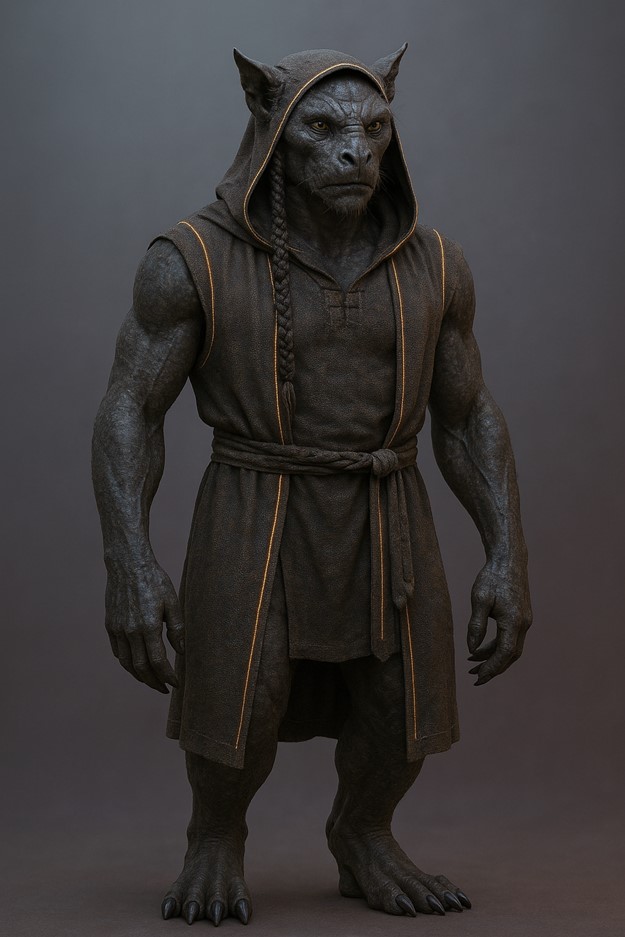
SpeciesThe species designated as Veilstalkers forms a distinctive cohort of avatars on Saṃsāra, distinguished by their adaptations to shadowy ambushes and robust endurance that have molded their progression across millennia. Veilstalkers originated from initial teleported groups landing on the island continent now termed Kachemak, intermingling with native dwellers who had long maneuvered the reincarnation loops…
-
Shellbound Harmony
The religion practiced predominantly on the island nation of Kachemak is known as Shellbound Harmony, a faith centered around the veneration of the deity Kachemakor, the Eternal Coil of Tides. Shellbound Harmony infuses the everyday existence of its devotees, influencing their engagements with the magical surges that pulse across Saṃsāra, affecting everything from the forging…
-
Kachemakari
The common national language for the Major Island Country of Kachemak is named Kachemakari. Kachemakari acts as the principal mode of expression throughout the island nation, serving as the official medium for administration, commerce, learning, and routine exchanges among its varied inhabitants of avatars, beasts, and integrated monster communities. It includes an extensive lexicon rooted…
-
Culture of Kachemak
LoreThe culture of Kachemak traces its roots to the primordial epochs of Saṃsāra, over nine thousand years ago, when the first multiversal souls arrived on the island continent amid evolving monsters and scattered teleported communities that began mixing and multiplying without explanation. Grounded in ancient practices of harmony with tidal spirals and chambered resilience, Kachemak…
-
Chimslug Flukenautil 784
The original life forms merged to create this feral life form are the chimaera from the class Chondrichthyes, the slug from the class Gastropoda, the fluke from the class Platyhelminthes, and the nautilus from the class Cephalopoda. These disparate organisms, each honed by the world’s untold evolutionary pressures over millennia amid reincarnating souls and magical…
-
Buzzsting Leviacuttle 783
The original life forms merged to create this feral life form are the ray from the class Chondrichthyes, the bee from the class Insecta, the whale from the class Mammalia, and the cuttlefish from the class Cephalopoda. These distinct creatures, each adapted to their respective niches in the natural order, have been fused through the…
-
Kordariism
The religion practiced predominantly on the island nation of Jōmon is known as Kordariism, a faith centered around the veneration of the deity Kordara, the Eternal Weaver of Bonds. Kordariism permeates the daily lives of its adherents, shaping their interactions with the magical flows that bubble across Saṃsāra, influencing everything from the construction of steam-powered…
-

Frostweavers
SpeciesThe species known as Frostweavers constitutes a distinct group of avatars within the world of Saṃsāra, characterized by their inherent adaptations to harsh, cold environments that have shaped their evolution over millennia. Frostweavers emerged from the early teleported communities that arrived on the island continent now called Jōmon, blending with the primordial inhabitants who had…