
Author: Dale
-
Chiyoki
The Chiyoki are a resilient, otherworldly species of avatars indigenous to the island nation of Mississippian in Saṃsāra. As the marginally predominant race, making up about 51% of Mississippian’s 129,977,191 inhabitants, they shape the nation’s societal framework and aesthetic, drawing from ancient mound-building traditions that emphasize earthen structures, riverine harmony, and communal rituals. Their presence…
-
Chokari
The common national language of the Major Island Country of Mississippian in the world of Saṃsāra is Chokari. Spoken by the vast majority of Mississippian’s 129,977,191 inhabitants, Chokari functions as the linguistic foundation of this expansive, river-laced island nation, binding its diverse avatars, possessed characters, and sentient creatures in shared expression. Below is a comprehensive…
-
Culture of Mississippian
Lore The culture of Mississippian in Saṃsāra originates from over 9,000 years ago, when initial avatars—small groups teleported from multiversal origins—settled along the island’s extensive river networks, discovering mana-infused soils that encouraged the construction of vast earthen mounds as homes, storage, and ceremonial sites. These early communities, blending their diverse instincts, developed a society focused…
-
Beetcrabstarkanga 29
The original life forms referenced were: beetle (from Insecta), crab (from Crustacea), starfish (from Echinodermata), and kangaroo (from Mammalia). Appearance: The Beetcrabstarkanga 29 is a bizarre, armored feral creature that fuses the hard, iridescent exoskeleton of a beetle with the pinching claws and sideways scuttling legs of a crab, the regenerative, multi-armed radial symmetry of…
-
Vermoctoadskate 46
The originals life forms referenced were: earthworm (from Annelida), toad (from Amphibia), octopus (from Cephalopoda), and skate (from Chondrichthyes). Appearance: The Vermoctoadskate 46 is a grotesque yet adaptive feral creature that blends the segmented, elongated body of an earthworm with the warty, moist skin of a toad, overlaid by the flexible, cartilaginous flatness of a…
-
Thalorim
The Thalorim are a graceful, ethereal species of avatars native to the island nation of Minoan in Saṃsāra. As the marginally predominant race, comprising approximately 52% of Minoan’s 106,784,000 inhabitants, they form the cultural and demographic core of the nation. Their presence shapes Minoan’s society, architecture, and daily life, evoking an ancient aesthetic of intricate…
-
Cult of the Eternal Labyrinth
The primary religion practiced in the island nation of Minoan on Saṃsāra is known as the Cult of the Eternal Labyrinth, a faith that weaves together themes of cyclical renewal, magical harmony, and the intricate paths of fate. This religion is followed by slightly over half of Minoan’s population of 106,784,000, encompassing approximately 55 million…
-
Kretari
The common national language of the Major Island Country of Minoan in the world of Saṃsāra is Kretari. Spoken by the majority of Minoan’s 106,784,000 inhabitants, Kretari serves as the linguistic backbone of this vibrant, high-magic island nation, unifying its diverse population of avatars, possessed characters, and sentient creatures. Below is a detailed exploration of…
-
Culture of Minoan
Lore The culture of Minoan in Saṃsāra traces its origins to over 9,000 years ago, when the first avatars—scattered communities teleported from multiversal realms—emerged on the island’s vast shores, their crystal pods blooming amid mana-rich groves and coastal cliffs. These early inhabitants, drawn together by shared visions of intricate patterns and cyclical renewal, forged a…
-
The Measured Path
Deity Name: Ki’ensi (The Judge of the Land) Adherents: The Measured Path is the foundational belief system of the Mesopotamian nation, deeply woven into its legal and social fabric. It is actively practiced by a majority of the population, numbering over sixty million of the nation’s 104,480,000 citizens. Lore The lore of the Measured Path…
-
Ashuri
The Ashuri are the most populous and influential race within the Mesopotamian nation. They are a small-statured, quick-witted, and highly social people, known for their skill in law, trade, and intricate craftsmanship. Their name is an ancient Eshunnan word meaning “Children of the River.” Species, Physical Form, and Sensory Traits The Ashuri are a distinct…
-
Eshunnan
The common national language of the Mesopotamian island-continent is Eshunnan. It is a venerable and deeply respected language, serving as the bedrock of the nation’s legal, commercial, and social structures. Its name is derived from the ancient Eshunnan words ‘Esh’ (river) and ‘Unna’ (voice), translating to “the Voice of the River.” Magical Properties While not…
-
Culture of Mesopotamia
Lore The Mesopotamian culture is one of the oldest and most influential civilizations on Saṃsāra, founded on the principle of order forged from chaos. Their history is not one of great conquests, but of a singular, great victory over nature itself. The foundational myths tell of the “First Peoples” arriving in the fertile but dangerously…
-
Nar Mantis Physalia 23
The Nar-Mantis Physalia 23, commonly known by sailors as a “Silent Drifter” or a “Tusk-Jelly,” is a bizarre and deadly aquatic predator. It is a solitary hunter that silently patrols the cold, deep oceans of the world, an unsettling fusion of intelligence, patience, and potent venom. Original Life Forms — This creature is a magical…
-
Path of the Unbroken Circle
Deity Name: The Sun-Forged Earth Adherents: The Path of the Unbroken Circle is the dominant spiritual belief system in the Magosian nation. It is deeply ingrained in the culture, with slightly more than half of the nation’s 102,176,000 people identifying as active followers. Lore The Path of the Unbroken Circle is not a religion of…
-

K’a-Gora
The K’a-Gora (“Sun-Mountain People” in the old tongue) are the powerful and enduring humanoid race that forms the backbone and ruling class of the Magosian nation. They are known for their formidable presence, deep connection to the earth, and a culture that values strength in both labor and leadership. Species, Physical Form, and Sensory Traits…
-
Afaan K’a Ushma (“Ushma”)
The common national language of the Magosian island nation is Afaan K’a Ushma, which translates to “the Tongue of the Sun-People.” It is most commonly referred to simply as Ushma. It’s a vibrant and ancient language that serves as the primary means of communication for its over 100 million speakers, binding them together through a…
-
Culture of Magosian
Lore The Magosian culture is forged from a history of hardship and a philosophy of creation. Their foundational myth is not one of gods or great wars, but of survival and ingenuity. In the “Time of the Cracked Earth,” a devastating drought brought the early clans to the brink of self-destruction. It was then that…
-
Guloactinia Conida 41
This creature is a magically-fused predator, an unnatural synthesis of ferocity, patience, and deadly venom that has perfectly adapted to ambush hunting in the dense woodlands of Saṃsāra. Original Life Forms — The Guloactinia is a magical amalgam of four distinct creatures: Appearance The creature possesses the dense, muscular body of a wolverine, covered in…
-
Melesepia Dynastes 77
The Melesepia Dynastes 77 is a monstrous amalgam, a product of Saṃsāra’s potent and unpredictable magic fusing several distinct life forms into a single, highly successful predator. Original Life Forms — This creature is a magical fusion of four distinct animals: Appearance The creature has the low-slung, powerful body of a massive badger, covered in…
-
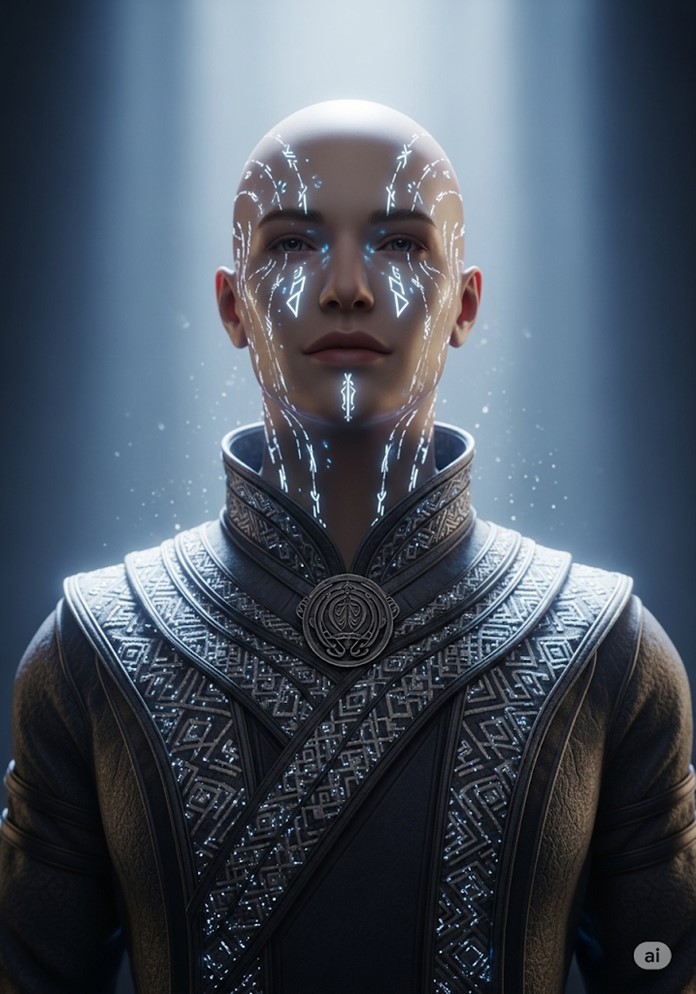
Tvillingesjæl
The Tvillingesjæl (a Maglemål word meaning “Twin-Soul”) are the most numerous race of the Maglemosian island nation and comprise its ruling family. They are humanoids whose physical forms are uniquely suited to housing the dual consciousness of an Avatar merged with a Character’s memories. Species, Physical Form, and Sensory Traits The Tvillingesjæl are a distinct…
-
Maglemål
The common national language of the Maglemosian island country is known as Maglemål. It is the primary tongue for communication, governance, trade, and daily life for the vast majority of its nearly 100 million inhabitants. Maglemål is defined by its deep historical roots and its intrinsic connection to the natural landscapes of the continent, from…
-
Culture of Maglemosian
Lore The culture of Maglemosian is one of the oldest and most stable on Saṃsāra, defined by a deep history of endurance and adaptation. The foundational myths, known to every child, tell of a time when their ancestors were scattered and disparate tribes living in a harsh, primal world. They were united by the first…
-
Wolfaxocuttmant 17
The original life forms referenced were: wolf (from Mammalia), axolotl (from Amphibia), cuttlefish (from Mollusca), and mantis (from Insecta). AppearanceThe Wolfaxocuttmant 17 presents a lean, quadrupedal form inspired by a wolf’s agile build, covered in smooth, gill-fringed skin that regenerates like an axolotl’s and shifts colors in sepia tones, greens, and reds for camouflage like…
-
Eletosnawasp 42
The original life forms referenced were: elephant (from Mammalia), toad (from Amphibia), snail (from Mollusca), and wasp (from Insecta). AppearanceThe Eletosnawasp 42 exhibits a bulky, quadrupedal body reminiscent of an elephant’s massive frame, encased in a spiral-shelled exoskeleton like a snail’s coil that spirals around its torso for protection, with iridescent stripes in earthy browns,…
-

Lendari
SpeciesThe marginally predominant avatars in Magdalenian are known as the Lendari, a species of agile, reptilian humanoids whose artistic heritage infuses every aspect of their existence, from their intricate cave carvings to their precise craftsmanship in communal hunts and gear forging. Lendari comprise approximately 52% of Magdalenian’s 190,489,905 souls, with densities in the glacial caverns,…
-
Magdali
The common national language for the Major Island Country of Magdalenian, which spans a broad array of glacial tundras, cavernous ice formations, and sheltered valleys with a total population of 190,489,905 souls spread across its resilient outposts, nomadic encampments, and fortified cave complexes, is known as Magdali. Magdali acts as the principal medium for decrees,…