
Category: WorldBuilding
-
Culture of Dawenkou
LoreDawenkou legend holds that the island rose when Taozhu-the-Wheel-Hidden-in-Fire exhaled through kiln vents scattered across a primordial seabed. Steam cooled into terraced ridgelines, rivers traced spiral furrows, and the first folk stepped from unfired clay already humming kiln-songs. Across forty centuries guilds of potters, slip-scribes, and steam-engineers have enlarged those terraces into labyrinthine delta cities…
-
Culture of Cordilleran
LoreThe island realm of Cordilleran rises from the western ocean as a broken spine of granite peaks banded with ancient terraces that glint jade-green in morning mist. Centuries before the first royal charter, high-valley clans learned to chisel the slopes into stepped paddies that hold thin soil on impossible gradients. Over ages, these terraces merged…
-
Cordilleran Language: Ruk-Vay
Linguistic Attributes and Characteristics Ruk-Vay is the national language of the Major Island Country of Cordilleran, a mountainous island continent in the world of Saṃsāra, named for its ancient culture known for terraced agriculture and intricate stonework. Ruk-Vay is an agglutinative, pitch-accented language with a resonant phonetic structure and complex grammar. It features a three-tier…
-
Way of the Slumbering Giant
This is the deeply animistic faith of the semi-nomadic peoples of the Cordilleran Marches, a vast and rugged nation of snow-capped mountain ranges, dense temperate rainforests, and winding river valleys that lead to a misty coastline. The Cordilleran religion is one of stewardship, balance, and a profound, reverent fear of the living land itself. Lore:…
-

Vayari
SpeciesThe Cordilleran skyfolk call themselves Vayari, a term that combines the root for “ridge” with the suffix for “voice,” reflecting their heritage as wind-borne heralds of the mountains. Physical Form and Sensory TraitsA Vayari adult stands upright on digitigrade legs ending in taloned, stone-gripping feet. From shoulder to fingertip stretches a membrane of layered flight…
-
Way of the Sudden Shard
This is the primal, instinct-driven faith of the scattered clans inhabiting the Clactonian Shards, a harsh archipelago of sharp, flint-rich islands and jagged coastlines. The Clactonian religion is one of improvisation, opportunism, and the belief that true power lies not in permanence, but in the explosive, useful moment of a thing’s breaking. Lore: Clactonian lore…
-
Culture of Clactonian
LoreClactonian stands on a storm-beaten, flint-veined landmass whose cliffs ring a ragged coastline of black sand and shattered glass. In distant ages the island held only scattered hunter clans who survived by breaking stone for tools and following the raw revelation of Klagg, the Spirit of the Fracture. Centuries of island-wide skirmish slowly forged loose…
-
Clactonian Language: Brak-Sor
Linguistic Attributes and Characteristics Brak-Sor is the national language of the Major Island Country of Clactonian, a rocky island continent in the world of Saṃsāra, named for its ancient culture known for crafting flint tools and early communal hunting practices. Brak-Sor is an agglutinative, stress-timed language with a rugged phonetic structure and structured grammar. It…
-

Fraxari
SpeciesThe people known across the shard-coasts as Fraxari are sentient, thorn-skinned succulents whose vascular flesh mingles plant fibre and pliant stone. Each adult body weaves lignin-rich strands around silicate granules, producing a living composite that fractures into razor flakes when struck and then seals again over days. Sap circulates in capillary veins, delivering both water…
-
Choukoutienian Language: Huo-Yan
Linguistic Attributes and Characteristics Huo-Yan is the national language of the Major Island Country of Choukoutienian, a volcanic island continent in the world of Saṃsāra, named for its ancient culture known for early fire mastery and cave dwellings. Huo-Yan is a polysynthetic, tone-contour language with a resonant phonetic structure and intricate grammar. It features a…
-
Culture of Choukoutienian
The island nation of Choukoutienian is a land forged in primordial fire. Its culture is one of resilience, transformation, and a deep, communal reverence for the volcanic power that both births and sustains their civilization. The look and feel of the nation are of intense heat and deep darkness; vast, forge-lit cities are carved into…
-
Way of the Enduring Flame
This is the foundational religion of the Choukoutien people, a civilization that dwells almost entirely within a single, colossal, continent-spanning cave system. Their society is built around the principles of community, shelter, and the sacred duty of tending the fire. Theirs is a faith born in darkness and centered on the light that holds the…
-

Huo Sar
The Huo-Sar are the predominant race and ruling people of the volcanic island nation of Choukoutienian. Their physical form and culture are a direct reflection of their creation myth: they are the children of the First Flame, souls given substance and a voice by the fire in the heart of the world. They are a…
-
Chellean Language: Gor-Tek
Linguistic Attributes and Characteristics Gor-Tek is the national language of the Major Island Country of Chellean, a rugged island continent in the world of Saṃsāra, named for its ancient culture known for crafting robust stone tools and early communal settlements. Gor-Tek is an agglutinative, stress-timed language with a raw phonetic structure and structured grammar. It…
-
Culture of Chellean
The island nation of Chellean is a land of rugged highlands and vast, desolate wastes, defined by a culture of stone, strength, and a deep, historical schism. The nation is ancient, its people known across Saṃsāra as peerless crafters and resilient survivalists. The “look and feel” of the nation is one of raw, powerful functionality;…
-
Way of the Unchanging Form
This is the ancient and deeply ingrained belief system of the nomadic tribes of the Chellean Wastes, a vast, primordial landscape of windswept plateaus, rocky badlands, and sparse, hardy scrubland. The Chellean faith is severe, pragmatic, and unadorned, concerned not with an afterlife or moral codes, but with the pure, functional truth of survival and…
-
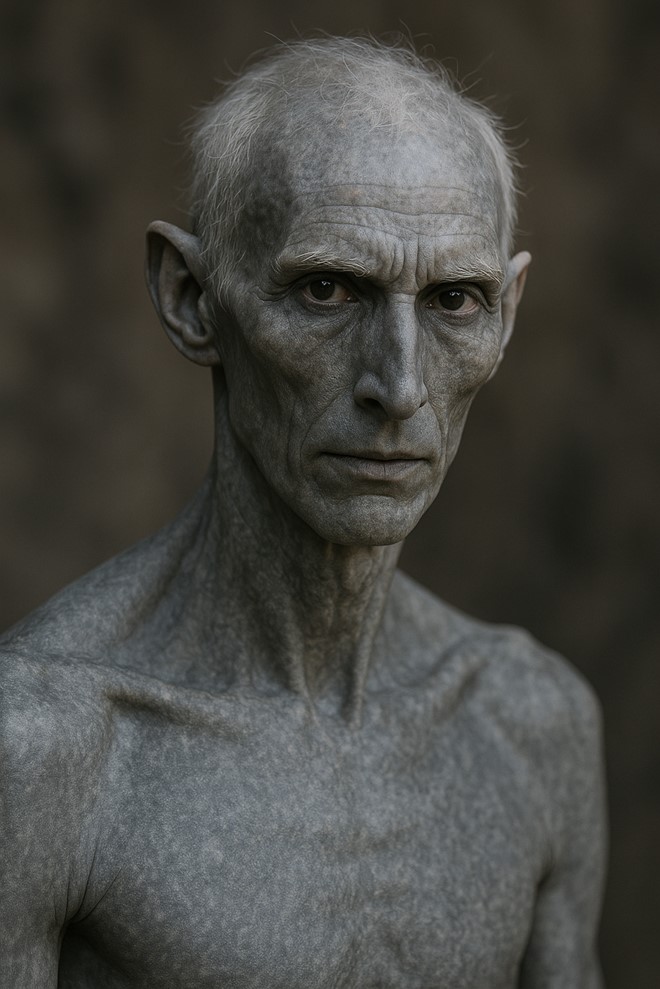
Gor Vak
The Gor-Vak are the predominant race of the island nation of Chellean, a people whose physiology and philosophy are as hard and unyielding as the stone from which they draw their name and identity. They are a race defined by a deep, ideological schism; their inherent traits of endurance and craftsmanship have allowed them to…
-
Chavín Language: Qor-Van
Linguistic Attributes and Characteristics Qor-Van is the national language of the Major Island Country of Chavín, a mountainous island continent in the world of Saṃsāra, named for its ancient culture renowned for monumental stone architecture and spiritual practices. Qor-Van is an agglutinative, pitch-accented language with a resonant phonetic structure and complex grammar. It features a…
-
Culture of Chavín
The Chavín Hegemony is an island nation of towering peaks, mist-shrouded jungles, and monumental stone temples. Its culture is one of the oldest and most esoteric in Saṃsāra, defined by a profound and perilous spiritual path that shapes every aspect of its society. The look and feel of the nation are severe, monolithic, and deeply…
-
Path of the Labyrinthine Eye
This is the esoteric faith of the Chavín Hegemony, a society dwelling in high-altitude mountain valleys and deep, mist-shrouded jungles. The Chavín people are reclusive, bound together by a shared, profound, and often terrifying spiritual experience. Theirs is not a religion of comfort or public worship, but a shamanistic path of inner transformation, where the…
-

Kor Runa
The Kor-Runa, or “Stone People,” are the ancient and predominant race of the Chavín Hegemony. Their origin myth is not one of arrival from a distant world, but of a terrestrial birth; they believe their ancestors were the first sentient life to sprout from the island’s sacred soil, their shells a gift from the living…
-
Carthaginian Language: Puni-Kad
Linguistic Attributes and Characteristics Puni-Kad is the national language of the Major Island Country of Carthage, a bustling island continent in the world of Saṃsāra, named for its ancient culture renowned for maritime trade and mercantile prowess. Puni-Kad is a fusional, stress-accented language with a vibrant phonetic structure and adaptable grammar. It features a stress-accent…
-
Culture of Carthage
The Island Nation of Carthage is a thalassocratic powerhouse, its culture forged by the principles of commerce, contract, and conquest of the seas. Its identity is inextricably linked to its history, its unforgiving deity, and the tangible prosperity that its rigid social order provides. The look and feel of the nation are one of grandeur…
-
Creed of the Balanced Scale
This is the state religion and societal framework of the Republic of Carthage, a thalassocratic nation centered on a large, strategically located island with a magnificent natural harbor. The Carthaginian faith is not one of mysticism or quiet contemplation; it is a pragmatic and demanding creed that governs every aspect of life, from international treaties…
-

Kaddite
The Kaddite people are the living embodiment of the First Contract that founded the nation of Carthage. They see themselves not as a race evolved from nature, but as a people forged by a divine agreement—the “Prize” of their ancestors’ bargain made manifest in flesh and blood. They are the predominant race of Carthage and…
-
Azilianism The Faith of Zoryn
Lore: In the ever-shifting, tide-washed expanse of Azilian, an island nation spanning 142,240,000 acres in Saṃsāra’s southern coastal belt, the religion of Azilianism has thrived for over 6,600 years. The faith’s origins lie in the Tide Shift, a mythic event when Zoryn, the Guardian of Tides and Transformation, rose from the island’s restless seas to…
-
Culture of Azilian: The Symbolic Isle
Lore The culture of the island nation of Azilian is one of the oldest and most distinct in Saṃsāra. Its people, the Zel-Tar, trace their lineage back over eleven millennia to ancient communities who lived in harmony with the island’s vibrant landscapes and magical flows. These ancestors were known for their profound connection to symbolism,…
-
Azilian Language: Zel-Kar
Linguistic Attributes and Characteristics Zel-Kar is the national language of the Major Island Country of Azilian, a diverse island continent in the world of Saṃsāra, named for its ancient culture known for painted pebbles and early symbolic art. Zel-Kar is an analytic, tone-contour language with a fluid phonetic structure and straightforward grammar. It features a…
-
Path of the Etched World
This faith is the cultural and spiritual heart of the Capsian Confederacy (also known as the Major Island Country of Capsian), a league of semi-nomadic clans inhabiting a vast, semi-arid landscape of towering rock formations, deep canyons, and sprawling grasslands. Their religion is not one of temples or priests, but of artists, storytellers, and hunters…
-
Culture of the Major Island Country of Capsian
Is one of rugged pragmatism, artistic spiritualism, and profound self-determination. Shaped by a unique and challenging environment, the Capsian people, known collectively as the Sal-Vyr, believe that meaning is not discovered but forged. Their entire society is built upon the principle of making a mark upon the world, whether through a masterfully crafted tool, a…