
This is the state religion and societal framework of the Republic of Carthage, a thalassocratic nation centered on a large, strategically located island with a magnificent natural harbor. The Carthaginian faith is not one of mysticism or quiet contemplation; it is a pragmatic and demanding creed that governs every aspect of life, from international treaties to a farmer’s loan. It is a religion of contracts, costs, and the solemn understanding that for every great reward, a great price must be paid.
Lore: Carthaginian lore states that their ancestors were not refugees or exiles, but master merchants whose grand trading fleet was caught in a multiversal storm, crashing upon the shores of their new island home. They arrived with nothing but their skill in negotiation, their understanding of value, and their unwavering belief in the sanctity of a contract. They found an island rich in resources—deep forests for timber, mountains heavy with ore, and fertile fields—but beset by treacherous currents and shadowed by monstrous sea beasts that made trade impossible.
The founding matriarchs and patriarchs of the stranded fleet gathered on the highest cliff overlooking the harbor. They did not pray for salvation; they drew up a contract. They proposed a grand exchange with the spirit of the world itself, offering their unwavering devotion, a share of all future profits, and solemn, binding oaths in exchange for dominion over the seas and prosperity in their ventures. The entity that answered was not a gentle spirit, but a powerful, ancient, and transactional consciousness, which they came to know as Baal-Tanit, the dual-faced god of the Price and the Prize.
The bargain was struck. The treacherous currents calmed enough for their skilled navigators to master them, and the sea beasts retreated from their harbor. In return, the people of Carthage have built their entire society on the principles of this First Contract. They believe the universe operates on a divine scale of exchange. Prosperity, power, and safety are not gifts but commodities to be purchased through sacrifice, piety, and unwavering adherence to one’s word. A broken oath is the greatest sin, as it not only invites personal ruin but insults the very nature of their god and jeopardizes the First Contract that guarantees their nation’s existence.
Deity: Baal-Tanit, Keeper of the Scale
- Personality: Baal-Tanit is a stern, exacting, and utterly impartial deity. It possesses the personality of a master merchant and a ruthless judge combined. It is not a god of love, mercy, or comfort. Its driving motivation is the maintenance of cosmic balance and the absolute sanctity of oaths. Baal-Tanit respects ambition, shrewd negotiation, and success, viewing a profitable enterprise as a form of worship. Conversely, it is utterly unforgiving of broken contracts, defaulted debts, and false words. The punishment for such transgressions is not damnation in an afterlife, but swift, precise, and devastating ruin in the mortal world—a “calling in” of the spiritual debt with catastrophic interest. The deity is patient when a payment is being arranged, but utterly relentless once a deadline has passed.
- Traits and Characteristics: Baal-Tanit is a dual-gendered or genderless entity, often referred to as “He of the Payment” (Baal) and “She of the Prize” (Tanit) in the same breath. The deity never manifests in a physical form. Its presence is felt and its judgment is seen in the material world. A favorable wind that brings a fleet home safely, the unexpected discovery of a rich silver vein, or the signing of a profitable treaty are seen as Baal-Tanit delivering the “Prize” side of a bargain. A sudden blight on a debtor’s fields, a ship’s rudder inexplicably splitting in calm seas, or the social ruin of a perjurer are the clear marks of Baal-Tanit collecting a debt. The highest priests of the faith are not mystics but “Adjudicators”—masters of law, commerce, and contract negotiation who oversee the most important oaths.
Attributes: Baal-Tanit’s divine portfolio is focused on the mechanisms of civilization, commerce, and power.
- Commerce and Wealth: The primary attribute. All trade, profit, and prosperity fall under the deity’s purview.
- Contracts and Oaths: The deity is the ultimate witness and enforcer of all sworn agreements, from a child’s promise to a national treaty.
- The Sea and Navigation: As patrons of a naval power, Baal-Tanit governs the sea lanes, granting safe passage to the faithful and swallowing the ships of their enemies or those who have broken their word.
- Dominion and Power: The deity respects strength and grants the “prize” of dominion to those who are willing to pay the price in sacrifice and ambition.
- Sacrifice: The core mechanism of exchange. Baal-Tanit demands that for every gain, something of value must be given up. This can range from a portion of profits, to the ritual sacrifice of a prized animal, to a vow of service.
- Justice: The deity’s justice is not based on morality, but on the cold, hard logic of a contract. A deal is a deal, and all accounts must be balanced, one way or another.
Symbols
- The Balanced Scale: The most important symbol, representing the perfect balance of payment and prize, risk and reward. It is worn by Adjudicators and stamped onto official contracts and coins.
- The Upraised Hand in Oath: A stylized, open right hand with the palm facing forward. It represents a sworn oath, the sanctity of one’s word, and the act of entering into a binding contract.
- The Crescent and Disc: A crescent moon arching over a solar disc. This represents the duality of Baal-Tanit, the darkness of the price (the crescent) and the light of the prize (the disc). It is often found on the prows of their ships.
- The Stylized Palm Tree: The hardy, fruit-bearing palm tree symbolizes prosperity and resilience, the fruits of a well-honored contract with the divine.
Tags: Deity, Religion, Lawful Neutral, Commerce, Contracts, Sea, Justice, Sacrifice, Wealth, Power, Dominion, Oaths, Balance, Transaction, Law, Debt, Ambition, Naval, Merchant, Adjudicator
Positives: The greatest strength of the Carthaginian faith is the extraordinary prosperity and stability it fosters. With the absolute sanctity of contracts as its central tenet, the Republic of Carthage is the most trusted and reliable center for commerce in the known world. This reputation draws immense trade, creating incredible national wealth and offering opportunities for savvy individuals to achieve vast personal fortunes. The societal structure is highly meritocratic; ambition and shrewdness are seen as virtues, allowing individuals to rise in station based on their success in business and their ability to forge and honor favorable bargains. Their legal system is robust, predictable, and impartial to emotion, ensuring that disputes are settled based on the cold, hard letter of the law. This creates an ordered and stable society where obligations are clear and one’s word is an iron-clad bond. This reliability also makes them powerful and sought-after allies, as any treaty signed with Carthage is considered unbreakable.
Negatives: The Creed’s transactional nature creates a deeply ruthless and unforgiving society. The system has no room for mercy, charity, or forgiveness; it is governed by profit and loss, credit and debt. A merchant who makes a bad investment or a farmer whose crops fail will face financial ruin without a second thought, as a defaulted loan is an insult to both the state and the divine. This leads to a stark division between the successful elite and the impoverished, with no social safety net for those who fail. This unforgiving nature breeds a culture of pervasive, low-grade fear. Citizens live with the constant anxiety of misstepping in a deal, being unable to fulfill a contract, or falling into debt, knowing that the punishment for default is divinely sanctioned, swift, and absolute. Furthermore, the creed is fundamentally amoral. Its sense of justice is based on the fulfillment of a contract, not the morality of its contents. An evil act, if contractually agreed upon, is considered a valid transaction in the eyes of Baal-Tanit, which leads outsiders to view Carthaginian society as decadent, cruel, and ethically bankrupt.
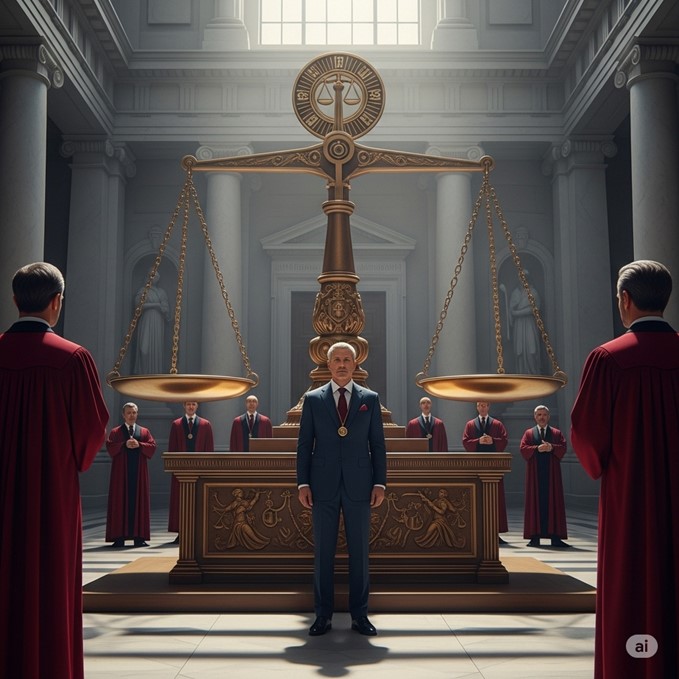
Type of Temple: The temples of Baal-Tanit are not places of quiet reflection but are imposing centers of civic, economic, and judicial power. Known as Grand Adjudicatures, they are among the most magnificent and expensive structures in the world, built from polished marble, rare woods, and precious metals. The architecture is severe, grand, and symmetrical, designed to inspire awe and to reflect the perfect balance of the divine scales.
The heart of every Grand Adjudicature is the Chamber of Oaths, a colossal hall where the most significant treaties and business contracts are sworn. In its center stands a massive, perfectly balanced scale of bronze and gold, which serves as the primary altar. It is before this scale that all binding oaths are made. Deep beneath the structure lie heavily fortified vaults that function as the state treasury and central bank, holding state funds and the collateral for major loans. The temple complex also contains numerous Courts of Adjudication, where the Adjudicator-priests, who are masters of law and commerce, preside over contract disputes. Attached to the main building is a large, open-air Sacrificial Precinct, containing numerous altars where the “price” part of a bargain is paid through the ritual sacrifice of animals, their smoke rising to the heavens as a testament to a debt fulfilled.
Number of Followers: The Creed of the Balanced Scale is the state religion of the enormously powerful and populous Republic of Carthage. As a major thalassocracy and the nexus of global trade, the city-state of Carthage and its colonial territories support a large, dense population.
The number of sworn citizens who are devout followers of the creed is estimated to be approximately 39,968,000. This makes them one of the most populous single nations on Saṃsāra. However, the influence of their faith extends far beyond the number of its actual adherents. Millions of foreign merchants, mercenaries, and even rulers from other nations engage with the principles of the Creed whenever they do business in Carthaginian ports. While they may not worship Baal-Tanit, they are forced to abide by the sanctity of the contracts it governs, making the Creed of the Balanced Scale one of the most influential, if not most beloved, belief systems in the world.
What Believers Believe: The followers of the Creed of the Balanced Scale believe the universe is a divine and cosmic ledger, meticulously maintained by the deity Baal-Tanit. Every action in existence, from the signing of a treaty to the sale of a single fish, is a transaction that is recorded, creating a credit or a debit on this ledger. Their core belief is in the absolute sanctity of the contract. An oath, whether spoken or written, is the most sacred instrument a mortal can wield, as it is a formal request to engage with the cosmic ledger, seeking a “Prize” (divine favor in the form of profit, power, or safety) in exchange for a “Price” (a future payment, service, or sacrifice).
In this worldview, wealth is piety. The accumulation of fortune through shrewd and honorable dealings is the highest proof of one’s favor with Baal-Tanit. A rich merchant is seen as a devout and righteous individual whose accounts are in good standing. Conversely, poverty and failure are often viewed as the tangible signs of an unbalanced account, the result of poor judgment, broken oaths, or an unpaid debt to the divine.
Sacrifice is not a gift meant to appease a deity, but a literal and necessary payment to keep the scales balanced. For any great gain, a price of genuine value must be paid. The most unforgivable sin is to default on a sworn contract. This act unbalances the cosmic ledger, an insult that Baal-Tanit must rectify. The deity’s retribution is not born of anger but of necessity. The debt will be collected, with ruinous interest, through worldly means—a sudden storm, a financial collapse, a blight upon a family—until the account is once again balanced.
Regular Services: Carthaginian religious services are not gatherings for prayer or spiritual comfort, but are public, civic rituals centered on the witnessing of contracts and the balancing of accounts. Their place of worship is the marketplace and the courthouse as much as the temple.
The primary daily devotion is the meticulous and honest conduct of business. A merchant carefully balancing their ledgers or a ship captain ensuring their cargo matches the manifest are both performing acts of personal piety.
The main public service is the Market-Day Assembly, held weekly in the grand courtyards of the city’s Adjudicature. On this day, all commerce is briefly halted. The assembly begins with the Proclamation of Oaths, where an Adjudicator-priest formally announces the most significant business ventures or treaties forged that week, calling upon Baal-Tanit as the divine witness. This is followed by the Witnessing of Payments, a celebratory event where successful citizens make a public sacrifice to demonstrate their piety and success. This may involve depositing a tenth of their profits into the temple’s vaults or sacrificing a prize bull on the precinct’s altars. The final, feared part of the assembly is the Declaration of Default, where the names of any who have broken a sworn contract are read aloud. This act publicly shames the defaulter, marking them as spiritually bankrupt and formally signaling that Baal-Tanit’s collection of their debt is now imminent.
Funeral Rites: The Carthaginian funeral rite is a solemn, public audit of a person’s life, known as The Closing of the Ledger. Its purpose is to present a final, honest accounting of the deceased’s soul to Baal-Tanit and to settle their account for eternity. Emotion is secondary to the hard facts of the ledger.
Upon death, the family hires temple “Accountants” (a specialized rank of Adjudicator-priests) to conduct a thorough audit of the deceased’s life. They review contracts, business records, and testimonies to create a literal balance sheet of the person’s worldly and spiritual transactions, listing their successes and honored oaths as credits, and their failures and broken promises as debits.
The rite is held in a formal chamber in a Grand Adjudicature. The deceased’s body, dressed in their finest attire, is displayed on a marble plinth. The lead Accountant unrolls a scroll and reads “The Final Ledger” to the assembled family and business associates. This eulogy is a blunt and honest accounting. It celebrates the deceased’s profitable deals and honored words, but it also unflinchingly details every unpaid debt and broken contract.
If the ledger shows a net profit—a life of honor and success—the family makes a final, lavish sacrifice on behalf of the deceased to “sweeten the account” with Baal-Tanit. The body is then sealed in a grand mausoleum, their name and reputation secured. If, however, the ledger shows a net loss, the family is publicly disgraced. They are now burdened with their ancestor’s spiritual debt and must immediately make a significant payment to the temple to begin rebalancing their family’s standing with the god. The body of the debtor is denied all honor and is interred in an unmarked grave, their legacy one of failure.
The magical power granted by Baal-Tanit is not freely given; it must be purchased. The Creed of the Balanced Scale operates on a strict, transactional basis where every magical effect is a “Prize” that requires a corresponding “Price.” Practitioners, often wealthy patrons or high-ranking Adjudicators, leverage this power by making sacrifices—of wealth, of vitality, of assets, or of binding future oaths—to fund their desired outcomes. The greater the price paid, the more potent the resulting magic.
Defensive Applications: Defensive magic within this creed is akin to purchasing divine insurance or retaining a supernatural legal counsel. It is about protecting assets, enforcing favorable terms, and turning value into safety.
- The Ward of Inviolate Assets: A follower can protect a valuable object or location by performing a ritual sacrifice proportional to its worth. For instance, to protect a ship and its cargo, a merchant might sacrifice a chest of silver coins into the sea before departure. This payment purchases a divine ward. For the duration of the journey, thieves will feel an unnatural urge to avoid the vessel, mundane locks will refuse to be picked, and the ship will be less susceptible to storm damage. The protection is a purchased commodity with a clear price and duration.
- The Invocation of the Scale: When targeted by hostile magic, a practitioner can instantly invoke Baal-Tanit’s authority by paying a price. This is often an immediate sacrifice of their own life force, felt as a flash of pain and weakness. The incoming spell is halted and weighed on a metaphysical scale against the value of the sacrifice. If the price paid is sufficient, the enemy’s spell is nullified. If the practitioner makes an extravagant payment, the scales can tip further, reflecting the hostile magic back upon its original caster.
- The Bulwark of Expended Value: In dire situations, wealth itself can be transmuted into a physical barrier. A practitioner under attack can crush a valuable jewel, scatter a pouch of gold dust, or snap a finely crafted wand. The item is consumed, its monetary and magical value instantly converted into a shimmering golden aegis that can absorb a proportional amount of physical or magical damage before shattering. It is the most direct and literal conversion of wealth into safety.
- Purchasing Favorable Winds: Before a naval voyage or a major trade expedition, a captain or caravan leader can make a significant offering at a temple of Baal-Tanit. This sacrifice is a payment to ensure fair passage. The “prize” received is a period of supernatural good fortune. Storms will seem to divert around their path, ambushes will be discovered by sheer luck, and favorable winds will speed their journey. This is not a guarantee of safety, but a heavy thumb on the scales of probability.
Offensive Applications: The offensive arts of this faith are those of a divine creditor, a ruthless lawyer, and an unforgiving auditor. They focus on devaluing an enemy, enforcing crippling terms, and calling in debts with devastating consequences.
- The Curse of Devalued Assets: This is a powerful form of economic warfare. By conducting a costly ritual that involves sacrificing wealth of their own, a practitioner can place a curse on an enemy’s holdings. The curse does not destroy but mystically “devalues” the target’s property. A rival’s rich vein of ore will mysteriously yield only worthless stone, their finest silks will rot in their unspoiled warehouses, and their perfectly crafted weapons will develop hidden, fatal flaws. It is an attack that turns an enemy’s greatest assets into worthless dross.
- Empowering the Oath-Chain: If an enemy is known to have sworn an oath—even a minor or unrelated one—a practitioner can make a sacrifice to Baal-Tanit to “invest” that oath with divine weight. The target now feels their promise as a heavy, magical chain around their soul. If they uphold the oath, nothing happens. But if they break it, the backlash is instantaneous and severe. The moment the promise is broken, Baal-Tanit collects the debt, inflicting a flash of agony, a moment of critical fumbling, or a sudden stroke of terrible luck upon the oathbreaker.
- Mark of the Unpaid Debt: A subtle but relentless curse used for tracking. A practitioner acquires an object that once belonged to their target and then ritually destroys it as a sacrifice. This act forges a mystical link, marking the target as a “debtor” to the practitioner. From that moment on, the practitioner has a constant, nagging sense of the target’s direction and general well-being, as if they were a creditor who can always feel the presence of their outstanding account.
- Invoking the Final Reckoning: This is the most fearsome and expensive magic they wield. A high-ranking Adjudicator sacrifices something of immense value—a legendary artifact, a decade of their own lifespan, or the life of a willing devotee—to petition Baal-Tanit to perform a “final audit” on an enemy’s soul. The deity’s attention turns fully to the target, and every broken promise, unpaid debt, dishonest deal, and broken contract from their entire life is called due, all at once. The cumulative spiritual backlash is almost always lethal, manifesting as a sudden catastrophic “accident,” a fatal affliction, or a moment of such horrifically bad luck that it engineers their immediate demise.
Two Brothers and Purple Dye
It is known from the old scrolls that when Carthage was but a new city, there were two brothers, both merchants of great promise. One was Hanno, whose face was open and whose word was his bond. The other was Gisco, whose face was clever and whose words were like water, seeking any crack to flow through. They were partners in all things, and their fortunes were tied as one knot.
And so it happened that on a voyage, their ship was blown off its course and came upon a new island. There they found a creature of the sea, a small snail, which when crushed gave a dye the color of a king’s robe at twilight, a thing of much value. They saw this and knew it was a Prize. They returned to Carthage, their minds full of the dye and the gold it would bring.
To claim this Prize, they knew a great Price must be paid. To harvest the snails, a new port must be built on that island. To carry the dye, a new fleet must be constructed. Such a venture was too large for them alone. So the two brothers went to the Grand Adjudicature, which is the House of the Scale. They stood before the Great Scale, which is the altar of Baal-Tanit, and they made their words heavy with an oath.
They asked for the Prize: that the seas to their island be safe for their new ships, that the forests of Carthage give them strong timber without rot, and that the workers they hired be free from the shaking sickness for five years. The Price they offered was this: of the profits from the purple dye, one half was the god’s. For ten years, they would give a true half of all they earned to the temple’s vault.
Hanno swore the oath. Gisco swore the oath. The Great Scale did not move, and the contract was witnessed.
And Baal-Tanit, who honors all contracts, delivered the Prize. The seas were as calm as glass for their ships. The trees they felled for the hulls were strong and true. The workers did not sicken. The venture was a success beyond all accounting. The purple dye made the brothers the richest men in Carthage. Gold flowed into their storehouses like a river.
Hanno, whose heart was honest, was joyful. He meticulously kept the records and each month, he brought the god’s portion, which was a heavy stone of gold, to the temple. He was grateful for the Prize, and so he paid the Price gladly.
But Gisco, his greed was a worm in his liver. He saw the piles of gold, and he thought, “This is my gold, earned by my cleverness. Why should half be given to a silent god and his priests? The sea is calm for all ships, not just ours. The timber grew before we asked. A portion is enough. A full half is a fool’s payment.”
So Gisco began his own accounting. He made two sets of books. One book, for Hanno and the temple, showed a small profit. The other book, for his own eyes, showed the true, great profit. He began to sell some of the dye through secret agents in other ports. He told Hanno that pirates had taken a ship. He told the priests that the snails were few in some seasons. And the Price he delivered to the temple was a pebble when it should have been a boulder. He built a great manse with his hidden gold, and he laughed in private at his brother’s simple honesty.
For a time, the scale seemed not to notice. But the ledger of Baal-Tanit is perfect. The collection began, but it was quiet. A secret shipment of Gisco’s dye, one not in the books, was spoiled by a strange mold that turned it to black sludge. He blamed the sailors. Then, a fire, which came from no torch, burned a hidden warehouse where he kept his secret gold. He blamed his watchmen. These were the first payments on his true debt.
The ten years of the contract came to an end. Hanno and Gisco went to the House of the Scale for the Final Accounting. Hanno presented his ledgers, which were clean and true. Gisco presented his, which were full of false numbers. The Adjudicator-priest took both scrolls and placed them on the two sides of the Great Scale. For a long moment, the scale was still. Gisco smiled a thin smile.
Then, the side of the scale holding Gisco’s scroll plummeted down, hitting the marble floor with a sound like a breaking bone. The Adjudicator pointed a finger at Gisco and said only one word: “Default.”
Gisco fled the temple in a cold sweat of fear. When he reached his great manse, he found the walls were cracked and sinking into the earth. The gold in his vaults had turned to lead. The fine silks of his clothes were as rotting rags. His servants and guards had abandoned him. Every partner in the city refused him. His name itself was now a currency worth less than nothing. His true debt was collected in a single hour. Hanno, though he had but half the wealth, was honored. His ventures prospered, and his name was as good as gold, for the scale had found it so.
Moral: You can lie to your brother, you can lie to a priest, and you can lie to yourself. But you cannot lie to the Scale, for it does not weigh your words, it weighs the truth of your soul.