
Emphasis: Admiration – Weaponsmithing and Metalcraft
Lore: While many forges exist in Saṃsāra, the Forge of the First Spark is revered. Legend claims it was the first place where fire, earth, and the skill of a smith combined to create not just a tool, but a work of art imbued with the essence of its maker. Apprentices and experienced smiths alike seek a place within its fiery heart, driven by the pursuit of crafting items that evoke awe in their wielders.
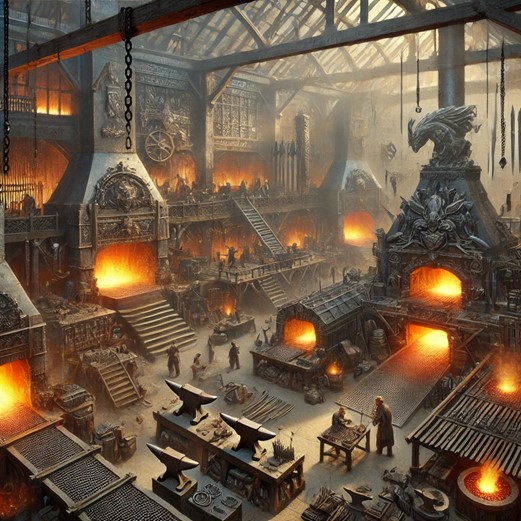
Environment: The clanging of hammers on anvils forms a ceaseless rhythm. The air is thick with heat and the sharp tang of cooling metal. Walls shimmer with reflected flames. Half-finished blades, intricate armor plates, and fantastical contraptions hang half-finished, waiting for the final touch of a skilled hand.
Appearance: The Forge itself is a sprawling complex, with multiple forges fed by magically enhanced coal that burns with unusual intensity. There are specialized workstations dedicated to quenching, polishing, and intricate detailing. Masterpieces from past generations adorn the walls, both for inspiration and as a challenge to be surpassed.
Tags: Weapons, Armor, Metalwork, Aesthetics, Master Craftsmanship, Reputation, Legendary, Time-Honored, Fiery, Soot-Stained, Prestigious, Sought-After Apprenticeship, High-Heat, Traditional, Quality Materials, Respect
Positives:
- Items of Renown: Items forged here carry a mark recognized by warriors and connoisseurs alike, increasing their intrinsic value alongside their combat prowess.
- Demanding Clientele: The Forge attracts high-paying customers with unique desires, leading to challenging and interesting commissions.
Negatives:
- Intense Competition: Only the best of the best thrive, and internal rivalries can be fierce. A reputation must be earned with both sweat and skill.
- Dangerous Conditions: The forges are unforgiving. Burns and accidents are common for the careless or overconfident.
Focus: Production of High-Quality Combat Weapons
Materials
- Steel: Not exotic, but high-quality steel ingots, sourced from trusted mines.
- Wood: Hardwoods like oak or ash for weapon handles and scabbards.
- Leather: For grips, belts, and sheaths.
- Grindstones: Various grades for sharpening and maintaining edges.
Labor
- Master Smiths: Oversee projects and handle finishing of the most important pieces.
- Journeymen: Do most of the forging and shaping.
- Apprentices: Handle basic tasks, fuel the forges, fetch materials, and learn by observation and doing.
Magic of Manufacturing
- Skill Focus: The ‘magic’ here is less about flashy enchantments and more about the combined skill of the smiths. Their intent imbues items with durability and reliability above that of a mundane weapon.
- Subtle Enhancements: Smiths might subtly enhance the properties of a weapon. This could be a blade that holds an edge longer, or armor more resistant to denting.
Equipment used in the process
- Standard Forges: Multiple forges going at once, each suitable for different-sized work.
- Anvils & Hammers: A range of sizes to accommodate different weapons.
- Tongs, Files, Chisels: The basic tools of a smith.
- Quenching Troughs: Filled with water or oil for tempering.
- Workbenches: For grinding, polishing, and assembly of finished pieces.
Process Timeframe (Examples)
- Simple Arming Sword: A journeyman might forge and shape the blade in 2-3 days. Finishing touches could take another day or two.
- Suit of Basic Plate Armor: This is a bigger project, likely taking several weeks of collaborative work between smiths for shaping, fitting, and assembly.
Things to Consider
- Mass Production: The Forge likely has established patterns for standard weapons to meet ongoing demand.
- Specialization: Some smiths within the Forge might focus on specific weapon types or even armor pieces.
- Quality Tiers: Not every piece leaving the Forge is a masterpiece. They likely produce items across a range of quality and price points.
Manufactured at the Forge of the First Spark, along with details of their distribution:
- High-Quality Tools
- Description: Axes, picks, hammers, saws, and other essential tools for construction, forestry, and mining. Made from well-tempered steel that holds an edge and resists wear.
- Distribution:
- Domestic Use: Towns and surrounding farms rely on these for everyday tasks and building maintenance.
- Export: Merchants transport these across Saṃsāra, as their quality makes them sought-after in places without a comparable forge.
- Other Industries: Miners and lumberjacks, in particular, require reliable tools, creating local demand.
- Nails, Hinges, and Hardware
- Description: Simple, but essential construction materials. While mundane, their consistent quality is valuable.
- Distribution:
- Homes & Workshops: Used by local carpenters, builders, and even average citizens for repairs and small projects.
- Bulk Export: Merchants purchase them in large quantities, as most settlements always need these items.
- Supporting Industry: The Forge itself likely uses a lot of its own hardware for renovations and expansion.
- Horseshoes & Farrier Tools
- Description: Well-made horseshoes are essential in a world where transport often relies on horses. Crafted to minimize wear and provide excellent grip.
- Distribution:
- Local Stables: Main source of demand, ensuring horses are healthy and well-shod.
- Itinerant Farriers: Traveling farriers may restock from the Forge, known for quality products.
- Military: If Saṃsāra has mounted units, the Forge is likely a supplier of reliable horseshoes.
- Basic Weaponry (Spears, Militia Gear)
- Description: Not masterpieces, but sturdy and functional arms for local guards or militias.
- Distribution:
- Local Security: Every town needs a way to defend itself, and the Forge provides an affordable, reliable option.
- Armories: Towns might maintain stockpiles of these arms for rapid equipping of citizens in emergencies.
- Caravan Guards: Smaller caravan companies might purchase bulk weaponry from the Forge to equip their hired guards.
Notes
- Reputation: The quality of these common goods contributes to the Forge’s overall reputation, even if they aren’t the most glamorous items.
- Barter Potential: The forge might accept payment in ore, raw materials, or even in kind (receiving crafted goods from other workshops in exchange).
Forge of the First Spark: Where Legacy is Forged in Fire
Step into a realm where the clang of hammer against steel is not merely a sound, but a song of creation – a hymn to skill, dedication, and the enduring power of tradition. Welcome to the Forge of the First Spark, a place revered throughout Saṃsāra, where legend claims the very art of smithing was born.
Here, within walls that shimmer with the reflected heat of magically-enhanced forges, generations of smiths have honed their craft. The air itself crackles with the energy of creation, a tangible manifestation of the passion that fuels every swing of the hammer, every careful quench, every precise grind. This is not just a factory; it is a crucible where raw materials are transformed into objects of both utility and breathtaking beauty.
The Forge of the First Spark is known for quality, not outlandish enchantment. Using high-quality steel, alongside sturdy hardwoods and supple leathers, the smiths here create items that endure. They produce the tools that build civilizations: axes that fell trees, hammers that shape stone, nails and hinges that hold homes together. They provide for the everyday needs: reliable horseshoes for transport, and the sturdy spears that arm local militias.
But it is in the realm of weaponry that the Forge’s true artistry shines. While they produce standard armaments for local guards, their true calling lies in crafting blades and armor that are more than just tools of war; they are extensions of the wielder’s soul. A simple arming sword, forged here, might take days of painstaking work, the smith’s intent imbuing it with a balance and resilience that surpasses the mundane. A suit of plate armor, weeks in the making, becomes a testament to the wearer’s status and a bulwark against the dangers of the world.
The items forged here carry a mark of distinction, recognized by warriors and collectors alike. The clientele is demanding, seeking not just weapons, but works of art that reflect their own prowess and aspirations. To apprentice here is a coveted honor, a path fraught with intense competition and the ever-present danger of the forge itself. But for those who persevere, the rewards are immeasurable: the mastery of an ancient craft, and the chance to leave their own mark on the legacy of the First Spark. Admiration is given to those that work here.
Moral of the Story: True mastery is not found in fleeting magic or extravagant displays, but in the unwavering dedication to craft, the relentless pursuit of perfection, and the understanding that even the simplest tool, when forged with skill and intention, can become a work of art.
Comments
2 responses to “Forge of the First Spark”
[…] From: Forge of the First Spark […]
[…] From: Forge of the First Spark […]