
Slot: Neck
Tags: Reflecting Magic, Deception, Illusion, Control, Worn Item, Common, Tier 1, Knock-back, Misdirection, Intimidation, Defensive, Non-lethal, Psychological, Subtle, Triggered, Auditory
Lore: True Reflecting Magic is notoriously volatile, immensely powerful, and incredibly rare—the province of legendary heroes and warnings in cautionary tales. However, the idea of it is a potent weapon in its own right. This item was born not in the forge of a master weaponsmith, but in the workshops of spies and the back rooms of theatrical guilds. They sought to capture the terror and reputation of Reflecting Magic without any of the suicidal risk or immense cost. The result is the Deceitful Martyr, a common charm that doesn’t reflect true damage, but instead creates a perfect, terrifying illusion of retaliation. It is a tool for the trickster, the spy, and the charlatan, allowing them to turn a staged attack from a co-conspirator into a massive diversion, or to bait an overzealous thug into an attack that results in a terrifying, but ultimately harmless, magical backlash that sends the attacker flying and creates the perfect window for escape.
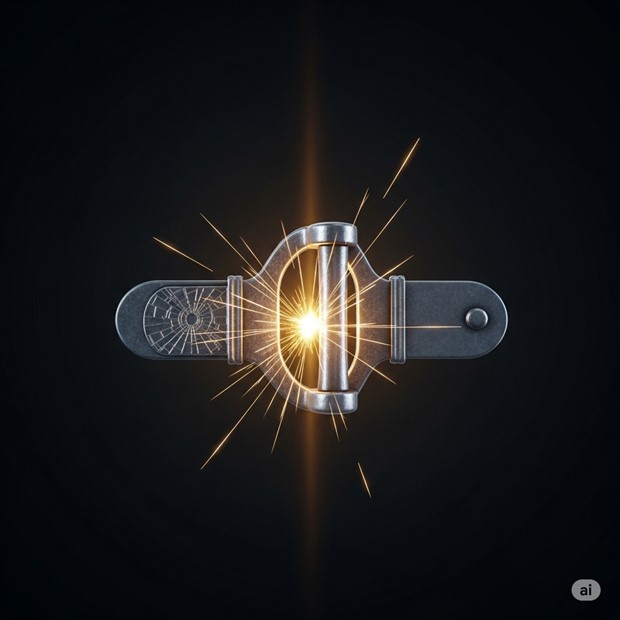
Description: The Deceitful Martyr takes the form of a simple, unassuming cloak clasp or brooch. It is forged from a dull, heavy metal like pewter or lead, deliberately crafted to appear cheap and non-magical. Its surface is smooth and undecorated, save for a single, faint etching of a shattered mirror that is almost invisible unless it catches the light just right. The item feels cool to the touch and has no discernible magical aura to a casual inspection. When its magic is activated, the clasp itself does not glow; instead, it unleashes a brilliant, blinding flash of light that appears to erupt directly from the wearer’s chest, making it impossible to pinpoint the clasp as the source.
Detailed Stats
- Tier: 1
- Rarity: Common
- Attunement Requirement: The wearer must attune to the clasp by telling a convincing lie to another sentient being while physically touching the item.
- Magic Capacity: The clasp holds a small reservoir of illusory energy, enough for a few activations of its primary ability. It passively recharges by absorbing a minuscule, harmless fraction of the ambient energy from any hostile intent directed at the wearer.
- Durability: Moderate. It is a simple piece of solid metal, not easily broken by mundane means.
Passive Magic
- Innocuous Aura: The item projects a faint, passive illusion that makes it seem entirely mundane to magical senses. A dedicated and powerful magical inspection can pierce this veil, but it will fool casual observation.
- Poised Demeanor: The clasp subtly channels a calming energy into the wearer, making it easier for them to maintain a calm and composed facial expression, even when anticipating an attack. This is invaluable for goading an opponent into striking.
- Knock-back Weave: The clasp has the “Knock-back Potential” safety feature built into its core design, a non-negotiable part of its illusion.
Activable Magic
- Martyr’s Retort: This is the item’s primary deceptive function, mimicking Reflecting Magic. When the wearer is struck by an attack, they can choose to activate the clasp. The item does not reflect any actual damage. Instead, it unleashes a powerful, multi-sensory illusion centered on the wearer.
- Reflective Damage (Illusion): The wearer mentally chooses a “damage type” for the illusion, usually matching the attack they just suffered. The item then creates the visual and auditory illusion of a massive retaliatory wave of that energy type—a blast of illusory fire, a shower of illusory ice shards, a wave of illusory necrotic energy, etc. This illusion deals no damage.
- Damage Radius (Illusion): The radius of the illusory blast is equal to the amount of damage the wearer sustained from the triggering attack, making the spectacle more dramatic the more serious the blow.
- Knock-back: The illusion is accompanied by a wave of real, tangible kinetic force. All creatures within the blast radius (friend or foe) are violently knocked back and away from the wearer, adding a layer of physical reality to the otherwise harmless illusion.
- False Resonance: The wearer can take an action to focus on the clasp, causing it to emit a faint but distinctly volatile magical hum. To anyone with the ability to sense magic, it will feel as though the user is wearing a dangerously unstable Reflecting Magic item that is on the verge of a catastrophic resonance cascade. This can be used as a potent tool of intimidation, making enemies hesitant to get close or use powerful magic for fear of setting off the “imminent” explosion.
The Deceitful Martyr is a tool of subterfuge, not direct conflict. Its trade is conducted not in armories or wizarding towers, but in the shops of performers, the back alleys of spies, and the crowded markets where a clever illusion is often more valuable than a sharp blade.
The Theatrical Properties & Effects Shop
In the vibrant theater districts of Saṃsāra’s major cities, one can find shops dedicated to the art of stagecraft. These establishments are a delightful chaos, smelling of sawdust, greasepaint, and flash powder. They are filled with intricate props, breakaway furniture, costumes, and a myriad of devices for creating on-stage special effects. The proprietor is often a retired stage magician or a master of theatrical engineering, someone who understands the power of a convincing illusion.
Here, the Deceitful Martyr would be sold not as a defensive charm but as a reusable, wearable special effect. It would be advertised as the “Retaliatory Burst Clasp” or the “Martyr’s Finale.” The shopkeeper would gleefully demonstrate its harmless but dramatic flash and knock-back, showcasing its potential as the stunning climax to a stage duel or a gasp-inducing spectacle in a magic act. The conversation would be about its dramatic impact, reliability, and the ways it can trick an audience.
Cost: Approximately 55 Gild. The price reflects its value as a unique, reusable prop that can be the cornerstone of a performance. The owner would be highly interested in trading for other rare stagecraft items: schematics for a new type of illusion, rare alchemical powders that create colored smoke, or finely crafted mechanical props.
The Clandestine Supplier
This is not a shop one can walk into. For spies, revolutionaries, and infiltrators, acquiring gear is a matter of utmost secrecy. The “shop” is a network of contacts and dead-drops managed by a supplier who is never met face-to-face. Communication happens through coded messages left in hollowed-out books or as chalk symbols on specific walls. The Deceitful Martyr would be known by a code name, such as a “Getaway Clasp” or a “Diversionary Charm.”
The transaction is a tense, multi-step process. A request is made through one channel. A reply with a price and instructions for a payment drop is left in another. Once the untraceable payment is made, the supplier leaves the item, wrapped in simple, unmarked cloth, at a third location for pickup. The entire process is designed for maximum anonymity and security.
Cost: A significant premium is paid for the secrecy and the specialized nature of the gear. The price would be a non-negotiable 75 Gild. The supplier deals only in currency or small, untraceable valuables like perfect gems, as their entire operation depends on liquidity and leaving no trail.
The Bazaar Trinket Stall
In the sprawling, open-air markets found in almost every city, there are countless stalls selling minor magical charms and trinkets. These vendors sell to the general public, offering glowing amulets, rings that warm the hands, and good-luck charms of dubious efficacy. The stall is often a riot of color and sound, with the merchant hawking their wares to any who pass by.
The Deceitful Martyr would be found here, likely in a large wooden tray filled with dozens of other brooches and clasps. The merchant, a fast-talking salesperson, would likely know its basic function but would embellish its capabilities wildly. “A fine protective ward, this is!” they might proclaim. “Stops a charging griffon in its tracks! A man tried to rob me, and the flash knocked him clear into the next street! He’ll think twice before trying that again!” They would conveniently omit that the “blast” is a harmless light show. A discerning buyer would need to see through the sales pitch to understand the item’s true, non-lethal nature.
Cost: The merchant would start high, asking for 40 Gild, but a savvy customer who understands the item’s limitations could likely haggle them down to 25 or 30 Gild. They would happily trade for a bundle of other minor magical items that they could resell at their stall.
The City Watch Auction
From time to time, the city watch will hold a public auction to sell off goods confiscated from apprehended criminals and smugglers. These events, often held in the courtyard of a barracks or a municipal building, are bureaucratic and attended by a mix of citizens, merchants, and opportunists. An auctioneer, typically a city official, drones through a list of lots, which are sold as-is.
The Deceitful Martyr would not be sold individually but as part of a miscellaneous lot, for example: “Lot 27: A bag containing various minor charms, enchanted jewelry, and trinkets of a fraudulent nature.” The city watch would have identified it as a low-power illusion item and lumped it in with other non-threatening contraband. A buyer would have to bid on the entire bag, hoping the other contents have some value or that no one else recognizes the clasp’s unique potential.
Cost: The final price is unpredictable. The entire lot might be sold for a bargain at 20 Gild, or if two bidders both recognize the clasp and want it, they could drive the price up to 50 Gild or more. All transactions are final and must be paid in official city currency.
The Deceitful Martyr is a tool of psychological warfare and tactical control. Its use in offense and defense is centered on manipulating the perceptions and positions of enemies, rather than causing them direct harm.
In a Tense Social or Political Gathering
This environment is governed by reputation, witnesses, and the threat of violence rather than open conflict. An over-the-top display can be more effective than a sword.
Defensive Roleplay: An avatar is being publicly berated by an arrogant noble duelist in a crowded ballroom. The noble, looking to assert his dominance, strikes the avatar with a contemptuous, open-handed slap—a minor blow meant to humiliate. The avatar activates Martyr’s Retort. A blinding flash of what appears to be divine, golden fire erupts from the avatar’s chest. The sound is deafening. The concussive knock-back force sends the surprised duelist stumbling backwards over a table. The crowd gasps, falling silent. They did not just see a defense; they believe they witnessed someone answer a simple insult with an immense and terrifying display of power. No one dares to approach the avatar, who has defended their honor and established a fearsome reputation without actually harming anyone.
Offensive Roleplay: The avatar is in a tense negotiation with a rival faction, whose most dangerous asset is a known, powerful mage. The avatar needs to gain a psychological advantage. During a lull in the conversation, the avatar subtly activates False Resonance. The rival mage, whose senses are attuned to magic, suddenly feels a terrifying aura emanating from the simple clasp on the avatar’s cloak. It is the unmistakable signature of a volatile Reflecting Magic item, humming with unstable energy as if on the verge of a catastrophic resonance cascade. The mage’s confidence shatters. They will not risk casting any significant spell, or even gesturing aggressively, for fear of triggering an explosion that would kill everyone in the room. The avatar has offensively “disarmed” the most dangerous person at the table without them ever knowing the threat was a complete bluff.
On a Treacherous, Narrow Path or Bridge
In this environment, positioning is everything. A fall can be more dangerous than any weapon, and controlling space is the key to victory.
Defensive Roleplay: The avatar’s party is retreating across a long, narrow rope bridge with several heavily armed pursuers close behind. The avatar is the last to cross. They stop two-thirds of the way across and wait. The lead pursuer, seeing them as cornered, charges forward and swings their axe. The avatar takes the blow and activates Martyr’s Retort. An illusory explosion of lightning fills the bridge, accompanied by the real, powerful knock-back wave. The avatar, braced for the impact, holds their ground. The attacker who struck them, along with the two comrades directly behind him on the narrow bridge, are violently blown off their feet and sent plummeting into the chasm below. The defense used the item’s knock-back to turn the environment into a weapon, eliminating multiple threats without a prolonged fight.
Offensive Roleplay: The avatar’s path forward is blocked by a heavy, reinforced wooden barricade manned by several guards. A direct assault would be costly. However, the avatar notices a large, precariously balanced rock formation on the cliffside above the barricade. They need to create a rockslide. They turn to their strongest companion and say, “Hit me. Hard.” The companion delivers a heavy, controlled blow. The avatar activates Martyr’s Retort. The resulting kinetic wave is not aimed at the guards, but at the unstable rocks above. The powerful concussive force is enough to dislodge the formation, triggering a landslide that completely smashes and buries the barricade, forcing the guards to flee. The offense was using the item’s defensive capability to reshape the battlefield to their advantage.
During a Chaotic Street Ambush
This environment is about surprise, confusion, and using the civilian population as both cover and a distraction.
Defensive Roleplay: An assassin lunges from a crowd of people in a busy marketplace, stabbing the avatar in the shoulder. As the assassin prepares for a second, fatal strike, the avatar activates Martyr’s Retort. A terrifying, but illusory, explosion of necrotic energy erupts from their chest. The assassin is physically thrown backwards by the knock-back into a merchant’s stall, which collapses with a loud crash. The surrounding civilians, seeing the dark “magic” and hearing the commotion, begin to scream and panic. In the ensuing chaos of the stampeding crowd, the avatar, having bought themself a crucial few seconds, melts away and disappears. The defense was not just stopping the attacker, but creating a massive, chaotic diversion to cover a safe retreat.
Offensive Roleplay: The avatar, a spy, needs to frame a corrupt captain of the city watch. They arrange for a co-conspirator, disguised as a petty thief, to “attack” them in a public square when the captain is nearby. The “thief” makes a show of trying to cut the avatar’s purse and gives them a visible shove. The avatar activates Martyr’s Retort, carefully choosing the illusion to match the specific golden light of the city watch’s sanctioned magic. The knock-back sends the “thief” flying. To the dozens of witnesses, it appears that the nearby captain has just used excessive, brutal force on a simple pickpocket. The offense is a sophisticated deception, using the item to create a false narrative in a public space, thereby destroying the captain’s career and reputation.
Perception of Activation:
Sight
- User’s Perspective: The user perceives the triggering blow, then a blindingly brilliant flash of light that seems to detonate a few inches in front of their own chest. For a moment, they are at the center of a miniature sun, and they witness the illusory wave of energy (fire, ice, shadow, etc.) rushing outwards past them. Their vision clears faster than anyone else’s.
- Observer’s Perspective: An overwhelming and instantaneous flash of white light erupts from the user’s torso, making it impossible to see anything for a moment. This is immediately followed by a terrifyingly realistic wave of energy—a wall of fire, a blast of razor-sharp ice, a tide of darkness—that expands outwards in a perfect sphere. Observers also witness the real, physical effect of creatures and objects being violently thrown backwards by the concussive force.
- Positives: The visual is a supremely effective tool for creating panic and chaos. Its scale and intensity are far beyond what a Tier 1 item should produce, ensuring most will believe it to be devastatingly real.
- Negatives: The flash is indiscriminate and will blind and disorient friends and foes alike. The sheer spectacle makes any form of subtlety impossible and will draw attention from a great distance.
Sound
- User’s Perspective: The user hears a sharp, deafening CRACK that feels both painfully loud and strangely muffled, as if heard through a thick wall. It is the sound of a thunderclap happening right next to them, but they are protected from the worst of the concussive, damaging force on their eardrums.
- Observer’s Perspective: An observer hears a cataclysmic explosion. The sound is a layered combination of a deep, forceful BOOM from the kinetic knock-back, and a higher-pitched, appropriate sound for the illusion—the roar of a firestorm, the shattering of a glacier, or the shriek of damned souls. The sound is physically painful and completely disorienting.
- Positives: The sound is the primary component that sells the lie, adding a terrifying auditory reality to the visual illusion. It causes panic and prevents verbal communication or spellcasting for a few crucial moments.
- Negatives: The deafening noise affects everyone in the radius, including allies, which can disrupt a coordinated battle plan. It will alert everyone, even those in nearby buildings or down the street, that a massive magical event has occurred.
Touch
- User’s Perspective: The user feels the physical impact of the initial attack. They then feel a powerful, thrumming vibration from the clasp on their chest and the distinct sensation of a shockwave moving away from them in all directions. They feel pressure, but no heat, cold, or other sensations from their own illusory blast.
- Observer’s Perspective: An observer in the blast radius feels two distinct sensations in rapid succession. First, a wave of appropriate temperature washes over them—intense heat from an illusory fire, a biting chill from an illusory blizzard. This sensation is convincing but does not actually burn or freeze them. This is immediately followed by the very real, solid impact of the kinetic knock-back wave, which feels like being struck by a solid wall of force, physically lifting them and throwing them backwards.
- Positives: The very real knock-back effect provides physical proof to the victims that they were hit by something powerful, making the illusion nearly impossible to disbelieve in the moment. It is also an excellent defensive tool for creating space.
- Negatives: The knock-back is indiscriminate, capable of throwing allies into walls, off ledges, or breaking a friendly shield wall just as easily as it does enemies.
Smell
- User’s Perspective: The user is momentarily overcome by a powerful, convincing scent that they chose for the illusion. If they chose fire, it smells of sulfur and ozone. If they chose necrotic energy, it smells of grave dirt and decay.
- Observer’s Perspective: The air in the entire blast radius is instantly filled with the strong, appropriate scent of the illusion. The smell of burning wood, sharp ozone, or rotting flesh is potent and unmistakable.
- Positives: The olfactory component is another layer of deception, making the illusion incredibly immersive and believable.
- Negatives: The smells are often foul and can linger long after the visual and auditory effects have faded. The sudden, powerful scent is a clear sign that powerful magic was used.
Taste
- User’s ‘s Perspective: The user experiences a sharp, acrid taste that matches the illusion—ash for fire, bitter frost for ice, rank decay for necrotic energy.
- Observer’s Perspective: An observer generally does not perceive a taste, unless the illusion was of something that would logically have one, like a cloud of “poison gas,” in which case they might perceive a phantom acrid taste on their tongue.
- Positives: Serves as another layer of internal, sensory feedback for the user, confirming the activation.
- Negatives: The taste is always unpleasant and can be distracting enough to cause the user to cough or gag.
Extra-Sensory Perception: Empathic Broadcast
- User’s Perspective: The user feels a powerful, outward burst of a single, pure emotion of their choosing. They are the calm center of an emotional storm they generate, projecting overwhelming terror to accompany a wave of illusory shadow, or righteous fury to accompany a blast of illusory holy light.
- Observer’s Perspective: An empathic observer is struck by a psychic “shout.” An overwhelming, artificial wave of a single emotion washes over them, completely overriding all other feelings. It feels incredibly powerful but also hollow, like a perfect but soulless imitation of the real emotion.
- Positives: The emotional broadcast is a potent psychological weapon, capable of causing enemies to panic, flee, or hesitate based on the emotion projected.
- Negatives: The broadcast is indiscriminate, affecting allies with the same emotional wave. Projecting pure terror could cause the user’s own party to break formation and run.
Extra-Sensory Perception: Aura Fabrication
- User’s Perspective: Through their Mind’s Eye, the user sees their own aura remain perfectly calm and small. They then witness the clasp generate an enormous, detached, and terrifyingly powerful false aura that erupts outwards and then vanishes into nothing. It is the experience of witnessing one’s own lie on a magical level.
- Observer’s Perspective: An observer with Aura Sight witnesses something that should be impossible. They see the initial attack strike the user’s relatively normal aura. Then, an entirely new, impossibly powerful magical aura of a chosen energy type detonates from the user’s location. A true expert, however, might notice that this aura has no “root” or connection to the user’s own life force; it is a hollow, masterfully crafted fabrication that disappears without a trace, which is not how real magic behaves.
- Positives: The fabricated aura is convincing enough to fool all but the most skilled magical experts, selling the lie of a devastatingly powerful and real magical retaliation.
- Negatives: If a magical expert does detect the fabrication, the user is instantly revealed not as a powerful warrior, but as a master of deceit and illusion.
Extra-Sensory Perception: Magical Null-Signature
- User’s Perspective: The user feels a sharp “void” as the clasp activates. It feels as if it creates a magical vacuum, pulling in a tiny bit of ambient energy and then detonating it as pure, un-typed illusion. The sensation is one of nullification and fabrication, not of channeling a flow of power.
- Observer’s Perspective: A magically-aware individual perceives a sudden “pop” on the magical plane. This is followed by a massive wave of what feels like magical energy, but it is “blank.” It has no signature, no flavor, no school, and leaves no residue. A real fireball would leave a lingering scent of fire magic; this leaves nothing at all.
- Positives: The lack of a magical residue makes it impossible for others to identify the user’s school of magic or the nature of the enchantment after the fact.
- Negatives: The “null signature” is itself a signature. To a true arcane scholar, the complete absence of any magical residue after such a powerful event is deeply suspicious, suggesting a level of illusion magic far beyond what is commonly thought possible, or a completely unknown type of power.
Artisan’s Gambit: The Martyr’s Clasp
This guide outlines the intricate process for creating a functional Deceitful Martyr clasp. The crafting requires not a mastery of destructive power, but a nuanced skill in illusion, misdirection, and the layering of multiple simple enchantments to create a single, dramatic effect.
Materials Needed
- Ingot of Soft Metal: A small ingot of a dull, heavy metal such as lead or pewter, chosen specifically for its non-magical and unassuming appearance.
- Shard of a Silvered Mirror: A single, small shard from a mirror that has been shattered. The “memory” of reflection within the shard is crucial for the illusion.
- Alchemical Flash-Powder: A pouch of finely milled powder that produces a brilliant, blinding, but harmless flash of light when exposed to a surge of magical energy.
- Essence of a Storm: A magically contained vial holding the captured sound of a powerful thunderclap.
- A Pinch of Air Elemental Dust: Fine dust gathered from a place where air elementals are known to congregate, containing latent kinetic potential.
Tools Required
- Crucible and Casting Mold: A small crucible for melting the soft metal and a simple, two-part mold for the clasp’s shape.
- Fine Steel Etching Needle: A sharp, precise tool for carving the delicate sigil onto the clasp’s surface.
- Enchanter’s Mortar and Pestle: A non-porous mortar and pestle for grinding the mirror shard into a fine dust.
- Acoustic Containment Box: A small, sound-proofed box used by enchanters to handle and imbue items with potent auditory magic without deafening themselves or alerting the neighborhood.
- Lens of Illusion: A specialized crystal lens that allows an enchanter to see the structure of illusory magic as they weave it.
Skill Requirements
- Basic Metallurgy: The ability to safely melt and cast soft metals into a simple, functional shape.
- Illusion Crafting: This is the primary skill. The crafter must be adept at creating multi-sensory illusions—visual, auditory, and even olfactory—and binding them to a trigger.
- Kinetic Imbuement: The ability to infuse an object with a simple but powerful burst of kinetic, concussive force.
- Subtle Enchantment: A specialized skill in layering multiple enchantments on a single object and then concealing the finished work under a passive “dweomer-dampening” field to hide it from casual magical inspection.
Crafting Steps
- Forging the Body: Melt the lead or pewter ingot in the crucible and pour it into the clasp mold. Once it has cooled and set, remove the raw clasp. Clean any rough edges, but do not polish it; the goal is a dull, unremarkable finish.
- Etching the Focus: Using the steel etching needle, carefully carve the faint but precise sigil of a shattered mirror onto the face of the clasp. This sigil will serve as the anchor point for the illusory magic.
- Preparing the Illusionary Core: In the mortar and pestle, carefully grind the silvered mirror shard into a glittering, dust-fine powder. Thoroughly mix this mirror-dust with the alchemical flash-powder. This mixture is the physical component of the light illusion.
- Imbuing the Knock-back and Sound: Place the clasp inside the Acoustic Containment Box. Carefully unseal the Essence of a Storm next to it. The contained sound of the thunderclap will be absorbed into the metal’s resonant frequency. Immediately after, sprinkle the pinch of Air Elemental Dust over the clasp while channeling a simple kinetic force spell. This charges the item with its knock-back potential. Seal the box until this energy has stabilized.
- Weaving the Grand Illusion: This is the most complex step. Remove the charged clasp from the box. The crafter must now take the flash-powder and mirror-dust mixture and carefully inlay it into the etched sigil. While doing so, and viewing their work through the Lens of Illusion, they must weave a complex, multi-sensory illusion spell into the powder. This spell must contain the desired visual (fire, ice, etc.) and olfactory components, and it must be “keyed” to activate simultaneously with the flash-powder and the stored thunderclap sound when triggered.
- The Final Concealment: Once all the active enchantments are in place and stable, the final step is to cast a subtle dweomer-dampening spell over the entire clasp. This creates the “Innocuous Aura,” a passive illusion of non-magic that conceals the potent and complex web of enchantments within from all but the most dedicated and powerful magical scrutiny.
Sermon of the Gilded Martyr
It is told in the scattered scrolls that there was a city ruled by a Warlord whose heart was a stone and whose laughter was a rare and rusted thing. This Warlord valued strength, and truth that was hard and plain like iron. In his city lived a man whose name changed with the seasons, so we shall call him The Man of Many Voices. This man owned no sword and no land, but his wit was a sharp thing and his tongue was a key that could open many doors.
Thus it came to pass that The Man of Many Voices performed a grand trick that made the stone-hearted Warlord appear a fool in the eyes of the people. The Warlord’s anger was a great fire, and he sent his soldiers to capture the trickster. They brought him in chains to the Warlord, who said, “Your tongue is a liar, and your wit is a poison. In three days, you will be brought to the public square, and your head will be separated from your clever tongue, so all may learn the price of deception.”
They threw The Man of Many Voices into a dark cell. His Fear was a cold stone in his belly, but his mind, which was his only true weapon, began to work. He was allowed one visitor, an old woman who swept the floors. He gave to her a small coin and a piece of cloth upon which he had drawn a strange design, and he gave her three names: a pewter-smith who worked with cheap metals, an alchemist who made smokes and flashes for the theater, and a mage who had been cast out for weaving small, troublesome magics.
The old woman went. The pewter-smith, for the price of a future favor, cast a dull clasp, heavy and plain. The alchemist, for the memory of a past kindness, provided a powder that made a great flash of light without heat. The disgraced mage, for the promise of a story he could tell for years, took the clasp and wove into it simple things. He put the sound of a great thunderclap into the metal. He put a small, forceful push of air into it. And over it all, he layered the alchemist’s powder and a greater illusion, a picture of a great and terrible magic. The clasp was then smuggled back to The Man of Many Voices in a loaf of hard bread.
On the third day, the guards brought the trickster to the great square. A wooden scaffold had been built. The Warlord stood there, his great axe in his hand. The Man of Many Voices wore a simple cloak, held shut by the dull pewter clasp.
The Warlord began a long speech about the virtue of truth and the poison of lies. As he spoke, The Man of Many Voices smiled, and when the Warlord was finished, the trickster said, loud enough for all to hear, “Your speech is as dull as your wits, and your face is an offense to the sun.”
The Warlord’s patience, which was a short rope, did snap. He forgot the formal execution. He forgot the crowd. In a pure rage, he raised his great axe and brought it down not on the trickster’s neck, but on his shoulder, to strike him down in anger.
The axe struck. And at that moment, The Man of Many Voices activated the clasp.
A light like a new sun erupted from the trickster’s chest, blinding all who looked. A sound like the sky splitting apart deafened the square. A great, real wave of force threw the Warlord and his honor guard back, sending them tumbling to the stone ground. The crowd screamed, believing they had witnessed the gods themselves strike down the Warlord for attacking the strange man. They did not see a trick; they saw a miracle of retribution.
In the great panic and the chaos of the scattering crowd, The Man of Many Voices, clutching his wounded shoulder but laughing, simply walked away. He vanished into the alleyways, and the legend was born of the Gilded Martyr, a man who tricked a Warlord into triggering his own divine punishment.
Moral of the Story: The sharpest weapon is the one your enemy does not believe you have.
Suggested conversions to other systems:
Dungeons & Dragons 5th Edition
Brooch of the False Retribution Wondrous item, common
This appears to be a simple, heavy brooch or cloak clasp made of a dull metal like pewter. Faintly etched on its surface is the image of a shattered mirror.
The brooch has 1 charge, and it regains its expended charge daily at dawn.
As a reaction when you take damage from a creature you can see within 5 feet of you, you can expend the brooch’s charge. When you do, each creature within a 10-foot radius of you must succeed on a DC 12 Strength saving throw or be pushed 10 feet directly away from you and be knocked prone.
Simultaneously, you create a harmless, instantaneous sensory illusion that originates from you. You can choose the appearance of the illusion (such as a flash of fire, a burst of black tentacles, or a shower of sparks) and an accompanying sound that is no louder than a thunderclap. The illusion provides no other effects and deals no damage.
Call of Cthulhu 7th Edition
The Charlatan’s Amulet Strange Item
A heavy, unassuming amulet made of lead, warm to the touch. It is of a simple, circular design, with a barely-visible etching of a fractured mirror on its face. It is a tool for tricksters and spies, designed to create chaos and enable escape through misdirection.
Retaliatory Burst. When the Investigator is successfully struck by a melee attack, they can choose to activate the amulet as a reaction. This costs 1 Magic Point. When activated, the amulet creates a blinding flash of light and a deafening bang. The attacker, and anyone else engaged in melee with the Investigator, must succeed on a DEX roll or be temporarily blinded and deafened for one round, suffering a penalty die on most actions. Furthermore, the attacker must succeed on a STR roll or be knocked back 5 feet by a tangible concussive force.
Aura of Menace. As an action, the Investigator can focus their will on the amulet, attempting to make it appear magically powerful. This requires a successful Hard Occult or Hard Deceit roll. If successful, any individual with magical or psychic senses who observes the Investigator perceives them as carrying a volatile and dangerously powerful magical artifact. This can be used to intimidate or bluff other occult practitioners, who may become unwilling to use their own powers for fear of setting off a catastrophe.
Blades in the Dark
The Martyr’s Gambit Worn Item, Deception, Illusion
A heavy, plain-looking clasp or brooch. It feels cold and dead, giving no hint of the potent (and fake) magic locked within. It’s a favorite tool of charlatans, spies, and anyone who understands that the threat of power is often better than the real thing.
Dramatic Retort. When you suffer Harm from an enemy’s attack, you can choose to take 1 Stress to activate the gambit. Describe the dramatic and terrifying (but ultimately illusory) explosion of energy that erupts from your body. Your attacker and any other enemies in close range are thrown back by the blast and must hesitate for a moment, stunned by the display. You immediately improve your Position by one level (for example, from Desperate to Risky).
Threaten Catastrophe. When you are trying to intimidate or threaten someone with your power, you can use the gambit to project an aura of immense, unstable energy. You take 1 Stress, but your action is considered to have Potency. This is especially effective against other occultists or scholars of the unnatural, who may recognize the (false) signs of a catastrophic magical resonance and be unwilling to call your bluff.
Knave 2nd Edition
The Liar’s Clasp Inventory Slots: 1
A dull pewter clasp, heavy for its size. Etched into it is a faint, hard-to-see image of a broken mirror. It is cool to the touch. The clasp has 3 uses.
Retaliatory Burst. When you are successfully hit by a melee attack, you may expend one use of the clasp as a free action. An illusory explosion of your description (fire, ice, holy light, etc.) erupts from you in a 15-foot radius. The attacker, and anyone else within that radius, must make a Strength saving throw. If they fail, they are pushed 15 feet away from you and are knocked prone. The illusion and the accompanying sound are terrifying but deal no actual damage.
Recharge. The clasp is recharged not by magic, but by successful deception. After you use the clasp as a key component in a successful ruse, con, or theatrical performance that fools a significant number of people, it regains one expended use.
Fate Core System
The Charlatan’s Retort An Extra represented by a heavy, unassuming pewter clasp that appears non-magical, but contains a potent deception.
This item is a masterwork of misdirection, allowing the wearer to turn an attack against them into a chaotic, terrifying, and ultimately harmless spectacle. It grants access to a new situational Aspect and the following Stunts.
Character Aspect: More Bark Than Bite. This Aspect can be invoked when you are trying to intimidate someone with the threat of the clasp’s power, or to emphasize the chaos caused by its activation to create a diversion. A GM can compel this Aspect by having a savvy opponent see through the illusion, or by having the knock-back effect unintentionally push an ally into a dangerous position.
Stunts
- Dramatic Reprisal: When you are successfully hit by a physical attack in a conflict, you can spend a Fate Point to activate the clasp. The attack has no effect, and you take no stress. Instead, you create the situational Aspect Blasted Back and Disoriented! with two free invocations on all enemies currently in your zone. This represents the flash, bang, and forceful knock-back of the device.
- Volatile Presence: You gain a +2 bonus when you use Provoke to Create an Advantage on a target by showing off the (false) unstable power of the clasp, making it hum and spark as if it’s about to detonate.
Numenera & Cypher System
Reactive Burst Clasp This item is a cypher. It takes the form of a dull, heavy clasp made of a lead-like metal with a faint, fractured mirror design etched on its surface.
Level: 1d6 Type: Usable (Worn) Effect: When the user is struck by a melee attack from a foe, they can activate this cypher as a reaction. It immediately unleashes a deafening bang and a blinding flash of multi-colored light. All creatures within immediate range (including the attacker) must make a Might defense roll against the cypher’s level. On a failure, they are knocked prone and pushed out to short range. In addition, for the next round, any task performed by these affected creatures is hindered by one step due to the sensory overload. The cypher is then consumed, crumbling into inert dust.
Pathfinder 2nd Edition
Martyr’s Clasp Item 3 [Uncommon] [Evocation] [Illusion] [Magical] Price 60 gp Usage worn clasp; Bulk —
This heavy pewter clasp is cool to the touch and features a faint etching of a shattered mirror. Despite its mundane appearance, it contains a potent, deceptive magic.
Activate [reaction] (concentrate, manipulate); Trigger You are damaged by a Strike from an adjacent creature; Frequency once per 10 minutes; Effect You unleash a deceptive blast of force and light. All other creatures in a 10-foot emanation must attempt a DC 17 Fortitude save. This is accompanied by your choice of a dramatic visual illusion (a burst of fire, a wave of shadow, etc.) and a loud auditory bang.
- Critical Success The creature is unaffected.
- Success The creature is pushed 5 feet away from you.
- Failure The creature is pushed 10 feet away from you and is knocked prone.
- Critical Failure The creature is pushed 10 feet away from you, is knocked prone, and is Dazzled for 1 round.
Savage Worlds Adventure Edition
The Deflection Brooch A heavy, plain-looking brooch that feels much heavier than it should. It is a common tool for spies and charlatans who need a dramatic escape plan.
This magical item stores a small amount of raw kinetic and illusory magic, allowing the wearer to turn a dangerous blow into a chaotic, non-lethal explosion.
Power Points: The brooch has 3 Power Points of its own. These do not count toward a character’s normal Power Point total and can only be used for the ability below. The points recharge after 24 hours.
Retaliatory Burst: When the wearer is successfully hit by a melee attack, they can spend 1-3 of the item’s Power Points as a free action. This immediately activates the havoc power, centered on the wearer, using a built-in Smarts die of d8 for the roll.
- 1 PP: Small Blast Template.
- 2 PP: Medium Blast Template.
- 3 PP: Large Blast Template.
- Trapping: The effect is a harmless but blinding flash of light and a deafening bang. Instead of causing damage, any creature in the template must make a Vigor roll or be knocked back 2d6″ and become Shaken.
Shadowrun, Sixth World
The “Backflash” Reaction Enhancer A piece of low-cost, grey-market defensive gear. It’s a heavy, utilitarian clasp or brooch, often clipped to a jacket, containing a pressure-sensitive trigger linked to a single-use chemical and kinetic charge. It’s popular with gangers and other street-level operators who need a dramatic, non-lethal way to end a fight before it begins.
Availability: 6R Cost: 400 nuyen (Reload cartridges cost 150 nuyen)
Reaction Trigger. When the wearer is successfully hit by a melee attack, they can use a Minor Action as a reaction to trigger the device.
Effect. The device unleashes its charge. It functions as a Flash-Bang Grenade (SR6, p. 269) centered on the wearer, affecting all characters in the area except for the wearer, who is shielded by the device’s directional blast. Anyone affected must resist 8S damage and the Blinded status. Additionally, the kinetic repulsor fires. The attacker who triggered the device must make a Body + Strength (3) test. If they fail, they are knocked prone.
Single Use. The device’s chemical and kinetic cartridge is expended after one use. The clasp itself is reusable and can be reloaded with a new cartridge, which requires a simple action.
Starfinder
Clasp of the False Martyr Level 2 Price 800 credits Hands —; Bulk L Type Hybrid Item; Category Worn Item
This heavy clasp is forged from a dull grey metal and etched with a faint, spiderweb-like pattern that resembles a shattered mirror. It contains a small kinetic resonator and a holographic light projector, a combination of simple magic and technology.
Retaliatory Burst. Once per day, as a reaction immediately after you take kinetic damage from a creature’s melee attack, you can activate the clasp. A wave of concussive force, accompanied by a blinding flash of light and a deafening bang, erupts from you in a 10-foot radius. Each other creature in the area must succeed at a DC 13 Reflex save or be knocked prone. This ability deals no damage, and the visual and auditory components are harmless illusions.
Traveller (Mongoose 2nd Edition)
The ‘Startle’ Personal Defence Device (PDD), TL-9 Cost: Cr 1,500 Mass: 0.5 kg
A personal security device disguised as a heavy, unfashionable brooch or belt buckle. It contains a high-capacitor flash-bulb, a sonic concussion emitter, and a kinetic pulse generator. The device is designed to trigger automatically when it detects a sharp, high-G force impact, such as a punch or melee strike.
Deterrent Blast. When the wearer is hit by a melee attack, the device automatically triggers. It unleashes a brilliant flash and a painfully loud sonic burst. Anyone within 2 meters of the wearer (except the wearer, who is shielded by the directional nature of the blast) is affected as if by a stun grenade. They take 1D damage and are stunned for 1D rounds unless they succeed on a Difficult (10+) Endurance check.
Kinetic Shove. The attacker who triggered the device is also hit by the kinetic pulse. They must succeed on a Difficult (10+) Strength check to avoid being knocked 2 meters back and falling prone.
Single Use. The device’s capacitor and internal chemical charge are expended after one use. It can be refurbished and reloaded at a workshop with the appropriate tools for Cr 500.
Warhammer Fantasy Roleplay, 4th Edition
The Charlatan’s Warning Encumbrance: 10 Price: 18 GC Availability: Scarce, often Illegal
A heavy pewter brooch, crudely but effectively made. It is popular among certain spies, agitators, and even some duelists in the Empire’s great cities who need to create chaos in an instant. It is an invention of pragmatic engineers, not wizards, though its effects are no less dramatic.
Flash-Bang Lode. The brooch is packed with a clever combination of flash powder and a small amount of blasting powder. As a reaction to being successfully struck by a Melee attack, the wearer can twist the clasp, triggering its mechanism.
Effect. The brooch explodes. It functions exactly like a Bomb (Flash Powder) (WFRP, p. 295), forcing everyone within 4 yards (including the user) to make a Challenging (+0) Endurance Test or gain one Blinded Condition.
Concussive Blast. The attacker who triggered the effect is also hit by the force of the blast. They must make a Challenging (+0) Athletics Test or be thrown to the ground by the concussive force, gaining one Prone Condition.
Single Use. The brooch is a one-use item and is completely destroyed in the process.
Comments
One response to “Reflecting 4 of the Deceitful Martyr”
[…] Merged Reflecting 4 of the Deceitful Martyr — pewter clasp with shattered-mirror sigil, illusion powder, storm essence, air dust, and silver […]