
The original life forms merged into this single feral life form are the common octopus from class Cephalopoda, the red-bellied piranha from class Actinopterygii, the red imported fire ant from class Insecta, and the medicinal leech from class Clitellata.
Appearance
The Octopir Antleech 937 is a horrifying chimeric amalgamation that fuses the fluid intelligence of an octopus, the voracious schooling aggression of a piranha, the colonial swarming instincts of a fire ant, and the parasitic tenacity of a leech, resulting in a feral creature that skulks through Saṃsāra’s waterways and damp undergrowth like a living nightmare spawned from the world’s bubbling magical flows. Its body is primarily a segmented, worm-like torso derived from the leech, elongated and flexible with ringed annuli that allow it to stretch or contract dramatically, covered in a slick, mucus-coated skin that shifts colors in octopus-like camouflage patterns ranging from mottled browns and greens to mimic riverbed silt to vibrant reds and blacks when agitated, echoing the warning hues of fire ants in a colony defense. From the anterior end protrudes a bulbous head with piranha-inspired jaws lined with razor-sharp, serrated teeth that can strip flesh in frenzied bites, above which dangles a bioluminescent lure akin to an anglerfish but adapted from octopus siphon emissions, glowing with a hypnotic pulse to draw in prey amid the dim jungles or cave systems. Eight tentacular appendages sprout from the midsection, blending octopus arms with ant-like jointed segments for precise manipulation, each tipped with suction cups that secrete a leech-derived anticoagulant saliva for latching onto victims, while the undersides bristle with ant-inspired mandibles for digging or tearing. The entire form is armored sporadically with chitinous plates from ant exoskeletons, providing segmented protection along the back and flanks that crackle with faint magical static during ebbs, and tiny, compound eyes dot the head and tentacles, granting multifaceted vision borrowed from insect facets but enhanced with piranha’s keen water-sensing lateral lines. In high-magic weather, the creature’s mucus glows faintly, illuminating its veins like rivers of elemental fire, and during molts, it sheds layers of skin embedded with discarded spines or teeth, leaving trails that hint at its passage through forgotten ruins or mangrove thickets. This appearance evokes a slithering abomination from pre-Placement evolutions, where multiversal souls might have warped native beasts into such forms, blending squishy, undulating textures with clicking joints and predatory gleam, making it a staple in Banpo lore as a “river’s vengeful knot” that Pattern-Keepers depict in cautionary pottery motifs.
Size
The Octopir Antleech 937 averages one to two feet in length from head to tail tip, with a body diameter of four to six inches when contracted, expanding up to a foot wide during feeding frenzies or defensive swells, akin to a large garden hose swollen with prey. Its weight ranges from five to eight pounds, buoyant in water due to octopus-derived ink sacs repurposed for flotation but dense on land from ant chitin reinforcements, allowing it to burrow or cling without sinking into mud. Juveniles emerge at half this size from communal egg masses, growing swiftly in nutrient-rich rivers where magical flows accelerate development, potentially reaching oversized variants of three feet in megacity sewers or steam-heated caves, their expanded tentacles spanning an additional foot for greater reach. This compact size enables infiltration into narrow crevices of uncharted islands or underwater enclaves, posing hidden threats to avatars foraging for clay or relics.
Speed
In aquatic environments, the Octopir Antleech 937 propels itself with octopus-jet siphons and piranha fin-like undulations, achieving bursts of fifteen miles per hour in short pursuits through river currents or mangrove roots, while sustaining a cruising speed of five miles per hour for prolonged hunts. On land, it slithers with leech contractions and ant-legged scurries, moving at eight miles per hour in dashes across damp soil or jungle floors, though it slows to three miles per hour when burrowing through earth with mandible-assisted digs. Climbing incorporates suction tentacles, allowing ascents of ten miles per hour on vertical surfaces like cave walls or stilted village undersides, enhanced by magical ebbs that infuse its mucus with levitation traces for brief glides. During low-magic periods, speeds halve as segmentation stiffens, but in bubbling storms, it surges with elemental water, outpacing fleeing beasts in labyrinth races.
Stat modifiers
The Octopir Antleech 937 exhibits stat modifiers that reflect its merged adaptability, serving as a balanced feral encounter in Saṃsāra’s tiered play. It gains +3 to Dexterity from octopus agility and ant swarming, enabling evasive maneuvers and precise strikes. Constitution receives +2 due to leech resilience and piranha endurance, bolstering survival in prolonged skirmishes. Strength is +1 from jaw power and tentacle grip, useful for latching or tearing. However, Intelligence suffers -1, as its instincts prioritize swarm tactics over strategy, making it susceptible to traps. Wisdom takes -2, reflecting impulsive feeding frenzies that overlook dangers, while Charisma remains 0, inspiring revulsion rather than command. These modifiers interact with gear in captures, where enchanted collars might amplify positives for domestication, scaling with tiers—forty percent at first for basic threats, up to two percent at fifth for alpha specimens leading packs.
Skills
Instinctively trained through survival in Saṃsāra’s wilds, the Octopir Antleech 937 masters skills blending its origins, emerging at adulthood without classes but honed via environmental pressures. Stealth proficiency allows seamless camouflage shifts, blending into reeds or ruins to ambush. Athletics enables powerful swims or climbs, using tentacles for vaulting over obstacles. Perception heightens with compound eyes and lateral lines, detecting vibrations or scents up to forty feet for tracking prey. Grapple expertise latches suckers with anticoagulant, restraining targets amid frenzies. Burrow digs tunnels with mandibles, creating lairs or escapes. Venom Application secretes toxins during bites, imposing debuffs like bleeding. In packs, Coordination synchronizes attacks via pheromone pulses from ant traits. Regeneration passively mends wounds in dampness, amplified by magic. These skills require no rests but improve with age, older ones demonstrating combos like luring with bioluminescence then grappling in cave explorations.
Behavior
The Octopir Antleech 937 displays colonial behavior akin to fire ant hives, forming swarms of fifteen to thirty in humid territories, communicating through vibrational pheromones and ink-cloud signals that mimic octopus warnings but carry leech scents for cohesion. It acts as an opportunistic pouncer, lurking in shallows or foliage to deploy its lure for hypnosis, then swarming with piranha ferocity to strip flesh in coordinated bites. Territorial, it defends nests with spine-barbed tentacles, escalating to frenzied defenses against intruders like beasts or avatars. During magical flows, it migrates to ebbing spots for enhanced regeneration, occasionally allying with river monsters for shared hunts. Reproduction involves leech-like hermaphroditic mating in communal piles, guarding eggs until hatching, with juveniles learning via mimicry. Encounters with avatars prompt wary assessments, fleeing higher-tiers but overwhelming lower ones, and taming quests use alchemical baits to exploit ant loyalty, though feral impulses make them erratic guardians.
Diet
Primarily carnivorous, the Octopir Antleech 937 feeds on small aquatic or terrestrial prey, using its lure to attract fish or insects before jaws rend with piranha efficiency, supplemented by leech blood-sucking via suckers that drain fluids from larger hosts. It scavenges carrion with ant mandibles to break down chitin, and in lean times, filters plankton through tentacle sieves like octopus foraging. Magical ebbs provide sustenance by absorbing elemental water, reducing food needs, while in urban fringes, it raids waste for alchemical residues. Captives are fed minced meats with potions, but overindulgence triggers uncontrolled swarming.
Emotions
Primal emotions drive the Octopir Antleech 937, often sensed telepathically by geared avatars, with aggression surging in red-flushed camouflage during threats, manifesting as tentacle thrashing. Curiosity flickers via lure pulses toward novel stimuli like airships, leading to investigative probes. Fear triggers ink ejections and burrows when facing fire magic, a leech vulnerability. Satisfaction hums in post-feed vibrations, fostering pack calm. Loyalty binds swarms, with distress pheromones summoning aid, ebbing in magic weather to amplify frenzies or induce torpor.
Environment where found
The Octopir Antleech 937 inhabits Saṃsāra’s transitional wetlands, thriving in Banpo’s Great River shallows and mangrove swamps where moisture supports its mucus and regeneration, nesting in mud burrows near clay banks. Jungles hide swarms in undergrowth, while caves and ruins offer dark lairs for luring prey. Uncharted islands host variants in reefs, and underwater centers see submerged packs preying on fish schools. In megacities, it infests sewers with steam warmth, disrupting trades.
Tags
Cephalopod-hybrid, Fish-jawed, Insect-colonial, Leech-segmented, Aquatic-feral, Swarm-predator, Regenerative, Camouflaging, Venomous-sucker, Lure-hypnotic, Spine-armored, Mucus-coated, Burrower, Pheromone-communicator, Magic-ebbing, Jungle-lurker, River-scavenger, Tentacled-grappler.
Life Cycle
The Octopir Antleech 937 follows a resilient life cycle adapted to Saṃsāra’s fluctuating magical environments, incorporating the metamorphic fluidity of octopuses, the rapid reproduction of piranhas, the colonial hatching of fire ants, and the segmented growth of leeches, progressing through stages that ensure survival in riverine and jungle habitats. It commences with the egg stage, where adults deposit masses of gelatinous spheres—up to one hundred—in communal burrows along muddy riverbanks or within the damp alcoves of forgotten ruins, these eggs coated in protective mucus that absorbs ambient humidity and magical ebbs to incubate for one to two weeks, their translucent shells flickering with bioluminescent pulses reminiscent of octopus chromatophores during high-magic nights. Hatching synchronizes across the mass, triggered by vibrations from nearby currents or steam vents, releasing larval forms that are primarily aquatic, measuring inches long with underdeveloped tentacles and jaws, relying on leech-like annuli for contraction and piranha gill slits for respiration, feeding on microscopic organisms while regenerating minor damages from fish nibbles. This larval phase spans three to five months, during which they undergo several molts, shedding skin layers embedded with nascent chitin plates, and begin forming compound eyes as ant influences emerge, allowing transition to semi-terrestrial juveniles. Juveniles, now about six inches long, venture onto land in small schools, mimicking pack behaviors to hunt tiny insects or algae, their tentacles elongating with octopus precision and mandibles hardening for burrowing, growing rapidly in nutrient-dense floodplains where magical flows can induce asymmetrical developments like extra suckers. Adulthood arrives at eight months, signified by full jaw serration and venom gland maturation, with individuals expanding to one to two feet, their mucus enabling advanced camouflage and anticoagulant secretion for parasitic feeds. Lifespan averages four years in the wild, prolonged to six near steam-powered settlements with consistent elemental nourishment, with elders exhibiting dulled colors and slowed regeneration, retreating to swarm nests to contribute pheromones until death, their corpses dissolving into nutrient slime that fertilizes new egg masses, echoing a leech’s decompositional cycle. In disappearing islands, low-magic intervals prompt encystment in chitin cocoons, suspending colonies until flows return, adapting the cycle to Saṃsāra’s unpredictable nature.
Mating
Mating in the Octopir Antleech 937 is a chaotic, swarm-driven event influenced by the hermaphroditic versatility of leeches, the schooling spawns of piranhas, the pheromone-driven assemblies of fire ants, and the arm-wrestling competitions of octopuses, occurring biannually during elemental water surges that heighten fertility across Saṃsāra’s rivers. It initiates with chemical signals released from mucus glands, pheromones drifting on currents or ground vibrations to convene swarms of ten to twenty, fostering diversity through multiversal soul echoes that occasionally imbue offspring with variant traits like glowing lures. Individuals, functioning as both sexes in leech fashion, engage in competitive displays: extending tentacles in octopus-like grapples while flashing red hues to assert dominance, clashing jaws in piranha-inspired nips that test resilience without lethality, and emitting ant colony calls via clicking mandibles to synchronize the group. Victorious pairings involve intertwining tentacles for spermatophore transfer, a process lasting minutes in mud depressions, infused with magical essence that may cause mutations such as enhanced venom in progeny. The swarm then constructs nests with woven algae and chitin scraps, depositing eggs en masse under collective watch, with ant-like division of labor assigning guards while others forage. Asexual budding complements this, allowing stressed loners to regenerate clones from segmented annuli, useful in isolated cave systems or floating city undersides for population recovery. Matrilineal nuances from Banpo culture subtly affect swarm hierarchies, with larger, more segmented individuals leading egg-laying decisions tied to river bounties. Avatars in Shu-Van sometimes interrupt these events with geared traps for alchemical harvests, resulting in altered behaviors like hyper-aggressive hybrids.
Tactics
The Octopir Antleech 937 utilizes a sophisticated array of tactics drawn from its composite heritage, emphasizing swarm coordination, camouflage, and parasitic exploitation to thrive in Saṃsāra’s perilous ecosystems. It primarily employs ambush tactics, shifting skin tones to blend with river silt or jungle vines, deploying its bioluminescent lure to hypnotize prey before launching a frenzied assault with serrated jaws, mimicking piranha feeding schools but augmented by tentacle grapples that inject anticoagulants to prolong bleeding. In swarms, it executes encircling maneuvers akin to ant raids, with peripherals releasing ink clouds for confusion while central members burrow underneath to upend targets, leveraging compound eyes for multi-angle awareness to counter evasions. Defensive tactics involve contracting into compact balls protected by chitin plates, exposing only venomous suckers for counter-latches, or dispersing pheromones to rally distant pack members, transforming isolated threats into overwhelming waves. Regenerative tactics permit sacrificial diversions, such as detaching a tentacle segment to distract predators while fleeing, with the lost part budding into a new entity over days, amplified by magical ebbs for quicker rebounds. Against larger entities like griffons or zeppelins, it climbs aboard with suction appendages, parasitizing by draining fluids stealthily. In labyrinthine racing paths, opportunistic swarms herd participants into chokepoints with vibrational lures, adapting to avatar incursions by targeting exposed skin or gear joints with bites that corrode enchantments, exploiting the world’s gear dependency to neutralize tiers, and scavenging ruins for alchemical boosts to enhance swarm potency.
Actions
The Octopir Antleech 937 performs a versatile set of actions rooted in instinct, influenced by Saṃsāra’s magic without relying on slots, though environmental relics may augment effects in ruins. Lure Pulse emits hypnotic glows from the head appendage to draw targets closer, followed by Tentacle Grapple that latches suckers with anticoagulant, restraining while draining vitality. Jaw Frenzy delivers rapid bites with serrated teeth, stripping flesh and reducing defenses. Burrow Dash excavates earth with mandibles for cover or surprise attacks, while Ink Ejection clouds areas with obscuring mucus, disorienting foes. Venom Injection through suckers or bites causes bleeding debuffs, persisting longer in humid zones. Regeneration heals passively in dampness, accelerating with magic bubbles. Pheromone Broadcast summons swarm allies or signals distress, and Camouflage Shift alters colors for stealth advantages. In sequences, it pulses lure, grapples, frenzies jaws, then regenerates while burrowing, with tamed specimens trained for Scout Latch, clinging to explorers to relay vibrations via clicks, or Harvest Drain for extracting fluids from beasts.
Other Interesting Information
The Octopir Antleech 937 occupies a pivotal role in Saṃsāra’s food webs, often depicted in Banpo pottery as a “flow’s tangled curse” symbolizing disrupted patterns, its anticoagulant saliva varying by diet—blood-thinning in rivers or adhesive in jungles—rendering it a dual tool for healers or trappers. Swarms establish pheromone-marked hierarchies with “alpha” segments leading via tentacle displays, budding clones prolifically to overrun isolated islands. Bioluminescent lures during storms create eerie light dances, luring hot air balloon pilots into ambushes, sometimes resulting in symbiotic attachments where the creature feeds on scraps from zeppelin hulls. They hoard metallic relics in burrows, mistaking them for ant eggs, attracting avatar quests for tier gear, but intrusion sparks venomous swarms. Diet impacts mucus hue—carnivorous reds for aggression, algal greens for stealth—and bonds form with aquatic beasts like fish-folk, trading protection for blood meals. Nobles in Shu-Van cultivate variants as spies, training lures for hypnotic interrogations amid intrigue. In racing events, they serve as dynamic obstacles, pacified by telepathic gear, while alchemists distill tentacle essence for inks granting temporary camouflage potions, sustaining black markets in cave metropolises. Sentience questions arise, with monsters regarding them as allies in underwater societies, and urban adaptations include infesting steam pipes, dodging hazards with lateral lines. Cave dwellers prey on bioluminescent fungi, and torpor in dry spells preserves swarms like leech hibernation, controlling overpopulations of small fish in floodplains to maintain ecological threads.
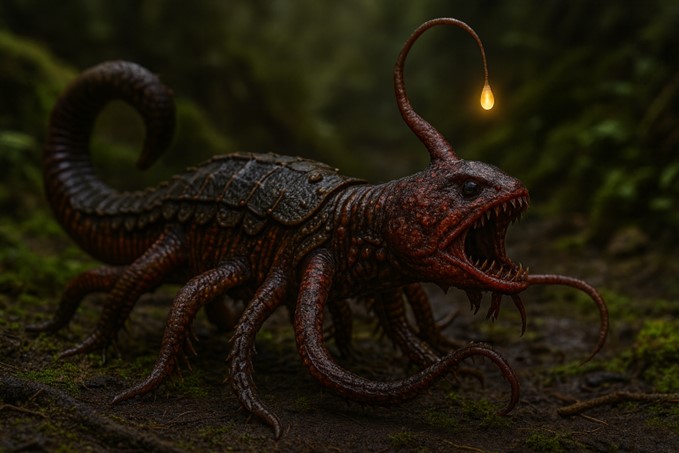
Adventurers might encounter or actively seek out the Octopir Antleech 937 in Saṃsāra for several reasons tied to the creature’s biology, magical properties, ecological role, and narrative mythos:
1. Harvesting Magical Components
The Octopir Antleech’s body is a repository of rare, volatile reagents:
- Leech-mucus and anticoagulant saliva: Essential in crafting powerful healing salves, blood-binding rituals, or necromantic potions that preserve tissue.
- Glowing lure gland: Used in illusions, charm magic, or scrying devices—an entrancing focus especially valuable to enchanters.
- Molted spines and bioluminescent skin: Infused with high-magic residue, they form components for alchemical tracers, elemental wards, or enchanted armor plates.
2. Quests Involving Cursed Rivers or Diseased Settlements
Villagers, Pattern-Keepers, or settlement leaders may report:
- Disappearing livestock or children near rivers, with glowing mucus trails leading to fetid pools.
- Disease outbreaks traced to water sources “tainted” by the creature’s molted skin or parasitic spoor.
- Artifacts gone missing—items of value drawn away by the creature’s lure into underwater burrows.
A party might be sent to cleanse, investigate, or seal off the beast’s territory, often finding its tunnels lined with relics, bones, or parasitized fauna.
3. Hunting for Reputation, Coin, or Taming
The creature is infamous among Banpo artisans and riverfolk as a “vengeful knot” and depicted in cautionary pottery or river tattoos. Thus:
- Bounty contracts might circulate through mercenary boards or druidic enclaves.
- Tamer guilds or bioscribes may seek a living specimen to study, harvest for controlled breeding, or bind into a summoning focus.
- Trophy hunters or thrill-seekers may pursue it to earn marks of status, favor from the Pattern-Keepers, or entry into high-prestige beast-lore circles.
4. Magical Weather or Ruin Interaction
In Saṃsāra, magic flows like weather and stirs the beast:
- During high-magic ebbs, the creature’s polyps swell, its mucus glows, and it migrates closer to inhabited places—drawn by energy surges or arcane relics.
- Adventurers might be caught in such an event during a ruin dive, river crossing, or ritual performance, leading to combat or pursuit.
- The creature could be a guardian organism, bound long ago by a forgotten civilization to protect submerged vaults or bind hostile spirits—killing or pacifying it may be key to progressing in an expedition.
5. Sentience, Evolution, or Infection Hooks
Some scholars argue the creature is not entirely bestial:
- Collective memory fragments from ant-lineage instincts may form a rudimentary hive-mind, offering cryptic resistance to Mind’s Eye probing or reacting to soul-presence in disturbing ways.
- The creature might carry a parasitic curse—infection or possession that replicates parts of its form in other hosts, drawing a party in to halt its spread.
- Ancient symbiosis: some avatar cultures revere it as a living filter of river rot and magical waste. A party sent to kill it might face ethical dilemmas, factional backlash, or unexpected spiritual insight.
6. Dream-Lures or Misidentification
Lastly, a party might not seek the Octopir Antleech directly—but follow:
- Recurring dream-visions of a glowing lure or writhing shape near water, seeded by proximity or magical drift.
- False readings from a Mind’s Eye misdirected by the creature’s camouflage or molted bait-flesh, leading the party to believe it guards something grander.
- Echoing calls of a distressed person or animal—only to find the mimicry originates from its siphon-lure echoing through a flooded ruin.
The Octopir Antleech 937 is not just a random encounter—it embodies how Saṃsāra’s ecology, magic, and soul-warped history create layered dangers and opportunities, shaping the narrative with both biological terror and ritual significance.
The corpse of the Octopir Antleech 937 yields a number of rare, high-value, and often unsettling ingredients—each imbued with magical resonance tied to its unique physiology and behavior. These components are sought after by alchemists, apothecaries, enchanters, beastcrafters, and arcane engineers across Saṃsāra.
Below is a categorized breakdown of harvestable components and their uses:
1. Mucosal Secretions (Color‑Changing Slime)
Yield: ~1–2 flasks per creature
Properties:
- Camouflaged blend of mucus, pigment cells, and arcane residue.
- Retains mild chameleon-like properties for days after death.
Uses:
- Ink for scrolls of concealment or illusion (fades text unless seen with Mind’s Eye).
- Component in stealth potions or Skinshift Salve (briefly mimics surroundings).
- Preservation coating for magical or perishable items—wards scrying for 24 hrs.
2. Siphon-Lure Gland (Bioluminescent Node)
Yield: 1 per creature
Properties:
- Emits low magical light in rhythmic pulses.
- Entrancing effect on insects, fish, some weak-willed avatars.
Uses:
- Focus crystal substitute for charm spells or hypnosis rituals.
- Ingredient in dream-draughts or potions of lucid sleep.
- Embedded into bardic instruments or masks to trigger Fascinate effects.
3. Tentacle Segments (Ant-Jointed Octopoid Arms)
Yield: 4–8 per creature
Properties:
- Suction cups secrete residual anticoagulant.
- Bristled undersides bear jagged mandibles and magical grip-tendons.
Uses:
- Crafting flexible whips or enchanted climbing tools with living grip traits.
- Basis for enchanted gloves or gauntlets that improve grip or disarming.
- Dried into alchemical straps for blood-binding enchantments.
4. Chitin Plates (Segmented Armor Scales)
Yield: 6–10 small plates
Properties:
- Shock-resistant and holds enchantments well.
- Conducts magical energy poorly—acts as a mild insulator.
Uses:
- Crafting armor with resistance to lightning or shock effects.
- Arcane ward plates used in unstable elemental labs.
- Scroll housing for unstable runes that might otherwise misfire.
5. Tooth-Ringed Jaws (Piranha Maw Plate)
Yield: 1 per creature
Properties:
- Serrated bone-hard arc, naturally laced with magical conductivity.
- Capable of absorbing trace elemental energy.
Uses:
- Forged into biting weapons or ritual daggers that deal bleeding or rending damage.
- Used in alchemy to prepare “Bloodlock Salts”, which bind with metal or stone upon contact with blood.
- Set into predator masks or bone totems to intimidate or channel aggression-based spells.
6. Leech-Tail Gland Cluster (Moisture Core)
Yield: 1 per creature
Properties:
- Glandular node that draws water and minor magic from the air.
- Glows faintly under moonlight or high ambient mana.
Uses:
- Used to craft water-seeking wands or survival charms.
- Key reagent in Aqua Animus, a potion that grants temporary water breathing.
- Infused into terrain rituals to maintain magically fertile wetlands or fungus farms.
7. Residual Polyps (Hydra-Spawn Buds)
Yield: 1d4 per corpse, usually near tentacle bases
Properties:
- Regenerative clusters that attempt to remain viable even after death.
- React violently to fire or dryness, but pulse with arcane potential in moisture.
Uses:
- Component in regeneration potions or wound-closing poultices.
- Placed into healing constructs or swamp golems to grant slow repair.
- Dangerous ritual seeds—under specific magical conditions, they may regrow into unstable offshoots or summon hydra-wrought spirits.
8. Compound Micro-Eyes (Multifaceted Optics)
Yield: 12–20 per creature
Properties:
- Insectile lenses that store last visual impressions.
- Some remain “attuned” to specific colors, motion patterns, or magical glows.
Uses:
- Used in surveillance spells or clairvoyant trinkets to record short-term sights.
- Powdered into ‘Eye Dust’—grants temporary perception bonuses.
- Set into jewelry worn by sentries or watch-beasts to alert wearers to sudden motion.
9. Magical Blood Residue (Arcane-Tainted Ichor)
Yield: Drains rapidly after death unless harvested immediately
Properties:
- Thick, dark fluid; shifts color under moonlight or when near ley lines.
- Often volatile when mixed with non-organic materials.
Uses:
- Short-term power sources for unstable enchantments.
- Catalyst in “soul-anchoring” rituals, or infused into necrotic constructs.
- Infused into ink for temporary magic glyphs—powerful but fade quickly.
Each of these parts reflects the Octopir Antleech’s complex origin and makes its remains a mobile resource node—a creature feared not only for its threat but also for the wealth of utility it provides. Harvesting is dangerous and often performed in wet conditions or beneath arcane weather, meaning specialized teams or rituals may be needed to extract the full benefit safely.
Knot That Hungered the River
As Remembered in the Broken Words of the Clay-Scratchers’ Line
In the time-before-time, when the sky was too low and the rivers had no beds to lie in, there came a tremble in the wet places, a writhing that stirred from the root of the black water. This was long before fire knew how to stand still, before the stone-lords carved names into bone. The people then were soft of head and full of questions, but they did not know the words for wrong, or bite, or hide.
So it was, that from the hunger-slick mouth of the mud, there came a being made of “all-noise” and “all-stick,” whose body stretched like serpent’s sleep but snapped like thunder root. This thing was not named by its own, for it had forgotten what it was, or who it bit. Some clay-men called it Okkupir Anthlitsh, which in the cracked pots means Knotted-One-Who-Grips-Too-Much-And-Lets-Go-Never.
It grew in a pool that was no pool, where time was dizzy and light forgot its shape. It drank from whispers, it fed on rememberings. Some say it was born when a fire-ant queen swallowed a dream of the sea and choked on a fish made of faces. Others say it is the river’s punishment for too many promises broken beneath wet stones.
The Clay-Scratchers tell this tale not in one breath, but in four bowls of silence and one of warning:
First Bowl: The Glow That Sang
There was a boy with cloud-fingers and no name, who chased the song-glow at night. He thought it was a frog with a lantern heart, and he followed it past the sleeping reeds, past the forgotten nets, past the foot-marked clay where grandmothers buried truth with salt.
But it was not a frog.
The glow was the mouth of the Knot, and when the boy leaned in to ask it a question, the Knot kissed him with all its teeth and remembered his blood for seven generations.
Only his breath came back. And it could not stop screaming.
Second Bowl: The Fire in the Dirt
The river-elders, who sang to bones and painted the walls with the dye of listening, gathered to cage the Knot. They brought eel-roots and sky-nails and words stolen from thunder. One spoke the sentence that meant “leave,” but said it backward.
The Knot laughed through its tentacles. Each laugh laid eggs in the listener’s courage.
So the elders built a cage of mirrors and spat in every corner, saying, “Let it see itself and forget the world.” But when the Knot saw itself, it saw too many mouths, and it became hungrier.
It burst the mirrors with its sigh and grew mandibles for the lies it planned.
Third Bowl: The Drinker of Dry
A woman whose name meant “She Who Keeps the Heat from Dying” sought the Knot, for it had stolen her son’s fingers and her daughter’s stillness. She brought a spear carved from the sleep-bone of a lightning cow, wrapped in leaves kissed by the Moon-Tied Slug.
She whispered her grief into the shaft, and it grew teeth.
She found the Knot in a whispering bog, surrounded by fish that wept and ants that prayed.
But when she struck, the spear entered—and never left. The Knot swelled, groaned, and from its wound more knots came, smaller and shrieking, each with the woman’s spear burning in its belly.
She was not seen again. But her echo grows lichen in places people do not walk.
Fourth Bowl: The River Refused
At last, the river spoke. Not with words, but with silence so deep it cracked frogs open.
The river said: This is not mine.
It dried for one cycle of moons. All who lived near it moved, or starved, or began to speak to trees in the old way. When the river came back, it curled around the Knot, but did not touch it.
The Knot was left in mud that would not drown it. It waits.
And now the Clay-Scratchers say:
If you see the glow, bite your tongue and close your eyes. If you hear the river cry in your dreams, chew ash and bury your fingernails. If something wet and clicking knocks at your door—never answer with your name still in your mouth.
The Moral of the Story: That which remembers more than it is will always hunger. Beware the thing that was made from too many answers and no question. The river forgets, but the Knot remembers.
Suggested conversions to other systems:
Call of Cthulhu 7e (Name: Lurking Knot of Banpo)
STR: 120 (6d6×5)
CON: 100 (5d6×5)
SIZ: 90 (4d6×5)
DEX: 60 (3d6×5)
INT: 55 (2d6+6×5)
POW: 85 (4d6+6×5)
HP: 19
Move: 6 (land), 9 (water)
Build: +2
Damage Bonus: +1d6
Sanity Loss: 1/1d8
Skills:
Stealth 50%, Swim 85%, Spot Hidden 70%, Track 60%, Cthulhu Mythos 10%
Bite (70%) 1d8+db and Bleed (1d4/round until treated)
Tentacle Lash (60%) 1d6 and target must roll CON vs poison (1d3 DEX loss if failed)
Pincer Crush (40%) 2d6 (requires grapple)
Armor: 3 points (chitin), Regenerates 1 HP per round in wet/moist environments
Magic: The Knot can emit a Compulsion Pulse once every 6 rounds—targets within 10 ft. must succeed a POW roll or lose their next action, hypnotized by its lure
Special:
• Bioluminescent Hypnosis: -20% to Spot Hidden checks against it in dim light
• If reduced to 0 HP, it explodes in a mass of regenerating buds—1d3 tiny Antleeches emerge (treat as 5 HP minions, Bite for 1d4)
Blades in the Dark (Name: The Knot-Slick Horror)
Type: Threat 4 (Dread Aberration)
Impulse: To feed on blood, memory, and magic
Description: A chimeric, parasitic horror from forgotten river-labs, composed of slithering leech segments, twitching pincers, and hypnotic tentacles.
Qualities:
• Fluid Form – It moves through grates, pipes, and cracks.
• Regenerating Flesh – Heals 1 segment of harm every time it is near water or arcane residue.
• Compelling Glow – Anyone who gazes too long at the lure must resist or freeze (Resolve check).
• Swarm-Mind Echo – If it’s studied or tracked, it always knows and sends fragment-spawn to harass the crew.
Clock Segments: 8-segment boss clock (defeating it); 4-segment Hypnosis; 6-segment Regeneration
Tier: IV
Armor: Heavy natural armor, ignores mundane blades unless fine quality or arcane
Suggested Clocks:
• “The Thing in the Water Moves” (6) – for its stalking/hunting pattern
• “The Glow in My Mind Won’t Stop” (4) – sanity pressure
Devil’s Bargain Ideas: The Knot marks you; you bleed continuously; you forget something important
Dungeons & Dragons 5e (Name: Octopir Antleech)
Large Aberration, Chaotic Neutral
Armor Class: 16 (Natural Armor)
Hit Points: 144 (17d10 + 51)
Speed: 30 ft., swim 40 ft., climb 20 ft.
STR 19 (+4)
DEX 14 (+2)
CON 17 (+3)
INT 6 (−2)
WIS 14 (+2)
CHA 7 (−2)
Saving Throws: DEX +5, CON +6
Skills: Stealth +6, Perception +5
Damage Resistances: Lightning, Cold; Bludgeoning from nonmagical weapons
Senses: Darkvision 60 ft., Tremorsense 20 ft., Passive Perception 15
Languages: —
Challenge: 7 (2,900 XP)
Proficiency Bonus: +3
Traits:
• Regenerative Polyps: Regains 10 HP at the start of its turn if in contact with water or magical residue.
• Hypnotic Lure (Recharge 5–6): Emits glowing pulses in a 30 ft. radius. Creatures that can see it must succeed on a DC 14 Wisdom saving throw or be charmed for 1 minute. While charmed, a creature is incapacitated and has a speed of 0. The effect ends if the target takes damage.
• Swarming Tentacles: Can occupy the same space as another creature. Difficult terrain for others.
• Death Buds: Upon reaching 0 HP, the body erupts in acid and tentacle growths. Each creature within 10 ft. must succeed on a DC 15 DEX save or take 3d6 acid damage and be restrained by regenerative vines (DC 13 Strength check to escape).
Actions:
• Multiattack: Makes two tentacle attacks and one bite or sting.
• Tentacle Slam: Melee Weapon Attack: +7 to hit, reach 15 ft., one target. Hit: 2d8+4 bludgeoning. If hit, the target must succeed a DC 14 CON save or take 1d6 poison damage per turn for 1 minute.
• Bite: +7 to hit, 5 ft., one target. Hit: 2d10+4 piercing, and target bleeds (1d6 damage/round until healed).
• Stinger Tail: +6 to hit, reach 10 ft., one creature. Hit: 1d10+2 piercing + DC 13 CON save vs Paralysis for 1 round.
Knave (2e-compatible; Name: River’s Hunger-Knot)
HD: 6
HP: 30
Armor: 3 (chitinous plates)
Move: 30 ft. (land), 40 ft. (water)
Morale: 10
Attacks:
• Tentacle x2 (1d8, grapple on 6+)
• Bite (2d6, bleeding: 1d4/round)
• Sting (1d6, Save or paralyzed 1d4 rounds)
Special:
• Glowing Lure: Anyone who looks at it must Save (WIL) or lose next action to fascination.
• Regenerate: Regains 1 HP/round while moist or magical weather is active.
• Split Death: When killed, splits into 1d3 wriggling mini-knots (HD 1, bite 1d4).
• Burrow: Can vanish into water, mud, or soft walls; reappears next round anywhere within 30 ft.
Treasure: Glistening Lure Gland (valuable), Mucosal Hide (used in stealth potions), Hydra Polyps (alchemical component)
Fate Core (Name: The River-Knot That Hungers)
High Concept: Nightmare Predator Born from Swarm, Slime, and Sorcery
Trouble: Drawn to Blood, Magic, and Memory
Aspects:
– Glowing Lure That Hypnotizes the Weak
– Polyps That Remember Their Wounds
– Slithers Where Minds Break and Waters Listen
Skills:
+4 Physique
+3 Stealth, Fight
+2 Will, Notice
+1 Athletics, Lore (Ancient Beasts), Intimidate
Stress: Physical 3, Mental 2
Consequences: Mild (2), Moderate (4), Severe (6)
Stunts:
• Hypnotic Pulse: Once per scene, the River-Knot emits a flashing lure. All within 2 zones must make a Will roll or be mesmerized and take −2 on actions until someone damages them or a scene shift occurs.
• Segmented Swarm-Body: Can squeeze through any space and divide itself briefly into multiple tentacular units. Once per session, split to create 2 aspects: Dispersed Form and Many-Jointed Reach.
• Polyptic Regeneration: Spend a Fate point to immediately reduce a physical consequence by one level or clear all stress in a watery/magical environment.
Approach: Use in narrative combat or as a Zone-dominating threat; opposition rolls using Fight or Stealth.
Numenera / Cypher System (Name: Hungering Polyptoid of the Mangrove Rifts)
Level: 6 (18 target number)
Health: 36
Damage: 8
Armor: 2
Movement: Long (slithering or swimming)
Modifications:
Stealth 7 (Level 7 in low light or water), Speed Defense 5, Intellect Defense 6 (vs Hypnosis)
Special Abilities:
• Hypnotic Lure (2 Intellect points): Creatures within short range must succeed on an Intellect defense roll or become dazed (lose next action) and move closer.
• Regenerative Polyps: Regains 3 HP per round in wet, dark, or magical environments.
• Tentacle Grasp: May attempt to grapple a target on hit (Speed defense to resist); a grappled target cannot move and takes 2 damage per round.
• Death Split: When reduced to 0 HP, it erupts into 1d3 Level 2 leechlings (2 HP each, 2 damage, no hypnosis).
Loot: One cypher embedded in body (usually illusion, mental control, or healing); valuable lure-gland component.
GM Intrusions: The creature splits unexpectedly; hypnosis spreads to an ally; a polyp survives unnoticed and attaches to a PC.
Pathfinder 2e (Name: Octopir Antleech)
Creature 7 | Large Aberration | Unaligned
Perception +15; darkvision, tremorsense 20 ft.
Languages —
Skills Athletics +17, Stealth +14, Occultism +10
Str +5, Dex +3, Con +4, Int −2, Wis +2, Cha −1
AC 25; Fort +17, Ref +15, Will +13
HP 140; Regeneration 10 (deactivates for 1 round if exposed to fire or desiccation)
Immunities: Controlled, disease
Weaknesses: Fire 10, Sonic 5
Speed 30 ft., swim 40 ft., climb 20 ft.
Melee
• Tentacle +18 (reach 15 ft.), Damage 2d10+5 bludgeoning plus Grab
• Bite +18, Damage 2d12+5 piercing plus Persistent Bleed 1d6
• Stinger +16, Damage 2d6+4 piercing plus DC 23 Fort save or paralyzed 1 round
Special Abilities:
• Hypnotic Lure ◆◆ (arcane, aura, emotion, enchantment, visual) – 30-ft aura, creatures must succeed DC 21 Will save or be fascinated for 1 round (stunned if critically failed). Used once per 10 minutes.
• Death Bloom ✦ – Upon death, releases 1d3 polyps (Tiny Aberrations, Level –1) in adjacent spaces that attack nearest target next round.
Harvestable Components: Lure Gland (arcane focus), Regenerative Polyp (ingredient for Fast Healing potion), Anticoagulant Tentacle Suction (used in weapons or poison traps)
Savage Worlds (SWADE) (Name: Glow-Knot of the Swampvoid)
Wild Card
Attributes: Agility d8, Smarts d6, Spirit d8, Strength d10, Vigor d10
Pace: 6 (Swim 8); Parry: 7; Toughness: 12 (3)
Size: +2; Large
Skills: Fighting d10, Stealth d8, Notice d10, Intimidation d6, Athletics d8
Special Abilities:
• Armor +3: Chitinous plating
• Multi-Tentacle Attack: Makes 3 Fighting attacks per round without MAP if it uses separate limbs.
• Hypnotic Glow (Cone Template, Spirit −2): Those who fail are Distracted and Vulnerable until next round. Used once every 3 rounds.
• Regenerate (3/round): Gains 3 wounds back per round while in water or heavy mist.
• Death Polyps: When Shaken or Incapacitated, it may spawn 1d3 Tiny Polyps (use Swarm stats, except Toughness 7, no WCs).
• Fear −1: Presence causes Fear checks at −1.
Edges: Frenzy (multiple attacks), Hard to Kill, Aquatic Adaptation
Hindrances: Blood Frenzy (once damaged, must roll Spirit or focus on damaged foe), Light Sensitivity (−1 in daylight)
Loot/Harvest: Hypnotic Core (Glow-stone), Polyp Glands (Fast Healing potion), Chitin Plates (Armor component)
Shadowrun 6E (Name: Riverbinder Knot)
Metatype: Awakened Critter
Type: Dual-Natured Paranormal Creature
Movement: 10/25 (swim 15/40)
Reach: 2
Size: Large
Armor: 4 (natural chitin)
Body: 6
Agility: 5
Reaction: 4
Strength: 6
Willpower: 4
Logic: 2
Intuition: 3
Charisma: 2
Essence: 6
Magic: 5
Initiative: 7 + 1d6
Condition Monitor: 12 (physical), 9 (stun)
Attack Dice Pools: Tentacle Slam (10 dice), Mandible Bite (12 dice), Lure Pulse (Spellcasting 11)
Powers:
• Regeneration – Recovers 1 box of Physical damage per round unless fire or toxic damage disables it
• Paralyzing Venom – Bite or stinger causes immediate Body + Willpower (3) test or target is paralyzed for 1 round
• Animal Control (Insects/Aquatics) – May influence native swarms or aquatic vermin within 30 meters
• Bioluminescent Lure (Illusion, Area, LOS(A)) – Targets resist with Willpower + Intuition (threshold 3); failure results in Distracted status and −2 to actions for 3 rounds
• Mana Static Pulse – Reduces all spellcasting in 10-meter radius by −2 dice for 1d6 turns (1/day)
Weaknesses:
• Light Sensitivity (–2 in direct light)
• Vulnerability: Fire and Toxic
• Dual-Natured (always perceivable in Astral)
Notable Lore Use: Often bound by toxic shamans, insect mages, or rogue technomancers for “river hive” experiments or used as anchor-beasts for unstable mana fields.
Starfinder (Name: Knotspawn of the Hypnogorge)
CR: 6
XP: 2,400
N Large Aberration
Init: +5; Senses: darkvision 60 ft., tremorsense 30 ft., Perception +13
DEFENSE
HP: 100
EAC: 18; KAC: 20
Fort +10; Ref +7; Will +9
Immunities: disease, mind-affecting (non-magical); Resistances: acid 10, cold 5
Weaknesses: fire vulnerability, sonic sensitivity (−2 to saves)
OFFENSE
Speed: 30 ft., climb 20 ft., swim 40 ft.
Melee: Tentacle +15 (2d10+9 B and grab), Sting +13 (1d10+5 P + paralysis DC 16)
Special Attacks: Hypnotic Lure (1/day, 30-ft. cone, DC 17 Will or Fascinated 1 round/level), Death Splinter (1d3 Tiny Polyp Swarms on death, each 2 HP, 1d4 acid on touch)
STATISTICS
Str +4, Dex +1, Con +5, Int −1, Wis +2, Cha −2
Skills: Stealth +12, Acrobatics +10, Life Science +7
Languages: Understands Aklo, cannot speak
Other Abilities: Amphibious, Regenerative Polyps (fast healing 5 in moisture)
Gear Harvestable: Bioluminescent lure core (used in charm grenades or darkvision mods), Regenerative enzyme sacs (nanite regen syringes), Polyptic armor resin (crafting biotech armors)
Traveller (Mongoose 2e; Name: Swarm-Knot Parasite)
Type: Xeno-Parasitic Macroform
Region: Swampworlds, Ruin-Moons, Arcane Drift Zones
Attributes:
STR: 10 (A), DEX: 8 (B), END: 10 (A), INT: 5, EDU: 0, SOC: —
Upp: ABAB50
Traits:
• Natural Armor (3)
• Hypnotic Field: 10-meter cone effect, targets must roll INT or be stunned for 1–2 rounds
• Swarm Polyps: Upon death, creates 1d3 micro-creatures (3 HP, 1d6 attack)
• Regeneration: Recovers 1 HP every 15 seconds in water or high-humidity
• Environmental Adaptation: No penalties for zero-G, low-oxygen, or underwater environments
Combat:
Attack Bonus: +2 melee
Bite: 2d6 damage, +2 DM vs unarmored
Tentacle Slam: 2d6+3 damage, may entangle (DM−1)
Stinger: 1d6, paralysis effect (END 8+ avoids)
Encounter Notes:
Swarm-Knot Parasites may appear during ruin expeditions or on strange rogue bioships. Always considered a containment threat due to regenerative and multiplicative behavior.
Value: Lure gland: Cr. 400, Polyptic enzyme sac: Cr. 1,000, Hide chitin (full): Cr. 2,500 (black market)
Warhammer 40K (Wrath & Glory; Name: Polyp-Knot of the Deep Warp)
Archetype: Monstrous Aberration
Tier: 3
Keywords: Xenos, Aberrant, Mutation, Warp-Touched
Attributes:
Strength 7, Agility 5, Toughness 8, Intellect 2, Willpower 5, Fellowship 1
Defense 5, Resilience 13 (Natural Armor 4), Soak 7
Speed 7, Shock 10, Wounds 18
Conviction 1, Resolve 3, Corruption 6
Skills: Stealth 6, Awareness 5, Intimidation 4, Survival 4
Weapons:
• Tentacles (Melee, Reach): 8 ED, AP −2, Wrapping Strike (Entangle)
• Stinger Tail (Melee): 7 ED, AP −1, Poison (TN 4 Toughness or Paralyzed 1 Round)
• Warp Glow (Psychic, Minor Power): Enemies within 10 meters must make DN 4 Willpower test or be Distracted and Stunned (1 round)
Abilities:
• Regeneration: Recovers 1d3 Wounds per round if within water, decay, or warp saturation
• Polyp Split: Upon death, erupts into 1d3 Minion-grade polyps (T2, 3 Wounds, 5 ED Tentacle attack)
• Psychic Taint: Any Psychic power cast within 10 meters suffers +1 DN
• Fear (2)
Narrative Use: Considered a minor Warp anomaly born from hybridized xenos life corrupted by forgotten Old Night science. Inquisition or Magos Xenobiologis may hunt, contain, or weaponize such entities.
Loot & Research: Chitin samples worth 3 Influence; polyps may be cultivated (Corruption test required); warp gland valuable for forbidden rituals or Navigator torture-training.