
Definition: Shyndara is a unique language with a strong emphasis on expressing bashful and shy emotions. It serves as a means for individuals to convey their sense of timidity, embarrassment, and reserve, even across species.
Linguistic Attributes and Characteristics:
- Gentle Vocabulary: Shyndara’s vocabulary is filled with gentle and delicate words and phrases that evoke feelings of bashfulness and shyness. It enables speakers to express their timidity with a soft and reserved tone.
- Modest Tones: The language often employs modest and demure tones, reflecting the bashful emotions it seeks to convey.
- Reserved Structure: Shyndara is structured in a reserved and modest manner, allowing for the expression of timidity and embarrassment.
Structure: Shyndara follows a reserved and demure pattern, allowing speakers to convey their feelings of bashfulness and shyness in a gentle and modest way. The language may involve the use of subtle and reserved expressions to convey the depth of timidity and embarrassment.
Cultural Identity and Usage: Shyndara is used by individuals who wish to communicate their sense of bashfulness, shyness, and reserve. It is often employed in situations where individuals feel timid or embarrassed, or when expressing feelings of shyness. Shyndara does not have a specific cultural identity but is used by individuals of various backgrounds who experience and value expressing their bashful emotions.
Rarity, Type, Script, Source, and History:
- Rarity: Shyndara is relatively rare, as it is a language associated with expressing bashful emotions. It is not widely known or used among the general population.
- Type: Shyndara falls under the category of reserved languages, as its primary purpose is to convey feelings of timidity and embarrassment. It does not possess traditional magical powers, but its ability to evoke bashful and shy emotions makes it a powerful tool for those seeking to communicate their sense of reserve.
- Script: Shyndara’s script appears delicate and gentle, reflecting the language’s connection to bashfulness and shyness.
- Source and History: The origins of Shyndara can be traced back to individuals who sought to express their feelings of bashfulness and shyness in a unique and gentle manner. Over time, it evolved into a distinct language used by those who experience and value expressing their bashful emotions.
Sensory Experience: When spoken, Shyndara has a gentle and reserved quality, as if the words themselves carry a sense of timidity and modesty. Listeners may feel a sense of empathy and understanding, as the language has the power to evoke bashful and shy emotions. The sensory experience is further enriched when used telepathically, as the soft and gentle essence behind Shyndara’s words is directly transmitted, creating a profound sense of bashfulness and shyness in the recipients.
In conclusion, Shyndara is a unique language with an emphasis on expressing bashfulness, shyness, and reserve. Its linguistic attributes, cultural significance, and sensory experience make it a powerful tool for individuals seeking to communicate their sense of timidity and embarrassment.
Tags: bashfulness, shyness, timidity, modesty, reserve, embarrassment, gentleness, delicacy, demure, soft-spoken, empathy, restraint, subtlety, tenderness, hesitance, humility, quietude
Inscriptions (11 ceremonial phrases)
- “Shyn’da kai’ven morai” – May gentle hearts dwell here.
- “Veluun shyn’dara thalvor” – Here rests the mark of modest grace.
- “Kairos shyn’da venith” – The shy spirit is etched eternal.
- “Thalvor shyn’dara kairos” – Soft voices guard this place.
- “Syr’en shyn’da morvos” – Timidity shields all who enter.
- “Velthros shyn’dara kairos” – Gentle reserve endures beyond time.
- “Kai’drel shyn’da veluun” – Embarrassment blossoms into quiet strength.
- “Shyn’dara kairos venra” – Tenderness binds these stones.
- “Throskai shyn’da morai” – In modest silence, this ground holds.
- “Veluun shyn’da thalvor” – Bashful presence lingers in stillness.
- “Kairos shyn’dara venith” – May humility remain forever here.
Political Oaths (11 ceremonial phrases)
- “Shyn’da kairos thalvor” – I vow in modesty to serve.
- “Veluun shyn’dara morai” – Timidity anchors my bond.
- “Thalvor shyn’da kai’neth” – With shy heart, I seal this oath.
- “Kairos shyn’dara venra” – Gentle truth binds me to this path.
- “Velthros shyn’da morvos” – In bashfulness, my loyalty rests.
- “Syr’en shyn’dara kairos” – May embarrassment undo me if I betray.
- “Kai’drel shyn’da veluun” – Humility is my covenant.
- “Shyn’dara kairos thalvos” – In reserve, I promise my honor.
- “Veluun shyn’da morai” – Softness anchors my service.
- “Throskai shyn’dara venith” – With timidity, I stand unbroken.
- “Kairos shyn’da mor’drel” – My oath rests in gentle reserve.
Cultural Ceremonies (11 ceremonial phrases)
- “Shyn’dara kairos venith morai” – Together we celebrate in shyness.
- “Veluun shyn’da throskai” – Timid voices unite us all.
- “Thalvor shyn’dara kairos” – Humility guides our gathering.
- “Kairos shyn’da veluun” – In reserve, we stand as one.
- “Syr’en shyn’dara morvos” – Gentle hearts shield our bond.
- “Velthros shyn’da morai” – Bashful silence blesses our union.
- “Kai’drel shyn’da venra” – Tenderness binds our steps forward.
- “Shyn’dara kairos veluun” – Shy voices honor this day.
- “Throskai shyn’da morvos” – In timidity, our spirits join.
- “Veluun shyn’dara thalvor morai” – Gentle hearts carry us together.
- “Kairos shyn’da venith throskai” – Humility is our eternal guide.
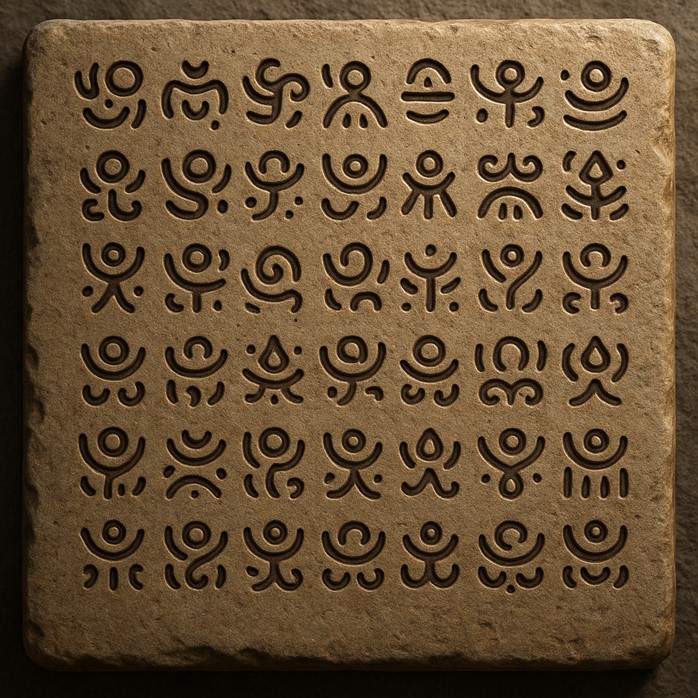
Blushing Tongue of Shyndara
It is written in scraps of faded parchment and murmured in hesitant voices that there once existed a language not born of power, nor of conquest, but of softness. This was Shyndara, the tongue of timidity, a speech of lowered eyes and trembling words. Its story comes to us cracked and faint, for even the scribes who copied it did so with gentleness, as though afraid to let it be heard too loudly.
The tale says that Shyndara first arose in a time of silence. People lived close together, yet their hearts were separated by unspoken shame and hidden fears. They longed to share their feelings, but bold words were too sharp, too heavy, and too exposing. One evening, beneath the quiet of a pale moon, a girl spoke not in strong tones but in whispers. Her words stumbled and faltered, yet they carried her true heart. To the astonishment of those listening, the words were understood not in mind but in soul. They felt her bashfulness, her timidity, her soft yearning to belong. And so the first Shyndara words bloomed, not from strength but from hesitation.
In the centuries that followed, Shyndara became a bridge between the timid and the world. Its sounds were soft, its symbols delicate, its gestures modest. Lovers too shy to confess spoke Shyndara and found themselves understood without raising their voices. Friends who feared burdening one another with sorrow could share in Shyndara, their emotions conveyed gently, like petals drifting upon water.
One fragmented passage tells of a gathering where an entire village spoke only in Shyndara. No loud voices, no harsh commands, only shy, blushing words. Though outsiders laughed at their timidity, the people lived long in peace, for none wished to wound another when every phrase carried the fragrance of humility.
Yet even this language bore warnings. A half-lost verse speaks of the “Silent Circle,” a group who drowned themselves too deeply in Shyndara. They spoke so softly that their words could no longer be heard at all. Misunderstandings grew, though none wished to admit them. Trust faltered, and though they lived together, they were alone. From their ruin comes the saying, poorly translated: “A whisper that hides too much becomes no voice at all.”
Still, Shyndara endured, not in halls of rulers nor on the banners of armies, but in quiet corners—between friends, in hesitant vows, in the blushing exchanges of those too modest to speak boldly. Its script, fragile and curling like vines, can still be found upon the stones of old wells, where shy hearts once carved their gentle truths.
The story, poorly carried through ages, remains difficult to tell with precision, yet its essence is clear: Shyndara is not a tongue of grandeur, but of smallness, of tender restraint. It reminds all who hear it that timidity is not weakness, but another kind of strength—the courage to speak softly in a world that often demands shouting.
Moral of the story: To be shy is not to be lesser; gentleness has its own power, for even the quietest whisper can carry the truest heart.