
Definition: Enigmara is a unique language with a strong emphasis on expressing baffled and perplexed emotions. It serves as a means for individuals to convey their sense of confusion, bewilderment, and puzzlement, even across species.
Linguistic Attributes and Characteristics:
- Cryptic Vocabulary: Enigmara’s vocabulary is filled with cryptic and enigmatic words and phrases that evoke feelings of bafflement and perplexity. It enables speakers to express their confusion with a mysterious and puzzling tone.
- Puzzled Tones: The language often employs puzzled and mysterious tones, reflecting the baffled emotions it seeks to convey.
- Enigmatic Structure: Enigmara is structured in an enigmatic and mysterious manner, allowing for the expression of puzzlement and bewilderment.
Structure: Enigmara follows an enigmatic and puzzling pattern, allowing speakers to convey their feelings of bafflement and perplexity in a cryptic and mysterious way. The language may involve the use of complex and mysterious expressions to convey the depth of confusion and bewilderment.
Cultural Identity and Usage: Enigmara is used by individuals who wish to communicate their sense of bafflement, perplexity, and confusion. It is often employed in situations where mysteries abound or when expressing feelings of puzzlement. Enigmara does not have a specific cultural identity but is used by individuals of various backgrounds who experience and value expressing their baffled emotions.
Rarity, Type, Script, Source, and History:
- Rarity: Enigmara is relatively rare, as it is a language associated with expressing baffled emotions. It is not widely known or used among the general population.
- Type: Enigmara falls under the category of enigmatic languages, as its primary purpose is to convey feelings of confusion and perplexity. It does not possess traditional magical powers, but its ability to evoke mysterious and puzzling emotions makes it a powerful tool for those seeking to communicate their sense of bafflement.
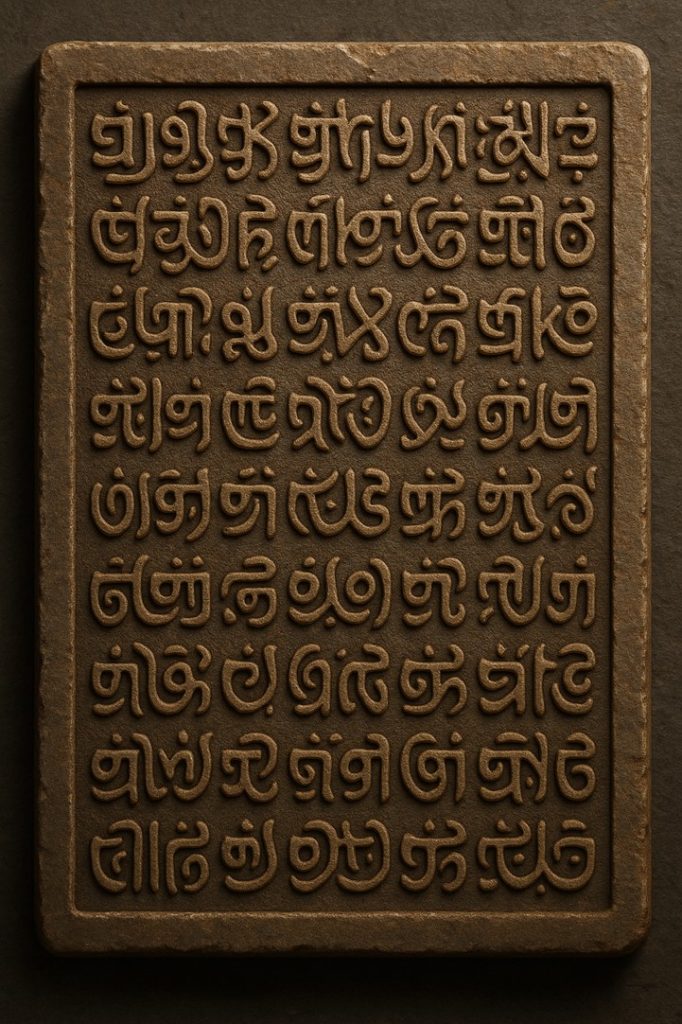
- Script: Enigmara’s script appears cryptic and mysterious, reflecting the language’s connection to puzzlement and bewilderment.
- Source and History: The origins of Enigmara can be traced back to individuals who sought to express their feelings of bafflement and confusion in a unique and enigmatic manner. Over time, it evolved into a distinct language used by those who experience and value expressing their baffled emotions.
Sensory Experience: When spoken, Enigmara has an enigmatic and mysterious quality, as if the words themselves carry a sense of puzzlement and bewilderment. Listeners may feel a sense of intrigue and curiosity, as the language has the power to evoke mysterious and enigmatic emotions. The sensory experience is further enriched when used telepathically, as the cryptic and mysterious essence behind Enigmara’s words is directly transmitted, creating a profound sense of puzzlement and bewilderment in the recipients.
In conclusion, Enigmara is a unique language with an emphasis on expressing bafflement, perplexity, and confusion. Its linguistic attributes, cultural significance, and sensory experience make it a powerful tool for individuals seeking to communicate their sense of puzzlement and bewilderment.
Tags: bafflement, perplexity, confusion, mystery, enigma, bewilderment, cryptic, puzzlement, riddle, obscurity, paradox, uncertainty, curiosity, intrigue, complexity, ambiguity, secrecy
Inscriptions (11 ceremonial phrases)
- “Enig’kai thalvos venra” – Mystery guards this place eternal.
- “Veluun enigmara morai” – Here lies the echo of bewilderment.
- “Kairos enig’ven throskai” – Confusion itself is carved in stone.
- “Thalvor enig’morvos kairos” – May perplexity bind these walls.
- “Syr’en enig’kai veluun” – The riddle shields what lies within.
- “Velthros enigmara venith” – Puzzlement endures beyond time.
- “Kai’drel enig’ven morai” – Cryptic voices whisper forever here.
- “Enig’mara kairos thalvor” – The enigma is etched in silence.
- “Throskai enig’kai venra” – Bewilderment lingers as guardian.
- “Veluun enig’morai kairos” – Confusion blossoms in eternity.
- “Kairos enig’ven thros” – The unknown is honored here.
Political Oaths (11 ceremonial phrases)
- “Enigmara kairos venith” – I vow in mystery to serve.
- “Veluun enig’morai kairos” – Perplexity seals my oath.
- “Thalvor enig’ven throskai” – By riddles, I anchor my allegiance.
- “Kairos enig’kai veluun” – My loyalty stands in bewilderment.
- “Velthros enig’mara morvos” – I swear by the cryptic truth.
- “Syr’en enig’kairos thalvor” – Let me be undone if I betray.
- “Kai’drel enig’morai venra” – In perplexity, my bond is eternal.
- “Enigmara kairos thalvos” – My service rests in confusion’s veil.
- “Veluun enig’kai throskai” – The enigma is my covenant.
- “Throskai enig’mara veluun” – My truth is sealed in riddles.
- “Kairos enig’ven mor’drel” – Mystery itself bears witness to me.
Cultural Ceremonies (11 ceremonial phrases)
- “Enigmara kairos venith morai” – Together we honor the enigma.
- “Veluun enig’kairos thalvor” – Confusion unites us as one.
- “Thalvor enig’mara veluun” – Mystery blesses our gathering.
- “Kairos enig’ven morai” – In riddles we find belonging.
- “Syr’en enig’kai throskai” – Bewilderment protects our bond.
- “Velthros enigmara venra” – Puzzlement guides our steps.
- “Kai’drel enig’morai veluun” – The enigma binds our voices.
- “Enig’mara kairos throskai” – Confusion joins us in harmony.
- “Throskai enig’ven morvos” – Perplexity blesses this union.
- “Veluun enig’mara thalvor” – Together we celebrate the unknown.
- “Kairos enig’kai venith” – In mystery we are eternal.
Veil of Enigmara
Tongue of Perplexity
It is told in half-broken verses, scattered upon the stones of forgotten temples, that there was once a language not of clarity, nor of passion, but of bewilderment itself. This was Enigmara, the tongue of bafflement, born from the unanswerable questions of existence. The tale is crooked, poorly remembered, each translation a puzzle within a puzzle, but enough survives to speak of its mystery.
The story says that long ago, when tribes of many races met at the edges of shadowed valleys, they were struck dumb by their differences. No tongue could bridge them, no trade of words could bring understanding. Then one among them began to speak in strange syllables that seemed less like language and more like riddles. His words made no sense, yet all who heard them felt the same: confusion, yes, but a confusion they shared. In their shared bafflement, they found laughter, and in laughter, a fragile bond. Thus was Enigmara first uttered—not to answer, but to question.
It is written that the tongue grew stronger with each generation. Priests used it to carve puzzles upon temple walls, believing that mystery itself was divine. Wanderers spoke it by firelight to cloak their truths in riddles, making friends of strangers who puzzled together. Even rulers once swore their oaths in Enigmara, so that no subject could be certain of their true intent, yet all felt the weight of a hidden meaning. To hear it spoken was to stand before a mirror clouded with smoke—you saw yourself, but also something beyond.
One fragment tells of the Riddle-Masters, who spoke Enigmara until their thoughts themselves became twisted. They built labyrinths of words so deep that they no longer knew their own beginnings or endings. Some vanished into silence, unable to form any phrase not wrapped in mystery. Their ruins are said to hold inscriptions that shift when gazed upon, never twice the same, as if the stone itself delights in perplexity.
Another tale speaks of a great festival, when an entire city gathered to speak only Enigmara for a single day. Questions without answers filled the air, cryptic tones rang from every mouth, and the streets thrummed with perplexity. At dawn, it is said, a strange silence fell. The people awoke uncertain of who they were, their names forgotten, their memories scrambled like broken shards. Some found new lives in the confusion, while others wandered endlessly, lost in their own riddles. The scribes who recorded this wrote a single line: “Bewilderment is both feast and famine.”
Yet, despite its dangers, Enigmara survived. It was cherished by those who sought the unknown, by mystics who believed that the world was not meant to be understood but marveled at. Even today, the script of Enigmara—cryptic symbols twisting like mazes—is carved upon relics, leaving those who discover them in a state of awe and puzzlement. Some claim the language itself changes with the listener, each phrase a mirror of their own questions.
The story of Enigmara, though poorly translated and often contradictory, remains clear in essence: it is the speech of riddles, a tongue not of answers, but of mysteries shared. To speak it is to confess not what you know, but what you cannot know.
Moral of the story: Confusion, when shared, can unite as surely as clarity—yet those who dwell too deeply in riddles may lose even themselves to the endless maze.