
Definition: Mordain is a unique language that emphasizes bitterness and negative emotions. It allows beings to communicate their deepest feelings of resentment, sorrow, and disappointment. Mordain transcends species barriers, enabling different creatures to share and understand the complexities of bitterness and the burdens it carries.
Magical Powers: Mordain does possess magical powers, but they are darker in nature. When spoken with intense bitterness and negativity, the language can invoke curses, hexes, and other malevolent effects upon the target. However, using the language in this way often comes with a price, as the speaker may also become further consumed by their own bitterness.
Linguistic Attributes and Characteristics:
- Bitterness Emphasis: Mordain has an extensive lexicon dedicated to describing various facets of bitterness, including different shades of resentment, regret, and hostility.
- Melancholic Tones: The language employs melancholic tones and mournful vocalizations, reflecting the emotions of bitterness and sorrow.
- Word Repetition: Mordain often uses repetition of specific words and phrases to amplify the bitterness and reinforce the emotions it conveys.
Structure: Mordain is a structured and organized language, with strict grammar and syntax. It employs dark imagery and metaphors to convey the complexities of bitter emotions with precision.
Cultural Identity and Users: Mordain is often associated with secretive and reclusive cultures that have experienced great suffering or loss. It is used by sages, hermits, and those who seek to express their deepest emotional pain in a way that connects with others who have endured similar hardships. Due to its potent and potentially dangerous nature, Mordain is typically only taught to a select few individuals within these communities.
Rarity, Type, Script, Source, and History:
- Rarity: Mordain is relatively rare and kept secret within specific circles due to its dark nature and potential for harm.
- Type: It is primarily a spoken language, as the emotions and inflections in the speaker’s voice are crucial to convey the true depth of bitterness.
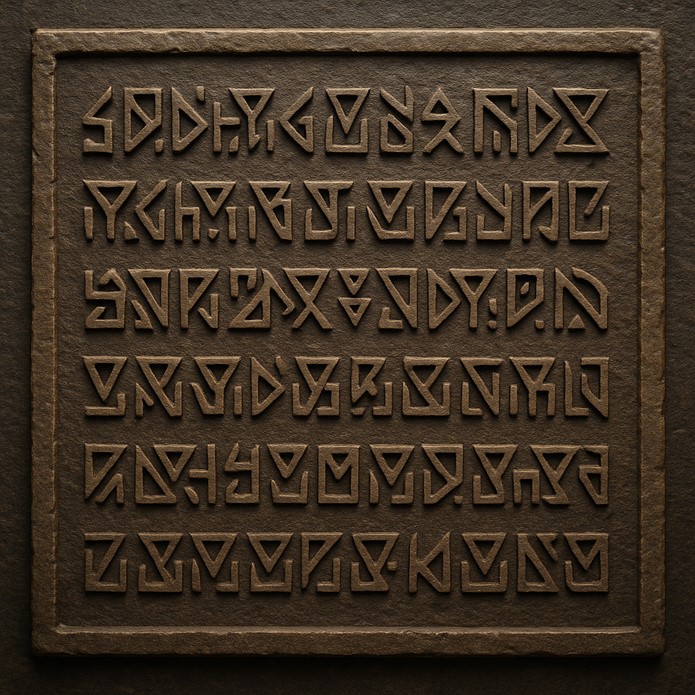
- Script: The script of Mordain is angular and harsh, reflecting the sharpness of bitter emotions. It is used sparingly for secret records and personal writings.
- Source: The origins of Mordain are shrouded in mystery, but it is believed to have arisen from ancient rituals that sought to channel negative emotions into a form of expression.
- History: Mordain’s history is intertwined with tragic events and individuals who sought to communicate their pain in ways that transcended ordinary languages.
Sensory Experience: Speaking or hearing Mordain is an emotionally intense experience. The language can evoke feelings of discomfort and sadness, as the bitterness within the words resonates with listeners. Proficient speakers can use Mordain to create an unsettling atmosphere, causing unease in those who are exposed to its dark and powerful emotions.
Tags: bitterness, resentment, sorrow, disappointment, curses, hexes, melancholy, repetition, dark-imagery, ritual, secrecy, reclusive, suffering, regret, hostility, angular-script, unease
Inscriptions (11 ceremonial phrases)
- “Mor-dai’en threll vosh” – May bitterness carve its mark eternal.
- “Varn uthrel mordain” – Let sorrow bind this place with shadow.
- “Kelthros ven mordra” – Here lies the weight of endless resentment.
- “Drav’el mordain uthrel” – Bitterness seals this with unbroken chains.
- “Selnai thraven mor’dra” – May regret seep through every stone.
- “Vorr’keth uthrel venai” – The curse of grief lingers here.
- “Nethrel dor’mordain” – May bitterness become the guardian.
- “Vorash uthrel zannai” – All hope withers, all sorrow binds.
- “Trel’morda kelthres” – Here lies the silence of pain.
- “Zorven uthrel kai’dras” – Let bitterness strike those who trespass.
- “Mor’dain elthros draven” – May resentment endure longer than stone.
Political Oaths (11 ceremonial phrases)
- “Vorr’mordain thrallai uthrel” – I swear in bitterness to bind my will.
- “Drosven mor’dai uthrel kai” – In sorrow I promise my loyalty.
- “Kelthros uthrel ven-dral” – Let resentment be the proof of my word.
- “Morn’dral uthrel kaiven” – Through bitterness, my oath is eternal.
- “Zarven mor’dra elthros” – I speak with resentment as my bond.
- “Throskai mor’dain uthrel dor” – Let curses shatter me if I betray.
- “Vor-drel uthrel mordai” – I bind myself to this oath in grief.
- “Sel’nai thraven uthrel mor” – In sorrow, I submit to duty.
- “Kelven uthrel dral’mor” – With bitterness, I stake my honor.
- “Zor’drel uthrel kai’neth” – Through resentment, I swear allegiance.
- “Mordai uthrel thraven vosh” – May bitterness consume me if I falter.
Cultural Ceremonies (11 ceremonial phrases)
- “Nethros kai’mordain” – We gather in sorrow’s shadow.
- “Thraven uthrel mordai” – May bitterness unite us in memory.
- “Kelthros dral’mor uthrel” – Together we honor loss with grief.
- “Zorven kai’thros mor’dai” – In bitterness, we weave our bond.
- “Selnai uthrel draven vosh” – May sorrow guide us through darkness.
- “Vorash kai’mordain uthrel” – Together we bear the curse of regret.
- “Dral’neth mor’dra uthrel” – May our bitterness echo through generations.
- “Kelven uthrel kai’vosh” – Let sorrow be the mark of our unity.
- “Morn’dral uthrel kai’veros” – We embrace the bitterness of truth.
- “Thraven mor’dai ven uthrel” – Together we bind ourselves to grief.
- “Zarven uthrel draven mor’dai” – In bitterness, our voices are one.
Bitter Tongue of Shadows
In the days when the seas were wider and the mountains uncounted, there walked among the people a tribe who bore no joy in their steps. They were called the Keepers of the Broken Chalice, for they carried within them only the dregs of sorrow. These people spoke not as others did, for their words struck like thorns and clung like briars. The language they uttered was said to be born from the ashes of forgotten grief, a speech where every sound was a wound and every syllable a scar. This was Mordain.
It is told that the first speaker of Mordain was a woman who had lost both her children to the sea. She sat upon the shore for seven seasons, crying words no one knew, words that were heavy as stone and sharp as broken bone. When she spoke, the tides turned black, and when she wept, fish floated lifeless upon the water. From her lips poured a tongue that was not hers but carried the weight of all who had ever suffered. Those who heard it felt their own grief swell, as if her sorrow had entered their hearts. Some fell to their knees, others fled in silence, but all remembered the strange and bitter cadence.
The tale says that Mordain spread not through teaching but through recognition. Those whose souls carried deep wounds found they could form its words without being shown. They spoke of betrayal, of famine, of wars unending, and the language bound them together in an unseen chain. Unlike other tongues, Mordain did not build nations nor celebrate victories. It was spoken in caves, in the ashes of burned villages, in the shadows of execution grounds. The Keepers of the Broken Chalice etched its script into stone so that sorrow would not be forgotten, each rune carved at the cost of a bleeding hand.
There is a passage, broken by time and mistranslation, that tells of a great gathering. Tribes from across the land assembled when the sun was veiled by storm. They brought their losses with them—ashes of fathers, bones of sons, the garments of widows. In the center stood a circle of black stones where the words of Mordain were spoken aloud. The sky wept, the ground shook, and all who listened felt their bitterness become more than grief: it became a curse. Trees withered, rivers soured, and beasts fled. Yet the people did not flee, for in that moment they felt united. Their pain had a voice, and the voice had power.
But the story does not end in triumph. Those who spoke Mordain too freely were hollowed by it. Their eyes grew dull, their hearts heavy, their steps dragging as if walking through water. A few became nothing but shadows that wandered the land, repeating the same bitter words until they dissolved into air. It is said that the woman of the shore herself became such a shadow, her figure forever visible at dusk, whispering to the waves.
And still, some sought the language, for it gave them strength when they felt weak, and curses when they felt powerless. Kings feared it, priests outlawed it, yet Mordain could not be erased, for bitterness needs no teacher. It lingers wherever sorrow is found. Even today, when a cry of grief is uttered too long in the night, some claim they hear echoes of Mordain in the wind, words that are not theirs yet rise from their own mouths.
The tale has been told and retold, translated poorly from broken fragments of clay, carved stones, and memory. Much of it is unclear, and some believe the story warns more than it tells.
Moral of the story: Bitterness, when given a voice, unites those who suffer, but if spoken too long, it consumes the speaker until nothing remains but shadow.