
Definition: Eunoia is a unique language with a strong emphasis on expressing appreciation, gratitude, and positive emotions. It serves as a means for individuals to convey their sincere thanks, admiration, and appreciation, fostering a sense of harmony and goodwill, even across species.
Linguistic Attributes and Characteristics:
- Appreciative Vocabulary: Eunoia’s vocabulary is rich with words and phrases that convey appreciation, gratitude, and positive emotions. It enables speakers to express their heartfelt thanks and admiration for others.
- Harmonious and Uplifting Tones: The language often employs harmonious and uplifting tones, creating a pleasant and inspiring sound that evokes positive emotions in listeners.
- Balanced and Expressive: Eunoia is structured in a balanced and expressive manner, allowing speakers to convey their appreciation with sincerity and eloquence.
Structure: Eunoia follows a structured yet emotionally expressive pattern, allowing speakers to articulate their appreciation and gratitude with depth and sincerity. The language may involve the use of flowing phrases and eloquent expressions to convey genuine warmth.
Cultural Identity and Usage: Eunoia is used by individuals and communities who value positive emotions, gratitude, and appreciation. It is often employed in moments of sincere thanks, celebrations of harmony, and acts of goodwill. While Eunoia is not tied to any specific cultural identity, it is appreciated and used by those who seek to promote harmony and goodwill in their interactions with others.
Rarity, Type, Script, Source, and History:
- Rarity: Eunoia is relatively rare, as it is a language that requires a genuine and sincere expression of appreciation and positive emotions. It is not commonly used in everyday situations but holds significant value in moments of heartfelt thanks and celebration.
- Type: Eunoia falls under the category of emotional languages, as its words carry the power to evoke positive emotions and create a sense of harmony and goodwill. While it does not possess magical powers in the traditional sense, its ability to foster a positive and harmonious atmosphere makes it a potent tool for promoting goodwill and understanding.
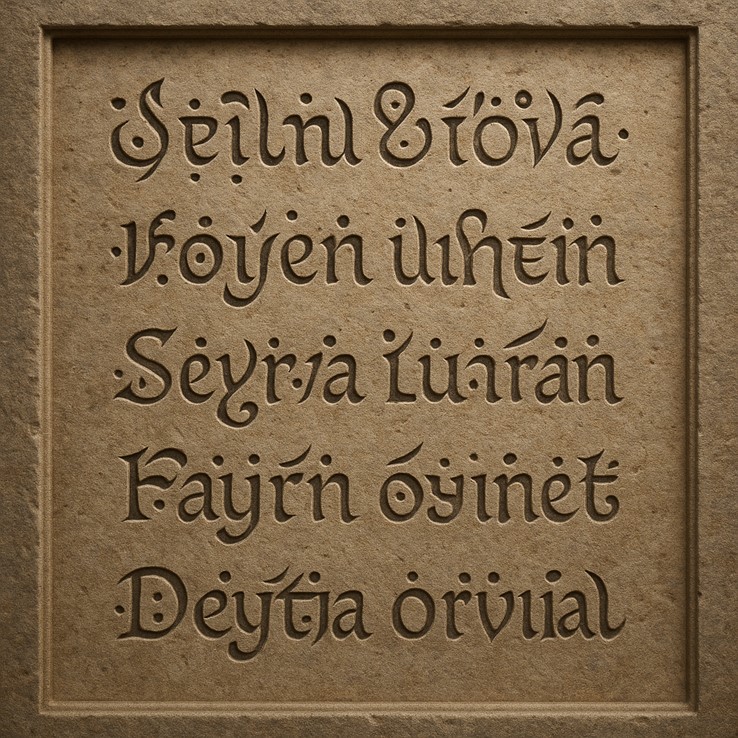
- Script: Eunoia’s script appears graceful and flowing, reflecting the language’s emphasis on eloquence and sincere expression.
- Source and History: The origins of Eunoia can be traced back to the desire of individuals to convey their heartfelt appreciation and gratitude to others. Over time, it evolved into a unique language used by those who value positive emotions and seek to cultivate an atmosphere of harmony and goodwill.
Sensory Experience: When spoken, Eunoia has a soothing and uplifting quality, as if the words themselves carry a sense of genuine appreciation. Listeners often feel a sense of warmth and positivity, as the language has the power to evoke sincere emotions of appreciation and goodwill. The sensory experience is further enriched when used telepathically, as the emotions behind Eunoia’s words are directly transmitted, creating a profound sense of gratitude and harmony in the recipients.
In conclusion, Eunoia is a unique language with an emphasis on expressing appreciation and positive emotions. Its linguistic attributes, cultural significance, and sensory experience make it a powerful tool for fostering harmony, goodwill, and heartfelt connections.
Tags: appreciation, gratitude, harmony, goodwill, sincerity, eloquence, warmth, positivity, admiration, balance, uplifting, celebration, kindness, respect, compassion, unity, serenity
Inscriptions
- “Liora venash” — Gratitude binds this stone with light.
- “Eshana doriel” — Appreciation carves pathways of peace.
- “Valura sohen” — Harmony flows where words endure.
- “Niriel thovan” — This mark honors those who came before.
- “Seran uthiel” — Thankfulness strengthens all foundations.
- “Eirath lomenar” — Written praise awakens goodwill eternal.
- “Thyra velonin” — In gratitude, permanence is found.
- “Solian uthenel” — This carving breathes harmony everlasting.
- “Orath devian” — Words of thanks guard this place.
- “Mirel shoruin” — Etched joy brightens shadowed halls.
- “Feyora luneth” — Script of kindness weaves eternal bonds.
Political Oaths
- “Erian dovash” — I vow with gratitude in every breath.
- “Soral venith” — In appreciation, I serve the whole.
- “Velian thureth” — May goodwill guide my rule.
- “Fayel morian” — I lead in harmony, never in greed.
- “Lunor shavenel” — I pledge to honor the people with thanks.
- “Nathiel orvenas” — With compassion, my oath is bound.
- “Seyra ulinar” — I promise peace, rooted in gratitude.
- “Eshora valiun” — The bond of leadership is woven with harmony.
- “Toriel venurath” — My service is lit by appreciation.
- “Orina fayelth” — I govern with sincere thanks for all.
- “Deythra loniriel” — My oath carries goodwill across generations.
Cultural Ceremonies
- “Seylan ovira” — Together we rise in harmony.
- “Lioren thuvash” — Gratitude joins us as one.
- “Erysha volian” — In celebration, we honor with thanks.
- “Oravin shureth” — With joy, we bless this gathering.
- “Serel lunara” — Our voices weave bonds of goodwill.
- “Meyora taliven” — May appreciation crown this union.
- “Fayrin oshavel” — With kindness, we sanctify this day.
- “Veyran eliora” — We bless the future with gratitude.
- “Thyrel ushenor” — Harmony breathes through this rite.
- “Orien shavale” — In thanks, the circle is complete.
- “Luneth orvial” — May goodwill shine upon all present.
Song of Gentle Tongues
In the era when the rivers still forgot their names and the stars had not yet chosen where to stand, there was spoken of a people who carried no iron, no crown, and no fire. They bore instead a strange treasure: a tongue woven from soft breath and quiet heart. This was the beginning of Eunoia.
The fragments, broken by centuries, tell of the First Gathering. A village divided by hunger and storm had nearly torn itself apart with anger. Stones had been thrown, blood had been drawn, and silence heavier than iron lay upon them. Then came a woman, called only “She-Who-Bows.” Her name is gone, rubbed away by time, but her deed is remembered. She knelt before those who cursed her, and instead of raising arms, she raised words. Not sharp, not heavy, not bent with spite, but smooth and light: words of thanks for the rains, of gratitude for the bread that was once shared, of admiration even for those who had turned against her.
The texts say the villagers trembled. Some wept, some laughed, some laid down stones still warm with rage. In the broken lines of the script we read: “Her voice was not against them, but around them, lifting them as branches are lifted by spring winds.” From that moment, her words spread not like fire nor like law, but like warmth across cold skin. They named this way of speaking Eunoia, though what they truly meant was “the tongue of good thought.”
As centuries wove past, the tongue of Eunoia became the secret strength of rulers, priests, healers, and wanderers. Oaths were spoken not with swords raised but with heads bowed, pledging thanks before claiming right. Temples bore inscriptions carved not to summon flame nor thunder, but to remind all who entered that “gratitude steadies the hand, and harmony steadies the world.”
But the story, poorly kept, warns also of forgetting. One tablet speaks of a kingdom that grew vast and proud, where the rulers’ tongues hardened and their thanks became empty ritual. They built tall towers, but the words spoken within those halls rang hollow, and the people no longer felt warmth from them. The land, so the tale goes, grew colder than stone, and even the rivers turned their backs, flowing away into deserts. In the margin of a torn parchment, one line remains: “Thanks without heart is but dust on the wind.”
Yet Eunoia endured. It survived not in palaces, nor in the mouths of kings, but in the whispers of children praising the gift of a fruit, in the prayers of farmers bowing to soil, in the clasping of hands when peace was chosen over battle. Like a gentle river, Eunoia did not vanish; it hid, moving quietly, always ready to return when called sincerely.
The tale ends in fragments, but one phrase is written clearer than the rest, repeated many times in the surviving copies: “Where gratitude is spoken, there the world is made whole.”
Moral of the Story: Words of thanks are more enduring than stone or crown, for true gratitude binds hearts where power only divides.