
The species known as the Enwoven forms a unique lineage of avatars within the world of Saṃsāra, characterized by their constructed bodies that blend organic souls with meticulously crafted fibrous materials, allowing them to embody the enduring cycles of reincarnation in a form that echoes the intricate artistry and resilience found across the island nation of Paracas. These avatars emerge from specialized weaving rituals where souls from the multiverse are bound into layered textiles, creating living entities that serve as the marginally predominant race among the 57,950,877 inhabitants of Paracas, comprising roughly 51 percent of the population through a combination of new creations and reincarnations that favor this form due to its alignment with the nation’s cultural heritage and magical traditions. As the race of the ruling family, the Enwoven hold positions of authority in governance, with the royal lineage tracing back to ancient weavings that have been repaired and enhanced over generations, ensuring continuity in political intrigue and trade negotiations across the endless ocean. Their presence influences the societal structure, where textile production drives much of the economy, from crafting gear for tier advancement to embroidering sails for ships and zeppelins that traverse the skies and seas connecting to other island countries.
The physical form of the Enwoven consists of a humanoid structure composed primarily of densely layered and enchanted fibers, derived from local cotton-like plants and camelid-inspired threads infused with magical essences during the weaving process, resulting in a flexible yet durable body that mimics the appearance of wrapped mummies from forgotten ruins but functions as a fully animate being. These fibers are interwoven with subtle reinforcements such as thin bone lattices or wooden frames harvested from the arid woodlands of Paracas, providing structural integrity without rigidity, allowing for fluid movements that facilitate activities like operating steam-powered machinery in factories or navigating the mechanical power transmission systems of pulleys and gears prevalent in the nation’s industrial hubs. The outer layers feature multiple wrappings that can be adjusted or replaced, serving as both protection and a canvas for cultural expressions, while internal cavities house the bound soul, which animates the form through resonances with the ambient magic that ebbs and flows like weather across the island. This construction enables the Enwoven to integrate seamlessly with the high magic environment, where their fibrous composition interacts with elemental water and fire to generate steam for personal mobility aids or to enhance the levitation magic in airships during racing events through labyrinths. In urban metropolises with skyscrapers, Enwoven avatars often customize their forms with additional layers for aesthetic or functional purposes, such as incorporating pockets for storing magic circuits that power telepathic communications among traders dealing in goods from underwater population centers.
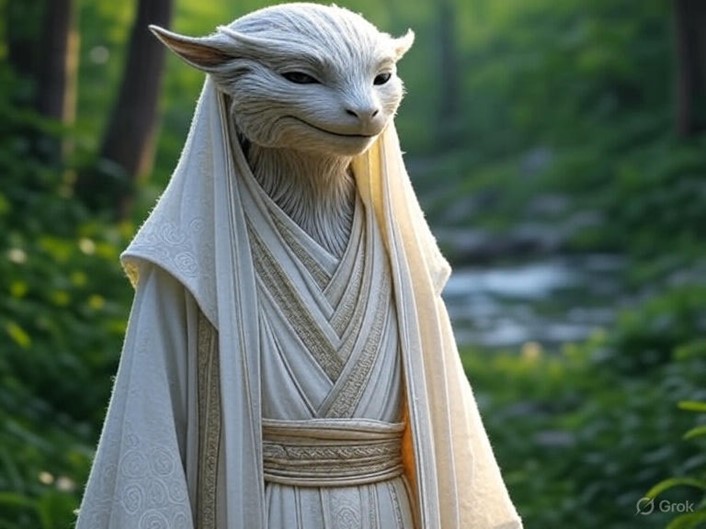
Sensory traits of the Enwoven rely on a network of enchanted threads that function as distributed receptors throughout their fibrous body, detecting vibrations, temperature shifts, and magical fluctuations in a manner that extends beyond traditional senses to include an acute awareness of fabric tensions and weave integrities in their surroundings. They perceive sounds through subtle oscillations in their outer layers, which resonate like taut strings on a loom, allowing them to discern the hum of gears in distant factories or the whisper of wind guiding hot air balloons over the endless ocean. Visual input comes from embroidered patterns on their head wrappings that act as multifaceted lenses, capturing light and magical auras to form detailed images, with the ability to focus on intricate details such as the stitching on a piece of gear that determines tier advancement. Tactile sensations are heightened via the density of fibers, enabling them to feel the ebb of magic flow as a tingling weave, useful for detecting hidden ruins in the backwoods or jungles of Paracas where old civilizations left behind textile artifacts. Olfactory and gustatory senses are simulated through absorbent threads that analyze airborne particles or residues, though less emphasized in their constructed nature, often supplemented by trained skills in alchemy to interpret scents from alchemical firearms or steam emissions. This sensory array aligns with the nation’s focus on textile arts, where Enwoven artisans use their traits to evaluate the quality of fabrics used in enchanted belts and pulleys for mechanical power transfer.
The general size of Enwoven avatars typically falls within a medium range, standing between five and seven feet tall with a build that varies from slender, elongated frames suited to the arid coastal regions of Paracas to more robust, layered forms adapted for labor in megacities within dark cave systems. Their weight averages around 150 to 250 pounds, lighter than flesh-based avatars due to the porous nature of their fibrous composition, which allows for buoyancy in floating cities or ease in mounting griffons for travel. Proportions emphasize elongated limbs and torsos, reflecting cultural practices of binding during creation to evoke the aesthetic of ancient mummies, with head shapes often deformed into conical or extended forms through tight wrappings that enhance sensory thread alignments. This size facilitates integration into diverse environments, from navigating narrow shafts in underwater centers to operating large steam-driven equipment in factories, while their scalable construction permits adjustments during repairs to fit specific roles in society, such as diplomats in political intrigue who adopt taller statures for presence or farmers who prefer compact builds for tending irrigated fields amid the island’s varying development stages.
Body patterns among the Enwoven feature elaborate embroideries and polychrome designs woven directly into their fibrous exteriors, depicting motifs of supernatural beings, flying shamans, trophy heads, and mythical monsters that symbolize the multiverse origins of souls and the evolving creatures of Saṃsāra. These patterns are not merely decorative but serve as identifiers of lineage, with the ruling family’s Enwoven displaying intricate, repeating geometrics in vibrant reds, yellows, and blues derived from natural dyes enhanced by magic storage, evoking the nation’s heritage of complex mortuary rites translated into living forms. Regional variations exist, such as coastal Enwoven with wave-like undulations representing the endless ocean and fishing traditions, or highland ones with angular, irrigation-channel inspired lines that mirror the water management systems sustaining agriculture in arid zones. The patterns can shift subtly with magical weather, causing colors to intensify during high magic ebbs, which aids in camouflage within jungles or ruins where forgotten civilizations left similar textile remnants. In social contexts, these body patterns convey status, with more layers and detailed stitchings indicating higher tiers achieved through worn gear, and they play a role in rituals where Enwoven unravel portions to incorporate new threads from trade goods, blending influences from other island countries.
The life cycle of the Enwoven begins with a creation ritual where a soul, often from a deceased avatar or newly arrived from the multiverse, is bound into a freshly woven body using looms powered by steam from elemental combinations, typically performed in specialized temples within Paracas’ urban centers or floating cities. Unlike biological reproduction, Enwoven do not multiply through birth but through crafting new forms, with communities mixing populations by sharing threads from dismantled bodies, allowing souls to reincarnate into enhanced versions that retain fragments of past memories. They do not age in the conventional sense, maintaining functionality for centuries as long as repairs are made, involving reweaving damaged fibers with magical threads to prevent unraveling, which could release the soul for reincarnation elsewhere. Upon “death” from severe damage, such as in battles with monsters or during political intrigue, the body is ritually unwrapped in mummification-like ceremonies, preserving the textiles for reuse while the soul cycles back into the world, potentially into another Enwoven form if the patterns align with the mind’s eye understandings. This cycle fosters a society valuing longevity and craftsmanship, with elder Enwoven in the ruling family accumulating layers over millennia, their bodies becoming archives of history from over nine thousand years ago when souls first appeared.
Potential positives due to their physical form include exceptional durability against slashing or piercing from monster encounters, as fibers can flex and absorb impacts before tearing, and a reduced need for sustenance since they draw energy from ambient magic flow rather than food, allowing prolonged activity in remote uncharted islands or during long ship voyages across the endless ocean. Their lightweight construction enables superior agility in airship races or climbing skyscrapers in metropolises, and the layered design permits easy integration of gear for tier advancement, such as embedding chains or belts directly into weaves for mechanical enhancements. The distributed sensory network provides comprehensive environmental awareness, aiding in detecting magical fluctuations or hidden threats in dark cave systems. Negatives encompass vulnerability to fire or excessive moisture, which can cause fibers to char or rot, necessitating protective gear in steam-heavy factories or underwater centers, and a slower healing process that requires skilled weavers rather than natural regeneration, potentially stranding them in isolated jungles without aid. Socially, their constructed nature may lead to perceptions of detachment in mixed populations, complicating telepathic bonds, and the need for periodic reweaving can interrupt training in skills, demanding time away from trade or exploration.
Tags: Enwoven, Paracas, Fibrous Body, High Magic, Textile Craft, Ruling Family, Steam Powered, Elemental Resonance, Reincarnation, Magical Gear, Cultural Heritage, Island Nation, Telepathic Link, Monster Taming, Industrial Age, Ancient Ruins, Multiverse Souls
Specialized item slots available to the Enwoven leverage their fibrous composition, offering additional wrap slots for mantle-like gear that layers over their body patterns, enhancing magic circuits without encumbrance, such as enchanted shawls that amplify elemental fire for steam production or embroidered cloaks storing magic for levitation during griffon flights. They possess frame slots for inserting bone or wooden reinforcements that interface with pulleys and gears, allowing direct mechanical power transfer to limbs for augmented strength in factory work or combat with alchemical firearms. Thread slots enable threading amulets or beads into their weaves, providing seamless access to tier-determining items that resonate with their soul binding, ideal for non-possessed users with limited mind’s eye capabilities. These slots expand with repairs, permitting up to three extra integrations compared to other avatars, facilitating complex setups like combining belts for rotational power with chains for telepathic networks in political councils.
Environmental adaptability of the Enwoven excels in arid, coastal settings mirroring Paracas’ desert-like terrains, where their fibrous bodies resist dehydration and sand abrasion through tight weaves that trap minimal moisture from magical weather, supported by irrigation knowledge embedded in creation rituals for thriving in water-managed farmlands. They fare well in high magic realms with fluctuating ebbs, as threads conduct flow efficiently, but struggle in overly humid jungles or submerged centers without waterproofing gear, where fibers swell and impede movement. In floating cities or zeppelin travels, their lightness aids buoyancy, and in dark cave megacities, sensory vibrations navigate low-light conditions, though extreme cold in uncharted islands can stiffen materials, requiring fire-element wraps.
Other information important to this race includes their central role in Paracas’ textile-driven economy, where Enwoven dominate artisan guilds crafting gear for all avatars, influencing trade with 72 other nations through embroidered sails on ships or balloons that incorporate monster motifs for protective resonances. The ruling family’s Enwoven maintain archives of woven histories, preserving lore from multiverse arrivals and monster evolutions, used in education to train skills amid the nation’s mix of middle-ages feudalism and renaissance innovation. Cultural practices involve annual unraveling festivals where portions of bodies are rewoven with new patterns, symbolizing reincarnation and adaptation to appearing or disappearing islands, fostering unity in a high population society full of isekai characters. Their predominance supports a stable hierarchy, with Enwoven advisors using body patterns to encode diplomatic messages in intrigue, and they contribute to monster taming by weaving restraints that align with creature reincarnations. In forgotten areas, Enwoven explorers seek ancient threads from ruins to enhance their forms, tying into the world’s old history where small communities first mixed.
Tale of Threadbound Awakener
In days before the great mixing, when souls fell like raindrops from unseen skies onto the shores of Paracas, there lived a weaver named Ixchel, whose fingers danced with fibers as if commanded by whispers from the endless ocean. Ixchel was no common soul, for she had come from a realm where threads bound the stars themselves, and her memories flickered like shadows in the mind’s eye, showing her visions of worlds lost to the multiverse. The land of Paracas then was harsh, with arid sands that swallowed the unwary, and jungles that hid ruins where old monsters slumbered, their forms evolving through cycles of living and dying without end. The people, scattered in small communities teleported from distant places, struggled against the magical weather that bubbled forth in storms of fire and water, combining to birth steam that powered nothing yet, for the industrial age slept in the future like a seed in dry earth.
Ixchel dwelt in a cave system deep beneath the earth, where darkness cradled megacities yet unborn, and echoes carried the cries of griffons far above. She wove not for warmth or trade, but to capture the essence of the souls arriving after death, binding them into patterns that mimicked the elemental flows. One eve, as magic ebbed low like a receding tide, a soul appeared before her loom, glowing with the light of forgotten realms. This soul belonged to a warrior from a past world, slain in battle against beasts that reincarnated endlessly, his memories filled with isekai journeys across times and places, including glimpses of what some called the real life beyond the veils.
“Bind me not to flesh that rots,” the soul pleaded in tongues twisted by translation from an unknown ancient speech, “for I have seen the tiers achieved through gear, and the mind’s eye reveals paths worn by items of power. Make me of threads that endure, so I may walk the island without the frailty of short rests or innate magics.” Ixchel, moved by the plea, gathered fibers from the cotton plants of the coast, infused with camelid hairs traded from highland souls, and began to weave. She layered the threads densely, embedding subtle lattices of bone from monsters slain in the backwoods, and wooden frames carved from arid trees that resisted the magical physics limiting advanced contraptions.
As she wove, the magical flow surged like weather unbound, and words of power in Parakasi, the tongue of the island, resonated through the cave. Aspirated consonants drew wind for levitation, vowel harmonies channeled water to calm the weave, and suffixes built layers of meaning that aligned with elemental forces. The form took shape: a humanoid of fibrous body, standing medium in height, with elongated limbs wrapped in polychrome designs depicting flying shamans holding trophy heads, mythical monsters with upturned mouths, and therianthropomorphic figures blending human and beast in vivid reds, blues, and golds. The head was conical, deformed by tight bindings to enhance sensory threads, and the patterns shifted with ambient magic, glowing faintly as if alive.
When the weaving concluded, the soul bound itself into the core, animating the form. Thus was born the first Enwoven, named Thalor, the Threadbound Awakener. Thalor emerged from the cave into the light of Paracas, his body flexible yet durable, absorbing impacts from the sands and resisting the slashes of evolving creatures that roamed the uncharted smaller islands appearing and disappearing like illusions. His sensory traits, distributed through enchanted threads, detected vibrations of approaching ships on the endless ocean, and the hum of future steam engines dreamed in the air. Thalor needed no food, drawing energy from magic circuits woven within, and his life cycle knew no aging, only repairs by skilled hands to prevent unraveling.
Thalor wandered the island nation, teaching scattered communities the art of weaving gear for tier advancement, for avatars had no classes or spell slots, relying on trained skills and worn items. In coastal villages, he demonstrated how to embroider mantles that amplified vocal resonances for incantations, stabilizing hot air balloons against turbulent skies. In highland settlements, he showed the use of frame slots for inserting reinforcements, allowing mechanical power transfer through shafts and pulleys, though steam was yet a whisper from elemental combinations. The people marveled, for Thalor’s body patterns conveyed status, with intricate geometrics symbolizing rebirth, like seeds in mummy bundles, and he fostered unity amid the mixing populations, where souls from future and past worlds blended.
Yet, envy stirred among the monsters, uncountable in number, who had reincarnated for untold times before souls arrived. A great beast, a hybrid of serpent and feline from the three worlds of earth, air, and water, lurked in the jungles, its form evolved through cycles, guarding ruins of old civilizations. This monster, called Kuyak, desired the endurance of the Enwoven, for its own body decayed despite reincarnations. Kuyak ambushed Thalor near a disappearing island, its claws tearing at the fibrous layers, seeking to unravel the soul within. Thalor, vulnerable to excessive moisture from the beast’s water-channeling breath, felt his threads swell and impede movement, but he called upon his specialized slots: wrapping an enchanted shawl that amplified elemental fire, generating steam to repel the attack.
The battle raged through labyrinthine paths, echoing like racing events that would one day roar with zeppelins and griffons. Thalor used telepathic links woven into his threads, summoning aid from nearby avatars trained in linguistic skills. Together, they wove restraints from traded fabrics, aligning with the monster’s reincarnation cycles, taming it rather than slaying, for in Saṃsāra, death fed the endless wheel. Kuyak, bound, became a guardian of Paracas, its power harnessed for irrigation systems that sustained farms in arid zones.
Thalor continued his journeys, exploring underwater population centers where sound traveled strangely, his buoyant form aiding dives to retrieve lost artifacts. In floating cities yet to rise, he envisioned metropolises with skyscrapers, full of trade and intrigue. He encountered other isekai souls, some from realms with combustion forbidden by gods, sharing memories that enriched the culture. As the population multiplied to millions, Thalor’s lineage grew, with new Enwoven crafted in rituals, their bodies archives of history from over nine thousand years past.
In time, Thalor faced the ruling family’s ancestors, nobles in political webs, who sought his wisdom for governance. He advised on body patterns encoding diplomatic messages, fostering alliances with the 72 other island countries via ships sailing goods across the ocean. Yet, a great magical storm, ebbing and flowing wildly, threatened to char his fibers with fire elements unbound. In a forgotten ruin, Thalor unraveled portions of himself, incorporating ancient threads from old textiles, symbolizing adaptation like the appearing islands.
Through trials, Thalor became the marginally predominant race’s progenitor, his descendants holding authority, their constructed nature bridging organic and magical. The Enwoven dominated artisan guilds, crafting gear for all, influencing the industrial age’s dawn with magic-driven steam.
The moral of the story is that endurance comes from binding strengths in layers, for the weave of community outlasts the fray of isolation.