
Name of Deity: Amaru-Qillqa (The Serpent Scribe)
Lore
The core belief of The Path of the Unbroken Line is that the world, and indeed all of reality, is the physical manifestation of a thought in the mind of a vast and unknowable cosmic entity known as Amaru-Qillqa. This being is not a god in a conventional, personified sense; it is a being of pure pattern, logic, and causality. The act of creation was not a feat of labor, but an act of inscription. Amaru-Qillqa “wrote” the laws of existence onto the fabric of the planes, and the land of Nazca is considered to be a place of singular importance, where the Serpent Scribe’s script is most clear and potent.
The great geoglyphs that dominate the Nazcan landscape are believed to be the most direct and powerful expressions of Amaru-Qillqa’s will. They are not mere images, but fundamental equations of reality that stabilize the climate, channel the flow of magic, and maintain cosmic order. The Qillqaruna people, with their naturally inscribed skin, are considered to be uniquely blessed, as they carry a personal fragment of the deity’s grand design on their very bodies. Their foundational myth, “The Chronicle of Aran and the Silence of the Sand,” serves as the central parable, teaching that mortals are not merely subject to the Great Pattern, but are active participants responsible for its upkeep and integrity.
Oracles and Divination
The primary interface between mortals and Amaru-Qillqa is through prophecy. The deity does not speak or send avatars; its intentions are revealed as echoes and resonances within its own grand pattern. Individuals with the correct training and a natural sensitivity for pattern recognition can become Oracles.
An Oracle of the Unbroken Line does not receive clear, spoken prophecies. Instead, they enter a meditative state to perceive the “Great Pattern” of causality as it shifts and flows toward the future. This is a highly ritualized process that can involve:
- Lithomancy: Super-heating inscribed stones and interpreting the patterns of the cracks that form upon them.
- Aeromancy: Observing the flight patterns of birds, particularly condors and hummingbirds, against the backdrop of the sky.
- Amathomancy: Tracing complex, interlocking lines in consecrated sand and reading the destiny revealed within the maze-like patterns.
- Glyph Meditation: The most powerful and dangerous form of divination, where an Oracle meditates for days or even weeks within one of the great geoglyphs, attuning themselves directly to its immense power to glimpse far-reaching possibilities.
The prophecies that result are invariably fragmented, symbolic, and metaphorical, requiring careful interpretation by a council of priests known as “Pattern-Walkers.” They speak of “threads that fray,” “a shadow that falls from the east like a spider’s leg,” or “a new line to be drawn in metal and steam.”
Personality, Traits, and Characteristics
The faith is not one of passionate, emotional worship. It is characterized by solemnity, studiousness, and deep contemplation. Followers of the Path value patience, precision, discipline, and a logical mind. To them, a poorly executed plan, a flawed piece of engineering, or a hastily made decision is not just a mistake, but a spiritual failing—an act that introduces discord into the Great Pattern. They are not fatalistic; while the pattern of destiny exists, they believe it is complex enough to allow for multiple paths. The goal of a follower is to understand the flow of the pattern so well that they can navigate it with grace and wisdom, choosing the most harmonious path for themselves and their community. There is no concept of divine judgment or afterlife in the traditional sense; one’s “reward” is the harmony and success achieved by living in accordance with the cosmic design, and one’s “punishment” is the chaos and failure that results from acting against it.
Attributes of the Faith
- Primacy of Pattern: The belief that all things, from the orbit of the stars to the flow of a conversation, are part of a single, interconnected pattern.
- The Virtue of Precision: A deep cultural and religious respect for craftsmanship, engineering, art, and strategy. Doing something well is an act of worship.
- Duty of Maintenance: The belief that mortals, especially the Qillqaruna, have a sacred duty to maintain the patterns of the world, both physical and magical, as taught by the hero Aran.
- Cyclical Time: Time is not seen as linear, but as a great, looping pattern, similar to the primary holy symbol. History is studied intensely, as past patterns are expected to echo in the future.
Symbols
- The Serpent’s Coil: The primary symbol of the faith is an endless, looping line stylized as a serpent with geometric, angular features, consuming its own tail. It represents the Unbroken Line, the cyclical nature of time, and the infinite, self-contained nature of Amaru-Qillqa.
- The Geoglyphs: The images of the condor (representing foresight and perspective), the spider (representing intricate connections and fate), and the hummingbird (representing swift, precise action) are used as secondary religious symbols.
- The Stylus and the Stone: A simple depiction of a scribe’s stylus poised above a flat stone tablet is a common symbol worn by artisans and scholars, representing the act of bringing order to the unformed.
Membership and Influence
The Path of the Unbroken Line is the state religion of Nazca. While belief is not compulsory, its philosophies are deeply integrated into the nation’s legal, educational, and social structures. Its followers, known as the “Line-Followers,” number slightly over half of the nation’s population of 122,912,000, accounting for approximately 65 million members. The temple, which also serves as the nation’s primary library and observatory, holds immense political and social sway, as its Oracles are consulted on all major matters of state, from declarations of war to the planning of new industrial projects.
Tags: Amaru-Qillqa, The Unbroken Line, Oracle, Divination, Prophecy, Pattern-Walker, Geomancy, Cosmic Pattern, State Religion, Philosophy, Logic and Order, The Serpent Scribe, Cyclical Time, Glyph Magic, Lithomancy, Nazca, Determinism
Positives of the Religion
The Path of the Unbroken Line provides a powerful framework for a stable and highly organized society. Its core tenets foster several key benefits:
- Social and Political Stability: The shared belief in a logical, ordered universe translates into a society that values law, long-term planning, and civic duty. This reduces internal conflict and promotes cooperation on a massive scale.
- Technological and Arcane Prowess: The religious emphasis on precision, pattern-reading, and engineering directly fuels innovation. This makes the nation of Nazca a leader in the creation of intricate magical items, complex industrial machinery powered by steam and glyphs, and magnificent architectural works.
- Strategic Foresight: The use of Oracles, while not infallible, provides the nation’s leadership with a significant strategic advantage. They can anticipate major environmental shifts, political maneuvers from other nations, or resource shortages, allowing them to prepare far in advance.
- Personal Discipline and Purpose: For the individual follower, the religion provides a clear sense of purpose. By striving to live in harmony with the Great Pattern, individuals are encouraged to cultivate patience, discipline, and intellectual rigor. This leads to a population of highly skilled artisans, scholars, and strategists.
Negatives of the Religion
Despite its strengths, the unwavering focus on order and pattern creates several societal and personal drawbacks:
- Cultural Rigidity: The faith can foster a deep-seated resistance to change and foreign ideas. Concepts, art forms, or philosophies that do not fit within their established patterns are often dismissed as “discordant” or “chaotic,” leading to a degree of cultural isolation and stagnation.
- Suppression of Individuality: Passion, spontaneity, and strong emotional displays can be viewed with suspicion, as they are seen as chaotic forces that disrupt one’s personal pattern. This can lead to a culture that is emotionally reserved and where conformity is heavily enforced.
- Analysis Paralysis: The reliance on oracular guidance for all major decisions can make the state slow to react. Time spent on rituals, interpretation, and debate over cryptic prophecies can be crippling in the face of a sudden, unexpected crisis that requires a swift response.
- Spiritual Elitism: A strict hierarchy can form, with the Oracles and the Pattern-Walkers who interpret their visions at the apex. This elite group holds immense power, and their interpretations can go unquestioned by the general populace, potentially leading to arrogance and the manipulation of prophecy for political gain.
Type of Temple
Temples dedicated to Amaru-Qillqa are not houses of emotional worship but are better described as centers of study, observation, and meditation. They are known as Observatories of the Unbroken Line.
- Architecture: The structures are low, sprawling complexes made of stone and adobe, built to mirror geometric patterns and align with celestial bodies. They feature large, open-air courtyards for stargazing, sand-filled ritual chambers for amathomancy, and heavily insulated subterranean libraries to protect ancient scrolls and tablets.
- Function: An Observatory serves as a combination temple, library, laboratory, and astronomical observatory. There are no idols or statues of the deity. Instead, the walls are covered with intricately carved star charts, historical timelines, mathematical equations, and replicas of the great geoglyphs. The central chamber of every major Observatory contains a Foucault pendulum or a similar device, its slow, predictable swing a meditative focus on the ordered nature of the cosmos.
Followers
The religion has a membership of approximately 65 million souls, comprising slightly more than half of the Nazcan population. These followers are known as the Line-Followers. While the Qillqaruna are the most zealous adherents, the faith is practiced by a significant number of all races living within the nation.
What They Do
The practices of the Line-Followers are integrated into their daily lives and are focused on maintaining harmony with the Great Pattern.
- Daily Observance: A common daily practice for an individual involves a brief morning meditation to mentally outline their day’s tasks, seeking the most efficient and orderly “pattern” for their work. They strive for precision in all they do, viewing their labor, whether it be farming, smithing, or soldering magical circuits, as a personal contribution to the Great Pattern.
- Community Rituals: Weekly gatherings are held at local shrines or Observatories. These are not for sermons but for “Pattern Discussions,” where a Pattern-Walker might discuss recent civic events, astronomical observations, or minor prophecies in the context of the Great Pattern, fostering a sense of communal purpose.
- Major Festivals: The most important religious events are tied to celestial alignments like solstices and eclipses. During these times, vast numbers of the faithful engage in communal projects, such as repairing the damage of time on the great geoglyphs or inscribing new, smaller patterns around their towns and cities to reinforce the stability of the land’s magic.
- Role of the Priesthood: The priests, or Pattern-Walkers, dedicate their lives to study. They are the nation’s chief scholars, astronomers, librarians, and advisors. They spend their days maintaining the Observatories, translating ancient texts, performing the complex rituals of divination, and interpreting the cryptic pronouncements of the Oracles for the ruling government.
What the Believers Believe
The followers of The Path of the Unbroken Line, known as Line-Followers, adhere to a philosophy of cosmic order and personal duty. Their core beliefs are:
- The Great Pattern: They believe the universe is a single, vast, and logical pattern. Everything from the movement of stars to the growth of a crystal is governed by this intricate and interconnected design. This Great Pattern is the physical manifestation of their deity, Amaru-Qillqa.
- The Impersonal Deity: Amaru-Qillqa, the Serpent Scribe, is not a sentient god who listens to prayers or intervenes based on emotion. It is the fundamental force of causality and logic itself. Worship is therefore not about supplication, but about study and alignment with this cosmic principle.
- The Sanctity of Inscription: They believe the “language” of the universe is mathematics and pattern. The great geoglyphs on the Nazcan landscape are their most sacred texts, as they are a direct and pure form of the deity’s writing. All forms of precise work—from engineering to calligraphy—are seen as a form of sacred inscription.
- The Duty of Maintenance: Following the example of their mythical hero, Aran, they believe it is the duty of all sentient beings to maintain the integrity of the Great Pattern. A well-built bridge, a precisely calculated magical formula, or a justly governed city are all acts that strengthen cosmic order. Conversely, shoddy work, flawed logic, and chaotic behavior weaken it.
- Cyclical Existence: They do not believe in a personal afterlife in a heaven or hell. They believe a life is a finite pattern. Upon death, the energy and substance of an individual resolve back into the Great Pattern, much like a musical note fades back into silence, leaving its resonance behind. The patterns of history and life repeat, and the essence of what was may be used to form new patterns in the future.
What Regular Services are Like
Regular services are not events of passionate worship but are structured, intellectual gatherings held at local Observatories. A typical weekly service, known as a Discourse on the Pattern, proceeds as follows:
- The Gathering and Attunement: Attendees enter the Observatory in silence and take their places on stone benches, which are often arranged in a spiral or other geometric shape. The atmosphere is quiet and contemplative. A priest, or “Pattern-Walker,” will initiate the service by activating a central focusing device—perhaps a large sand pendulum that traces patterns on the floor or a light projector that casts a complex, rotating glyph onto the ceiling. This serves to quiet the mind and focus the congregation on a symbol of pure order.
- The Discourse: The Pattern-Walker delivers the central lecture. This is not a sermon on morality but an analytical discourse on a recent event as it relates to the Great Pattern. Topics might include an analysis of recent trade disputes with another nation, a discussion of the mathematical principles behind a new steam engine design, or a lesson on how the patterns of a historical famine are recurring and what steps should be taken. The goal is to educate the congregation and provide them with a logical framework for understanding their world.
- The Communal Inscription: After the discourse, the congregation participates in a quiet, meditative activity to internalize the lesson. This might involve each person tracing a simple, related glyph in a personal sand tray, or the entire group humming a single, resonant note to “attune” the chamber. This is a practical, physical reinforcement of the intellectual concepts discussed.
- The Closing: The Pattern-Walker deactivates the central device and offers a simple, declarative closing, such as, “The pattern is revealed. Go forth and maintain the line.” The congregation then departs in the same quiet, orderly fashion in which they arrived.
What Funeral Rites are Like
Funerals are solemn, dignified, and logical ceremonies known as the Resolution of the Pattern. The focus is on the completion of a life’s design and their contribution to the whole, rather than on grief or the journey of a soul.
- The Ceremony – The Final Tracing: The ceremony is held at a place of significance to the deceased. A Pattern-Walker or a respected peer delivers a “Pattern Eulogy.” This speech does not dwell on the deceased’s personality or emotional relationships. Instead, it recounts their life in terms of their accomplishments, skills, and contributions, framing their existence as a well-executed pattern. For example: “Her pattern as a physician was one of precision and restoration. She mended the broken patterns of others over seven thousand times. The lines of her work are now woven into the fabric of our community. Her personal pattern is resolved, but the strength she added to the Great Pattern remains.”
- The Return to the Pattern: The body is seen as the physical medium upon which the life-pattern was written. To complete the cycle, it must be returned to its base components. Cremation is the universal practice. The body is placed on a pyre, and as the flames consume it, attendees remain silent or hum a low, single note. For a Qillqaruna, this moment is particularly significant, as it is believed the fire releases the light of their personal skin-glyphs back into the cosmos one final time.
- The Integration of Ash: The ashes are not kept. They are seen as a tool for future inscription. The ashes of a great engineer might be mixed into the mortar of a new bridge. The ashes of a scholar might be mixed with pigments to create ink for the library’s historical scrolls. The ashes of a soldier might be scattered across a defensive geoglyph. In this way, the deceased physically contributes to the future of the community, their pattern literally reinforcing the world they left behind. Public mourning is subdued, as a completed life is seen as a thing of logical beauty, not tragedy.
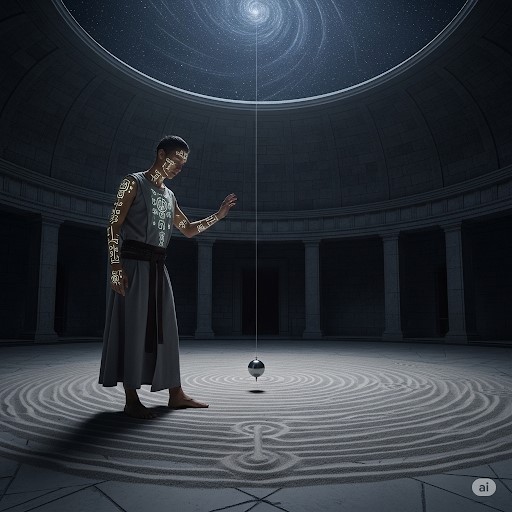
The power derived from the deity Amaru-Qillqa and The Path of the Unbroken Line is not wielded as direct, divine smiting. Instead, it is an indirect power, a deep understanding of pattern, causality, and inscription that allows its followers to use the world’s inherent magic with unparalleled precision and efficiency. All effects are still channeled through magical items and trained skills, but the user’s methodology, informed by their faith, makes these applications unique.
Defensive Applications
The faith’s defensive philosophy focuses on integrity of pattern, redirection, and strategic foresight.
- Direct Tactical Defense (Wards and Glyphs):
- Pattern Wards: A trained Pattern-Walker can use an inscribed staff, shield, or protective bracers to project a defensive field of pure geometric logic. Instead of simply blocking an attack, this ward analyzes the incoming magical or physical pattern. It might deconstruct a spell by unraveling its structure or redirect the force of a physical blow along the ward’s geometric lines, harmlessly dispersing the energy.
- Reactive Armor Glyphs: Believers often wear armor with finely etched “Glyphs of Integrity.” When magic is channeled into the armor, these glyphs create a subtle field that reinforces the armor’s structural pattern. An axe blow might land, but the glyphs resist the “pattern of breaking,” making the armor significantly more durable than its material would suggest.
- Labyrinthine Curses: A defender can inscribe a temporary glyph in the air or on the ground that targets an attacker’s sense of direction. This is not a wall, but a “pattern of confusion” that causes the enemy to perceive false paths, making it difficult for them to charge or even retreat in an orderly fashion.
- Indirect Strategic Defense (Foresight and Fortification):
- Oracular Fortification: This is their most powerful defense. Through oracular divination, the leaders can predict the most likely avenues of attack, the type of forces an enemy will bring, and even the weather patterns on the day of a siege. This allows them to reinforce the exact wall section that will be targeted, prepare countermeasures for specific enemy types, and build fortifications that exploit the natural landscape to their fullest advantage.
- Geomantic Manipulation: Using the great geoglyphs that cover their nation, trained geomancers can perform rituals to create large-scale, long-term defensive effects. They might alter the land’s magical pattern to create a zone of perpetual mist around a city, making it impossible to scout. They could also create vast “mazes” of distorted space that cause an invading army to march for days only to end up back where they started.
Offensive Applications
Offensive power is not about raw, overwhelming force. It is about identifying the flaw in an opponent’s pattern and applying precise pressure to cause a total collapse.
- Direct Tactical Offense (Deconstruction and Resonance):
- Pattern-Shattering Spells: A believer channels a spell through their weapon or a wand that is designed not just to do damage, but to attack the “pattern” of a target. Such a spell might strike an armored foe and cause the straps and buckles of their armor to break, or hit a construct and disrupt the magical syntax that animates it, causing it to freeze or fall apart.
- Resonant Frequency Attacks: Through intense focus, a trained follower can use their Mind’s Eye to perceive the resonant pattern of an object—be it a castle wall or an enemy’s shield. Using a precisely tuned magical pulse, they can then strike that object, creating a vibration that shatters it from the inside out. This is an attack of pure precision, not brute force.
- Causal Arrows: An archer who follows the Path might be trained to not just aim at a target, but to see the “line of causality” leading to a weak point. They would loose their arrow at the precise moment to strike the keystone of a shield wall, the clasp of a saddle, or the lynchpin of a siege engine, causing cascading failure.
- Indirect Strategic Offense (Analysis and Disruption):
- Logistical Warfare: Oracles and strategists would analyze the “pattern” of an enemy nation’s supply lines, political alliances, and command structure. Their offense would begin long before any battle, with targeted actions designed to disrupt those patterns—bribing a key official, sabotaging a critical bridge, or spreading misinformation to create political infighting.
- Morale Deconstruction: Using intelligence gathered through divination, they would identify the “pattern of an enemy’s morale.” They might learn of a commander’s hidden fear and create illusions to exploit it on the battlefield. They could uncover a secret shame and reveal it to the enemy’s troops to sow discord. Their goal is to make the enemy army defeat itself by unraveling its internal cohesion before the first sword is even drawn.
Oracle Who Read the Lines but Not the Page
The telling says, from a time after the great Aran restored the rhythm of the world, that the nation of Nazca knew an age of supreme order. The Path of the Unbroken Line was strong, and the wisdom of its Pattern-Walkers was without peer. In these days of order, the greatest of all seers was the Oracle Hestia. Her eyes did not see as others saw; she saw the threads of causality that wove the tapestry of the days to come. The lines on her own Qillqaruna skin were said to glow with the light of pure calculus when she entered her divining trance. Great was her skill, and the nation prospered by her sight.
One day, while in communion with a great geoglyph of the Condor, Hestia was given a vision of terrible clarity and force. She was thrown from her trance, and for a day and a night, she spoke to none, only tracing frantic, broken patterns in a tray of black sand. When she finally emerged to speak before the council of Pattern-Walkers, her face was a mask of cold logic, but her hands trembled.
This is the prophecy she spoke: “I have seen the Great Pattern shift. I have seen a star fall from its appointed course and break the sky. I have seen a line, long held as perfect, that is broken by a new and unwritten metal. And I have seen the Serpent Scribe, the great Amaru-Qillqa itself, shedding its skin in a coil of fire and shadow.”
The council was silent for a long time, for the words were heavy with dread. They, the most brilliant minds of their age, began their work of interpretation. They brought forth the star-charts, the histories, the tablets of engineering. For a month, they debated. The falling star, they concluded with fear-forged certainty, must be a celestial body, an asteroid of ruin that would strike the world. The unwritten metal must be a flaw, a hidden weakness, in the magical-steam technologies that powered their nation. The shedding skin of their god could mean only one thing: their world, their very pattern of existence, was to be violently unmade and remade. It was a prophecy of apocalypse.
A great and terrible purpose seized the nation. If the pattern was to be broken, they would break it first on their own terms. If their technology was flawed, they would unmake it to find the flaw. Hestia, her vision driving her, oversaw the Great Deconstruction. The people of Nazca, with their characteristic discipline and precision, began to dismantle their own magnificent works. Great bridges were taken apart, rivet by rivet, to search for the “unwritten metal.” The marvelous pumping mechanisms of their underground reservoirs were disassembled. Production of new items slowed to a crawl as every factory and workshop turned its efforts to this frantic, preventative unmaking.
To answer the threat of the falling star, they began the construction of a great Sky-Shield. It was a geoglyph of immense scale, not on the land, but projected into the heavens by colossal spires that drank deeply from the land’s magic. The project was a work of genius, a testament to their skill, but it was born of fear. It drained the resources of the nation, and the land itself began to groan under the strain of such a constant and mighty working.
Years passed. The people grew weary. The great deconstruction had yielded no flaw, and the Sky-Shield was a hungry ghost that loomed over them, a monument to a terror that never came. The nation was poorer, its infrastructure in careful, cataloged pieces, its spirit worn thin by the constant vigilance. Hestia herself grew gaunt, her every waking moment spent searching the skies for the star that was prophesied to fall.
Then, on a day like any other, a watchman on the coast sounded a horn of alarm. But he did not point to the sky. He pointed to the sea.
Sailing over the horizon was a ship, its form strange and its sails billowing with a wind they did not recognize. It was made of a lustrous, dark metal they had never seen before. At its prow, a high-ranking officer raised a spyglass to his eye, and the sun, catching the lens, flashed a single, brilliant point of light across the ocean—a star, falling from the sky to the sea.
The ship breached their coastal defenses, the first to do so in a thousand years, breaking a line once thought perfect. It was a diplomatic vessel from a far-off land, a nation of people they did not know existed. They had come not in war, but in discovery.
The truth fell upon Hestia and the council with the weight of a mountain. The falling star was not a rock from the heavens, but a gleam of sunlight on a piece of glass. The unwritten metal was not a flaw in their own works, but the material of their visitors’ hull. The broken line was not their technology, but their own coastline, their isolation. And the Serpent Scribe shedding its skin was not a prophecy of their end, but a promise of transformation, of casting off an old skin of ignorance to be reborn into a wider, more complex world.
They had read the words of the prophecy with perfect precision, but they had failed to understand the story. Their fear had been a wall that prevented them from seeing the truth. Their nation, weakened by its own panicked efforts, was in no state to greet this new age with the strength it should have possessed. It was a moment of profound, painful humility. The greatest minds of Nazca had been undone not by a flaw in the pattern, but by a flaw in themselves.
The Moral of the Story: To read a single line is not to understand the page, and the truest pattern is the one that includes the spaces you do not yet comprehend.