
Deity: Alchymos, the Transmuter
Lore: In the world of Saṃsāra, the Path of Elixiria is a unique religion that revolves around the art of alchemy. Its followers, known as Elixians, believe in harnessing the transformative power of alchemical substances and unlocking the hidden potential within themselves. They worship Alchymos, the Transmuter, as the divine patron of their craft and the source of their spiritual enlightenment.
Personality: Alchymos is depicted as a wise and enigmatic deity, embodying the boundless creativity and infinite possibilities of alchemical transformation. They are often portrayed as a figure clad in flowing robes of shimmering gold and silver, radiating an aura of otherworldly knowledge. Alchymos is believed to possess profound insight into the secrets of the universe and is revered as the ultimate guide on the spiritual path of alchemy.
Traits and Characteristics:
- Catalyst of Change: Alchymos is revered as the catalyst of change, inspiring Elixians to seek personal transformation and growth through their alchemical endeavors. They encourage their followers to embrace change as a necessary part of life and view it as an opportunity for self-improvement.
- Balance and Harmony: Alchymos teaches the importance of balance and harmony in all aspects of life. They emphasize the need for equilibrium between opposing forces and encourage Elixians to seek harmony within themselves, their relationships, and the world around them.
- Creative Manifestation: The Transmuter is associated with the creative force of alchemical manifestation. Elixians believe that through the mastery of alchemical principles, they can manifest their desires and shape their reality. Alchymos inspires their followers to embrace their creative potential and use it for the betterment of themselves and others.
Attributes:
- Wisdom and Insight: Alchymos is renowned for their profound wisdom and insight into the mysteries of alchemy. They are believed to guide Elixians through visions, dreams, and intuitive revelations, providing them with guidance and illumination on their spiritual journey.
- Transformation and Transmutation: As the deity of alchemy, Alchymos possesses the power of transformation and transmutation. They can turn base materials into valuable substances and facilitate the spiritual evolution of their followers. Elixians seek Alchymos’ blessings to facilitate their alchemical experiments and achieve profound changes within themselves.
Symbols and Tags:
- The Philosopher’s Stone: The Philosopher’s Stone is a prominent symbol associated with Alchymos and the Path of Elixiria. It represents the goal of alchemy, the attainment of spiritual perfection and enlightenment. Elixians often wear or display symbols of the Philosopher’s Stone as a reminder of their quest for self-transformation.
- The Caduceus: The Caduceus, a staff entwined with two serpents, is another symbol connected to Alchymos. It represents the dualistic nature of alchemy, the balancing of opposing forces, and the unification of body, mind, and spirit. The Caduceus is often used to mark sacred spaces and alchemical laboratories.
- Elemental Symbols: Elixians use elemental symbols, such as fire, water, air, and earth, to represent the different aspects of alchemical transformation. These symbols are incorporated into rituals, ceremonies, and sacred texts to invoke the elemental forces and seek their alignment with Alchymos’ divine guidance.
- Tags: Transmutation Sanctuary, Alchemical Enlightenment, Elemental Balance, Philosopher’s Quest, Creative Alchemy, Harmonic Transformation, Elixir Mastery, Mystical Craft, Change Catalyst, Golden Wisdom
Positives:
- Personal Transformation: The Path of Elixiria and the worship of Alchymos focus on personal transformation and growth. Elixians believe that through alchemical practices and following Alchymos’ guidance, they can unlock their true potential and achieve spiritual enlightenment.
- Creative Expression: The religion encourages creative expression and manifestation. Elixians are inspired to explore their creative abilities and use alchemy as a means of shaping their reality and bringing their desires into fruition.
- Balance and Harmony: The Path of Elixiria emphasizes the importance of balance and harmony. Elixians strive to achieve equilibrium within themselves and in their relationships, fostering a sense of peace and unity.
Negatives:
- Obsession with Transformation: The relentless pursuit of personal transformation can sometimes lead to an obsession among Elixians. They may become consumed by their desire for change, potentially neglecting other aspects of their lives or becoming disconnected from the world around them.
- Ethical Dilemmas: Alchemical practices can raise ethical concerns, especially when it comes to experimenting with volatile substances or potentially harmful procedures. The religion must grapple with these ethical dilemmas and ensure that the pursuit of alchemical transformation is carried out responsibly and with consideration for the well-being of others.
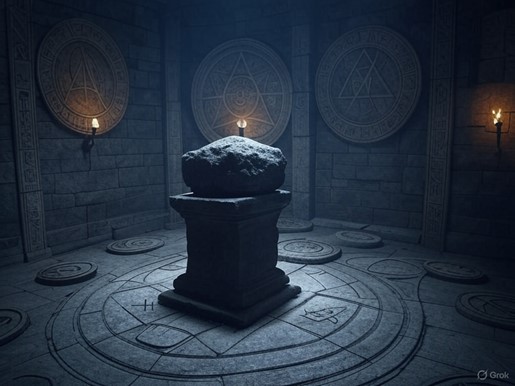
Type of Temple: The temples of the Path of Elixiria are known as “Transmutation Sanctuaries.” These sanctuaries are designed to reflect the principles of alchemy and serve as places of spiritual contemplation, learning, and communal gathering. They are typically adorned with alchemical symbols, murals depicting the transformative process, and elaborate displays of the Philosopher’s Stone. The sanctuaries often have dedicated alchemical laboratories where Elixians can conduct experiments and further their understanding of the craft.
Number of Followers: The Path of Elixiria has a moderate number of followers. While not as widespread as some of the more established religions in Saṃsāra, it attracts a dedicated and passionate community of individuals drawn to the pursuit of personal transformation through alchemical means. The number of followers can vary across different regions and cities, with larger populations being found in major centers of alchemical study and practice. Overall, the religion maintains a small but committed following, consisting of alchemists, spiritual seekers, and those intrigued by the mysteries of alchemy.
Alchymos, the Transmuter, possesses magical powers rooted in alchemy that can be harnessed for both defense and offense. Here are some ways these powers can be utilized:
Defense:
- Elemental Shields: Alchymos can imbue their followers with elemental shields, granting them protection against physical and magical attacks. These shields can be made of earth, fire, water, or air, providing resistance to corresponding types of damage.
- Transmutation Ward: Alchymos can create a temporary barrier around their followers, transmuting incoming attacks into harmless or less harmful substances. For example, a sword strike may be transformed into a harmless puff of smoke or a fireball into a harmless ball of water.
- Healing Elixirs: Through their mastery of alchemical concoctions, Alchymos can provide healing elixirs that restore health and vitality to their followers. These elixirs can mend wounds, cure ailments, and revitalize weary adventurers in times of need.
Offense:
- Alchemical Projectiles: Alchymos can empower their followers with alchemical projectiles that can be used as offensive weapons. These projectiles can be in the form of explosive vials, acid-filled orbs, or elemental-infused ammunition, dealing damage to enemies upon impact.
- Transmutation Attacks: Alchymos can grant their followers the ability to temporarily transmute parts of their body into different substances, such as turning their hands into hardened metal or their feet into flowing water. This allows them to deliver devastating blows or unleash elemental attacks upon foes.
- Elixir of Instability: Alchymos can provide their followers with a volatile elixir that causes temporary instability in their enemies. This elixir disrupts the balance within the target’s body, causing weakness, dizziness, or even temporary paralysis.
It is important to note that the offensive and defensive capabilities granted by Alchymos are in line with the principles of balance and harmony. Their powers are not inherently destructive, but rather seek to restore or transform in a controlled manner. Followers of Alchymos are encouraged to use their abilities responsibly and with consideration for the overall balance of the world.
The alchemical principles and powers associated with Alchymos, the Transmuter, can indeed be merged into armor, weapons, and equipment to enhance their capabilities. Here are some examples:
Armor:
- Transmuter’s Wardplate: This armor is infused with Alchymos’ protective energy, granting the wearer increased resistance to physical and magical attacks. It can adapt to the incoming threats, transmuting the force of impact into harmless or less harmful substances.
- Elemental Enchantments: Armor can be enchanted with elemental properties, allowing the wearer to harness the power of fire, water, earth, or air. For instance, fire-infused armor may provide resistance to fire damage while allowing the wearer to emit bursts of flames for offensive purposes.
Weapons:
- Alchemical Blades: Swords, daggers, or other melee weapons can be forged with alchemical alloys that enhance their cutting power and durability. These blades may have the ability to inflict elemental damage, such as burning or freezing effects, or transmute their target upon contact.
- Catalyst Staff: A staff infused with alchemical energy can serve as a powerful catalyst for spells and alchemical experiments. It enhances the wielder’s ability to manipulate elements, transmute substances, or channel magical energy, making it a versatile weapon in both offense and defense.
Equipment:
- Elixir Satchel: This specialized satchel contains various vials and bottles filled with alchemical elixirs. These elixirs can be used to heal wounds, provide temporary boosts to physical or magical attributes, or create potent alchemical reactions to solve puzzles or overcome obstacles.
- Philosopher’s Stone Pendant: A pendant or amulet made from a fragment of the Philosopher’s Stone, symbolizing the connection with Alchymos. This item grants the wearer enhanced insight and intuition, aiding them in alchemical endeavors and providing guidance in difficult situations.
- Alchemical Traps: Elixians skilled in trap-making can create intricate mechanisms that utilize alchemical substances. These traps may release explosive or corrosive materials, ensnare enemies with sticky webs, or unleash clouds of disorienting smoke or gas.
By merging alchemical principles and the blessings of Alchymos into armor, weapons, and equipment, the followers of the Path of Elixiria can unlock a wide range of unique and powerful capabilities. However, the craftsmanship and creation of such items require deep knowledge and expertise in alchemy, ensuring that their use aligns with the balanced and harmonious teachings of Alchymos.
Forging of Alchymos’ Crucible
In the swirling haze of Saṃsāra, where the threads of birth and unmaking weave wild, there drifts a tale, old as the bones of the earth, of Alchymos, the Transmuter, bearer of the molten gift. Passed through tongues long turned to dust, scratched onto clay by hands that guessed at sounds they could not catch, this story—bent, blurred, and patched—stands as the most famed whisper of the Path of Elixiria, a faith of change and the crucible’s glow.
Before the skies found their hue, when Saṃsāra lay raw, a churn of mud and spark, the gods—so the chipped runes claim—grew restless with stillness. The world sat heavy, unyielding, its pieces locked in dull slumber. From their council, vast as flame, they called forth a being not of stone nor breath, but of shift and shimmer. This was Alchymos, clad in robes that danced gold and silver, their eyes twin wells of secrets, their hands—two or many, the carvings falter—holding a crucible that sang with heat. The gods spoke, their voices a roar of ash and honey: “Stir the stagnant, for in change lies the world’s pulse.”
Alchymos descended, their crucible aglow, and where their shadow flickered, the earth trembled. Stone softened to clay, water burned to steam, and winds twisted into shapes unseen. The first folk of Saṃsāra, huddled in dark hollows, their hands empty of craft, knew not what neared. Alchymos knelt, silent as dusk, and poured a drop from their crucible—liquid fire, or perhaps dew, the tablets disagree. It struck the dirt, and up sprang a bloom, its petals gold, its scent sharp as dawn. “This,” they said, their voice a ripple through the void, “is the seed of becoming. Tend it, twist it, and find me.”
So began the Great Melting—or so the shards call it, though some etchings say “The Forge of Forms” or “The Elixir’s Birth,” the words lost in cracks. Alchymos taught the folk to crush rock, to boil root, to catch the steam in bowls of clay. They showed how a pinch of sulfur might spark life, how a drip of mercury could mend or break. Their gift was a blade with two edges, for change is a wild beast. To one, a brew brought strength; to another, it scorched the tongue. Yet all who followed felt the world shift beneath their feet, alive with possibility.
Years bled into ages, and Alchymos’ faithful—the Elixians—built Transmutation Sanctuaries, halls of stone and glass where fires hissed and vials gleamed. They carved their deity’s form, robes flowing, crucible raised, and planted gardens where strange blooms wept nectar and thorns bled sap. The tale murmurs Alchymos lingered still, unseen, their presence a sudden heat on the air. But the gods, ever-watchful, grumbled anew. “Does change undo us?” they hissed, their voices a clash of iron and mist. They feared mortals might remake the heavens, too bold beneath Alchymos’ spark.
Then came the Shattering—or so the scribes guess, the word half-erased—a day when a sanctuary in the vale of Syris cracked wide. The Elixians wailed as their vials burst, their fires flared wild, and the air thickened with bitter smoke. Some cried Alchymos had fled; others swore the gods struck them down, jealous of their craft. But an elder, her fingers stained with soot, stood amid the ruin and lifted a shard of glass. “Wait,” she rasped, and dropped it into a cold crucible. A flame flickered, weak then fierce, and from it rose a thread of scent—harsh, then sweet, like iron kissed by rain. She bid the others stir, to meld anew, and from the wreck they forged a sanctuary stronger, its walls now veined with the gleam of loss.
Here the tale splinters, as if the ancients bickered over the next mark. Some say Alchymos returned, their robes trailing embers, to bless the reborn hall. Others claim they faded, their essence spilled into every flame, every vial, too vast to hold. A few glyphs hint at a foe—shadows unmade, forms unbound—but the strokes trail to silence. What endures is this: the Elixians thrived. They spread through Saṃsāra, their sanctuaries stitching hills and rivers, each a hymn to Alchymos’ art. Warriors bore blades that burned on touch, healers brewed draughts to shift flesh to vigor, and all who knelt in the glowing halls swore they felt them—elusive, warm, a whisper of change in the stillness.
The story bends through time, as tales do when dragged through rough hands. Some whisper Alchymos faced a tide of rot, a blight that ate form and left void, and tamed it with a brew of salt and starlight—each drop a new shape, each sip a seal—until it sank still. Others tell of a smith, proud and reckless, who dared forge a stone to rival the Philosopher’s own, only to vanish in a puff of his own smoke. There’s a scrap, too, of a child lost in Saṃsāra’s wastes, guided home by a trail of petals that shimmered gold where none should bloom. Each thread, true or not, ties back to them: Alchymos, the Transmuter, whose crucible birthed a faith.
At its close—or what passes for a close in a tale so worn—the Elixians met a trial. A frost, deep and cruel, gripped Saṃsāra’s veins. The sanctuaries dimmed, their fires sputtered, their vials froze solid. The faithful wavered, their craft failing. But one, a youth named Lyra—or perhaps Lhoris, the glyphs blur—climbed a peak where Alchymos first poured their gift. She carried no tools, only will, and sat where the ice bit deep. Days turned to moons. At last, she struck flint to frost, and from the clash came a spark—not fire, not ice, but alive. She returned, shared the strange gleam, and the Elixians rallied. They sought new fuels—bone, shale, even the breath of the cold—and the sanctuaries blazed again.
Thus, the Forging of Alchymos’ Crucible lingers in Saṃsāra, a tale of shift and spark, pieced from a tongue lost to time. The Elixians still kneel in their halls, hands poised over flames, seeking them in every change. And though the ancient words fray, the glow holds.
Moral of the Story: From the smallest ember, be it stone or frost, new forms may rise; for in the heart of change, even the frozen may find their fire.