
Lore: In a world where machines and contraptions have become a vital part of daily life, the Mechanic’s Tool Belt was forged by a legendary engineer and tinkerer known for their mastery of mechanical craftsmanship. This tool belt originated from an ancient guild of inventors and technicians who sought to revolutionize the way mechanical devices were maintained and manipulated.
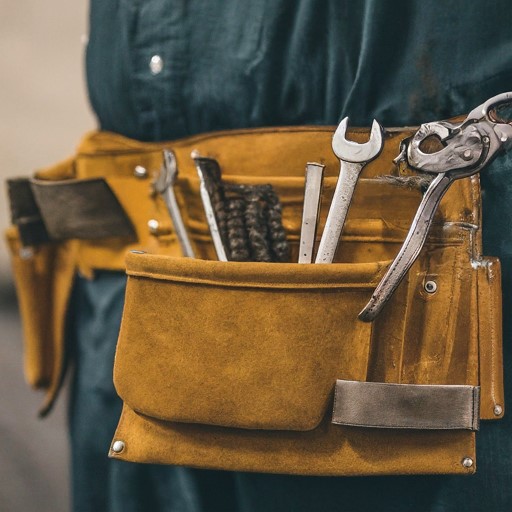
Crafted with utmost precision, the Mechanic’s Tool Belt is a testament to the artistry and practicality of its creator. It features a collection of specialized tools, including wrenches, pliers, screwdrivers, and small gears, each meticulously selected to cater to a wide range of mechanical needs. The tool belt itself is made from reinforced leather, allowing it to withstand the wear and tear of demanding tasks.
Use: When worn by a skilled engineer, tinkerer, or adventurer with a knack for mechanical devices, the Mechanic’s Tool Belt becomes an invaluable companion for on-the-go repairs, modifications, and overcoming mechanical obstacles. Its purpose is to provide easy access to a comprehensive set of tools, empowering the wearer to handle a multitude of mechanical challenges.
The Mechanic’s Tool Belt grants a bonus to the wearer’s Engineering skill, enhancing their ability to understand the inner workings of complex mechanisms, identify faults, and devise effective solutions. This bonus allows the wearer to tackle intricate repairs with greater efficiency and precision. Additionally, the tool belt provides advantage on checks related to mechanical tinkering, offering a higher chance of success when modifying or dismantling mechanical devices.
Level: 1
Stats:
- Engineering Skill Bonus: +10%
- Advantage on Mechanical Tinkering Checks: +20%
Skills:
- Mechanical Mastery: Enhances the wearer’s Engineering skill.
- Tinkering Advantage: Provides advantage on mechanical tinkering checks.
Cost: 500 gold coins (or equivalent currency)
Tags:
- Accessory: The Mechanic’s Tool Belt is worn as an accessory.
- Engineering Boost: Enhances the wearer’s Engineering skill.
- Mechanical Tinkering: Provides advantage on checks related to mechanical tinkering.
- Additional: Utility Item, Skill Enhancement, Problem-Solving Aid, Crafted Artifact, Adventurer’s Essential, Guild Legacy, Tinker’s Pride, Mechanical Expertise, Repair Kit, Portable Workshop
In the world of Saṃsāra, the Mechanic’s Tool Belt could be found in a variety of shops and sold through various methods:
- Specialized Engineering Shops: These establishments cater specifically to engineers, inventors, and tinkerers. They would be the most likely places to find high-quality Mechanic’s Tool Belts, crafted by skilled artisans and sold at a premium price, perhaps around 600-700 gold coins.
- General Goods Stores: Larger towns and cities might have general stores that offer a wide range of items, including tools and equipment. The Mechanic’s Tool Belt might be found here, but it’s likely to be a more basic version, perhaps mass-produced, and sold at a lower price, around 400-500 gold coins.
- Traveling Merchants: These merchants roam from town to town, offering a variety of goods. They might have a Mechanic’s Tool Belt among their wares, but the quality and price could vary greatly. A skilled bargainer might be able to get a good deal, perhaps around 350-450 gold coins for a decent quality belt.
- Guild Auctions: Guilds of engineers or tinkerers might hold auctions where members can buy and sell rare or unique items. A particularly fine Mechanic’s Tool Belt, perhaps crafted by a renowned engineer, could fetch a high price at auction, potentially exceeding 1000 gold coins.
- Private Commissions: A wealthy individual or organization might commission a master craftsman to create a custom Mechanic’s Tool Belt tailored to their specific needs. Such a belt would be incredibly expensive, potentially costing several thousand gold coins.
The price of the Mechanic’s Tool Belt would also depend on its condition. A used belt with signs of wear and tear would be cheaper than a brand-new one. Additionally, the belt’s reputation and the skill of its creator could also influence its price.
It’s worth noting that in a world where magic is commonplace, there might also be enchanted versions of the Mechanic’s Tool Belt, granting additional benefits or abilities. These enchanted belts would likely be even more expensive and sought after.
The roleplay potential of the Mechanic’s Tool Belt in various scenarios, focusing on its use for both defense and offense:
- Defensive Applications
- Improvised Repairs: Under attack? A damaged piece of armor or a malfunctioning weapon can be disastrous. The Mechanic’s Tool Belt allows for quick repairs mid-combat, potentially turning the tide of battle. Picture your character swiftly mending a broken shield strap or fixing a jammed crossbow mechanism, buying precious seconds to regroup or counterattack.
- Trap Disarmament: Facing a trapped doorway or a hidden trigger mechanism? The tool belt’s precision instruments aid in carefully disarming traps, preventing harm to the party. The tension rises as your character delicately manipulates wires and gears, the fate of the group hanging in the balance.
- Creating Barriers: Need to buy time or slow down pursuers? The Mechanic’s Tool Belt can be used to quickly construct makeshift barricades or obstacles from available materials. Imagine your character repurposing scrap metal and debris to block a narrow passage or fashioning a crude but effective caltrop to hinder enemy movement.
- Emergency Repairs to Vehicles or Structures: If a crucial vehicle or structure is damaged during an attack, the Mechanic’s Tool Belt can be vital for making emergency repairs. Imagine your character working feverishly to patch a leaking airship or reinforce a crumbling bridge, ensuring the party’s escape or survival.
- Offensive Applications
- Weapon Modification: The Mechanic’s Tool Belt can be used to enhance existing weapons or craft makeshift ones from scavenged parts. Imagine your character attaching a sharpened gear to a club for added damage or fashioning a crude but effective flamethrower from a broken lantern and some flammable liquid.
- Sabotage: Infiltrating an enemy stronghold? The tool belt allows for subtle sabotage of machinery and equipment. Your character might disable alarms, disrupt communication systems, or even rig a boiler to explode, creating chaos and confusion among the enemy ranks.
- Constructing Offensive Devices: With a bit of ingenuity, the Mechanic’s Tool Belt can be used to construct simple but effective offensive devices. Imagine your character fashioning a spring-loaded trap to ensnare an unsuspecting foe or rigging a makeshift catapult to launch projectiles at enemies from a distance.
- Exploiting Weaknesses: The tool belt’s ability to analyze and understand mechanical systems can be used to identify and exploit weaknesses in enemy defenses or structures. Your character might discover a hidden access panel, a vulnerable support beam, or a flaw in a magical barrier, opening up new avenues of attack.
Environmental Considerations: The environment plays a crucial role in how the Mechanic’s Tool Belt can be used.
- Urban Environments: In cities and towns, the abundance of machinery and scrap materials provides ample opportunities for repairs, modifications, and sabotage. Your character might scavenge for parts in abandoned workshops or repurpose objects found in the streets.
- Natural Environments: In the wilderness, the Mechanic’s Tool Belt can be used to repair damaged equipment, construct shelters, or fashion tools for survival. Your character might utilize natural materials like wood and stone to create traps or obstacles.
- Industrial Environments: In factories or mines, the tool belt is invaluable for navigating complex machinery and potentially disrupting enemy operations. Your character might sabotage production lines, reroute power sources, or even reprogram automatons to fight for the party.
Remember: The Mechanic’s Tool Belt is not just a collection of tools; it’s an extension of the character’s ingenuity and resourcefulness. Encourage players to think creatively and use their imagination to find unique and unexpected ways to utilize the tool belt in both defensive and offensive situations.
Perception of Activation:
- Sight:
- What’s perceived: A subtle shimmer or glow emanating from the object or person being activated. This could manifest as a faint aura, a ripple of light, or a change in color saturation.
- Description: The visual effect is usually fleeting and localized, often concentrated around specific points or areas of the activated entity. It might resemble heat haze, a shimmering mirage, or the subtle play of light on a polished surface.
- Positives: Provides a visual cue that activation has occurred, aiding in identifying the source or target of the activation. Can be aesthetically pleasing, adding a touch of wonder or mystery to the scene.
- Negatives: The visual effect might be subtle and easily missed, especially in bright or chaotic environments. Can be distracting or disorienting if the activation is powerful or prolonged.
- Hearing:
- What’s perceived: A soft hum, buzz, or chime accompanying the activation. The sound could vary in pitch and intensity depending on the nature of the activation and the entity being activated.
- Description: The auditory cue is often described as a gentle, almost musical tone, like the resonance of a tuning fork or the whisper of wind chimes. It might also resemble the subtle crackle of static electricity or the gentle whirring of gears.
- Positives: Provides an additional sensory confirmation of activation, aiding in situational awareness. Can be calming or reassuring, depending on the nature of the sound.
- Negatives: The auditory cue might be faint and easily masked by ambient noise, especially in loud or busy environments. Could be jarring or unsettling if the sound is unexpected or discordant.
- Touch:
- What’s perceived: A tingling sensation, a subtle shift in temperature, or a change in pressure around the activated entity. The tactile perception can vary depending on the nature of the activation and the individual’s sensitivity.
- Description: The tactile sensation is often described as a gentle buzz or vibration, like the feeling of holding a live wire or standing near a powerful machine. It might also manifest as a localized warmth or coolness, or a subtle change in air pressure.
- Positives: Provides a direct, physical confirmation of activation, aiding in grounding and focus. Can be invigorating or soothing, depending on the nature of the sensation.
- Negatives: The tactile perception might be subtle and easily overlooked, especially if the individual is distracted or desensitized. Could be uncomfortable or even painful if the activation is intense or prolonged.
- Smell:
- What’s perceived: A faint, distinctive odor associated with the activation. The scent could be metallic, ozone-like, floral, or even reminiscent of burnt toast, depending on the nature of the activation and the entity being activated.
- Description: The olfactory cue is often subtle and fleeting, like the lingering scent of a distant storm or the faint aroma of freshly brewed tea. It might also be more pungent or acrid, like the smell of burning metal or ozone.
- Positives: Provides an additional layer of sensory information, aiding in identifying the type or source of the activation. Can evoke specific memories or emotions, adding depth to the experience.
- Negatives: The olfactory cue might be easily masked by other scents, especially in environments with strong odors. Could be unpleasant or even nauseating if the scent is foul or overpowering.
- Taste:
- What’s perceived: A subtle metallic or tingling sensation on the tongue, a change in the perceived taste of food or drink, or even a phantom taste unrelated to any actual substance. The gustatory perception can vary depending on the nature of the activation and the individual’s sensitivity.
- Description: The taste sensation is often described as a faint metallic tang, like licking a battery or biting into a coin. It might also manifest as a change in the perceived sweetness, sourness, or bitterness of food or drink, or even a completely unrelated taste, like smoke or flowers.
- Positives: Provides a unique and unexpected sensory confirmation of activation, adding a layer of surprise and intrigue. Can be used to trigger specific memories or emotions, enhancing the immersive experience.
- Negatives: The gustatory perception might be subtle and easily missed, especially if the individual is eating or drinking. Could be unpleasant or even disturbing if the taste is foul or unexpected.
- Extra-Sensory Perceptions:
- Empathy: Sensing the emotional state of the activated entity, experiencing their joy, fear, or determination.
- Precognition: Glimpsing potential future outcomes or events related to the activation.
- Telepathy: Receiving thoughts, images, or impressions from the activated entity or other individuals connected to the activation.
- Clairvoyance: Perceiving events or objects at a distance, beyond the normal range of the five senses.
- Psychometry: Gaining insights or impressions from physical objects associated with activation.
These extra-sensory perceptions can provide valuable information and insights, but they can also be overwhelming or confusing, especially if the individual is not accustomed to such experiences.
The perception of activation is a multi-sensory experience that can involve a combination of visual, auditory, tactile, olfactory, gustatory, and even extra-sensory perceptions. The specific combination and intensity of these perceptions will vary depending on the nature of the activation, the entity being activated, and the individual’s own sensitivities and abilities.
It is important to note that not all individuals will experience all of these perceptions, and some may be more sensitive to certain perceptions than others. Additionally, the perception of activation can be influenced by factors such as the individual’s emotional state, their level of focus, and the surrounding environment.
Crafting Recipe: Recreation of the Mechanic’s Tool Belt
- Materials Needed:
- High-quality leather: 1 large piece, preferably tanned and treated for durability
- Metal rivets and buckles: A variety of sizes for securing straps and pouches
- Sturdy thread: Waxed or treated for strength and weather resistance
- Metal rings and hooks: For attaching tools and accessories
- Assorted tools: Wrenches, pliers, screwdrivers, small gears, etc., selected based on desired functionality
- Tools Required:
- Leatherworking tools: Cutting knife, hole punch, stitching awl, edge beveler
- Metalworking tools: Hammer, anvil, file, pliers
- Measuring and marking tools: Ruler, pencil, compass
- Skill Requirements:
- Leatherworking: Proficient or higher
- Metalworking: Basic or higher
- Engineering: Basic or higher (for understanding tool placement and functionality)
- Crafting Steps:
- Design and Pattern: Sketch out the desired design of the tool belt, considering the size and placement of pouches, tool loops, and other features. Create a paper pattern for the leather pieces.
- Cut and Shape Leather: Using the pattern, cut the leather pieces to size. Bevel the edges of the leather for a polished look.
- Attach Rivets and Buckles: Mark and punch holes for rivets and buckles. Securely attach them to the leather pieces using a hammer and anvil.
- Stitch Pouches and Loops: Sew pouches and tool loops onto the main belt using sturdy thread and a stitching awl. Ensure stitches are even and tight for durability.
- Attach Metal Rings and Hooks: Position and secure metal rings and hooks for additional tool attachments.
- Assemble the Belt: Connect the various leather pieces using rivets, buckles, or stitching, creating the final form of the tool belt.
- Test and Adjust: Fill the tool belt with the desired tools and accessories. Test the fit and adjust straps or pouches as needed for comfort and functionality.
- Finishing Touches: Apply any desired finishing treatments to the leather, such as oiling or waxing, to enhance its appearance and protect it from the elements.
- Additional Notes:
- The specific tools included in the tool belt can be customized based on the wearer’s needs and preferences.
- Consider incorporating magical elements into the crafting process, such as enchanting the leather for added durability or imbuing the tools with specific properties.
- The crafting time and difficulty may vary depending on the complexity of the design and the skill of the crafter.
- This recipe provides a general guideline for recreating a Mechanic’s Tool Belt in the world of Saṃsāra. Encourage creativity and experimentation to craft a unique and personalized item.
Saga of the First Tinkerer’s Girdle
In the dawn-age of this world, when steam hissed and gears whirred, there lived a being of boundless ingenuity, known only as the First Tinkerer. From the raw stuff of existence, they wrought marvels of metal and leather, devices that hummed with power and danced to their will.
Yet, their greatest creation was not a towering machine or a cunning contraption, but a humble girdle of tools. Each implement, a testament to their mastery, each pouch, a testament to their foresight. With this girdle at their hip, the First Tinkerer strode forth, mending the broken, improving the functional, and defying the impossible.
They tamed the wild energies of the world, harnessing them to drive their creations. They plumbed the depths of forgotten ruins, unearthing secrets lost to time. They faced down fearsome beasts and cunning foes, their tools ever at the ready.
Through countless trials and triumphs, the First Tinkerer’s girdle became a symbol of their legacy, a beacon of hope for those who dared to dream and build. It whispered of a time when innovation knew no bounds, when the spirit of creation burned bright.
And though the First Tinkerer has long since passed into legend, their girdle endures, a reminder that even the simplest tools, wielded with skill and passion, can change the world.
Moral: Ingenuity and resourcefulness are the keys to overcoming any challenge.
Suggested conversions to other systems:
Call of Cthulhu (7th Edition)
- Type: Skill Item
- Skills: Mechanics, Electrical Repair
- Effect: Provides a +10% bonus to Mechanics and Electrical Repair skill rolls. Grants a +20% bonus to rolls involving the repair, modification, or sabotage of mechanical or electrical devices.
- Sanity Loss: None
- Notes: Particularly useful for investigators dealing with the strange and often malfunctioning machinery found in the Mythos.
Blades in the Dark
- Type: Gear
- Effect: +1 to Tinker rolls. When used for tinkering, the character may reduce the position or effect level of a complication by 1.
- Special: May be used to create makeshift tools or weapons with a successful Tinker roll.
- Load: 1
- Notes: A valuable asset for Lurk crews specializing in infiltration, sabotage, or heist jobs involving complex machinery or traps.
Dungeons & Dragons (5th Edition)
- Type: Wondrous Item, uncommon
- Properties:
- You gain a +2 bonus to Intelligence (Engineering) checks.
- You have advantage on ability checks made to repair, modify, or disable mechanical devices.
- Notes: Useful for characters with proficiency in Tinker’s Tools or those who frequently encounter mechanical puzzles and traps in their adventures.
Knave
- Type: Gear
- Effect: +1 to any roll involving mechanics or tinkering. May be used to attempt to repair or disable mechanical devices with a successful roll.
- Notes: A versatile tool for Knaves who rely on their ingenuity and resourcefulness to overcome obstacles and complete their missions.
Fate Core/Accelerated
- Type: Gear Aspect
- Effect: Provides a +2 bonus when using the Engineering skill. May be invoked once per scene to reroll a failed Engineering skill check or to create an advantage related to repairing or modifying mechanical devices.
- Notes: A flexible tool for characters who rely on their technical skills, allowing them to overcome challenges and create opportunities in inventive ways.
Numenera & Cypher System
- Type: Cypher
- Level: 1
- Effect: When used, the Mechanic’s Tool Belt grants a +2 bonus to any Intellect task involving the repair, modification, or understanding of mechanical devices. It can also be used to bypass a minor obstacle or complication related to machinery.
- Depletion: 1-in-6 chance of depletion on a roll of 1.
- Notes: A useful cypher for explorers who frequently encounter ancient technology or complex machinery in the Ninth World.
Pathfinder (2nd Edition)
- Type: Worn Item
- Level: 1
- Price: 50 gp
- Usage: Worn;
- Bulk: L
- Activate: Interact
- Requirements: Trained in Crafting
- Trigger: You attempt a Crafting check to Repair a technological item or to Craft a technological item with the improvised trait
- Effect: You gain a +1 item bonus to the triggering check.
- Notes: A practical tool for characters skilled in Crafting, particularly those who specialize in technological items.
Savage Worlds
- Type: Gear
- Cost: 200
- Effect: +2 to Repair and Knowledge (Engineering) rolls. May be used to attempt a Repair roll on a broken or damaged device even if the character does not have the Repair skill.
- Notes: A valuable asset for any character who needs to fix things on the fly, especially in a setting with a lot of technology or machinery.
Shadowrun (Sixth World)
- Type: Gear
- Availability: 8R
- Cost: 300¥
- Effect: The user gains a +2 dice pool bonus to all Mechanics skill tests related to repairing, modifying, or disabling mechanical or electronic devices.
- Notes: A useful tool for riggers, deckers, and anyone who needs to work with technology in the shadows.
Starfinder
- Type: Technological item
- Level: 1
- Price: 400 credits
- Bulk: L
- Usage: worn
- Activate: 1 minute (Interact)
- Effect: While wearing this belt, you gain a +1 item bonus to Engineering checks to Repair technological items or to Craft technological items with the improvised trait.
- Notes: A valuable asset for mechanics, engineers, and anyone who relies on technology in the vastness of space.
Traveller (Mongoose 2nd Edition)
- Type: Tool
- Skill: Mechanic
- Effect: +1 DM to Mechanic skill checks related to repairing, modifying, or disabling technological devices.
- Notes: A handy tool for engineers, ship crew members, and anyone who needs to work with technology in the far reaches of the Imperium.
Warhammer Fantasy Roleplay (4th Edition)
Type: Adventuring Gear
- Availability: Common
- Cost: 5s
- Effect: The wearer gains a +10 bonus to any Trade (Engineer) or Lore (Engineering) tests related to repairing, modifying, or disabling mechanical devices.
- Notes: A practical item for engineers, tinkerers, and anyone who needs to work with technology in the grim darkness of the Old World.