
Tier One Stats:
- Craft Check Bonus: +2 bonus to checks related to the chosen craft.
- Skills: Provides a bonus to checks related to the chosen craft.
- Cost: 100 gold pieces (or the equivalent value)
- Tags: Precision, Craftsmanship, Enhancement, Durable, Skill Boost, Professional, Customizable, Intricate, High-Quality, Heirloom, Specialized, Maintenance, Toolset, Creation
Lore and Use: The Masterwork Artisan’s Tools are a set of meticulously crafted tools tailored to the creature’s chosen craft. Whether it is blacksmithing, woodworking, or any other form of craftsmanship, these tools are designed to enhance the character’s abilities and enable them to create intricate and high-quality items.
The origins of the Masterwork Artisan’s Tools can vary, depending on the setting and the character’s background. They could be heirlooms passed down through generations of skilled artisans, specially commissioned tools made by renowned craftsmen, or even imbued with magical properties to enhance the character’s craftsmanship.
When used, the Masterwork Artisan’s Tools provide a significant bonus to checks related to the chosen craft. This bonus reflects the character’s superior tools and their mastery over their chosen craft, increasing the chances of success and the quality of the final product.
The specific craft-related checks can vary depending on the type of craftsmanship chosen. For example, a blacksmith may benefit from the bonus when forging weapons or armor, while a woodworker may use it when carving intricate designs or constructing furniture. The exact mechanics and effects of these checks can be determined by the game’s rules and the player’s creativity.
Additionally, the Masterwork Artisan’s Tools allow the character to create intricate and high-quality items. This could mean crafting weapons and armor with superior stats, creating ornate jewelry with additional enchantment slots, or constructing furniture with added functionality. The exact benefits and effects of these creations can be determined by the game’s rules and the character’s proficiency in their chosen craft.
The Masterwork Artisan’s Tools are highly sought after by craftsmen and artisans, and their possession often signifies the character’s skill and dedication to their craft. Other craftsmen, collectors, and patrons may recognize the quality of these tools and be more inclined to seek the character’s services or purchase their creations at a higher price.
However, the acquisition and maintenance of these tools may come with their own challenges. The character may need to invest time and resources in finding or crafting the tools initially, as well as ensuring they remain in good condition. Special care and occasional repairs may be necessary to preserve the tools’ effectiveness and prevent them from deteriorating over time.
The Masterwork Artisan’s Tools provide a significant bonus to checks related to the chosen craft and enable the character to create intricate and high-quality items. They represent the character’s dedication to their craft, opening up opportunities for exceptional craftsmanship and potentially attracting recognition and higher rewards for their work.
In the world of Saṃsāra, Masterwork Artisan’s Tools are highly prized, often found in specialized shops that cater to skilled craftsmen and artisans. These shops range from high-end, prestigious establishments to hidden, more niche suppliers. The availability, price, and means of acquiring these tools vary depending on the region and the shop type.
- Guild Artisan Workshops
- Location: Prominent cities or bustling trade hubs, particularly in districts dedicated to craftsmanship and industry. These workshops are run by highly skilled guild members who oversee the crafting and sale of specialized tools.
- Shop Features: These are well-established and respected venues, with tools meticulously crafted by master artisans. The Masterwork Artisan’s Tools would be displayed as part of the guild’s most sought-after collections, often requiring the buyer to be a member or have a sponsor from the guild to make a purchase.
- Cost: 100-150 gold pieces, with discounts offered to guild members or those who have earned favor with the guild through notable achievements in their craft.
- Transaction Style: Guilds often require proof of skill or reputation before allowing access to such high-quality tools. Buyers may also receive commissions for special orders or participate in guild-sponsored competitions to win rare versions of the tools.
- Luxury Crafting Emporiums
- Location: Found in wealthy districts of major cities, particularly those known for high-end craftsmanship, like floating cities or island capitals.
- Shop Features: Lavishly decorated shops catering to the elite, with finely crafted tools that are often enchanted or aesthetically designed. The Masterwork Artisan’s Tools here are custom-made, sometimes using rare materials like Zephyrstone or enchanted woods, and come with ornate detailing.
- Cost: 150-300 gold pieces, depending on the rarity of materials and whether the tools are enchanted.
- Transaction Style: Purchases here are reserved for those of high status or wealth, often involving negotiations or commissions for personalized sets of tools. Buyers may also be invited to special showcases or events where only the finest tools are available for bidding.
- Artisan’s Black Market
- Location: In the underbelly of major cities or on isolated floating islands where trade in rare and contraband goods flourishes.
- Shop Features: These hidden markets offer rare or even stolen versions of Masterwork Artisan’s Tools, some of which may come from ancient ruins or be created by rogue artisans working outside guilds.
- Cost: 50-100 gold pieces, often less than the market value due to the dubious nature of the shop. However, the risk of counterfeit or cursed tools exists.
- Transaction Style: Purchases are done in secret, usually after haggling or bartering with the shopkeeper. Buyers may need to provide rare crafting materials or perform dangerous favors to acquire these tools. The reputation of the buyer can influence the price, as well as whether or not the seller will trust them.
- Traveling Merchant Caravans
- Location: Mobile, often traveling between island nations or through regions known for their craft or resource richness.
- Shop Features: Vibrant stalls or wagons filled with tools and materials from distant lands. These merchants specialize in exotic or unique variations of the Masterwork Artisan’s Tools, crafted with regional or elemental influences, such as tools forged from volcanic metals or carved from wind-blessed trees.
- Cost: 80-120 gold pieces, with prices fluctuating based on availability and distance from major trade routes.
- Transaction Style: Haggling is common, and the price can be reduced if the buyer offers unique materials or services. Tools might also be offered in exchange for rare or hard-to-find components rather than gold alone.
- Historical Relic Dealers
- Location: Found in academic districts, near museums or magical universities, specializing in ancient or lost craftsmanship techniques.
- Shop Features: These shops deal in artifacts and relics from ancient civilizations. Masterwork Artisan’s Tools sold here might be ancient or carry the legacy of long-forgotten master craftsmen, often imbued with minor magical properties or containing hidden runes.
- Cost: 200-400 gold pieces, with the high cost reflecting the historical or magical significance of the tools.
- Transaction Style: Buyers typically need to prove themselves as worthy inheritors of these historical tools, either through demonstrating their skill or knowledge of the craft. These shops often refuse to sell to anyone who hasn’t shown respect for the ancient traditions or who seeks to resell the items for profit.
- Rural Artisan Shops
- Location: Small towns or isolated villages where local craftsmen specialize in their unique forms of art and tool-making.
- Shop Features: These humble shops offer well-made but less ornate versions of the Masterwork Artisan’s Tools. While lacking the embellishments of their urban counterparts, these tools are still incredibly effective, designed for practicality over aesthetics.
- Cost: 70-100 gold pieces, depending on the local economy and materials available.
- Transaction Style: Here, tools are often sold in exchange for local goods or bartered for services. The transactions are straightforward, with the shopkeeper valuing the buyer’s sincerity and commitment to their craft over wealth.
In Saṃsāra, the Masterwork Artisan’s Tools are considered a significant investment for any craftsman, enhancing their abilities and granting them recognition. Whether found in a prestigious guild workshop or acquired through more dubious means, these tools symbolize dedication and mastery in the art of crafting.
The Masterwork Artisan’s Tools are primarily designed for enhancing craftsmanship, but imaginative roleplay allows their use in various environments for both defense and offense. These tools can serve multiple purposes outside of their traditional crafting role, offering creative opportunities for artisans to use them in a pinch.
- Urban Environments
- Defense: In the chaos of a bustling city, the artisan might use their tools for quick, practical defense. For example, a blacksmith’s hammer or chisel could be used to parry incoming blows or to quickly disable an assailant’s weapon. A jeweler’s loupe might be used to reflect light into the eyes of a pursuer, momentarily blinding them. The artisan could also use their tools to barricade a door by reinforcing it with nails or bracing it with crafted pieces of wood.
- Offense: A blacksmith might wield their hammer as an improvised weapon, delivering heavy blows to incapacitate enemies. The tools could also be used to craft small, improvised traps in alleyways or marketplaces—such as laying caltrops crafted from scrap metal or rigging simple snares with ropes and hooks from their toolkit to disable pursuers.
- Dense Forests and Jungles
- Defense: In the wild, the artisan’s tools can be used to quickly construct shelters or defensive structures. A woodworker could use their saw and carving tools to cut down branches and create spiked barriers to ward off dangerous wildlife. A leatherworker might fashion ropes or harnesses from nearby vines, allowing the party to navigate the dense foliage safely or avoid predators by ascending into trees.
- Offense: With access to natural resources, the artisan can create primitive weapons or traps, like sharpened stakes or slings from forest materials. A stonemason’s tools might be used to set up rockfalls or tripwires along jungle trails, turning the natural environment into an offensive tool to defend against enemies or large predators.
- Mountainous or Rocky Terrain
- Defense: In mountainous areas, tools such as a blacksmith’s hammer or miner’s pick can be used to dig footholds or secure ropes, preventing falls during a climb. A mason might use their chisels to quickly carve out handholds or fashion defensive perches on steep rock faces, giving the group higher ground to defend themselves. These tools could also be used to reinforce a cave entrance, creating a temporary hideout that protects against avalanches or rockslides.
- Offense: An artisan could use their tools to collapse small rock formations, setting up a defensive perimeter or creating barriers against enemies. A mason’s pick or hammer can be wielded as a powerful melee weapon, delivering strong, blunt-force strikes. For a more creative offense, a stonemason might craft makeshift boulders to roll down on unsuspecting foes or use spikes crafted from local stone to line a path with dangerous obstacles.
- Seafaring and Coastal Areas
- Defense: At sea or along a coast, tools can serve as makeshift survival gear. A carpenter’s tools could be used to quickly patch holes in a boat or construct crude rafts from driftwood. The tools could also be used to secure a temporary shelter against strong winds by building sturdy anchors or braces. Additionally, nets or fishing tools could be used to tangle enemies during an attack, buying the artisan time to escape or counterattack.
- Offense: A boatbuilder’s saw or mallet could be wielded as improvised weapons during a naval skirmish. On a larger scale, an artisan might craft simple traps like rigging loose planks on a dock to trip enemies or setting up makeshift barriers using ropes and wood to obstruct ships during a chase. In coastal caves, stone-carving tools might be used to collapse narrow passages, trapping enemies or creating choke points.
- Underground or Cavernous Dungeons
- Defense: Deep within a dungeon, tools are invaluable for navigating and surviving environmental hazards. A miner’s pick or stonemason’s hammer could be used to break through collapsed tunnels or carve handholds in cavern walls. These tools can also help construct makeshift barricades to defend against monsters or rogue creatures. A locksmith might be able to rig traps, lock doors, or disable traps to create safe paths through perilous areas.
- Offense: A blacksmith might use their hammer as a weapon, delivering powerful, blunt-force attacks in close quarters. Similarly, a miner’s pick could be used as a piercing weapon, especially effective against stone-based creatures or golems. Underground, the artisan could also craft environmental traps, using stalactites or loose stone to create deadly hazards for enemies.
- Deserts and Arid Wastelands
- Defense: In the harsh desert environment, the artisan’s tools could be used to build shelters against the sun or reinforce temporary camps. A leatherworker could craft tarps or tents from animal hides, while a woodworker could fashion windbreaks using local materials. A jeweler or metalworker might use their precision tools to craft reflective surfaces that disorient enemies in the desert heat, using the sun to their advantage.
- Offense: Using the limited resources available, an artisan might craft primitive weapons like slings or sharpened stones. A metalworker could forge makeshift blades from scrap metal found in ruins or scavenged from defeated foes. In addition, a creative artisan might use the desert’s shifting sands to set traps or create barriers, perhaps using a hammer or mallet to trigger small landslides or rock falls on unsuspecting enemies.
- Ruins and Ancient Cities
- Defense: In the crumbling ruins of ancient cities, an artisan might use their tools to reinforce weakened structures, creating defensive positions within fallen towers or temples. Carpenters could reinforce doors or create traps from fallen beams and rubble, while locksmiths could manipulate ancient mechanisms to block access to certain areas, protecting their party from wandering enemies.
- Offense: An artisan exploring ruins could craft improvised weapons using the remnants of the city. A blacksmith might repurpose ancient, rusted weapons or armor pieces, while a jeweler or artificer could repurpose magical materials found in ancient relics, turning them into offensive tools. A mason might dislodge sections of walls to trap enemies or create obstacles to hinder pursuit.
- Overall Roleplay Opportunities:
- Defense: In all environments, the Masterwork Artisan’s Tools allow for creativity in fortification, crafting, and survival. The artisan’s deep understanding of materials and construction offers a unique form of defense, as they can quickly create barriers, traps, and shelter to protect themselves and their allies.
- Offense: While not traditionally used for combat, the tools become valuable weapons or instruments of environmental manipulation. An artisan can wield their tools to disable foes, set traps, or even shape the environment to gain a tactical advantage in battle.
In any environment, the roleplay possibilities for using these tools are endless. Whether crafting weapons, building fortifications, or setting traps, the Masterwork Artisan’s Tools open up a wide range of defensive and offensive strategies, allowing players to creatively solve challenges beyond simple combat.
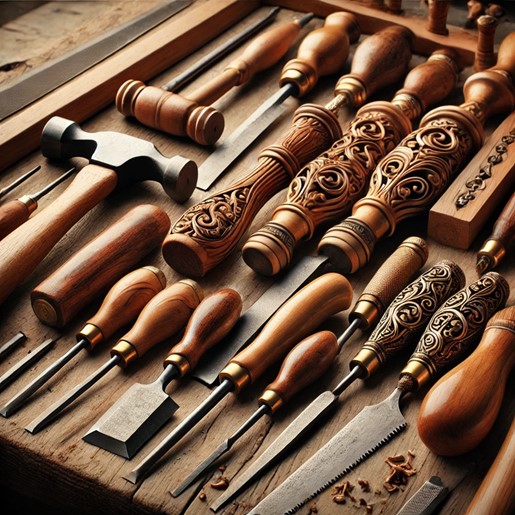
Perception of Activation: Masterwork Artisan’s Tools
- Sight (Visual Perception)
- What’s Perceived: When the tools activate, a soft glow emanates from the polished surfaces of the handles and metalwork, shifting between hues of gold and silver. The light traces intricate runes and patterns along the edges of the tools, as though ancient symbols are momentarily revealed. The aura around the tools seems to sharpen, making every detail of the materials being worked on appear more vivid and clear.
- Description: The glow lasts for a few moments, guiding the artisan’s hands, as if the tools themselves are alive with purpose. The craftsmanship becomes flawless, and the item being crafted looks more refined with every stroke.
- Positives: The light enhances focus, improving precision and making the craftsmanship appear almost supernatural. It inspires confidence, helping the artisan achieve perfect detail.
- Negatives: The glow can be distracting in low-light environments, making the artisan an easy target for observation. In sensitive or secretive situations, the activation may attract unwanted attention.
- Sound (Auditory Perception)
- What’s Perceived: A soft, resonant hum fills the air when the tools are in use, like the quiet ringing of metal against metal. The sound is melodic, akin to the notes of a well-tuned instrument, rising and falling in harmony with each stroke or cut.
- Description: This hum helps synchronize the artisan’s movements with the rhythm of the craft, making each action smooth and controlled. The sounds of hammering, sawing, or chiseling are more precise, with a ringing clarity that suggests perfect alignment with the material.
- Positives: The harmonic sound sharpens the artisan’s focus and soothes the mind, making long hours of work feel less exhausting. It also signals to others that something special is being created.
- Negatives: The sound may be too loud in quiet spaces, potentially alerting others nearby. It could also drown out more subtle noises, such as approaching danger, or interrupt concentration if the artisan is unfamiliar with the rhythm.
- Touch (Tactile Perception)
- What’s Perceived: The tools grow warm to the touch when activated, though never uncomfortably so. The handles feel perfectly balanced in the artisan’s hands, with a slight vibration that makes it seem as though the tools are guiding the user’s movements. The materials being worked on also become more malleable, responding smoothly to every strike or cut.
- Description: The tactile feedback from the tools is immensely satisfying, as every touch feels precise and deliberate. The artisan feels an increased sense of connection with the tools, as though they are an extension of their own hands.
- Positives: The enhanced feedback from the tools leads to superior craftsmanship, with mistakes feeling almost impossible to make. The warmth and balance give the artisan a feeling of control and mastery over their craft.
- Negatives: The constant vibration may feel unsettling for those unused to it, and prolonged use could cause fatigue. Additionally, the warmth might be interpreted as unnatural, raising suspicion among others.
- Smell (Olfactory Perception)
- What’s Perceived: A faint scent of freshly cut wood, polished metal, and leather fills the air when the tools are activated. For those working with metal, the subtle smell of forge smoke and heated iron also lingers, while for woodworkers, the scent of pine or oak may emerge.
- Description: The smell is a comforting reminder of craftsmanship at its finest, evoking the atmosphere of a master’s workshop. The sensory connection to the craft creates a calming, focused environment.
- Positives: The pleasant scent enhances focus and immersion in the task at hand, making the process of crafting more enjoyable. It also signals to others the quality and care put into the work.
- Negatives: The distinct smell may linger too long, betraying the artisan’s presence in areas where they might prefer to remain unnoticed. The smell could also overpower natural environmental scents, masking danger or the presence of others.
- Taste (Gustatory Perception)
- What’s Perceived: Though there is no direct taste associated with the activation, a subtle metallic tang may linger in the air, akin to the taste of fresh iron. For those working with enchanted materials, the faint sweetness of magical energy may also be perceived on the tongue.
- Description: The taste reinforces the sensation of working with high-quality materials, subtly affecting the artisan’s focus on their task, as if they can almost taste the essence of creation itself.
- Positives: This sensation of quality materials enhances confidence in the work being done, giving the artisan a sense of pride in their craftsmanship.
- Negatives: The taste, though faint, might become distracting during long crafting sessions or in environments where food and water are scarce, leading to discomfort.
- Extra-Sensory Perceptions:
- Arcane Resonance (Magical Attunement)
- What’s Perceived: The artisan feels a strong connection to the magic within the tools, as though they can sense the flow of arcane energy guiding their every movement. It feels like a gentle current running through the tools and into the crafted material, imbuing it with power.
- Description: This arcane resonance enhances the quality of the crafted item, giving it magical properties or superior durability, as though the tools are transferring part of their essence into the final product.
- Positives: The connection with the magical energy enhances the work’s enchantment potential and allows the artisan to infuse magical properties into their creations effortlessly.
- Negatives: For artisans unfamiliar with magic, this sensation may be overwhelming or disorienting, potentially leading to mistakes. The strong connection could also drain the artisan’s own magical reserves or energy.
- Temporal Shift (Perception of Time)
- What’s Perceived: Time seems to slow down when the tools are activated, giving the artisan more time to focus on each detail. Every stroke feels deliberate, and complex tasks seem easier to manage, as though time is bending to the artisan’s will.
- Description: This temporal shift allows the artisan to complete intricate tasks with precision, creating detailed work that might otherwise take much longer.
- Positives: The slowed perception of time gives the artisan the ability to work with incredible attention to detail, resulting in flawless craftsmanship and allowing for complicated tasks to be completed more quickly.
- Negatives: Once the effect wears off, the artisan may feel disoriented, particularly in combat or time-sensitive situations. There is also the risk of losing track of actual time, leading to dangerous lapses in awareness.
- Crafting Insight (Enhanced Focus)
- What’s Perceived: A heightened sense of insight and clarity fills the artisan’s mind when the tools are activated. The artisan becomes hyper-aware of every imperfection in the material, every opportunity for enhancement, and every possible outcome of their choices.
- Description: This insight allows the artisan to instinctively know the best course of action for their craft, leading to optimal results.
- Positives: The ability to foresee potential flaws and opportunities results in highly efficient and masterful work. The finished product is often superior to what the artisan could normally achieve.
- Negatives: The overwhelming clarity may lead to over-analysis, causing the artisan to second-guess their choices or become too fixated on perfection, slowing down the crafting process.
- Arcane Resonance (Magical Attunement)
- Overall Positives:
- Heightened precision, focus, and control during crafting.
- Magical and physical enhancements to crafted items.
- Sense of connection to the tools, improving both quality and speed.
- Overall Negatives:
- Sensory overload or distraction for those not accustomed to the enhanced perceptions.
- Increased visibility or attention, making stealth or discretion difficult.
- Potential fatigue from prolonged use of the tools due to intense focus or magical energy draw.
The Masterwork Artisan’s Tools offer powerful sensory and extra-sensory feedback, greatly enhancing craftsmanship, but they come with risks of distraction and overexertion when used for extended periods.
Crafting Recipe: Masterwork Artisan’s Tools (Replica)
- Materials Needed:
- High-Grade Steel (2 lbs): For crafting the metallic components like the hammer, chisel, and saw blades.
- Polished Hardwood (1 plank): Sourced from rare or enchanted trees, used to carve the handles, providing durability and comfort.
- Arcane Inscriptions (1 scroll): A set of magical runes or symbols to enhance the tools, improving their precision and effectiveness.
- Enchanted Leather Straps (2 feet): Used to wrap around the handles, providing a better grip and comfort during prolonged use.
- Alchemical Polish (1 vial): A special compound that prevents wear and tear on the metal, ensuring longevity and sharpness.
- Fine Silver Wire (3 feet): Used to inlay delicate runes or patterns into the tools for both aesthetic and magical enhancements.
- Tools Required:
- Blacksmith’s Forge: For heating, shaping, and tempering the steel components.
- Woodworking Kit: For carving and shaping the wooden handles.
- Engraving Tools: For inscribing runes and intricate patterns on the metal surfaces.
- Leatherworking Kit: For creating and attaching the leather grips to the handles.
- Arcane Inscription Tools: To precisely etch the arcane symbols needed for the tool’s magical enhancements.
- Alchemy Kit: To apply the alchemical polish and ensure the tools maintain their sharpness and durability over time.
- Skill Requirements:
- Blacksmithing (Advanced Level): Necessary for shaping, tempering, and creating durable metal components that retain sharpness and strength.
- Woodworking (Intermediate Level): Required to craft the handles with the proper balance and finish for ease of use.
- Enchanting (Intermediate Level): To properly bind the arcane runes to the tools, enhancing their precision and functionality.
- Leatherworking (Basic Level): For creating comfortable and durable leather grips.
- Engraving (Advanced Level): Needed for etching runes and intricate designs into the tools without compromising their functionality.
- Crafting Steps:
- Forge the Steel Components:
- Heat the high-grade steel in the blacksmith’s forge until it reaches a malleable state. Using a hammer, shape the steel into the required tools (hammerhead, chisel, saw blades, and other small instruments). Temper the metal by cooling it in a vat of water or oil, ensuring that it retains strength and sharpness.
- Polish each tool head using the Alchemy Kit with the alchemical polish, ensuring a smooth and durable surface that resists rust and damage.
- Carve the Wooden Handles:
- Using the woodworking kit, carve the polished hardwood into handles suited for each tool. Ensure that the handles are balanced and comfortable for extended use, tapering the ends for ease of gripping.
- Apply a layer of finish from the Alchemy Kit to prevent the wood from splintering and to enhance its longevity.
- Attach Leather Grips:
- Cut and prepare the enchanted leather straps using the leatherworking kit. Wrap the leather around the handles of each tool, securing it tightly to ensure a firm grip.
- Stitch or rivet the leather in place, ensuring that it doesn’t slip during use. These enchanted straps also subtly enhance the user’s grip, reducing the likelihood of accidents during fine craftsmanship.
- Engrave Arcane Runes:
- With engraving tools, carefully etch decorative patterns and runes onto the metal parts of each tool. These symbols should be placed along the edges of the hammer, chisel, and saw for aesthetic and arcane purposes.
- Using the Arcane Inscription Tools, follow the instructions on the arcane inscription scroll to infuse each tool with a magical bonus. The runes should be precise to enhance crafting ability, improving the tools’ performance during use.
- Inlay fine silver wire into the engraved runes for aesthetic elegance and to conduct arcane energy through the tools.
- Final Assembly:
- Combine the steel components and wooden handles, ensuring each is securely attached. Use rivets or strong adhesives to bond the wood and metal, making the tools durable for long-term use.
- Apply a final layer of alchemical polish across the entire toolset to give the pieces a lasting sheen and protect them from wear.
- Test the Tools:
- Before the tools are considered complete, they must be tested. Perform several crafting tasks—such as carving, shaping metal, or delicate engraving—to ensure that the tools function as intended and that the magical enhancements improve precision and skill.
- If the tools perform flawlessly, they are ready for use or sale. If they show flaws, return to previous steps to correct any imbalance or fault.
- Forge the Steel Components:
Once completed, the Masterwork Artisan’s Tools (Replica) will provide a significant bonus to crafting, improving precision and overall craftsmanship. These tools can enhance the artisan’s ability to create high-quality items, while also being durable and aesthetically impressive.
Tale of the Craftlord’s Gift and the Shining Tools
In the days when the first fires of creation burned in the great hearth of the sky, there was a master of all making, the Craftlord. His hands shaped stone, wood, metal, and stars with equal grace, and no creature in all the realms could match the things he made. It was said his work was touched by both gods and beasts, and even the mountains sang when his tools struck their peaks.
In a time when the world was young but growing old, there came to the Craftlord a humble artisan, nameless and small, who sought to learn from him. This artisan traveled many roads, crossed rivers that ran backward, and climbed mountains that reached for the underworld, all to stand before the Craftlord’s mighty forge.
The Craftlord looked upon this small one and spoke: “Why do you seek the tools of a master? Your hands are not strong, your skill not yet worthy.” But the artisan, though trembling, answered, “It is not my hands that will shape greatness, but the desire that guides them.”
Moved by this answer, the Craftlord agreed to share his tools. Yet, he said, “These are not mere things of metal and wood. They live, they listen, and they are never quiet. When they strike, the world will know, and you will not work alone.”
The Craftlord gave the artisan a set of tools unlike any ever seen. They shone like the sun at midday, humming with a song known only to the gods. But the tools were strange—heavy with the memory of stars, light as a whisper in the wind, and sharp enough to carve the air itself.
The artisan used the tools and, as promised, his work became greater than his hands alone could manage. When he carved wood, it grew roots and leaves, sprouting life where there was none. When he shaped metal, it bent like water yet remained strong as mountains. The tools whispered secrets as they worked, telling the artisan things long forgotten, things that had never been known.
But the tools’ song grew loud, and the artisan’s joy became sorrow, for the song could not be silenced. Each strike of the hammer, each cut of the chisel, echoed across the lands. Creatures came—both beast and spirit—drawn to the sound. Some sought to steal the tools, others wished to destroy them, and still more came only to hear the melody of creation.
The artisan, who once sought greatness, now sought only peace. He begged the Craftlord to take back the tools, saying, “They are too loud! I cannot hear my own thoughts, nor work in silence.” The Craftlord replied, “These tools are not to be quiet, for creation is never silent. You asked to make greatness, and greatness is known by all.”
With no other choice, the artisan buried the tools deep in the earth, hoping the silence of the soil would mute their song. Yet, even now, it is said that those who wander the ancient places hear the faint ringing of hammers and chisels, calling out to any who dare listen.
Moral of the Story: The desire for greatness brings with it a noise that cannot be silenced. One must be prepared not only to shape the world, but to be shaped by the tools that create it.
Suggested conversions to other systems:
Call of Cthulhu (7th Edition)
Masterwork Artisan’s Tools
- Description: A set of ancient tools, imbued with a subtle supernatural quality, rumored to have been used by legendary artisans. They enhance the user’s ability to create masterful works but are accompanied by strange, unsettling sensations.
- Game Mechanics:
- Craftsmanship Bonus: Grants a +20% bonus to Craft skill checks related to the tools’ designated craft (e.g., Carpentry, Metalworking).
- Sanity Loss: Each use of the tools for more than a day leads to a minor Sanity loss (1d2), as prolonged exposure causes the user to experience strange whispers or visions tied to the tool’s original creators.
- Special Ability: Once per session, the tools can be used to automatically succeed on a Craft check, but the user must roll a Hard POW check to avoid taking 1d4 Sanity damage due to the unsettling, otherworldly precision achieved.
- Cost: Priceless (not typically sold, often found in ancient ruins or with collectors).
- Weight: 5 lbs.
Blades in the Dark
Masterwork Artisan’s Tools
- Item Load: 2
- Description: A finely crafted set of tools passed down through generations, capable of producing superior results in their specific craft. These tools are often sought after by crafters and artisans of the highest skill.
- Game Mechanics:
- Effect: The tools provide +1d on all crafting rolls related to the chosen craft (e.g., Tinker, Craft, or a specific item creation).
- Masterwork Quality: Once per score, the tools allow the user to create an item of exceptional quality, reducing the time required to craft by 1 downtime activity.
- Drawback: The tools are highly recognizable due to their unique design, and anyone seeing them will recognize their value, possibly increasing Heat by 1 if they are seen in public or used during a job.
- Availability: Rare, often stolen or acquired through black market dealings.
- Tier: IV quality.
Dungeons & Dragons (5th Edition)
Masterwork Artisan’s Tools
- Wondrous Item (Uncommon)
- Crafting Bonus: When using these tools, the user gains a +2 bonus to all checks related to their chosen craft (e.g., Smithing, Woodworking).
- Skills: Provides proficiency in a specific toolset if the user does not already have it.
- Special Ability: Once per long rest, the tools can be used to craft an item in half the normal time.
- Magical Properties: These tools are imbued with subtle enchantments, allowing for advantage on any checks to appraise or identify other crafted items when using the tools.
- Cost: 100 gp.
- Weight: 5 lbs.
Knave
Masterwork Artisan’s Tools
- Type: Equipment
- Effect: Provides a +2 bonus to Crafting checks made using the tools’ related skill (e.g., Blacksmithing, Woodworking).
- Special Ability: Once per day, the tools allow the artisan to complete a project in half the usual time, thanks to their superior quality and ease of use.
- Cost: 100 silver pieces (or local equivalent).
- Weight: 1 slot.
- Usage: The tools must be maintained regularly; otherwise, their bonus diminishes by -1 until repaired.
Fate Core System
Masterwork Artisan’s Tools
- Aspect: Master’s Touch
- These tools are finely crafted and imbued with the expertise of master artisans, allowing for superior craftsmanship.
- Game Mechanics:
- Crafting Bonus: When using these tools, you gain a +2 bonus to create or repair items related to the chosen craft.
- Invoke: Once per session, the tools allow you to invoke Master’s Touch to succeed at a difficult crafting task without rolling, or to create something of exceptional quality.
- Complication: If the tools are damaged or lost, you face a -2 penalty to crafting checks until you replace them.
- Cost: Typically rare, only found through quests or favors from high-level craftsmen.
Numenera & Cypher System
Masterwork Artisan’s Tools
- Level: 5
- Effect: These tools provide +2 to Crafting tasks related to the specific skill (e.g., Blacksmithing, Carpentry). The tools are of exceptional quality, allowing the user to craft higher-level items with ease.
- Special Ability: Once per day, the user can use the tools to craft something in half the usual time, regardless of complexity, due to the tools’ enhanced precision and quality.
- Intrusion Effect: If a GM intrusion is rolled during use, the tools may suddenly become unstable, reducing their effectiveness for one day and imposing a -1 penalty to crafting tasks until repaired.
- Rarity: These tools are extremely rare, typically crafted by a master or discovered in ancient ruins.
Pathfinder (2nd Edition)
Masterwork Artisan’s Tools
- Item Type: Tool, Uncommon
- Crafting Bonus: Grants a +2 item bonus to Crafting checks related to the specific craft (e.g., Smithing, Tailoring).
- Special Ability: Once per day, the tools allow the user to halve the time required for a crafting task, representing their exceptional quality and ease of use.
- Drawback: These tools require frequent maintenance. If not properly cared for, they impose a -1 penalty to Crafting checks after one week of heavy use, unless properly repaired.
- Cost: 100 gp.
- Bulk: Light.
Savage Worlds (Adventure Edition)
Masterwork Artisan’s Tools
- Type: Tools, Rare
- Effect: Provides +2 to all relevant Crafting skill rolls when using these tools for the appropriate craft.
- Special Ability: Once per session, the user may treat a failed Crafting roll as a success or reduce the crafting time by half.
- Drawback: Due to their rarity and value, the tools draw unwanted attention. If used in public, the user might attract a -1 penalty to Persuasion rolls or may become a target of theft.
- Weight: 2 lbs.
- Cost: $200.
Shadowrun (6th Edition)
Masterwork Artisan’s Tools
- Description: A rare set of high-end tools, designed for precision work in a variety of crafts. These tools are custom-made, often using advanced materials, and occasionally incorporate minor cyberware interfaces for enhanced crafting abilities.
- Game Mechanics:
- Crafting Bonus: Provides a +2 dice pool bonus to any Engineering, Armorer, or Artisan tests.
- Wireless Bonus: If the tools are modified with a wireless interface, the user gains +1 to Logic-based crafting tests while using AR overlays or smart crafting systems.
- Drawback: These tools are highly recognizable and expensive, which may increase the likelihood of theft or raise Street Cred by 1 when openly displayed.
- Cost: 5,000¥ (unavailable in most black markets).
- Availability: 10F (restricted).
Starfinder
Masterwork Artisan’s Tools
- Item Level: 3
- Price: 2,000 credits
- Description: This finely crafted set of artisan tools provides an edge in technical and crafting tasks. They are enhanced with minor technological improvements and ergonomic designs for ease of use.
- Game Mechanics:
- Crafting Bonus: Grants a +2 insight bonus to all Craft checks related to a specific craft (e.g., Engineering, Armory, etc.).
- Special Ability: Once per day, you may reroll a failed Craft check when using these tools, taking the higher result.
- Drawback: Requires regular maintenance or repairs after extended use. If not maintained, the tools impose a -1 penalty until they are fixed (Engineering DC 15).
- Bulk: L (light).
- Usage: Worn.
Traveller (Mongoose 2nd Edition)
Masterwork Artisan’s Tools
- Tech Level: 10
- Description: A set of expertly crafted tools, highly advanced for their time. These tools offer precision and superior quality for any engineering, mechanical, or crafting tasks.
- Game Mechanics:
- Crafting Bonus: Grants a +2 DM to all Mechanic or Engineer checks related to crafting or repair tasks.
- Special Ability: Once per week, the tools allow a failed Craft or Engineer check to be reattempted with a +1 DM bonus.
- Weight: 1 kg.
- Cost: 10,000 credits.
- Availability: These tools are typically found on high-tech worlds or obtained through wealthy connections in engineering circles.
Warhammer (4th Edition)
Masterwork Artisan’s Tools
- Type: Tools, Rare
- Armor Points: N/A
- Description: These tools are legendary among artisans, known for their perfect balance and precision. Forged by a master craftsman, they are highly sought after by those who wish to create items of exceptional quality.
- Game Mechanics:
- Crafting Bonus: Grants a +10% bonus to any Crafting-related Test using these tools.
- Special Ability: Once per week, the artisan can use the tools to craft a superior-quality item, reducing crafting time by half.
- Drawback: The tools are extremely valuable and recognizable, attracting the attention of thieves or rival artisans, potentially leading to encounters or plot complications.
- Encumbrance: 1
- Cost: 300 gold crowns, often requiring special connections or noble patronage to obtain.
Comments
One response to “Masterwork Artisans Tools”
[…] From: Masterwork Artisans Tools […]