
Rarity: Common • Tier: 1 • Roleplay Emphasis: Bellfounder
Specific Slot: Worn (Neck or Belt loop)
Lore: In the coastal forge-cloisters of Hāmuera’s Drift, bellfounders speak chants not for worship alone, but to command metal’s memory. Among them, the tale endures of Ha-Tira, the apprentice who sang to molten ore not in verse but in tone—each note a call to form. When her forge-mates mocked the idea of “voicing brass into beauty,” she took her discarded slag, shaped it by karakia alone, and poured her soul into its cooling. The result: a rough pendant humming low, casting echoes in bellmetal and in heart. This item—now called Karakia of the Resonant Mold—remains with those who shape with sound and sense, not strength alone.
Description: A lumpen pendant of dark bell-bronze, naturally weathered, with uneven ripples that suggest it cooled under song. Tiny forged glyphs encircle its lower edge—each representing a bell’s first note. The whole is suspended from a loop of burnt-linen cord, stiffened with smoke and soot. When activated, a faint, harmonic overtone pulses outward—a note felt more than heard, especially by nearby metals and sound-bearing surfaces.
Stats and Effects:
Passive Magic:
• Resonant Memory – You gain +1 to crafting checks involving metal or sound-producing items (bells, gongs, chimes, tuning forks).
• Molten Intuition – When observing heated metal, you may detect flaws or readiness 1 minute faster than normal, as the pendant lightly vibrates in your presence.
• Forge Whisper – Once per day, while resting within 30 ft of a forge or foundry, recover 1 additional HP during the rest as the item harmonizes with industrial hums.
Activable Magics:
• Echo Mending (1/day) – While in physical contact with a broken metallic object no larger than a helmet, chant the karakia for 3 rounds. If uninterrupted, you restore a single fracture, crack, or break in the object (does not restore magical effects).
• Sounding Call (1/day) – As a bonus action, you emit a controlled harmonic tone from the pendant. The sound draws the attention of constructs, spirits attuned to metal or sound, or creatures with tremorsense within 60 ft (Will save or be compelled to listen). Ideal for disruption, focus, or signaling.
Tags: Bellfounder, Resonance, Crafting-Assist, Metalworking, Chant‑Bound, Sound‑Magic, Tuning‑Relic, Low‑Tier‑Artifact, Sonic‑Focus, Smith’s‑Favor, Forge-Harmonics, Artisan-Linked, Echo-Triggered, Heat-Sensitive, Bell-Crafting, Smith’s Legacy, Chant-Reactive, Sound-Tuned, Metal-Attuned, Ritual-Forged
Shops and Trade Sources for Karakia 411 of the Resonant Mold:
1. Forge-Kin Gallerettes (Riverfound Cities such as Loh-Mirā):
Small indoor workshops combined with storefront displays, run by multigenerational bellfounders. The Karakia of the Resonant Mold is sold here to apprentices who pass a tone-matching trial using raw slag chimes.
• Cost: 22 gp (or 17 gp with proof of completed casting apprenticeship)
• Currency Alternative: One forged object offered to the shop for “public ring”—typically added to communal bells used during storm alerts.
2. Echo-Niche Vaults (Sealed Markets beneath the Ghul Resonance Chambers):
Vendors speak only in struck tones and keep their wares in hex-stilled alcoves, sealed until sung open. Here, the karakia is held sacred, sold only to those who resonate a “founder’s interval”—a specific two-tone chime matching the ancient hammering songs.
• Cost: 25 gp flat (includes tone testing)
• Alternate Trade: A set of harmonic blueprints or old bell schematics from before the Sundering of Clocks.
3. Traveling Furnace-Caravans (Nomadic foundry caravans crossing the Ashwind Routes):
In these mobile forge-markets, items like this are traded from smith to smith along pilgrimage paths. The pendant may be found hanging beside smelt-picks and forge-robes.
• Cost: 20 gp (includes rough forge stone as bonus), or barter equivalent in copperwork, sootgrass, or coal relics.
• Purchase Method: Best acquired through shared meals and the telling of “sound-shaping tales.”
4. Chime-Bazaars (Floating Markets in Mournharp Bay):
Merchants display bell-based goods from boats laced with sonorous wind lines. The karakia is often mistaken for a poor man’s trinket until struck gently—it rings a harmonic fifth.
• Cost: 18 gp in coin, 12 gp if the buyer is a bellfounder or has made an offering to the Wind‑Gods in the last 30 days.
• Social Condition: Buyers may need to prove they are “tone-true” by identifying three distinct bell sounds while blindfolded.
5. Monastic Tone-Libraries (Silent Forge Orders in Upper Karvun):
These silent monasteries hold only a few copies of the pendant, kept in felted drawers and awakened by touch alone. Sales occur only once per moon, after silent recitation.
• Cost: 15 gp
• Alternative Access: Donation of a functional bell or sound-sculpture, or agreement to perform a seasonal tolling duty for a local shrine.
Price Range: 15–25 gp
Common Trade Methods: Coin, crafted items, bell schematics, stories of forge work, or acts of tonal understanding.
Market Perception: Seen less as a magical trinket and more as a tool of craft-honor—never sold casually, and rarely to non-artisans.
Roleplay Use of Karakia 411 of the Resonant Mold in Various Environments:
Urban Environments (Foundries, Workshops, Walled Cities)
Defense:
The karakia’s Echo Mending can restore broken metal locks, shattered guard-bands, or armor clasps in city skirmishes—especially when equipment failure might mean death. The wearer may whisper the karakia to stabilize protective tools or barriers.
Example: During a rooftop chase in a forge-district, the user repairs a broken ladder rung with a chant, delaying pursuers.
Offense:
The Sounding Call can be activated in echo-prone city alleys, startling metal-sensitive constructs or triggering minor vibrations through metal grates. In certain regions, striking a harmonized street bell with the karakia active may summon reinforcements or disorient watchers using sonar.
Example: The user chants, activating the pendant, and a nearby watch-drone malfunctions briefly due to resonance overload.
Wilderness and Natural Terrain (Mountains, Forests, Coasts)
Defense:
In storm-prone highlands or near volcanic forges, the pendant’s harmonic feedback helps detect structural instability in cliffs or rocky forges. The Resonant Memory passive lets users sense nearby unsafe metallic debris or ore seams—vital for surviving wild terrain collapses.
Example: The pendant vibrates, warning the user seconds before a bellstone outcrop collapses, allowing retreat.
Offense:
While not overtly aggressive, the Sounding Call can trigger sympathetic resonances in abandoned mining tools or cave bells, potentially drawing out cave-dwelling foes or causing targeted collapses.
Example: The karakia is sung into a long-forgotten foundry shaft, the chime drawing a metal-eating beast from hiding toward a trap.
Ritual or Sacred Environments (Bellshrines, Sonic-Temples, Pilgrimage Trails)
Defense:
Among religious zones, the karakia acts as both social shield and spiritual ward. When spoken in sanctified spaces, the pendant’s hum grants respectful notice—potentially shielding the bearer from suspicion or ritual exclusion.
Example: A sonic acolyte recognizes the pendant’s chant, stopping hostile wardens from expelling the group mid-rite.
Offense:
If threatened in a sacred bell-temple, the user may strike an old ritual bell in tandem with Sounding Call, creating disruptive echoes that break concentration or disturb dark spirit bindings tethered to metallic anchors.
Example: The user chants beside a chained artifact, causing the bound specter to stagger as its binding iron resonates violently.
Underground/Industrial Zones (Mines, Gearworks, Steam-Pits)
Defense:
In steam-choked mines or bell-metal workshops, the pendant functions as an ambient safety tool—detecting pressure buildups or poor alloys by slight vibration. Molten Intuition may warn of dangerous pour temperatures or flawed casting molds.
Example: As molten bronze approaches, the pendant’s tone shifts, prompting the bellfounder to delay pour and avoid blowback injury.
Offense:
Using Sounding Call in pipe-filled areas or among metal-grated catwalks causes temporary interference in rhythm-based machinery or enemy formation signals.
Example: Activating the karakia sends a pulse through a forge’s floor-rails, disrupting enemy patrol timing and allowing a stealthy flank.
Social or Market Settings (Chime-Bazaars, Craft Guildhalls)
Defense:
Passive bonuses make it easier to avoid fights by appealing to shared craft respect. A properly timed chant can turn a violent shopkeeper’s rage into a moment of mutual understanding.
Example: Facing a wrongful accusation, the user sings a phrase that matches the guild’s forge-song, calming tensions.
Offense:
In debates or skill duels, the karakia’s resonance subtly reinforces the user’s crafting points or style. A bell-strike paired with the pendant’s tone might unnerve rivals whose molds are less refined.
Example: During a metal-shaping contest, the user activates the karakia, unsettling a rival whose design begins to resonate out of tune, giving the user the edge.
The Karakia 411 of the Resonant Mold functions as a craftsman’s shield and subtle sonic tool, excelling in indirect control, environmental manipulation, and social forging of safety. While not directly violent, it enables proactive defense and clever disruption—ideal for bellfounders who fight with tone, not blade.
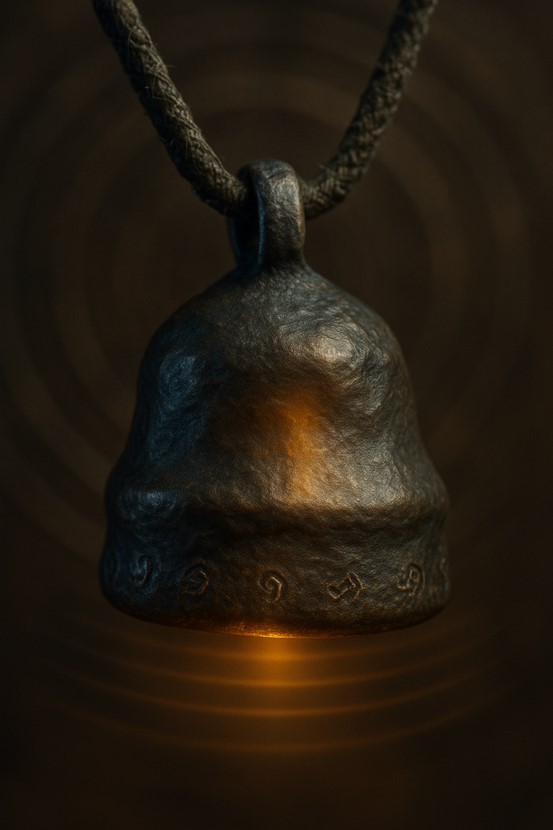
Perception of Activation: Karakia 411 of the Resonant Mold
User’s Perspective:
• Sight: The glyphs on the lower edge of the pendant glow faintly with a dull orange shimmer, like furnace-coals whispering before reignition.
• Sound: No audible note emerges in the air—but a clear, resonant tone rings inside the chest, vibrating gently with the rhythm of the lungs. Each inhale subtly harmonizes with the pendant’s pulse.
• Touch: A warm ripple passes through the linen cord and into the wearer’s collarbone, like a forge-hammer’s reverberation echoing from far away.
• Smell: Hints of soot, cooling bronze, and rain-steamed stone rise faintly—memories of old foundries and fresh-poured molds.
• Taste: A metallic tang coats the tongue briefly, reminiscent of copper, ash, and something nearly floral, like brass blossoms in heat.
Extra-Sensory (User):
• Metal Awareness: All nearby shaped metals within 30 feet become faintly “present,” as though their resonances were now part of the ambient field.
• Emotional Echo: The pendant subtly tunes to emotional states—its vibration deepens when the user is afraid, sharpens when focused, and stills completely if deceit is attempted nearby.
• Memory Tether: If used during craft, the pendant briefly recalls the last successfully forged item by the user—only as tone and scent, not as image.
Observer’s Perspective:
• Sight: The pendant emits no light, but minute motes of soot lift and fall in rhythmic pulses, as if gravity is following a silent toll.
• Sound: Those standing within arm’s reach may feel a slight internal “tick” in their sternum but hear nothing aloud. Faint tools in the area (hammers, chisels) may buzz imperceptibly.
• Touch (if handled): The pendant feels slightly warmer than it should, with a slow, heartbeat-like pulse when gripped.
• Smell: Observers may catch whiffs of worked bronze or scorched flax, especially if they’ve spent time in forges or bell-works.
Extra-Sensory (Observer):
• Construct Empathy: Sentient constructs or magically animated metal forms become uneasy or focused, their internal harmonics briefly syncopated.
• Sound-Memory Interference: Musical instruments within 15 feet may momentarily go out of tune or resonate with the pendant’s frequency.
Positives:
• Non-intrusive yet deeply immersive activation with lasting aftereffects in forging or musical applications.
• Enhances resonance sensitivity, useful for crafting, detection, and subtle social manipulation.
• Provides tactile and emotional affirmation—feels “correct” when used well.
Negatives:
• Draws the attention of metal-sensitive or resonance-tuned entities.
• Can interfere with fine musical tuning or magical instruments when active.
• May cause brief disorientation in individuals highly sensitive to internal sound or vibrational changes.
Crafting Recipe: Forging the Karakia 411 of the Resonant Mold
A sacred act of sonic metallurgy drawn from ancestral bellfounding traditions in Saṃsāra.
Materials Needed:
- Bell-Bronze Ingot (1 lb): Must be smelted from salvaged ceremonial bell fragments, ideally from no fewer than three different sources.
- Burnt-Linen Cord (1 ft): Stiffened with forge soot and treated in woodsmoke for three consecutive dawns.
- Soot-Char Powder (small pouch): Collected from a forge that has never gone cold in 100 days.
- Glyph-Marks (etched pattern set): Cast or engraved symbols representing the “first note” of four ancestral bells (must be known to the crafter).
- Tuning Embers (3): Minor magical embers harvested from a chimed ritual brazier used during a full moon.
- Singersalt (pinch): Alchemical seasoning used to bind sonic essence into metal during final cooling.
Tools Required:
- Forgemaster’s Crucible or Ritual Melting Pan
- Tuning Hammer (bellwright’s size)
- Runic Etching Pick or Song-Chisel
- Harmonic Retort Bell (tuned to low A or G)
- Small Molding Basin lined with ceramic ash
- Leather bell tongs or spirit-cloth gloves
Skill Requirements:
- Metalworking (Intermediate) – Must have shaped or poured a sound-producing object at least once.
- Lore: Resonant Craft or Bellfounding (Basic) – Understanding of symbolic note structures in metallic traditions.
- Chanting or Karakia Knowledge (Basic) – Capable of voicing a steady tone for at least 3 minutes while working.
- Alchemy or Enchantment (Minor Familiarity) – Ability to preserve sonic properties during cooling phase.
Crafting Steps:
- Forge Preparation:
Bless the forge or brazier with a whispered karakia of sound’s beginning. Line the molding basin with ceramic ash and place the harmonic retort bell nearby to capture overtones. - Melting & Mixing:
Smelt the bell-bronze ingot in the crucible. Once liquefied, stir in the soot-char powder and tuning embers while humming a constant harmonic tone. Add the pinch of singersalt just before the pour. - Pouring & Shaping:
Carefully pour the metal into the prepared mold while maintaining the chant. Do not allow interruption in tone—any silence or voice break taints the harmonics. - Cooling Phase:
During the cooling (3 hours minimum), recite the glyph-karakia every 15 minutes. Use the tuning hammer to gently strike the mold’s rim at each repetition to bind the tone. Let no external sound interfere. - Etching Glyphs:
Once cooled and hardened, use the runic etching pick to carve the four glyphs along the base. Each must correspond to a “first bell note” from a known forge or shrine. - Cord Binding:
Thread and knot the burnt-linen cord through the pendant’s head. Secure the knots with breath-infused chant and smoke the final product over a forge’s breath until the pendant hums faintly. - Attunement Chant:
Place the item beneath a cooling bell or beside a resonant metallic wall. Speak the full karakia of the Resonant Mold for six minutes. If the glyphs begin to shimmer faintly, the crafting was successful.
Total Time: 8–12 hours (excluding material acquisition)
Expected Yield: One Karakia 411 of the Resonant Mold, bound to the voice and touch of the creator until gifted or ritually transferred.
Story of Tuning Girl and Bronze That Remembered
(As recounted from the Cracked Bark Codex, translated clumsily from the lost Cant of Bellroot)
And in a time when sounds were still young and the metals had not yet closed their ears, there was a girl, small as a bell-frog but with lungs of iron-flower bloom, and her name was Ha-Tira Who Sang to Molds.
She was not liked in the forge-circle, for she did not strike nor pour as others. When the bronze was hot, she would not hammer. When the mold was carved, she would not shout. When the bells were cooled, she would listen to them long, and then say, “You’ve cast it deaf,” which was rude, very rude.
The masters scowled and the apprentices mimicked, and she was given slag to clean, soot to fold, and cords to patch. Yet even in punishment, Ha-Tira hummed. She hummed when the others coughed smoke, she hummed when the ladles spilled, and she hummed when the rain silenced the chimneys.
Now there came a storm season unlike others, with rain so heavy it filled the bells and cracked the walls, and thunder rolled in the brass like ghosts trying to breathe. All the great bells of the city rang wrong and the resonance was broken and the people grew unsound—quarrels, tremors, bad dreams, and soured milk.
The masters tried to recast their bells, but the molds shattered. The priests tried to chant, but their voices failed mid-rung. It was Ha-Tira who walked into the forge alone with only slag and a scarf of burnt linen. No one followed.
For nine forge-hours she sang to the slag as it melted, not in words but in note, and she pressed it into an old mold that others had burned by mistake. She etched it with her fingers, smeared in soot, and when it cooled she wrapped it and held it. It did not ring.
But when she stood atop the bell-tower, she held the lump aloft and whispered her karakia, and all the broken bells of the city remembered. They resonated together—one note, perfect, echoing—not just in air but in water, stone, and marrow.
The city stilled. The milk sweetened. The madness quieted.
Ha-Tira vanished the next dawn. Some say she melted into the echo. Others say she became a whisper that follows all good forges. But the pendant, rough and low, remained. Not pretty. Not shaped. But never silent.
Moral: The note that listens shapes truer than the hammer that shouts.
Suggested conversions to other systems:
Call of Cthulhu (7th Edition)
Item Name: Karakia 411 of the Resonant Mold
Type: Minor Mythos Artifact
Description: A lumpen bronze pendant etched with harmonic glyphs, it resonates faintly in the presence of certain metals or beings touched by sound-based rituals.
Game Mechanics:
• When worn, grants a +10% bonus to Craft (Metalwork) and Listen while active.
• Once per day, may emit a harmonic pulse that gives a temporary insight into the structural stability of metallic objects (e.g., locks, vaults, weapons). Grants advantage on rolls to avoid mechanical failures.
• If exposed to eldritch rituals involving sonic resonance, the pendant may react unpredictably—causing hallucinations or involuntary chant repetition (SAN loss 1D3).
Activation: Spoken chant and a soft touch to a metallic surface.
Blades in the Dark
Item Name: Resonant Mold Pendant (Karakia 411)
Item Type: Fine Arcane Implement
Load Cost: 1
Game Mechanics:
• When carried, this pendant grants +1 effect on actions involving crafting, metalworking, or using vibration/sonic cues (e.g., Tinker to detect forged seams).
• Once per score, may emit a silent pulse that distracts a metal-sensitive device or construct (e.g., disabling a security bell or alert golem for a moment).
• On downtime, using the pendant during crafting reduces project coin cost by 1 (requires forge access).
Roleplay Use: Recognized by underguild bell-casters and old smith-spirits. May earn favors—or debts—when shown in the wrong circle.
Dungeons & Dragons (5e)
Item Name: Karakia 411 of the Resonant Mold
Wondrous Item, common (requires attunement)
Slot: Necklace
Properties:
• While attuned and worn, the bearer gains advantage on Intelligence (History) and Tools (Smith’s Tools) checks when dealing with bells, alloys, or resonant structures.
• Echo Pulse (1/day): As an action, cause a harmonic wave to ripple out 30 ft. Constructs or objects made primarily of metal must succeed on a DC 11 Constitution saving throw or be stunned for 1 round (no effect on living creatures).
• Resonant Awareness (passive): While touching metal, the wearer may detect imperfections, weak spots, or false metals (like fool’s gold or glamoured silver) with a successful DC 12 Intelligence check.
Knave (Ben Milton version)
Item Name: Karakia 411 of the Resonant Mold
Type: Magic Item
Usage: Worn (Neck)
Effect:
• Grants +1 bonus when interacting with any object made of metal (locks, hinges, traps, etc.).
• Once per dungeon or journey, the wearer may chant to reveal hidden resonance—exposing hollow walls, unstable ceilings, or concealed doors within 30 ft.
• If used during a crafting rest, reduces crafting time for metal items by half.
• Metal beasts or constructs (if any exist) must Save or hesitate upon first encountering the wearer (disadvantage on their first action).
Notes: The pendant has no resale value to normal merchants but is revered by bellfounders and craft cults.
Fate Core
Item Name: Karakia 411 of the Resonant Mold
Aspect: Ancient Bellfounder’s Chant-Infused Pendant
Item Type: Magical Trinket (Neck Slot)
Game Mechanics:
• Invoke the item’s Aspect to gain a +2 bonus when attempting actions involving sound, metalwork, vibration detection, or resonant crafting.
• Once per scene, the bearer may Create an Advantage by harmonizing the pendant with ambient noise or metallic vibrations—examples include “Echo Trap Revealed” or “Weak Point Detected.”
• Can be Compelled when within proximity to haunted or cursed metalwork, as the pendant may resonate involuntarily and draw unwanted attention.
Permissions: Requires a background or stunt tied to crafting, smithing, or ritual chanting.
Refresh Cost: 0 (common trinket)
Numenera & Cypher System
Item Name: Karakia 411 of the Resonant Mold
Item Level: 3
Form: Necklace
Rarity: Common Cypher (Wearable, Non-Depleting)
Effect:
• Grants an asset on crafting tasks involving metal, harmonic structures, or sound-based mechanisms.
• When activated (1 Intellect point), emits a silent pulse revealing hidden weaknesses or flaws in metal structures within short range.
• Once per day, causes a construct or intelligent metal object to skip a turn unless it succeeds on a Level 3 Intellect defense task.
Additional Use: When worn during rest or meditative crafting, wearer regains 1 extra point to their Intellect Pool if near any ringing object (e.g., bells, chimes).
Pathfinder (Second Edition)
Item Name: Karakia 411 of the Resonant Mold
Item Type: Worn Item – Wondrous Item (Neck Slot)
Level: 1
Price: 6 gp
Usage: Worn
Bulk: L
Activation: 1 Action (Interact) – Once per Day
Effect: Emit a harmonic pulse in a 15-foot emanation. All metallic constructs in the area must succeed on a DC 15 Fortitude save or become stunned 1.
Passive Benefits:
• You gain a +1 item bonus to Crafting checks involving metalwork, bells, or acoustic mechanisms.
• You may Detect Harmonic Instability (as a 1st-level cantrip, once per hour) in objects made of metal—this acts as a specialized detect magic for hidden flaws.
Traits: Magical, Sonic, Resonance, Common
Savage Worlds (Adventure Edition)
Item Name: Karakia 411 of the Resonant Mold
Item Type: Magical Gear (Worn)
Rarity: Common
Slot: Worn on Neck
Game Mechanics:
• Passive: Grants +1 to Repair and Notice rolls involving metallic objects or vibrations.
• Active Ability – Sonic Pulse (1/Encounter): As a free action, emit a harmonic tone in a Medium Blast Template. All constructs or metal-bound creatures within must roll Smarts at −2 or become Distracted and lose their next action.
• Craft Echo (Downtime Use): When used during a day of crafting, reduces material cost by 25% for metallic or resonance-based items.
Drawback: In areas with active anti-magic fields or sonic interference, the item loses all function until recalibrated with a successful Repair (−2) roll.
Notes: Favored by artisans, but viewed as “sacred junk” by mercenaries—only truly appreciated by bellwrights, archivists, and resonance cultists.
Shadowrun (6th Edition)
Item Name: Karakia 411 of the Resonant Mold
Item Type: Magical Focus (Artisan/Resonance)
Availability: 4R
Cost: 1,000¥
Slot: Neck (Worn)
Game Mechanics:
• Functions as a Rating 1 Focus for Artificing or Artisan Traditions.
• Grants +1 dice to tests involving Artisan Skill, Resonance-based Perception, or Sound-sensitive Tech Interfacing.
• Once per scene, may emit a resonance pulse: causes one adjacent metallic device or construct (with Device Rating ≤ 3) to suffer a –2 dice penalty on its next action.
• Weakens in strong noise zones or against cyberware with sound-suppression.
Notes: Recognized by fringe resonance cults and underground sculptor-nodes; illegal in corporate acoustic research zones.
Starfinder
Item Name: Karakia 411 of the Resonant Mold
Item Level: 2
Item Type: Hybrid Item (Magitech)
Price: 200 credits
Usage: Worn, Constant
Bulk: L
Game Mechanics:
• Grants a +2 insight bonus to Engineering checks involving metallic objects, bells, resonance chambers, or sonic conduits.
• Once per day, the wearer can emit a pulse (standard action) that forces all constructs or sound-sensitive tech within 30 ft. to make a Fortitude save (DC 12) or become off-target for 1 round.
• Synergizes with sonic weapons or spells: increases their critical hit range by +1 when pendant is worn.
Restrictions: May malfunction in null-gravity environments unless specially calibrated (DC 15 Engineering check).
Traveller (Mongoose 2nd Edition)
Item Name: Karakia 411 of the Resonant Mold
Item Type: Minor Tech Artifact (Cultural/Anomalous)
Tech Level: 9
Mass: Negligible
Value: Cr800
Game Mechanics:
• While worn, grants DM+1 to Electronics (Sensors) and Mechanic tasks involving metal-based resonance systems.
• Once per day, may activate to emit a pulse affecting any robot, drone, or metal-structured machine within 10 meters, forcing it to make an INT check (8+) or suffer –1 DM on its next check.
• Can be used as a downtime tool to reduce Construction or Repair project time by 10% (requires relevant skill and crafting bay).
Cultural Quirk: Believed by some fringe sects to “sing metal true”; worn openly may inspire awe or suspicion among colonists or artisan guilds.
Warhammer (Wrath & Glory)
Item Name: Karakia 411 of the Resonant Mold
Item Type: Relic (Tier 1, Rank 1–3 recommended)
Rarity: Uncommon
Keywords: Relic, Sonic, Artisan, Tech-Priest
Game Mechanics:
• While worn, grants +1 bonus die to Tech or Scholar tests involving ancient machinery, bells, or sound-based mechanisms.
• Activable Ability (Once per scene): Emit a pulse (Minor Action) that causes all metal-bodied constructs or servitors within 6 metres to suffer +1 DN to their next action.
• If used during downtime as part of a crafting or tech-ritual, reduce cost of project materials by 25%.
Complication Risk: If used near corrupted machinery or warp-tainted constructs, there is a 25% chance it creates a false harmony, increasing complication range by 1 for 1 hour.
Flavor: Revered by Forge World artisans and bell-machinists; loathed by those who hear in non-linear harmonics (e.g., psykers or warp-entities).