
Tier: 1
Rarity: Common
Roleplay Emphasis: • Beggar
Slot: Worn (neck or wrapped around wrist)
Lore: When the copper-sky famine struck the salt-basin streets of ancient Mūrehina, it is said an old pauper—blind in both eye and status—sang daily from beneath the shadow of a broken temple gate. His voice was cracked like parched earth, but the words he spoke—ancient karakia passed from wandering lineages—carried the rhythm of mercy itself. On the seventh day, a child, a bird, and a silent priest all gave him the same thing: not coin, but presence. In return, the pauper wove the Karakia of the Opened Hand into a thread of cloth he never let go, and which, it is said, now listens more than it speaks.
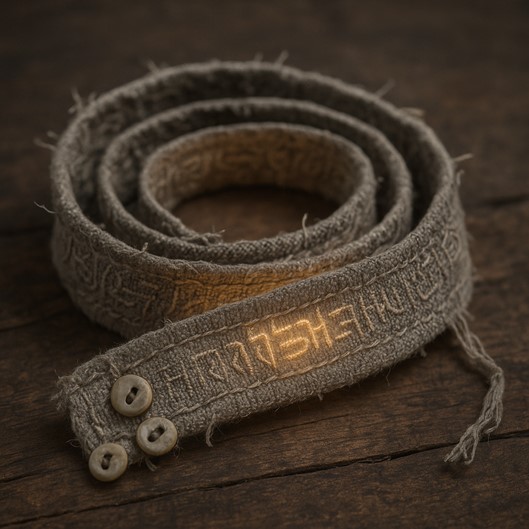
Description: A frayed length of grayish cloth, hand-wrapped in patchy looped spirals with worn shell buttons stitched unevenly along its edge. Etched into the fabric in weathered thread are phrases of hunger and humility in ten minor trade dialects. It carries the scent of dry stone and warmed ash, and emits a faint rustle like old prayers caught in wind. The center glows dully with use—warmed not by magic, but by being held.
Detailed Stats
Passive Magic Effects:
- Hunger Recognition: You can always identify the most desperate individual in a crowd (magically revealed as a brief shimmer in your peripheral vision).
- Open-Handed Grace: Gain a +1 bonus on Persuasion, Barter, or Deception rolls made when asking for food, lodging, or minor aid from strangers.
- Beggar’s Memory: Once per day, recall the last act of generosity (toward or from you) in perfect detail, regardless of time passed. This includes emotional impressions and tone.
Activable Magics:
- Karakia of Breadless Sustenance (1/short rest):
Whisper the chant to reduce your daily food need to zero for 24 hours. The effect carries a faint spiritual fullness but no nourishment—this does not heal or energize. - Chant of Coinless Worth (1/day):
Sing this aloud while gesturing the item toward someone with higher social standing. They must make a WIS saving throw (DC 12) or feel compelled to give you a small gift, a bit of food, or momentary shelter. Does not work on hostile or magically shielded individuals. - Echo of the Opened Hand (1/week):
Once per week, if you give away something meaningful to you (not magical), and then whisper this karakia, you gain a minor but immediate benefit:- Food appears within a 5 ft radius (enough for one person),
- A wound stabilizes,
- A stranger turns toward you with unexpected kindness.
This magic never works if the gift is given with expectation.
Tags: Spoken-Magic, Folk-Worn, Urban-Ritual, Charity-Bound, Spirit-Attuned, Trade-Dialect, Poverty-Tied, Shelter-Magic, Mercy-Linked, Roleplay-Centric, Street-Favored, Alms-Blessed, Cracked-Voice, Downtrodden-Magic, Silent-Plea, Hearthless-Woven, Mendicant’s Relic, Kindness-Echo, Spoken-Survival, Dustwalker’s Gift
Shops and Market Paths for Karakia 297 of the Opened Hand:
1. Rafter-Ridden Reliquaries (Old Quarter of Vaṡ-Kho):
Located in the hollowbones of collapsed shrines, these rooftop shanty-markets are overseen by ex-clergy and relic-scavengers. The Karakia of the Opened Hand may be bartered here in exchange for public storytelling, compassionate labor, or a single night of city cleanup. Price in coin: 12–15 gp, but vendors strongly prefer trades based in emotional sincerity or shared hardship.
2. Whisper-Nook Booths (Under-arches of Drenvahl’s Walk):
Along the oldest aqueducts of the steam-sunk city of Drenvahl, beggar-touched talismans are sold by hush-merchants—vendors who refuse to speak unless spoken to with a sacred phrase. One must kneel and offer a crumb, coin, or confession before even seeing the wares. Here, the item fetches 8 gp, but may be given freely if the buyer answers a question about suffering.
3. Charity-Keeper’s Shelters (Rotational shrines in Temple‑Edge districts):
In cities like Mēkoth or Tilari, the karakia is stocked in mobile shrine-wagons run by humble acolytes. For those who serve in soup-lines or wash temple floors, the item may be offered in lieu of wages. For outsiders, it is available only to those who swear to use it to aid others. Cost: 6 gp if approved by the elder-priest or shrine minder.
4. Dustlane Folk-Bazaars (Nomadic crossroads settlements):
In trade knots deep in the Saṃsāra interior, wandering patchweavers and orphans display karakia-stitched items on rugs made of refuse and leafcloth. No fixed price. They ask instead for “an honest story, a shared meal, and a promise”. The item appears amid heirlooms and bones—priced spiritually, not materially. If forced or stolen, the magic fades for 13 days.
5. Apothecary Addenda Bins (in wealthier urban markets):
Some herbists and sympathetic menders keep one or two of these sashes among “folk curios” for those willing to browse through the neglected corner of the shop. Cost: 10 gp, often mislabeled as a “charm of minor warmth.” These sellers rarely know its full power, and may discount it if the buyer appears ragged or speaks in Trade-Cant Verse.
Price Range in Coin: 6–15 gp, though non-monetary exchange is more commonly accepted or even preferred depending on region. The item is culturally considered a “begging oath charm” and often seen as a sacred trust, not mere merchandise.
Roleplay Use of Karakia 297 of the Opened Hand in Defense and Offense Across Environments:
Urban Environments (Markets, Alleyways, Temple Edges)
Defense:
- In crowded plazas or dangerous alleyways, a beggar may use the Karakia of Breadless Sustenance to endure hunger when escape or aid is unlikely. By appearing spiritually nourished while physically starved, they dissuade pity-based manipulation or harm.
- Chant of Coinless Worth becomes a form of urban shield: in front of guards, officials, or merchants, it turns derision into reluctant generosity. The sudden softening of a rich patron’s mood can redirect aggression or create a window to flee.
Offense:
- When cornered or harassed, invoking the Echo of the Opened Hand after surrendering a personal item (even a tattered bootlace or kept stone) might cause a brawler to hesitate, a guard to falter, or food to appear—fuel for a last push or bribe.
- The beggar’s ability to recall emotional debts (Beggar’s Memory) allows them to roleplay into blackmail, social leverage, or ironic turnabout: “Do you remember what you took from me under that arch last Frostmoon?”
Wilderness and Rural Settings (Crossroads, Wayshrines, Forest Paths)
Defense:
- In solitary environments where threats include starvation or natural predators, Breadless Sustenance keeps the beggar alive when others collapse from hunger, allowing them to endure long walks between outposts or forest delays.
- The karakia’s aura often pacifies natural animals that would otherwise see the beggar as prey. While not magical beast control, their aura of need often reads as non-threatening, buying just enough time to back away.
Offense:
- By performing the chant in front of suspicious villagers or suspicious druids, the beggar may subvert hostilities through vulnerability. “Who would lie with nothing to lose?” They become disarmingly powerful in their helplessness.
- Abandoning a scrap of cloth or a relic mid-chant at a bandit camp or beast’s lair may trigger Echo of the Opened Hand, generating a distraction (a sudden sparrow, a breeze of warmth, a moment of confusion) to create opening for others.
Sieges, Ruins, or Underworld (Crisis, Tunnels, Abandonment)
Defense:
- Within catacombs or ruins, a beggar’s hum or whispered karakia might be misinterpreted as ancient warding. Spirits and scavengers may hesitate—especially those who detect intent.
- The karakia’s passive Hunger Recognition can identify the hungriest spirit, beast, or fellow captive. Appealing to their desperation, the beggar aligns themselves with fellow survivors instead of becoming the first victim.
Offense:
- In a siege or famine, when others hoard, the beggar giving away even a crust of food then activating Echo of the Opened Hand might rally latent allies or receive spirit aid.
- Against those blinded by power, invoking Coinless Worth may strip away social armor—compelling a commander to listen, a priest to question orders, or a soldier to lower their blade just long enough to matter.
Perception of Activation: Karakia 297 of the Opened Hand
User’s Perspective
Sight:
The center of the cloth glows faintly with a soft, body-warm sheen—not luminous, but visibly alive. The thread-script in the dialects of hunger seems to shimmer momentarily, curling slightly as if whispered prayers were exhaled through them.
Sound:
A whisper of distant street-prayers and temple bells drifts just at the edge of perception, like memories of sound rather than sound itself. Occasionally, the beggar hears a distinct coin dropping in some far-off alley that doesn’t exist.
Smell:
The scent of dry hearth ash and sun-warmed stone intensifies, mingling with the faintest traces of lentil broth, cracked barley, or shared meals. These are phantom scents—comforting, not nourishing.
Touch:
The cloth feels warm—not with heat, but with attention, as if gripped by a kindly hand. There’s a subtle trembling under the fingers, as though the woven spirals hum in response to the bearer’s need.
Taste:
The mouth fills with a ghostly aftertaste of something longed for—bread, salt, or even fresh rain. It is emotionally nourishing, though physically empty.
Extra-Sensory:
There is a spiritual tug, as if invisible eyes gently acknowledge your existence. You sense one memory from another person nearby: a moment when they once gave something freely. A warmth forms in your chest, not unlike hope.
Observer’s Perspective
Sight:
The cloth does not glow so much as dim the light around it. Observers see the beggar momentarily as the center of a soft hush. The item does not draw attention but quiets the space it inhabits.
Sound:
The observer hears no distinct sound unless within touching distance. If nearby, they may catch a whispered word in a dialect they don’t understand—yet still somehow know to mean “share.”
Smell:
To those sensitive to magical cues or spiritual auras, the air faintly smells like old bread crusts or worn cloth soaked in temple incense.
Touch (if they handle it):
To others, the cloth feels oddly warm, slightly quivering, and used—like an heirloom handed down too many times.
Extra-Sensory:
An empathetic observer may momentarily feel their own palms itch or feel an internal pull to offer kindness. A hostile observer may feel inexplicably irritated, as if reminded of guilt unspoken.
Positives
- Induces quiet emotional resonance: kindness, memory, mercy.
- Creates space for conversation or mercy in unlikely places.
- Disarms suspicion and softens rigid social interactions.
- Calms internal stress or anxiety momentarily.
Negatives
- Overuse may cause emotional fatigue in the bearer—an echoing hollowness.
- Those who have committed cruelty may react with discomfort, even aggression.
- In highly militarized or cynical areas, the activated item marks the user as weak or vulnerable.
- Magic-resistant beings or constructs may detect its aura as “off-pattern” or “emotionally manipulative.”
The activation is not showy. It is felt, like hunger itself—not seen, not shouted. In the world of Saṃsāra, it is not the karakia’s volume that holds power, but the silence left in its wake.
Crafting Recipe: Karakia 297 of the Opened Hand
Materials Needed
- Frayed Gray Cloth (1 strip): Must be personally worn for at least one full day while sleeping on stone or soil, then hand-washed in cold river water.
- Shell Buttons (3 or more): Collected from discarded garments or refuse heaps; must be mismatched and smoothed by time.
- Thread of Humility (1 spool): Any common thread, but must be dyed in a mix of ashwater and leftover hearth oil, spoken over with seven phrases of hunger in seven tongues.
- Phrases of Need (10 dialects): Transcribed or stitched phrases (blessings, requests, memories) from lesser trade tongues—can be phonetic. The writer must know true need or imitate it with sincere focus.
- Whispered Offering (1): A non-material offering given during the process—such as a heartfelt story, honest tear, or shared meal during crafting.
- Holding Ember (1): A small stone heated in an old brazier or hearth and cooled while wrapped in cloth. Symbolizes “warmed not by magic, but by being held.”
Tools Required
- Bone Needle or Threading Twig
- Patch-Stone (a rough stone to press stitches tight)
- Lantern with Soft Flame (for low-light stitching; enhances focus)
- Char-Stick or Coal Shard (to mark spirals and glyph positions)
- Singing Bowl or Hollow Shell Drum (to maintain rhythm during stitching of glyphs)
Skill Requirements
- Folk Magic Craft (Beginner): Familiarity with spiritual or cultural crafting rites.
- Sewing or Weaving (Basic): Ability to hand-stitch, tie spirals, and anchor buttons.
- Linguistics or Dialect Familiarity (Low): Understanding or mimicry of trade dialects for inscription.
- Empathy or Spirit Alignment (Moderate Roleplay Insight): Ability to channel sincere emotion into the item.
Crafting Steps
- Prepare the Cloth:
Wear the cloth scrap for one full sleep under open sky or in a place of abandonment. Afterward, rinse in a running stream or basin blessed with ash and silence. - Inscribe the Spirals:
Using the char-stick or coal shard, draw patchy spiral loops across the fabric. These loops represent cycles of hunger and the hand that always returns open. - Stitch the Phrases:
One by one, carefully sew or ink the ten trade phrases around the spirals. Speak each aloud softly as you work. If you falter in pronunciation, begin the stitch again. - Attach the Buttons:
Sew each worn shell button along uneven edges, allowing them to clatter slightly. These represent echoed alms and must be stitched without measuring. - Imbue with Ember:
Wrap the Holding Ember in the cloth, press it to your chest, and whisper a story of loss or gift-giving until the heat fades. The warmth must transfer into the cloth. - Complete the Whispered Offering:
Share a piece of your meal, memory, or voice with another while holding the nearly finished item. The cloth must witness generosity given without promise of return. - Final Chanting and Sealing:
Tap gently on each spiral with a bone needle or drumstick while humming a monotone note for seven breaths. Roll the cloth, leave it under your head while sleeping, and awaken with it clenched in your hand.
The item will function if all steps are followed with sincerity. False intent or shortcutting rituals results in a dead cloth—frayed, silent, and unheeded by the karakia spirits.
Cloth Who Hungered With No Mouth and Wept With No Eyes
Recovered from the Redstone Fragments of Lo-Varni, as translated thrice and faded in charcoal
There was a Time-Before-the-Time-That-Was-Not-Time, when skies wore beggar’s cloaks and ground sighed dry of fruit. In the half-stone city of Nine-Hollows, among the cracked pots and the songs of broken teeth, there lived the One-With-Less. This one had a name, but it was traded long ago for a cup of fish-bone tea and half a shadow of shelter. So he was called No-Name, and this was both cruel and true.
No-Name walked with the lean of those who know the taste of forgetting. His sandals were sisters no longer, and his cloak was made of past stories stitched in dirt. He asked for nothing—not bread, nor coin, nor glance—only a place to sit where no one’s memory would cling.
But in the winds of the Ninth Hollow, there came a child with words not yet softened. She spoke to No-Name, saying, “Why do you not sing? My mother says old ones must sing for warmth when the gods go deaf.” And No-Name, whose tongue had rusted from disuse, opened his mouth and a sound like creaking windows fell out.
And so he sang.
He sang of hunger not of belly, but of soul. He sang of giving names to empty bowls so they might feel held. He sang of the smell of stone after it has been warmed by someone else’s fire. And the child listened, and she wept, for she understood none of it and all of it at once.
Moved, the child tore the hem of her dress and gave it to No-Name, whispering, “For your words to hold.” Then came a second figure—a widow whose ears were full of grief. She placed a shell button, worn from prayers, into his palm. “For what was taken,” she said. A third came, this one silent, placing nothing but a nod near his foot, and even that was weighty.
No-Name, who now had fragments, sewed them with a bone thorn and wrapped them with a string made of breath. Upon it he stitched the words he remembered and the ones he didn’t, in languages he had begged in and been beaten in. The cloth he made was small, frayed, and imperfect. But when it was held, it sang back to him—not loudly, but like the warmth left in a shared blanket.
And so the Karakia of the Opened Hand was born. Not from gold or fire, but from the sacred trade of unspoken giving. They say it weeps when kindness is near and tightens when cruelty walks past. Some claim it once fed an entire alley from the smell of boiled kindness. Others whisper it turned a soldier’s blade to vapor when he hesitated at the sight of a beggar’s courage.
The last tale says No-Name vanished on a night of copper rain, his cloth left folded on the steps of the temple he was never allowed to enter. The cloth was dry, though the world was wet. It was warm, though no hand held it.
Moral of the Story: That which is given with no promise of return will one day return when no promise remains.
Suggested conversions to other systems:
System: Call of Cthulhu (7th Edition)
Item Name: Karakia of the Opened Hand
Type: Folk Magic Talisman (Worn)
Use: Once per day
Effects:
• Aura of Need: When worn openly, gain a +10% bonus to Persuade or Fast Talk when asking for aid or sympathy from strangers.
• Chant of Breadless Sustenance: Once per day, negate the effects of missed meals for 24 hours (no SAN loss from starvation-related scenes).
• Echo of Memory: Once per session, recall with perfect clarity the last time someone gave or received something freely in your presence (including emotional tone).
Mythos Implication: If used in high-Mythos areas, some spirits of poverty or forgotten gods may respond with brief warmth or curiosity rather than hostility. This may alert Keepers to modify creature reactions.
Sanity Cost: None directly, but prolonged dependence on the cloth may invoke a sense of helplessness (Keeper’s discretion).
System: Blades in the Dark
Item Name: Karakia of the Opened Hand
Item Type: Special Item (Common)
Load: 0
Abilities:
• Open-Handed Grace: Gain potency when Consorting or Swaying sympathetic NPCs by sharing food, gifts, or stories.
• Chant of Coinless Worth: Once per score, compel a low-tier NPC to offer a small favor or protection, no coin required (counts as a flashback with no stress cost if tied to a past act of generosity).
• Folk Tag: Use this item during a downtime action to reduce Heat if used while aiding the poor or forgotten in the district.
Notes: The item is not flashy; it offers edge only in situations of empathy, charity, and identity. Some Spirit Wardens have been known to respect it silently.
System: Dungeons & Dragons (5e)
Item Name: Karakia 297 of the Opened Hand
Wondrous Item, common (requires attunement)
Slot: Worn (neck, wrist, or wrapped around a limb)
Passive Effects:
• When requesting aid or shelter, gain advantage on Persuasion checks if roleplayed with sincerity.
• Once per long rest, you may substitute one failed Charisma (Persuasion) check with a flat 15 result, if the target is not hostile.
Activable Abilities:
• Breadless Sustenance: As an action, you may chant to reduce food requirements to zero for 24 hours.
• Coinless Worth: Once per day, target a non-hostile humanoid who can hear you. They must succeed a DC 12 Wisdom save or be compelled to offer basic aid (a meal, shelter, or minor object).
Roleplay Bonus: If the wearer gives something meaningful (nonmagical) freely during a session, the item glows faintly and restores 1 HP once (no action required).
System: Knave (Revised)
Item Name: Karakia of the Opened Hand
Item Type: Magical Gear
Slot: 1 (Worn, always visible)
Properties:
• Mercy Echo: If worn while making peaceful entreaties, gain +2 to reaction rolls with NPCs of Neutral or Friendly disposition.
• Beggar’s Chant: Once per dungeon/day, you may avoid the effects of hunger or starvation through whispered prayer.
• Favor from the Forgotten: If you give away an item of personal significance, regain 1d4 HP or remove one condition (Referee’s discretion).
Notes: The karakia is not protection by force, but by sentiment. Enemies who value honor, piety, or kinship may hesitate upon seeing the cloth, giving a 1-round delay in hostile action once per encounter.
System: Fate Core
Item Name: Karakia of the Opened Hand
Aspect: Sacred Cloth of the Forgotten Gift
Passive Benefit: Once per session, invoke this item for free when using Empathy or Rapport to gain trust, especially in situations involving need, vulnerability, or generosity.
Stunt:
Echo of Mercy: When you compel an NPC’s empathy by sharing a past struggle or act of giving, reduce the difficulty of the overcome or create advantage roll by 2.
Use:
• Can be invoked to create an advantage in social scenes where charity, humility, or suffering is at stake.
• If given away freely during a scene, the bearer receives a fate point at the start of the next session.
System: Numenera / Cypher System
Item Name: Karakia of the Opened Hand
Item Type: Cypher (Subtle Artifact), Level 3
Form: A worn cloth with trade-script glyphs, bound with buttons and weathered fabric.
Effect:
• Breadless Sustenance: As an action, wearer may activate to ignore the need for food and water for 28 hours.
• Open-Hand Invocation: Once per day, speak the karakia to gain an asset on any task involving persuasion, empathy, or emotional connection.
• Spiritual Glimmer: Non-player characters who witness the activation and are not hostile become one step more favorable on the reaction scale (GM discretion).
Depletion: 1 in 1d20 (each use)
System: Pathfinder 2e
Item Name: Karakia of the Opened Hand
Item Type: Worn Item (Worn, Magical, Common), Level 1
Usage: Worn sash, cloth, or armband
Bulk: L
Passive Effects:
• You gain a +1 item bonus to Diplomacy checks when asking for aid, shelter, or mercy, particularly when you offer a personal item or story in exchange.
Activated Effect (1/day):
Breadless Sustenance – [Concentrate] [Divine] [Emotion]
You invoke the karakia with a spoken chant. For 24 hours, you do not suffer penalties or effects from hunger or dehydration.
Reaction (1/day):
Echo of the Opened Hand – [Emotion] [Mental]
Trigger: You offer a meaningful non-magical item or favor to an NPC.
Effect: The target must attempt a Will save (DC 15). On a failure, they are compelled to assist you (offering minor aid, opening a door, providing shelter) for up to 10 minutes.
System: Savage Worlds (Adventure Edition)
Item Name: Karakia of the Opened Hand
Item Type: Worn Folk Talisman
Requirements: Novice, Tier 1
Encumbrance: Negligible
Passive Effects:
• +1 to Persuasion when requesting help or appealing to a target’s mercy or charity.
• The wearer does not suffer Fatigue from hunger or thirst for 1 day after activation.
Powers (1/day):
• Soothing Voice (Minor Custom Power): With a short chant, the wearer may attempt a Spirit roll. On success, a non-hostile target shifts one step more favorable (friendly → helpful). Failure causes no effect. Critical failure causes the target to become suspicious.
• Sacrifice for Favor: If the wearer gives away something meaningful (even minor), they may reroll a failed Persuasion or Performance check made in the same scene.
Notes: When worn openly, most common folk react with cautious sympathy. However, higher-ranking or corrupt individuals may view it with disdain or suspicion.
System: Shadowrun (6th Edition)
Item Name: Karakia of the Opened Hand
Type: Worn Focus (Street Talisman)
Availability: 2R
Cost: 800¥
Mechanics:
• Effect: Provides +1 die to Con or Influence tests when appealing to empathy, desperation, or invoking shared hardship.
• Once per Day: The user may invoke the karakia to ignore the effects of hunger, fatigue, or dehydration for 24 hours (resisting Drain 2).
• Attunement: Must be worn for one full sleep cycle and activated with a whispered chant.
• Tradition Affinity: Bestows +2 dice on any Social test made using a Spirit Aid action if the spirit is associated with hearth, shelter, or mercy.
Notes: Corp agents often overlook its value; urban shamans and dispossessed Awakened recognize its subtle power. It carries no signature unless activated.
System: Starfinder
Item Name: Karakia of the Opened Hand
Item Level: 1
Price: 150 credits
Bulk: L
Slot: Worn (Wrap/Cloth)
Type: Magic Item
Passive Effects:
• Grants a +1 circumstance bonus to Diplomacy checks made to request aid, shelter, or food when appealing as a non-threat.
Activatable Abilities:
• Breadless Chant (1/day): As a standard action, you speak the karakia to sustain yourself for 24 hours without food or water.
• Aura of Appeal (1/day): As a reaction to being offered help or shown kindness, you may immediately regain 1 Resolve Point (must have performed a meaningful selfless act earlier in the session).
Special: Functions only when the item is worn openly and not hidden beneath armor.
System: Traveller (Mongoose 2nd Edition)
Item Name: Karakia of the Opened Hand
Item Type: Folk Artifact (Personal Equipment)
TL: 1
Cost: Cr250
Mechanics:
• Passive Bonus: When worn and used as part of a sincere appeal, grants +1 DM to Advocate or Persuade checks targeting strangers or individuals of equal or lower Social Standing.
• Active Use (1/week): The bearer may ignore the effects of starvation or thirst for up to 72 hours if they perform a 10-minute chant of personal significance.
Effect on NPC Reaction:
• Characters who value culture, history, or spirituality react at one level more favorable if the item is noticed.
• High-ranking or corporate officials may treat the bearer with disdain or suspicion (-1 DM on initial social checks).
System: Warhammer Fantasy Roleplay (4th Edition)
Item Name: Karakia of the Opened Hand
Item Type: Worn Talisman (Common, Tier 1)
Encumbrance: Negligible
Availability: Average
Mechanics:
• Passive Bonus: +10 to Charm Tests made while requesting help, food, or sanctuary, especially among common folk or religious orders.
• Karakia Effect (1/day): When you chant with open hands for one minute, you gain the Resist Starvation Trait for 24 hours.
• Echo of Mercy: Once per session, if you gift an NPC something meaningful (non-magical), you may re-roll one failed social skill test involving that NPC.
Traits: Sacred, Poorfolk, Lowborn-Favored
Narrative Use: Often seen as a pilgrim’s or penitent’s relic, the karakia’s history is preserved in scattered temple scrolls. Witch Hunters ignore it; beggars swear by it.
Comments
One response to “Karakia 297 of the Opened Hand”
[…] Karakia 297 of the Opened Hand: A Tier 1 frayed length of grayish cloth wrapped in patchy looped spirals and mismatched shell buttons. […]