
Lore In the monasteries of Old Saṃsāra, enlightenment was sought through discipline and expression. It was believed that true understanding could only be achieved when one’s spirit flowed freely through their chosen art. A school of monks, known as the Still-Water Painters, practiced a form of meditative calligraphy, believing they could capture the very essence of a moment—its emotions, sounds, and spirit—within a single brushstroke. To aid this, their elders would spend weeks chanting Jumon over freshly cut bamboo and the bristles of mountain beasts, crafting brushes that were not merely tools, but extensions of the soul. The Fude of Lingering Moments is one such brush. It was said that its first owner, a monk named Koshin, painted a single image of a blooming sakura tree that, for generations, would fill its viewing room with the phantom scent of blossoms and the warmth of a spring day each time it was unfurled.
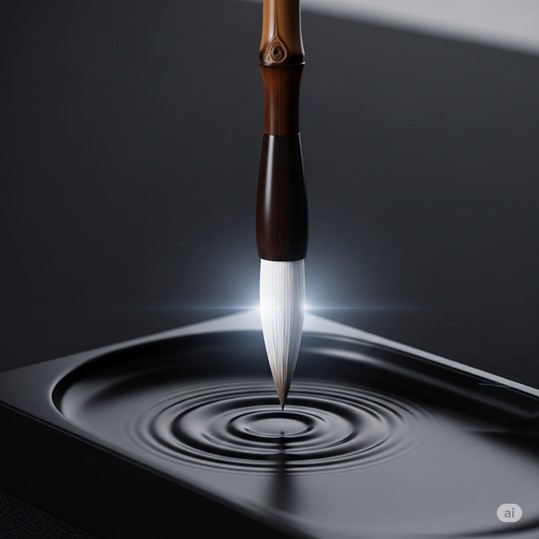
Description The Fude is an elegant, simple calligraphy brush. Its handle is made of a single piece of dark, polished bamboo that feels perfectly balanced in the hand. The bristles are a soft, immaculate white, made from the hair of an unknown animal, and they come to a perfect point. They never seem to splay or fray. While inert, it appears to be merely an artist’s tool of exceptional quality. When its magic is activated, the water in the user’s inkstone will ripple without cause, and the bristles of the brush will glow with a very faint, silvery light, as if they have been dipped in moonlight rather than ink.
Slot Calligrapher’s Kit Item
Detailed Stats
- Skill Bonus: Grants a +1 bonus to any skill check related to painting, calligraphy, or drawing.
Passive Magic
- Immaculate Bristles: The brush magically cleans itself. When dipped in fresh water or ink, any previous color instantly vanishes from the bristles, allowing for an immediate change of medium without muddling the colors or needing to pause one’s work.
- Resonant Perception: The user becomes attuned to the emotional echoes left on objects and in places. When holding the brush, you can faintly perceive strong emotions (joy, sorrow, anger, fear) that have “stained” a location or an object, granting you inspiration and insight into its past.
Activable Magic
- Chant of the Fleeting Image: By mixing your ink while quietly chanting the Jumon, “Ugoki, odore, utsushie no sei,” (Move, dance, spirit of the fleeting image), you can imbue your next drawing with minor, temporary life. For one minute after the drawing is completed, it will animate in a simple, repeating loop. A painted bird might flap its wings on the parchment, a drawn courtier may fan themselves, or a written word might elegantly rewrite itself over and over. This is a cantrip-level illusion.
- Invocation of the Lingering Moment: Once per day, you may witness an event and immediately begin to paint a representation of it. As you paint, you must chant the Jumon, “Toki yo, tomare, shizuku ni nare,” (Time, stop, become a droplet). The process takes ten minutes. Upon completion, the painting becomes imbued with an echo of that moment. Any creature who later touches the surface of the painting will experience a brief, ghostly sensory flash of the original event: the sounds, the ambient temperature, and the overarching emotions of the scene will wash over them for a few seconds. The magic in the painting fades after three such viewings.
Tags: Common, Tier 1, Jumon, Magic, Tool, Art, Illusion, Roleplay, Utility, Divination, Social, Investigation, Non-Combat, Psychometry, Enchantment, Calligraphy
In the world of Saṃsāra, an item like the Verse of Expression: The Fude of Lingering Moments is a specialist’s tool, a thing of subtle magic sought by artists and scholars rather than warriors. Its sale is often as much about finding a worthy owner as it is about coin.
Here are several places where one might buy or sell such a brush:
- The Scholarly Stationer’s Shop
- How it is Sold: Found in the more refined districts of a city, this shop caters to scribes, cartographers, and courtly artists. The proprietor is a connoisseur of fine paper, rare inks, and masterwork tools. They would recognize the Fude not as a magical artifact, but as a “Brush of the Still-Water School,” a rare and revered artisan’s tool. The sale would be a quiet, respectful affair. The shopkeeper would praise its perfect balance, the impossible quality of its bristles, and speak of how it “helps the ink find its true voice.” They are selling a masterwork tool, and the magic is considered an inseparable part of its quality.
- Cost: 45 – 55 Silver Pieces. This is a premium price for a premium tool. The cost reflects its superb quality and rarity as a piece of craftsmanship, with the subtle magic being an assumed, unstated feature for those “in the know.”
- A Secluded Monastery’s Guesthouse
- How it is Sold: The most direct, if not the easiest, source. If a traveler makes a pilgrimage to one of the remote monasteries where the Still-Water Painters still practice, they might earn the privilege of acquiring a Fude. It would not be a simple purchase. The sale is a spiritual transaction. A senior monk would likely speak with the potential owner to gauge their artistic spirit and intent. The price is framed as a “required donation” for the monastery’s upkeep.
- Cost: 30 Silver Pieces and a worthy offering. The monetary cost is secondary. The monks might be more interested in a gift of rare poetry, a finely crafted musical instrument, or the completion of a service for the monastery. Haggling would be a grave insult.
- The Gilded Cage Curiosities
- How it is Sold: This is an upscale pawn shop in a major city that deals in estate sales from noble houses. A Fude could end up here after a noble family falls on hard times. The proprietor is a shrewd merchant who knows aesthetics and provenance but little of genuine magic. They will present the brush on a velvet cushion, spinning a tale about its famous previous owner. “This, my friend, is the very brush the great Lady Amisara used to paint the Emperor’s portrait. It practically paints by itself!” They are selling a story and a beautiful object.
- Cost: Initial Price: 70 Silver. Haggleable down to ~40 Silver. The price is inflated by the fabricated story. A character with a good eye for truth or a dismissive attitude towards the sales pitch could negotiate the price down significantly.
- The Traveling Storyteller’s Blanket
- How it is Sold: A traveling artist, musician, or storyteller might possess a Fude and use its minor illusion magic to enhance their performances—making the illustrations in their storybook move or creating whimsical, animated sketches for children. They likely don’t know the brush’s deeper, memory-capturing potential. The sale would be informal, perhaps struck up after a performance. They might be more desperate for practical goods than coin.
- Cost: 25 Silver Pieces, or a trade of equivalent value. They would likely trade the “gimmick brush” straight up for a new pair of boots, a warm cloak, or a week’s worth of rations. This is often the cheapest way to acquire one, if you can find such a performer.
- The Silent Gallery
- How it is Sold: In the criminal underworld, there are fences who specialize not in weapons, but in stolen art and cultural artifacts. In a hidden, members-only gallery, a Fude might be offered for sale. The fence knows it’s stolen from a wealthy collector or a monastery and just wants to move it quickly and quietly. They likely know nothing of its magic, only that it was valuable enough to be kept in a special case. The transaction would be tense and discreet.
- Cost: 15 Silver Pieces. The price is low because the item is hot. The real cost is the risk; being caught with an item stolen from a powerful monastery or vengeful noble could be far more costly than a few pieces of silver.
Perception of Activation:
Sight
- User’s Perspective: As you begin to chant, the immaculate white bristles of the Fude gather a faint, internal luminescence, as if you dipped them in liquid moonlight instead of ink. The surface of the water or ink in your inkstone shimmers with subtle, concentric ripples that are not caused by any movement of your own. The image you are creating seems to gain a momentary, impossible depth on the page.
- Observer’s Perspective: From across a room, it simply looks like the artist is deeply focused on their work. A closer observer would notice the soft, silvery glow of the brush’s bristles, which is quite distinct from a mere reflection. If they are very sharp-eyed, they might see the uncanny, silent ripples spreading across the inkstone’s surface.
- Positives: The glow is a clear, silent confirmation that the magic is working. It’s subtle enough to be used discreetly in a crowd, and the soft light is just enough to allow the artist to see their work in low-light conditions.
- Negatives: Any light source, no matter how faint, can compromise a position of absolute stealth. A keen-eyed observer (or one familiar with magic) will immediately know that the tool is more than it appears.
Sound
- User’s Perspective: The world around you seems to fall away. The normal, soft scratching of the bristles on parchment is replaced by a sound you perceive internally: the sound of a single silk ribbon unfurling in a perfectly silent room. It is the sound of pure, creative potential, and it helps to focus your mind to a single point.
- Observer’s Perspective: An observer hears nothing out of the ordinary, only the whisper-quiet sounds of an artist at work.
- Positives: The activation is acoustically undetectable, allowing for completely stealthy use. The internal sound acts as a meditative focus for the user, helping to block out distracting external noises.
- Negatives: There are no inherent negatives to this perception, as it is entirely internal and beneficial to concentration.
Touch
- User’s Perspective: The polished bamboo handle, already perfectly balanced, seems to mold to your grip. A cool, smooth sensation, like river water flowing over polished stones, travels from the brush into your hand. It feels less like you are holding a tool and more like the brush has become a natural extension of your fingers.
- Observer’s Perspective: An observer perceives no tactile effect.
- Positives: The sensation is pleasant and reinforces the connection between the artist and their work, aiding immersion and roleplay. This feedback is completely private to the user.
- Negatives: An inexperienced user might be momentarily surprised or distracted by the sudden coolness flowing into their hand.
Smell
- User’s Perspective: For a fleeting moment, the earthy, slightly acrid smell of the ink is completely replaced by a clean, pure fragrance. It might be the scent of ozone after a thunderstorm, of blooming night jasmine, or of very old, dry parchment. It is the scent of inspiration itself.
- Observer’s Perspective: There is no discernible change in smell to an observer.
- Positives: This is a pleasant, grounding sensation for the user that enhances the roleplaying experience of using a special, revered tool. It is completely undetectable.
- Negatives: There are no inherent negatives to this perception.
Taste
- User’s Perspective: As you focus your intent into the brush, you get a faint, clean taste on the back of your tongue, like fresh snow or the clearest spring water. It is the taste of mental clarity.
- Observer’s Perspective: There is no perceivable effect.
- Positives: Provides another subtle, personal layer of feedback for the user, confirming the magic is being channeled.
- Negatives: There are no inherent negatives to this perception.
Extra-Sensory Perceptions
- Emotional Resonance (Psychometry):
- User’s Perspective: When you activate the “Invocation of the Lingering Moment,” you feel the dominant emotions of the scene you are painting as a direct, unfiltered torrent. You don’t just see the festival, you feel the collective joy. You don’t just witness the argument, you feel the biting anger and sorrow.
- Observer’s Perspective: An observer with a high degree of empathy might notice the user’s entire demeanor change drastically, reflecting the emotion they are channeling—a tear might trace a line through the ink-dust on their cheek, or their knuckles might turn white with vicarious rage. They are feeling a faint “splash” of the emotion the user is immersed in.
- Positives: This allows the user to capture and later convey information that is impossible to see or hear, providing deep insights for investigation and roleplay.
- Negatives: This can be intensely draining or even psychically damaging. Witnessing and channeling the terror of a murder or the profound grief of a tragedy could inflict serious mental stress upon the user long after the painting is finished.
- Temporal Flow State:
- User’s Perspective: You enter a state of absolute focus. The world outside of your parchment fades to an indistinct blur. Time itself seems to stretch and warp; a frantic minute of drawing under pressure feels like a calm, meditative hour, while a long, patient session might pass in what feels like a blink.
- Observer’s Perspective: An observer witnesses a startling display of artistic prowess. The user’s hands move with an unnatural speed, grace, and confidence, creating complex and beautiful images far faster than should be physically possible. They seem completely deaf and blind to the world around them.
- Positives: The user can produce incredible works of art with extreme speed and focus, even in chaotic situations. Their concentration is absolute.
- Negatives: The user is utterly vulnerable. While in this state, they are completely oblivious to their surroundings. An enemy could walk right up to them, and they would not notice until the brush was knocked from their hand. This makes activating the magic in a dangerous environment a significant risk.
Verse of Expression: Crafting a Fude of Moments
This recipe details the meditative and meticulous process required to create a Fude of Lingering Moments. The creation is a ritual of art itself, where the crafter’s focus, intent, and connection to the natural world are as crucial as their skill with a knife or needle. The magic is not forced into the materials but is gently invited to dwell within them.
Materials Needed
- A Stalk of Grove Bamboo: A single, flawless stalk of bamboo harvested from a grove known for its profound silence. It must be cut during the hour just before dawn when the world is most still.
- A Gathering of Winter-Shed Hair: The pure white, winter-shed hairs from a reclusive mountain animal known for its elusiveness and grace (such as a snow fox or ermine). The hairs cannot be taken by force but must be gathered after being naturally shed.
- A Skein of First-Spun Silk: Thread spun from the cocoon of a silkworm that has fed only upon the leaves of a ginkgo tree. The ginkgo is revered for its ancient lineage and resilience.
- A Bowl of Still Water: Water collected from a natural pond or spring at high altitude, on a day with no wind, so that the surface is perfectly placid like a mirror.
- Knowledge of the Jumon: The crafter must have a deep, intuitive understanding of the Chant of the Fleeting Image (“Ugoki, odore, utsushie no sei“) and the Invocation of the Lingering Moment (“Toki yo, tomare, shizuku ni nare“).
Tools Required
- Master Calligrapher’s Kit: An exquisite set of tools including razor-sharp knives for shaping bamboo, fine-toothed combs, burnishing stones, and a delicate binding needle.
- An Unadorned Inkstone: A simple, smooth inkstone carved from river rock, to be used as the ritual focus for holding the Still Water. It must be cleansed and never used with common ink.
Skill Requirements
- Artistry (Calligraphy or Painting): The crafter must possess a master’s level of skill. The physical creation of the brush requires exceptional grace and precision, as any flaw in its form will disrupt the flow of magic.
- Discipline or Meditation: The crafter must possess immense mental and spiritual fortitude. The entire process is a single, unbroken ritual that can last for more than a day, requiring a state of deep, unwavering concentration.
Crafting Steps
The entire process must be undertaken in a place of quiet solitude, free from interruption and distraction. It begins on one day and must be completed by the dawn of the next.
- The Ritual Cleansing: The crafter begins by laying out their tools on a clean silk cloth. All materials—the bamboo, the hairs, the silk—are gently washed in the Still Water held within the inkstone, purifying them of any lingering chaotic energies.
- Shaping the Vessel: The crafter takes up their knives and begins to shape the bamboo stalk. This is a slow, meditative process of carving and polishing that can take many hours. The goal is to create a handle that is not just functional, but perfectly balanced and resonant, feeling like a natural part of the hand that will hold it.
- Gathering the Spirit: The crafter carefully aligns each individual hair, combing and gathering them until they form a perfect, sharp point. This is the most patience-testing step, as a single misaligned hair can ruin the brush’s “spirit.”
- The Binding Chant: The magic begins here. The crafter dips the first-spun silk in the Still Water and begins to bind the bristles into the hollowed end of the bamboo handle. As they wind the thread, they must begin to chant the Chant of the Fleeting Image in a low, continuous whisper. The chant must not cease until the binding is complete. This process weaves the concept of “movement” and “life” into the very structure of the brush.
- The Final Invocation: The brush is now fully assembled but magically inert. The crafter must place the inkstone, now holding the last of the Still Water, before them. Using the newly created Fude, they dip it into the water and begin to paint the characters of the Invocation of the Lingering Moment onto a piece of fine, unused parchment. As they paint, they chant the invocation aloud. The brush is not applying water to the page; it is absorbing the intent of the final Jumon from the water. The painted characters will be invisible and fade in moments, but the magic will flow from the water, up through the bristles, and into the handle, awakening the brush’s full potential.
- The Quickening: If the ritual is successful, upon the final brushstroke the bristles will emit a soft, silvery light for the first time. The water remaining in the inkstone will gently ripple without cause, and the handle will feel unnaturally warm. The Fude of Lingering Moments is now awake and ready.
As though the story was poorly translated in ancient times from even a more ancient unknown language, tell the lengthy story that is most known about the original item… At the beginning include the title and at the end include the moral of the story.
Testimony of the Silent Pool, Regarding Koshin’s Brush
In the time of the Later Chrysanthemum Emperors, which was long after the age of true sorrows, there was a brotherhood. They were not men of swords, nor of loud prayers. They were the Still-Water Painters, and their temple was high in the mountain’s thinking-place. They believed that a memory, if it is true, leaves a small ghost behind. A ghost of feeling. Their work was to give these small ghosts a new house to live in, on paper.
Among them was a young man called Koshin. This name means ‘old heart’ or ‘ancient spirit’, which was a joke because he was young. But his soul was not young. He felt the fading of things too much. He would look at a sunset, and his heart would hurt not because it was beautiful, but because it was ending. He saw a great General return from war, and he felt not the victory, but the great tiredness that would follow the victory. This was his burden. A kind of sadness that has no modern word.
Koshin tried to paint these things. He painted the sunset, but the paper only held the color, not the feeling of ending. He painted the General, but the ink only showed the man’s posture, not his great tiredness. He said to his master, “My brush tells lies. It shows the shape of things, but not their truth. The memory-ghost will not enter such a poor house.”
His master, who was very old and whose name is not remembered in the text, told him, “The ghost is shy. The brush is too loud. You must make a brush that does not shout, but listens.”
So Koshin left the temple. He went to the quietest places. He took bamboo from a grove where the wind had forgotten how to speak. He gathered the white hairs of the snow-ferret, an animal that makes no sound and leaves no tracks and maybe does not even exist. He took silk from a worm that dreamed instead of eating. The meaning here is slippery. He bound them together not with glue, but with a promise. A spoken Jumon. A thread of words.
Then he went to the Silent Pool. It is a pool high in the mountains that is never disturbed. Not by wind, not by rain. It only holds the sky. It is a mirror for the world’s quiet face. Koshin sat by it for three days. On the third day, he saw the reflection of a single hawk turning in the sky. It was a perfect moment of grace and freedom. He knew this was the moment he had to paint.
He dipped his new brush, the Fude, into the pool itself, for he had no ink. He began to paint the hawk’s reflection onto a sheet of prayer-paper. As he painted, he spoke the second Jumon. It was not a chant for power, but a request. A polite asking. “Toki yo, tomare, shizuku ni nare.” Time, please wait. Become a small drop. He asked the moment to leave its ghost in his brush.
When he was done, the painting was invisible, for it was only water on paper. But the brush was changed. It felt warm. It had learned how to listen.
Koshin returned. At this time, the Emperor’s most loved consort, the Lady Hinageshi, had died. The Emperor was a man made of grief. He would not eat. He would not rule. The empire was becoming sick with his sorrow. He told his court, “All I have left of her is my memory, and it fades like watercolor in the rain. Soon, I will have nothing.”
The great artists were summoned. They painted the Lady Hinageshi from memory. They made her beautiful, smiling, perfect. The Emperor looked at them and grew more angry. “These are dolls! They are beautiful lies! They do not hold her truth.” He ordered the paintings burned.
Then Koshin, the young monk, came to the court. He did not bring a painting. He brought only his Fude and a clean inkstone. He bowed and said to the Emperor, “Great Majesty, I cannot paint the Lady. I did not know her. But you did. Your memory is the ink. Let me be the brush.”
The Emperor did not understand, but he was too weary to refuse. He was taken to his private garden, to a bench where he and the Lady had often sat. Koshin asked the Emperor to speak of her. To speak of one, true moment.
The Emperor spoke of a day when a small, yellow bird had landed on the Lady’s hand. He spoke of the tune she hummed to it, a simple country song. He spoke of the sun on her face, and the surprise and delight that made her seem like a girl instead of a consort. As the Emperor spoke, his own memory became strong. He was not just remembering; he was in the moment again.
And as the Emperor spoke, Koshin painted. He did not look at the Emperor. He looked at the empty bench, at the air where the Lady had been. He let the Emperor’s memory-ghost guide his hand. He painted the scene, the Lady, the bird, the sunlight. When he was done, he presented the simple ink painting to the Emperor.
The Emperor took the paper. And as his fingers touched it, the magic of the Fude worked. It was not a sight. It was a feeling. For a second, the Emperor heard, faintly, the sound of a woman humming a country song. He felt the warmth of a forgotten sun on his face. He felt the pure, uncomplicated joy of that single, small moment.
He began to weep. But they were not the tears of grief. They were the tears of remembering. The ghost had found a home. The Emperor kept the painting, and it is said that whenever his sorrow grew too great, he would touch it, and the small memory would make it bearable. His heart began to menden. The empire was saved.
Moral of the Story: A single, true memory, however small, is a stronger medicine for sorrow than a thousand beautiful lies.
Suggested conversions to other systems:
Dungeons & Dragons (5th Edition)
Brush of Echoing Memories Wondrous item, common
This elegant calligraphy brush is crafted from a single piece of dark, polished bamboo. Its bristles are immaculate and white, coming to a perfect point. It feels perfectly balanced in your hand.
- Immaculate Design. The brush magically cleans itself of any ink or paint when dipped in fresh water.
- Artistic Flourish. As an action, you can touch a simple drawing you created with this brush and cause it to animate in a short, repeating loop for 1 minute. The animation is a harmless, non-magical visual effect.
- Resonant Perception. While holding the brush, you can faintly sense the dominant emotion (joy, sorrow, anger, fear) that has transpired in your current location within the last hour.
- Invocation of Memory. Once per day, after you witness an event, you can spend 10 minutes creating a painting or drawing of that scene. The first creature to physically touch the completed image experiences a momentary, psychic flash of the key sounds and overarching emotions of the original event. Once the image has been touched, this magic fades.
Call of Cthulhu (7th Edition)
Koshin’s Brush Unique Artefact
An exquisitely crafted Japanese calligraphy brush (fude) of indeterminate age, rumored to have been made by a monk from a lost, esoteric sect. It is believed to capture not the image of a thing, but its emotional “ghost” or memory. To study and understand the brush’s function requires a successful Cthulhu Mythos roll, costing the Investigator 1d2 Sanity points to comprehend the alien concepts of emotional residue.
- Artistic Focus: Grants the user one Bonus Die on all Art/Craft (Painting or Calligraphy) rolls.
- Psychic Resonance: Upon entering a new location of significance, the Keeper may call for a Psychology roll. On a success, the Investigator holding the brush is flooded with the dominant emotion most recently experienced in the room. If this emotion is particularly violent or terrifying (e.g., the last moments of a victim), this insight costs 0/1 Sanity points.
- Unnatural Animation: When the user makes an Art/Craft (Painting) roll, a Hard success allows them to animate the image for one minute in a simple, repetitive loop. Anyone other than the creator who witnesses this subtly impossible event must make a Sanity roll for 0/1 Sanity loss.
- Capture Moment: Once per story, an Investigator can attempt to capture an event they have personally witnessed. This is an hour-long ritual of painting that costs the artist 1d3 Sanity points and requires a successful POW roll. If successful, the created image holds a true psychic echo. The next person to touch the image experiences the full sensory event as a psychic flash (sounds, emotions, temperature) and must make a Sanity roll appropriate for witnessing the original event.
Blades in the Dark
Still-Water Brush An esoteric artist’s tool, crafted by an unknown master to paint the echoes of the ghost field. [Mundane, Tool, Mystic, Subtle]
This item functions as a set of Fine Art Supplies. When you use it, you can feel the emotional residue lingering in the air, which you can channel into your work or use to your advantage.
- Feel the Room. When you Survey a location or Attune to the ghost field, you can ask an additional question for free: “What was the last strong emotion felt here?” or “What is the emotional state of the person I’m observing?”
- A Moving Distraction. When you use your art to create a distraction or flash of insight, you can suffer 1 Stress to make the image subtly and uncannily animate. This improves your Effect by one level for the action.
- Paint the Echo. Once per score, you can create a piece of art that perfectly captures the “ghost echo” of an event you witnessed. This art becomes a valuable asset. You can use it to:
- Provide another character with a +1d bonus to a future action related to that information.
- Fulfill one requirement of a long-term project clock related to the event.
- Inflict 2 Stress on a target by forcing them to experience the echo.
Knave (2nd Edition)
Memory Brush An elegant, self-cleaning calligraphy brush. (1 inventory slot)
- When you hold the brush, you can ask the GM what strong emotion was last felt in your current location.
- You can touch a drawing you just made to cause it to animate in a simple loop for one minute.
- Once per day: You may spend 10 minutes painting a scene you have just witnessed with your own eyes. The first person to touch the painting sees and hears a perfect, two-second “memory” of that event from your perspective. The magic on the painting then fades.
Fate Core System
Brush That Paints a Ghost’s Memory
In Fate, this powerful item is best represented as a new character Aspect, which the player’s character gains upon acquiring the brush: Painter of Lingering Moments. This Aspect can be invoked and compelled like any other, and it grants access to unique Stunts.
- Invoking the Aspect: You can spend a Fate Point to invoke Painter of Lingering Moments for a +2 bonus or a reroll. This is most appropriate when using the Crafts skill to create an emotionally resonant piece of art, using Empathy to sense the emotional state of a room by reading its “residue,” or using Investigate to find clues related to a past emotional event.
- Compelling the Aspect: The GM can offer you a Fate Point to compel your Aspect. For example, the emotional residue in a gruesome murder scene might be so overwhelming that it incapacitates you for a moment, or the joy from a child’s forgotten birthday party might make your serious character break into an uncharacteristic smile at an inappropriate time.
- Item Stunts: The brush grants the following Stunts:
- The Fleeting Image: Because you are the Painter of Lingering Moments, you can create simple, animated drawings. Once per scene, you can automatically create a situation Aspect like Mesmerizing Doodle with a free invocation for yourself or an ally.
- The Lingering Moment: Once per session, you may declare that you have spent time painting an event you witnessed. The painting becomes a story detail that another character can interact with. When they do, they receive a full sensory download (sounds, emotions, atmosphere) of that one key moment, gaining crucial information that was previously unknown.
Numenera & Cypher System
Empathic Imprinter Artifact
This device appears to be an elegant stylus or brush made of a single piece of dark, polished synth that is constantly warm. It is likely a psychoreactive recording and display tool from a prior world, capable of capturing and replaying subjective sensory data.
- Level: 4
- Form: A handheld artist’s brush or stylus.
- Effect: Grants the user the following abilities:
- Passive: Emotional Resonance. The user is Eased on all tasks related to sensing emotions, determining the mood of a room, or discovering the history of a specific place or object via its psychic residue.
- Enabler: Animated Illustration. As an action, the user can create a simple, silent image on any surface that animates in a repeating loop for one minute. This can provide an asset on a subsequent task for social interaction, deception, or diversion.
- Action: Capture Moment. The user can spend ten minutes concentrating on an event they are currently witnessing. The Empathic Imprinter records the event. Later, anyone holding the device can spend their action to experience a full sensory playback of the event (sights, sounds, and the user’s emotions at the time) directly in their mind. The device can only hold one such recording at a time; recording a new one erases the previous one.
- Depletion: 1 in 1d20.
Pathfinder (2nd Edition)
Koshin’s Fude of Remembrance Item 2 Uncommon | Divination | Illusion | Magical
- Price 30 GP
- Usage held in 1 hand
This masterwork calligraphy brush has a handle of dark, polished bamboo and bristles of immaculate white. It is said to have been crafted by an artist who wished to paint not just images, but the memories themselves.
- Passive The brush never needs to be cleaned; dipping it in water instantly removes any old ink or paint. You also gain a +1 item bonus to Crafting checks to create fine art and to Perception checks to Sense Motive.
Activate [one-action] Interact; Frequency at-will; Effect You touch a simple drawing you made with the fude on a flat surface, causing it to animate in a harmless, silent, 1-minute loop. This is a 1st-level cantrip effect.
Activate [one-action] to [three-actions] Interact; Frequency once per day; Requirements You must have personally witnessed an event within the last minute; Effect You spend the required number of actions (minimum 1, maximum 3) painting a representation of the event. The painting becomes imbued with a psychic echo. The next creature to touch the painting experiences a momentary flash of the sounds and emotions from the event. The fidelity of the memory depends on the number of actions spent: * [one-action] A single, dominant emotion. * [two-actions] The dominant emotion and key sounds. * [three-actions] The emotion, sounds, and a flash of the key visual moment. The magic on the painting then fades.
Savage Worlds Adventure Edition
Spirit-Artist’s Fude
This appears to be an exceptionally well-made artist’s brush from a distant land. It is a tool not just for creating art, but for perceiving and capturing the spirit of a moment.
- Artist’s Soul: The brush grants its user a +1 bonus to all Performance or Academics rolls related to creating or analyzing visual art.
- Sense the Echo: The user can spend a minute in meditation to get a sense of the strongest emotion that occurred in their immediate vicinity within the past day. The GM should provide a one or two-word summary (e.g., “Joyful Celebration,” “Violent Terror”).
- Living Ink: The brush holds 5 Power Points that can only be used to activate the Illusion power, which it contains. It can only create silent, two-dimensional animated images on a surface. The Power Points recharge at a rate of 1 per hour, and the user does not need an Arcane Background to use this ability.
- Capture the Moment: Once per day, the user may perform a 10-minute ritual to create a painting of an event they just witnessed. Anyone who later holds the painting can make a Notice roll. On a success, they experience a flash of the event, gaining a useful clue or piece of information. With a raise, they learn a particularly critical detail that would otherwise be missed.
Shadowrun, Sixth World
Koshin’s SimSense Fude Artisan Focus (Calligraphy)
A relic from pre-Awakened Japan, this simple-looking bamboo brush is a powerful focus for an artist who walks the line between the physical and astral worlds. It allows the user to perceive and record emotional and sensory data, functioning as an organic, spiritual precursor to modern SimSense technology.
- Focus Rating: 3
- Activation: The focus is always active while held. Its specific abilities are used through the Assensing skill or as special actions.
- Psychic Resonance: When holding the brush in a location, the user may use the Assensing skill to perceive the astral residue of past events. The user gains a dice pool bonus equal to the Focus’s Force (+3 dice) to any Assensing test made to read the emotional history of the area.
- Fleeting Image: As a Minor Action, the user may touch a drawing they made to cause it to animate in a simple, repeating loop for one minute. This uncanny illusion acts as a visual distraction, imposing a -2 dice pool penalty on any enemies’ Perception tests to notice anything else in the immediate vicinity for one combat turn.
- Memory-Lace: Once per day, the user can perform a 10-minute ritual to paint a scene they witnessed, creating a psychic recording. Any metahuman with astral perception who touches the parchment can experience the event as if it were a BTL SimSense chip, including the artist’s unfiltered emotions. Viewing a traumatic event via the painting requires a Composure (3) test to avoid taking 1 box of Stun damage.
Starfinder Roleplaying Game
Stylus of the Soul’s Echo Level 3 | Price 1,500 credits Aura faint divination and illusion | Bulk L Hands 1
This elegant stylus is crafted from an unknown, dark, organic material that feels like polished bamboo. It is believed to be a Veskarian artist’s tool from their early, more spiritual history, capable of capturing impressions of life itself.
- Passive: Empathic Insight. The stylus resonates with the psychic echoes of a place. You gain a +2 insight bonus to Sense Motive checks, and to Perception checks made to search an area for clues about events that occurred there within the last 24 hours.
- Action: Kinetic Illustration. As a standard action, you can cause a simple image you have drawn to animate for 1 minute. If used as part of a social interaction, this provides you or an ally with a +2 circumstance bonus to your next Bluff or Intimidate check against creatures who witness the animation.
- Action: Record Moment. Once per day, you can spend 1 minute concentrating on and painting a scene you are currently witnessing. The painting becomes psychically charged. As a standard action, any creature can touch the painting to receive a psychic message containing the key sounds and dominant emotions of that scene, lasting for up to 1 round (as if you had cast mindlink). After one such use, the charge in the painting is expended.
Traveller (Mongoose 2nd Edition)
Psychohistorian’s Stylus
- Tech Level: 17 (Precursor/Psionic)
- Description: A simple, elegant stylus made of a lightweight, unbreakable, dark material. Scans reveal no power source or complex technology, yet it interacts with psionic energy. It is believed to be a tool used by a precursor race to record subjective historical data—not just what happened, but how it felt for it to happen.
- Passive: Empathic Interface. The stylus attunes to its user and their surroundings. The user gains DM+1 on any Investigate, Persuade, or Streetwise check where understanding the emotional context of a situation, person, or location would be a deciding factor.
- Holographic Art: The stylus can be used to “draw” in the air, creating simple, silent, 2D holographic images that persist for up to 10 minutes. This functions as a TL-9 Holographic Projector but requires no power source.
- Psionic Recording: The stylus can record up to one minute of the user’s direct sensory and emotional experience. This recording can then be imprinted onto any small, mundane object (a coin, a datachip, a piece of paper) with a touch. Any individual with any level of psionic talent who touches the imprinted object experiences the recording as a powerful, unavoidable flashback. The stylus can only hold one recording at a time.
Warhammer Fantasy Roleplay, 4th Edition
Cathayan Spirit-Brush Enc: 1 (negligible)
A rare and valuable brush from the mystical lands of Grand Cathay, where the relationship between art, magic, and the spirits is far more intimate than in the Old World. The handle is polished bamboo, and the bristles are said to be the whiskers of a Temple Cat, able to brush away evil spirits.
- Qualities: Magical, Exotic (Cathayan), Fine (+1 SL to relevant tests).
- Whispers in the Wind: The owner of the brush becomes sensitive to the emotional character of the Aethyr. With a successful Challenging (+0) Intuition Test, the user can get a one-word summary of the strongest emotion to have occurred in their immediate location (‘Sorrow’, ‘Rage’, ‘Fear’, etc.), as determined by the GM.
- Uncanny Grace: The user may spend a moment concentrating to make one of their drawings or calligraphic characters move in a simple, repeating fashion for one minute. While this has no direct mechanical effect, a particularly clever or impressive display might grant a bonus to a subsequent Charm or Entertain Test.
- The Lingering Moment: Once per week, the user may perform a solemn, hour-long ritual of painting to capture the spiritual essence of an event they personally witnessed. The painting becomes a unique magical artifact. The next person to touch the painting must make a Challenging (+0) Cool Test. On a success, they are granted a momentary, divine flash of insight into the event, learning a crucial clue. On a failure, they are overwhelmed by the raw emotion and gain 1 Stunned Condition. If the event witnessed was especially horrifying, the Test may become more difficult at the GM’s discretion.