
Lore: Forged in the shadowed cloisters of a forgotten Saṃsāran monastery, the Coptic Amulet 472 of Solace is said to have been crafted by a reclusive Coptic monk who arrived in Saṃsāra after a life of exile in a distant multiversal Egypt. This monk, alienated from both his original world and the vibrant, magic-saturated society of Saṃsāra, poured his longing for connection into this amulet. Infused with Coptic prayers for protection and peace, the amulet resonates with the quiet sorrow of one who walks among others yet feels eternally apart. Legends whisper that the amulet’s power grows stronger in moments of isolation, offering solace to those who feel like strangers in a crowded world. It is a common item, found in the hands of wanderers, outcasts, and those struggling to find their place in Saṃsāra’s endless tapestry of souls.
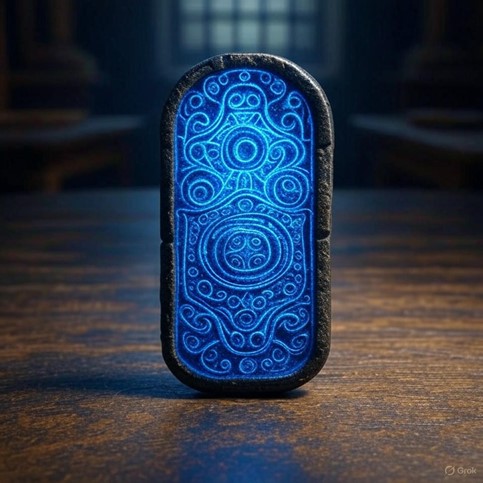
Description: The Coptic Amulet 472 of Solace is a small, palm-sized disc of polished bronze, etched with intricate Coptic crosses and swirling script in an ancient tongue. A single turquoise bead, symbolizing divine protection, dangles from a leather cord that allows it to be worn around the neck. The amulet feels warm to the touch, as if carrying the faint echo of a whispered prayer. When held in moments of solitude, it faintly hums, and the script glows with a soft golden light, casting fleeting shadows that resemble the outlines of distant figures. Its unassuming appearance belies its subtle power, making it a cherished companion for those who feel disconnected from the bustling societies of Saṃsāra.
Detail Stats:
- Rarity: Common
- Tier: 1
- Slot: Neck
- Attunement: Requires 1 minute to attune, automatically attuned when worn by a tier 1 avatar.
- Weight: 0.1 lbs
- Material: Bronze, turquoise, leather
- Durability: Resistant to mundane wear but can be destroyed by magical fire or acid.
Passive Magic:
- Prayer of Solitude: The wearer gains a +1 bonus to Wisdom-based skill checks when alone (no allies within 20 feet). This reflects the amulet’s ability to sharpen the mind in moments of isolation, allowing the wearer to draw on their inner strength.
- Echo of Exile: The amulet subtly amplifies the wearer’s sense of alienation, granting advantage on Charisma (Performance) checks to convey feelings of loneliness or displacement through storytelling, song, or art. However, this also imposes a -1 penalty to Charisma (Persuasion) checks in crowded social settings (10 or more people within 30 feet), as the wearer struggles to connect.
- Protective Whisper: The amulet emits a faint protective aura, granting the wearer +2 temporary hit points at the start of each day, provided they spent at least 1 hour alone during the previous day. These temporary hit points last until lost or until the next day.
Activable Magic:
- Chant of Solace (Normal Casting, 1/day): The wearer can speak a brief Coptic prayer (taking 6 seconds or less) to cast the Sanctuary spell (as per D&D 5e rules, no material components required). The spell is cast at 1st level, with a spell save DC of 12, and lasts for 1 minute. The wearer must concentrate to maintain the spell. This ability can only be used when the wearer is not within 10 feet of an ally, emphasizing their reliance on the amulet in moments of isolation.
- Ritual of Reflection (Ritual Casting, 1/week): By spending 10 minutes chanting a Coptic prayer and focusing on the amulet, the wearer can commune with their own memories of their past life, gaining insight into a specific moment of alienation they experienced. This grants advantage on one Intelligence (History) or Wisdom (Insight) check made within the next hour, as the amulet helps the wearer process their feelings of disconnection. The ritual must be performed in a quiet, solitary environment, or it fails.
- Spark of Comfort (Silent Casting, 3/day): As an immediate action (no words required), the wearer can touch the amulet to gain a momentary sense of calm, reducing the effects of fear or despair. This grants a +2 bonus to the next saving throw against being frightened or charmed, provided the saving throw is made within 1 minute. The effect is subtle, dealing 25% less impact than a normal casting (reflected in the short duration and limited bonus), but it can be a lifeline in moments of emotional turmoil.
Specific Slot:
- Neck: The amulet must be worn around the neck to function. It cannot be placed in another slot or stored in a container without losing its magical properties. Only one neck slot item can be worn at a time, per Saṃsāra’s slot rules.
Tags:
- Coptic, Magical, Amulet, Common, Tier 1, Roleplay, Alienation, Protective, Solitude, Wisdom, Charisma, Sanctuary, Memory, Insight, Prayer, Bronze, Turquoise, Solace, Monastery, Exile, Connection, Outcast, Spiritual, Loneliness
In the world of Saṃsāra, the Coptic Amulet 472 of Solace, a common-tier magical item, can be bought and sold in various types of shops that cater to adventurers, wanderers, and those seeking spiritual or magical trinkets. The high-magic setting and the widespread population of over 7 billion souls across 73 island nations create a diverse marketplace where such items are relatively accessible, though their specific nature ties them to certain cultural and economic niches. Below is a detailed description of the types of shops where this amulet might be found, the methods of transaction, and the associated costs, tailored to the setting’s steampunk-inspired, magically driven economy without advanced technology.
Types of Shops and Transaction Methods
- Monastic Outposts and Reliquaries
- Description: Scattered across Saṃsāra’s islands, monastic outposts are small, fortified enclaves run by reclusive orders, often tied to spiritual traditions like those inspired by Coptic Christianity. These outposts serve as places of worship, meditation, and trade for pilgrims and outcasts. Reliquaries within these outposts specialize in selling blessed items, such as amulets, crafted by monks or nuns who infuse them with prayers. The Coptic Amulet 472 of Solace, with its origins in a forgotten monastery, is a natural fit for these shops, often displayed on simple wooden racks alongside other prayer-infused trinkets.
- Locations: Found in rural areas, on smaller islands, or near ancient ruins, often in designated safe areas where the outpost’s guards ensure tripled AC (Armor Class). Examples include the cliffs of the Isle of Thorns or the outskirts of the megacity of Kharis.
- Transaction Methods: Purchases are made using Saṃsāra’s standard currency, the aura, a coin-like token infused with trace magical energy that glows faintly when held. Bartering is also common, with buyers offering items like preserved herbs, minor magical reagents, or handwritten prayer scrolls. Monastic outposts rarely haggle, as their prices are seen as offerings to sustain the order. Transactions are conducted in person, often after a brief ritual where the buyer is blessed by a monk to ensure the amulet’s attunement aligns with their soul.
- Cost: 50 aura. The price reflects the amulet’s common rarity and the outpost’s modest needs, covering crafting materials and the monastery’s upkeep. Barter equivalents might include 10 bundles of rare incense or a single lesser healing crystal.
- Wandering Peddler Caravans
- Description: Wandering peddlers travel Saṃsāra’s endless oceans and skies in steam-powered ships, hot air balloons, or griffon-drawn carts, bringing goods to remote communities. These caravans often carry eclectic collections of magical items, including amulets like the Coptic Amulet 472 of Solace, acquired from monks or scavenged from ruins. Peddlers cater to adventurers and outcasts, making them ideal vendors for an item tied to alienation. The amulet might be found in a peddler’s velvet-lined case, nestled among other trinkets with tales of distant origins.
- Locations: Peddlers frequent somewhat safe areas (doubled AC) like walled towns or trade hubs, such as the floating city of Aerith or the port of Vellum. They also visit normal areas (standard AC) like open markets on uncharted islands, setting up temporary stalls under canvas tents.
- Transaction Methods: Peddlers accept aura but prefer bartering to maximize profit. Buyers might trade adventuring gear, monster parts (e.g., a griffon feather or kraken ink), or services like guarding the caravan for a day. Transactions are informal, often sealed with a handshake or a shared meal to build trust, aligning with Saṃsāra’s roleplay emphasis on communal acts like eating (which grants 1 HP if over 20 minutes). Peddlers may inflate prices slightly, but their mobility makes them convenient for rural buyers.
- Cost: 60 aura. The higher price accounts for the peddler’s travel expenses and profit margin. Barter equivalents could include a set of enchanted leather straps (worth 20 aura) plus 2 hours of labor, or a vial of minor mana essence.
- Urban Curio Shops
- Description: In Saṃsāra’s megacities and metropolises, curio shops thrive in bustling market districts, selling oddities, minor magical items, and cultural artifacts. These shops, often housed in multi-story buildings with steam-powered lifts, cater to a diverse clientele, including Isekai adventurers seeking items that resonate with their past lives. The Coptic Amulet 472 of Solace might be displayed in a glass case labeled “Exotic Relics,” appealing to those who feel alienated in the crowded urban sprawl. Shopkeepers, often eccentric scholars or retired adventurers, may share tales of the amulet’s monastic origins to entice buyers.
- Locations: Found in somewhat safe areas (doubled AC) like the walled districts of Kharis or the skyscraper-lined streets of Nexus Prime. Some shops operate in normal areas (standard AC) near city outskirts, where rent is cheaper but foot traffic is still high.
- Transaction Methods: Aura is the primary currency, with shopkeepers using magic circuits to verify the coins’ authenticity. Bartering is less common but accepted for unique items, such as a fragment of an ancient Coptic scroll or a low-tier magical tool. Transactions are formalized with written receipts, often inscribed on enchanted parchment that glows briefly when signed. Shopkeepers may offer discounts to buyers who share stories of their own alienation, fostering a roleplay connection.
- Cost: 55 aura. The price is slightly higher than monastic outposts due to urban overhead costs but lower than peddlers due to stable supply chains. Barter equivalents might include a minor enchanted gem (worth 30 aura) plus 25 aura in coin.
- Seaside Bazaar Stalls
- Description: Seaside bazaars flourish in Saṃsāra’s port cities, where ships deliver goods from across the 73 island nations. These open-air markets are chaotic, filled with stalls selling everything from kraken-scale armor to prayer beads. The Coptic Amulet 472 of Solace might be sold by a stallholder specializing in spiritual trinkets, often a sailor or merchant with ties to monastic communities. The amulet could be hung on a rope display, swaying in the salty breeze, catching the eye of lonely travelers or sailors far from home.
- Locations: Common in somewhat safe areas (doubled AC) like the docks of Vellum or the trade hub of Coralspire. Some stalls operate in normal areas (standard AC) along less-regulated beachfronts, where vendors compete loudly for attention.
- Transaction Methods: Aura is widely used, as bazaars are economic hubs. Stallholders often haggle, lowering prices for charismatic buyers or raising them for obvious foreigners. Bartering is popular, with vendors accepting trade goods like pearls, enchanted coral, or even a day’s labor unloading cargo. Transactions are quick, often completed with a verbal agreement and a tap of the amulet to confirm its magic via the buyer’s Mind’s Eye. Roleplay opportunities arise as buyers might need to navigate language barriers or cultural misunderstandings, emphasizing alienation.
- Cost: 58 aura. The price reflects market competition and import costs but is moderated by the amulet’s common rarity. Barter equivalents could include a small enchanted seashell (worth 15 aura) plus 43 aura, or a set of minor prayer beads.
- Underwater Relic Traders
- Description: In Saṃsāra’s underwater population centers, relic traders operate in coral-encrusted shops or floating market spheres, accessible via magic-driven submersibles or water-breathing enchantments. These traders specialize in items salvaged from sunken ruins or crafted by aquatic monks, including Coptic-inspired amulets like the Amulet 472 of Solace. The amulet might be stored in a watertight case, its bronze polished to resist corrosion, appealing to aquatic avatars who feel isolated in their submerged cities.
- Locations: Found in somewhat safe areas (doubled AC) like the coral city of Aquavelle or the deep-sea hub of Thalassar. Rarely, traders set up in normal areas (standard AC) near underwater ruins, where safety is less assured.
- Transaction Methods: Aura is used, often in the form of waterproof tokens that resist corrosion. Bartering is common, with traders seeking rare underwater reagents (e.g., luminescent algae or merfolk-crafted pearls). Transactions involve a ritual where the amulet is submerged in a basin of blessed water to confirm its Coptic enchantments, a process that can spark roleplay about the buyer’s alienation in an alien aquatic environment. Traders may charge a premium due to the niche market.
- Cost: 65 aura. The higher price reflects the difficulty of underwater trade and the costs of maintaining magical submersibles. Barter equivalents might include a vial of glowing coral dust (worth 35 aura) plus 30 aura, or a minor water-breathing charm.
Economic and Cultural Context
The Coptic Amulet 472 of Solace’s price range (50–65 aura) reflects its common rarity and the economic dynamics of Saṃsāra. The aura currency, infused with magical energy, is universally accepted, and its value is stable due to the gods’ oversight of trade. Prices vary based on location, accessibility, and vendor overhead. Monastic outposts offer the lowest prices due to their nonprofit ethos, while underwater traders charge the most due to logistical challenges. The amulet’s tie to alienation makes it particularly appealing in shops catering to Isekai characters, outcasts, or spiritual seekers, and vendors may emphasize its lore to attract such buyers.
Roleplay opportunities abound in these transactions. A buyer might need to prove their worth to a monastic vendor through a shared prayer, haggle with a peddler over a meal, or navigate cultural misunderstandings in a bazaar. The amulet’s Coptic origins may draw curiosity or suspicion, especially in urban or underwater settings where such traditions are rare, reinforcing the theme of alienation. In all cases, the Mind’s Eye allows buyers to passively verify the amulet’s stats (name, material, basic properties) or actively identify its magical abilities with the right item and skill, ensuring they know its value before purchasing.
Notes on Safety and Accessibility
- Designated Safe Areas (tripled AC): Monastic outposts and some urban curio shops in guarded districts offer the safest shopping environments, ideal for tier 1 avatars wary of combat.
- Somewhat Safe Areas (doubled AC): Most bazaars, urban shops, and underwater traders operate here, balancing accessibility with moderate risk.
- Normal Areas (standard AC): Peddler stalls and some bazaar outposts in less-regulated areas carry higher risk, suitable for avatars prepared for potential ambushes.
- The amulet’s common rarity ensures it is widely available, but its specific Coptic nature may limit its presence in regions dominated by other magical traditions, requiring buyers to seek out specialized vendors.
In the world of Saṃsāra, the Coptic Amulet 472 of Solace, a common-tier magical item designed for tier 1 avatars, serves as a versatile tool for both defense and offense, with a strong roleplay emphasis on alienation. Its magical properties—rooted in Coptic prayers and rituals—offer subtle but impactful abilities that shine in specific situations, particularly when the wearer is isolated or grappling with feelings of disconnection. Below is a detailed exploration of how this amulet is used for defense and offense in various environments across Saṃsāra, with a focus on roleplay opportunities that highlight the theme of alienation. The environments considered include urban megacities, rural monasteries, underwater cities, uncharted islands, and deathly areas, each presenting unique challenges and opportunities for leveraging the amulet’s magic.
Roleplay in Defensive Use
The amulet’s defensive capabilities stem from its Protective Whisper passive, Chant of Solace activable magic (Sanctuary spell), and Spark of Comfort activable magic (bonus to saves against fear or charm). These abilities are most effective when the wearer is alone, reinforcing the alienation theme by encouraging solitary tactics or moments of emotional introspection.
- Urban Megacities (Somewhat Safe Areas, Doubled AC)
- Defensive Use: In the crowded skyscraper-lined streets of a megacity like Kharis, the wearer might feel overwhelmed by the throng of diverse souls, amplifying their sense of alienation. The Protective Whisper passive grants +2 temporary hit points daily if the wearer spent an hour alone, which could be roleplayed as retreating to a quiet rooftop or a dimly lit alley to meditate with the amulet. This small buffer can absorb minor damage from a pickpocket’s dagger or a stray spell in a market brawl. The Chant of Solace (cast as Sanctuary, 1/day) is ideal when the wearer is cornered by thugs in a backstreet. By reciting a brief Coptic prayer (6 seconds or less), they force attackers to make a DC 12 Wisdom save to target them, potentially allowing escape. The Spark of Comfort (3/day) can be used to bolster a saving throw against a charismatic merchant’s charm spell, roleplayed as clutching the amulet to quell rising panic in a bustling bazaar.
- Roleplay Opportunities: The wearer might narrate their internal struggle to connect with the city’s vibrant populace, feeling like an outsider despite the crowd. Using Chant of Solace could involve a whispered prayer that draws curious glances from passersby, sparking rumors of a “lonely monk” with strange powers. The Echo of Exile passive’s -1 penalty to Charisma (Persuasion) in crowded settings (10+ people within 30 feet) can be roleplayed as stammering or withdrawing during negotiations, prompting allies to step in or foes to underestimate the wearer. A scene might unfold where the wearer, after using Spark of Comfort to resist a charm, reflects on a past life’s betrayal, deepening their sense of isolation.
- Rural Monasteries (Designated Safe Areas, Tripled AC)
- Defensive Use: In the serene but isolated setting of a monastic outpost, such as one on the Isle of Thorns, the wearer’s alienation may stem from being an outsider among tight-knit monks. The Protective Whisper passive ensures +2 temporary hit points after solitary prayer in a cloister, protecting against minor hazards like a falling stone during a storm. The Chant of Solace can be used if a rogue monster breaches the outpost’s defenses, allowing the wearer to avoid attack while fleeing to alert the guards. The Spark of Comfort is useful against fear effects from a haunting spirit in the monastery’s ruins, roleplayed as touching the amulet to recall a comforting memory from a past life.
- Roleplay Opportunities: The wearer might roleplay their alienation as a sense of unworthiness among the devout monks, perhaps feeling their Isekai origins make them impure. Activating Chant of Solace could involve chanting loudly in the monastery’s chapel, earning respect or suspicion from the monks. The Prayer of Solitude passive (+1 to Wisdom-based checks when alone) enhances Investigation or Insight checks to uncover hidden threats, roleplayed as a solitary vigil that isolates the wearer from allies but hones their focus. A poignant moment might occur when the wearer uses Spark of Comfort to resist a spectral fear, narrating a flashback to a lonely moment in their past life that strengthens their resolve.
- Underwater Cities (Somewhat Safe Areas, Doubled AC)
- Defensive Use: In the coral-encrusted depths of Aquavelle, the wearer’s alienation might manifest as discomfort in an alien aquatic environment, surrounded by merfolk and bioluminescent creatures. The Protective Whisper passive provides +2 temporary hit points after meditating alone in a private air bubble, cushioning against minor scrapes from coral or a stray harpoon. The Chant of Solace is effective when ambushed by a rogue predator, forcing it to save or ignore the wearer, allowing time to swim to safety. The Spark of Comfort counters charm effects from a siren’s song, roleplayed as gripping the amulet to focus on a terrestrial memory.
- Roleplay Opportunities: The wearer could roleplay their alienation as a longing for the surface world, feeling out of place among aquatic natives. Using Chant of Solace might involve a prayer that bubbles up in the water, drawing attention from curious onlookers or hostile creatures, complicating the scene. The Echo of Exile passive’s advantage on Charisma (Performance) for expressing loneliness can be roleplayed as singing a melancholic hymn that resonates with other outcasts, perhaps forging a fleeting bond. A defensive use of Spark of Comfort might prompt a monologue about a past life’s isolation, shared with an ally to build trust.
- Uncharted Islands (Normal Areas, Standard AC)
- Defensive Use: On an uncharted island teeming with unknown monsters, the wearer’s alienation is heightened by the lack of civilization. The Protective Whisper passive’s +2 temporary hit points, gained after meditating alone in a jungle clearing, can absorb a minor bite from a venomous creature. The Chant of Solace is crucial when surrounded by a pack of beasts, forcing them to make DC 12 Wisdom saves to attack, giving the wearer time to climb a tree or hide. The Spark of Comfort counters fear from a monstrous roar, roleplayed as clutching the amulet to recall a moment of courage from a past life.
- Roleplay Opportunities: The wearer might roleplay their alienation as a sense of being lost in an untamed world, far from familiar faces. Activating Chant of Solace could involve a desperate prayer shouted into the wilderness, alerting both allies and enemies to their presence. The Prayer of Solitude passive aids in spotting traps or tracks when alone, roleplayed as a hyper-focused scan of the environment driven by paranoia. Using Spark of Comfort might lead to a quiet moment where the wearer confesses their fears to the amulet, imagining it as their only friend.
- Deathly Areas (No AC, Every Attack Hits)
- Defensive Use: In a deathly area, such as a cursed jungle ruin where every attack hits, the amulet’s defensive abilities are a lifeline. The Protective Whisper passive’s +2 temporary hit points are critical, gained after hiding alone in a crumbling shrine, offering a slim buffer against inevitable strikes. The Chant of Solace is a gamble, as its Sanctuary effect (DC 12 Wisdom save) may deter some attackers, allowing the wearer to flee a swarm of undead. The Spark of Comfort is vital against fear effects from a malevolent aura, roleplayed as a desperate grasp of the amulet to banish visions of death.
- Roleplay Opportunities: The wearer’s alienation is at its peak in a deathly area, feeling utterly alone against overwhelming odds. Using Chant of Solace might be roleplayed as a defiant prayer screamed into the void, drawing the attention of a spectral entity that offers cryptic aid or menace. The Echo of Exile passive’s advantage on Charisma (Performance) could be used to perform a ritual dance to appease a spirit, roleplayed as a solitary act of desperation. A Spark of Comfort use might involve collapsing against a ruin wall, whispering to the amulet about a past life’s final moments, finding strength to press on.
Roleplay in Offensive Use
The amulet’s offensive capabilities are indirect, relying on the Prayer of Solitude passive (+1 to Wisdom-based checks when alone) and Ritual of Reflection activable magic (advantage on History or Insight checks). These abilities enhance the wearer’s ability to outmaneuver or outwit foes, particularly in solitary scenarios, aligning with the alienation theme by rewarding lone tactics.
- Urban Megacities (Somewhat Safe Areas, Doubled AC)
- Offensive Use: In a megacity’s underbelly, the wearer might use the Prayer of Solitude passive to gain a +1 bonus on Wisdom (Perception) checks when alone, spotting a hidden assassin before they strike. This can be roleplayed as a paranoid scan of a crowded market, isolating the wearer mentally. The Ritual of Reflection (1/week), requiring 10 minutes of solitary prayer, grants advantage on Wisdom (Insight) to discern a foe’s intentions, such as a rival adventurer’s plan to sabotage a deal. This allows the wearer to preemptively counter with a well-timed accusation or maneuver, effectively “attacking” the foe’s credibility.
- Roleplay Opportunities: The wearer might narrate their alienation as a distrust of the city’s scheming inhabitants, preferring to act alone. Performing the Ritual of Reflection in a rented room could involve chanting Coptic prayers that echo through thin walls, alarming neighbors and adding tension. The Echo of Exile passive’s advantage on Charisma (Performance) can be used offensively to perform a dramatic monologue exposing a foe’s lies, roleplayed as a lonely outburst that captivates onlookers but alienates allies.
- Rural Monasteries (Designated Safe Areas, Tripled AC)
- Offensive Use: In a monastery, the Prayer of Solitude passive enhances Wisdom (Investigation) checks when alone, allowing the wearer to uncover a hidden cultist’s plot within the outpost. This can lead to an offensive action, such as alerting guards to apprehend the traitor. The Ritual of Reflection grants advantage on Intelligence (History) to recall a past life’s knowledge of cult symbols, identifying a foe’s allegiance and enabling a preemptive strike, such as exposing them during a communal prayer.
- Roleplay Opportunities: The wearer’s alienation might manifest as feeling like an intruder among the monks, driving them to investigate alone. The Ritual of Reflection could be roleplayed as a candlelit vigil where the wearer’s prayers stir restless spirits, complicating the scene. The Echo of Exile passive’s Performance advantage can be used to perform a mournful hymn that distracts a cultist, roleplayed as a solitary act that unnerves the foe but isolates the wearer from the monastery’s community.
- Underwater Cities (Somewhat Safe Areas, Doubled AC)
- Offensive Use: In Aquavelle, the Prayer of Solitude passive boosts Wisdom (Survival) checks when alone, helping the wearer track a predatory creature through coral tunnels, setting up an ambush. The Ritual of Reflection grants advantage on Wisdom (Insight) to read a merfolk trader’s deceptive intentions, allowing the wearer to outmaneuver them in a trade dispute, effectively “attacking” their economic position.
- Roleplay Opportunities: The wearer might roleplay their alienation as a fish-out-of-water struggle in the aquatic city, avoiding crowds to focus. The Ritual of Reflection could involve praying in a bioluminescent grotto, with the amulet’s glow attracting curious sea creatures, adding roleplay complexity. The Echo of Exile passive’s Performance advantage can be used to sing a haunting melody that intimidates a rival, roleplayed as a solitary performance that echoes through the water but leaves the wearer feeling more alone.
- Uncharted Islands (Normal Areas, Standard AC)
- Offensive Use: On an uncharted island, the Prayer of Solitude passive enhances Wisdom (Perception) checks when alone, spotting a monster’s weak point (e.g., a cracked carapace) to guide an ally’s attack. The Ritual of Reflection grants advantage on Intelligence (History) to recall a past life’s tactic against similar beasts, allowing the wearer to devise a strategy that exploits the creature’s behavior, effectively contributing to the offense.
- Roleplay Opportunities: The wearer’s alienation might be roleplayed as a sense of being the only one attuned to the island’s dangers, isolating them from carefree allies. The Ritual of Reflection could involve praying under a canopy, with the amulet’s hum drawing a curious creature, forcing a quick decision. The Echo of Exile passive’s Performance advantage can be used to chant a battle hymn that distracts a monster, roleplayed as a lonely cry that bolsters allies but deepens the wearer’s solitude.
- Deathly Areas (No AC, Every Attack Hits)
- Offensive Use: In a deathly area, the Prayer of Solitude passive aids Wisdom (Insight) checks when alone, reading a demonic entity’s attack pattern to predict its next move, guiding allies to strike effectively. The Ritual of Reflection grants advantage on Wisdom (Insight) to discern a cursed relic’s weakness, allowing the wearer to direct an offensive ritual to destroy it, neutralizing the area’s threat.
- Roleplay Opportunities: The wearer’s alienation is magnified in the deathly area, roleplayed as a crushing sense of being the only survivor in a doomed place. The Ritual of Reflection might involve a desperate prayer in a crumbling temple, with the amulet’s glow attracting hostile spirits, heightening the stakes. The Echo of Exile passive’s Performance advantage can be used to perform a defiant prayer that weakens a foe’s resolve, roleplayed as a solitary act of faith that inspires awe but leaves the wearer emotionally drained.
Roleplay Nuances Across Environments
- Alienation as a Core Theme: In all environments, the amulet’s abilities encourage the wearer to embrace solitude, whether by retreating to use Chant of Solace, meditating for Ritual of Reflection, or relying on Prayer of Solitude. Roleplay can focus on the emotional toll of this isolation, with the wearer narrating their longing for connection or their acceptance of being an outsider. For example, in a megacity, they might avoid allies to trigger the amulet’s bonuses, roleplaying this as a deliberate choice to remain detached, while in a deathly area, their solitude might be forced by circumstance, amplifying their despair.
- Coptic Flavor in Roleplay: The amulet’s Coptic origins invite roleplay centered on prayer and ritual. Defensive uses like Chant of Solace or Spark of Comfort can involve reciting specific Coptic phrases (e.g., “Kyrie eleison” or “Lord, have mercy”), grounding the wearer in a spiritual tradition that sets them apart from Saṃsāra’s diverse magical practices. Offensive uses like Ritual of Reflection might include visualizing Coptic crosses or saints from a past life, adding depth to the wearer’s Isekai backstory.
- Environmental Interactions: Each environment shapes how alienation is expressed. In urban settings, the wearer might feel lost in a crowd, using the amulet to carve out mental space. In rural monasteries, their alienation might stem from spiritual inadequacy, with the amulet as a crutch. Underwater cities highlight physical and cultural displacement, while uncharted islands and deathly areas emphasize survival-driven isolation. Roleplay can explore how these contexts deepen the wearer’s reliance on the amulet, perhaps leading to moments of self-discovery or despair.
- Social Dynamics: The Echo of Exile passive’s penalties in crowded settings create roleplay tension, as the wearer struggles to connect with allies or NPCs. Defensive actions might draw attention (e.g., chanting loudly in a bazaar), prompting reactions from curiosity to hostility. Offensive actions, like exposing a foe’s lies, can be roleplayed as solitary triumphs that alienate the wearer further, as others fear their insight or resent their detachment.
Practical Considerations in Saṃsāra
- Safety Levels: The amulet’s defensive abilities are most effective in safer areas (urban, monastic, underwater) where doubled or tripled AC reduces the need for constant protection, allowing roleplay to focus on emotional and social challenges. In normal or deathly areas, the amulet’s limited defensive power requires careful roleplay to avoid overreliance, emphasizing the wearer’s vulnerability and alienation.
- Tier 1 Limitations: As a tier 1 item, the amulet’s effects are modest, fitting the low-power struggles of early adventurers. Roleplay should highlight the wearer’s inexperience, perhaps portraying them as an Isekai soul still adjusting to Saṃsāra’s high-magic world, using the amulet as a tether to their past life.
- Mind’s Eye Integration: The wearer’s Mind’s Eye passively reveals the amulet’s basic stats (name, material, protective nature) and, with active identification, its full abilities. Roleplay can include moments of using the Mind’s Eye to understand the amulet’s powers, perhaps during a solitary meditation that reinforces their alienation.
The Coptic Amulet 472 of Solace is a subtle but evocative tool for defense and offense, with its roleplay potential rooted in the wearer’s alienation. Across Saṃsāra’s diverse environments, it encourages solitary tactics, spiritual reflection, and emotional storytelling, making it a compelling addition to a tier 1 avatar’s journey.
Perception of Activation:
When the Coptic Amulet 472 of Solace is activated in the world of Saṃsāra, its magical properties manifest in ways that engage the five senses and extend into extra-sensory perceptions, reflecting its Coptic origins and the theme of alienation. These perceptions vary depending on the perspective—whether the user (the wearer) or an observer—and come with both positive and negative implications. Below is a detailed exploration of these sensory and extra-sensory experiences, emphasizing the roleplay potential in this high-magic setting.
User’s Perspective (Wearer of the Amulet)
- Sight: As the user activates the amulet (using Chant of Solace, Ritual of Reflection, or Spark of Comfort), the etched Coptic script on the bronze disc begins to glow with a soft golden light. The turquoise bead dangles and10 seconds or less, emitting a faint shimmer that dances like sunlight on water. For Chant of Solace or Ritual of Reflection, the glow intensifies, casting fleeting shadows that resemble distant figures, enhancing the user’s sense of alienation by visually reminding them of their isolation. During Spark of Comfort, the glow is subtler, a brief pulse of light that feels like a fleeting memory.
- Sound: The user hears a low, resonant hum emanating from the amulet, like the echo of a whispered prayer in a vast cathedral. For Chant of Solace, this hum accompanies the spoken Coptic prayer (e.g., “Kyrie eleison”), which the user chants in a few seconds, their voice reverberating with a haunting clarity. In Ritual of Reflection, the hum persists for the full 10 minutes, interwoven with the user’s chanting or singing, creating a rhythmic, meditative drone. With Spark of Comfort, the hum is nearly imperceptible, a faint whisper that feels like a comforting thought.
- Touch: The amulet, normally warm to the touch, grows noticeably hotter during activation, a comforting heat that spreads through the user’s chest, symbolizing divine protection. For Chant of Solace and Ritual of Reflection, this heat is steady and grounding, lasting as long as the spell or ritual. During Spark of Comfort, the heat spikes briefly, like a sudden embrace, before fading, leaving a lingering warmth that combats emotional distress.
- Smell: A faint scent of frankincense wafts from the amulet, reminiscent of ancient Coptic rituals. This aroma is strongest during Ritual of Reflection, filling the air for the full 10 minutes, evoking memories of sacred spaces from the user’s past life. For Chant of Solace, the scent is briefer but noticeable, lasting the 6 seconds of chanting. With Spark of Comfort, the scent is a fleeting whiff, like a distant memory of a temple.
- Taste: There’s no direct taste sensation, but the user might perceive a subtle dryness in their mouth during Chant of Solace or Ritual of Reflection, a physical manifestation of their alienation as they focus inward, disconnected from the world. This sensation fades quickly after activation.
- Extra-Sensory Perceptions:
- Mind’s Eye: The user’s Mind’s Eye, a metaphysical ability inherent to all in Saṃsāra, activates passively, revealing the amulet’s stats (name, material, protective nature) and, with focus, its full abilities. During activation, the Mind’s Eye also perceives a protective aura around the user (Chant of Solace), a shimmering barrier that feels like a divine shield, or a surge of clarity (Ritual of Reflection), as past life memories surface with vivid detail. For Spark of Comfort, the Mind’s Eye senses a momentary calm, like a mental fog lifting.
- Emotional Resonance: The user feels a profound sense of solace mixed with alienation. Activating Chant of Solace or Spark of Comfort brings a wave of peace, as if a higher power is watching over them, but this is tempered by a deepened awareness of their isolation—no allies within 10 feet for Chant of Solace, or the solitary nature of Spark of Comfort. Ritual of Reflection evokes a bittersweet connection to past lives, amplifying feelings of displacement as the user recalls moments of loneliness.
- Positives: The sensory and extra-sensory perceptions enhance the user’s connection to the amulet’s Coptic magic, making activations feel sacred and meaningful. The warmth, glow, and scent ground the user in their spiritual heritage, providing emotional and physical protection (Chant of Solace’s Sanctuary, Spark of Comfort’s save bonus). The Mind’s Eye clarity during Ritual of Reflection offers strategic advantages, such as recalling tactics or insights from past lives.
- Negatives: The heightened sense of alienation can be emotionally taxing, as the amulet’s effects often require solitude, reinforcing the user’s disconnection from others. The heat, while comforting, might become uncomfortable if activations are frequent, and the dryness in the mouth during chanting can distract from the ritual’s focus. The Mind’s Eye’s clarity might overwhelm the user with vivid, painful memories of past isolation, potentially causing short-term emotional debuffs.
Observer’s Perspective (Those Nearby)
- Sight: Observers see the amulet’s golden glow, which is most striking during Chant of Solace or Ritual of Reflection, illuminating the user in a soft, ethereal light. The turquoise bead catches the glow, refracting it in tiny sparkles. Shadows of distant figures cast by the light are faint but noticeable to attentive observers, adding an eerie, otherworldly quality. For Spark of Comfort, the glow is a brief flicker, easily missed unless the observer is focused on the user.
- Sound: The user’s chanting or singing during Chant of Solace or Ritual of Reflection is audible, the Coptic prayer carrying a haunting, melodic tone that echoes in enclosed spaces (e.g., a monastery or cave). The amulet’s hum is fainter to observers, a low vibration felt more than heard, but it adds a mystical undertone to the user’s voice. Spark of Comfort produces no audible sound, as it’s a silent activation.
- Touch: Observers feel a subtle warmth in the air if they’re within 5 feet of the user during Chant of Solace or Ritual of Reflection, a residual effect of the amulet’s heat. This warmth is comforting but fleeting, dissipating after the activation ends. Spark of Comfort produces no noticeable tactile effect for observers.
- Smell: The scent of frankincense is detectable to observers within 10 feet, strongest during Ritual of Reflection’s 10-minute duration, creating an atmosphere of sacred ritual. For Chant of Solace, the scent lingers for the 6 seconds of chanting, noticeable but brief. Spark of Comfort’s scent is too faint for observers to detect.
- Taste: Observers experience no taste sensations, as the amulet’s effects are centered on the user.
- Extra-Sensory Perceptions:
- Mind’s Eye: Observers with the Mind’s Eye can passively perceive the amulet’s basic stats (name, material, protective nature) if they focus on it, and with active identification, its full abilities. During Chant of Solace, they sense a protective aura around the user, a shimmering barrier that deters hostility (DC 12 Wisdom save to attack). For Ritual of Reflection, they might sense the user’s emotional shift, a deepening introspection that radiates a subtle aura of memory. Spark of Comfort is too subtle for observers to perceive via the Mind’s Eye.
- Emotional Resonance: Observers feel a mix of awe and unease. The user’s solitary activation, especially in Chant of Solace or Ritual of Reflection, highlights their alienation, making observers feel a social distance from the user. The sacred nature of the Coptic prayer can inspire reverence, but the user’s isolation may also evoke pity or suspicion, as if they’re touched by a divine but lonely power.
- Positives: The observer gains insight into the user’s spiritual nature, potentially fostering respect or curiosity about Coptic magic. The glow, scent, and sound create a memorable, mystical atmosphere, enhancing the scene’s roleplay potential. The Mind’s Eye’s perception of the amulet’s protective aura (Chant of Solace) can reassure observers that the user is safe, encouraging them to focus on other threats.
- Negatives: The user’s alienation, amplified by the amulet’s effects, can strain social dynamics, as observers may feel excluded or unable to connect with the user during activation. The sacred aura might intimidate observers unfamiliar with Coptic traditions, leading to mistrust or fear. The Mind’s Eye’s perception of the user’s emotional state during Ritual of Reflection might burden observers with secondhand melancholy, especially if they empathize with the user’s loneliness.
Broader Implications in Saṃsāra: In Saṃsāra’s high-magic setting, the Coptic Amulet 472 of Solace’s activation stands out as a deeply personal and spiritual act, contrasting with the world’s bustling, interconnected societies. The sensory and extra-sensory perceptions reinforce the theme of alienation, as the user’s reliance on solitude to access the amulet’s powers isolates them from allies, even in crowded environments like megacities or underwater hubs. For observers, the amulet’s effects can inspire a range of reactions, from admiration to unease, shaping social interactions and roleplay opportunities. The interplay of positive and negative perceptions ensures that each activation is a double-edged sword, offering protection and insight at the cost of emotional and social distance.
Coptic Amulet of Solace Crafting Recipe
In the world of Saṃsāra, crafting a Coptic Amulet of Solace, a common-tier magical item for tier 1 avatars, involves a blend of spiritual ritual and skilled craftsmanship. This recipe replicates the original Coptic Amulet 472 of Solace, focusing on its Coptic magical properties and the theme of alienation, while adhering to the setting’s high-magic, steampunk-inspired constraints—no advanced technology, only magical and mechanical means. Below is a detailed crafting recipe with materials, tools, skills, and steps required to create this amulet.
Materials Needed
- Bronze Sheet (0.2 lbs): A small, thin sheet of bronze, the primary material for the amulet’s disc, chosen for its durability and ability to hold magical etchings. Bronze is commonly available in Saṃsāra’s markets, often sourced from island mines.
- Turquoise Bead (1 small bead): A single turquoise bead, symbolizing divine protection in Coptic tradition, to be attached to the amulet. Turquoise is harvested from Saṃsāra’s coastal regions or traded in bazaars.
- Leather Cord (1 ft): A sturdy leather cord to form the necklace, sourced from local tanneries or monster hides (e.g., griffon leather), ensuring the amulet can be worn around the neck.
- Frankincense Resin (0.1 oz): A small amount of frankincense, used in the ritual to infuse the amulet with Coptic magic, evoking sacred scents. This can be obtained from monastic outposts or herbalists.
- Blessed Water (1 vial, 2 oz): Water blessed by a Coptic ritual, used to consecrate the amulet during crafting. This can be sourced from a monastery or created by a character with the appropriate ritual knowledge.
- Minor Mana Essence (1 vial, 1 oz): A vial of minor mana essence, a common magical reagent in Saṃsāra, to channel the amulet’s protective and reflective properties. This can be extracted from low-tier magical creatures or purchased from alchemists.
Tools Required
- Engraving Kit: A set of fine metalworking tools, including chisels and a hammer, used to etch Coptic script and designs into the bronze sheet. These kits are standard in Saṃsāra’s crafting workshops, often powered by magic circuits for precision.
- Steam-Powered Forge: A small forge that uses magically generated steam (from elemental water and fire) to heat and shape the bronze sheet. This is a common tool in Saṃsāra’s industrial workshops, reflecting the setting’s steampunk aesthetic.
- Ritual Bowl: A shallow bronze or stone bowl, used to hold blessed water and frankincense during the consecration ritual. This can be a personal item or borrowed from a monastery.
- Candle (1): A simple wax candle, used to provide light and symbolize divine presence during the ritual. Candles are ubiquitous in Saṃsāra, often infused with minor magic for steady burning.
- Pliers and Twine: Basic tools to attach the turquoise bead and leather cord, ensuring the amulet can be worn. These are standard crafting tools, available in any workshop or market.
Skill Requirements
- Crafting (Metalworking) – Novice Level: Basic proficiency in metalworking to shape and engrave the bronze sheet. This skill is common among Saṃsāra’s artisans, as metalworking is a foundational trade in the magically driven industrial age.
- Ritual Magic – Coptic Knowledge (Novice Level): Knowledge of Coptic rituals and prayers to infuse the amulet with its magical properties (Prayer of Solitude, Chant of Solace, Ritual of Reflection, Spark of Comfort). This requires familiarity with Coptic spiritual traditions, which can be learned from a monastery or an Isekai character’s past life memories.
- Wisdom (Concentration) – Novice Level: The ability to focus during the ritual, ensuring the magical infusion is successful. This reflects the crafter’s mental discipline, a common trait in Saṃsāra’s high-magic society.
- Dexterity (Fine Motor Skills) – Novice Level: Precision in engraving and assembling the amulet, ensuring the Coptic script is accurate and the components are securely attached. This is a basic skill for any crafter in Saṃsāra.
Crafting Steps
- Prepare the Workspace
Set up the steam-powered forge in a quiet, isolated area, ideally a designated safe area (tripled AC) like a monastic workshop, to minimize disruptions and align with the amulet’s theme of alienation. Light the candle to provide a steady glow, symbolizing divine guidance. Place the ritual bowl on a flat surface, ready for the consecration step. - Shape the Bronze Disc
Heat the bronze sheet in the steam-powered forge until it’s malleable, using the magical steam to maintain a consistent temperature (around 900°C, controlled by elemental magic). Remove the sheet with tongs and shape it into a palm-sized disc (approximately 3 inches in diameter) using a hammer. Allow the disc to cool naturally, ensuring it retains its magical conductivity. - Engrave the Coptic Script
Using the engraving kit, carefully etch Coptic crosses and swirling script onto the bronze disc. The script should include a simple prayer for solace (e.g., “Kyrie eleison” or “Lord, have mercy”), reflecting the amulet’s protective nature. Focus on precision, as the script serves as a conduit for the amulet’s magic. This step requires Dexterity (Fine Motor Skills) to ensure the etchings are clear and symmetrical. - Attach the Turquoise Bead
Drill a small hole at the top of the bronze disc using the engraving kit’s finest chisel. Thread the leather cord through the hole, then use pliers to attach the turquoise bead to the cord, positioning it just below the disc. Tie the cord into a loop, ensuring the amulet can be worn around the neck. This step completes the physical assembly of the amulet. - Prepare the Consecration Ritual
Pour the blessed water into the ritual bowl and add the frankincense resin, allowing it to dissolve slightly, releasing its sacred scent. Place the amulet in the bowl, ensuring it’s fully submerged. The crafter must be alone during this step, aligning with the amulet’s alienation theme, and should focus on their own feelings of isolation to channel the intended magic. - Infuse the Amulet with Coptic Magic
Begin a 10-minute Coptic ritual, chanting a prayer of protection and solace (e.g., “O Lord, grantVen at mercy, shield us in Thy sacred light”). As the crafter chants, sprinkle the minor mana essence over the amulet in the bowl, visualizing a golden glow enveloping the item. This step requires Ritual Magic (Coptic Knowledge) and Wisdom (Concentration) to successfully infuse the amulet with its magical properties: Prayer of Solitude, Chant of Solace, Ritual of Reflection, and Spark of Comfort. The frankincense scent and blessed water act as conduits, embedding the Coptic magic into the bronze. - Test the Amulet’s Magic
Remove the amulet from the bowl and dry it with a cloth. Wear the amulet around the neck and use the Mind’s Eye (a metaphysical ability all in Saṃsāra possess) to passively perceive its basic stats (name: Coptic Amulet of Solace, material: bronze, protective nature). If the crafter has an item with the “identify” ability, they can spend a few minutes focusing to reveal the amulet’s full abilities, confirming the infusion was successful. - Finalize and Attune
The amulet is now complete and can be attuned by wearing it for 1 minute, a process that aligns its magic with the user’s soul. The crafter, or the intended user, should spend this minute in solitude, reflecting on feelings of alienation to fully activate the amulet’s theme and powers. The finished amulet occupies the neck slot and is ready for use by a tier 1 avatar.
Notes on Crafting in Saṃsāra
- Setting Constraints: The recipe avoids advanced technology, relying on steam-powered tools and magical reagents, fitting Saṃsāra’s steampunk-inspired, high-magic world. The use of elemental magic (water and fire) to generate steam reflects the setting’s industrial mechanics.
- Roleplay Opportunities: The requirement to craft in solitude reinforces the amulet’s alienation theme, allowing the crafter to roleplay their isolation, perhaps narrating memories of a past life’s loneliness while chanting. The frankincense scent and candlelit ambiance create a sacred atmosphere, enhancing the ritual’s spiritual weight.
- Tier and Rarity: As a common-tier item for tier 1 avatars, the recipe is accessible to novice crafters, requiring only basic skills and materials available in Saṃsāra’s markets or monasteries. The process takes approximately 1 hour, including the ritual, making it feasible for early-level adventurers to craft.
- Safety Considerations: Crafting in a designated safe area minimizes risks, as Saṃsāra’s safety levels affect AC. The isolated nature of the ritual ensures the crafter is undisturbed, aligning with the amulet’s mechanics (e.g., Chant of Solace requires no allies within 10 feet).
Tale of the Solace-Bearer’s Lament
In the ancient days of Saṃsāra, when the islands were fewer and the seas whispered secrets of the gods, there lived a wanderer named Khephri, a soul torn from a distant realm of sand and stone, reborn into the body of a lone avian creature with feathers of midnight blue. This tale, passed down through generations, bears the marks of poor translation from a tongue long forgotten, its words warped by time and the hands of scribes who knew not the full weight of its meaning. Yet, it remains the most known story of the Coptic Amulet 472 of Solace, a relic of solace and sorrow, cherished by those who walk apart.
Khephri, once a priest of a forgotten faith in his first life, awoke in Saṃsāra with memories of towering temples and the scent of sacred oils, but his new form—a swift-winged creature of the skies—knew only the wind and the endless ocean. The gods of Saṃsāra, ever-watchful, had bound the world with laws of magic and metal, forbidding the tools of lightning and fire that Khephri once knew. Instead, the land pulsed with magic that flowed like rivers, and steam rose from forges where water and flame danced as one. Khephri, with his Mind’s Eye, saw the world’s truths: the tiers of power, the slots of gear, the ebb of mana. But he saw, too, his own apartness, for no creature of Saṃsāra understood the prayers he whispered to a god whose name he could no longer recall.
In the third cycle of his wandering, Khephri came upon a cloister carved into the cliffs of the Isle of Thorns, a place of stone and silence where monks of a strange rite dwelt. These monks, clad in robes of woven kelp, spoke in a tongue that echoed Khephri’s memories—a language of crosses and chants, a faith born of a land called Kemet in another world. They called themselves Keepers of the Coptic Flame, and their leader, an elder named Seraphis, bore a disc of bronze upon his neck, etched with swirling marks and a single stone of sea-blue. Khephri, through his Mind’s Eye, knew it as the Amulet 472 of Solace, a vessel of protection and memory, crafted to ease the hearts of those who walked alone.
Seraphis, seeing the longing in Khephri’s eyes, spoke in broken words, for the tongue of Saṃsāra was not his own. “Thou art a stranger, bird of night, as I am stranger. This circle of bronze, it holds the breath of the divine, the whisper of mercy. Take it, for thou art more alone than we.” Khephri, with trembling talons, accepted the amulet, feeling its warmth as he looped the leather cord around his feathered neck. The turquoise stone gleamed, and the Mind’s Eye revealed its gifts: a prayer to shield, a chant to reflect, a spark to calm. But with each gift came a shadow, for the amulet’s power grew in solitude, and Khephri was already a creature apart.
For many moons, Khephri roamed the islands, the amulet his only companion. In the floating city of Aerith, where zeppelins soared and steam hissed from every tower, he stood amidst crowds of souls—merfolk, griffon-riders, gestalts of insects—yet felt none of their warmth. The amulet’s Prayer of Solitude sharpened his sight when alone, allowing him to spot thieves in the market’s chaos, but its Echo of Exile made his words falter in their presence, his pleas for friendship met with turned backs. He chanted the Chant of Solace when pursued by sky-pirates, the golden glow of the amulet turning their blades aside, but the prayer’s demand for isolation left him fleeing alone, his wings aching with the weight of solitude.
In the underwater city of Aquavelle, where coral glowed and water-breathers sang, Khephri sought kinship among those who, like him, were not of the land. Yet the amulet’s Ritual of Reflection, chanted in a bubble of air, brought forth memories of his past life—days of exile in a desert temple, shunned for his unorthodox prayers. The advantage it gave him in recalling ancient lore helped him navigate the city’s labyrinthine reefs, but the memories deepened his sorrow, for he saw how little had changed. The Spark of Comfort quelled his fear when a kraken’s shadow loomed, but its fleeting warmth reminded him of the divine he could no longer name.
Khephri’s journey took him to the uncharted isles, where monsters roamed and islands appeared and vanished with the tides. Here, in a normal area where his armor was but feathers, he faced a pack of shadow-wolves, their eyes glinting with hunger. He chanted the Chant of Solace, the amulet’s glow forcing the wolves to hesitate, their minds clouded by divine mercy. But the spell’s demand for solitude meant no ally stood with him, and when the wolves turned to flee, Khephri’s wings faltered, exhaustion claiming him. He rested, the amulet’s Protective Whisper granting him a sliver of health after a solitary hour, but the island’s silence pressed upon him, a weight heavier than any foe.
The tale’s final chapter came in a deathly area, a jungle ruin where the gods’ wrath stripped all armor, and every strike landed true. Khephri, seeking answers to his alienation, ventured into the heart of the ruin, where a crystal of mana pulsed with dark power. A demon of shadow and flame guarded it, its roars shaking the earth. Khephri, alone as ever, used the amulet’s Spark of Comfort to banish the fear that gripped him, the turquoise stone flashing as he faced the beast. With the Prayer of Solitude, he saw the demon’s weakness—a crack in its fiery core—and struck with a talon, guided by the amulet’s clarity. But the demon’s retaliation was swift, and Khephri’s health, already low, fell to nothing.
As Khephri’s avian form dissolved into a cloud of sparks, the amulet fell to the ground beside a crystal of his essence, its glow fading. The demon, too, vanished, its purpose fulfilled. The monks of the Isle of Thorns, sensing the amulet’s loss through their own magic, retrieved it years later, passing it to another lonely soul. But Khephri’s story lived on, whispered in markets and sung in cloisters, a tale of a wanderer who sought connection but found only the solace of the divine.
Moral of the Story: Seek not the solace of the divine to mend the heart’s solitude, for true peace lies in the bonds forged with others, not in the whispers of the past.
Suggested conversions to other systems:
Call of Cthulhu (7th Edition)
Name: Pendant of the Exiled Prayer
Description: A bronze pendant etched with Coptic script, dangling a turquoise bead on a leather cord. It radiates a faint warmth, offering solace to the isolated, but its power deepens the wearer’s alienation.
Stat Block:
- Type: Enchanted Artifact
- Sanity Cost: 1d4 Sanity upon first use, due to the unsettling memories it evokes.
- Magic Points (MP) Cost: 3 MP per use of active abilities.
- Durability: Hardness 5 (resistant to mundane damage, but can be destroyed by magical means).
Mechanics:
- Passive Effect – Solitude’s Insight: When the wearer is alone (no allies within 10 yards), they gain a +10% bonus to Spot Hidden and Psychology rolls, reflecting the pendant’s ability to sharpen perception in isolation. However, they suffer a -10% penalty to Charm and Fast Talk rolls in social settings (5+ people within 10 yards), as the pendant amplifies feelings of alienation.
- Active Ability – Chant of Sanctuary (1/day): The wearer can spend 3 MP and recite a Coptic prayer (1 action, 6 seconds) to cast a protective ward, granting a +20% bonus to Dodge rolls against attacks for 1 minute. Enemies must succeed on a POW roll (difficulty 50) to target the wearer with hostile actions. This ability can only be used when no allies are within 10 yards.
- Active Ability – Ritual of Reflection (1/week): The wearer spends 10 minutes and 3 MP chanting in solitude to gain a +20% bonus to Occult or History rolls for the next hour, recalling past-life memories. This requires a quiet environment, and failure (e.g., interruption) causes 1d6 Sanity loss due to fragmented memories.
- Active Ability – Spark of Comfort (3/day): As a free action, the wearer can touch the pendant to gain a +10% bonus to a POW roll against Fear or Horror effects, lasting 1 minute. This reflects a momentary calm, but its subtle nature reduces its impact (25% less effective than a full ritual).
- Drawback – Alienation’s Toll: Each use of an active ability causes the wearer to lose 1d4 Sanity, as the pendant’s memories of exile resurface, deepening their sense of isolation.
Balance Notes: The Sanity cost and social penalty align with Call of Cthulhu’s focus on psychological horror, while the protective and reflective abilities provide utility without overpowering the system’s investigative tone. The MP cost ensures the pendant isn’t overused in a system where magic is rare and costly.
Blades in the Dark (v1.2)
Name: Relic of the Lone Chant
Description: A bronze relic inscribed with Coptic runes, tied with a leather cord and a turquoise bead. It hums faintly, offering protection to those who stand apart, but its magic isolates the user further.
Stat Block:
- Type: Mystical Trinket
- Tier: I (common, minor magical item)
- Load: 1 (light, worn around the neck)
- Stress Cost: 1 Stress per use of active abilities.
Mechanics:
- Passive Effect – Solitude’s Clarity: When the wearer is alone (no crew within 10 yards), they add +1d to Study or Survey rolls, reflecting heightened awareness in isolation. However, they take -1d to Consort or Sway rolls in group settings (3+ people within 10 yards), as the relic deepens their alienation.
- Active Ability – Chant of Sanctuary (1/scene): The wearer spends 1 Stress and recites a Coptic prayer (1 action, 6 seconds) to create a protective ward. For the next 3 ticks of a clock (or 1 minute), enemies must roll Resolve (2d difficulty) to target the wearer with attacks or hostile actions. This can only be used when no allies are within 10 yards.
- Active Ability – Ritual of Reflection (1/downtime): During downtime, the wearer spends 1 Stress and 10 minutes chanting to gain +1d to a Study roll related to past-life memories or occult knowledge. This requires solitude, and interruption adds +1 Heat due to the ritual’s unsettling nature.
- Active Ability – Spark of Comfort (3/scene): As a free action, the wearer spends 1 Stress to touch the relic, gaining +1d to a Resolve roll against fear or despair effects for 1 minute. The effect is subtle (25% less potent), reflecting its silent casting.
- Drawback – Echoes of Exile: Each use of an active ability adds +1 Heat, as the relic’s mystical aura draws attention from local mystics or spirits, complicating the crew’s operations.
Balance Notes: The Stress cost and Heat drawback fit Blades in the Dark’s resource management, ensuring the relic’s abilities come at a cost in a system focused on heists and consequences. The social penalty and solitude requirement tie into the game’s themes of strained relationships, while the abilities provide utility for a lone scoundrel without breaking the system’s gritty tone.
Dungeons & Dragons (5th Edition)
Name: Coptic Amulet of Solace
Description: A bronze amulet etched with Coptic script, adorned with a turquoise bead on a leather cord. It glows faintly when activated, offering solace to the isolated, but its power deepens the wearer’s alienation.
Stat Block:
- Type: Wondrous Item, Common (requires attunement)
- Slot: Neck
- Weight: 0.1 lbs
- Durability: AC 15, 5 HP (resistant to non-magical damage, vulnerable to magical fire or acid).
Mechanics:
- Passive Effect – Prayer of Solitude: When the wearer is alone (no allies within 20 feet), they gain a +1 bonus to Wisdom (Perception) and Wisdom (Insight) checks, reflecting heightened awareness in isolation. However, they take a -1 penalty to Charisma (Persuasion) checks in crowded settings (10+ creatures within 30 feet), as the amulet amplifies feelings of alienation.
- Passive Effect – Protective Whisper: At dawn, if the wearer spent at least 1 hour alone the previous day, they gain 2 temporary hit points, lasting until lost or the next dawn.
- Active Ability – Chant of Solace (1/day): As an action, the wearer recites a Coptic prayer (6 seconds) to cast the Sanctuary spell (1st level, DC 12 Wisdom save, 1 minute duration, requires concentration). This can only be used when no allies are within 10 feet.
- Active Ability – Ritual of Reflection (1/week): The wearer spends 10 minutes chanting in solitude to gain advantage on one Intelligence (History) or Wisdom (Insight) check made within the next hour, recalling past-life memories. This requires a quiet environment, and interruption ends the effect.
- Active Ability – Spark of Comfort (3/day): As a bonus action, the wearer touches the amulet to gain a +2 bonus to the next saving throw against being frightened or charmed, made within 1 minute. The effect is 25% less potent due to its silent casting.
- Drawback – Echo of Exile: The wearer has disadvantage on Charisma (Persuasion) checks to form bonds or alliances while attuned to the amulet, reflecting its alienating influence.
Balance Notes: This adaptation mirrors the original item’s mechanics from the user’s request, fitting D&D 5e’s magic item framework. The common rarity and tier 1 focus ensure it’s appropriate for low-level play, with the attunement requirement and solitude conditions balancing its utility. The social drawback aligns with 5e’s roleplay emphasis, encouraging players to explore the character’s alienation.
Knave (2nd Edition)
Name: Solace Shard of the Outcast
Description: A bronze shard carved with Coptic runes, tied with a leather cord and a turquoise bead. It hums with a faint warmth, granting solace to the lonely, but its magic isolates the user further.
Stat Block:
- Type: Magical Item
- Slots: 1 (neck slot)
- Quality: 1 (common, minor magic)
- Defense: +0
Mechanics:
- Passive Effect – Solace in Solitude: When the wearer is alone (no allies within 20 feet), they gain +1 to Wisdom rolls for noticing details or recalling knowledge, reflecting the shard’s clarity in isolation. However, they take -1 to Charisma rolls for social interactions in groups (5+ creatures within 30 feet), as the shard deepens their alienation.
- Passive Effect – Whisper of Protection: At the start of each day, if the wearer spent at least 1 hour alone the previous day, they gain 1 temporary HP, lasting until lost or the next day.
- Active Ability – Chant of Sanctuary (1/day): The wearer spends 1 action (6 seconds) reciting a Coptic prayer to gain a +2 bonus to their defense rolls against attacks for 1 minute. Enemies must succeed on a Wisdom roll (DC 10) to target the wearer. This can only be used when no allies are within 10 feet.
- Active Ability – Ritual of Reflection (1/week): The wearer spends 10 minutes chanting in solitude to gain +2 to a Wisdom or Intelligence roll for recalling past-life knowledge within the next hour. This requires a quiet environment, and interruption ends the effect.
- Active Ability – Spark of Comfort (3/day): As a free action, the wearer touches the shard to gain +1 to a Wisdom roll against fear or charm effects for 1 minute. The effect is 25% less potent due to its silent casting.
- Drawback – Outcast’s Burden: The wearer takes -1 to Charisma rolls for forming alliances or gaining favor while wearing the shard, reflecting its isolating magic.
Balance Notes: Knave’s minimalist system focuses on simplicity and lethality, so the shard’s effects are scaled down to fit its framework. The +1 bonuses and temporary HP provide minor utility for a level-agnostic system, while the social penalty encourages roleplay around alienation. The solitude requirement aligns with Knave’s emphasis on survival and resourcefulness, making the shard a situational but flavorful item.
Fate Core System (4th Edition)
Name: Amulet of the Forlorn Prayer
Description: A bronze amulet etched with Coptic script, adorned with a turquoise bead on a leather cord. It hums with a faint warmth, offering solace to the isolated, but its magic deepens the wearer’s alienation.
Stat Block:
- Type: Stunt-Linked Item
- Aspects: Coptic Relic of Solace, Burden of Alienation
- Cost: 1 Refresh (to attune the item as a stunt)
- Slots: 1 (neck slot)
Mechanics:
- Aspect – Coptic Relic of Solace: The amulet can be invoked (spending a fate point) to gain a +2 bonus to a Defend or Create an Advantage action when the wearer is alone (no allies within the same zone). This reflects the amulet’s protective and reflective powers in isolation.
- Aspect – Burden of Alienation: The amulet imposes a situational penalty: the wearer takes a -2 penalty to Rapport or Provoke rolls in social situations involving three or more people in the same zone, reflecting the deepening sense of isolation. This aspect can be compelled by the GM to create complications, such as NPCs noticing the wearer’s aloofness, offering a fate point to the player.
- Stunt – Chant of Sanctuary (1/session): When alone (no allies in the same zone), the wearer can spend a fate point to create an advantage called “Sanctuary Ward” with two free invokes. This advantage makes it harder for enemies to attack the wearer (enemies must overcome a Fair (+2) opposition to target them) and lasts for one scene.
- Stunt – Ritual of Reflection (1/session): During a quiet moment of solitude, the wearer can spend 10 minutes chanting to create an advantage called “Echoes of the Past” with one free invoke, granting a +2 bonus to a Lore or Investigate roll related to past-life memories or spiritual knowledge within the next scene.
- Stunt – Spark of Comfort (3/session): As a free action, the wearer can touch the amulet to gain a +1 bonus to a Will roll to resist fear or mental stress, reflecting a subtle calming effect (25% less potent due to silent casting).
Balance Notes: Fate Core emphasizes narrative flexibility, so the amulet’s mechanics are tied to aspects and stunts, encouraging roleplay around alienation. The Refresh cost ensures it’s a meaningful choice for a character, while the situational bonuses and penalties align with Fate’s focus on drama and consequences. The solitude requirement ties into the system’s zone-based mechanics, making the amulet’s effects situational but flavorful.
Numenera & Cypher System (2nd Edition)
Name: Solace Cypher of the Outcast
Description: A bronze cypher with Coptic etchings, tied with a leather cord and a turquoise bead. It glows faintly, offering protection to the lonely, but its magic isolates the user further.
Stat Block:
- Type: Cypher (Subtle)
- Level: 2
- Wearable: Neck slot (1 slot)
- Usable: Worn around the neck, activates with a touch or chant
Mechanics:
- Passive Effect – Solitude’s Insight: When the wearer is alone (no allies within short range, ~50 feet), they reduce the difficulty of Intellect tasks involving perception or memory by 1 step, reflecting the cypher’s clarity in isolation. However, they increase the difficulty of social interaction tasks (e.g., persuasion, deception) by 1 step when in a group (3+ people within short range), as the cypher amplifies alienation.
- Active Effect – Chant of Sanctuary (1 use): The wearer recites a Coptic prayer (1 action, 6 seconds) to create a protective field, reducing the difficulty of defense tasks against attacks by 2 steps for 1 minute. Enemies must succeed on an Intellect task (level 2 difficulty) to target the wearer. This can only be used when no allies are within short range.
- Active Effect – Ritual of Reflection (1 use): The wearer spends 10 minutes chanting in solitude to reduce the difficulty of an Intellect task involving memory or occult knowledge by 2 steps, usable within the next hour. This requires a quiet environment, and interruption wastes the effect.
- Active Effect – Spark of Comfort (3 uses): As a free action, the wearer touches the cypher to reduce the difficulty of an Intellect defense task against fear or charm by 1 step for 1 minute. The effect is 25% less potent due to its silent nature.
- Drawback – Echoes of Isolation: After using any active effect, the wearer increases the difficulty of social interaction tasks by 1 step for the next hour, as the cypher’s magic deepens their sense of alienation.
Balance Notes: The Cypher System’s focus on limited-use artifacts fits the amulet’s design as a cypher, with a low level (2) to reflect its common rarity in Saṃsāra. The solitude requirement and social penalty align with the system’s narrative-driven mechanics, while the difficulty adjustments provide utility without overpowering the system’s exploration focus. The drawback ensures the item’s benefits come with a cost, fitting the system’s tone of strange, double-edged technology.
Pathfinder (2nd Edition)
Name: Pendant of Coptic Solace
Description: A bronze pendant inscribed with Coptic runes, featuring a turquoise bead on a leather cord. It radiates a faint warmth, granting solace to the isolated, but its magic deepens the wearer’s alienation.
Stat Block:
- Item Level: 1
- Type: Worn Magical Item (Invested)
- Slot: Neck
- Bulk: L (0.1 lbs)
- Price: 15 gp
- Traits: Common, Divine, Invested
Mechanics:
- Passive Effect – Prayer of Solitude: When the wearer is alone (no allies within 20 feet), they gain a +1 item bonus to Perception and Recall Knowledge checks using Wisdom, reflecting heightened awareness in isolation. However, they take a -1 item penalty to Diplomacy checks in social settings (5+ creatures within 30 feet), as the pendant amplifies feelings of alienation.
- Passive Effect – Protective Whisper: At dawn, if the wearer spent at least 1 hour alone the previous day, they gain 2 temporary Hit Points, lasting until lost or the next dawn.
- Activate – Chant of Solace (1/day): Command, Verbal (1 action, 6 seconds); Effect The wearer recites a Coptic prayer to cast the 1st-level sanctuary spell (DC 15 Will save, 1 minute duration). This can only be used when no allies are within 10 feet.
- Activate – Ritual of Reflection (1/week): Cast, Verbal (10 minutes); Effect The wearer chants in solitude to gain a +2 item bonus to a Recall Knowledge check (History or Religion) made within the next hour, recalling past-life memories. This requires a quiet environment, and interruption ends the effect.
- Activate – Spark of Comfort (3/day): Command, Interact (1 action); Effect The wearer touches the pendant to gain a +1 item bonus to the next Will save against fear or emotion effects, made within 1 minute. The effect is 25% less potent due to its silent casting.
- Drawback – Echo of Exile: The wearer takes a -1 item penalty to Diplomacy checks to Make an Impression or Request while invested with the pendant, reflecting its isolating influence.
Balance Notes: Pathfinder 2e’s structured magic item system accommodates the amulet as a low-level (1) item, fitting its common rarity in Saṃsāra. The item bonuses and penalties align with the system’s tight math, providing utility for a level 1 character without breaking balance. The solitude requirement and social penalty encourage roleplay around alienation, while the sanctuary spell and temporary HP offer defensive utility appropriate for early play.
Savage Worlds (Adventure Edition, SWADE)
Name: Talisman of the Solitary Chant
Description: A bronze talisman etched with Coptic script, tied with a leather cord and a turquoise bead. It glows faintly, offering protection to the lonely, but its magic isolates the user further.
Stat Block:
- Type: Enchanted Item
- Weight: 1 (light, worn around the neck)
- Cost: 500 credits (or equivalent in Saṃsāra’s aura currency)
- Rarity: Common
Mechanics:
- Passive Effect – Solitude’s Clarity: When the wearer is alone (no allies within 5”/10 yards), they gain +1 to Notice and Survival rolls, reflecting heightened awareness in isolation. However, they take -1 to Persuasion rolls in group settings (3+ people within 5”/10 yards), as the talisman deepens their alienation.
- Passive Effect – Protective Whisper: At the start of each session, if the wearer spent at least 1 hour alone the previous day, they gain 1 temporary Wound soak (can soak 1 Wound once, then it’s gone until the next session).
- Power – Chant of Sanctuary (1/day): The wearer spends 1 action (6 seconds) reciting a Coptic prayer to activate the deflection power (Power Points: 3, Duration: 5 rounds). This grants a -2 penalty to enemies’ attack rolls against the wearer, but it can only be used when no allies are within 5”/10 yards.
- Power – Ritual of Reflection (1/week): The wearer spends 10 minutes chanting in solitude to gain +2 to a Smarts roll for recalling past-life knowledge or spiritual insight, usable within the next hour. This requires a quiet environment, and interruption ends the effect.
- Power – Spark of Comfort (3/day): As a free action, the wearer touches the talisman to gain +1 to a Spirit roll to resist Fear or mind-affecting effects for 1 minute. The effect is 25% less potent due to its silent casting.
- Drawback – Echoes of Isolation: The wearer takes -1 to Persuasion rolls to build alliances or gain favor while wearing the talisman, reflecting its isolating magic.
Balance Notes: Savage Worlds’ fast-paced, pulpy system requires the amulet to provide simple, impactful effects. The +1 bonuses and penalties fit the system’s modifier scale, offering utility for a starting character without overwhelming the game. The deflection power replaces sanctuary for a more fitting effect, and the solitude requirement encourages tactical positioning, aligning with SWADE’s emphasis on dynamic combat and roleplay.
Shadowrun (6th Edition)
Name: Solace Fetish of the Outcast
Description: A bronze fetish etched with Coptic runes, tied with a leather cord and a turquoise bead. It hums with a faint magical aura, offering solace to the isolated, but its magic deepens the wearer’s alienation.
Stat Block:
- Type: Magical Fetish (Minor)
- Availability: 4
- Cost: 500 nuyen (or equivalent in Saṃsāra’s aura currency)
- Karma Cost: 1 (to attune)
- Weight: 0.1 kg
- Slot: Neck
Mechanics:
- Passive Effect – Solitude’s Clarity: When the wearer is alone (no allies within 10 meters), they gain +1 die to Perception and Assensing tests, reflecting the fetish’s enhancement of awareness in isolation. However, they suffer a -1 die penalty to Con and Etiquette tests in social situations (3+ people within 10 meters), as the fetish amplifies feelings of alienation.
- Enchantment – Chant of Sanctuary (1/day): The wearer can recite a Coptic prayer (1 Major Action, 6 seconds) to activate a protective ward, granting +2 Defense Rating for 1 minute (10 combat turns). Enemies must succeed on a Willpower + Intuition (2) test to target the wearer with attacks. This can only be used when no allies are within 10 meters. Activating this costs 1 Edge if the wearer has no Magic attribute.
- Enchantment – Ritual of Reflection (1/week): The wearer spends 10 minutes chanting in solitude to gain +2 dice to a Knowledge (Magical Theory) or Memory test within the next hour, recalling past-life memories. This requires a quiet environment, and interruption ends the effect.
- Enchantment – Spark of Comfort (3/day): As a Minor Action, the wearer touches the fetish to gain +1 die to a Willpower test to resist Fear or Intimidation effects for 1 minute. The effect is 25% less potent due to its silent casting.
- Drawback – Echoes of Isolation: The wearer suffers a -1 die penalty to Social tests to build alliances or gain favor while attuned to the fetish, reflecting its isolating magic.
Balance Notes: Shadowrun’s gritty, magic-tech blend is adjusted for Saṃsāra by treating the amulet as a purely magical fetish, avoiding any electronic components. The +1 die bonuses and penalties fit the system’s dice pool mechanics, providing utility for a low-level runner without overpowering the game. The solitude requirement encourages tactical positioning, and the social penalty aligns with Shadowrun’s focus on social dynamics in a dystopian setting.
Starfinder (1st Edition)
Name: Coptic Talisman of Solitary Grace
Description: A bronze talisman inscribed with Coptic runes, featuring a turquoise bead on a leather cord. It radiates a faint magical aura, granting solace to the isolated, but its magic deepens the wearer’s alienation.
Stat Block:
- Item Level: 1
- Type: Magic Item (Worn)
- Slot: Neck
- Price: 200 credits (or equivalent in Saṃsāra’s aura currency)
- Bulk: L (0.1 lbs)
Mechanics:
- Passive Effect – Solitude’s Insight: When the wearer is alone (no allies within 20 feet), they gain a +1 insight bonus to Perception and Culture checks, reflecting heightened awareness in isolation. However, they take a -1 penalty to Diplomacy checks in social settings (5+ creatures within 30 feet), as the talisman amplifies feelings of alienation.
- Passive Effect – Protective Whisper: At the start of each day, if the wearer spent at least 1 hour alone the previous day, they gain 2 temporary Stamina Points, lasting until lost or the next day.
- Activate – Chant of Sanctuary (1/day): The wearer recites a Coptic prayer (1 standard action, 6 seconds) to gain a +2 insight bonus to AC for 1 minute. Enemies must succeed on a DC 12 Will save to target the wearer with attacks. This can only be used when no allies are within 10 feet.
- Activate – Ritual of Reflection (1/week): The wearer spends 10 minutes chanting in solitude to gain a +2 insight bonus to a Culture or Mysticism check made within the next hour, recalling past-life memories. This requires a quiet environment, and interruption ends the effect.
- Activate – Spark of Comfort (3/day): As a swift action, the wearer touches the talisman to gain a +1 insight bonus to the next Will save against fear or emotion effects, made within 1 minute. The effect is 25% less potent due to its silent casting.
- Drawback – Echo of Exile: The wearer takes a -1 penalty to Diplomacy checks to improve attitudes or gain favor while wearing the talisman, reflecting its isolating influence.
Balance Notes: Starfinder’s sci-fi setting is adjusted for Saṃsāra by treating the amulet as a purely magical item, avoiding technological enhancements. The +1 bonuses and penalties fit the system’s modifier scale, providing utility for a level 1 character without breaking balance. The solitude requirement encourages tactical positioning, and the social penalty aligns with Starfinder’s focus on roleplay and exploration in a futuristic universe.
Traveller (2nd Edition by Mongoose Publishing)
Name: Relic of the Solitary Prayer
Description: A bronze relic etched with Coptic symbols, tied with a leather cord and a turquoise bead. It hums faintly, offering solace to the isolated, but its magic deepens the wearer’s alienation.
Stat Block:
- Type: Minor Artifact (Magical)
- Tech Level: 0 (purely magical, no tech components)
- Weight: 0.1 kg
- Cost: 300 credits (or equivalent in Saṃsāra’s aura currency)
Mechanics:
- Passive Effect – Solitude’s Clarity: When the wearer is alone (no allies within 10 meters), they gain a +1 DM (Difficulty Modifier) to Recon and Survival checks, reflecting heightened awareness in isolation. However, they suffer a -1 DM to Persuade and Diplomat checks in social situations (3+ people within 10 meters), as the relic amplifies feelings of alienation.
- Effect – Chant of Sanctuary (1/day): The wearer recites a Coptic prayer (1 significant action, 6 seconds) to create a protective ward, granting a +2 DM to all defense rolls (e.g., dodging attacks) for 1 minute. Enemies must succeed on an INT 8+ check to target the wearer with attacks. This can only be used when no allies are within 10 meters.
- Effect – Ritual of Reflection (1/week): The wearer spends 10 minutes chanting in solitude to gain a +2 DM to an INT or EDU check for recalling past-life knowledge or spiritual insight, usable within the next hour. This requires a quiet environment, and interruption ends the effect.
- Effect – Spark of Comfort (3/day): As a minor action, the wearer touches the relic to gain a +1 DM to an END check to resist fear or mental strain for 1 minute. The effect is 25% less potent due to its silent casting.
- Drawback – Echoes of Isolation: The wearer suffers a -1 DM to all social checks to build alliances or gain favor while wearing the relic, reflecting its isolating magic.
Balance Notes: Traveller’s focus on exploration and survival is reflected in the relic’s mechanics, with +1 DM bonuses fitting the system’s 2d6 roll structure. The item is treated as a magical artifact with no tech components, aligning with Saṃsāra’s constraints. The solitude requirement and social penalty encourage roleplay around alienation, while the effects provide utility for a low-tech, high-magic setting without overpowering the system’s grounded tone.
Warhammer Fantasy Roleplay (4th Edition)
Name: Coptic Charm of the Lone Soul
Description: A bronze charm inscribed with Coptic runes, tied with a leather cord and a turquoise bead. It glows faintly, offering solace to the isolated, but its magic deepens the wearer’s alienation.
Stat Block:
- Type: Talisman (Minor Enchantment)
- Availability: Uncommon
- Cost: 10 silver shillings (or equivalent in Saṃsāra’s aura currency)
- Encumbrance: 0 (light, worn around the neck)
Mechanics:
- Passive Effect – Solitude’s Insight: When the wearer is alone (no allies within 10 yards), they gain +5 to Perception and Lore (Theology) tests, reflecting heightened awareness in isolation. However, they suffer a -5 penalty to Fellowship tests in social situations (3+ people within 10 yards), as the charm amplifies feelings of alienation.
- Passive Effect – Protective Whisper: At the start of each day, if the wearer spent at least 1 hour alone the previous day, they gain 1 temporary Resilience point, lasting until lost or the next day (can negate 1 Wound once).
- Enchantment – Chant of Sanctuary (1/day): The wearer recites a Coptic prayer (1 action, 6 seconds) to gain a +10 bonus to Dodge tests for 1 minute. Enemies must succeed on a Willpower test (TN 40) to target the wearer with attacks. This can only be used when no allies are within 10 yards.
- Enchantment – Ritual of Reflection (1/week): The wearer spends 10 minutes chanting in solitude to gain a +10 bonus to a Lore (Theology) or Lore (History) test made within the next hour, recalling past-life memories. This requires a quiet environment, and interruption ends the effect.
- Enchantment – Spark of Comfort (3/day): As a free action, the wearer touches the charm to gain a +5 bonus to a Cool test to resist Fear or Terror for 1 minute. The effect is 25% less potent due to its silent casting.
- Drawback – Echoes of Isolation: The wearer suffers a -5 penalty to Fellowship tests to build alliances or gain favor while wearing the charm, reflecting its isolating magic. Additionally, each use of an active enchantment risks a Minor Miscast (roll on the Miscast Table) due to the charm’s unfamiliar divine magic in a world of Chaos.
Balance Notes: Warhammer Fantasy Roleplay’s grim, low-fantasy tone is adjusted for Saṃsāra’s high-magic setting by treating the charm as a minor divine enchantment, avoiding Chaos taint. The +5 bonuses and penalties fit the system’s percentile mechanics, providing utility for a starting character without breaking balance. The solitude requirement and social penalty encourage roleplay around alienation, while the Miscast risk reflects the system’s dangerous magic, ensuring the charm’s benefits come with a cost.
Comments
One response to “Coptic Amulet 472 of Solace”
[…] Coptic Amulet 472 of Solace (Tier 1) […]