
Rarity: Common
Lore: The origins of Wind-Whisper Tea are traced back to the sprawling Sky-Garden Plateau, a region known for its constant, gentle updrafts and the unique flora that thrives there. It is said that the recipe was first discovered by the cliff-dwelling Sylvans, small, nimble beings who observed the exceptionally agile mountain goats chewing on the pale, feathery leaves of the Zephyrbloom plant just before effortlessly leaping across treacherous chasms. The Sylvans, ever observant and in tune with the natural world, began to steep these leaves, finding that the resulting infusion imparted a remarkable lightness and grace to their movements.
Knowledge of Wind-Whisper Tea spread as traders and travelers bartered with the Sylvans, or as Isekai souls with a keen interest in herbalism independently identified the properties of the Zephyrbloom. While the Sylvans’ original brewing method involved capturing specific morning dews and steeping the leaves in sun-warmed stone bowls, simpler methods were developed using readily available spring water and gentle heating, making the tea accessible to many across Saṃsāra. It became a favored drink among couriers, acrobatic performers, and even city guards who needed to navigate crowded streets or rooftops with agility. Some brewing guilds add a pinch of powdered Sun-Peach pit to enhance its aroma, though purists insist on the original, unadulterated flavor.
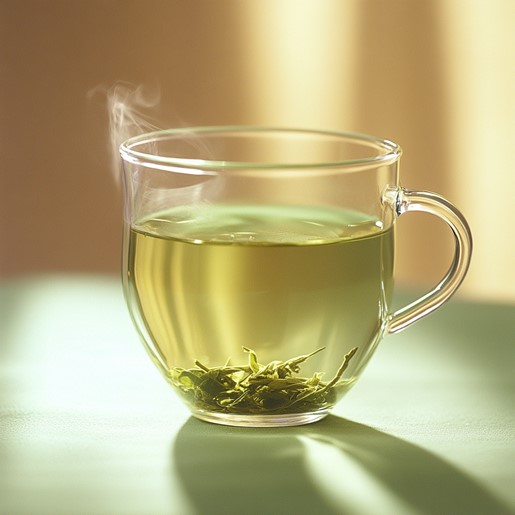
Description: Wind-Whisper Tea is a delicate, almost ethereal beverage. When poured, it is a very pale, translucent green, reminiscent of new spring leaves catching the sunlight. It has a subtle, fresh aroma that evokes the scent of clean mountain air and freshly cut grass, with a faint, almost imperceptible hint of sweetness. The steam that rises from a warm cup often curls in wispy, dance-like patterns.
Upon tasting, it is light on the palate, with a clean, slightly herbal flavor that is neither bitter nor overly sweet. There’s a refreshing quality to it, leaving a sensation of coolness and clarity. It does not possess a strong aftertaste, but rather a fleeting feeling of airiness that seems to linger in the senses more than in the mouth. The tea is typically served warm, as this is believed to best release its subtle properties, though some prefer it chilled for a more invigorating sensation. It is not a filling drink; instead, it feels as though it dissipates quickly, leaving behind only its gentle influence.
Stats (for a Tier 1 Avatar):
- Primary Effect: Imbiber gains a narrative advantage on actions primarily involving Acrobatics (such as balancing, tumbling, leaping, or maintaining footing in precarious situations) for 30 minutes. This might manifest as being able to describe a slightly more daring maneuver, finding it easier to stick a landing, or a general sense of improved bodily control and coordination when performing nimble feats.
- Secondary Effect (Roleplay Focus): For the duration, the imbiber feels unusually light on their feet, as if a gentle breeze is aiding their movements. They might perceive short falls as less jarring or find themselves more easily able to twist and turn in mid-air or when navigating tight spaces. This encourages descriptive roleplaying of acrobatic actions, emphasizing grace and agility.
- Hit Point Recovery: Consuming this brew does not directly restore Health Points, aligning with its common rarity and focus on agility rather than direct healing.
(Duration may be extended to the length of the session with Guide Manager approval.)
Color: Pale, translucent spring green.
Tags: Beverage, Infusion, Mundane, Light, Agility-Enhancing, Common, Herbal, Mountain-Sourced, Sylvan-Origin, Zephyrbloom-Extract, Air-Infused, Feather-Step, Balance-Aid, Evasion-Support, Nimbleness
Passive Magic: Upon consumption and for the duration of its effects, the imbiber might notice that small, light objects (like fallen leaves or dust motes) seem to subtly drift away from them as they move, as if a very faint personal zephyr accompanies them. Clothing might flutter slightly more than usual, even in still air. This effect is purely sensory and provides no mechanical benefit but enhances the thematic feel of the brew. The faint, fresh aroma of the tea also seems to cling to the imbiber for a short while.
Active Magic: The primary active magical effect is the direct enhancement to acrobatic endeavors. When an avatar who has consumed Wind-Whisper Tea attempts an action where agility, balance, and nimble movement are key, the magic within the brew subtly guides their muscles, lightens their frame, and sharpens their reflexes for such tasks. It doesn’t grant new skills, but rather makes the avatar’s existing (even if untrained) potential for acrobatic success more readily achievable. For instance, a character attempting to leap across a narrow gap might find their launch more controlled and their landing more precise. Someone trying to navigate a collapsing rope bridge might feel their balance adjust more intuitively to the swaying. The magic manifests as a temporary state of heightened physical grace and coordination specifically tied to acrobatic challenges.
Wind-Whisper Tea, being a common and subtly beneficial infusion, finds its way into various marketplaces and points of exchange throughout the diverse lands of Saṃsāra. The manner of its transaction and its typical cost can fluctuate based on proximity to its source, the nature of the settlement, and the type of vendor.
- Villages and Rural Settlements (Especially near Zephyrbloom Growth Areas like the Sky-Garden Plateau):
- Where and How It’s Sold: In small villages nestled at the foothills of mountains or within regions where the Zephyrbloom plant grows naturally, Wind-Whisper Tea is often a household staple. It might be sold directly from the homes of local foragers or village herbalists who gather the leaves themselves. Small, informal market gatherings, perhaps held weekly or bi-weekly, would see individuals offering bundles of dried Zephyrbloom leaves or small clay pots of freshly brewed tea. Transactions here are often personal, with the seller perhaps sharing tips on brewing or recounting local tales associated with the tea. The tea might be sold as loose dried leaves wrapped in simple cloth or broad leaves, or as a ready-to-drink infusion poured into a buyer’s own cup or waterskin.
- Cost: This is where Wind-Whisper Tea is typically at its most affordable. The cost might be as little as a few copper pieces for a generous bundle of dried leaves sufficient for several servings, or a single copper piece for a cup of freshly brewed tea. Barter is also common in such areas; a bundle of Zephyrbloom leaves might be exchanged for a handful of fresh eggs, a small portion of grain, or a mended tool.
- Towns and Market Hubs:
- Where and How It’s Sold: In bustling towns and established market hubs that serve as intermediary points of trade, Wind-Whisper Tea becomes more commercialized. Dedicated herbalist shops, apothecaries (even those not specializing in potent alchemical concoctions), and general stores that stock various dried goods would likely carry Zephyrbloom leaves. Teahouses and inns, particularly those catering to travelers, couriers, or entertainers, might offer Wind-Whisper Tea on their menu as a specialty beverage. Market stalls, clearly marked with painted signs depicting swirling leaves or leaping figures, would sell the tea alongside other common herbs and remedies. Here, the leaves are more likely to be found in standardized weights or measures, perhaps in small cloth sacks or wooden boxes.
- Cost: The price would see a modest increase due to transportation from rural sources and the vendor’s overhead. A bundle of dried leaves might cost between 5 to 10 copper pieces. A cup of brewed tea at an inn or teahouse could range from 2 to 3 copper pieces. The quality is generally consistent, and buyers can expect a reliable product.
- Large Cities and Metropolises:
- Where and How It’s Sold: Within the sprawling urban landscapes of Saṃsāra’s major cities and metropolises, Wind-Whisper Tea can be found in a wider array of venues. Larger, more sophisticated tea emporiums might stock it alongside exotic blends from distant lands, possibly presenting it as a charming local specialty. Some alchemist supply shops might carry high-quality Zephyrbloom leaves, valued for their purity. Performance venues, such as circuses or theaters featuring acrobatic troupes, might have vendors selling cups of the tea to audience members seeking a thematic refreshment, or supply it to their performers. In the vast, multi-layered bazaars and marketplaces common to these large population centers, numerous stalls would offer it, some perhaps even claiming unique or slightly enhanced brewing methods (though its common rarity makes truly magical enhancements unlikely without higher cost).
- Cost: In cities, the cost could be slightly higher, reflecting greater demand, longer supply chains, and the general cost of doing business in a metropolis. A finely packaged selection of Zephyrbloom leaves might sell for 10 to 15 copper pieces, potentially more if presented in an ornate container or marketed as a “premium” selection. A cup from a street vendor might be 3 to 4 copper pieces, while an upscale teahouse might charge 5 copper pieces or more for a carefully prepared pot.
- Traveling Merchants and Trade Caravans:
- Where and How It’s Sold: Merchants navigating the trade routes of Saṃsāra, whether by steam-powered riverboats, airships, or guarded land caravans, often carry goods like Wind-Whisper Tea. They might sell it at temporary encampments, roadside trading posts, or upon arrival in settlements that have limited direct access to Zephyrbloom sources. The tea would typically be in its dried leaf form for ease of transport and longevity.
- Cost: The cost from traveling merchants is highly variable. If the merchant is far from the source regions, the price will be inflated to reflect the risks and effort of transportation, potentially reaching 15 to 20 copper pieces for a standard bundle. Conversely, a merchant looking to offload stock quickly might sell it for a more competitive price.
- Specialized Establishments (Guilds, Schools):
- Where and How It’s Sold: Institutions that value agility, such as acrobatic schools, courier guilds, or even informal associations of nimble-footed rogues or scouts, might procure Wind-Whisper Tea in bulk for their members. It would likely be available through a quartermaster or a common room provisioner. In these settings, it’s less about a commercial transaction and more about supplying a useful tool to members.
- Cost: If sold, it would likely be at a subsidized rate, close to its base cost, perhaps 5 copper pieces for a standard measure. Alternatively, access to the tea might be included as part of guild dues or provided freely from communal supplies, with the expectation that it be used to benefit the organization’s goals.
The pervasive magic of Saṃsāra and the diverse knowledge of its inhabitants, including Isekai souls, ensure that even common items like Wind-Whisper Tea are appreciated for their subtle benefits, leading to their widespread, if modestly priced, availability across its many lands.
An avatar who has partaken of Wind-Whisper Tea finds their body imbued with a subtle, ethereal lightness, their movements becoming more fluid and precise. This enhancement to their natural agility can be creatively applied in various situations, both for safeguarding themselves and for gaining an edge when confronting adversaries. The roleplay of these actions often emphasizes grace, opportunism, and a heightened awareness of their physical capabilities within their surroundings.
- Urban Environments (Rooftops, Crowded Markets, Narrow Alleys, Industrial Districts):
- Defensive Roleplay:
- Rooftop Evasion: “Feeling the familiar airy lift from the Wind-Whisper Tea, Elara sprints across the rain-slicked tiles of the Kestrel District rooftops. When a pursuer’s grappling hook snags too close, she doesn’t just dodge; she launches into a breathtaking cartwheel along a narrow parapet, the wind seeming to guide her balance, landing lightly on an adjacent, lower roof. Each footfall is a whisper, her cloak billowing like a shadow as she uses a hanging laundry line to swing across a chasm between buildings, the tea making the daring maneuver feel almost instinctive.”
- Marketplace Escape: “Caught in a sudden scuffle within a bustling Saṃsāran bazaar, Finn, buoyed by the tea’s effects, weaves through the panicked throng not by brute force, but with an almost dance-like agility. He slides under an overturned fruit cart with surprising ease, tumbles over a merchant’s low table scattering only a few trinkets, and uses the heads and shoulders of larger individuals as momentary handholds to vault deeper into the maze of stalls, each movement calculated to make him an elusive target.”
- Alleyway Dodge: “Cornered in a tight alley by a pair of city guards, Lyra sips the last of her Wind-Whisper Tea. As they lunge, she doesn’t just step back; she presses her hands against one grimy wall and her feet against the other, walking herself several feet up the narrow passage as if gravity has lessened its hold on her. With a nimble twist, she kicks off the opposing wall, sailing over their heads to land silently behind them, the sensation of lightness allowing her to absorb the impact with barely a sound.”
- Factory Floor Navigation: “Inside a clamorous steam-powered workshop, with gears grinding and pistons hissing, a character might need to evade a malfunctioning automaton. Under the influence of Wind-Whisper Tea, they could describe leaping onto moving conveyor belts with uncanny timing, balancing precariously on narrow gantries high above the factory floor, or tumbling through a complex web of pipes and conduits to avoid crushing machinery, their movements made swift and sure by the tea’s subtle magic.”
- Offensive Roleplay:
- Rooftop Ambush: “Kai, having consumed the tea, stalks his target across the city’s skyline. He moves with the silence of a cat, the tea allowing him to run lightly along narrow beams and leap wide gaps between buildings without a tell-tale thud. He positions himself on a precarious gargoyle overlooking a moonlit square, using the enhanced balance to line up a perfect shot, or to drop down silently behind his quarry.”
- Marketplace Disruption: “To create a diversion or approach an opponent unnoticed, the character might use the crowded market to their advantage. They could describe using the tea’s agility to scale a vendor’s awning with a swift, silent leap, running briefly along the top of the canvas structure to bypass a guard, then dropping down into a strategic position with the lightness of a falling leaf.”
- Alleyway Flanking: “Facing a heavily armored foe in a confined space, the character uses Wind-Whisper Tea to turn the environment into an asset. They might run a few steps up one wall, kick off to propel themselves over the adversary’s shield, and land lightly behind them for a surprise attack, the tea granting them the confidence and bodily control for such a risky aerial maneuver.”
- Industrial Sabotage/Attack: “In an industrial setting, an avatar might use the tea to nimbly climb up the framework of a large steam-driven machine, perhaps to disable a critical component or to gain a high vantage point. They could describe how the tea helps them maintain their grip on oily surfaces and balance on vibrating platforms, allowing them to reach an otherwise inaccessible spot to strike from an unexpected angle.”
- Defensive Roleplay:
- Wilderness Environments (Forests, Mountains, Crumbling Ruins):
- Defensive Roleplay:
- Forest Canopy Escape: “Hunted by dire wolves through a dense Saṃsāran jungle, Anya, fueled by Wind-Whisper Tea, takes to the trees. She describes how the tea makes each leap from branch to branch feel more certain, her fingers finding purchase on slender boughs that might otherwise snap. She swings on vines with enhanced grace, her body a blur of motion, using the thick foliage and her nimble movements to break line of sight with her pursuers.”
- Mountain Traverse: “Navigating a treacherous mountain pass to evade a territorial griffon, a character feels the tea’s lightness counteracting the pull of gravity on steep ascents. They might describe skittering across a narrow, crumbling ledge with surprising confidence, or using small, unstable rock outcroppings as fleeting footholds to descend a cliff face with agility that borders on flight.”
- Ruin Evasion: “Fleeing from animated statues within an ancient, collapsing temple, the character uses the tea to turn the hazardous environment to their advantage. They leap across chasms in the floor with extended airtime, balance on decaying beams that groan under any weight, and tumble through narrow openings in fallen masonry, their movements quick and fluid, avoiding traps and obstacles as if guided by an unseen hand.”
- Offensive Roleplay:
- Forest Ambush from Above: “The character, having drunk Wind-Whisper Tea, scales a towering ironwood tree with unnatural speed and silence. Perched on a high branch overlooking a bandit camp, they feel exceptionally stable and light, allowing them to take careful aim with a ranged weapon or to prepare a silent, acrobatic descent directly onto an unsuspecting sentry.”
- Cliffside Maneuver: “Engaging a foe on a narrow cliff path, the character uses the tea to perform daring feints. They might pretend to stumble towards the precipice, only to use the lightness in their limbs to execute a swift spin and kick off the cliff wall itself, propelling them back towards their opponent from an unexpected angle or into a flanking position.”
- Ruin Skirmishing: “Fighting amidst the debris of a forgotten city, the character leverages the tea’s effects to outmaneuver their opponents. They might run along the top of a fallen pillar to gain height, leap from one precarious platform to another to avoid area attacks, or use a series of agile tumbles and rolls to close the distance on a ranged attacker, their movements too quick and unpredictable to easily track in the cluttered environment.”
- Defensive Roleplay:
In essence, Wind-Whisper Tea encourages a character to see their environment not just as a backdrop, but as a dynamic stage for displays of agility. It prompts roleplay that is less about raw power and more about finesse, opportunism, and the artful application of movement, whether they are artfully dodging a blow or positioning themselves for a decisive strike. The key is the feeling of enhanced lightness and control, allowing actions that might otherwise seem reckless to be performed with a surprising degree of confidence and success.
Perception of Activation: The activation of a brew like Wind-Whisper Tea, referring to the moment its subtle magical properties begin to noticeably imbue the consumer, is perceived differently by the User (the imbiber) and an external Observer. These perceptions engage the conventional five senses as well as more esoteric, extra-sensory capacities.
- User’s Perspective:
- Sight:
- Perception: As the tea’s essence begins to work, the User might experience a fleeting, almost imperceptible sharpening of their peripheral vision, particularly concerning movement. Colors around them might seem to brighten for a moment, not intensely, but as if a thin veil has been lifted. There’s no dramatic visual distortion, but rather a subtle enhancement, a sense that their eyes are more attuned to the flow of motion in their immediate surroundings.
- Positives: This can lead to a feeling of heightened alertness and readiness, making the User feel more connected to their environment and better able to react to quick changes. It can be reassuring, a gentle confirmation that the brew is taking effect.
- Negatives: For an unprepared User, the slight shift in visual acuity, however minor, could be momentarily disorienting, especially if they are in a visually complex or rapidly moving environment. It might cause a brief, second-long distraction.
- Sound:
- Perception: A very faint, internal sensation akin to the whisper of a gentle breeze might be heard, not as an external sound, but as if originating from within their own ears or mind. Some Users report a brief diminution of loud, jarring noises, replaced by a heightened sensitivity to softer sounds like rustling leaves, distant wind chimes, or the soft creak of a floorboard.
- Positives: This can create a calming effect, filtering out some overwhelming sounds and allowing a clearer perception of subtle auditory cues, potentially aiding in stealth or awareness of delicate environmental interactions.
- Negatives: If the User is trying to focus on a specific, loud sound source, the momentary shift in auditory perception could be a minor inconvenience. The internal “whisper” might be unsettling for a first-time User.
- Smell:
- Perception: The lingering, fresh herbal aroma of the Wind-Whisper Tea itself might seem to bloom once more from within, a clean, airy scent that feels as if it’s subtly perfusing their own breath. For a moment, the ambient smells of the environment might recede, replaced by this pure, invigorating fragrance.
- Positives: This is often perceived as a pleasant and refreshing sensation, reinforcing the tea’s theme of lightness and airiness, and can be mentally uplifting.
- Negatives: In rare cases, if the User is particularly sensitive or dislikes herbal scents, this internal aroma might be slightly cloying or distracting until it fades.
- Taste:
- Perception: (Primarily during and immediately after consumption, leading into activation) The initial light, herbal taste of the tea might evolve on the palate for a moment after swallowing. A fleeting, cool tingling, like menthol but far gentler, might spread across the tongue and down the throat, signaling the magical infusion beginning its work.
- Positives: This sensation can be an enjoyable confirmation of the brew’s magical nature, a distinct marker that separates it from mundane beverages. The coolness can feel invigorating.
- Negatives: If unexpected, the tingling might cause a brief, minor coughing fit or a surprised expression.
- Touch/Feel (Physical Sensation):
- Perception: This is often the most pronounced sensory experience for the User. A distinct feeling of lightness begins to spread through their limbs, as if a small burden has been lifted from their shoulders and ankles. Muscles might feel more supple, joints looser. A subtle coolness or a gentle warmth, like a soft current of air, might flow just beneath the skin, particularly in the legs and arms. Their own body weight might feel fractionally reduced.
- Positives: The sensation of lightness is usually very pleasant and directly relates to the tea’s intended effect, boosting confidence in one’s agility. It can make movement feel effortless and graceful.
- Negatives: If the onset is too sudden or the User is not expecting it, the feeling of reduced weight could cause a momentary loss of balance or a slight feeling of disembodiment until they adjust.
- Extra-Sensory Perceptions (User):
- Enhanced Proprioception: The User gains a crystal-clear, intuitive sense of their body’s position and the spatial orientation of their limbs. It feels as if they know precisely where every part of them is without needing to look, and their sense of balance becomes acutely sharp.
- Positives: This dramatically improves coordination and balance, making complex movements feel natural and reducing clumsiness.
- Negatives: An overabundance of this information, if the User is not used to such clarity, could initially feel overwhelming, like suddenly being aware of too many bodily details at once.
- Heightened Kinaesthesia: Movements feel exceptionally smooth, fluid, and efficient. There’s a distinct perception that their body will respond more readily and accurately to their intentions for agile actions.
- Positives: Actions like leaping, tumbling, or dodging feel more intuitive and require less conscious effort.
- Negatives: Could lead to overconfidence if the User misjudges the actual limits of their physical capabilities despite the enhanced grace.
- Aetheric Attunement (Sense of Ambient Magic): The User might feel a subtle resonance with the ambient magical energies of Saṃsāra, a fleeting sensation of their personal Ki-Aether being gently stirred or aligned by the tea’s magic. It’s like feeling a very soft current in a still pool of water.
- Positives: Can be a profound or interesting sensation for those attuned to magic, providing a deeper connection to the world’s energies.
- Negatives: For those unfamiliar or uncomfortable with magical sensations, this might feel slightly invasive or strange.
- Enhanced Proprioception: The User gains a crystal-clear, intuitive sense of their body’s position and the spatial orientation of their limbs. It feels as if they know precisely where every part of them is without needing to look, and their sense of balance becomes acutely sharp.
- Sight:
- Observer’s Perspective:
- Sight:
- Perception: To an ordinary Observer, there is usually very little, if any, visible change in the User as the Wind-Whisper Tea activates. Perhaps a momentary flicker in the User’s eyes, a slight, almost imperceptible straightening of their posture as the feeling of lightness takes hold, or a brief, subtle relaxation of facial muscles. If the User is holding a cup of the warm tea, the already present wispy steam might seem to briefly coalesce or swirl more energetically before returning to normal.
- Positives: The subtlety means the User isn’t drawing unwanted attention to themselves for consuming a magical brew.
- Negatives: The lack of clear visual cues makes it difficult for an Observer to confirm if or when the brew has taken effect based on sight alone.
- Sound:
- Perception: An Observer is unlikely to hear anything specific from the User or the brew during activation, beyond perhaps the User taking a slightly deeper breath or letting out a soft, almost inaudible sigh of contentment or surprise.
- Positives: Maintains discretion.
- Negatives: Provides no auditory cue of activation.
- Smell:
- Perception: If the Observer is very close to the User, they might catch a fleeting hint of the fresh, herbal aroma of the Wind-Whisper Tea on the User’s breath or seemingly emanating faintly from their person for a moment after consumption. This is very faint and dissipates quickly.
- Positives: Could be a pleasant, subtle scent if noticed.
- Negatives: Too faint to be a reliable indicator of activation for an Observer.
- Taste:
- Perception: Not applicable from an Observer’s perspective concerning the User’s internal experience. They would not perceive any change in the brew remaining in a cup.
- Positives: N/A.
- Negatives: N/A.
- Touch/Feel (Physical Sensation):
- Perception: An Observer would not perceive any change in the User by touch. The internal sensations of lightness are not externally palpable.
- Positives: The User does not exhibit any strange tactile changes that might alarm others.
- Negatives: No tactile confirmation of activation for an Observer.
- Extra-Sensory Perceptions (Observer with ESP capabilities):
- Aura Reading: An Observer capable of perceiving auras might see a subtle, temporary shift in the User’s aura. For Wind-Whisper Tea, this could manifest as the aura becoming slightly brighter or taking on faint, swirling patterns of pale green or silvery light, particularly around the User’s limbs. The aura might also appear ‘lighter’ or more ‘mobile’ for a short period.
- Positives: Provides a clear, albeit specialized, confirmation that a magical effect has been initiated. Can help an allied Observer anticipate the User’s enhanced capabilities.
- Negatives: The specific auric signature might be unfamiliar, requiring interpretation. For a hostile Observer, this confirms the User has activated a magical aid.
- Magic Detection: An Observer sensitive to magical energies might detect a faint, brief pulse or emanation of subtle Ki-Aether from the User as the tea’s magic integrates with their system. It would likely register as a very low-level, transient magical signature.
- Positives: Confirms the presence of active magic.
- Negatives: The signature is weak and could be easily missed in areas with high ambient magic or other magical effects.
- Empathic Echo: A highly empathic Observer might sense a fleeting wave of specific emotion from the User as the tea activates – perhaps a surge of lightheartedness, a moment of focused calm, or a gentle thrill of newfound grace.
- Positives: Can provide insight into the User’s mental state and the subjective effect of the brew.
- Negatives: Can be easily misinterpreted or conflated with the User’s general emotional state if not carefully discerned.
- Aura Reading: An Observer capable of perceiving auras might see a subtle, temporary shift in the User’s aura. For Wind-Whisper Tea, this could manifest as the aura becoming slightly brighter or taking on faint, swirling patterns of pale green or silvery light, particularly around the User’s limbs. The aura might also appear ‘lighter’ or more ‘mobile’ for a short period.
- Sight:
The perception of activation for a common brew like Wind-Whisper Tea is thus a blend of subtle personal experiences for the User and even more understated cues for any Observer, with extra-sensory abilities often being necessary for external confirmation of the magical effect taking hold.
The creation and utilization of Wind-Whisper Tea in the world of Saṃsāra involve specific elements, from its core components to the individuals who prepare it and the purposes it serves.
- Ingredients:
- The primary and most essential ingredient for Wind-Whisper Tea is the Zephyrbloom leaf. These are described as pale and feathery, gathered from the Zephyrbloom plant which thrives in high-altitude regions like the Sky-Garden Plateau, known for its constant gentle updrafts. The quality of the leaves can vary based on the specific harvesting time—perhaps when they are newly unfurled in the morning or when kissed by a specific type of mountain breeze, believed to enhance their inherent lightness.
- The liquid base for the infusion is typically clean spring water. In more common preparations, any readily available, potable spring water will suffice. However, some brewers, seeking a slightly more refined product, might source their water from springs known to be naturally purified by magical earth-energies or those that have a particularly “light” or “sweet” mineral composition. The original Sylvan method specifically called for “specific morning dews,” meticulously collected from plants on the Sky-Garden Plateau. This dew was believed to be imbued with the nascent magical energies of the dawn and the unique atmospheric qualities of the region, contributing a subtle, natural enchantment to the brew.
- Optional or regional ingredients may be added to create variations. The most commonly cited is a pinch of powdered Sun-Peach pit, which is said to enhance the tea’s delicate aroma and add a whisper of fruity sweetness. Other local herbs known for their complementary subtle properties – such as those that promote clarity of mind or a sense of calm – might be included by individual brewers, though these additions are not standard and can alter the tea’s classic profile. Pure forms of Wind-Whisper Tea rely solely on Zephyrbloom leaves and water.
- Tools:
- The tools required for brewing Wind-Whisper Tea vary depending on the method and the brewer’s resources, but generally reflect its common rarity and connection to simple herbalism.
- For the widely practiced common method, the tools are quite straightforward:
- Heating Vessel: A simple kettle made of copper, clay, or even well-seasoned iron, or a standard cooking pot, is used to heat the water. In areas with access to Saṃsāra’s steam-based technology, a dedicated water heater providing magically derived steam for consistent, gentle heating might be employed.
- Heat Source: This could be a traditional hearth fire, a bed of magically heated stones (which provide even and controllable warmth), or a simple burner. The emphasis is on gentle, controllable heat.
- Steeping Vessel: Often the same as the heating vessel, or a separate teapot made of ceramic or clay.
- Strainer/Filter: A fine sieve made of woven natural fibers, a piece of clean, unbleached cloth (like linen or muslin), or a purpose-built tea strainer is necessary to separate the leaves from the infused liquid.
- Serving Cups: Simple cups or mugs, typically crafted from local clay, carved wood, or basic ceramics, are used for serving.
- For the more ancient and ritualistic Sylvan original method, the tools were more specific and attuned to natural processes:
- Collecting Implements for Dew: Broad, clean leaves from specific plants, or specially shaped shells or shallow wooden ladles might have been used to carefully gather the morning dew without contamination.
- Infusion Bowls: Sun-warmed stone bowls were key. These were likely shallow bowls made from a particular type of stone found on the Sky-Garden Plateau, perhaps a type of smooth river stone or a specific flat rock that naturally absorbed and retained the sun’s warmth efficiently, allowing for a very gentle, prolonged steeping process.
- No artificial heat source was used beyond the sun itself.
- Process:
- The process of creating Wind-Whisper Tea focuses on preserving the delicate nature of the Zephyrbloom leaves.
- The common brewing process typically involves the following steps:
- Leaf Preparation: Freshly harvested Zephyrbloom leaves are preferred for their vibrancy. If using dried leaves (which are more common for trade and storage), they must be of good quality, not crushed or overly brittle.
- Water Heating: Clean spring water is heated gently in a kettle or pot. It is crucial that the water is brought to just below a rolling boil. Overly hot or aggressively boiling water is believed to damage the subtle compounds in the leaves that impart the sensation of lightness.
- Steeping: The heated water is poured over the Zephyrbloom leaves in a steeping vessel, or the leaves are added to the water once it has reached the correct temperature. The steeping time is relatively short and precise – perhaps only for a few minutes. The exact timing is often a guarded secret of experienced brewers or learned through careful practice, as over-steeping can lead to a slightly bitter taste or diminish the desired airy effect.
- Straining: Once the infusion has reached its optimal point, the liquid is carefully strained to remove all leaf particles, resulting in the characteristic pale, translucent green tea.
- Serving: Wind-Whisper Tea is traditionally served warm, as this temperature is thought to best release its delicate aroma and activate its subtle properties.
- The Sylvan original brewing process was a more patient and nature-attuned ritual:
- Dew Collection: Sylvans would venture out at dawn to collect specific dewdrops, believed to be at their most potent.
- Leaf Selection: Only the freshest, most vibrant Zephyrbloom leaves would be chosen.
- Natural Infusion: The fresh leaves and collected dew were combined in the sun-warmed stone bowls. These bowls, already warmed by the morning sun, would then be left in a sunny, airy spot, allowing the ingredients to steep slowly and naturally. This process could take longer than the hot water method, relying on the gentle, pervasive warmth of the sun to draw out the essence of the leaves into the dew.
- Observation: The Sylvans likely observed the brew for subtle signs indicating it was ready – perhaps a slight change in color, aroma, or the way light interacted with the liquid.
- Practitioners:
- Given its common rarity and relatively simple (common method) preparation, Wind-Whisper Tea is made by a variety of individuals across Saṃsāra:
- Village Herbalists: Especially those residing in or near mountainous regions where Zephyrbloom thrives. They possess the local knowledge of harvesting and brewing techniques.
- Common Folk: In areas where the plant is accessible, households often brew it for personal consumption, to aid in daily tasks requiring nimbleness, or simply as a refreshing beverage.
- Innkeepers and Teahouse Proprietors: Many include Wind-Whisper Tea on their menus as a local specialty or a functional beverage for travelers and adventurers. They often develop their own slight variations or pride themselves on a particularly well-made brew.
- Traveling Merchants: Those who trade in herbs and common consumables often carry dried Zephyrbloom leaves and can advise on their simple preparation.
- Isekai Souls: Individuals with backgrounds in herbalism, botany, or even culinary arts from other worlds might quickly recognize the unique properties of Zephyrbloom and adapt or refine brewing methods.
- The Sylvans: The original practitioners, who maintain their ancient, more ritualistic methods and hold a deep understanding of the Zephyrbloom plant. Their brews are considered rare and of exceptional quality.
- Generally, its preparation does not require advanced alchemical knowledge or powerful magical ability, but rather a degree of care, patience, and an understanding of basic herbal infusion.
- Given its common rarity and relatively simple (common method) preparation, Wind-Whisper Tea is made by a variety of individuals across Saṃsāra:
- Role:
- Wind-Whisper Tea serves several roles within the societies of Saṃsāra:
- Primary Functional Role: Its main purpose is to grant a temporary, subtle enhancement to the imbiber’s agility, balance, coordination, and overall nimbleness. It makes the User feel lighter on their feet, aiding in acrobatic maneuvers, quick evasion, and graceful movement.
- Culinary and Social Beverage: Beyond its functional properties, it is a pleasant and refreshing tea. Its delicate flavor and fresh aroma make it a favored drink in social settings, offered to guests, or enjoyed during quiet moments. Teahouses often feature it as a light, invigorating option.
- Aid for Specific Professions: It is particularly valued by individuals whose livelihoods or survival depend on agility. This includes couriers navigating crowded cityscapes or treacherous terrain, acrobatic performers, scouts exploring dangerous territories, city guards patrolling rooftops, and even nimble artisans or laborers.
- Minor Folk Medicine: In some local traditions, it might be considered a gentle tonic to alleviate feelings of physical sluggishness, mental fog, or to promote a sense of lightness and well-being, especially during damp or oppressive weather.
- Symbolic and Cultural Significance: In regions where Zephyrbloom is prominent, the tea can hold symbolic meaning associated with the wind, mountains, freedom of movement, and harmony with nature. The Sylvans, for example, likely view it as a sacred or significant part of their culture.
- Component in Other Preparations (Rare): While not its primary use, very high-quality or specially prepared Wind-Whisper Tea might occasionally be used as a subtle ingredient or base in more complex alchemical concoctions or magical infusions where a touch of “lightness” or “aetheric airiness” is desired, though this is uncommon due to its gentle nature.
- Wind-Whisper Tea serves several roles within the societies of Saṃsāra:
Chronicle of the Sky-Steppers and the Whispering Leaf
In the high dominion, where the peaks kiss the breath of the firmament, there existed a place. This place, it was named by utterances lost, yet we speak it as the Sky-Garden Plateau, for its great altitude and the growths upon it. The wind, yes, the wind, it did unceasingly blow there, a song of ages, a sculptor of stone.
Upon this very plateau, a folk resided. Small they were, of stature not great, the Sylvans they were called, or sometimes, in the old tellings, the Cliff-Dancers, for their manner of existence. Their homes, they were carved in the rock faces, like nests of birds of much cunning. And these Sylvans, their bodies were light, and their hearts brave for the heights. Yet, the wind, it was a master, sometimes kind, sometimes a harsh taker of balance. To fall, it was a great fear, a final silence.
It came to be, in a season of particularly fierce gales, that the passages between dwellings became as paths of certain peril. The young Sylvans, they could not leap as far, the old ones, their grip was not as the ironwood. The hunters of the cloud-goats, they returned with hands empty, for the goats, they danced on the very edges of nothingness, and the Sylvans, they could not follow, not then. A sadness, it did settle upon the cliff-homes. The elders, they made council, their faces like the weathered stone.
Now, there was one Sylvan, young of years but keen of eye, Elara was her designation, though the sounds were different in the forgotten speech. Elara, she did observe much. She watched the mountain swifts, how they rode the wind’s anger with feathers fine. She watched the snow-hares, how they bounded on ledges thin as a promise. And she did see the cloud-goats, those beasts of high places, munching a certain plant, a plant with leaves pale, like tiny feathers of green, before they did make their leaps of great boldness. This plant, it grew in crevices where the wind sang sharpest, named then as Zephyrbloom by later mouths.
Elara, a thought came to her head-place. “If beast eats this leaf,” she mused in the fashion of her people’s thought-speech, “and beast becomes sky-nimble, perhaps folk too?” So, she did climb, with much strain against the wind’s push, to where the feathery plant did cling. She plucked the leaves, pale green they were, and smelled them. A smell like clean air after rain, very faint, very shy.
First, as the old ways sometimes did prompt, she did chew a leaf. It was not of bad taste, a little like fresh grass, but no great sky-nimbleness did fill her. A disappointment, it was a small stone in her spirit. But Elara, she was not one for quick surrender. She remembered the shamans, how they took plants and made infusions, with water and with fire’s warmth.
The Sylvans, they held water precious, for it was carried from springs deep in the mountain’s belly, or gathered from the tears of the sky when clouds did weep. But Elara, she thought of the dew, the morning’s breath upon the land. This dew, it lay like jewels on every surface when the sun first showed its face-disc. She gathered this dew, with wide leaves as her bowls, before the sun drank it. The Zephyrbloom leaves, she placed them in a shallow stone bowl, one hollowed by wind and time, a sun-stone her mother called it, for it held the day’s heat long. She poured the dew upon the leaves. And the sun, it did climb, and its warmth, it did fall upon the bowl.
For many passings of the sun’s arc across the sky-canvas, she watched. The water, it did not boil, for there was no fire there. It grew warm, and the leaves, they did unfurl and give their essence to the dew-water. A pale green the water became, like the first light of dawn through a mist. The smell, it was still faint, but now, it danced a little, a promise of air.
With a heart of much thumping, Elara did take a sip. And then another. It was cool, yet warm from the sun-stone, and the taste, it was light, as if she drank the breeze itself. And then, a feeling. It began in her feet, a lightness, as if the stone of the mountain no longer pulled so strong. It climbed her legs, into her very core. She stood, and she felt… less. Less of weight, more of air.
She took a small leap, one she did often make. But this time, oh, this time! She went further, landed softer, like a tuft of cloud-seed. Her balance, it was as if a string, unseen, held her from the sky. A joy, it did explode in her spirit-place!
She ran, then, to the elders, the bowl held careful. “See!” she did exclaim, in the manner of her folk. “A drink of the wind’s own secret!” The elders, they were of much doubt, for new things are often cloaked in fear. But they saw the light in Elara’s eyes, and the strange new grace in her smallest movement. One by one, they did sip from the sun-stone bowl.
And as they drank, a murmuring did rise. The old Sylvan, his joints stiff as winter branches, he felt a loosening. He stood, and he swayed, and then, he did take a small, dancing step, a thing he had not done since the snows of many seasons past. The young mother, burdened by the carrying of her child and the mountain’s harshness, she felt her weariness lift like a morning fog.
That day, the Sylvans, they did all partake of the Wind-Whisper Tea, as later it was named by those who spoke in tongues more familiar to us. The hunters, they went forth, and they moved with the surety of the cloud-goats themselves, leaping chasms wide, their feet finding purchase where only wind did seem to tread before. They returned with much bounty. The passages between homes, they became paths of joyful reunion, not of trembling fear. Children played on ledges, their laughter like the chiming of tiny ice-bells, their movements quick and sure.
The Sylvans, they learned to harvest the Zephyrbloom with respect, to gather the dew with clean hands, to steep the leaves with patience in the sun’s embrace. The Sky-Garden Plateau, it bloomed not just with plants, but with a new lightness in the hearts of its folk. The story of Elara and the sun-stone bowl, it was told from elder to child, a thread in the tapestry of their days. And the wind, it still blew, but now, it often carried the scent of the whispering leaf, and the Sylvans, they danced with it, no longer just its subjects, but its partners. This knowledge, it did eventually travel, like seeds on that very wind, to other folk in other places, changed in the telling and the making, but its heart-truth, it remained.
Moral of the Story: Observe the small, listen to the quiet, for therein often lies the path to rise above great weights.
Suggested conversions to other systems:
Dungeons & Dragons (5th Edition)
Zephyr’s Draught
- Wondrous item, common (consumable)
- This pale green tea is brewed from the leaves of the rare Zephyrbloom plant, found only in high, windswept mountains. It has a light, fresh aroma.
- When you drink this tea as an action, you gain the following benefits for 1 hour:
- You have advantage on Dexterity (Acrobatics) checks.
- Your jumping distance is doubled.
- You feel unnaturally light and graceful. When you fall, you can use your reaction to reduce any falling damage you would take by an amount equal to five times your character level.
- Once the tea is consumed, the magical effects fade, and the container becomes nonmagical.
Call of Cthulhu (7th Edition)
High Peaks Brew
- This subtly fragrant, pale green infusion is prepared from leaves found only in certain remote and perilously high mountain ranges, often associated with reclusive communities or forgotten hermitages. Investigators who have managed to procure it, or a recipe for its brewing, find it has a curious effect on their physical coordination.
- Upon consuming the High Peaks Brew (which takes approximately five minutes to properly imbibe and take effect), the Investigator gains a sense of unusual lightness and bodily control. For the next hour of game time, the Investigator receives one bonus die (roll an additional tens die and use the better result) on up to three separate skill rolls using Dodge, Climb, or Jump.
- Alternatively, the Keeper may rule that the brew grants a flat +20% bonus to one of these skills for the duration, or to a specific, significant roll involving extreme agility or balance.
- There is typically no Sanity cost associated with this brew, given its natural origins, though particularly potent or strangely sourced batches might carry unforeseen psychical resonances at the Keeper’s discretion. An Investigator with Occult or Cthulhu Mythos knowledge might, upon tasting it, sense a faint, almost untraceable connection to ancient, airy beings or places beyond normal human ken (0/1 Sanity loss possible if the sensation is particularly alien or disturbing).
Blades in the Dark
Alley-Cat Elixir
- A small vial containing a shimmering, pale green liquid that smells faintly of mountain air and herbs. Favored by nimble acrobats, infiltrators, and those who ply their trade along the rooftops of Duskwall.
- Mechanics:
- When you consume the Alley-Cat Elixir (this counts as using an item and takes a moment of quiet contemplation or a brief pause in the action), you feel a preternatural lightness and grace infuse your movements. For the remainder of the current score, or for the next few hours if between scores:
- Gain +1d to your action roll when you perform a feat of acrobatics, such as leaping across rooftops, balancing on narrow ledges, climbing difficult surfaces, or tumbling to avoid harm. This bonus applies to relevant Prowl, Finesse, or even Skirmish rolls, depending on the specific action and situation.
- Alternatively, you may choose to ignore 1 stress cost when pushing yourself for an acrobatic feat.
- This is a consumable item and typically takes up one load slot. Some alchemists or apothecaries in the city might know how to brew it, often jealously guarding their recipes or sources for the rare ingredients.
Knave
Cliffclimber’s Infusion
- Item Slot: 1 (Potion vial)
- A flask containing a pale green, aromatic tea. It feels light in the hand.
- Description & Effect:
- Upon drinking this infusion (takes one round or a brief moment), for the next hour (or 6 exploration Turns), you feel remarkably light and agile. During this time:
- You gain Advantage (roll twice and take the better result) on all saving throws made to avoid falling or to resist effects that would knock you prone or impede your movement through difficult acrobatics.
- You gain Advantage on any ability checks (typically Dexterity) made to climb, balance, jump, or perform other feats of physical nimbleness.
- You take half damage from falls.
- The infusion leaves a pleasant, airy sensation, but its benefits are fleeting.
Fate Core / Fate Condensed
Whisper-Light Infusion
- This is a delicate, pale green tea that grants a fleeting sense of preternatural lightness and grace.
- Mechanics:
- When a character takes a moment to drink the Whisper-Light Infusion, they gain the temporary situation Aspect: “Grace of the Four Winds.”
- This Aspect can be invoked once for free on an Overcome or Create an Advantage action where exceptional agility, balance, or acrobatic skill would be beneficial (e.g., leaping a chasm, balancing on a narrow ledge, dodging a clumsy attack through nimble movement).
- After the free invocation, the Aspect may be invoked further by spending a Fate Point as usual, for as long as the Game Master deems the Aspect relevant (typically for the current scene or until a significant rest).
- The GM can also compel this Aspect; for instance, the character might feel an urge to perform an unnecessarily showy acrobatic maneuver due to their heightened sense of grace, potentially drawing unwanted attention.
- Alternatively, instead of an Aspect, consuming the infusion could grant a +2 bonus to a single, specific Athletics (or other relevant skill/approach) roll made to perform an acrobatic feat, declared before the roll.
Numenera & Cypher System
Airsylph Draught
- A shimmering, pale green liquid in a small vial or pouch, smelling faintly of high mountain air. It is created through esoteric herbalism.
- Level: 1d6 (typically 2 or 3)
- Form: Consumable liquid (usually one dose)
- Effect: When ingested, the Airsylph Draught fills the user with a sensation of incredible lightness and agility for one hour. During this time, the user gains an asset on all Speed-based tasks related to balancing, jumping, climbing, or moving with delicate footwork.
- Alternatively, for a more potent but shorter effect (e.g., Level +2, duration 10 minutes), the draught might allow the user to make one leap up to a short distance horizontally or vertically without needing to make a roll, or to automatically succeed on one Speed-based defense task by nimbly evading an attack or hazard.
- Depletion: — (Consumed on use)
Pathfinder (2nd Edition)
Lightfoot Liqueur
- Alchemical Consumable Elixir
- Price 4 gp Level 1
- Usage held in 1 hand; Bulk L
- Activate [one-action] Interact
- This shimmering, pale green liqueur smells of fresh breezes and high mountain herbs. When you drink Lightfoot Liqueur, your steps become preternaturally light and your movements graceful.
- For the next 10 minutes, you gain the following benefits:
- You gain a +1 item bonus to Acrobatics checks.
- When you Leap, you can move an additional 5 feet horizontally, or an additional 2 feet vertically.
- You treat falls as if they were 10 feet shorter than they actually are.
- If a higher-level version is crafted (e.g., Level 5, Price 25 gp), the item bonus to Acrobatics could increase to +2, the Leap distance could improve further (e.g., an additional 10 feet horizontally), and the fall reduction might increase to 20 feet.
Savage Worlds Adventure Edition (SWADE)
Quickfoot Draught
- This vial contains a light green, aromatic tea. It is known among nimble explorers and those who prefer to tread lightly.
- Effect:
- Upon consuming the Quickfoot Draught (which takes about a minute), the imbiber feels exceptionally light and agile. For the next 10 minutes, they gain:
- A +1 bonus to all Agility rolls made for tasks involving climbing, balancing, jumping, or other acrobatic maneuvers.
- Their Pace is increased by 2 inches.
- Alternatively, the GM might rule that the draught allows the character to ignore 2 points of penalties on one such Agility roll, or grants a one-time free reroll on a failed Agility roll for an acrobatic feat.
- Weight: Negligible Cost: Typically low (e.g., $20-$50 in a standard setting, subject to GM discretion and availability).
Shadowrun (6th World Edition)
Aero-Infusion
- This is a carefully prepared infusion of certain awakened herbs, sometimes found in pristine, magically active environments, or occasionally synthesized by boutique bio-labs. It produces a pale green liquid that smells faintly of ozone and high-altitude flora. While not as potent or debilitating as many street chems, it’s sought after by those needing a temporary boost to agility.
- Type: Awakened Herbal Preparation / Mild Biostimulant
- Effect: When consumed, the Aero-Infusion grants the user a distinct sensation of lightness and enhanced motor control. For the next 30 minutes, the user gains +1 Edge on any test involving Gymnastics (for acrobatics, balancing, leaping) or Stealth (for silent and nimble movement). Alternatively, the Game Master might grant a +1 dice pool bonus to such tests. The user also treats falls as if the distance were 2 meters less for purposes of calculating damage.
- Side Effects: After the duration expires, the user may feel a slight lethargy for a short period (e.g., -1 dice pool modifier to Agility-based tests for 10 minutes) as the body readjusts. There is no significant addiction potential for most preparations, though poorly synthesized street versions might carry higher risks or unknown impurities.
- Legality: Typically legal, though restricted in some high-security zones. Awakened preparations may attract unwanted attention from entities interested in magical compounds.
- Cost: 50-100 nuyen per dose on average.
Starfinder
Sylphwind Serum
- Level 2; Price 100 credits; Bulk L
- This injectable serum is a clear, pale-green liquid synthesized from extremophile plant extracts found on worlds with thin atmospheres and high winds. It’s favored by scouts, acrobatic performers, and anyone needing to navigate treacherous environments with grace.
- Type Serum (consumable); Usage Injection (standard action to administer)
- Effect For 10 minutes after this serum is injected, you feel remarkably light and agile. You gain a +1 item bonus to Acrobatics checks and treat your Dexterity score as 2 higher for the purpose of calculating your maximum jump distance. Additionally, when you fall, you can attempt a DC 15 Acrobatics check as a reaction; if successful, you take damage as if the fall were 10 feet shorter.
- Craft DC 17 Mysticism or Life Science
Traveller (Mongoose 2nd Edition)
Sylph-Stim
- A small, sealed ampule containing a clear, greenish fluid, often marketed under various trade names by pharmaceutical corporations specializing in biotech or performance enhancers. It’s a mild stimulant designed to enhance neuromuscular coordination and balance.
- Effect: Upon injection or ingestion (depending on the specific brand’s delivery method, typically taking one round), Sylph-Stim grants the user a +1 DM to Dexterity-based skill checks directly involving acrobatics, climbing, jumping, or maintaining balance (e.g., Athletics (DEX) for such specific tasks) for 1D6x10 minutes. During this time, the user also finds it slightly easier to operate in low-gravity or zero-gravity environments if relevant skills are used.
- Side Effects: Once the effects wear off, the user may experience minor jitters or a slight headache for an equivalent duration, resulting in a -1 DM to similar tasks or intellectually demanding checks until they rest or take a mild pain reliever.
- Legality: Generally legal for personal use in most systems (Tech Level 8+), but may be restricted for competitive athletes or in certain high-security professions. Bulk possession might require pharmaceutical licenses.
- Cost: Cr 50-150 per dose, depending on legality and source.
Warhammer Fantasy Roleplay (4th Edition)
Sprite-Step Draught
- This is a rare and delicate infusion, typically brewed by those with deep knowledge of woodland herbs, often Elves or reclusive herbalists. It is made from specific flowering plants that only bloom under moonlight in ancient, untouched groves. The resulting liquid is a shimmering, pale green, and smells of fresh dew and subtle blossoms.
- Type: Draught
- Effect: After imbibing the Sprite-Step Draught (which requires a moment to drink), the consumer feels an uncanny lightness and grace flow through their limbs. For the next 1d10+Agility Bonus minutes (or roughly 1-2 scenes), the character gains one of the following benefits (GM or player may choose, or determine randomly):
- Add a +20 bonus to their Agility characteristic for the purpose of any Agility Test made to balance, leap, dodge blows in combat, or move silently.
- Gain the Surefooted talent. If they already possess it, they may re-roll one failed Agility Test related to movement or balance during the draught’s duration.
- Automatically succeed on one Average (+20) Agility Test involving complex acrobatic maneuvers, such as tumbling through an enemy’s legs or leaping a narrow chasm.
- Side Effects: Some find the sensation of lightness mildly disorienting, suffering a -5 penalty to any Fellowship Tests involving appearing imposing or steadfast for the duration, as they may seem flighty or insubstantial. Once the draught wears off, the user may feel a little clumsy for a few minutes as they readjust (no mechanical penalty, but good for roleplaying).
- Ingredients & Lore: Rumored to contain petals of the Moonglimmer flower, morning dew from an Athel Loren glade, and a whisper of Elven enchantment. Its brewing is a closely guarded secret.
- Availability: Rare.