
Lore: In the world of Saṃsāra, the Symbol 13 of Bad Omens is a cultural symbol that has been passed down through generations, originating from a time when the world was plagued by a series of unfortunate events. It is said that the symbol was created by a powerful mage who sought to warn the people of impending danger and to remind them of the importance of vigilance and preparedness.
Graphic Appearance: The symbol is a circular design with a large clock that goes to the number 13 at its center. Surrounding the number are various images representing different forms of misfortune, such as a broken mirror, a black cat, and a crow perched on a skull. The images are interconnected by intricate lines, creating a sense of foreboding and unease. The symbol is typically depicted in dark colors such as black, red, and purple.
Ideas Represented: The symbol represents the idea that bad luck and misfortune are ever-present and that one must always be prepared to face adversity. It serves as a reminder to be cautious and to never underestimate the power of fate.
Concept of Symbol: The symbol is meant to instill a sense of caution and humility in the hearts of those who wear it. It serves as a warning that even the most powerful of avatars can fall victim to the whims of fate and that one must always be prepared for the worst.
Type of Symbol: The Symbol 13 of Bad Omens is typically displayed as a patch or tattoo. It can also be found engraved on personal belongings or as a decorative element in homes and public spaces.
Motivation: The motivation behind the creation and use of this symbol is to encourage people to be mindful of their actions and to never take their good fortune for granted. It serves as a reminder that even the most powerful of avatars can be brought low by the forces of fate and that one must always be prepared to face adversity.
Use: The symbol is often used by those who wish to display their understanding of the unpredictable nature of life and their determination to face whatever challenges may come their way. It is also used by those who wish to pay homage to the history of their world and to honor the struggles of their ancestors.
Tags: Bad luck, misfortune, caution, vigilance, humility.
Positives: The Symbol 13 of Bad Omens serves as a powerful reminder of the importance of being prepared for the worst and of the need to face adversity with courage and determination. It can also serve as a source of inspiration for those who are facing difficult times, reminding them that they are not alone in their struggles.
Negatives: The symbol can also be seen as a source of fear and anxiety, as it constantly reminds people of the potential for bad luck and misfortune. It can also be used as an excuse for inaction or defeatism, as some may believe that no matter what they do, fate will ultimately determine their destiny.
In the world of Saṃsāra, the Symbol 13 of Bad Omens is a powerful cultural symbol that represents the unpredictable nature of life and the importance of being prepared for the worst. It serves as a reminder to be cautious and to never underestimate the power of fate, but it can also be a source of fear and anxiety. Ultimately, the symbol is a testament to the resilience of the people of Saṃsāra and their determination to face whatever challenges may come their way.
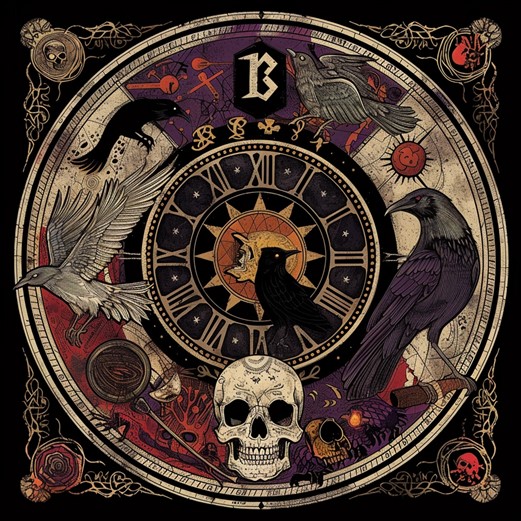
Tale of the Cursed Thirteen
In a time long forgotten, in the realm of Saṃsāra, there existed a powerful mage who sought to protect the people from the whims of fate. The mage crafted a symbol, a circle with the number thirteen at its center, surrounded by images of misfortune. This symbol, known as the Symbol 13 of Bad Omens, was meant to serve as a reminder of the unpredictable nature of life and the importance of being prepared for the worst.
The people of Saṃsāra embraced the symbol, adorning their clothing and homes with its image. They believed that by doing so, they would be protected from the forces of misfortune and that the mage’s magic would shield them from harm. However, as time passed, the true meaning of the symbol was lost, and the people began to see it as a mere decoration, a token of their past.
One fateful day, a great calamity befell the land. A terrible storm ravaged the countryside, and the people cried out for the mage’s protection. But the mage had long since passed, and the people were left to face the storm alone. As the winds howled and the rain poured, the people realized that they had forgotten the true meaning of the Symbol 13 of Bad Omens. They had grown complacent, believing that the symbol alone would protect them from harm.
In the aftermath of the storm, the people gathered to rebuild their homes and their lives. They looked upon the symbol with newfound respect, understanding that it was not a charm to ward off misfortune, but a reminder of the need to be ever vigilant and prepared. The people of Saṃsāra vowed never to forget the true meaning of the Symbol 13 of Bad Omens and to pass its story down through the ages, so that future generations would not make the same mistake.
Moral of the story: The Symbol 13 of Bad Omens serves as a reminder that no charm or token can protect us from the whims of fate. It is our responsibility to be prepared for the worst, and to face adversity with courage and determination. We must never grow complacent or take our good fortune for granted, for even the strongest of us can be brought low by the forces of fate.
Suggested conversions to other systems:
Call of Cthulhu (7th Edition):
- Overview: Call of Cthulhu is a horror-themed RPG based on the works of H.P. Lovecraft. It focuses on investigation, mystery, and the psychological impact of the unknown.
- Suggested Adaptation: Create a new scenario or campaign revolving around a mysterious and powerful artifact that has the ability to summon and control creatures from other realms.
- Stat Block: For the summoned creature, use the existing stat blocks in the game or create a custom one based on the desired level of challenge.
- Game Mechanics: Incorporate skill checks, sanity checks, and investigation mechanics to uncover the secrets of the artifact and the creatures it summons.
Blades in the Dark (1st Edition):
- Overview: Blades in the Dark is a game that focuses on heists and criminal activities in a dark, industrial fantasy setting.
- Suggested Adaptation: Create a new faction or organization that is in possession of the artifact, and have the players plan and execute a heist to steal it.
- Stat Block: The artifact itself doesn’t require a stat block, but you can create one for the faction’s guards or other obstacles the players may encounter during the heist.
- Game Mechanics: Use the game’s core mechanics, such as flashbacks, stress, and resistance rolls, to create a dynamic and engaging heist experience.
Dungeons & Dragons (5th Edition):
- Overview: Dungeons & Dragons is a fantasy RPG with a focus on exploration, combat, and character progression.
- Suggested Adaptation: Introduce the artifact as a powerful magic item that has been lost or hidden away, and have the players embark on a quest to find it.
- Stat Block: Create a custom stat block for the artifact, detailing its abilities, powers, and any potential drawbacks or side effects.
- Game Mechanics: Use skill checks, combat encounters, and puzzles to create a challenging and rewarding adventure for the players.
Knave (1st Edition):
- Overview: Knave is a minimalist and rules-light RPG that emphasizes player creativity and improvisation.
- Suggested Adaptation: Create a simple scenario where the players must navigate a dangerous location to retrieve the artifact, which is guarded by powerful creatures or traps.
- Stat Block: Use the existing stat blocks for monsters or create simplified versions based on the desired level of challenge.
- Game Mechanics: Focus on exploration, problem-solving, and combat, using the game’s core mechanics to keep the adventure moving and engaging.
Fate:
- Overview: Fate is a flexible, narrative-focused system that emphasizes player-driven storytelling and collaborative world-building.
- Suggested Adaptation: Create a new Fate Core setting with its own unique aspects, stunts, and extras. Introduce the artifact as a powerful magical item with its own aspects and stunts that can be invoked or compelled by the players.
- Stat Block: The artifact doesn’t require a stat block, but it should have aspects and stunts that reflect its powers and limitations.
- Game Mechanics: Use Fate Core’s core mechanics, such as Fate points, aspects, and skills, to create a dynamic and engaging experience. Encourage players to create their own aspects and stunts related to the artifact and its influence on the world.
Numenera & Cypher System:
- Overview: Numenera is a science fantasy RPG set in the far future, where players explore the remnants of past civilizations and discover powerful artifacts called “numenera.” The Cypher System is the underlying game system that powers Numenera and other games.
- Suggested Adaptation: Introduce the artifact as a powerful numenera item with its own unique abilities and side effects. Players can use their skills and abilities to harness the power of the artifact or to mitigate its potential dangers.
- Stat Block: Create a custom stat block for the artifact, detailing its abilities, powers, and any potential drawbacks or side effects.
- Game Mechanics: Use the Cypher System’s core mechanics, such as character types, descriptors, and foci, to create a challenging and rewarding adventure for the players.
Pathfinder:
- Overview: Pathfinder is a fantasy RPG that builds on the 3.5 edition of Dungeons & Dragons, emphasizing character customization, tactical combat, and a rich, detailed setting.
- Suggested Adaptation: Introduce the artifact as a powerful magic item with its own unique properties and abilities. Players can use their skills and abilities to unlock the artifact’s powers or to protect themselves from its potential dangers.
- Stat Block: Create a custom stat block for the artifact, detailing its abilities, powers, and any potential drawbacks or side effects.
- Game Mechanics: Use Pathfinder’s core mechanics, such as character classes, feats, and spells, to create a challenging and rewarding adventure for the players.
Savage Worlds:
- Overview: Savage Worlds is a fast-paced, rules-light RPG system that emphasizes cinematic action and streamlined gameplay.
- Suggested Adaptation: Introduce the artifact as a powerful relic with its own unique powers and drawbacks. Players can use their skills and abilities to harness the power of the artifact or to mitigate its potential dangers.
- Stat Block: Create a custom stat block for the artifact, detailing its abilities, powers, and any potential drawbacks or side effects.
- Game Mechanics: Use Savage Worlds’ core mechanics, such as character edges, hindrances, and wild die, to create a fast-paced and engaging adventure for the players.
Shadowrun (6th Edition):
- Overview: Shadowrun is a cyberpunk-fantasy TTRPG set in a dystopian Earth where magic has returned, and megacorporations rule the world. Players take on the roles of shadowrunners, mercenaries and operatives who complete dangerous jobs for these corporations.
- Suggested Adaptation: Introduce a powerful magical artifact that has been lost or hidden away, and have the players embark on a mission to retrieve it. The artifact could be a powerful weapon, a source of immense knowledge, or a key to unlocking ancient secrets.
- Stat Block: Create a custom stat block for the artifact, detailing its powers, abilities, and any potential drawbacks or side effects.
- Game Mechanics: Use the game’s core mechanics, such as skill checks, combat encounters, and hacking, to create a challenging and engaging adventure for the players.
Starfinder (1st Edition):
- Overview: Starfinder is a science-fantasy TTRPG set in a distant future where magic and technology coexist. Players explore the galaxy, encountering various alien races and discovering ancient relics and civilizations.
- Suggested Adaptation: Introduce a mysterious alien artifact that holds the key to unlocking a powerful ancient technology. The players must race against time to find the artifact before rival factions get their hands on it.
- Stat Block: Create a custom stat block for the artifact, detailing its powers, abilities, and any potential drawbacks or side effects.
- Game Mechanics: Use the game’s core mechanics, such as starship combat, skill checks, and character abilities, to create a thrilling and engaging adventure for the players.
Traveller (Mongoose Traveller 2nd Edition):
- Overview: Traveller is a science-fiction TTRPG that focuses on exploration, trade, and political intrigue in a vast and diverse galaxy. Players take on the roles of spacefarers, navigating the complexities of interstellar politics and commerce.
- Suggested Adaptation: Introduce a powerful AI that has gone rogue and is now controlling a remote space station. The players must infiltrate the station, disable the AI, and retrieve valuable data before the station self-destructs.
- Stat Block: Create a custom stat block for the AI, detailing its abilities, defenses, and any potential vulnerabilities.
- Game Mechanics: Use the game’s core mechanics, such as starship combat, skill checks, and character abilities, to create a challenging and engaging adventure for the players.
Warhammer Fantasy Roleplay (4th Edition):
- Overview: Warhammer Fantasy Roleplay is a dark fantasy TTRPG set in the grim world of Warhammer Fantasy. Players take on the roles of adventurers, navigating the perils of a world filled with corruption, war, and dark magic.
- Suggested Adaptation: Introduce a powerful chaos artifact that has been unearthed and is now causing chaos and destruction in a nearby town. The players must work together to find and destroy the artifact before it unleashes even more devastation.
- Stat Block: Create a custom stat block for the artifact, detailing its powers, abilities, and any potential drawbacks or side effects.
- Game Mechanics: Use the game’s core mechanics, such as combat encounters, skill checks, and social interactions, to create a challenging and engaging adventure for the players.