
Original Life Forms Referenced:
- Class Reptilia: Jackson’s Chameleon (Trioceros jacksonii)
- Class Insecta: Bombardier Beetle (Brachinini tribe)
- Class Cephalopoda: Common Cuttlefish (Sepia officinalis)
- Class Aves: Shoebill Stork (Balaeniceps rex)
Appearance: The Sepilaceps 77 is a nightmarish fusion of its progenitors. It possesses the quadrupedal, reptilian body plan of a chameleon, with zygodactylous feet (two toes forward, two back) that provide an uncanny grip on any surface. Its back is covered by a hard, chitinous carapace reminiscent of a beetle’s elytra, often displaying iridescent sheens of dark green and black. From its maw sprouts the massive, shoe-shaped beak of a shoebill, a formidable weapon of bone-colored keratin marked with greyish splotches. On either side of this disproportionately large head are two independently rotating, turret-like eyes that allow it to look in two directions at once. Two small, highly dexterous tentacles, like those of a cuttlefish, emerge from just below the beak, constantly tasting the air. Its skin is its most remarkable feature: a network of chromatophores allows it to change not only its color but its texture and reflectivity in seconds, shifting from smooth and wet to rough and bark-like, granting it near-perfect camouflage.
Size: This is a medium-sized creature, built low to the ground. An adult typically stands 3 to 4 feet tall at the shoulder and measures 6 to 8 feet from its beak to the base of its long, prehensile tail. They weigh between 150 and 250 pounds, with most of the weight concentrated in their dense head and carapace.
Speed: The Sepilaceps 77 is not a creature of sustained speed. It moves with the slow, deliberate, rocking gait of a chameleon, conserving energy and enhancing its stealth. However, it is capable of incredibly fast, short-burst lunges when striking from ambush, covering 15-20 feet in the blink of an eye. It cannot engage in prolonged chases.
Stat Modifiers:
- Strength: Average
- Perception: Very High
- Intellect: Low (Cunning but feral)
- Agility: High (for stealth and strikes)
- Charisma: Very Low
- Endurance: High
Skills: The skills of a Sepilaceps 77 are entirely focused on survival and ambush. It possesses mastery-level skills in Stealth and Perception. Its ability to remain perfectly still for hours, combined with its camouflage, makes it an expert in Ambush tactics. It is also an adept Climber, capable of scaling sheer rock faces, trees, and cavern walls. It can use its imposing form and clattering beak to perform Intimidation displays.
Behavior: A solitary and highly territorial ambush predator. The Sepilaceps 77 will find a strategic location—typically overlooking a water source, a game trail, or a cavern entrance—and enter a state of near-total stillness, camouflaging itself perfectly with its surroundings. It can wait motionless for days for suitable prey to wander into its strike zone. When a target is in range, it attacks with a single, explosive lunge, using its massive beak to crush bone and flesh. If threatened, it will first engage in a threat display, clattering its beak loudly and flashing chaotic, disorienting patterns across its skin. If this fails, it can eject a boiling, noxious chemical spray from its tail tip, a defense mechanism inherited from its bombardier beetle ancestry.
Diet: The Sepilaceps 77 is a strict carnivore with an opportunistic diet. It will consume any creature it can successfully ambush and overpower, including large fish, wild swine, deer-like herbivores, giant insects, and unwary travelers or avatars. It uses its powerful beak to crush its prey before swallowing large chunks whole.
Emotions: As a feral creature, its emotional range is limited to primal instincts: territorial aggression, predatory patience, and defensive fear. It is incapable of forming social bonds. Its emotional state can be gauged by the patterns on its skin; slow, gentle waves of color indicate placidity, while sharp, flashing, high-contrast patterns signify agitation or aggression.
Environment Where Found: This creature thrives in humid, cluttered environments that offer ample cover for ambush tactics. It is most commonly found in the misty jungles, mangrove swamps, and cavern systems of Saṃsāra’s temperate and tropical islands. It requires access to water and is often found lurking near underground rivers, murky ponds, or within the dripping, moss-covered entrances to deep caves.
Tags: Ambush Predator, Feral, Solitary, Territorial, Adaptive Camouflage, Chemical Defense, Armored Carapace, Climber, Wetland Dweller, Cavern Lurker, Patient Hunter, Bio-alchemical, Chimeric, Crushing Beak, Panoramic Vision, Prehensile Tail, Texture Mimicry, Noxious Spray, Carnivore
Age: The lifespan of a Sepilaceps 77 is relatively short and brutal, averaging 30 to 40 years in the wild. Their life is marked by distinct stages:
- Egg: The creature begins life in one of a small clutch of 3-5 leathery, stone-colored eggs. These are laid in highly secluded and defensible nests and are camouflaged to look like ordinary rocks or fungal growths.
- Neonate: Upon hatching, the neonate is roughly the size of a house cat. Its beak is soft, and its camouflage ability is instinctual but imperfect, often resulting in mismatched colors and textures. At this stage, it is extremely vulnerable and survives by hiding and consuming insects, grubs, and other small invertebrates.
- Juvenile: After its first year, the creature is considered a juvenile. Its beak hardens, its chemical defenses become potent, and it gains conscious control over its camouflage. It leaves the nest to begin a solitary life, hunting progressively larger prey and learning the geography of its future territory.
- Adult: At three years of age, the Sepilaceps 77 reaches full size and sexual maturity. It is now a master of its environment, capable of taking down large prey and defending a territory that can span several square miles of dense swamp or cavern.
- Elder: A Sepilaceps that survives past 25 years is considered an elder. These rare specimens are formidable. Their carapace is often scarred and thicker, and what they have lost in youthful speed they have gained in immense patience and cunning, having perfected their ambush tactics over decades.
Mating: Mating is the only time these solitary creatures seek each other out, and the process is tense and dangerous. Once a year, during the wettest season, females release a subtle chemical pheromone into the environment. Males will abandon their territories to follow these scents. The courtship ritual is a silent, hypnotic display. The prospective mates will face each other from a distance, flashing complex, pulsating waves of color and texture across their skin. This display communicates fitness, intent, and genetic compatibility. The male may also perform a slow, rhythmic clattering of its beak. If the female accepts the display, she will mirror his patterns. Mating is a swift and silent affair, after which the male immediately retreats. The female is left alone to find a suitable location to lay her eggs, which she will guard without feeding until they hatch.
Tactics: The Sepilaceps 77 is a specialist predator that relies on a specific set of tactics rather than brute force.
- Ambush Site Selection: Its primary tactic begins with choosing the perfect location: a narrow canyon, a riverbank where animals come to drink, or a cavern chokepoint. It will often select a position with verticality, allowing it to strike from above.
- Perfected Camouflage: Once in position, it engages its adaptive skin, perfectly matching the color, texture, and even light-reflecting properties of the adjacent rock, tree bark, or moss. It then enters a state of absolute stillness, slowing its breathing and remaining motionless for hours or even days.
- The Patient Wait: The creature’s patience is its deadliest weapon. It will ignore smaller, less energy-efficient prey, waiting for a substantial target to enter the precise kill zone. Its independently moving eyes allow it to monitor its surroundings without moving its head, betraying its position.
- Intimidation Display: If discovered or confronted by a creature it deems a potential threat, it will not attack immediately. It first employs an intimidation display: rising to its full height, flashing chaotic, strobing patterns on its skin, and producing a loud, hollow clattering sound with its beak. This is often enough to scare away competitors or less determined aggressors.
- Chemical Assault: If intimidation fails, it resorts to its chemical defense. Its prehensile tail whips around to aim at the threat, unleashing a short-range conical spray of boiling, noxious chemicals. This is used both to harm an attacker and to create a thick, irritating vapor cloud to cover its escape.
Actions: In a combat scenario, a Sepilaceps 77 can perform several distinct actions:
- Beak Crush: A powerful melee attack with its massive beak, designed to shatter bones and armor.
- Lunge: An explosive burst of movement from a stationary or hidden position, often combined with a Beak Crush attack to close distance and strike in a single action.
- Tentacle Grab: A quick lashing-out with its two facial tentacles to grapple a smaller foe, pulling them off-balance and closer to its beak.
- Noxious Spray (Rechargeable): Unleashes its chemical defense in a cone. All creatures in the area must contend with the damaging and blinding effects of the hot, irritating vapor. This ability is taxing and cannot be used every turn.
- Active Camouflage: If it is in an area with suitable cover, it can use an action to remain perfectly still and blend into its surroundings, becoming hidden from view.
Other Interesting Information
- Chitinous Molting: Like an insect, the Sepilaceas 77 must periodically shed its hard carapace as it grows. A molted shell is a rare prize, valued by armorers for its unique combination of lightness and durability.
- Silent Communication: While mostly silent, the creature communicates through its skin. The intricate patterns and colors are a language unto themselves, used for mating displays and threat warnings. It is theorized that the faint bioluminescence of these patterns may also be used for communication in the pitch-black of the deepest caverns.
- Spatial Memory: Despite its feral intelligence, it possesses an incredible photographic and spatial memory of its territory. It knows every crack, ledge, and shadow, which it uses to its advantage when hunting or escaping.
- Alchemical Value: The glands that produce its defensive spray are highly sought after by alchemists. When properly harvested and refined, the chemical can be used as a key ingredient in potent acid-based concoctions or powerful smoke-screen devices.
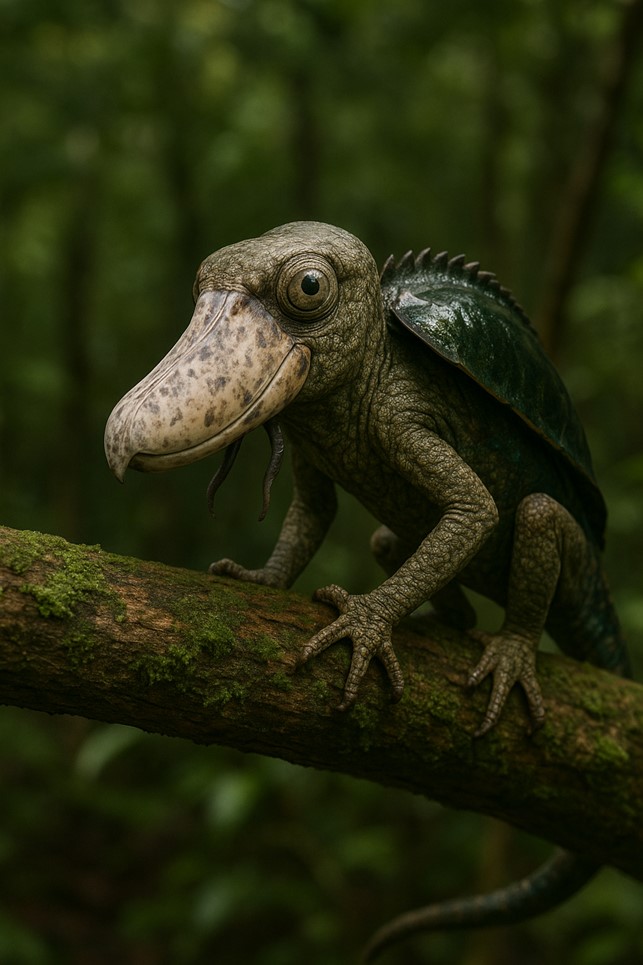
An encounter with a Sepilaceps 77 is rarely a simple affair. Given its deadly nature and preference for secluded, hazardous environments, parties of adventurers would typically encounter or actively search for one for reasons of great profit, dire need, or sheer desperation. These encounters can generally be categorized into a few distinct scenarios.
The Bounty: Hunting for a Client
The most common reason for a party to willingly enter the creature’s territory is that someone has paid them to. The unique biological components of a Sepilaceps 77 are highly prized by various specialists, leading to lucrative bounties on the creature or its parts.
- The Alchemist’s Reagent: A master alchemist might post a high-value contract for the creature’s chemical glands. The boiling, noxious compound it produces cannot be synthesized and is a key ingredient for crafting potent acid flasks, powerful smoke-screen devices, or even a rare antidote. The quest would require the party to slay the beast while taking extreme care not to rupture the delicate glands in its tail.
- The Artificer’s Masterwork: The gear-based nature of Saṃsāra means there is a constant demand for exotic materials. An artisan armorer might hire a party to acquire the molted carapace of a Sepilaceps, known for being incredibly light yet durable. Alternatively, a master of stealth might seek its chromatophore-rich hide to weave into a cloak that can mimic its surroundings. In either case, the party might be tasked with the dangerous job of finding its lair and stealing a molted shell rather than engaging the creature directly.
- The Sage’s Curiosity: A scholar or biologist at a mage’s college might hire adventurers for a research mission. They may not want the creature killed, but rather seek detailed observations of its mating display, a sample of its camouflaged skin, or a preserved, unhatched egg. The most dangerous of these quests would involve the live capture of a juvenile specimen, a task requiring immense skill in trapping and containment.
The Upgrade: Seeking Personal Power
For an adventurer in Saṃsāra, power comes from the gear they wear. Legendary equipment often requires legendary components, forcing a party to hunt the Sepilaceps 77 for their own advancement.
- An Epic Crafting Recipe: A party member, perhaps a hunter or rogue-archetype, may discover a recipe for a Tier 5 piece of gear that requires a “Core of the Patient Hunter” or the “Crushing Beak of a Sepilaceps Elder.” The desire to craft this powerful item would be motivation enough to begin the dangerous expedition into the swamps or caverns the creature calls home.
- A Rite of Passage: A character’s personal story or their allegiance to a specific faction, such as a hunter’s guild or a survivalist clan, might require them to best a Sepilaceps 77. Successfully tracking, ambushing, and slaying one of these cunning predators could be the final trial needed to gain renown, unlock special titles, or earn the respect of their peers.
The Obstacle: An Accidental Encounter
Sometimes, adventurers aren’t looking for the creature at all; they simply find themselves in the wrong place at the wrong time.
- Territorial Trespass: The party could be traveling through a dense jungle or navigating an underground river for a completely unrelated quest. Unbeknownst to them, they have entered the established hunting ground of a Sepilaceps. The encounter would be sudden and terrifying—a silent, camouflaged form striking from the shadows or from beneath the murky water. The goal would not be to defeat it, but simply to survive the ambush and escape its territory.
- A Blocked Path: The creature may have established its lair in a critical location, such as the only cavern pass connecting two regions or the ruins of a collapsed bridge. Progress is impossible until the formidable obstacle is dealt with, turning a simple travel mission into a deadly monster hunt.
The Menace: A Threat to be Neutralized
The most heroic reason to hunt a Sepilaceps 77 is to protect others. While they are typically reclusive, a shift in circumstances can turn one into a direct threat to civilized areas.
- The Missing Villagers: A Sepilaceps, displaced from its usual territory by a flood or other event, may have established a new lair dangerously close to a logging camp, a small village, or a trading outpost. When people or livestock begin to disappear without a trace, the local leadership would pool their resources to hire a skilled party of adventurers to track down and eliminate the unseen predator that stalks them from the mists.
- The Legendary Beast: In some regions, a particularly old and cunning Sepilaceps Elder might become a local legend, a named monster responsible for the deaths of many would-be heroes. Slaying “Old Bone-Beak” or the “Cavern Creeper” would be a matter of fame and public service, earning the party immense gratitude and renown throughout the land.
Beyond the more obvious materials like the carapace, hide, and beak, a skilled adventurer with training in alchemy, enchanting, or anatomy can harvest several other valuable components from the corpse of a Sepilaceps 77. These ingredients are often rare and essential for crafting high-tier magical items.
- Focusing Lens of the Oculi The large, obsidian-like eyes of the Sepilaceps are complex biological lenses, capable of independent focus and rotation. When carefully extracted and preserved, they can be used by enchanters as a primary component in helmets, goggles, or other headwear. Gear crafted with these lenses often grants the wearer enhanced perception, the ability to track fast-moving targets with ease, or even a form of panoramic vision that reduces the chance of being flanked.
- Prehensile Tongue Sinew The creature’s long, incredibly elastic projectile tongue is reinforced with a single, powerful sinew. If harvested intact, this sinew is a masterwork component for ranged weaponry. When used as a bowstring, it provides a faster, quieter release than any wooden or gut string. It can also be braided into the core of enchanted whips or grappling lines, allowing them to stretch and retract with surprising speed and strength.
- Vibrational Nerve Cluster Located at the base of the creature’s skull is a dense ganglion of nerves responsible for processing the input from its vibration-sensitive skin. Alchemists can render this nerve cluster into an elixir that grants the user a temporary, rudimentary version of this sense, allowing them to “feel” nearby footsteps or movements. Artificers can also integrate the preserved cluster into the soles of boots to grant a permanent, if less potent, vibration-sensing ability.
- Chromatophoric Ichor The blood of a Sepilaceps 77 is a shimmering, oily substance that carries the raw material for its adaptive camouflage. This “ichor” is highly valued as a magical pigment. When mixed into dyes or paints, it can create illusions of texture and depth on surfaces. When used as a base for potions, it can grant the drinker short-term, chameleon-like invisibility that breaks upon moving too quickly. A thin coat of the raw ichor can be applied to gear for a temporary, low-level camouflage effect that lasts until it dries.
- The Heart of Stillness To facilitate its patient hunting style, the creature’s heart is capable of entering a state of extreme bradycardia, beating only a few times per minute. This organ, when harvested, is known as the Heart of Stillness. It is a key ingredient in potions of endurance or meditation, allowing the user to survive for hours on a single breath or go long periods without food or water. It is also used in enchanting to imbue armor with a “Stillness” property, making the wearer harder to detect by magical life-sensing spells.
- Caustic Gastric Fluid The stomach of a Sepilaceps contains highly acidic digestive fluids capable of breaking down bone. While less volatile than the contents of the tail glands, this fluid is more stable and easier to transport. Alchemists use it as a powerful solvent for stripping enchantments, etching metal, or as the base for contact poisons that slowly corrode armor and weapons.
Tears of the Still Watcher
In the age of the first trade ships, it is written that there was a merchant whose name is remembered as Silas, and the heart within his breast was a weighing-scale that was never balanced. He suffered from the gold-sickness, and his ears were ever open to whispers of treasure. A whisper came to him on a salt wind, a tale of the Tears of the Swamp—gleaming crystals, without flaw or inclusion, found only within the deepest, mist-haunted mangroves where the air itself was a green poison.
Hence, Silas provisioned his men and journeyed to the edge of that grim fen. There, in a hut woven from reeds, lived an elder woman whose face was a map of the swamp’s own winding paths. The people called her Yenna. Silas showed her a coin of heavy gold and spoke of his quest for the Tears.
Yenna’s gaze was clouded, like the swamp water. “Foolish man,” she spoke, her voice like the rustle of dry leaves. “The silence of that place is not an empty silence. The Old Man of the Murk dwells there, the rock-that-breathes. He is the Still Watcher. The Tears you seek are not for the purses of men. They are guarded by a patience that can outlast stone.”
But the avarice in Silas’s heart was a fire that her words could not quench. He laughed, a sound that was sharp and out of place, and called her warnings the fables of a simple mind. With his guards, whose swords were sharp and whose courage was paid for, he pressed into the mangrove’s embrace, leaving the old woman to her omens.
For days they traveled. A great stillness was upon the land. No bird sang its song; no beast rustled in the undergrowth. The very trees seemed to hold their breath as the men passed. The water was black and slick as oil, and the air was so thick with moisture it was like drinking from a cup. The guards grew uneasy, their hands ever upon the hilts of their swords, but Silas urged them onward, his eyes alight with the vision of the Tears.
At last, in the heart of the swamp, they found a hidden grotto, its entrance veiled by hanging moss. Within, the walls shimmered with a soft, internal light. There they were—hundreds upon hundreds of the Tears of the Swamp. They were the size of a man’s fist, perfectly clear and cut with a thousand facets that drank the dim light and returned it with cold fire. Silas cried out in triumph, his gold-sickness reaching its fever pitch. He ordered his men to harvest the great treasure.
A guard, the strongest among them, reached out and laid his hand upon the largest of the crystals. As his fingers closed around it, it shifted under his touch. It was not cold and hard like a stone, but leathery and warm. With a soft tearing sound, he pulled it from the wall, and they saw it for what it was: an egg, translucent and veined, within which a small, dark shape was curled. They stood not in a crystal cave, but in a hatchery.
In that same instant of terrible knowing, a portion of the far wall detached itself. It was a patch of rock they had rested their packs against, a surface they had brushed with their own hands. But it was not rock. The skin of stolen seeming rippled, the texture of moss and stone melting away into a slick, chitinous hide. A great, bone-colored cutting-tool of a beak emerged from the shifting mass, and two turreted eyes swiveled to fix upon them, one eye for the thief and one for the path of its vengeance. The Still Watcher had awakened.
There was no roar, no challenge. There was only silence, and then movement. A motion so swift it was not truly seen, only felt as a shift in the heavy air. The guard who held the egg was gone, crushed in the single, silent strike of the great beak. Panic, that shrieking madness, seized the remaining men. Their blades rang uselessly against the creature’s armored back. From its coiled tail, it unleashed a cloud of biting, scalding vapor that turned their shouts into choking coughs. The grotto became a tomb of steam and fear.
Silas did not fight. The merchant in him made a final, swift calculation of his life against his fortune, and he fled. He ran without looking back, the sounds of his dying men fading behind him, his heart a frantic drum against the swamp’s oppressive silence. He came stumbling out of the mangroves days later, a man hollowed out by terror, his fine clothes in tatters and his avarice washed clean by fear. He fell before Yenna’s hut, and she gave him water, her face showing only a deep and ancient pity.
The moral of this telling is thus: Know this: Not all that glitters is a stone, and not all that is silent is asleep. The greatest treasures of the wild are often but the bait in a patient trap.
Suggested conversions to other systems:
Dungeons & Dragons 5th Edition
Murk Lurker Large monstrosity, unaligned
Armor Class 16 (natural armor, carapace) Hit Points 114 (12d10 + 48) Speed 30 ft., climb 30 ft.
STR 17 (+3), DEX 16 (+3), CON 18 (+4), INT 3 (-4), WIS 16 (+3), CHA 5 (-3)
Skills Perception +9, Stealth +9 Senses Darkvision 60 ft., Blindsight 30 ft., Passive Perception 19 Languages — Challenge 6 (2,300 XP) Proficiency Bonus +3
Adaptive Camouflage. The murk lurker has advantage on Dexterity (Stealth) checks. As a bonus action, it can take the Hide action.
Amphibious. The murk lurker can breathe air and water.
Patient Hunter. If the murk lurker surprises a creature and hits it with an attack during the first round of combat, the target takes an extra 10 (3d6) damage from the attack.
Actions
Multiattack. The murk lurker makes two attacks: one with its Crushing Beak and one with its Tentacle Grab.
Crushing Beak. Melee Weapon Attack: +6 to hit, reach 5 ft., one target. Hit: 16 (2d12 + 3) piercing damage. If the target is a Medium or smaller creature, it must succeed on a DC 14 Strength saving throw or be knocked prone.
Tentacle Grab. Melee Weapon Attack: +6 to hit, reach 10 ft., one target. Hit: 7 (1d8 + 3) bludgeoning damage, and the target is grappled (escape DC 14). Until this grapple ends, the target is restrained. The murk lurker has two tentacles, each of which can grapple one target.
Noxious Spray (Recharge 5–6). The murk lurker exhales a boiling, chemical compound in a 15-foot cone. Each creature in that area must make a DC 15 Dexterity saving throw, taking 22 (4d10) acid damage on a failed save, or half as much damage on a successful one. A creature that fails its save is also blinded until the end of its next turn.
Call of Cthulhu 7th Edition
The Still Watcher A silent, patient predator of the deep fens and lightless caverns.
Characteristics STR 80, CON 85, SIZ 80, DEX 40, INT 30, POW 50
HP: 17 Damage Bonus: +1d6 Build: 2 Move: 6
Attacks Attacks per round: 2 Fighting (Brawl) 70% (35/14), deals 1d10 + damage bonus with its beak, or grapples with its tentacles. A beak attack that successfully deals maximum damage (10 + DB) has shattered a bone, crippling a limb.
Skills: Stealth 80%, Spot Hidden 75%, Listen (Vibrations) 60%.
Armor: 4-point chitinous carapace on its back. Spells: None.
Sanity Loss: 1/1d6 Sanity points to see the Still Watcher reveal itself from its camouflage. 0/1d3 Sanity points to witness its chemical spray attack.
Blades in the Dark
The Mire-Maw A terrifying predator of the bayous and forgotten waterways, a living blind spot that reveals itself only to strike.
Threat Level: 3 (A dangerous, supernatural creature requiring special preparation)
Description: A chimerical beast with a stony hide, a bone-crushing beak, and an unnerving stillness. It can change its skin and texture to perfectly match its surroundings, making it functionally invisible until it moves. It is a solitary and fiercely territorial hunter.
Drives: To ambush the unwary, to defend its nest and territory, to remain unseen.
Instinct: To strike from perfect stillness.
Moves:
- Reveal itself from nowhere: The Mire-Maw appears from a surface you thought was safe. All who witness this suffer a consequence of fear (hesitate, panic, take 2 stress) unless they resist with Prowess.
- Strike with crushing finality: Its massive beak snaps shut on a target, inflicting severe harm (Level 3, “Shattered Bones”).
- Vanish into the environment: It melts back into the scenery of stone, wood, or water. The GM starts a clock like “Pinpoint the Mire-Maw before it strikes again.”
- Spray a boiling fog: It unleashes a cloud of noxious chemicals. This creates a dangerous area of effect that inflicts harm (Level 2, “Chemically Burned”) and obscures vision.
Knave 2nd Edition
Carapace Stork HD 6; Armor as Mail (15); Morale 10; Attack Beak (d10)
Description: A large, reptilian creature with a hard carapace and a massive, shoe-shaped beak. It moves with a slow, deliberate gait but strikes with terrifying speed. Found in swamps and caves.
Qualities: Patient, Territorial, Camouflaged.
Reactions (d6): 1-2: Attack closest target. 3: Use Intimidating Display. 4: Attempt to Hide. 5: Use Noxious Spray if able. 6: Retreat to a better vantage point.
Special Abilities:
- Ambush: If it attacks a surprised target, its attack deals double damage.
- Adaptive Hide: Its skin mimics its surroundings. It takes a successful opposed Wisdom save to spot it when it is still. It can attempt to hide using a single move action if it is near suitable terrain.
- Noxious Spray: Once per combat, it can spray a 15-foot cone. Targets must save versus Poison or take 2d6 damage and be blinded for d4 rounds.
- Crushing Beak: If its beak attack hits a target with an Armor score of 15 or less, the target’s armor is damaged and its Armor score is reduced by 1 until repaired. This effect cannot reduce armor below its base score.
Pathfinder 2nd Edition
Fen Lurker Creature 6
N Large Animal Amphibious
Perception +16; Darkvision Languages — Skills Athletics +15, Stealth +17
Str +5, Dex +5, Con +4, Int -4, Wis +4, Cha -3
AC 24; Fort +16, Ref +17, Will +12 HP 95
Perfect Camouflage The fen lurker can Hide without cover or concealment in its natural swamp or cavern environment. It can even move at half its Speed while Hidden.
Actions
[one-action] Beak Melee Strike +17, Damage 2d10+8 piercing. [one-action] Tentacle Melee Strike +17 (Agile), Damage 1d8+8 bludgeoning plus Improved Grab.
[two-actions] Noxious Spray (acid, primal) The fen lurker exhales a 15-foot cone of boiling chemicals. Each creature in the cone takes 6d6 acid damage (DC 24 basic Reflex save). A creature that critically fails its save is also blinded for 1 round. The fen lurker cannot use Noxious Spray again for 1d4 rounds.
[two-actions] Sudden Lunge The fen lurker Strides up to its Speed and makes a Beak Strike at the end of its movement. If it was hidden from the target at the start of this action, the target is flat-footed against this attack.
Fate Core
The Stillness That Hungers An inhuman predator that embodies the terrifying patience of the wild.
High Concept: Chimeric, Perfectly Camouflaged Ambush Predator Trouble: Fiercely Territorial and Prone to Startling Violence Other Aspects: My Skin is Rock, Water, and Shadow; A Beak That Crushes Hope; Its Gaze is Everywhere at Once
Skills Great (+4): Stealth Good (+3): Fight, Notice Fair (+2): Athletics, Physique Average (+1): Provoke
Stunts Perfect Camouflage: Because I can perfectly mimic my surroundings, I get a +2 to Stealth when I remain still to create an advantage or overcome an obstacle related to being seen. Crushing Beak: Because my beak is immensely powerful, when I succeed with style on a Fight attack, instead of a boost, I can choose to inflict a lasting physical consequence on the target (e.g., Shattered Arm, Cracked Ribs). Boiling Spray: Once per scene, I can make a special Fight attack against every character in my zone. This attack inflicts 2 stress on anyone who fails to defend against it.
Stress [1] [2] [3] Consequences Mild (2): Moderate (4):
Numenera & Cypher System
The Sepian Lurker A bio-engineered predator that hunts the Ninth World’s swamps and ruins, a living illusion that ends in crushing reality.
Level: 6 Health: 18 Damage: 6 points Armor: 2 Movement: Short Modifications: Stealth as level 8 when motionless. Perception as level 7.
Combat: The Sepian Lurker’s beak attack is a level 6 task to defend against, inflicting 6 points of damage. Its tentacles can lash out to grapple a target. A grappled character must succeed on a level 6 Might-based task to break free.
GM Intrusion: The lurker’s true power is revealed through GM Intrusions. The GM can spend 1 XP to have the lurker:
- Reveal itself from ambush. It emerges from a surface a character assumed was safe (a rock wall, a pile of debris, the floor of a murky pond). The character’s next action is hindered by shock and surprise.
- Unleash its chemical defense. The lurker sprays a cloud of boiling, noxious vapor in an immediate area. All characters within the cloud must make a Might defense roll. Failure results in taking 4 points of ambient damage and all actions are hindered for one round due to choking and blindness.
- Vanish completely. After attacking, the lurker uses its camouflage to blend back into the environment. The party must now succeed on a level 8 Perception task to locate it before it can strike from ambush again.
Savage Worlds Adventure Edition
Bog Stalker A patient, chimeric horror that stalks the misty bogs and flooded caverns of the world. It is often mistaken for a mossy log or rock formation—a fatal error.
Attributes: Agility d8, Smarts d4 (A), Spirit d8, Strength d10, Vigor d10 Skills: Athletics d8, Fighting d10, Notice d10, Stealth d10 Pace: 5; Parry: 7; Toughness: 11 (4)
Special Abilities:
- Armor +4: Hardened chitinous carapace.
- Beak: Str+d8, AP 2.
- Camouflage: +2 to Stealth rolls in its native environment. Opponents suffer a –2 penalty to Notice rolls to spot it when it is motionless.
- Noxious Spray: As an action, the Bog Stalker can spray a Cone Template. All targets in the cone must make a Vigor roll. Success means they are Distracted. A failure means they are Shaken. A critical failure means they suffer a level of Fatigue.
- Pounce: The Bog Stalker can leap up to 6″ (12 yards) to make a Fighting attack. If it does, it adds +4 to its damage total.
- Size 4 (Large): The creature is large, increasing its Toughness by 4.
- Tentacles: Str+d4. These small tentacles are located near its beak. If the Bog Stalker hits with a tentacle attack, it may immediately make a free test to grapple the target.
Shadowrun, 6th World
Gator-Stork A dangerous paracritter that has adapted to the polluted wetlands and industrial runoff zones outside major sprawls. Its chameleon-like skin mimics not just natural foliage but also the grimy textures of rust, concrete, and refuse, making it a uniquely urban ambush predator.
Attributes Body: 7 Agility: 5 Reaction: 4 (6) Strength: 6 Willpower: 4 Logic: 2 Intuition: 5 Charisma: 1 Edge: 2 Essence: 6.0 Magic: 6
Derived Stats Initiative: 9 (11) + 1d6 (2d6) Physical Condition Monitor: 12 Stun Condition Monitor: 11 Overflow: 7 Movement: 10/20 Armor: 10 (Natural Armor)
Skills Athletics 4, Perception 4, Stealth 5, Unarmed Combat 5
Critter Powers Enhanced Senses: Low-Light Vision, Thermographic Sense. Natural Weapon (Beak): Damage Value 8P, AP -2. Corrosive Spit: As a ranged attack, the Gator-Stork can spray a cone of chemicals. Targets must make an Agility + Intuition roll versus a threshold of 3. Those who fail take 8P Acid damage with an AP of -4. This attack has the Blast and Corrosive properties. Adaptive Camouflage: The Gator-Stork gains 4 bonus dice to its Stealth tests when remaining still. This camouflage fools thermographic vision.
Starfinder
Chameleoid Stalker Creature 6 XP 2,400 N Large magical beast Init +4; Senses Blindsense (vibration) 60 ft., darkvision 60 ft.; Perception +13
Defense HP 90 EAC 18; KAC 20 Fort +10; Ref +10; Will +7 Defensive Abilities Adaptive Camouflage
Offense Speed 30 ft., climb 30 ft. Melee Beak Bite +16 (1d8+12 P) Ranged Noxious Spit +13 (15-ft. cone, 2d8+6 A, Reflex DC 14 half) Offensive Abilities Patient Ambusher
Statistics STR +6; DEX +4; CON +2; INT -4; WIS +2; CHA -2 Skills Athletics +13, Stealth +18
Ecology Environment Temperate or warm forests, swamps, and caverns Organization Solitary
Special Abilities Adaptive Camouflage (Ex) The stalker’s skin mimics its surroundings. It can always take 10 on Stealth checks, and as a move action, it can grant itself concealment (20% miss chance) for 1 round. Noxious Spit (Ex) As a standard action, the stalker can spray a 15-foot cone of boiling acid. Creatures in the area take 2d8+6 acid damage (Reflex DC 14 for half). A creature that fails its save is also blinded for 1 round. The stalker cannot use this ability again for 1d4 rounds. Patient Ambusher (Ex) During a surprise round, the stalker’s beak bite deals an additional 2d6 damage.
Traveller (Mongoose 2nd Edition)
Amphibious Ambush Predator (Sepilaceps primus) UPP: BAC200 Armor: Carapace-4 Attacks: Beak (Crush, 3d6) or Noxious Spray (Chemical, 15m cone) Skills: Stealth-3, Athletics-2 Behavior: Ambush Predator, Carnivore, Territorial.
Description: A large, four-legged creature found in the swamps and wet caves of newly discovered worlds. It possesses a hard upper carapace and a massive, bone-like beak capable of crushing vehicle hulls. Its most notable ability is its skin, which can change color and texture to perfectly match the surrounding environment, making it exceptionally difficult to spot before it strikes. If cornered, it can spray a boiling, irritating chemical from its tail. It is highly aggressive when defending its territory, especially its nest of translucent, leathery eggs.
Warhammer Fantasy Roleplay, 4th Edition
Fen-Gallow A dreaded beast of the Empire’s great marshes and fog-shrouded rivers. It is a thing of unnerving patience, said to be a rock until it becomes a tombstone. Many folk tales tell of travelers resting against a mossy boulder, only for the boulder to turn its great, dead eyes upon them.
Fen-Gallow Profile WS 65, BS —, S 55, T 60, I 50, Agi 45, Dex —, Int 15, WP 40, Fel 10 Wounds: 28
Traits: Amphibious, Armour (4), Bite (Beak) +11, Fear (2), Hardy, Night Vision, Size (Large), Swamp-Strider, Territorial Skills: Perception 60, Stealth (Swamps) 75
Special Abilities: Shifting Skin: When in its native swamp or cavern environment and remaining still, the Fen-Gallow is almost impossible to distinguish from its surroundings. Any character attempting to spot it suffers a -30 penalty to their Perception Test. Patient Ambusher: If the Fen-Gallow successfully attacks a target that was Unaware of it, it may add its Toughness Bonus (+6) to the damage and the attack is considered to have the Vicious Quality. Caustic Spray: Once per combat, as a full action, the Fen-Gallow may spray a cone-shaped template with the “large” end facing away from it. Any character touched by the template must make a Challenging (+0) Agility test. On a failure, they suffer 1d10 Wounds which ignore both Armour Points and Toughness Bonus, and they gain the Blinded Condition for 1d4 rounds.