
From: Explorers of the Aether
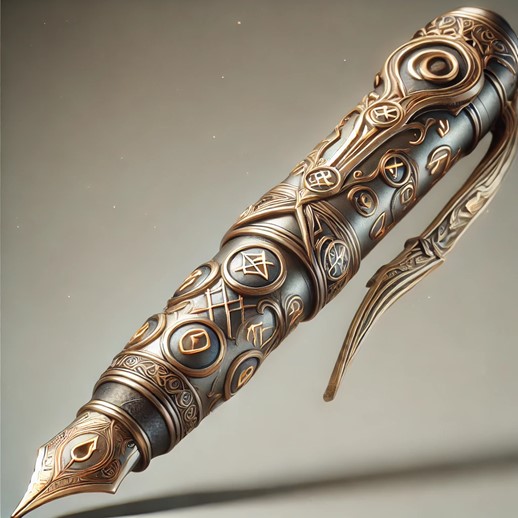
This intricate tool resembles a stylized pen, adorned with mystical symbols and runes. The Glyphcarver’s Scribe allows the creature to inscribe magical glyphs and sigils on various surfaces, imbuing them with specific effects. These glyphs can range from protective wards to offensive enchantments, providing tactical advantages in both combat and non-combat situations.
The Glyphcarver’s Scribe is a fascinating and intricate tool that resembles a stylized pen, adorned with mystical symbols and runes. It serves as a conduit for the creature’s magical abilities, allowing them to inscribe powerful glyphs and sigils on various surfaces.
With the Glyphcarver’s Scribe, the creature gains the ability to create and activate magical glyphs. These glyphs are intricate symbols imbued with specific magical effects. The creature can inscribe them onto surfaces such as walls, floors, or objects, infusing the chosen area or item with the enchanted properties of the glyph.
The range of effects that can be created with the Glyphcarver’s Scribe is vast and versatile. Protective wards can be etched to create barriers against physical or magical assaults, shielding the creature and their allies from harm. Offensive enchantments can be inscribed, granting additional damage or debilitating effects to attacks made within the marked area. Utility glyphs can be crafted to enhance mobility, reveal hidden passages, or provide other helpful advantages in various situations.
Tags: Arcane Tool, Sigilcraft, Enchantment, Warding, Ritual, Amplification, Precision, Versatility, Tactical, Mystical Artistry, Customization, Empowerment
The precise nature and power of the glyphs depend on the creature’s magical abilities and knowledge. The Glyphcarver’s Scribe acts as a conduit, amplifying the creature’s magical energies and allowing them to manifest their intentions through the inscribed symbols. Mastery over different types of glyphs and their effects requires practice, study, and a deep understanding of magical arts.
The Glyphcarver’s Scribe is a highly coveted tool among spellcasters, enchanters, and those who seek to harness the power of magic in their endeavors. It offers a unique and creative approach to problem-solving, providing tactical advantages in both combat and non-combat scenarios. With the ability to inscribe magical glyphs and sigils, the creature can shape the environment to their advantage, manipulating magical energies to suit their needs and outwit their adversaries. The Glyphcarver’s Scribe represents a blend of artistry and arcane mastery, empowering the creature to leave their mark on the world in both literal and magical senses.
In the world of Saṃsāra, the Glyphcarver’s Scribe is a highly specialized and valuable tool sought after by those who practice the arcane arts. The shops where this item can be bought and sold are equally unique, catering to an elite clientele that understands the intricacies of glyphcraft and magical inscriptions. Below are descriptions of the types of shops where the Glyphcarver’s Scribe might be bought and sold, along with the associated costs in each:
- Arcane Scriptoria
- Location: These establishments are found in major cities known for their magical academies and arcane institutions. They often operate near libraries, universities, or wizard towers where scholars and mages congregate.
- Appearance: The shop is filled with shelves of ancient scrolls, magical inks, and rare materials for inscribing glyphs. The air is thick with the scent of parchment and the faint hum of ambient magic. Intricate runes and sigils glow faintly on the walls, showcasing the shop’s expertise in glyphcraft.
- Proprietor: A master scribe or glyphcaster who has dedicated their life to the study of magical symbols. They are knowledgeable in various forms of arcane writing and often offer services for custom inscriptions.
- Cost: 3,000 gold pieces. The high cost reflects the rarity of the Glyphcarver’s Scribe and the shop’s reputation for providing top-tier magical tools.
- Enchanters’ Guild Emporiums
- Location: Located within or near enchanters’ guildhouses in large cities, these shops cater to the needs of professional enchanters and those who deal in magical crafting.
- Appearance: The shop is a well-organized, clean, and professional space, with display cases featuring enchanted tools, gemstones, and other magical implements. A large counter serves as the main point of sale, with a back room dedicated to private consultations and custom orders.
- Proprietor: A high-ranking member of the enchanters’ guild, usually a senior enchanter or a seasoned mage with a deep understanding of magical tools and their applications.
- Cost: 2,800 gold pieces. The price is slightly lower due to guild affiliations, offering a discount to members or repeat customers.
- Hidden Arcane Markets
- Location: Found in the more obscure and secluded parts of the world, often within hidden enclaves or deep within underground cities. These markets are frequented by rogue mages, adventurers, and collectors of rare magical items.
- Appearance: The market is a labyrinth of stalls and shops, each with a mysterious and often dimly lit atmosphere. The items for sale are eclectic and range from cursed objects to powerful artifacts, with the Glyphcarver’s Scribe displayed prominently among other arcane tools.
- Proprietor: A secretive dealer or collector who may have acquired the Glyphcarver’s Scribe through unconventional means. They are skilled negotiators and may offer the item for trade rather than direct purchase.
- Cost: 2,500 to 3,000 gold pieces. The price can vary based on the buyer’s negotiation skills and the dealer’s interest in the item being offered in trade.
- Rune Masters’ Workshops
- Location: Often located in remote areas known for their concentration of magical energy, such as near ley lines, ancient ruins, or secluded mountaintops. These workshops are sometimes difficult to find and may require a quest or specific knowledge to access.
- Appearance: The workshop is a simple yet mystical space, with walls lined with rune-carved stones and workbenches filled with glyphcraft tools. The air is charged with magic, and the faint glow of runes illuminates the room.
- Proprietor: A reclusive rune master, known for their deep connection to ancient magical traditions. They may be an elder sage, a retired adventurer, or a legendary enchanter who prefers solitude.
- Cost: 3,200 gold pieces. The high cost reflects the rarity of the item and the skill of the rune master. However, the rune master may also request a service or quest in exchange for the Glyphcarver’s Scribe, valuing deeds over gold.
- Black Market for Forbidden Magic
- Location: Operating in the shadows of major cities or deep within criminal networks, these black markets deal in items that are often banned or restricted by magical authorities.
- Appearance: The market is dark, with a clandestine and somewhat dangerous atmosphere. The Glyphcarver’s Scribe is sold alongside other forbidden or controversial magical items, often hidden behind wards or in secret compartments.
- Proprietor: A black market trader with connections to smugglers, rogue mages, and other underworld figures. They are often unscrupulous but highly knowledgeable about the value of the items they sell.
- Cost: 2,200 to 2,500 gold pieces. The price is lower due to the illicit nature of the sale, but the risks associated with purchasing from a black market are higher. Buyers may need to beware of counterfeit items or cursed versions.
The Glyphcarver’s Scribe is an item of great value and rarity, and its purchase reflects the importance of both the item and the knowledge required to use it effectively. The different shops where it might be bought or sold each offer unique experiences, from the scholarly atmosphere of the Arcane Scriptoria to the clandestine dealings of the black market.
The Glyphcarver’s Scribe is a versatile and powerful tool that can be used creatively for both defense and offense in various environments within the world of Saṃsāra. The way it is utilized depends on the surroundings, the intended effects of the glyphs, and the strategic needs of the situation. Below is an exploration of how the Glyphcarver’s Scribe might be used for defense and offense in different settings:
- Urban Environments
- Defense:
- Protective Wards: The Glyphcarver’s Scribe can be used to inscribe protective glyphs on doorways, windows, or streets to create barriers against intruders or magical attacks. For example, in a busy marketplace, the wearer could discreetly etch a warding glyph on the entrance of an ally’s shop, providing a shield that repels those with hostile intentions.
- Trap Glyphs: In a narrow alleyway or at a chokepoint, the wearer can carve glyphs into the pavement or walls that trigger when someone crosses them. These traps might unleash a burst of energy, create a temporary barrier, or emit a blinding flash to disorient pursuers, providing an escape route.
- Offense:
- Offensive Enchantments: The wearer could inscribe glyphs on weapons or objects that, when activated, enhance their damage or inflict status effects. For example, a glyph on a thrown knife might cause it to explode on impact, dealing area damage to multiple enemies.
- Ambush Preparation: In an urban setting like a dark alley or abandoned building, the wearer could prepare a series of offensive glyphs that release bursts of fire or lightning when an enemy steps within range. This tactic could turn a mundane location into a deadly ambush site.
- Defense:
- Wilderness Environments
- Defense:
- Camouflage Glyphs: In a forest or mountainous region, the wearer can use the Glyphcarver’s Scribe to create glyphs that blend with the environment, masking the presence of the party or their campsite. These glyphs might warp light around an area, making it invisible to passersby, or emit a faint scent that repels predators.
- Barrier Glyphs: The wearer might carve glyphs into the trunks of trees or boulders to create natural barriers, such as walls of thorny vines or shifting earth that impede the progress of enemies or aggressive wildlife.
- Offense:
- Environmental Manipulation: The Scribe can inscribe glyphs that cause the natural environment to turn against foes. For instance, a glyph on a rock could cause it to roll down a slope when triggered, or a glyph on a tree might cause its branches to lash out like whips.
- Elemental Traps: In a wilderness setting, the wearer might place glyphs on the ground that trigger elemental effects like a sudden burst of flames, freezing cold, or a localized lightning strike when enemies approach.
- Defense:
- Dungeon or Underground Environments
- Defense:
- Securing Safe Zones: In the labyrinthine corridors of a dungeon, the wearer can inscribe glyphs that seal off entrances to create temporary safe zones. These glyphs could prevent undead or other dungeon creatures from entering, buying time for rest or healing.
- Alarm Glyphs: The wearer might inscribe glyphs at the entrances of rooms or around valuable treasures. These glyphs could emit a loud noise or create a bright flash when triggered, alerting the wearer to intruders or thieves.
- Offense:
- Hazardous Glyphs: In a dungeon, where space is often confined, the wearer could inscribe glyphs that cause localized hazards. For example, a glyph on the floor might cause spikes to shoot up, impaling enemies, or a glyph on a wall might release a burst of poison gas.
- Directional Traps: The wearer could place glyphs that trigger specific effects in a directed manner, such as a forceful gust of wind pushing enemies into a pit or a blast of fire pushing them back down a corridor.
- Defense:
- Coastal or Aquatic Environments
- Defense:
- Water Barrier Glyphs: The Glyphcarver’s Scribe can inscribe glyphs on docks, boats, or even rocks along the shore that create barriers against water-based threats. These might manifest as protective bubbles around the ship or force fields that repel dangerous sea creatures.
- Tidal Control: The wearer could inscribe glyphs that influence the movement of water, such as creating a calm zone in rough seas or preventing a tidal wave from crashing onto a coastal village.
- Offense:
- Elemental Wave Attacks: The Scribe can create glyphs that manipulate water to serve offensive purposes, such as summoning waves that crash against enemy ships or drawing water away to create a trap of quicksand-like mud.
- Glyphs on Projectiles: The wearer might inscribe glyphs on harpoons or other projectiles used in maritime combat. These glyphs could cause the weapon to explode in a burst of steam or lightning upon impact with an enemy ship or sea monster.
- Defense:
- Roleplaying Considerations
- Tactical Versatility: The Glyphcarver’s Scribe allows for a wide range of creative tactics, encouraging the wearer to think ahead and prepare for various scenarios. This leads to dynamic roleplay as players adapt their strategies based on the environment.
- Resource Management: The number of glyphs the wearer can inscribe and the complexity of the effects may be limited by their magical ability or resources, requiring them to make strategic choices about when and where to use the Scribe.
- Moral and Ethical Dilemmas: Using the Glyphcarver’s Scribe to its full potential may involve morally ambiguous choices, such as setting deadly traps in populated areas or using powerful glyphs that could harm innocents. This can add depth to roleplay, forcing characters to weigh the consequences of their actions.
The Glyphcarver’s Scribe offers a unique blend of offensive and defensive capabilities that can be tailored to any environment, making it an invaluable tool for adventurers, mages, and strategists in the world of Saṃsāra. Its use requires careful planning, creativity, and an understanding of the environment, enhancing both the tactical and narrative aspects of the game.
Perception of Activation:
- Sight
- What’s Perceived: Upon activation, the Glyphcarver’s Scribe begins to glow softly, with the runes and symbols etched into its surface emitting a bright, pulsating light. The tip of the scribe might spark or trail faint magical energy as it moves, leaving a glowing line where the glyph is inscribed. The glow intensifies as the glyph is completed, with the symbol itself shimmering and pulsating with energy.
- Description: The visual effect is both mesmerizing and precise, with the intricate patterns of light drawing attention to the delicate craftsmanship and power of the tool. The brightness of the glow depends on the potency of the glyph being inscribed.
- Positives: The glowing runes and energy trails make it easier to see the glyph being inscribed, enhancing precision and ensuring the correct symbol is crafted. It also provides a clear indication that the scribe is active and functioning correctly.
- Negatives: The light emitted by the Glyphcarver’s Scribe could attract unwanted attention, especially in low-light or stealth situations. The glow might also be distracting or overwhelming in sensitive environments.
- Sound
- What’s Perceived: A soft hum or resonance fills the air as the Glyphcarver’s Scribe is activated, growing in intensity as the glyph is inscribed. The sound may change pitch depending on the element or magic being channeled, creating a harmonic tone that resonates with the surroundings. The scribe might emit a faint, scratching sound as it carves into a surface, followed by a subtle chime as the glyph is completed.
- Description: The sound is gentle yet noticeable, adding an auditory dimension to the inscription process. The harmonic tones can be soothing or unsettling, depending on their pitch and the context in which they are heard.
- Positives: The sound provides feedback to the user, confirming that the glyph is being properly inscribed. The resonance can also help focus the mind, aiding in concentration during complex inscriptions.
- Negatives: The hum or chime might give away the user’s position, particularly in quiet or echoing environments. The sound could also be disorienting if multiple glyphs are inscribed in rapid succession, creating a cacophony of overlapping tones.
- Touch
- What’s Perceived: The scribe becomes warm to the touch as it activates, with a gentle vibration that pulses through the user’s hand. The sensation intensifies as the glyph is formed, with the user feeling a slight resistance or pull as the magical energy flows through the scribe and into the inscription.
- Description: The tactile feedback from the scribe is subtle but significant, grounding the user in the physical act of inscription. The warmth and vibration provide a connection to the magic being channeled, enhancing the sense of control and precision.
- Positives: The warmth and vibration help the user maintain focus and stability while inscribing, ensuring that the glyph is crafted accurately. The tactile sensation also reinforces the connection between the user and the scribe, making the tool feel like an extension of the user’s will.
- Negatives: Prolonged use may cause discomfort or fatigue in the hand, especially if the warmth becomes excessive. The vibration could also make fine control more challenging for delicate or intricate glyphs.
- Smell
- What’s Perceived: A faint scent fills the air as the Glyphcarver’s Scribe is activated, with the smell varying depending on the type of glyph being inscribed. For example, a fire-based glyph might produce a smoky or sulfuric odor, while a water-based glyph could evoke the fresh scent of rain or the sea.
- Description: The scent is usually subtle, adding a sensory layer that complements the other perceptions. It is a fleeting but distinct reminder of the elemental or magical nature of the glyph being created.
- Positives: The specific scent can provide the user with a quick indication of the glyph’s alignment or element, aiding in focus and intent. It also adds an immersive quality to the act of inscription, engaging the senses fully.
- Negatives: The scent could be distracting or overpowering in enclosed spaces, particularly if multiple glyphs are being inscribed at once. Certain smells, such as sulfur, may be unpleasant or cause irritation to the user or those nearby.
- Taste
- What’s Perceived: Though not directly related to the glyph itself, the user might experience a faint taste in their mouth when the Glyphcarver’s Scribe is activated. This taste could be metallic, akin to the taste of magic, or it might carry a hint of the element being channeled, such as salt for water or ash for fire.
- Description: The taste is faint and often subconscious, adding a final, subtle layer to the sensory experience of using the Glyphcarver’s Scribe. It is usually more of an aftertaste, lingering briefly after the glyph is completed.
- Positives: The taste can serve as a final confirmation of the glyph’s nature, reinforcing the sensory cues provided by the other perceptions.
- Negatives: The taste might be unpleasant or off-putting, particularly if the user is sensitive to certain flavors. It could also be distracting in situations where focus is paramount.
- Extra-Sensory Perceptions (ESP)
- Arcane Resonance
- What’s Perceived: The user may sense a subtle resonance in the magical energies around them as the Glyphcarver’s Scribe activates. This resonance might manifest as a tingling sensation or a heightened awareness of the flow of magic, making the user more attuned to nearby arcane forces.
- Description: This perception deepens the user’s connection to the magical energies they are manipulating, providing an intuitive understanding of how the glyph will interact with its surroundings.
- Positives: The resonance can guide the user in making precise and effective inscriptions, helping them to harmonize the glyph with existing magical energies or detect hidden wards and enchantments.
- Negatives: The influx of arcane awareness could be overwhelming, particularly in areas dense with magic, leading to sensory overload or confusion.
- Glyphic Echo
- What’s Perceived: After a glyph is inscribed, the user might perceive a faint echo or afterimage of the glyph, visible only in their mind’s eye. This echo represents the lingering energy of the glyph and may provide insight into its potential effects or stability.
- Description: The glyphic echo is a mental image that persists for a few moments after the glyph is completed, offering a glimpse into its power and alignment.
- Positives: The echo can help the user assess the strength and effectiveness of their glyph, allowing for adjustments or reinforcements if necessary.
- Negatives: The echo might be distracting or confusing, especially if multiple glyphs are inscribed in quick succession, leading to a muddled sense of their individual energies.
- Magical Intuition
- What’s Perceived: The user may experience a heightened sense of intuition or foresight while using the Glyphcarver’s Scribe. This intuition could manifest as a gut feeling or sudden clarity regarding the best placement or timing for the glyph.
- Description: Magical intuition enhances the user’s decision-making process, providing flashes of insight or understanding that guide the creation of powerful and effective glyphs.
- Positives: This intuition can lead to more strategic and impactful use of glyphs, optimizing their effects and maximizing their potential in both combat and non-combat situations.
- Negatives: Relying too heavily on intuition could lead to overconfidence or rash decisions, particularly if the user misinterprets the signals or ignores more tangible evidence.
- Arcane Resonance
The activation of the Glyphcarver’s Scribe is a multi-sensory experience that engages the user fully, blending physical and magical perceptions. Each sense plays a role in the inscription process, providing feedback and guidance while also introducing potential challenges and distractions. The combination of these perceptions enhances the user’s connection to the tool and the magic it creates, making the act of inscription both an art and a science.
Crafting Recipe: Glyphcarver’s Scribe
- Materials Needed:
- Runic Silver (1 ingot): A special silver alloy infused with arcane energy, known for its ability to channel magic. The silver must be purified in moonlight for seven nights to retain its magical properties.
- Mystic Ink (1 vial): An ink made from the blood of a magical creature (e.g., a dragon or unicorn), mixed with powdered gemstones (sapphire, emerald, ruby, diamond) and distilled in a ritual under the guidance of a skilled alchemist.
- Elemental Gemstones (4 small stones): One gemstone for each element—Fire Ruby, Water Sapphire, Earth Emerald, and Air Diamond. These must be carefully cut and polished to enhance their magical conductivity.
- Etherwood Handle (1 piece): A piece of wood from the sacred Etherwood tree, known for its natural affinity with magic. The wood should be harvested during a full moon and shaped with care to preserve its magical essence.
- Binding Runes (1 scroll): A scroll containing ancient runes and incantations, specifically designed to bind magical energies into physical objects. These runes must be inscribed onto the Glyphcarver’s Scribe to activate its power.
- Tools Required:
- Enchanter’s Forge: A forge specifically designed for crafting magical items, capable of heating metals to temperatures where they become malleable enough to infuse with magic.
- Rune Engraver: A precision tool for carving intricate runes and symbols into metal and gemstones, often crafted from mythril or another magical alloy.
- Alchemist’s Set: A complete set of alchemical tools needed to prepare the Mystic Ink, including a cauldron, glass vials, and a distillation apparatus.
- Gem-Cutter’s Kit: Specialized tools for cutting and polishing gemstones with precision, ensuring they are perfectly shaped to enhance magical conductivity.
- Arcane Chisel: A chisel imbued with magical properties, used to carve the Etherwood handle without disrupting its natural magic.
- Skill Requirements:
- Arcane Craftsmanship (Expert Level): Proficiency in crafting magical items, particularly those that channel or inscribe magical energies.
- Runecrafting (Advanced Level): Skill in inscribing runes and binding them to physical objects, ensuring the correct alignment of symbols for maximum efficacy.
- Gemcrafting (Intermediate Level): Ability to cut and polish gemstones to precise specifications, enhancing their magical properties.
- Alchemy (Intermediate Level): Proficiency in creating Mystic Ink and handling magical reagents without losing their potency.
- Crafting Steps:
- Prepare the Runic Silver:
- Place the Runic Silver ingot in the Enchanter’s Forge and heat it to a temperature where it becomes malleable.
- Once the silver is heated, use the Rune Engraver to carve basic stabilizing runes into the metal. This will allow it to channel magic without destabilizing during the crafting process.
- Shape the silver into a slender, pen-like structure, forming the core of the Glyphcarver’s Scribe. Ensure that the silver remains perfectly balanced to avoid any disruption in the flow of magic.
- Shape the Etherwood Handle:
- Using the Arcane Chisel, carefully shape the Etherwood into a smooth, ergonomic handle. The handle should be comfortable to hold and aligned with the flow of magical energy.
- Attach the Etherwood handle to the Runic Silver core, ensuring a seamless connection. The Etherwood will serve as the anchor for the scribe’s power, allowing the user to channel magic through the silver tip with precision.
- Cut and Embed the Elemental Gemstones:
- Use the Gem-Cutter’s Kit to cut and polish the Elemental Gemstones, ensuring that each stone is flawless and capable of enhancing the corresponding elemental magic.
- Embed the Fire Ruby, Water Sapphire, Earth Emerald, and Air Diamond into the scribe, spacing them evenly along the body of the pen. The gemstones should be set into sockets carved into the silver, ensuring they are secure and perfectly aligned.
- Prepare and Apply the Mystic Ink:
- Using the Alchemist’s Set, prepare the Mystic Ink by combining the blood of a magical creature with powdered gemstones and other alchemical ingredients. Distill the mixture carefully to create a potent, magically conductive ink.
- Once the ink is ready, use the Rune Engraver to inscribe the Binding Runes onto the Glyphcarver’s Scribe. Dip the engraver into the Mystic Ink and carefully etch the runes along the silver core, wrapping them around the embedded gemstones. This step binds the magic within the scribe and allows it to channel and inscribe glyphs.
- Final Enchantment:
- Place the completed Glyphcarver’s Scribe on an altar surrounded by candles or other sources of magical energy. Recite the incantations from the Binding Scroll, focusing your will on the scribe as you do so.
- The candles will flicker and the runes on the scribe will begin to glow as the final enchantment is laid. The scribe must remain undisturbed until the glow subsides, signaling that the magical energies have fully bonded with the item.
- Once the ritual is complete, the Glyphcarver’s Scribe is ready for use. It should now be capable of inscribing powerful glyphs and sigils, channeling the user’s magical abilities into the physical realm.
- Prepare the Runic Silver:
Upon completion, the Glyphcarver’s Scribe will be a powerful tool for any mage, enchanter, or runecaster, allowing them to create intricate and potent glyphs with precision and control. The crafting process requires mastery of several magical disciplines, reflecting the scribe’s rarity and the skill needed to create such a finely-tuned instrument.
Tale of the Scribe and the Four Stones of Power
In the long before times, when the sky was close and the earth was still young, there was a wise one who carved words into the stone of the world. This one, who name was forgotten even before the stars were counted, sought to capture the voices of the elements themselves. The fire that burned, the water that flowed, the earth that stood, and the air that whispered—all these the wise one wished to bind into symbols, to hold their power in the marks of a scribe.
The wise one traveled far, to the edges where the world ends, beyond the lands where the sun sleeps. There, in the deep places where light dares not tread, the wise one found the Four Stones of Power, each stone a keeper of one element’s voice. The stones were guarded by creatures of old, beings who spoke in the language of the first dawn. The wise one, with a heart full of resolve and hands full of skill, did not fear them.
To the fire creature, the wise one offered the warmth of the first hearth. To the water creature, the wise one gave the tear of the first sorrow. To the earth creature, the wise one gifted the dust of the first mountain. And to the air creature, the wise one breathed the breath of the first life. Pleased with these offerings, the creatures let the wise one take the Four Stones, but they warned: “What you carve with these will bind you as it binds the world.”
The wise one returned to the place where the earth touches the sky and carved a pen from the wood of the ancient trees that remember the birth of time. Into this pen, the wise one set the Four Stones, one for each element. With this pen, the Glyphcarver’s Scribe, the wise one began to inscribe the world with the language of power. The stones sang as the scribe moved, leaving behind marks that could shape the fire, command the waters, bend the earth, and direct the winds.
But as the wise one carved, the warning of the creatures echoed in the silence. The symbols that bound the world began to bind the wise one as well. The fire’s heat scorched the hands that held the scribe, the waters’ flow drowned the heart that guided it, the earth’s weight crushed the spirit that wielded it, and the winds’ whispers drove the mind to madness. The wise one, who once sought to command the elements, became their prisoner, trapped in the very symbols they had carved.
It is said that the Glyphcarver’s Scribe still exists, waiting to be found by those who would seek its power. But those who find it must heed the warning lost in the first dawn: the power to bind is also the power to be bound.
Moral of the Story: To command the forces of the world is to be commanded by them; the symbols that carve power also carve the soul.
Suggested conversions to other systems:
Adaptation for Call of Cthulhu (7th Edition)
Name: Glyphcarver’s Scribe
- Type: Mythos Artifact
- Description: An ancient pen-like tool, adorned with symbols and runes, that allows the user to inscribe powerful glyphs and sigils with mystical effects. The tool is said to connect the user to otherworldly powers, but at a great risk to their sanity.
- Game Mechanics:
- Glyph Inscription: The user can inscribe glyphs on surfaces that create barriers, traps, or other magical effects. Each glyph takes 1D6 minutes to inscribe and requires a successful Cthulhu Mythos roll.
- Sanity Loss: Each glyph inscribed causes 1D4 Sanity Points loss due to the dark forces channeled through the scribe.
- Spell-like Effects: The scribe allows the user to cast spells like Ward of Protection or Symbol of Fear by inscribing the appropriate glyphs. These spells cost Magic Points as normal and have the usual casting consequences.
- Cost: Using the scribe requires 5 Magic Points per glyph. Depletion of Magic Points results in 1D10 Sanity Points loss.
- Suggested Adjustments: Balance the item by limiting the number of glyphs that can be inscribed per day, or by increasing the Sanity loss for particularly powerful glyphs. The Glyphcarver’s Scribe should be a tool that offers great power but at a steep cost to the user’s mental health.
Adaptation for Blades in the Dark
Name: Glyphcarver’s Scribe
- Type: Arcane Tool
- Description: A stylized pen, covered in mystical runes, that allows the user to inscribe magical glyphs and sigils. The scribe is highly sought after by those who deal in arcane rituals and forgotten magics.
- Game Mechanics:
- Arcane Glyphs: The Glyphcarver’s Scribe allows the user to create glyphs that can trap, ward, or harm. Each glyph takes time and concentration to inscribe, usually a complex action (4 segments). Roll Attune to activate the glyph.
- Effect: Success on the Attune roll allows the user to inscribe a glyph with a specific effect (e.g., a ward against spirits, a trap that triggers when crossed). The magnitude of the effect depends on the roll outcome:
- 1-3: Minimal effect, the glyph’s power is weak.
- 4/5: Standard effect, the glyph functions as intended.
- 6: Strong effect, the glyph is particularly potent.
- Critical Success: Exceptional effect, the glyph’s power is significantly amplified.
- Stress Cost: Inscribing a glyph costs 2 stress. Particularly dangerous or potent glyphs may cost more stress, at the GM’s discretion.
- Suggested Adjustments: Consider the time required for inscribing glyphs as a balancing factor. The Glyphcarver’s Scribe should be a versatile tool, but with significant stress costs to prevent overuse.
Adaptation for Dungeons & Dragons (5th Edition)
Name: Glyphcarver’s Scribe
- Wondrous Item (Rare)
- Requires Attunement
- Description: A finely crafted pen imbued with magical properties, allowing the user to inscribe glyphs that hold arcane power. The scribe is adorned with mystical runes that glow faintly when in use.
- Game Mechanics:
- Glyph Inscription: The Glyphcarver’s Scribe allows the user to inscribe glyphs as per the Glyph of Warding spell. The user can inscribe one glyph per long rest without expending a spell slot, using their spellcasting ability.
- Additional Effects: The user can also inscribe the following glyphs:
- Ward Glyph: Creates a protective barrier (as per Alarm) that alerts the user to intrusions.
- Trap Glyph: Triggers an elemental effect (fire, cold, lightning) dealing 4d6 damage in a 10-foot radius.
- Utility Glyph: Inscribe a glyph that casts a utility spell (e.g., Light, Mage Hand).
- Charges: The Glyphcarver’s Scribe has 3 charges, which replenish at dawn. Each additional glyph beyond the first requires the use of one charge.
- Suggested Adjustments: Adjust the rarity and the number of charges based on campaign balance. The Glyphcarver’s Scribe provides a powerful tool for strategic play, allowing for creative use of glyphs in various scenarios.
Adaptation for Knave
Name: Glyphcarver’s Scribe
- Type: Magic Item
- Description: An ancient, rune-covered pen that allows the user to inscribe glyphs imbued with magical power. The scribe is a valuable tool for those who practice arcane arts.
- Game Mechanics:
- Inscription: The user can inscribe a glyph on any surface, creating effects such as traps, wards, or magical triggers. Each glyph takes 1 hour to inscribe and requires a successful Intelligence check.
- Charges: The Glyphcarver’s Scribe has 4 charges. Each glyph inscribed consumes one charge. Charges are restored after a full day of rest.
- Effect: The effects of the glyph vary:
- Trap Glyph: Deals 2d6 damage when triggered.
- Ward Glyph: Creates a barrier that blocks entry to a small area.
- Trigger Glyph: Activates a minor magical effect (e.g., opening a door, lighting a torch).
- Risk: There is a 1-in-6 chance that the glyph backfires, causing unintended effects (e.g., the trap triggers prematurely, or the ward becomes unstable).
- Suggested Adjustments: Adjust the number of charges and the risk of backfire based on the tone of the campaign. The Glyphcarver’s Scribe should be a tool that offers strategic advantages but with inherent risks.
Adaptation for Fate Core
Name: Glyphcarver’s Scribe
- Aspect: “Inscriber of Arcane Power”
- Type: Magical Artifact
- Description: The Glyphcarver’s Scribe is a mystical pen that allows the user to inscribe powerful glyphs and sigils, each imbued with magical effects. The scribe is covered in ancient runes and is a coveted tool among those who wield arcane forces.
- Game Mechanics:
- Glyph Inscription (Stunt): Once per session, the user can invoke the “Inscriber of Arcane Power” aspect to create a significant glyph with a specific effect. This glyph might protect an area, trap an enemy, or trigger a magical effect.
- Arcane Advantage: The user gains a +2 bonus when using the Glyphcarver’s Scribe to create advantages involving glyphs and magical symbols. This could involve setting up traps, creating wards, or otherwise using glyphs to gain an upper hand.
- Compel: The GM may compel the “Inscriber of Arcane Power” aspect to introduce complications, such as the glyph’s power attracting unwanted attention or the inscription process going awry.
- Suggested Adjustments: The scribe should be a powerful tool that allows for creative problem-solving and strategic play. The GM can use compels to balance its power by introducing challenges or drawbacks related to its use.
Adaptation for Numenera & Cypher System
Name: Glyphcarver’s Scribe
- Type: Artifact (Level 1d6+3)
- Description: A pen-like artifact covered in runes, the Glyphcarver’s Scribe allows the user to inscribe glyphs on various surfaces, imbuing them with magical effects. The scribe is highly valued by those who understand its power.
- Game Mechanics:
- Glyph Inscription (Action): The user can inscribe a glyph that has a specific effect, such as creating a ward, trap, or triggering a magical effect. The glyph’s effect is determined by the artifact’s level and lasts for up to 24 hours.
- Depletion: Roll 1d20 after each use:
- 1-3: The scribe depletes and becomes inactive until recharged or repaired.
- 4-20: No depletion.
- Cost: Each glyph inscribed consumes 2 Intellect points, representing the mental focus required to channel the artifact’s power.
- Suggested Adjustments: The artifact’s level can be adjusted based on the campaign’s needs, with more powerful effects requiring higher levels. The risk of depletion adds a balancing factor, ensuring that the scribe’s use remains a strategic decision.
Adaptation for Pathfinder (2nd Edition)
Name: Glyphcarver’s Scribe
- Type: Wondrous Item (Rare)
- Usage: Worn (held); Bulk L
- Activation: 1 action, command (Interact)
- Description: This enchanted pen allows the user to inscribe glyphs that hold arcane power. The Glyphcarver’s Scribe is adorned with runes that glow faintly when in use, and it is a prized tool for those who practice the arcane arts.
- Game Mechanics:
- Glyph Inscription (Focus Spell): The Glyphcarver’s Scribe grants the user the ability to inscribe glyphs, similar to the Glyph of Warding spell. The user can inscribe one glyph per day without expending a spell slot, using their spellcasting ability.
- Additional Glyphs: The scribe also allows the user to inscribe specific glyphs:
- Ward Glyph: Functions like the Alarm spell, alerting the user to intrusions.
- Trap Glyph: Triggers an elemental effect (e.g., fire, cold) dealing 3d6 damage.
- Utility Glyph: Allows the user to cast a cantrip (e.g., Prestidigitation, Light) as a glyph that activates when triggered.
- Charges: The Glyphcarver’s Scribe has 2 charges, which replenish after a full day’s rest.
- Suggested Adjustments: The scribe’s rarity and the number of charges can be adjusted to suit the campaign’s power level. It offers flexibility and tactical options in both combat and exploration, making it a valuable tool for creative play.
Adaptation for Savage Worlds (Adventure Edition)
Name: Glyphcarver’s Scribe
- Type: Magic Item (Relic)
- Description: A mystical pen that allows the user to inscribe glyphs with magical effects. The scribe is etched with runes that channel arcane energies, making it a powerful tool in the hands of a skilled user.
- Game Mechanics:
- Glyph Inscription (Power): The Glyphcarver’s Scribe allows the user to inscribe glyphs that activate powers such as Barrier, Blast, or Boost/Lower Trait. Each glyph costs 3 Power Points to inscribe and can be triggered by a specific condition (e.g., when someone enters an area).
- Trappings: The user can choose the elemental or arcane nature of the glyph when it is inscribed, such as fire for Blast or arcane energy for Barrier.
- Recharge: The scribe recharges 1d4 Power Points every hour, allowing it to be used multiple times in a day.
- Risk: On a roll of 1 when using the scribe, it backfires, causing the user to suffer 2d6 damage as the magical energy rebounds.
- Suggested Adjustments: The recharge rate and risk of backfire provide balance, making the Glyphcarver’s Scribe a potent but potentially dangerous tool. This encourages careful use and strategic planning in its application.
Adaptation for Shadowrun (6th Edition)
Name: Glyphcarver’s Scribe
- Type: Magical Gear (Enchanted Item)
- Description: The Glyphcarver’s Scribe is an enchanted pen designed to inscribe magical glyphs and sigils. It’s highly sought after by spellcasters and those involved in magical research and security.
- Game Mechanics:
- Glyph Inscription: The Glyphcarver’s Scribe allows the user to inscribe magical glyphs that function similarly to the Magical Guard or Warding spells. These glyphs can trap, ward, or create specific effects when triggered. Each glyph takes 1 Combat Turn to inscribe and requires a successful Arcana + Magic roll.
- Drain: Each use of the Glyphcarver’s Scribe requires the user to resist Drain equal to (Force/2) + 2. The glyph’s Force is determined by the user at the time of inscription.
- Availability: 14F
- Cost: 35,000 nuyen
- Suggested Adjustments: Adjust the availability and cost based on campaign power level. The Glyphcarver’s Scribe should be a powerful, high-risk tool for advanced characters, with the potential for significant rewards and consequences.
Adaptation for Starfinder
Name: Glyphcarver’s Scribe
- Item Level: 8
- Price: 12,500 credits
- Bulk: L
- Type: Magical Item
- Description: The Glyphcarver’s Scribe is a mystical pen that allows the user to inscribe glyphs that carry magical effects. It’s prized by those who practice rune magic or seek to protect valuable assets.
- Game Mechanics:
- Glyph Inscription (1/day): The Glyphcarver’s Scribe allows the user to inscribe a glyph similar to the Glyph of Warding spell. The glyph can store a spell of up to 3rd level or create a magical trap that triggers under specific conditions. The glyph remains active for 24 hours or until triggered.
- Elemental Trapping: The scribe allows the user to choose an elemental effect (fire, cold, acid, electricity) for the glyph’s trap. The chosen effect deals 4d6 damage when triggered.
- Recharge: The Glyphcarver’s Scribe can be recharged with a full rest, regaining its daily use.
- Suggested Adjustments: Modify the item level and price according to the campaign’s balance. The Glyphcarver’s Scribe offers strategic options for both offense and defense, making it a valuable item for adventurers.
Adaptation for Traveller (Mongoose 2nd Edition)
Name: Glyphcarver’s Scribe
- Tech Level (TL): 14
- Type: Ancient Artifact
- Description: The Glyphcarver’s Scribe is an ancient artifact believed to be created by a forgotten civilization. It allows the user to inscribe glyphs that produce powerful effects, blending advanced technology with mystical properties.
- Game Mechanics:
- Glyph Inscription: The Glyphcarver’s Scribe allows the user to inscribe glyphs that create a variety of effects, such as:
- Protective Barrier: A glyph that projects a force field, preventing access to a specific area.
- Energy Trap: A glyph that releases a burst of energy (3D damage) when triggered.
- Sensor Trigger: A glyph that activates a device or alarm when someone enters a designated space.
- Energy Source: Each use of the scribe consumes one energy cell. Recharging or replacing the energy cell requires a TL 14+ facility.
- Depletion: After 1d6+2 uses, the scribe must be recharged at a TL 14+ facility or it ceases to function.
- Glyph Inscription: The Glyphcarver’s Scribe allows the user to inscribe glyphs that create a variety of effects, such as:
- Suggested Adjustments: The scribe’s effects and energy consumption can be adjusted based on the campaign’s tech level and theme. It should be treated as a rare and valuable artifact with a blend of high-tech and mystical elements.
Adaptation for Warhammer (Fantasy Roleplay 4th Edition)
Name: Glyphcarver’s Scribe
- Type: Enchanted Item
- Availability: Very Rare
- Encumbrance: 0
- Description: The Glyphcarver’s Scribe is an ancient, rune-inscribed pen that allows the user to create powerful glyphs. It is highly valued by wizards and those who practice the arcane arts, capable of inscribing glyphs with potent effects.
- Game Mechanics:
- Glyph Inscription: The Glyphcarver’s Scribe allows the user to inscribe glyphs that can trigger magical effects similar to spells such as Ward, Blast, or Protection. The glyph takes 10 minutes to inscribe and requires a successful Language (Magic) Test.
- Magic Points: Inscribing a glyph consumes 2 Magic Points. The glyph remains active for 24 hours or until triggered.
- Overcharge: On a failed Language (Magic) Test, the glyph backfires, causing 1D10 wounds to the user and possibly destroying the scribe.
- Suggested Adjustments: Consider the item’s rarity and the consequences of failure to balance its power. The Glyphcarver’s Scribe should offer potent but risky magical abilities, encouraging careful use and strategic planning.