
Category: Hohokam
-
National Map of Hohokam
The map of the island nation of Hohokam depicts a sprawling archipelago with a central landmass flanked by smaller islands to the north and east, surrounded by deep blue waters that transition to turquoise near the shores. The terrain varies across the island, featuring dense green forests, arid desert plateaus, and marshy lowlands, with rugged…
-
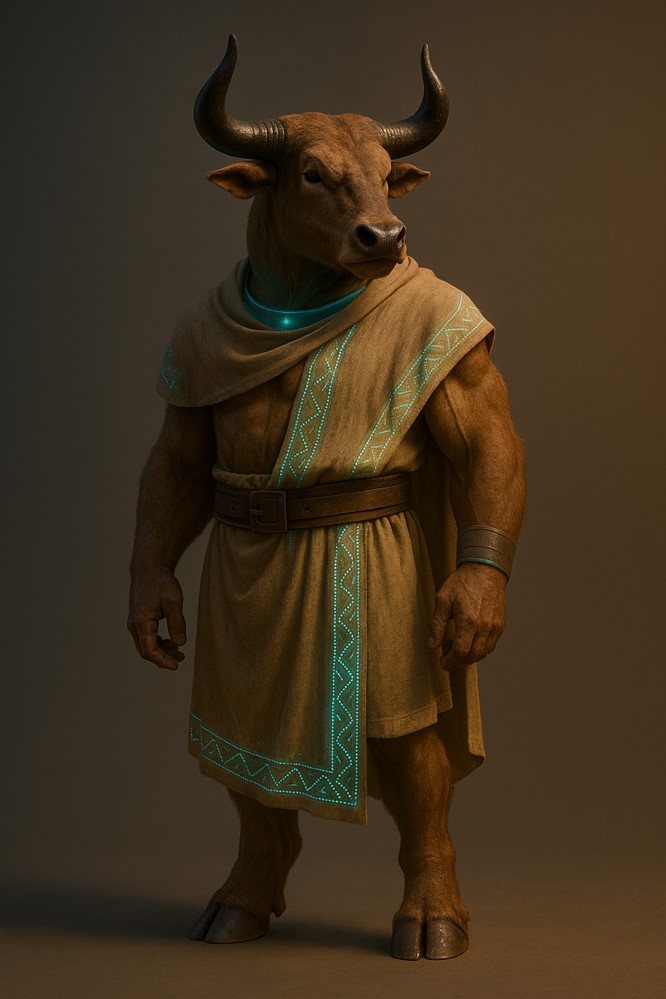
Kokorut
SpeciesSapient Boviform Humanoid. Thought-born souls inhabit large-framed, horned mammaloid avatars whose ancestral stock once roamed Hohokam’s canyon basins. They exist today as builders, water-engineers, and ceremonial guardians of the island nation. Physical Form and Sensory TraitsStature ranges between 7⅓ and 8 feet when standing relaxed, with barrel torsos tapering to narrow, flexile waists that ease…
-
Flow Gate Covenant
The Flow-Gate Covenant reveres Talutara, Keeper of the Living Channel. Adherents describe Talutara as neither wholly water nor wholly stone but a self-shaping convergence where motion and restraint trade places each heartbeat. Countless irrigation sluices across Hohokam carve the deity’s emblem: a split spiral that begins as a droplet and resolves into an angular gate…
-
Sa hó tam
Sa hó tam (pronounced sah-HOH-tahm, “speech of the canal people”) is the principal tongue of the island nation Hohokam. Around 62 million residents—roughly nine-tenths of the population—speak it natively; another five million immigrants, traders, and scholars use it as a second language. Beyond the homeland it circulates as a trade and technical lingua among coastal…
-
Culture of Hohokam
LoreHohokam stands upon a lattice of canals older than written memory, each channel etched by successive generations who learned to carve yearning desert stone into obedient waterways. When the first settlers arrived—souls drawn from uncounted realms—they found low mesas striped by seasonal flash floods. Rather than abandon the unpredictable land, they turned instability into creed,…