
Definition: Xyrioth is a unique language developed to convey the concept of absence, focusing on the profound impact of what is missing or lost rather than what is present. It is a language of longing, nostalgia, and the void. Xyrioth serves as a medium to express the complexities of emptiness and the yearning for what once was or could have been.
Magical Powers: Xyrioth possesses subtle magical powers related to the manipulation of space and time. Skilled speakers of the language can evoke a sense of absence or create temporary voids in the immediate environment. They may also influence emotions by inducing feelings of nostalgia or longing in those who listen to the language being spoken. However, these magical effects are limited in scope and require considerable proficiency in using Xyrioth.
Linguistic Attributes and Structure:
- Minimalistic Vocabulary: Xyrioth has a concise vocabulary, emphasizing key concepts associated with absence, such as “loss,” “void,” “ghost,” “remnant,” “yearning,” and “echo.”
- Poetic Sentences: The language relies on poetic and metaphorical sentence structures to evoke powerful emotions. It often uses imagery and symbolism to convey the depths of absence and its impact on individuals and societies.
- Harmonic Tones: Xyrioth is spoken with harmonically rich tones, which resonate with the listener on an emotional level. The language is designed to provoke introspection and contemplation about the nature of loss and the ephemeral nature of existence.
Cultural Identity and Users: Xyrioth has its roots in ancient lore, originating from a reclusive group of scholars and philosophers who sought to understand the profound consequences of absence in the world. Over time, the language spread to artists, poets, and mystics who found its expressive nature captivating. It became a way for individuals to connect with their own feelings of longing and explore the existential aspects of existence. The language is now practiced by a diverse range of individuals, each using it as a tool to express their unique experiences of absence.
Rarity, Type, Script, Source, and History:
- Rarity: Xyrioth is a relatively rare language, known only to a select few who actively study and practice it. It is not widely used in everyday communication due to its profound and emotionally charged nature.
- Type: Xyrioth is an emotional and philosophical language, primarily focusing on the concept of absence and its impact on sentient beings.
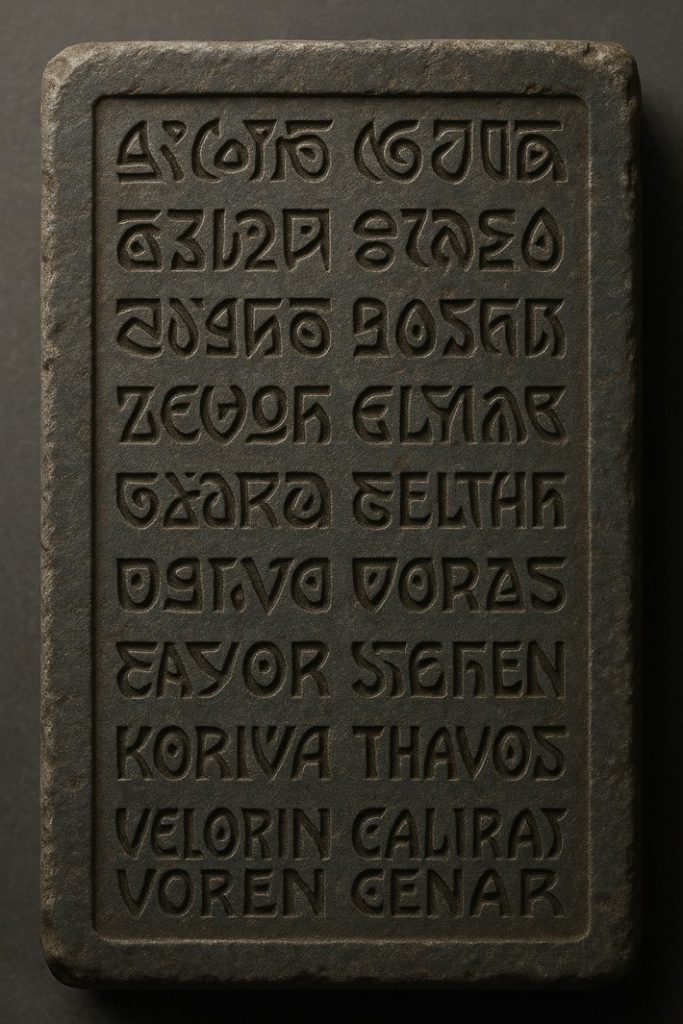
- Script: The script of Xyrioth consists of flowing, elegant symbols with intricate curves and lines. The characters represent the essence of emptiness and are written in a circular fashion, symbolizing the cyclical nature of absence and presence.
- Source and History: The origins of Xyrioth can be traced back to an ancient civilization that delved into the mysteries of existence and sought to understand the nature of loss. The language was created to articulate and explore the emptiness and the transient nature of all things. As civilization declined, the language survived through texts and artifacts, finding its way into the hands of those who sought to preserve its wisdom.
Sensory Experience: Listening to Xyrioth being spoken is an evocative and introspective experience. The harmonious tones resonate deeply with the listener, triggering emotions associated with absence, longing, and contemplation. The language has a mesmerizing effect on the senses, drawing individuals into a state of deep reflection on their own experiences of loss and yearning. The combination of poetic sentence structures and the magical influence of the language can create an atmosphere of profound introspection, leaving a lasting impact on those who encounter it. Xyrioth is considered a language of deep artistry, touching the soul and inspiring creativity in those who engage with it.
Tags: absence, loss, void, yearning, nostalgia, echo, remnant, emptiness, longing, ghost, ephemeral, memory, silence, reflection, intangible, melancholy, contemplation
Inscriptions
- “Velorin thavos” – The void remembers.
- “Thyros enivra” – Loss leaves the truest mark.
- “Sivral othiren” – Silence is the echo of eternity.
- “Morath elunir” – What is gone still binds us.
- “Zeylor thalos” – Emptiness shapes all things.
- “Nivora senith” – Longing is the breath of the soul.
- “Calira moren” – Every absence tells a story.
- “Orivra thunel” – Shadows linger where memory fades.
- “Eryvon selthir” – Yearning is the bridge of time.
- “Korath ivorel” – What remains unseen endures.
- “Zelath voren” – The ghost of the past guides.
Political Oaths
- “Ithral vorin thalos” – I swear to rule mindful of loss.
- “Thalor enithas” – By absence, I hold wisdom.
- “Morath silen” – I pledge to honor what is gone.
- “Zeroth valen” – My reign shall remember the void.
- “Velorin asvara” – I bind my rule with echoes of the past.
- “Norivan threlos” – Yearning guides my justice.
- “Seylor enivra” – By what we lack, I lead.
- “Thavros elthar” – I vow remembrance beyond presence.
- “Voriel senar” – I swear by emptiness unbroken.
- “Calorin vesnar” – Loss itself tempers my power.
- “Orivan thravos” – I rule with memory of absence.
Cultural Ceremonies
- “Sivora thalen” – We gather in the shadow of loss.
- “Valorin esveth” – May absence unite us.
- “Zerath morin” – The echoes carry our bond.
- “Thalorin voras” – Let longing sanctify this day.
- “Eryvon selthir” – Yearning blesses our union.
- “Koriva thalun” – The void holds our truth.
- “Sorivas eltheren” – May absence guide our steps.
- “Nivorin vesal” – What is lost binds us closer.
- “Lorath enirath” – The unseen lingers among us.
- “Velorin thavos” – Emptiness marks this rite.
- “Calira voren” – We honor the ghost of what was.
Echoes of What Was Not
The tale most remembered of Xyrioth is not whole. It comes to us in fragments, like broken clay jars pieced together without their handles, or like the faint shadows of a song once sung but now lost to the wind. The ancients tell that this language was not of presence, but of absence—that it was not made to describe what is, but what has slipped away.
Long ago, in a time when kingdoms flourished and the air was thick with noise and laughter, there arose a people who felt hollow even in their abundance. They had food, but still felt hunger. They had gold, but still felt poor. They had companions, but still felt alone. These people searched for a way to speak the emptiness, to give shape to the void that pressed on their hearts. And so, in slow tones and flowing signs, they gave birth to Xyrioth—the tongue of loss.
The first story says it was spoken beside empty graves. The mourners could no longer find comfort in the common tongue, so they uttered words that circled like wind in caverns: half-sounds, long vowels, syllables that lingered then vanished. When they spoke, they did not name the dead, but the silence left by them. The language grew not from things, but from the spaces between things.
Another tale claims it was crafted by scholars and philosophers who gathered in high towers, staring into the stars. They studied the heavens not for what shone, but for the dark gaps between lights. They shaped their script in spirals and voids, curved lines circling emptiness. They said: To speak absence is to touch the eternal, for only what is missing endures without change.
Yet another story tells of mystics who wandered deserts and empty coasts. They said the world spoke Xyrioth already, in echoes off stone, in shadows cast by the setting sun, in the hollow cry of wind through abandoned halls. These mystics only listened, and then repeated what the world already whispered.
But the language was not without danger. For those who spoke too deeply in Xyrioth began to feel their bodies lighten, their shadows lengthen. It is said that some vanished entirely, swallowed by the very voids they invoked. Others could not stop yearning once they began; their lives consumed by longing for what never was, until they withered away. The fragments of the tale warn: to speak of absence too often is to become absent yourself.
Still, its power was undeniable. Kings and leaders once used Xyrioth in oaths, binding themselves not by promises of what they would do, but by remembering what must never be lost again. Lovers whispered it not to celebrate union, but to remind one another of the emptiness that would follow should their bond break. Poets carved it into stone, their verses not filled with triumph, but with aching reminders of moments already gone.
Now, the language drifts only in shards—seen in concentric carvings that spiral inward to nothing, spoken in the rare chants of those who seek to remember the forgotten. Listeners say the sound of it leaves them uneasy, as though something was taken from them that they cannot name. Yet others find comfort in it, for in the ache of absence they discover they are not alone—others too have lost, and others too remember.
The crooked translations always end the same way: Xyrioth is not a tongue of command, nor of joy, but of memory of emptiness. It is the reminder that absence has as much shape as presence, and that the void binds lives together as surely as the touch of hand to hand.
Moral of the Story: What is missing still speaks; absence is its own presence, and to remember what is gone is to honor what remains.