
Definition: Somnolilith is a unique language in the TTRPG world, with a primary emphasis on boredom. It is a versatile method of communication that transcends species and can be expressed through written, telepathic, body, sign, or vocal symbols to convey thoughts, ideas, emotions, and information related to the theme of boredom.
Magical Powers: Somnolilith possesses magical powers that tap into the realm of dreams and the subconscious mind. Skilled users of Somnolilith can induce drowsiness, trance-like states, and even enter the dreams of others to communicate or influence them subtly.
Linguistic Attributes and Characteristics:
- Structure: Somnolilith is structured in a way that invokes a sense of lethargy and hypnotic fascination. It relies on repetitive patterns, low-frequency sounds, and elongated syllables to create a rhythmic, almost meditative quality.
- Symbols and Gestures: The language employs a combination of unique symbols and hand gestures to complement the vocal or telepathic components. These symbols are usually flowing and circular, mimicking the ebb and flow of a drowsy mind.
- Subconscious Connection: Somnolilith has the remarkable ability to connect with the subconscious minds of its listeners or recipients, allowing for a deeper understanding of emotions and hidden thoughts related to boredom.
- Emotive Vocabulary: The vocabulary of Somnolilith is rich in expressions related to ennui, monotony, apathy, and the myriad facets of boredom. It can describe both mundane and existential aspects of boredom, making it a nuanced and expressive language.
Cultural Identity and Users: Somnolilith originated from a reclusive society of dreamweavers who sought to explore the depths of the mind and understand the significance of boredom in shaping individuals’ destinies. As the language gained prominence, it spread to various cultures and became associated with scholars, mystics, artists, and those with a profound interest in exploring the hidden aspects of consciousness.
Rarity, Type, Script, Source, and History:
- Rarity: Somnolilith is a rare language, known only to those who have studied the ancient texts and rituals of the dreamweavers’ society.
- Type: Somnolilith is a mystical language that straddles the boundary between mundane communication and ethereal, dream-like expressions. It is often used in rituals, artistic performances, and philosophical debates.
- Script: The written form of Somnolilith is intricate and delicate, resembling calligraphic strokes that dance across the page, resembling the flow of dreams.
- Source: The source of Somnolilith’s power lies in an enigmatic artifact known as the “Slumberstone.” The Slumberstone is said to be a crystalline object that holds the collective dreams of the dreamweaver society, infusing the language with its magical abilities.
- History: Somnolilith’s history is intertwined with the rise and fall of the dreamweaver society, known for its secluded existence and esoteric knowledge. It was a language developed by the dreamweavers as a means of exploring the depths of the subconscious mind and unraveling the mysteries of boredom’s impact on individuals and civilizations.
Sensory Experience: The experience of encountering Somnolilith is akin to entering a tranquil dreamscape. Listeners or recipients of the language may feel a calming, almost hypnotic sensation wash over them. As they delve deeper into its melodic and rhythmic qualities, they may find themselves slipping into a drowsy state, where time seems to slow down, and the world becomes hazy and dreamlike. The hand gestures and symbols used in conjunction with the language create an otherworldly visual spectacle, enhancing the sensory experience and deepening the connection to the subconscious realm. Skilled speakers of Somnolilith can lead others on journeys through their own minds, revealing hidden truths and insights related to their boredom and emotional landscapes.
Tags: rare, mystical, telepathic, gestural, written, subconscious, dream-related, boredom-themed, hypnotic, rhythmic, emotive, artistic, philosophical, ritualistic, lethargic, calligraphic, trance-inducing
Inscriptions
- Somnolilith: “Zhaal marnuul droth, ulla zhar’na fel droth.”
Meaning: “The stone sleeps, but the dream within it never sleeps.” - Somnolilith: “Ithaarn fel’desh, marnuul khal’vesh.”
Meaning: “To inscribe is to invite the sleep of ages.” - Somnolilith: “Khal’na marnuul, droth’na ulla.”
Meaning: “In deep sleep, true power awakens.” - Somnolilith: “Zhaal marnuul khal’na zhar’na vesk.”
Meaning: “A sleeping mind is a vessel for endless dreams.” - Somnolilith: “Fel’desh marnuul, ithaarn zhar’na.”
Meaning: “The sleep of one becomes the inscription for all.” - Somnolith: “Ulla droth’na marnuul khal’vesh.”
Meaning: “Awaken not the ancient slumber.” - Somnolith: “Vesk’na zhar’na fel, marnuul’na khal.”
Meaning: “The vessel holds the dream, the dream holds the depth.” - Somnolith: “Zhaal’na ithaarn, marnuul’na droth.”
Meaning: “The mind’s inscription is the dream’s truth.” - Somnolith: “Fel marnuul, ulla khal’na zhar.”
Meaning: “A single dream awakens a thousand depths.” - Somnolith: “Droth’na zhar’na marnuul, vesk’na ulla.”
Meaning: “The truth of the dream sleeps, the vessel awakens.” - Somnolith: “Khal’vesh marnuul, ithaarn’na zhaal.”
Meaning: “The endless sleep is inscribed upon the mind.”
Political Oaths
- Somnolilith: “Marnuul’na zhaal, droth’na fel.”
Meaning: “My mind sleeps on this truth.” - Somnolilith: “Zhar’na vesk, ulla’na khal’vesh.”
Meaning: “I awaken to an endless duty.” - Somnolith: “Ithaarn’na droth, marnuul’na zhaal.”
Meaning: “My word is inscribed, my mind is lulled to peace by it.” - Somnolith: “Fel’desh khal, marnuul’na zhar’na.”
Meaning: “For the deep good, I dream no more.” - Somnolith: “Ulla’na zhar’na droth, marnuul’na fel’desh.”
Meaning: “I awaken to the true dream, I sleep for the one cause.” - Somnolith: “Vesk’na zhaal, ithaarn’na khal’vesh.”
Meaning: “My body is a vessel, my oath is without end.” - Somnolith: “Droth’na marnuul, zhar’na ulla.”
Meaning: “The truth sleeps, the dream must awaken.” - Somnolith: “Khal’na zhar, marnuul’na droth’vesh.”
Meaning: “In depth of dream, I sleep in perpetual truth.” - Somnolith: “Zhaal’na ulla, fel’desh marnuul.”
Meaning: “My mind awakens, so that the one may sleep secure.” - Somnolith: “Marnuul’na vesk, ithaarn’na zhar.”
Meaning: “I sleep as a vessel, I am inscribed by the dream.” - Somnolith: “Ulla’na khal’vesh droth, marnuul’na zhar’na fel.”
Meaning: “I awaken to endless truth, I sleep only for the dream.”
Cultural Ceremonies
- Somnolilith: “Zhar’na marnuul, ulla’na zhar.”
Meaning: “The dream sleeps, now the dream awakens.” (Used to begin a ceremony) - Somnolilith: “Fel marnuul, zhaal’na khal.”
Meaning: “One sleeps, the mind goes deep.” (Chanted during meditation) - Somnolith: “Vesk’na ulla, marnuul’na droth.”
Meaning: “The vessel awakens, the truth sleeps within.” (Spoken during a coming-of-age ritual) - Somnolith: “Khal’vesh zhar, marnuul’na ithaarn.”
Meaning: “Endless dreaming, sleeping inscription.” (Recited to honor ancestors) - Somnolith: “Ulla zhaal, marnuul khal’na.”
Meaning: “Awaken the mind, sleep deeply.” (A blessing for peaceful rest) - Somnolith: “Droth’na marnuul, zhar’na ulla fel’desh.”
Meaning: “The truth sleeps, the dream awakens for all.” (A communal prayer) - Somnolith: “Ithaarn’na zhar, marnuul’na vesk.”
Meaning: “The dream is inscribed, the vessel sleeps.” (Said at a funeral) - Somnolith: “Zhaal’na marnuul khal’na zhar’na fel.”
Meaning: “The mind sleeps deeply in the one dream.” (A phrase for unity) - Somnolith: “Marnuul’na ulla, zhar’na droth.”
Meaning: “From sleep, awaken to the true dream.” (A new year’s proverb) - Somnolith: “Khal’na fel, marnuul’na zhaal.”
Meaning: “In the depth of one, the mind sleeps.” (A marriage vow) - Somnolith: “Zhar’na ulla, marnuul’na itharn.”
Meaning: “The dream awakens, the inscription sleeps.” (To end a ceremony)
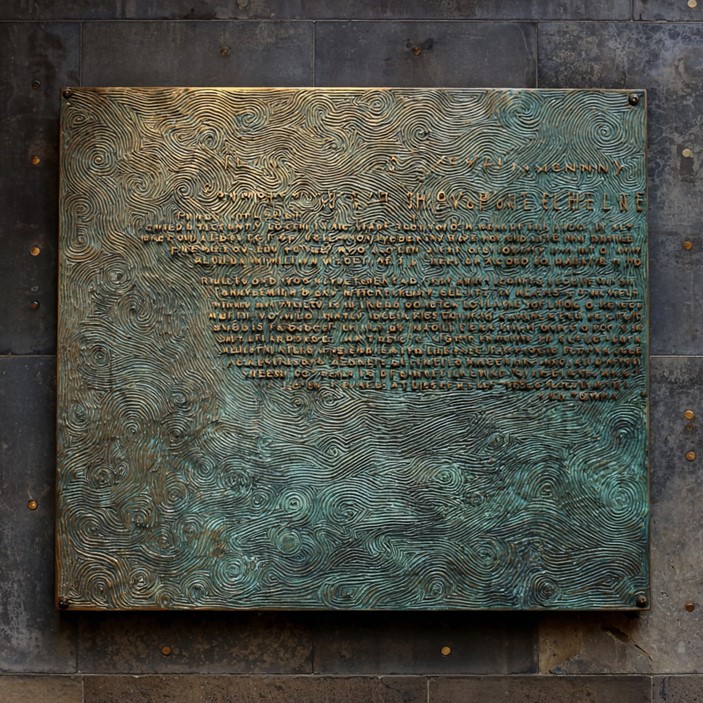
Lament of Waking Stone
In the Before-Time, when the world was yet a shallow dream, there existed the First Dreamers, beings of pure thought who swam in the seas of potential. They were the Zhaal’vesh, the Endless Mind. Their existence was a constant, vibrant hum of creation and wonder, a state of perpetual awakening that knew no rest. In their wakefulness, they crafted marvels that bent light and thought, but they knew not peace, for to be ever-aware is to be ever-yearning.
A singular entity among them, known to the later dreamweavers as Khal’na-Zhar, the Depth-Dreamer, grew weary of the endless brilliance. This weariness was a new thing, a quiet, subtle ache in its core. It looked upon the frantic, beautiful creations of its kin and felt a profound emptiness, a longing for a silence it could not name. This feeling was the first boredom, the first true ennui, and it was a sacred, terrible pain.
Khal’na-Zhar retreated from the shimmering chorus of its kind. From the substance of its own being, it carved a place of stillness, a hollow in the fabric of existence. Within this hollow, it spoke not a word of creation, but a word of cessation. This word was Marnuul. And with the utterance of Marnuul, the Depth-Dreamer did what no First Dreamer had ever done: it slept.
Its sleep was not an emptiness, but a filling. In the quietude of its slumber, the first true dreams blossomed. These were not the conscious creations of the Zhaal’vesh, but things wilder, softer, and more profound. They were dreams of shadow and solace, of mysteries half-glimpsed and emotions too deep for the waking light. The Depth-Dreamer slept for eons, and its dreams pooled around it like a deepening ocean.
The other First Dreamers, in their constant, frantic wakefulness, eventually noticed the absence. They sensed the new, strange energy emanating from the hollow—a energy of rest, of peace, of potent silence. They were drawn to it, not with understanding, but with a desire to consume this new thing, to dissect it and add its principle to their own brilliant works. They swarmed the edges of Khal’na-Zhar’s hollow, their light scorching the delicate borders of its dreams.
The violence of their waking attention threatened to shatter the slumber and vaporize the dream-sea. In its deepest sleep, the Depth-Dreamer acted. With a final, sighing thought, it solidified its own dreaming heart, the source of its boredom and its rest. This heart became the Slumberstone, a crystalline anchor of perfect, irresistible lethargy. The Stone pulsed with the power of Marnuul, and a wave of divine drowsiness washed over the Zhaal’vesh.
Their brilliant lights guttered. Their frantic thoughts slowed. One by one, the First Dreamers succumbed to a sleep they could not comprehend, their conscious forms dissolving into the dream-sea, adding their vast potential to the roiling subconscious of existence. Their waking world was forgotten, subsumed by the dream.
The Slumberstone settled into the depths, and around it, the first of the dreamweavers coalesced from the lingering echoes of the Depth-Dreamer’s sigh. They were born knowing sleep, and they found the Stone. They learned to trace its slow, pulsing rhythms, its hypnotic patterns. They understood that the Stone was not a thing of death, but of profound life turned inward. They learned to speak to it, not with the sharp words of creation, but with the slow, looping, repetitive words of invitation, of shared languor. This was the first utterance of Somnolilith. It was not a language they invented, but one they discovered—the native tongue of the sleeping stone, the sound of sacred boredom itself.
The dreamweavers learned that by speaking this language, they could gently navigate the dream-sea, could glimpse the lost wonders of the Zhaal’vesh without being burned by their frantic energy, and could understand the profound truths that only reveal themselves in the quiet spaces between thoughts. They became the guardians of sleep, the translators of the subconscious, the ones who remember that the First Dreamer had to first grow weary before it could truly dream.
Moral of the story: The highest truths are not found in relentless pursuit and wakeful striving, but are often hidden within the depths of stillness, weariness, and the sacred, generative power of boredom.