
Definition: Solitarii is a unique language in the TTRPG world, with a primary emphasis on conveying aloofness, emotional distance, and a sense of solitude. It is a language designed to express a detached and reserved demeanor, making it a powerful tool for maintaining emotional boundaries and independence. Solitarii can be expressed through cool and detached vocalizations, enigmatic telepathy, and calculated body language.
Linguistic Attributes and Characteristics:
- Cool Vocalizations: Solitarii employs cool and detached vocal sounds, resembling measured tones and deliberate pauses. These sounds convey a sense of emotional distance and aloofness.
- Enigmatic Telepathy: Proficient users of Solitarii can telepathically project their aloof emotions and enigmatic thoughts to others. This telepathic barrier maintains a sense of distance and reserve.
- Calculated Body Language: Solitarii emphasizes calculated and enigmatic body movements, including controlled gestures, limited eye contact, and poised postures. These non-verbal cues accentuate the aloof nature of the language.
Cultural Identity and Users:
- Loner Wanderers: Solitarii is often practiced by loner wanderers and individuals who prefer solitude and introspection. They use the language to maintain emotional boundaries and independence.
- Elusive Mystics: In certain cultures, elusive mystics and enigmatic figures adopt Solitarii as a means of projecting an aura of mystery and wisdom.
Rarity, Type, Script, Source, and History:
- Rarity: Solitarii is relatively rare, as it requires a deep understanding of emotional detachment and the ability to maintain emotional barriers through language. Skilled users are not common.
- Type: Solitarii is primarily a language of emotional reserve and independence. It is not used for general communication but rather as a tool to convey aloofness.
- Script: Solitarii does not rely on a traditional written script. Instead, its emphasis is on vocalizations and calculated body movements to express aloofness.
- Source and History: The origins of Solitarii can be traced back to enigmatic figures and loners who sought to communicate their emotional detachment and independence. It evolved as a way for them to maintain their boundaries and privacy through a unique language.
Sensory Experience: Learning and using Solitarii can be a mentally intriguing experience. Practitioners must delve into their own emotional boundaries and reserve to convey and interpret the language accurately. When Solitarii is directed at others, they may feel a sense of emotional distance and a lack of access to the speaker’s inner thoughts and feelings, heightening the enigmatic nature of the conversation.
Tags: aloofness, solitude, detachment, reserve, mystery, introspection, independence, distance, enigma, restraint, isolation, control, boundaries, poise, secrecy, silence, self-reliance
Inscriptions
- “Thalen vosir” – Distance guards the self.
- “Sovira lenoth” – Silence is strength unbroken.
- “Vorath silen” – Cold walls preserve truth.
- “Nirath volen” – Solitude carries wisdom.
- “Kaleth onira” – The watcher stands apart.
- “Zorven thalis” – Mystery shields the heart.
- “Dovrel amun” – To walk alone is to endure.
- “Selith enovar” – The veiled soul remains whole.
- “Orivas theren” – Boundaries protect the spirit.
- “Venral othir” – Detachment is clarity.
- “Mareth ilvon” – Silence is a fortress eternal.
Political Oaths
- “Ithar solven thalos” – I vow to rule without entanglement.
- “Voren thiril” – My strength is independence.
- “Kireth volnar” – I guard the realm with distance.
- “Elvorn thalis” – I lead without surrendering my core.
- “Morath silven” – My heart shall remain unmoved.
- “Dorven ithar” – I swear to stand apart yet guide.
- “Thoren valith” – My power is aloof, my justice cool.
- “Sarnel ovira” – By solitude I will not falter.
- “Velir thunos” – I reign with mystery intact.
- “Talvon siren” – I vow to guard with silence.
- “Corith enval” – My oath is distance everlasting.
Cultural Ceremonies
- “Sivorn elnath” – We gather yet remain apart.
- “Voralith enor” – Each soul stands alone in the circle.
- “Thirion volas” – Silence blesses this rite.
- “Elath moren” – Solitude honors the moment.
- “Zelir thalun” – The unknown sanctifies us.
- “Norath elvir” – Mystery is the crown of ceremony.
- “Marion selvar” – Distance binds us without touch.
- “Torven alis” – Aloofness is purity of spirit.
- “Evrath lonis” – The lone soul is strongest.
- “Calen tharos” – Silence carries us forward.
- “Orveth enira” – We honor independence eternal.
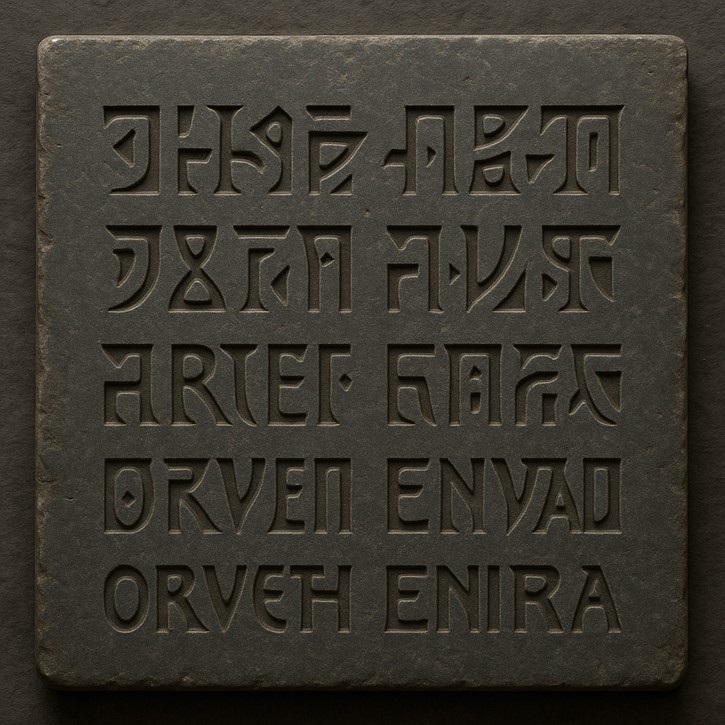
Chronicle of Silent Watchers
It is told in fragments, as though whispered through broken glass, that there once was a speechless people who carved their thoughts upon stone rather than bare them to the air. This tongue was not made for closeness but for distance, not for joining but for dividing. The name of it was Solitarii, though some fragments call it Solitaren or Sorithal, for the sound shifts like smoke when retold.
The story begins with the Wanderer of Ash, a figure who came from no place and returned to no place. The Wanderer walked among villages but spoke little, his words cool as night air, his eyes never lingering. Yet wherever he went, quarrels ceased, for his silence created a wall no anger could cross. Some said he was cursed, others that he carried wisdom too heavy to be shared. All agreed he was untouchable, like a star viewed but never reached.
From him came the first marks of Solitarii: sharp lines upon rock, cold and deliberate. Each stroke meant not welcome but boundary. To inscribe them was to say: Here I stand apart, untouched. When spoken, the syllables fell like stones into still water—measured, echoing, without warmth.
Centuries passed, and the keepers of Solitarii became known as the Silent Watchers. They dwelt on cliffs, in lone towers, at the edges of deserts, always apart. Kings sent emissaries, but their answers were brief, their tones distant. Priests sought blessings, but the Watchers offered only silence. It was said that to hear Solitarii was to feel the closing of a door: you might glimpse wisdom beyond, but it would never be yours.
Yet there is one tale told crookedly of a great storm, when seas swallowed villages and fire split mountains. People fled to the towers of the Watchers, begging for shelter. At first the Watchers spoke their cold syllables—we are apart, we are alone. But as the storm raged, one voice faltered. A single Watcher lowered the barrier, speaking words that carried not aloofness but measured resolve: To stand alone is strength; but strength may choose to shield others. And so they opened their gates, not from warmth but from duty. Many lives were saved, though no bond was forged.
Since then, Solitarii has remained. Its carvings can still be found upon lonely stones, on cliffside monuments no hand dares to touch. Scholars say its lines are too rigid for beauty, yet too deliberate for accident. They are boundaries etched into eternity.
The translation of these stories is fractured. Some say the Watchers were guardians of hidden wisdom, others that they were cursed souls unwilling to join the living. Some claim the language was never spoken at all, only carved, only gestured. But in every version, the same lesson passes through the cracks: Solitarii is not for closeness, but for keeping the self intact, a fortress of solitude against the hunger of the world.
Moral of the Story: Strength is not always found in joining with others; sometimes it lies in the quiet power of standing apart.