
Solacium is a language that embodies the essence of consolation, comfort, and emotional healing. It is a linguistic tapestry woven with gentle tones, soothing rhythms, and a profound depth of empathy, designed to alleviate the burdens of the soul and offer solace in times of distress.
Linguistic Attributes and Characteristics:
- Solacium is characterized by a melodic, almost lyrical cadence, with each word and phrase flowing seamlessly into the next, creating a calming and harmonious rhythm.
- The language employs a rich vocabulary of metaphors and imagery drawn from the natural world, evoking a sense of serenity and connection with the cycles of life.
- Solacium’s grammar and syntax are structured in a way that prioritizes emotional expression over strict rules, allowing for a more organic and intuitive flow of communication.
- The language incorporates a unique system of vocal inflections and tonal variations, enabling speakers to convey a wide range of emotions and subtle nuances of meaning.
Magical Powers:
- While not inherently magical, Solacium is believed to possess a certain mystical quality, as its ability to soothe the spirit and offer emotional respite is seen as a form of healing by many cultures.
- Skilled orators and poets who have mastered Solacium can weave intricate tapestries of words that resonate with the very essence of their listeners, providing solace and emotional catharsis.
- It is said that those who truly understand the depths of Solacium can use the language to forge powerful emotional bonds, creating a shared sense of empathy and understanding that transcends mere words.
- In some traditions, Solacium is used in rituals and ceremonies designed to honor the departed, offering comfort and consolation to those in mourning.
Cultural Identity and Users:
- Solacium is the language of the Empathic Order, a spiritual society dedicated to the pursuit of emotional healing and the cultivation of empathy and compassion.
- The Empathic Order is comprised of individuals from various cultures and backgrounds, united by their shared understanding of the power of language to console and heal the wounded soul.
- Solacium is also used by poets, storytellers, and counselors, who employ the language’s gentle tones and emotional resonance to offer solace and guidance to those in need.
Rarity and Type:
- While not exceedingly rare, Solacium is a language that requires a deep well of emotional intelligence and empathy to truly master, making it less common than some of the more widely spoken tongues.
- It is primarily a spoken language, with a strong emphasis on vocal delivery, inflection, and the ability to convey emotion through tone and cadence.
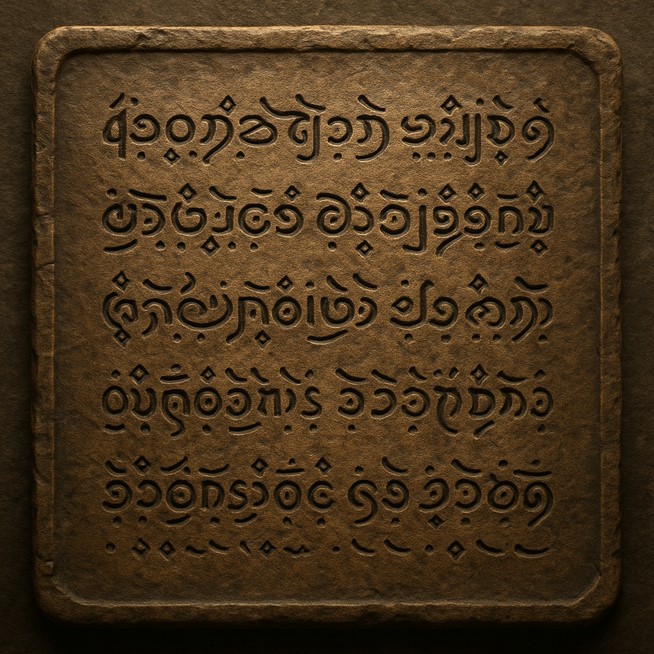
- Solacium has a written script, but it is primarily used for the preservation of poetry, stories, and other works of emotional significance, rather than everyday communication.
Source and History:
- The origins of Solacium can be traced back to ancient traditions of oral storytelling and healing rituals, where the power of words was recognized as a means of offering solace and emotional support.
- Over centuries, Solacium evolved and spread, becoming a common language among communities that valued empathy, compassion, and the healing of the spirit.
- Legends speak of a legendary figure, a great healer and orator, who is said to have perfected Solacium and used it to mend the souls of countless individuals, offering consolation and hope in even the darkest of times.
Sensory Experience:
- To hear Solacium spoken is to experience a profound sense of emotional resonance, as the language’s gentle tones and soothing rhythms wash over the listener like a calming wave.
- The melodic cadence and careful inflections create a captivating auditory experience, evoking a sense of tranquility and emotional catharsis.
- For those who speak Solacium, the act of articulating each word and phrase is akin to a sacred ritual, a means of connecting with the depths of their own emotional landscape and offering consolation to those in need.
Solacium is a language that embodies the very essence of consolation and emotional healing. Its gentle tones and profound empathy serve as a reminder that the power of words extends far beyond mere communication, offering solace and comfort to the wounded soul and guiding us towards a deeper understanding of our shared human experience.
Tags: consolation, empathy, healing, comfort, mourning, lyrical, soothing, compassion, renewal, catharsis, gentle, emotional, resonance, harmony, solace, ritual, empathy-bond
Ceremonial phrases in Solacium, designed for magical inscriptions, political oaths, and cultural ceremonies. Each phrase carries the soothing, empathetic cadence of the language, intended to heal, console, and unify:
Magical Inscriptions
- “Lumina pacis in corde manet.” – The light of peace remains in the heart.
- “Dolor cadit, solacium surgit.” – Sorrow falls, consolation rises.
- “Fluctus vitae leniter fluant.” – May the tides of life flow gently.
- “Vox dulcis sanat vulnera invisibilia.” – The sweet voice heals unseen wounds.
- “Cordis nexus vincit omnem fracturam.” – The bond of hearts overcomes all fracture.
Political Oaths
- “Per verba Solacii, iuro servare concordiam.” – By the words of Solacium, I swear to preserve harmony.
- “Non ad gloriam meam, sed ad levamen populi.” – Not for my glory, but for the people’s relief.
- “In fide, in pace, in compassione permaneo.” – In faith, in peace, in compassion I remain.
- “Auctoritatem recipio, dolorem populi sustinebo.” – I accept authority, I will bear the people’s sorrow.
- “Fiat lex non dura, sed consolans.” – Let law be not harsh, but consoling.
Cultural Ceremonies
- “Lacrimae veteres in terram redeunt.” – The old tears return to the earth.
- “Memoria manet, sed cor invenit quietem.” – Memory remains, yet the heart finds rest.
- “Unum sumus, etiam in fractura.” – We are one, even in fracture.
- “Vita nova nascitur ex solacio.” – New life is born from solace.
- “In cantu dulci invenimus viam domum.” – In the gentle song, we find the way home.
- “Manus coniunctae portant pondus leviter.” – Joined hands carry the burden lightly.
- “Solacium est donum quod semper redit.” – Consolation is a gift that always returns.
Song of the Quiet Healer
It is said, though the saying has been broken and mended by many mouths, that long ago there was a valley where the sky would bend low and the rivers sang lullabies. In this valley there were people who spoke with no quarrel, for they carried within them a tongue woven from the threads of solace. This tongue was called Solacium, though in the oldest telling the name is forgotten, and only the sound of a long sigh remains.
Among these people there lived a woman whose name was said to be like soft rain upon still waters, though no one recalls it rightly. Some call her Aelira, others call her She-of-the-Tears-Healed. She was born in the season when the wind carried sorrow, and her village was heavy with grief after storms carried away the fields. Where others shouted against the heavens, she sang, not in anger but in Solacium. Her words fell not as commands, nor as prayers, but as gentle hands upon weary hearts.
Her gift was not learned in temple nor from scribe. They say she was found once, as a child, whispering to a dying bird, and the bird ceased its trembling and passed into death with calm, not terror. They say she soothed even the fire when it raged through the trees, her words falling like a cool stream, though the trees still burned. But the people remembered less the events than the feeling—that in her presence, grief could be carried, not broken.
When famine came, many were lost. But Aelira did not speak of grain or meat. She sat with the starving and told them, “Your pain is known, your sorrow is not unseen.” And somehow, in those words, the night did not feel as long. Travelers who carried their despair into the valley said they left with hearts lightened, though their troubles remained. They named her the Quiet Healer, and so the valley became a place where wanderers sought not wealth, but rest for their weary souls.
But the story turns, as all stories do. There came men of iron and banners, carrying the tongue of command and the language of power. They mocked Solacium as weakness, calling it the speech of cowards and children. They chained those who spoke it, saying “comfort has no place in empire.” And yet, when they brought Aelira before their lord, demanding she beg for her life, she spoke only:
“Even you, in your armor, have a wound unseen. I see it, and I do not despise it.”
The lord struck her down, but the strike did not silence her. For it is said that even as her body fell, the words of Solacium rippled outward. The soldiers who had scorned her felt their hands tremble, as if the weight of cruelty were suddenly heavy. The chains upon the captives did not break, yet their despair did. And in time, the empire that laughed at her grew hollow, while the valley endured, speaking the same soothing tongue.
The tale has been told so many times that some say she lived, some say she died, some say she was never born at all but was only Solacium given flesh for a season. The fragments change, but the heart remains: the language of comfort is stronger than the language of scorn, for it builds where others break.
Moral of the Story: Words of solace may not stop death, fire, or empire, yet they heal the soul and endure beyond all ruin.