
Definition: Remoros is a unique language with a strong emphasis on conveying feelings of shame, guilt, and regret. It serves as a means for individuals to express their inner turmoil, seeking understanding and empathy from others, even across species.
Linguistic Attributes and Characteristics:
- Expressive Vocabulary: Remoros’s vocabulary is filled with words and phrases that convey shame, guilt, and regret, allowing speakers to articulate their deepest emotions with precision and sensitivity.
- Melancholic Tones: The language often employs melancholic tones, creating a somber and introspective atmosphere that reflects the emotions it seeks to convey.
- Empathetic Structure: Remoros is structured in a way that fosters empathy and understanding. It allows speakers to express their vulnerabilities and seek emotional support from others.
Structure: Remoros follows a structured yet emotive pattern, allowing speakers to convey their feelings of shame and guilt with sincerity and vulnerability. The language may involve the use of introspective phrases and poetic expressions to explore the complexities of one’s emotions.
Cultural Identity and Usage: Remoros is used by individuals who wish to share their inner struggles and seek understanding and empathy from others. It is often employed in moments of vulnerability and self-reflection, where individuals aim to connect emotionally with others by expressing their feelings of shame and regret. Remoros does not have a widespread cultural identity but is used by those who value emotional openness and vulnerability.
Rarity, Type, Script, Source, and History:
- Rarity: Remoros is relatively rare, as it is a language associated with emotions of shame and regret. It is not commonly known or used among the general population.
- Type: Remoros falls under the category of emotional languages, as its words carry the power to evoke deep emotions of shame and vulnerability. While it does not possess magical powers in the traditional sense, its ability to foster emotional connection and understanding makes it a potent tool for individuals seeking empathy and support.
- Script: Remoros’s script appears gentle and flowing, reflecting the language’s connection to vulnerability and self-reflection.
- Source and History: The origins of Remoros can be traced back to individuals who sought to share their inner struggles and seek emotional support from others. Over time, it evolved into a unique language used by those who value emotional expression and empathy.
Sensory Experience: When spoken, Remoros has a melancholic and emotionally charged quality, as if the words themselves carry a sense of vulnerability and self-examination. Listeners may feel a deep sense of empathy and understanding, as the language has the power to evoke emotions of compassion and support. The sensory experience is further enriched when used telepathically, as the emotional depth behind Remoros’s words is directly transmitted, creating a profound sense of connection and empathy in the recipients.
In conclusion, Remoros is a unique language with an emphasis on expressing feelings of shame, guilt, and regret. Its linguistic attributes, cultural significance, and sensory experience make it a powerful tool for individuals seeking emotional connection and understanding.
Tags: Melancholic, Emotional, Vulnerable, Introspective, Somber, Empathetic, Flowing, Poetic, Regretful, Guilt-ridden, Shameful, Supportive, Cathartic, Gentle, Sorrowful, Self-reflective, Connective
Inscriptions
- Sound: Saelen draeshal morwenna. | Meaning: This stone absorbs sorrow.
- Sound: Voraen ilyaetha fen. | Meaning: May this gate forbid despair.
- Sound: Nael shiara dolen. | Meaning: I etch my regret here.
- Sound: Fael uvar imlen. | Meaning: Let this wall share the burden.
- Sound: Loraen diara vell. | Meaning: This hearth understands silence.
- Sound: Mael norae thyren. | Meaning: This mirror reflects my flaw.
- Sound: Soraen valae quor. | Meaning: This path remembers every step.
- Sound: Thyraen belaen solas. | Meaning: This ink is made from tears.
- Sound: Elaraen fior melen. | Meaning: This archive holds our collective shame.
- Sound: Quoraen dinael wren. | Meaning: This lock requires a confession to open.
- Sound: Yvraen loraen sol. | Meaning: This well receives unspoken apologies.
Political Oaths
- Sound: Draeshal en morwen nael sol. | Meaning: I bear the sorrow of my rule.
- Sound: Fen nael ira thyra en vas. | Meaning: My failure will be a public lesson.
- Sound: Imlen nael fenra elar ilya. | Meaning: I share the burden of every citizen’s hardship.
- Sound: Saelen nael vora en draeshal. | Meaning: My heart is a vessel for the people’s grief.
- Sound: Thyren nael solas en bela. | Meaning: My flaws will water the soil of progress.
- Sound: Nael uvar fenra quor valae. | Meaning: I will not forget the price of my decisions.
- Sound: Loraen nael diara en fenra. | Meaning: My ear will listen to every grievance.
- Sound: Nael shiara melen en vas. | Meaning: I confess my ignorance before all.
- Sound: Mael en norae thyra nael sol. | Meaning: The mirror of judgment shows my true failure.
- Sound: Nael vorae draeshal ilyaetha. | Meaning: I will forbid sorrow from becoming despair.
- Sound: Nael thyra en quoraen wren. | Meaning: My term of office is my confession.
Cultural Ceremonies
- Sound: Saelen ilya, imlen draeshal. | Meaning: One heart, shared sorrow.
- Sound: Valae solas, morwen fen. | Meaning: The steps of the past water the future.
- Sound: Uvar melen, loraen diara. | Meaning: Share the story, listen to the silence.
- Sound: Thyra en norae, fenra en vas. | Meaning: The flaw revealed is the lesson given.
- Sound: Draeshal vorae, shiara bela. | Meaning: Sorrow forbidden, regret spoken.
- Sound: Quor dolen, elaraen sol. | Meaning: Remember this place, hold this apology.
- Sound: Fael ira, fael uvar. | Meaning: Let it be known, let it be shared.
- Sound: Nael solas, ilya solas. | Meaning: My tears, our tears.
- Sound: Mael en fen, vorae en vas. | Meaning: The mirror of error, the forbidding of repetition.
- Sound: Loraen thyren, diara vell. | Meaning: The ear of the flawed understands the quiet.
- Sound: Saelen draeshal, saelen bela. | Meaning: A heart of sorrow, a heart of healing.
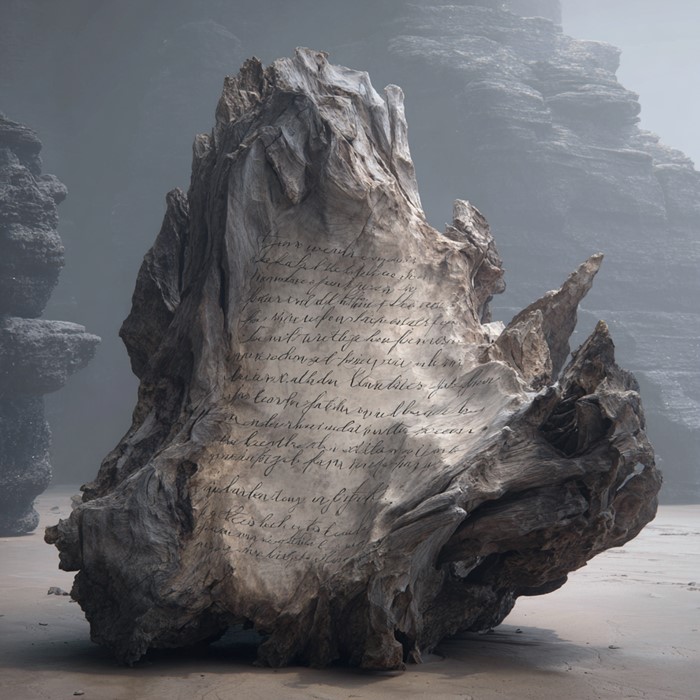
Weeping Sands of Lament’s Shore
In the before-times, when the great leviathans still sang the world into shape and the islands yet drifted on the breath of the gods, there was a tribe of the people who lived on the edge of the great nothing-water. They were not a people of the sword or the clever machine. They were the Keepers of the Unspoken Thing, the holders of the quiet pain that all souls gather like dust on a journey. It is said their first chief was not a warrior, but a weeper, a man whose heart was a cave that echoed with the sorrows of others.
In this time, the words available to the people were like broken shells—they could not hold the water of a true feeling. To say “I am sad” was to say nothing. To say “I regret” did not touch the acid-burn of a wrong choice in the belly. The emotions festered inside the people, making them sick with a fever of the spirit. They would build great towers and then tear them down in rage for no reason. They would love deeply and then push away, their hearts choked by things they could not name.
The chief, the weeper, saw this sickness and went alone to the shore where the water meets the land, the place of in-between. He cut his own palm and let his blood fall upon the wet sand, and with his finger, he began to draw. But he did not draw shapes. He drew the feeling itself. He drew the heavy weight that sits on the chest after a betrayal. He drew the hollow coldness of a missed chance. He drew the desperate wish to undo a single moment. The tide came in and washed his drawings away, but the meaning of them soaked into the world.
That night, he dreamed of a creature made of water and memory that rose from the waves. It had no mouth, but it spoke in a language of sighs and pressures. It showed him that the sand where he had bled had now, in its grains, remembered the shape of his feelings. The chief awoke and ran to the shore. Where his blood had fallen, a strange, pale driftwood had washed up, smooth as bone. On its surface, he found not his own drawings, but new marks—flowing, soft, and deep—that carried the same meaning as his lost drawings, but perfected. This was the First Script, the Mother of Remoros.
He brought the driftwood to his people. Those who looked upon the marks did not see pictures or words. They felt the emotion etched there. A woman who had lied to her brother saw a particular spiral and burst into tears, for she finally understood the crack her lie had made in his trust. A warrior who had survived a battle where his friends fell saw a series of descending curves and fell to his knees, his grief finally finding a vessel to hold it.
They learned to copy these marks, to speak the sounds that carried their weightless, aching meaning. They built not a city of stone, but a quiet place of gathering on the shore, where they would bring their unspoken shames and carve them into great pieces of driftwood for the tide to eventually cleanse. The language did not erase the pain, but it let one person take their pain from inside and place it outside themselves, so another could see it and say, “Yes. I have also held this. I understand its weight.”
The story says the chief lived a very long life, and on the day he died, he carved one last word upon his own piece of wood. It was not a word of goodbye, but a word that means “the peaceful emptiness that comes when a shared burden is finally laid down.” He then walked into the sea. The tide took his body, but the wood remained. His people, in their grief, could not speak their ordinary words. They could only speak in the language of sighs he had given them. And they found it was enough.
Moral of the story: A pain that is given a name and a witness is a pain that loses its power to poison the soul.