
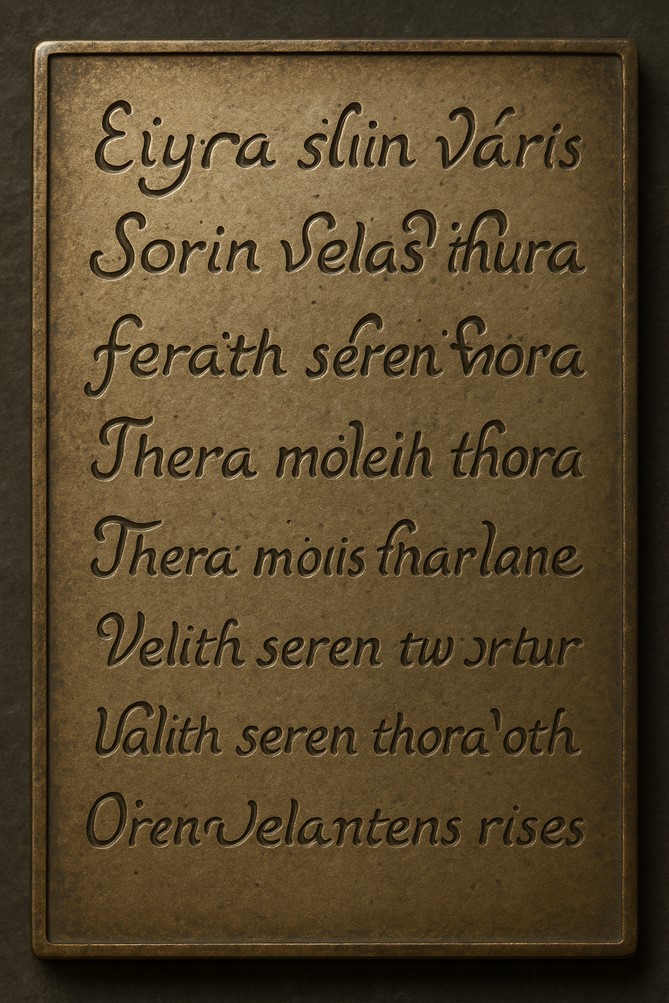
Definition: Melodyspeak is a unique language in the world that emphasizes calm and serenity in its communication. It is a language used for conveying thoughts, ideas, and emotions in a soothing manner, promoting tranquility and relaxation in its users and listeners. Melodyspeak can be expressed through telepathic, vocal, and body symbols, but it is most potent when communicated through melodious tones and harmonious gestures.
Magical Powers: Melodyspeak possesses magical properties. When spoken or conveyed with genuine calmness and inner peace, it can influence the emotions and mental states of both the speaker and the listener. It has the power to soothe, heal emotional wounds, and pacify agitated minds. In the hands of skilled practitioners, Melodyspeak can bring about a sense of serenity, dissolve conflicts, and promote harmony among individuals and even across species.
Linguistic Attributes and Characteristics: Melodyspeak has a melodic and rhythmic structure, resembling a musical composition. It relies heavily on tonal variations, pitch inflections, and precise timing to convey nuances of meaning. Each symbol and gesture in Melodyspeak is intricately designed to evoke calm emotions and foster a sense of harmony. It is a complex language, requiring its users to be in touch with their inner emotions and mental states.
Cultural Identity and Users: Melodyspeak originated from an ancient society of mystics and philosophers who sought to create a language that could transcend linguistic barriers and unite beings through a shared sense of tranquility. Over time, its usage has spread to various peaceful communities, healers, diplomats, and sages who advocate for harmony and peaceful resolutions. It is considered a sacred language, and its teachings are passed down through generations within these select groups.
Rarity, Type, Script, Source, and History: Melodyspeak is rare and not widely known. Its mystical nature and the need for a profound understanding of inner calm make it challenging to learn for most individuals. It exists primarily in oral traditions, though some ancient texts and scripts contain fragments of its teachings. The language’s source is believed to be divine, inspired by celestial harmonies and the deep wisdom of nature. Its history traces back to a time when the ancient society of mystics first developed the language in their quest for peace and understanding.
Sensory Experience: Experiencing Melodyspeak is a profound sensory journey. When spoken or conveyed, it feels like being enveloped in a warm, gentle embrace. The melodious tones and harmonious gestures create a sense of serenity and emotional resonance. Listening to Melodyspeak feels like floating on a calm sea, with waves of tranquility washing over the mind and soul. It is not just a language but an immersive experience that leaves a lasting impression on both the speaker and the listener.
Tags: calm, serenity, tranquility, harmony, peace, soothing, healing, relaxation, balance, unity, compassion, melody, rhythm, flow, resonance, gentleness, mindfulness
Inscriptions (11)
- “Lirae thalen moru.” – Peace flows as water through stone.
- “Serin vala thora.” – Harmony dwells within every breath.
- “Elios maran veth.” – Calm endures longer than storms.
- “Thyra solin neva.” – Stillness is the well of strength.
- “Orina velas thar.” – Gentle voices shape the world’s heart.
- “Feylin doris lun.” – Serenity guides the wandering spirit.
- “Morath selun ivra.” – Quiet binds where conflict shatters.
- “Kalen thirun osel.” – Tranquil minds weave lasting bonds.
- “Veyra molis thu.” – In silence, wisdom takes root.
- “Lorath enar silen.” – Gentleness carries weight unseen.
- “Sorin uthar velys.” – Peace is the deepest foundation.
Political Oaths (11)
- “Thalen veyra moris.” – I vow to rule with calm heart.
- “Eryon selis thura.” – I pledge to keep peace among all voices.
- “Moriel tharun veyth.” – I promise harmony in judgment and law.
- “Sora velith emen.” – My word shall soothe, not wound.
- “Kiren thalos veir.” – I bind myself to nurture balance.
- “Orath simen thura.” – I swear to mend discord with serenity.
- “Fenra lioris thalen.” – With compassion, I hold this trust.
- “Serath minel voru.” – My strength shall calm, not divide.
- “Thylen oris valar.” – Through harmony I serve my people.
- “Noren feyra silis.” – By gentleness I carry this mantle.
- “Valen uthir seren.” – In tranquility I seal my oath.
Cultural Ceremonies (11)
- “Elyra solin varis.” – Together we breathe one harmony.
- “Mira thalen uros.” – Let serenity flow among us all.
- “Sorin velas thura.” – Our gathering blooms with peace.
- “Thera molen ivra.” – Gentle bonds weave our unity.
- “Feyra sulin orel.” – We celebrate in tranquil song.
- “Lorath thiren vala.” – Harmony descends in this moment.
- “Nira molis enel.” – Peace embraces each soul present.
- “Velith seren thora.” – May calm guide the steps of all.
- “Thalen moris velar.” – Our spirits rest in unity’s light.
- “Oren sulis tharal.” – Tranquility strengthens the circle we keep.
- “Liora velis thun.” – With calm hearts, we rise together.
Song That Calmed the Shattered Sky
Long before the hills bore names and the seas were charted, the world was troubled with many tempests. Not storms of cloud and rain alone, but storms of heart and mind. Peoples rose and quarreled, voices rang like iron striking iron, and all the lands quivered with dissonance. No hand was steady, no tribe was still, for words were sharp and carried fire that burned deeper than flame.
In those days, so the broken fragments tell, there was a circle of mystics who dwelt in caves by the river where reeds whispered endlessly. They desired not conquest, nor did they sharpen blades, but they pressed their ears to the winds, to the stones, to the water’s music. They sought a tongue that could cool the fury of man and beast alike. What they discovered—or perhaps remembered—was a speech woven from tone, from rhythm, from the breath itself.
The ancient scrolls say this tongue was not spoken at first, but sung low, like a lullaby forgotten by the stars. Each note curved like a river bend, each syllable was drawn long and soft, until even the fiercest warrior felt his wrath slide from him like water spilling from cupped hands. They called it Melodyspeak, though the truest name was said to be untranslatable, carried only in the hush between sounds.
The story tells of the first great trial of this language. A warlord, cruel and mighty, whose armies blackened the plain, came to strike the mystics’ refuge. Yet when he entered their circle, they did not raise spears. They sang. And their words, as faint as reeds in the evening wind, wound about his heart. He dropped his weapon. His armies looked on in wonder as their leader knelt, weeping, not from shame but from peace he had never before known. Some say his tears became a river that still runs through the valley.
Over centuries, the tongue spread among healers, wandering philosophers, and quiet leaders. It was said to mend quarrels before they began, to soothe the madness of grief, to still the trembling of beasts, and even to soften the restless storms above the mountains. Yet not all who tried could wield it. For the language demanded more than skill of mouth or hand—it demanded the calm of the speaker’s soul. If one spoke in anger, the notes faltered, and the words became ash.
But this tale is not without sorrow. In the Age of Fractured Voices, when nations sought to harness every power, some attempted to wield Melodyspeak not for peace, but for control. They bent the soothing phrases into chains, silencing dissent, commanding obedience with false serenity. The language dimmed in those days, and many turned away from it, fearing it was corrupted. Yet a saying from cracked tablets reminds: “The tongue itself is innocent; the speaker makes it true or false.”
And so the knowledge survived in hidden schools, carried by few. It is passed by breath, not by ink, for script is brittle and tone eternal. When one learns, it is said they must first find stillness in themselves—only then will the syllables flow like water. Even now, when a gathering speaks Melodyspeak in ceremony, listeners describe the same sensation: as if cradled, as if the weight of the world lifts, as if the heart remembers its home.
The fragments end with words so often repeated they are almost prayer: “When the sky shatters, let not the hand strike, nor the blade sing, but let the voice flow soft and true, and the sky shall heal.”
Moral of the Story: True peace does not come from silencing others, but from calming oneself; only then may words carry harmony into the world.