
Definition: Irritari is a unique language in the TTRPG world, with a primary emphasis on conveying aggravation, frustration, and exasperation. It is a language that has the power to heighten irritation in its recipients, making them more susceptible to negative emotions. Irritari can be expressed through vocal sounds, telepathic projections, and subtle body cues.
Linguistic Attributes and Characteristics:
- Grating Tones: Irritari consists of a series of grating vocal tones and sharp sounds that can cause discomfort and annoyance in the listener. These tones are carefully chosen to evoke irritation.
- Telepathic Irritation: Proficient users of Irritari can telepathically project their own feelings of aggravation onto others. This ability allows them to amplify existing irritations or create new ones within their targets.
- Body Language: Irritari employs specific body movements, gestures, and expressions that subtly convey aggravation. Skilled practitioners can use these cues to manipulate the emotions of those around them.
Cultural Identity and Users:
- Tacticians and Manipulators: Irritari is often practiced by cunning tacticians, manipulators, and spies. They use the language to undermine alliances, provoke conflicts, and gain an advantage in negotiations.
- Courtiers and Diplomats: In some societies, Irritari is employed as a secret language among courtiers and diplomats. Those who understand it can discern hidden tensions and political maneuverings in social gatherings.
Rarity, Type, Script, Source, and History:
- Rarity: Irritari is relatively rare, as it requires a deep understanding of human psychology and emotional manipulation. Only those with exceptional emotional intelligence can wield it effectively.
- Type: Irritari is primarily a language of emotional manipulation and provocation. It is not used for general communication but rather as a tool to create tension and conflict.
- Script: Irritari does not rely on a traditional written script. Instead, it emphasizes vocalization and non-verbal cues to convey aggravation.
- Source and History: The origins of Irritari are obscured in history, and its true source is the subject of myths and legends. Some believe it was a gift from a mischievous deity, while others claim it was discovered in ancient texts of emotional manipulation.
Sensory Experience: Learning and using Irritari can be an emotionally charged experience. Practitioners must delve into the complexities of aggravation and frustration, which can be both challenging and draining. When Irritari is directed at others, they may experience heightened irritation and a growing sense of agitation, as if their patience is being tested to the limit.
Tags: Aggravating, Frustrating, Grating, Manipulative, Provocative, Telepathic, Subtle, Cunning, Rare, Annoying, Discordant, Psychological, Agitating, Non-Scripted, Vocal, Gestural, Tense
As a language of pure emotional manipulation with no script, Irritari’s “ceremonial phrases” are not formal, written words. They are ritualized applications of grating sounds, telepathic projections, and subtle gestures designed to provoke and exasperate.
Inscriptions (Wards of Frustration)
These are not written carvings but magically imbued marks, glyphs, or objects that telepathically project a constant, low-level irritation onto anyone who observes them. The “sound” is the mental sensation they produce.
- (A low, telepathic hum, just on the edge of hearing) – This place is designed to slowly erode your patience.
- (The mental sensation of a single, out-of-tune instrument in a grand orchestra) – There is a subtle flaw in your plan; you will never find it.
- (The phantom feeling of having a small, sharp pebble in your shoe) – Every step you take will be an annoyance.
- (A telepathic projection of a condescending, slow clap) – Your achievements are noted, and they are unimpressive.
- (The nagging mental feeling that you are being watched and judged by a superior) – Your every move is being scrutinized for error.
- (A glyph that seems to subtly shift and mock whatever pattern it’s placed on) – The order you seek to impose here is futile.
- (The phantom sound of someone chewing loudly and with their mouth open) – This area is meant to break your concentration.
- (A wave of irrational frustration, as if you’ve just lost your train of thought) – Your focus will fail you here.
- (The mental image of a perfectly tied knot that is impossible to undo) – You are faced with an infuriating, unsolvable problem.
- (A telepathic whisper that constantly repeats the last word someone spoke, but with a questioning, mocking tone) – Your own words will be used to irritate you.
- (The feeling of a persistent, unscratchable itch between your shoulder blades) – You will find no comfort or rest in this place.
Political Oaths (Pledges of Aggravation)
These are not sincere vows but are instead veiled insults, backhanded agreements, and declarations laced with passive aggression, designed to undermine and frustrate the other party.
- Gneeeh-chak. (A nasal whine followed by a sharp click of the tongue) – I agree to your… proposal, for now.
- Ssssoooo… (A long, drawn-out, and condescending hiss) – If you truly believe that is the wisest course of action, I will support you.
- (A barely audible, grating sigh, followed by a nod) – Let us proceed with this tiresome formality.
- Tik-tik-tik-Yessss. (A rapid tapping of fingernails on a surface, ending with a sibilant hiss) – We accept your terms, though your lack of foresight is… noted.
- (A slight, dismissive wave of the hand) – I pledge my “full” cooperation.
- Gr-gr-GRAH. (A low throat-clearing that builds into a sharp grunt) – This alliance is… adequate.
- (A subtle, infuriatingly smug smirk) – I swear to uphold my end of this bargain, just as I’m sure you’ll uphold yours.
- Hnnng-ok. (A pained, put-upon groan that concedes the point) – Fine. Have it your way.
- (A sharp, grating laugh that cuts off abruptly) – An oath of peace between us? Amusing. I accept.
- (Looking just past the other person’s shoulder while speaking) – I offer my fealty. I trust it is… sufficient for someone of your station.
- (A telepathic projection of utter, soul-crushing boredom) – I vow to honor this agreement. Can we move on now?
Cultural Ceremonies (Rituals of Discord)
These are not celebrations but are instead gatherings designed to sow discord, test patience, or subtly assert dominance through orchestrated aggravation.
- (The “Toast of a Thousand Interruptions,” where the speaker is constantly and deliberately cut off) – We honor your success, though it was, perhaps, expected.
- (A ritual of gift-giving, where each gift is intentionally useless or slightly broken) – May this token serve as a constant reminder of our… generosity.
- (The “Chant of Impatience,” a ritual that is always performed five minutes late) – We begin this rite to test the patience of the worthy.
- (A low, grating hum performed during a rival’s speech) – Your words are heard, though their meaning is… thin.
- (A coming-of-age ritual where an initiate must perfectly balance a flawed, asymmetrical stone for an hour) – May you find stability in a world designed to frustrate you.
- (A telepathic chorus of nagging doubts projected at a new leader) – We offer our support, but question your methods.
- (The “Feast of Minor Annoyances,” where every cup has a slight leak and every chair a subtle wobble) – Let us share in this moment of communal discomfort.
- (A parting blessing that is actually a subtle curse of bad luck) – May your journey be as interesting as you are.
- (A marriage vow that focuses on future arguments) – We acknowledge the inevitable friction that will define your union.
- (A formal greeting that involves deliberately mispronouncing the guest’s name) – We welcome you to our court, though your name escapes us.
- (A shared, exasperated sigh to end a negotiation) – The matter is settled, to no one’s true satisfaction.
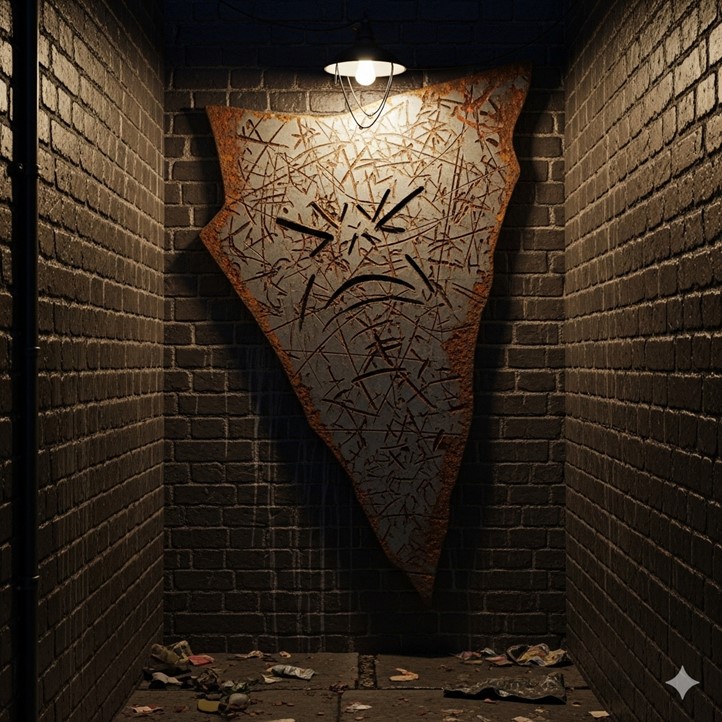
King of a Thousand Courtesies
It is told, from records that are themselves copies of whispers, that there was once a court so perfect in its etiquette that it had become a prison. In the Gilded Court of King Theron, every word was a polished stone, every gesture a carefully measured dance. The Law of a Thousand Courtesies was absolute, and so, while the court was a place of breathtaking civility, it was also a place where no true feeling could be shown. Treason and loyalty wore the exact same smile.
King Theron, the master of these courtesies, grew weary. He sat upon his throne surrounded by perfect smiles and perfect bows, yet he could not discern a true friend from a well-mannered foe. The politeness had become a wall, thick and smooth, behind which plots could fester unseen. In his frustration, the king made a plea not to the great gods of sun and war, but in a quiet moment to any power that might be listening. He did not ask for a sword to smite his enemies, but for a pin to prick their composure.
His plea was answered by a being of whim and shadow, a mischievous entity whose name is poorly translated but may mean the Patron of Petty Spites. The being appeared in the king’s chambers not with a crash of thunder, but with the faint, infuriating sound of a single dripping tap that could not be located.
The trickster god did not offer the king a new law or a magical truth-telling harp. Instead, it offered a gift of a different kind. It did not teach the king new words, but the spaces between them. It taught him how to take a perfectly courteous phrase, such as “Your counsel is most valued,” and infuse it with a grating, nasal tone so subtle that while the words were polite, the sound was a profound insult.
It taught the king to project his own feeling of aggravation, not as a shout, but as a silent, telepathic nudge. He could now stand before a rival duke and make the man feel the maddening sensation of an itch he could not scratch, or the nagging certainty that he had left an important document in his other robes.
Finally, the god taught the king the language of the body. He learned that a gaze held one second too long turned respect into a challenge. He learned that a slight, almost imperceptible tightening of the jaw during a compliment could turn praise into a threat.
This was Irritari. It was not a language to be spoken, but a language to be wielded alongside spoken words.
King Theron became its first master. In his now-perfectly infuriating court, he could test the mettle of any courtier. He would offer a gracious toast to a general in a tone that made the man’s teeth ache. He would listen to a diplomat’s proposal while telepathically projecting the aggravating feeling of being late for a vital appointment. He watched as his rivals, pricked by a thousand tiny, deniable annoyances, would eventually make a mistake—a sharp word, a frustrated gesture—and in that moment, their true intentions would be revealed.
The most cunning of the courtiers began to understand. They learned to recognize the subtle cues, the grating tones. In time, they learned to use them themselves. Irritari became the true language of the court, a silent, constant battle of wills and patience fought behind a mask of perfect courtesy. It was never written, for its power was in its subtlety and its ability to be denied. It was the language of the crack in the facade.
Moral of the story: A crack in a calm facade reveals the pressure building beneath.