
Magical Powers: Frithglacis possesses chilling magical properties that allow speakers to manipulate cold and ice. When spoken or signed with intent, it can lower temperatures, form ice structures, and enhance abilities related to frost magic. The language can also be used to communicate with ice elementals and spirits of cold, as well as to protect against the effects of extreme cold.
Linguistic Attributes and Characteristics:
- Phonetics: Frithglacis is characterized by crisp, sharp sounds and a breathy, whispering intonation. The language is spoken with a clipped, precise manner, reminiscent of the biting cold wind. It incorporates many sibilants and fricatives that mimic the sound of ice cracking and frost forming.
- Syntax and Structure: The language uses an Object-Subject-Verb (OSV) structure, emphasizing the object and actor before the action. This structure reflects the language’s focus on the impact and presence of cold before the action it takes.
- Grammar: Frithglacis has a complex grammatical system with numerous affixes to denote degrees of coldness, intensity, and duration. It employs a variety of icy metaphors and descriptive terms to convey different aspects of cold and frost. The grammar is designed to be precise and descriptive, often using compound words to express subtle variations in coldness.
Cultural Identity and Users:
- Cultural Significance: Frithglacis is primarily spoken by the Glaciar, an ancient race that inhabits the icy tundras and frozen wastelands of Saṃsāra. The language reflects their deep connection to the cold and their ability to thrive in frigid environments.
- Users: While it is the native language of the Glaciar, Frithglacis is also learned by frost mages, arctic explorers, and ice sculptors who value its ability to control and communicate with cold. It is spoken in regions where cold and ice are prevalent, making it relatively uncommon but highly specialized.
Rarity, Type, Script, Source, and History:
- Rarity: Frithglacis is moderately rare, known primarily to those who inhabit or study cold environments or who specialize in frost magic.
- Type: It is a spoken, written, and sign language, with a telepathic component for those skilled in mental communication with ice spirits. The telepathic form often involves sharing vivid sensory experiences of cold and frost.
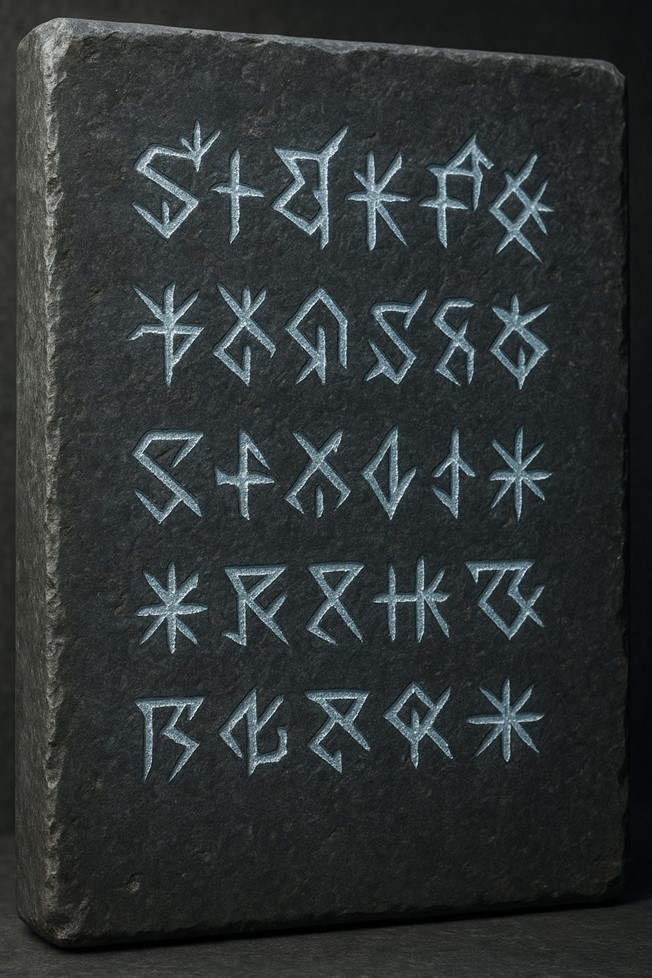
- Script: The written form of Frithglacis consists of angular, crystalline glyphs that resemble ice crystals and frost patterns. These symbols are often etched into surfaces with a freezing touch or inscribed with a shimmering, frost-like ink.
- Source and History: Frithglacis originated from the ancient Glaciar tribes, who developed it to communicate in their frozen, desolate environments. Over millennia, it has evolved to incorporate magical elements that enhance their natural abilities and interactions with the cold.
Sensory Experience:
- Auditory: Hearing Frithglacis feels like being enveloped in a cold, crisp breeze. The language sounds like the crackling of ice and the whispering of the wind, often inducing a sense of chill and clarity in the listener.
- Visual: The written script of Frithglacis appears sharp and crystalline, like frost patterns forming on a window. When signed, the language involves precise, controlled hand movements and body postures that convey the cold and calculated nature of the language.
- Telepathic: When communicated telepathically, Frithglacis conveys not just words but the sensation of extreme cold. It creates a mental image of icy landscapes and freezing temperatures, enhancing the feeling of chill and frost.
Frithglacis is a cold, precise language with magical properties that enhance the ability to manipulate cold and ice. It is structured to be descriptive and focused on the impact of cold, reflecting its connection to frost and ice. Culturally significant to the Glaciar, it is also used by frost mages, arctic explorers, and ice sculptors. Its rarity and unique characteristics make it a specialized and respected language in the world of Saṃsāra. The auditory, visual, and telepathic aspects of Frithglacis all contribute to its distinctive cold sensory experience.
Tags: frithglacis, glaciar, frost magic, osv syntax, sibilant phonetics, crystalline glyphs, sign language, telepathic chill, ice elementals, cold resistance, affix-rich morphology, ritual inscriptions, arctic explorers, ice sculptors, glacial culture, frost metaphors, precision speech
Ceremonial phrases for Frithglacis, grouped into inscriptions, political oaths, and cultural ceremonies. Each includes:
- Frithglacis (as it sounds) — using crisp, icy phonetics with sibilants and fricatives.
- Meaning (translation) — plain meaning in Saṃsāra’s common tongue.
Inscriptions (carved into stone, etched with frost)
- “Ssilth varr’hun glash.”
The cold binds eternity. - “Frisshak ondr’hal isen.”
Ice remembers all names. - “Glaith serros vun thrask.”
Frozen walls guard our souls. - “Issreth falcith draen.”
Frost seals the oath eternal. - “Charriss vrenn’golth icir.”
The shard of ice cuts lies away.
Political Oaths (spoken before leaders, binding words to ice spirits)
- “Isen thralc ven oss.”
By ice, I serve the people. - “Glathross firn’ss vell.”
The frost holds my loyalty firm. - “Shrelith glac’uun thror.”
I swear my breath to the cold law.
Cultural Ceremonies (festivals, rituals, funerary rites)
- “Vrenn’shar isith glissor.”
May the frozen path guide you. - “Issil cran’thros verrai.”
Let the frost bless this union. - “Thren’ssil dravokh isen’thru.”
From ice, we rise; to ice, we return.
Song of Shattered Frost
(as gathered from fragments, translated poorly from a tongue older than the ice itself)
In the elder ages, before the rivers found their paths and before the winds knew their turning, there was only the Breath. The Breath was cold, and from it the first crystals fell. The people who came after called this Breath by many names, but among the Glaciar it is said the Breath spoke with sound sharper than blade and lighter than snow.
And so it was that the First Tongue of Cold was given, not carved nor learned, but breathed through lips by the frost itself. This tongue was called Frithglacis, though the old tablets say it once held a name now lost, written in shards too broken to piece together.
The tale tells of Issreth the Frost-Singer, a child born in silence upon the northernmost ice. She did not cry as other children cried, but when her lips opened, frost bloomed across the air and the stone beneath her cracked with rime. The Glaciar feared her, yet they also honored her, for it was said she had been touched by the Breath of First Cold.
Issreth walked the tundra with bare feet. Wherever she stepped, the snow sang beneath her and the air hummed with sharp syllables none understood. When storms came, she whispered, and the blizzard bent aside. When wolves prowled, she hissed, and their teeth froze in their mouths. Her voice was not hers but the echo of the language itself.
One season, the people begged her: “Bind the river, Issreth, for it floods our homes and steals our fires.” And she spoke. The words cracked from her mouth like glass breaking, and the river froze where it ran, a white serpent turned to stone. The Glaciar praised her, and from that day they began to shape her sounds into their own speech. They copied the hiss, the breath, the split of ice, until they too could command the chill.
But the words came at a cost.
For when Issreth grew older, her breath weakened. The more she taught, the less she held. At last, when she spoke the greatest phrase—to halt the sun’s warmth for a single day—her body shattered like ice struck by hammer. The Glaciar wept, but they said her voice lingered in the air, caught in the frost, and that whoever spoke her language with true intent could touch again the First Breath.
So it was that Frithglacis became not only tongue but ritual. The Glaciar carved it into stone so the words would not melt with time. They signed it with hands so the air would not bear too much burden. They whispered it into each other’s dreams, where the Breath of Cold could pass without sound.
Yet every retelling is fractured. Some say Issreth never lived. Some say she was not a girl but an ice-spirit wearing human form. Others claim the river she froze cracked mountains and swallowed half the tribe. The truth is snow itself—never fixed, always reshaped by wind.
The Moral of the Story: Cold is not enemy nor friend, but mirror. To speak Frithglacis is to remember that power taken from the frost will one day return to it. The tongue does not belong to those who use it; it belongs to the silence of ice, which waits always to reclaim its voice.