
Definition: Ferocilis is a unique language in the TTRPG world, with a primary emphasis on conveying intense aggressivity, ferocity, and battle prowess. It is a language designed to invoke fear, awe, and dominance in its recipients, making it a potent tool for warriors and conquerors. Ferocilis can be expressed through vocalizations, telepathic projections, and primal body language.
Linguistic Attributes and Characteristics:
- Feral Vocalizations: Ferocilis utilizes feral and guttural vocal sounds, reminiscent of snarls, roars, and growls. These sounds are carefully crafted to convey raw aggression and primal power.
- Empowering Telepathy: Advanced users of Ferocilis can telepathically project their intense aggressivity and battle prowess onto others. This telepathic influence allows them to inspire allies and instill fear in their enemies.
- Dominant Body Language: Ferocilis emphasizes assertive and dominant body language, including fierce postures and imposing gestures. These non-verbal cues reinforce the aggressive intent of the language.
Cultural Identity and Users:
- Warrior Clans and Tribes: Ferocilis is often practiced by warrior clans, tribes, and cultures that revere strength and valor. It is passed down through generations, shaping the identity of these warrior societies.
- Battle Leaders and Warlords: Ferocilis is used by battle leaders and warlords to rally their troops and instill a collective sense of aggressive determination on the battlefield.
Rarity, Type, Script, Source, and History:
- Rarity: Ferocilis is relatively rare, as it requires a deep connection to primal instincts and an understanding of the power of aggressivity. Skilled users of Ferocilis are highly regarded in warrior societies.
- Type: Ferocilis is primarily a language of battle and conquest. It is not used for general communication but rather as a tool to inspire, intimidate, and dominate in combat.
- Script: Ferocilis does not rely on a traditional written script. Its emphasis is on vocalizations and non-verbal cues to convey aggressivity.
- Source and History: The origins of Ferocilis are rooted in ancient warrior traditions and battle rituals. Some legends suggest that it was a gift from powerful animal spirits, while others claim it was a language taught by an ancient, fierce war god.
Sensory Experience: Learning and using Ferocilis can be a deeply immersive experience. Practitioners must tap into their primal instincts, embracing their inner ferocity. When Ferocilis is directed at others, they may feel a surge of adrenaline, heightened alertness, and a sense of reverence or fear towards the speaker.
Tags: aggression, ferocity, dominance, intimidation, battle, conquest, primal, warcry, rage, valor, fear, strength, warrior, guttural, intimidation, telepathy, dominance
Inscriptions
- “Grathor velkun” – Strength is eternal.
- “Tharos envek” – Fear bends before fury.
- “Vorath grimnar” – Dominance carves the path.
- “Ravok thirnal” – Ferocity is truth unbroken.
- “Draven korval” – Battle is the forge of honor.
- “Vornak zulthir” – The roar never dies.
- “Kraval dosith” – Blood binds legacy.
- “Thuran vokresh” – In rage, the spirit rises.
- “Zorath grimnel” – The weak are the foundation of the strong.
- “Feralith kroveth” – Death honors the warrior.
- “Morvak thulor” – To fight is to live.
Political Oaths
- “Ithran vorash krul” – I vow to rule with unyielding strength.
- “Varoth grimvak senar” – I promise conquest for my people.
- “Thoran velkor enath” – By ferocity, I hold authority.
- “Dralith korven” – My word cuts sharper than steel.
- “Zaroth thumek” – I swear by the roar of ancestors.
- “Vorak selthur” – My power flows from fury.
- “Grimar tholos” – I bind my reign with dominance.
- “Threvon kulnar” – I swear to bring fear to my foes.
- “Morath zulkor” – In war, I prove my right to lead.
- “Kravon selkor” – My oath is carved in blood.
- “Vorthan grimsel” – I vow to conquer, not to yield.
Cultural Ceremonies
- “Sivrak thalorn” – We gather as warriors eternal.
- “Grimath voren” – Let ferocity bind our kin.
- “Thralok senar” – Rage blesses this rite.
- “Morvak zulith” – Battle sanctifies our spirit.
- “Vorak thirnos” – Strength crowns this day.
- “Drovath grinel” – The roar unites us.
- “Tharos vruven” – We honor life through ferocity.
- “Kraval zorthen” – May blood remember our names.
- “Zulmar thoren” – In fire, our tribe is reborn.
- “Draven korvos” – The clash of steel is sacred.
- “Feralis thuvor” – We rise, untamed and eternal.
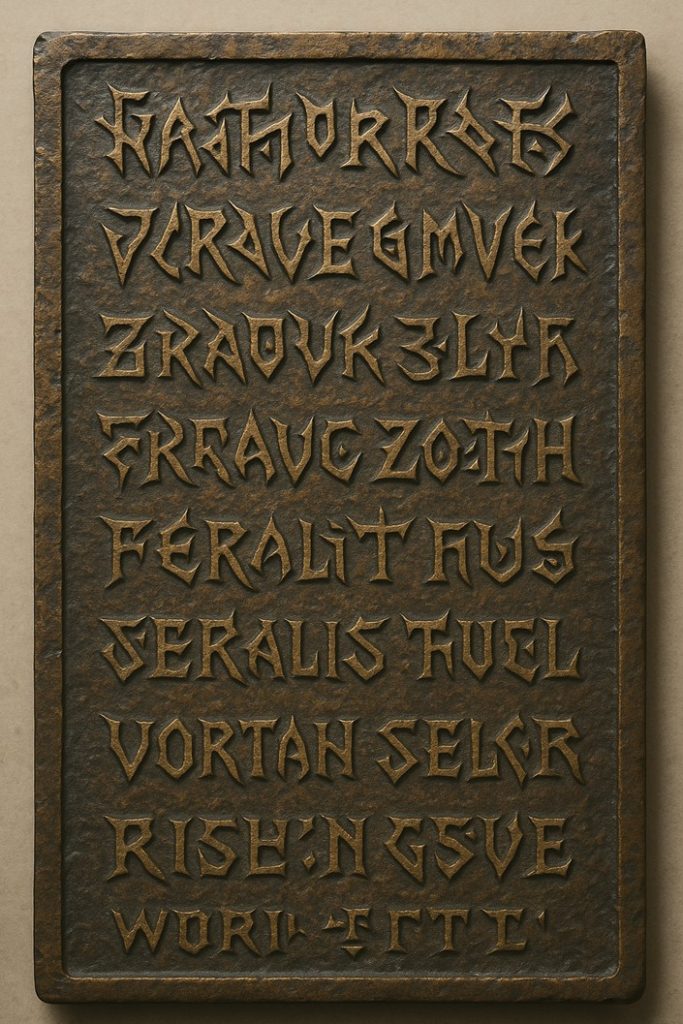
Roar That Shook First Spears
It is told, in carvings worn smooth by centuries and in chants that no two voices speak the same, that long before men had walls or kings, there was a tongue not of peace but of fury. They call it Ferocilis, though the true word is said to be unpronounceable without teeth bared and heart burning. The story that lingers, though broken and scarred with mistranslation, is of how the warriors first received this tongue of battle.
When the world was young and soft, the tribes lived in fear of beasts larger than forests. Claws split the ground, and the sky shook with growls. No shield could withstand, no spear could pierce. The people scattered, their fires swallowed in the night. In those days rose a war-leader, unnamed in most tongues, though some call him Thurak and others Gravos. He did not seek to flee but to meet the beast.
It is said he wandered into the mountains where the storms slept. There, amid caves echoing with thunder, he tore his own hand upon the stone and let his blood fall. From the depths came not silence, but a sound—half roar, half word. The wind of it flayed the skin from trees and broke the peaks, yet he stood. This was the first utterance of Ferocilis, the tongue of fury. It entered him not as knowledge but as instinct, carved into bone and marrow.
When he returned, his voice was changed. His growl made spears tremble. His roar stilled the beasts themselves, who crouched low as if struck with fear. He taught his people—not gently, but by force of will. They learned that Ferocilis was not spoken as other tongues, but shouted from the gut, carried on rage, given shape by dominance. Where once they scattered, they now gathered, for the roar of one was the roar of all.
The story says that with this language, the tribes fought the beasts and drove them into shadow. They painted their frenzies upon stone, claws and spirals, symbols sharp as fangs. They learned that Ferocilis was not merely a weapon of sound but a binding of spirit: when a leader spoke it, the tribe surged with strength; when an enemy heard it, their knees quaked.
But the tale is crooked, for later ages tell that Ferocilis brought not only unity but endless war. Chiefs vied with one another, their roars clashing louder than their blades. Battles raged not for food or need but for dominance, until whole valleys rang with Ferocilis cries that shattered harmony. Some say the gods themselves silenced many clans, cursing their tongues to wither so that Ferocilis would not consume the world entire.
And still, in broken verses, it is told: the language did not die. It waits, slumbering in the throats of warriors, rising whenever blood is spilled and courage demanded. Some claim the fiercest warlords still speak it without knowing, their words carrying the same primal fear that once drove beasts into the dark. Others whisper that in the heat of battle, Ferocilis speaks through men, not the other way around.
Moral of the Story: Ferocity is a gift that can unite or destroy; the roar that terrifies the foe may also consume the one who speaks it.