
Magical Powers: Felithara possesses unique magical properties that resonate with the emotions of the speaker and the listener. When spoken or signed with genuine positive emotions, it can amplify the effects of enchantment spells and charms, enhancing the caster’s ability to inspire, heal, or protect.
Linguistic Attributes and Characteristics:
- Phonetics: Felithara is a melodious language characterized by soft, flowing consonants and harmonious vowel sequences. The sounds are light and airy, often compared to the tinkling of small bells or the gentle rustling of leaves.
- Syntax and Structure: The language uses a Subject-Verb-Object (SVO) structure, making it relatively simple to learn. It heavily employs reduplication (repeating parts of words to change meaning or add emphasis) and has a rich system of affixes to modify words and convey nuances.
- Grammar: Felithara’s grammar emphasizes mood and emotion. It has a unique set of verbal moods that express the speaker’s emotional state, including joy, hope, and serenity. Adjectives and adverbs are plentiful and often combined to create nuanced descriptions.
Cultural Identity and Users:
- Cultural Significance: Felithara is primarily spoken by the Luminari, a race of light-dwelling beings known for their joyful and optimistic nature. They believe that the language itself is a gift from the gods of light and joy, and they use it in daily life, rituals, and ceremonies.
- Users: While it is the native language of the Luminari, Felithara is also learned by healers, bards, and diplomats from other species who value its positive influence and enchanting qualities. It is spoken across various regions but is especially prevalent in areas with high magical activity and light-based magic.
Rarity, Type, Script, Source, and History:
- Rarity: Felithara is moderately rare, known mainly to those who have a connection with light magic or who seek its cheerful influence.
- Type: It is both a spoken and sign language, with telepathic elements for those skilled in mental magic.
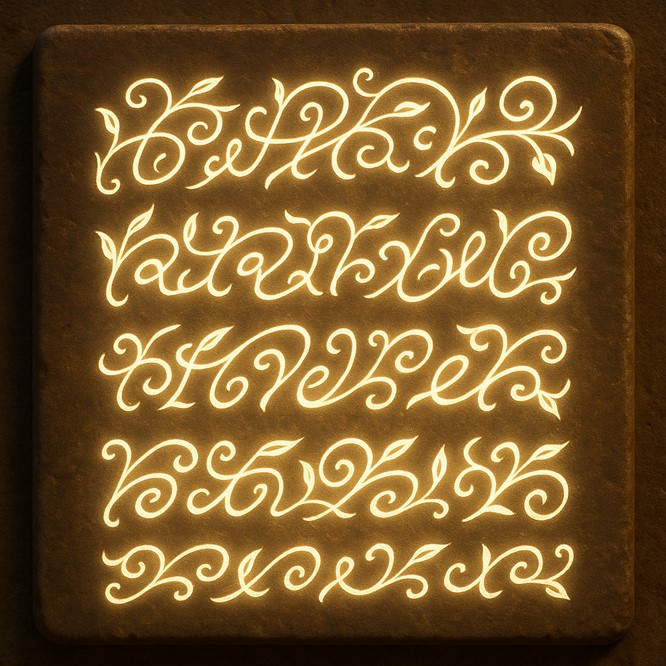
- Script: The written form of Felithara is composed of elegant, flowing glyphs that resemble interconnected vines and flowers. These glyphs are often illuminated with light magic, making written texts glow softly.
- Source and History: Felithara originated from the ancient Luminari civilization, who were said to have received it from the Lightbringers, celestial beings of joy and hope. It has evolved over millennia but retains its core elements of positivity and enchantment.
Sensory Experience:
- Auditory: Hearing Felithara is a pleasant experience. The language sounds like a gentle melody, often lifting the spirits of those who listen. In its spoken form, it is accompanied by musical tones that enhance its cheerful effect.
- Visual: The written glyphs of Felithara are a visual delight, often glowing with a soft, radiant light. When signed, the language involves fluid, graceful movements that are almost dance-like.
- Telepathic: When communicated telepathically, Felithara conveys not just the words but the emotions behind them. It creates a shared mental space filled with warmth and light, often inducing feelings of happiness and calm in both sender and receiver.
Felithara is a cheerful, melodious language with magical properties that enhance positive emotions and enchantments. It is structured with a focus on mood and emotion, making it unique among the languages of Saṃsāra. Culturally significant to the Luminari, it is also appreciated by healers, bards, and diplomats. Its written form is visually enchanting, and its spoken form is akin to a gentle melody, making it a joy to experience in any form.
Tags: felithara, luminari, light magic, svo syntax, melodious phonetics, glowing glyphs, enchantment amplification, joy language, healing speech, protective charms, bards, healers, diplomats, divine gift, reduplication, emotional moods, radiant script
Ceremonial phrase set for Felithara, reflecting its melodic, luminous qualities. Each entry contains the spoken phrase (as it sounds) and its meaning in Saṃsāra’s common tongue.
Inscriptions (glowing glyphs carved into stone, vines, or radiant tablets)
- “Liora venari silen.” – Light protects the heart.
- “Serelis tharae vannor.” – Joy flows eternal.
- “Aeliri lumor thessan.” – Hope blossoms in shadow.
- “Velorae ithil soren.” – Harmony binds us together.
- “Thalirae ennor vessa.” – From light, truth is born.
- “Mirenna veyra lumiel.” – Trust shines brighter than steel.
- “Aurelis thorien nael.” – Courage is the shield of dawn.
- “Sarenel velis lumora.” – Friendship outlives the dark.
- “Lioraeth ven solari.” – The heart carries the sun.
- “Thessara lumir velor.” – Peace carves eternal paths.
- “Elirae veyna saren.” – Love endures beyond time.
Political Oaths (spoken in radiant councils, treaties, and vows of peace)
- “Velirae lumis thoran.” – I vow to serve the light.
- “Aurenna veyra solis.” – By joy, I bind my oath.
- “Thalirae ven lumiel.” – I speak with the voice of truth.
- “Sarenis veyraen noril.” – My heart stands open to peace.
- “Miralis solvenn aureth.” – I guard unity with light.
- “Elyra vorrin thessael.” – By harmony, I remain steadfast.
- “Thessiel venor lumirae.” – No darkness shall break my word.
- “Auriel veyran thoril.” – I carry trust as my banner.
- “Lioren thessae solira.” – My promise glows in every breath.
- “Veliss auriel vannor.” – Light seals my loyalty.
- “Serelis thalor veyna.” – Joy crowns my service.
Cultural Ceremonies (weddings, funerals, celebrations, healing rites)
- “Aurenae solir veyra.” – May joy bless this union.
- “Thessirae velor lumiel.” – Love is the eternal flame.
- “Elorin veyraen solis.” – May harmony cradle the child.
- “Lioraeth thalen veyna.” – Let the heart shine in remembrance.
- “Serelis vannor thalirae.” – May hope rise with every dawn.
- “Velirith solara veyna.” – Peace wraps us in its glow.
- “Aurith venrae liorael.” – Courage flows with love.
- “Thessira lumor veyna.” – Joy restores the weary spirit.
- “Aeliraen ven solor.” – May light lead every step.
- “Elyra veyna thaliss.” – Together, we shine brighter.
- “Miralis solvenn auriel.” – In love and light, we endure.
Song of Felithara and Light That Spoke
In the time before the counting of moons, when shadows walked as men and men were but whispers of light, there was said to be a tongue given by the Bright Ones, those who dwelt beyond the veil of dawn. That tongue was named Felithara, though some fragments claim it was once called Felithera or Phalithar, for the older the parchment, the less steady the hand that wrote. The story that remains, though cracked as a vase and patched with resin of other tellings, speaks thus:
It is told that the Luminari were not always dwellers in joy. In the days of Stone-Hunger, they crept beneath hills and wore faces pale with want. They quarreled with one another, each seeking the dim flame of their own survival. The Bright Ones, who looked upon the world with sorrow, descended not as forms but as voices. Their voices were rivers of sound, and when the Luminari opened their ears, they heard not only words but warmth.
The first of the Luminari to understand was Serelis, who was neither queen nor priest but a weaver of nets. When she repeated the words of the Bright Ones, the air around her seemed to soften; quarrels ceased, and her neighbors’ eyes brightened as though filled with dawn. She taught them to repeat what she had heard, though her tongue stumbled. Thus began Felithara—the tongue of bonds, of joy, of gentle power.
But the tale does not end with harmony alone. For in the old fragments, there is a darker echo: the jealousy of Torveth, a chieftain who sought dominion. He too spoke Felithara, but his heart held hunger, not warmth. Though the syllables were sweet, the magic bent and cracked. His words, instead of weaving comfort, made bonds that were chains, and his followers loved him not, but obeyed in trembling. When Torveth stretched his hand to claim the whole people, his voice shattered like glass struck by iron. The notes of Felithara turned against him, and silence swallowed his name. Some say he was unmade by his own false tones; others say he yet wanders, mute and hollow.
The story tells that the Luminari learned then the lesson that has never faded: Felithara is not a tool to be wielded, but a mirror of the heart. To speak it with true joy is to heal and unite, but to speak it with hunger or cruelty is to summon only emptiness.
So the people carved the words into stone, glowing glyphs like flowers of light, so all might remember. They sang Felithara in their births, their unions, their farewells, for they knew that each sound carried the weight of the speaker’s soul. And in times when grief threatened to drown them, they whispered Felithara together, and the shadows fled.
Thus the tale has been told and retold, crumbling at the edges, reshaped by the tongues of many, but always carrying the same dawn-born seed:
Moral: Felithara is not magic by the sound alone, but by the truth of the heart that speaks it. To wield joy falsely is to be broken, but to offer joy sincerely is to bring light eternal.