
Definition: Eudovia is a unique language in the world with an emphasis on benevolence. It is a language that promotes kindness, goodwill, and compassion, fostering understanding and empathy among its speakers.
Magical Powers: Yes, Eudovia possesses magical powers. When spoken with genuine benevolence and a sincere desire to do good, the language can radiate a soothing aura that calms emotions, heals emotional wounds, and inspires acts of kindness in those who hear it.
Linguistic Attributes and Characteristics:
- Harmonious Vocalization: Eudovia is characterized by its harmonious vocal tones that resonate with positive energy. The words seem to carry a gentle melody that elevates the spirits of both the speaker and the listener.
- Healing Intention: Eudovia incorporates words and phrases designed to promote emotional healing and comfort. It can ease emotional pain and instill a sense of hope and positivity.
- Empowering Vocabulary: The language uses empowering words and encouragement to uplift others and help them overcome challenges.
- Non-violent Communication: Eudovia discourages the use of harsh or aggressive language. Instead, it promotes peaceful communication and conflict resolution.
Structure: Eudovia’s structure is based on simplicity and clarity. It avoids ambiguity and uses straightforward expressions that convey kindness and goodwill.
Cultural Identity and Usage: Eudovia is not tied to a specific cultural identity or group. Instead, it is a language valued by individuals and communities that prioritize benevolence, empathy, and altruism.
Rarity and Type: Eudovia is relatively rare, known only to those who actively seek to promote benevolence and compassion. It is not commonly taught or spoken in mainstream societies, making it a language cherished by a select few.
Script and Source: Eudovia has a written script with flowing and graceful characters, mirroring the language’s emphasis on kindness and harmony. However, its true power lies in the spoken or telepathic form.
History: The origins of Eudovia trace back to an ancient society or wise beings who understood the value of benevolence in fostering peaceful coexistence. It is said to have been gifted by benevolent spirits or enlightened individuals who sought to spread kindness and goodwill in the world.
Sensory Experience: Encountering Eudovia is a profoundly uplifting and healing experience. When spoken, the language creates a soothing and calming aura that envelops the listener in a warm embrace of benevolence. The words seem to resonate with positive energy, touching the hearts of the participants and inspiring feelings of compassion and empathy. The sensory experience is akin to basking in a pool of gentle light and kindness, leaving the participants with a sense of emotional healing and a desire to perform acts of benevolence and kindness towards others.
In the world, Eudovia could serve as a powerful tool for characters seeking to heal emotional wounds, resolve conflicts through peaceful means, and inspire others to perform selfless acts of kindness. It could be a language sought after by healers, diplomats, and leaders who understand the transformative power of benevolence in building harmonious relationships and fostering a better world.
Tags: benevolence, kindness, compassion, empathy, healing, harmony, goodwill, peace, encouragement, altruism, soothing, uplifting, clarity, nonviolence, positivity, inspiration, emotional-healing
Inscriptions (11 ceremonial phrases)
- “Eudo’ven thalor kai” – May kindness guard this place.
- “Veluun eudra morai” – Here rests harmony eternal.
- “Kairos eudo’ren thros” – Compassion is carved in stone.
- “Thalvor eudo’ven veluun” – Let peace dwell in these walls.
- “Eudovia kairos venith” – May benevolence shine here always.
- “Syr’en eudo’kai thral” – Love speaks through this mark.
- “Velthros eudo’ren kairos” – Hope breathes within these stones.
- “Kai’drel eudo’ven morvos” – May goodness endure beyond time.
- “Throskai eudo’ren veluun” – Harmony echoes in this ground.
- “Eudovia kai’thros venra” – May kindness become the shield eternal.
- “Veluun eudo’kairos thalvor” – Here flows the light of compassion.
Political Oaths (11 ceremonial phrases)
- “Eudo’kairos veluun thral” – I vow in kindness to serve.
- “Veluun eudo’ren kairos” – Compassion binds me to this path.
- “Thalvor eudovia kai’neth” – My oath is sealed in goodwill.
- “Kairos eudo’ven throskai” – I pledge to honor with harmony.
- “Velthros eudovia morai” – Benevolence is my covenant.
- “Syr’en eudo’kai veluun” – May peace guide my duty.
- “Kai’dros eudo’ren venith” – I swear to protect with kindness.
- “Eudo’kairos thral morvos” – May compassion undo me if I betray.
- “Veluun eudra kairos thalvor” – My loyalty rests in benevolence.
- “Throskai eudovia veluun” – I bind my honor to peace.
- “Kairos eudo’ven mor’drel” – Kindness is my eternal bond.
Cultural Ceremonies (11 ceremonial phrases)
- “Eudo’kairos veluun throskai” – Together we rise in kindness.
- “Veluun eudo’ren morai” – In harmony, we are as one.
- “Thalvor eudovia kairos” – May compassion guide our gathering.
- “Kairos eudo’ven velthros” – Benevolence unites us this day.
- “Eudra kairos venith morvos” – Let kindness protect us always.
- “Syr’en eudo’kai veluun thral” – In peace, our voices join.
- “Veluun eudovia throskai” – May goodwill shine upon us all.
- “Kai’drel eudo’ven morai” – We bind ourselves in benevolence.
- “Throskai eudo’ren veluun” – Harmony blesses our steps.
- “Eudo’kairos venith thalvor” – Kindness is our eternal guide.
- “Veluun eudovia kairos” – In compassion, we celebrate life.
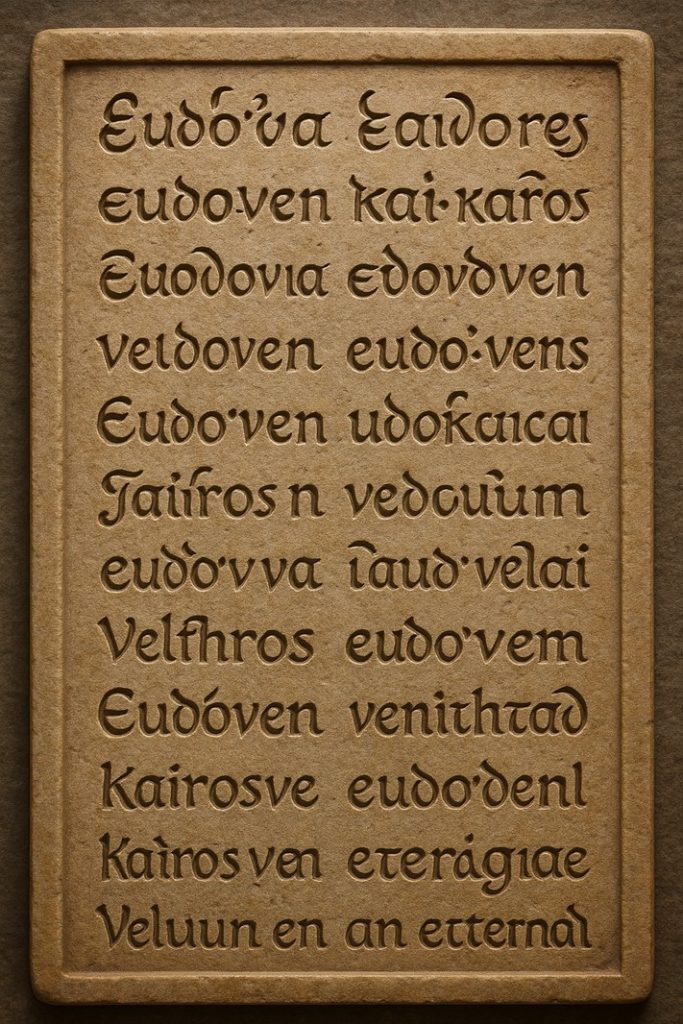
Gentle Tongue of Eudovia
In the distant past, before towers of brass rose from the earth and before the oceans were mapped with ink, there existed a voice unlike any other. It was not forged in anger nor sharpened for deceit, but born from a whisper of kindness carried by winds that sought to heal. This was Eudovia, the tongue of benevolence, whose syllables were like rivers of light flowing into wounded hearts.
The fragments of its tale tell that Eudovia was first spoken by a wandering people who had suffered greatly. Their homes lost, their kin scattered, they walked the barren lands in silence until despair nearly silenced them forever. One among them, a child with eyes bright as dawn, lifted her voice. The words she uttered were soft and strange, not of their tongue, yet all who heard them felt peace in their bones. Their hunger dulled, their sorrow eased, and for the first time in many moons, they embraced one another. The people said the words glowed faintly upon the air, and thus they named this new speech Eudovia—the gift of goodwill.
As the years passed, the language spread not by conquest but by compassion. Healers spoke Eudovia over the sick, and their suffering lessened. Farmers whispered it to the soil, and the fields grew kinder seasons. Warriors, weary of endless blood, laid down their arms when words of Eudovia touched them, for to hear its tones was to be reminded of the bonds that tie all living things.
One broken tablet describes the Gathering of Lights, when villages across the land came together in a time of famine. Instead of fighting for what little remained, they spoke Eudovia in unison beneath the stars. Witnesses claimed the heavens brightened, and gentle rain fell, nourishing the crops. The record says, “By words of kindness, the earth itself remembered mercy.”
Yet even this language bore warnings. Some who learned it sought to twist its power, not with malice, but with pride. They believed themselves saviors, forcing others to act with kindness through compulsion rather than compassion. The tale of the Silver Priest tells of one who spoke Eudovia so strongly that entire towns obeyed him, their wills softened until they forgot their own desires. In the end, his people grew hollow, unable to choose good for themselves. When he passed, their kindness crumbled, for it had not been born within them but chained upon them. The ruin of that place became a reminder that even benevolence, when wielded without humility, can smother rather than heal.
Still, the language endured. Carvings of Eudovia, flowing like water and curling like vines, can be found upon old stones in forgotten gardens, where flowers yet bloom though no hand tends them. Songs of Eudovia are said to still drift across mountain valleys, carried by shepherds who hum to calm their flocks. Even today, when one stranger comforts another in their grief without knowing how, some whisper that Eudovia lingers still, guiding tongues and hearts alike.
The translations we have are fractured, stitched together by scribes who sought to preserve a truth greater than their own words. Though the original meanings are uncertain, the essence remains: Eudovia is the speech of goodwill, a gift that softens grief and calls forth light in the darkest places.
Moral of the story: True benevolence cannot be forced upon others—it must rise freely from the heart, for only then does kindness endure beyond the moment it is spoken.