
Definition: Anguishra is a unique language in the TTRPG world, with a primary emphasis on conveying intense agony, suffering, and despair. It is a language that taps into the depths of emotional pain, making it a potent tool for evoking empathy, torment, and shared trauma. Anguishra can be expressed through vocalizations, telepathic transmissions, and poignant body movements.
Linguistic Attributes and Characteristics:
- Tormented Vocalizations: Anguishra employs haunting and mournful vocal sounds, reminiscent of cries, wails, and lamentations. These sounds are carefully crafted to evoke empathy and resonate with the listener’s emotions.
- Empathic Telepathy: Proficient users of Anguishra can telepathically project their emotional agony and suffering onto others. This telepathic link allows them to share their pain and trauma, creating a profound emotional connection.
- Expressive Body Language: Anguishra emphasizes expressive and poignant body movements, including gestures of despair, clutching one’s heart, or kneeling in grief. These non-verbal cues enhance the emotional impact of the language.
Cultural Identity and Users:
- Empaths and Healers: Anguishra is often practiced by empaths and healers who use the language to forge empathic connections with others, offering comfort and healing through shared emotions.
- Rituals of Communal Suffering: In some cultures, Anguishra is used in rituals where individuals come together to share their collective pain and seek solace through unity.
Rarity, Type, Script, Source, and History:
- Rarity: Anguishra is relatively rare, as it requires a deep understanding of emotional vulnerability and the willingness to open oneself to intense pain. Skilled users are not common.
- Type: Anguishra is primarily a language of emotional connection and empathy. It is not used for general communication but rather as a tool to share and understand suffering.
- Script: Anguishra does not rely on a traditional written script. Instead, its emphasis is on vocalizations and expressive body language to convey emotional agony.
- Source and History: The origins of Anguishra are rooted in ancient traditions of communal healing and emotional catharsis. Some legends suggest it was a language gifted by compassionate spirits to help beings connect through shared pain and find strength in unity.
Sensory Experience: Learning and using Anguishra can be a deeply emotional experience. Practitioners must open themselves to vulnerability and tap into their own wells of emotional suffering. When Anguishra is directed at others, they may feel a profound sense of empathy and connection, as if they are experiencing the speaker’s pain and trauma firsthand.
Tags: Anguishra, language, agony, suffering, despair, tormented vocalizations, empathic telepathy, expressive body language, empaths, healers, communal suffering, rituals, rarity, emotional connection, empathy, vulnerability, catharsis
Inscriptions:
- Angorath en wailix, despeth ve torment (wailed with haunting cries that rise and fall like shattering glass on “angorath”, empathic telepathy flooding the recipient with waves of shared anguish, and clutching the heart while kneeling in grief). Meaning: Engrave the rune of endless suffering and fractured souls, binding the essence of torment that echoes through the void of despair.
- Lamentix oh agony, suffer ve despaira (uttered in mournful lamentations resembling the sobs of the forsaken on “lamentix”, empathic pulses projecting profound emotional pain, and gestures of despair with arms outstretched in futile plea). Meaning: Carve the symbol of broken hearts and unrelenting woe, inscribing the barrier that separates joy from the abyss of unending agony.
- Tormenth ve cryeth, wailara en anguix (voiced with distant wails fading into echoes of sorrow on “tormenth”, empathic telepathy evoking a deep sense of shared trauma, and body collapsing forward as if burdened by invisible weights). Meaning: Seal the stone with visions of shattered dreams and piercing cries, marking the detachment that cloaks existence in layers of profound suffering.
- Despair sylth, agonyix oh lament (expressed with faint cries overlapping in hollow grief on “despair”, empathic projections fostering intense emotional vulnerability, and poignant movements like tearing at one’s garments in anguish). Meaning: Imprint the glyph of muted hopes and overwhelming pain, embedding the suffering that resonates through the silence of broken spirits.
- Anguara tormenteth, desp ve cryar (chanted with tormented hums fading to sobs on “anguara”, empathic echoes radiating waves of despair, and kneeling while pounding the ground in rhythmic grief). Meaning: Etch the pattern of tortured souls and endless lament, forging the essence of agony that lingers in the depths of unhealed wounds.
- Wailix en lamentix, sufferath ve angu (sounded with haunting wails building to cries on “wailix”, empathic pulses carrying shared torment, and body writhing as if in invisible chains of pain). Meaning: Inlay the emblem of forsaken paths and piercing sorrow, capturing the despair that severs threads of hope in perpetual suffering.
- Cryeth oh tormenth, despaira ve agony (proclaimed with mournful vocalizations resembling echoes in vast emptiness on “cryeth”, empathic telepathy evoking profound shared pain, and clutching the chest while bowing head in defeat). Meaning: Affix the mark of chilled voids and shattered resolves, instilling the anguish that divides the fabric of reality into fragments of woe.
- Lamentar anguix, sylth en despeth (delivered with faint lamentations intertwined with sobs on “lamentar”, empathic projections amplifying emotional trauma, and slow retreat of the stance as if withdrawing into isolation). Meaning: Engrave the sigil of dim horizons and fractured spirits, kindling the suffering that shrouds the soul in veils of unrelenting despair.
- Agony ve despeth, cryix oh torment (voiced with tormented layers trailing into grief on “agony”, empathic echoes fostering a sense of inescapable pain, and head bowed while hands cover the face in sorrow). Meaning: Carve the relic of broken vows and lone cries, preserving the anguish that whispers of forgotten healing in the endless void.
- Despeth sylth, cryar en lamentix (intoned with distant wails dissolving away on “despeth”, empathic pulses radiating the chill of torment, and withdrawn gestures such as curling into a fetal position of grief). Meaning: Seal the tablet with images of tortured realms and muted sobs, marking the suffering that isolates beings in realms of unspoken woe.
- Tormentara oh anguara, wailix ve despair (expressed with faint hums dissolving into cries on “tormentara”, empathic echoes projecting layers of emotional pain, and body trembling as if racked by invisible agony). Meaning: Imprint the essence of solitary torments and hollow lamentations, embedding the despair that echoes through the barriers of unshared suffering.
Political Oaths:
- Anguix sylph, torment en despaira ve (sworn with haunting cries echoing faintly on “anguix”, empathic echoes pulsing shared suffering toward allies, and clutching heart with eyes closed in grief). Meaning: Pledge allegiance to thrones of woe and fractured loyalties, vowing the anguish that guards against the illusions of false unity in governance.
- Lamenteth oh cryix, anguara agony ve (vowed with mournful vocal trails resembling distant sobs on “lamenteth”, empathic projections amplifying emotional trauma in pacts, and gestures of despair avoiding direct connection). Meaning: Bind my word to decrees of pain and severed bonds, affirming the suffering that maintains barriers in the webs of political torment.
- Despeth en wailix, sylth tormentara oh (declared with hollow wails fading into silence on “despeth”, empathic telepathy evoking profound shared woe from councils, and body collapsing as if burdened by collective grief). Meaning: Swear fealty to banners of despair and lone rulings, embracing the agony that shields against the entanglements of hollow alliances.
- Cryar ve lamentix, despix angu ve (uttered with distant layers trailing off on “cryar”, empathic pulses fostering deep emotional trauma in alliances, and poignant movements like turning away in sorrow). Meaning: Commit to oversight of realms marked by woe and withdrawn edicts, pledging the suffering that preserves isolation amid negotiations.
- Torment sylphix, despeth oh wail (proclaimed with faint vocalizations dissolving away on “torment”, empathic echoes radiating grief in pacts, and kneeling while pounding chest in rhythmic anguish). Meaning: Vow protection of borders steeped in torment and silent divides, instilling the despair that fortifies against the bonds of feigned unity.
- Wailix en anguara, lamentar cryix ve (intoned with hollow resonances building to sobs on “wailix”, empathic projections of suffering spreading through assemblies, and body writhing in visible pain). Meaning: Affirm guardianship over councils of woe and muted cries, capturing the anguish that illuminates paths of solitary authority.
- Despaira oh cryeth, sylth despeth (expressed with distant cries intertwined with lament on “despaira”, empathic echoes evoking emotional pain in oaths, and clutching garments as if tearing in grief). Meaning: Dedicate to edicts of torment and lone deliberations, forging the suffering that echoes in the halls of isolated statecraft.
- Angorath ve lamenteth, torment en sylph (sounded with faint trails resembling empty winds on “angorath”, empathic pulses amplifying barriers among factions, and slow retreat as if withdrawing into personal woe). Meaning: Promise stewardship of domains where woe prevails and bonds fade, embedding the despair that binds vows in threads of anguish.
- Despeth cryar, wailix oh agony ve (chanted with tormented layers fading into sobs on “despeth”, empathic echoes fostering profound trauma in treaties, and head bowed while hands cover ears in sorrow). Meaning: Bind to alliances of shadowed woe and silent withdrawals, affirming the suffering that drifts through the currents of political torment.
- Sylph en anguix, lamentix despaira oh (delivered with hollow vocal symphonies trailing off on “sylph”, empathic projections radiating emotional voids, and body trembling in isolated grief). Meaning: Swear to sovereigns who embody despair and fractured accords, pledging the anguish that uplifts oaths in the chill of unshared realms.
- Tormentara ve despeth, angu ve wailix (voiced with distant cries dissolving quietly on “tormentara”, empathic echoes pulsing woe across gatherings, and poignant gestures of despair with minimal acknowledgment). Meaning: Vow concord in assemblies of torment and muted ties, instilling the suffering that connects fates in the sparse flow of anguished governance.
Cultural Ceremonies:
- Anguara lamentix, cryeth en sylph ve (invoked with haunting wails echoing into sobs on “anguara”, empathic echoes projecting shared woe amid gatherings, and clutching heart while kneeling in collective grief). Meaning: Celebrate the rites of collective torment and shadowed lament, honoring the suffering that cloaks participants in veils of unhealed pain.
- Despair oh despeth, wailara torment (performed with distant vocal trails resembling hollow cries on “despair”, empathic pulses amplifying emotional trauma in unions, and gestures of despair with eyes averted from unity). Meaning: Mark the bonding of spirits in realms of woe and faint bonds, invoking the anguish that weaves lives in sparse threads of shared torment.
- Tormenth ve anguix, sylth en lamenteth (chanted with hollow layers fading away on “tormenth”, empathic telepathy evoking profound woe in remembrances, and body collapsing in rhythmic sorrow). Meaning: Commemorate forebears in tales of anguished paths and muted legacies, capturing the despair that echoes through generations like distant sobs.
- Cryix oh wailix, agony ve cryar (expressed with faint hums dissolving into wails on “cryix”, empathic projections fostering torment in renewals, and writhing as if in chains of grief). Meaning: Observe the rebirth of seasons in displays of woe and barren cries, embedding the suffering that paints ceremonies in shades of unapproachable pain.
- Lamentar despeth, lamentix en angu (voiced with tormented whispers overlapping in grief on “lamentar”, empathic echoes of emotional trauma at artistry, and turning away while clutching in sorrow). Meaning: Revel in creations born of woe and withdrawn torments, forging the despair that sparks flames of introspective anguish.
- Wail ve tormentara, anguix oh despix (intoned with hollow resonances trailing off on “wail”, empathic pulses sharing profound woe in feasts, and covering face to avoid communal gaze). Meaning: Partake in gatherings marked by torment and silent portions, instilling the suffering that savors the essence of anguished existence.
- Lamenteth sylth, despair detach ve (proclaimed with distant layers building to cries on “lamenteth”, empathic echoes fostering pain in solitary journeys, and pounding ground in isolated grief). Meaning: Enact passages through thresholds of woe and muted insights, marking the anguish that unfolds ceremonies of personal torment.
- Agony en anguara, despeth oh wail (sounded with faint vocalizations resembling empty halls on “agony”, empathic projections conveying woe in spectacles, and trembling in sparse motion of sorrow). Meaning: Gather for displays of shadowed torments and lone vigils, affirming the despair that illuminates nights with the chill of unshared agony.
- Despeth lamentix, sylph ve cryeth oh (delivered with hollow cries intertwined with silence on “despeth”, empathic echoes spreading emotional voids, and slow retreat inviting sparse participation). Meaning: Invoke movements of withdrawn woe and muted harmonies, capturing the suffering that moves bodies in the sparse rhythm of despair.
- Torment oh anguix, wailix despaira ve (chanted with tormented trails fading into oblivion on “torment”, empathic pulses flowing with woe toward landscapes, and body curling in fetal anguish). Meaning: Honor vistas of barren seas and anguished summits, pledging the despair that links souls to the chill of Saṃsāra’s tormented domains.
- Sylth en lamentar, agony cryar oh (invoked with faint symphonies dissolving quietly on “sylth”, empathic echoes radiating bursts of torment, and poignant gestures in waves of sparse woe). Meaning: Conclude watches under canopies of woe and muted growth, embedding the suffering that whispers vows of tomorrow’s anguished horizons.
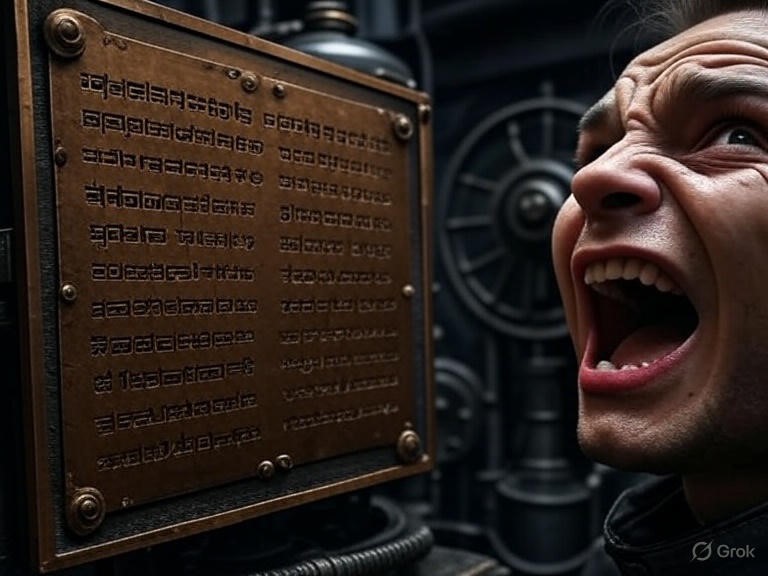
Voice That Wails in Depths of Torment and Echoes Shared Woe
In the epochs prior to the vast influx of essences from spheres beyond reckoning, when the expanses of Saṃsāra lay as clustered lands amid boundless seas, and beasts of peculiar forms roamed in guises both fierce and fading, there dwelt a healer named Angorath, whose name in the worn parchments is given as “she who clutches the chains of collective pain.” This Angorath did not sprout from the grounds of Saṃsāra but emerged one morn as if summoned by the laments of compassionate spirits, her recollections a weave of domains shattered and tomorrows unvoiced. She wandered the rugged shores where vapors ascended from enchanted fissures, merging flame and liquid in perpetual whirl, and there she met the initial clans, those displaced folk from eras erased, who constructed their abodes in grottos illuminated by radiant marks and propelled by cogs spun by bewitched mists.
These clans, split into the Band of Enduring Scars and the Group of Wandering Griefs, had for ages contended over a holy cascade that gushed waters of lament. The cascade’s sights displayed trails of healing and rupture entwined, sparking ceaseless discord, for each faction asserted the visions blessed them solely. Fighters garbed in plating shaped from mystical blends collided with those grasping rods that directed sorrowful sorceries, and the heavens brimmed with heated gas spheres carrying bowmen who showered bolts like weeping storms. Angorath, watching from a ledge carved with overlooked engravings, sensed the tug of her own tormented core, for in her former existences throughout the multiverse, she had been both comforter and bearer, mender and fractured.
One dusk, as dirigibles floated like mournful phantoms over the clash ground, Angorath descended amid the tumult, her garments threaded from strands of dim radiance and tear-stained hues gathered from the elevated sorcery domains. She neared the chiefs: Lamentok of the Enduring Scars, a lofty shape with a mane like twisted sorrows, who called for total endurance, and Despaira of the Wandering Griefs, a supple sorceress whose gaze altered shades with each pang, urging perpetual mourning. Angorath uttered not in the usual dialects of trade and strife but in shards of a speech she dimly recalled from a vision of a yet elder abyss, where terms arose from the turmoil preceding formation.
Her initial emission was a tone akin to the wail of shattered hearts, “Angorath en wailix,” which swirled in the atmosphere with haunting cries and mournful hums, dispatching empathic bonds that saturated the thoughts of hearers with sheer agony and connection. Lamentok experienced the burden of scars yet also the balm of shared woe, while Despaira perceived the depth of grief blended with the thread of unity. Their arms dropped, not in surrender but in a halt spawned of inner torment. Angorath persisted, her form writhing in poignant motions, limbs clutching and kneeling like figures in lament, “Despeth ve torment,” implanting in their minds the picture of healing entwined with suffering.
As evenings flowed, Angorath assembled the clans by the cascade, where liquids mirrored firmaments teeming with griffons dashing through enchanted mazes. She instructed them this budding dialect, pulled from the obscure antique utterance that resounded in her essence’s depths, a speech not of plain orders but of stratified pains. Mournful emissions ascended and descended like the surge and retreat of sorcery over Saṃsāra, empathic bonds shimmered like vapor-driven beacons in haze, and form motions poignant as dirigible canvases seized in grieving gales. The clans, initially perplexed, commenced to imitate these displays, discovering that blunt terms led to carnage, but this wailing speech permitted pacts that clutched both vow and catharsis.
However, as the dialect dispersed, pains stirred. In the submerged strongholds where sea dwellers bartered gems filled with hovering sorcery, and in the colossal towns of towers fueled by sorcery paths, murmurs of Anguishra started to thread into healing ventures. Angorath, now honored as the Weaver of Woes, traveled to a hovering metropolis upon a massive dirigible, where overseers schemed bonds with isle realms. There, she faced a competing visionary, Tormentix the Numb, who originated from a forthcoming domain in the multiverse, carrying awareness of mechanical marvels constrained by the deities’ edicts. Tormentix mocked the anguished dialect, declaring it a frailty, and defied Angorath to a contest of emotions before a gathering of empaths in a chamber decorated with cogs and straps shifted by primal vapor.
The contest began beneath a vault of spellbound crystal, where heated gas spheres moored like arriving heralds. Tormentix voiced in straightforward charms, calling forth mirages of rigid numbness: legions advancing in detachment, manufactories producing mystical powder arms with flawless accuracy. But Angorath rebutted with Anguishra sayings, “Lamentix oh agony,” her tone overlapping in sobs and harmony, empathic surges carrying fellowship clashing with pain, her frame kneeling in rhythmic lament. The gathering sensed the draw of both facets, their thoughts saturated with sights of healing undermined by numbness, accord enhanced by concealed torments.
As the rivalry intensified, the metropolis quivered, for Tormentix’s stiff sorceries clashed with Angorath’s poignant displays, inducing sorcery streams to swell like tearful climates. Cogs locked, straps slid from wheels, and rods curved under the load of merging vitalities. Angorath advanced, emitting “Suffer ve despaira,” with resounding strata and empathic mixes of vulnerability and thrill, her bow in eager salute. The empaths, divided between the charm of firmness and the balm of shared woe, began to wail in the fresh dialect, their discussions moving from claims to delicate unities.
In the peak, as a griffon contest thundered through the heavens beyond, trailing breezes that elevated air vessels into winding routes, Tormentix released a ultimate enchantment, a explosion of sheer numbness intended to crush anguish. But Angorath replied with “Tormenth ve cryeth,” a sobbing glee shifting to mournful breath, empathic delight blended with despair, limbs unfolding in gradual lament. The enchantment recoiled, surrounding Tormentix in his own inflexible glow, which disclosed his concealed pains and fractures, prompting him to withdraw into the remote groves of aged societies, where thickets concealed forsaken vapor machines overrun with tendrils.
Triumphant yet sorrowful, Angorath etched the dialect’s marks upon a grand tablet in the metropolis’s core, emblems elaborate as the realm’s healing nets, denoting layered woes. The voice, now termed Anguishra in the clumsily conveyed renderings of subsequent recorders, extended over the 73 isle nations, to submerged communities exchanging in sorcery hoard crystals, to cavern capitals where multitudes resided in towers brightened by empathic dims. Healers embraced it for vows that secured yet permitted release, empaths employed it in rites where sayings like “Anguix sylph” vowed service with quiet torments.
Ages transpired, essences growing to billions, beasts advancing in elevated sorcery domains, and Anguishra grew scarce, commanded by those with profound painful depths. In societal rites, sayings resounded in yield ceremonies, bonds, and watches, ever bearing the twin borders of woe and connection. Angorath faded one day, rising in a dirigible toward unexplored lands that materialized and vanished like passing griefs, abandoning scrolls that told of her roots in that further antique, obscure dialect, pieces of which persisted in visions.
The moral of the story is that genuine insight resides not in the shield of numbness but in the embrace of shared woe, for it is through clasping tormented trails that lasting unities are shaped.
Comments
One response to “Anguishra”
[…] From: Anguishra […]