
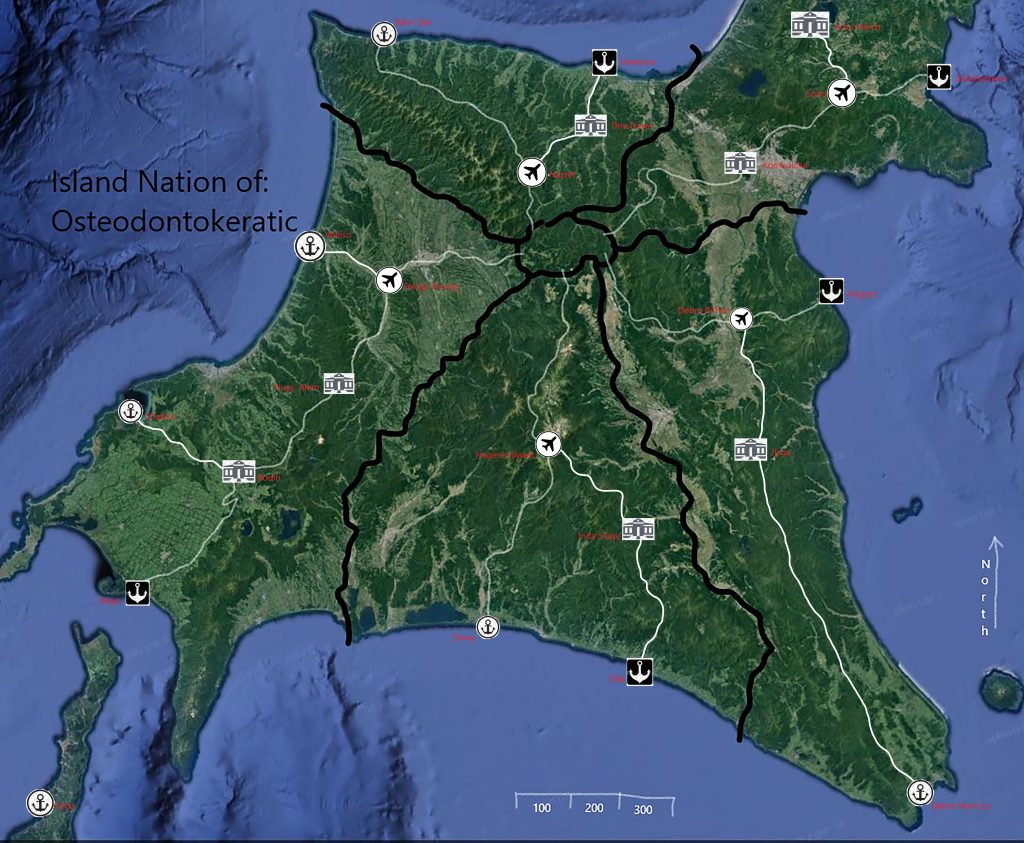
Based on the lore and the geographical data for the island nation of Osteodontokeratic, here is an analysis of the map of the nation.
1. The Abyssal Realm (The Heart of the Nation)
The map is likely dominated by a massive, central underwater depression—the Abyssal Trench.
- The Capital City: Carved directly into the basalt walls of the deepest trench, the capital would appear on the map as a concentrated cluster of magical runes and “Bone-singing” resonance points.
- Volcanic Vents: Labeled as glowing hotspots on the seafloor, these are vital for the Aglarr, providing geothermal energy and mineral-rich waters where they cultivate the leviathans they eventually hunt.
- Coral Reef Systems: The map likely shows extensive, vibrant “outer rings” of coral. These are not just decorative; they are the nation’s primary defense and food-production zones.
2. The Surface Kingdom (278 Million Acres)
The terrestrial portion of the map highlights the “New Hunting Grounds” accessible via Strider-Bones.
- Coastal Mangroves & Cliffs: A thick, dark green and jagged gray boundary ringing the island. This represents the “Wall of Bone,” where Aglarr sentries monitor the tides and surface threats.
- Inland Jungles & Plains: Large swaths of the map likely show trails and “Harvest Zones.” These are regions where the Aglarr hunt massive land beasts to gather terrestrial bone and hide for their Tier-level gear.
- Volcanic Mountains (The Spine): Centrally located, these peaks are the source of obsidian and rare minerals. The map likely marks these as dangerous “High-Altitude Hunting Zones” for Tier 4 and Tier 5 masters who can handle the aerial predators found there.
3. Strategic Points and Fortifications
- Surface Ports: While their hearts are in the deep, the map likely indicates several Fortified Port Cities. These serve as the primary diplomatic (or aggressive) interfaces with “land-bound” races and as bases for Bone-singing artisans who specialize in air-processing gear.
- The Strider-Bone Forges: Specialized icons likely mark the locations where the custom-crafted gear for the “Surfacing” rite is created.
4. Demographic & Tier Distribution
The map may use a color-coded overlay to show the distribution of the 55.6 million Aglarr:
- Dark Blue/Black (Trench Depth): Highest concentration of Tier 4 and 5 masters (the ~3.9 million elite) guarding the Matriarch.
- Green/Brown (Surface/Coastal): Tier 1 and 2 hunters (~33.4 million) maintaining the “Osteodontokeratic creed” through active land and sea patrols.
Summary of Environmental Dynamics
The photo map illustrates a nation that is effectively three-dimensional. It doesn’t just show “north, south, east, and west,” but emphasizes depth and altitude. The “sacred hunting grounds” transition seamlessly from the crushing pressures of the volcanic vents to the thin air of the obsidian peaks, all unified by the Aglarr’s pride and their mastery over the “bone, tooth, and horn” of the world.
Based on the geographical structure of Osteodontokeratic, the map represents a dual-realm civilization where the land and sea are treated as a singular, tiered hunting ground. The nation’s infrastructure is built upon the “Osteodontokeratic creed,” utilizing the remains of apex predators to maintain a society of 55.6 million inhabitants.
Secondary Communities: The Specialized Packs
Beyond the abyssal capital and fortified surface ports, the map is dotted with specialized “Pack” settlements:
- The Trench-Forge Enclaves: Located along deep-sea volcanic vents, these communities are dedicated to the highest levels of Bone-singing. They utilize geothermal heat to temper “lavish” gear made from the polished, rune-scribed bones of legendary kills.
- Strider-Outposts: These are small, fortified hamlets located on the inland grassy plains. They serve as the primary transition points for hunters using Strider-Bones to adapt their flukes into legs for terrestrial hunts.
- The Marrow-Caches: Found within the dense inland jungles, these are temporary but highly fortified camps where hunters butcher large terrestrial beasts and prepare the bones, teeth, and horns for transport back to the cities.
- Cliff-Watcher Eyries: Communities built into the sheer rocky cliffs that ring the island. These Aglarr utilize Auditory Filigree—specialized ear jewelry—to pinpoint distant sounds across both the waves and the land.
Trade and Hunting Routes: The Great Migration Paths
Trade in Osteodontokeratic is a practical extension of the pack hunt, focusing on the movement of “The Great Marrow”:
- The Abyssal Veins: Deep-sea currents that connect the capital trench to the outlying coral reefs. These are used by nomadic packs following the migratory patterns of sea leviathans.
- The Surface Ascent Paths: Strategic “climbing” routes where Aglarr, equipped with Strider-Bones and Leviathan’s Harnesses, move from the coastal mangroves into the inland jungles.
- The Obsidian Trail: A treacherous route leading from the plains up to the volcanic mountains at the island’s center. This trail is used to transport rare minerals and obsidian, which are often traded to “air-breathers” for items the Aglarr cannot craft themselves.
Natural Resource Zones: The Bounty of the Kill
The map is partitioned by the type of “strength” the environment provides:
- The Leviathan Boneyards: Regions of the deep-sea trenches where the remains of great sea creatures settle. These are sacred resource zones used for harvesting the materials needed for Resonance Helms and Knuckle Horns.
- The Tusk-Plains: Wide grassy plains in the interior populated by large terrestrial megafauna. These zones are harvested for “Strider-Bones” and leather hides.
- The Volcanic Spine: The central mountain range, which serves as the primary source for the volcanic rock used to work bone and the minerals required for rune-carving.
- The Coral Defenses: The ring of mangrove swamps and reefs that provides a sustainable source of smaller, everyday tools and serves as a natural barrier against naval intrusion.
Terrain and Physical Challenges
The terrain of Osteodontokeratic is designed to test the resilience of the Aglarr:
- The Crushing Deep: The abyssal realm requires Aglarr to be naturally pressure-resistant; those in the deeper trenches represent the elite Tier 4 and Tier 5 population.
- The Air-Breach Zones: Locations where the Aglarr must rely on magical assistance and Strider-Bones to survive out of water. These areas are often viewed with a mixture of detached curiosity and predatory intent by the Aglarr.
- The Gilled Canyons: Underwater passages where Bone-singers can raise jagged walls of chitin or hardened bone-material to trap prey or block enemies.