
Species
The predominant race of avatars on the Island nation of Ghassulian, with a population of 67,616,000, consists of the Qassuli, a majestic humanoid species deeply rooted in the ancient Ghassulian culture’s legacy of metallurgy and ritual transformation. The Qassuli form the majority of the nation’s inhabitants, comprising approximately 75% of the population, and their presence shapes the societal structure, from bustling forges in urban centers to the ruling family, the House of Qashtara, which traces its matrilineal lineage to the first copper-smiths who harnessed the island’s magical resources. Qassuli avatars are sentient and self-aware, capable of possession by multiversal characters, enabling tier progression through gear attunement and trained skills, mirroring Saṃsāra’s mechanics. Their species evolved from the cyclical reincarnations of the land’s early inhabitants, blending with soul migrants to form gestalts that often incorporate metallic or elemental affinities, reflecting the ancient culture’s focus on communal craftsmanship and spiritual renewal. Qassuli society emphasizes matriarchal leadership and resource stewardship, with elder councils advising the ruling house on matters of trade, magical conduits, and defense against unsafe areas, reinforcing a culture of balanced power and ritual purity.
Physical Form and Sensory Traits
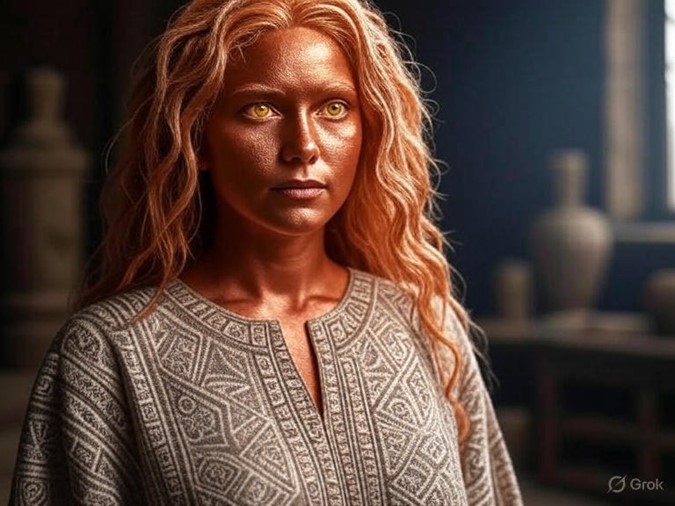
Qassuli possess a robust yet elegant humanoid physique, characterized by a muscular frame covered in a shimmering, copper-hued skin that reflects their metallurgical heritage, with a texture that shifts subtly under magical ebbs, suggesting an inner vitality. Their heads feature a mane of metallic, fibrous hair that flows like molten copper, often braided with beads or copper wire, framing a broad face with high cheekbones, a pronounced jawline, and almond-shaped eyes that glow faintly with an amber or bronze hue, attuned to detect magical residues and heat signatures. Ears are slightly pointed and mobile, capable of rotating to capture distant forge clangs or environmental vibrations, while their mouths contain sharp, enamel-coated teeth suited for cracking nuts or shaping soft metals. Hands and feet end in sturdy digits with retractable metallic claws for precision crafting or combat, and a short, prehensile tail aids in maintaining balance during intricate forge work or ritual dances. Internally, their physiology includes a reinforced respiratory system for enduring smoky environments, a rapid circulatory system that channels mana through copper-like veins, and scent glands that release a metallic aroma during emotional peaks, detectable by those with heightened senses. Sensory traits enhance their awareness: vision extends into infrared for spotting heat sources or hidden foes, hearing picks up ultrasonic frequencies from forging tools or beast movements, smell discerns metallic impurities or mana traces up to 50 feet, taste identifies alloy compositions through metallic tang, and touch senses minute vibrations in worked materials to predict structural integrity.
General Size
Qassuli avatars typically stand between 6 feet 6 inches and 7 feet 6 inches in height, with weights ranging from 200 to 300 pounds, influenced by muscle mass, gear load, and environmental mana exposure. Females average slightly taller and leaner, around 7 feet 2 inches and 250 pounds, reflecting matriarchal strength, while males tend toward broader builds at 7 feet and 275 pounds. Gestalts involving Qassuli may alter size marginally, such as a merger with a metallic construct adding bulk through symbiotic alloys, but individual forms remain within this range to support their crafting prowess. At tier 1, a Qassuli’s stature facilitates dominance in forges or ritual spaces, while tier advancements distribute physical tasks across multiple avatars, like one forging while another guards.
Body Pattern
The body pattern of Qassuli showcases a metallic sheen across their copper-toned skin, marked with intricate geometric etchings reminiscent of ancient Ghassulian pottery, which deepen with age or magical attunement, symbolizing transformation and purity. These patterns include spiral bands around limbs, resembling coiled copper wire, and tessellated designs on the torso that mimic ossuary carvings, glowing faintly during mana expenditure. Hair varies from burnished copper to bronze, styled into elaborate braids or left flowing to cascade over shoulders, often adorned with ritual beads or small copper charms. Facial features include a prominent nasal ridge etched with fine lines like hammered metal, and eyes framed by metallic lashes that enhance their glow, shifting from amber to bronze in emotional states. Limbs display vein-like tracings that pulse with mana flow, and chests bear a central sigil resembling a forge flame, a cultural emblem of their heritage. Mature Qassuli may bear ritual scars or tattoos in copper ink, replicating ancient wadi motifs like interlocking triangles for unity or wavy lines for water sources.
Life Cycle
Qassuli life cycles extend approximately 180 to 250 years without possession, potentially lengthening indefinitely with tier advancements via character mergers, though avatars become sterile post-possession. Birth occurs after a 9-month gestation in communal forges lined with copper-infused clay, with litters of 1 to 2 offspring emerging amidst ritual chants. Infancy lasts 3 years, during which young develop basic mobility and sensory acuity, nourished on fermented metal-rich milks and soft ores. Childhood spans to age 18, marked by playful manipulation of copper scraps, training in rudimentary forging skills, with Mind’s Eye glimpses revealing basic stats of local materials. Adolescence from 18 to 30 involves apprenticeship in family crafts, building resilience against overwhelm from complex alloys. Adulthood begins at 30, focusing on community roles, gear attunement for magic, and potential possession, halting physical aging but integrating memories for tier growth. Elderhood after 120 years shifts to advisory positions, with bodies slowing but senses sharpening through recalled multiversal lives. Death, if not prevented by mana boosts, results in the avatar vaporizing into sparks or leaving a crystal, memories preserved in the character for future possessions. Cycles include seasonal molts every 7 years, shedding old skin patterns for renewed metallic sheen, and ritual rebirth ceremonies where elders attune gear to simulate possession-like enhancements.
Potential Positives and Negatives Due to Their Physical Form
Positives from the Qassuli physical form include exceptional strength for forging or combat, granting advantages on tasks requiring force, such as shaping metal or resisting grapples in unsafe areas. Their robust build supports high carrying capacity for gear, up to 20% above standard limits, and their metallic skin provides natural resistance, adding +2 to AC in designated safe zones like forges. Heightened senses offer early warnings of dangers, improving survival in deathly zones by detecting heat signatures or hidden threats. Rapid circulation enhances mana channeling, reducing attunement times by 10 seconds for standard gear, and their prehensile tail aids in multi-tasking during crafting or ritual dances. Copper-like veins glow to signal allies in gestalts, providing a +1 bonus to coordination rolls. Negatives encompass vulnerability to corrosion, where prolonged exposure to water or acidic environments halves AC and imposes a -2 penalty to Constitution saves, reflecting their metallic nature. Heavy frames reduce agility, imposing disadvantages on maneuvers requiring speed, like dodging in dense jungles, and their sensory acuity risks overload in chaotic settings, triggering temporary debuffs akin to Mind’s Eye exhaustion. Dependence on metal-rich diets limits food options, potentially slowing HP gains from meals in scarce regions, and retractable claws snag easily on organic terrain, risking gear damage if not maintained.
Tags: Qassuli, Ghassulian, Copper Skin, Metallic Hair, Infrared Eyes, Retractable Claws, Prehensile Tail, Mana Veins, Geometric Etchings, Forge Born, Matriarchal, High Magic, Gestalt, Ruling Family, Craft Master, Ritual Pure, Ancient Heritage
Specialized Item Slots Available
Qassuli avatars adhere to standard slot limits based on tier—19 at tier 1 down to 15 at tier 5—but include specialized slots reflecting their metallurgical heritage, enhancing gear integration with their physical traits. A mane slot accommodates copper circlets or wire-woven crowns, counting as one slot but allowing dual items like beads without conflict, adding +1 to Charisma for ritual presence. Nasal ridge slots permit rings or clips for scent enhancement, limited to two per ridge for alloy detectors or trackers. Ear slots support up to four earrings or clamps total, specialized for auditory conduits like forge-echo amplifiers. A chest sigil slot fits amulets or breastplates tied to the forge flame, adding three extra pouch slots for tools. Digit slots on hands and feet allow rings or claw sheaths, with ten total (one per digit), designed for precision gear like engraving tools. A tail slot integrates bands or tassels for balance aids, providing one additional weapon slot. These slots do not exceed overall limits but enable bonuses for metal-attuned items, like copper conduits increasing chant potency by 10%. Exceeding slots triggers pain via two d4 rolls for intervals and HP loss, continuing until reduction or death.
Environmental Adaptability
Qassuli thrive in Ghassulian’s resource-rich wadis, highland forges, and urban smitheries where high magic flows support their metallic skin and sensory traits, doubling AC in somewhat safe walled workshops or tripling it in designated forge enclaves. They adapt well to industrial variability, forging in steam-powered facilities with retractable claws aiding navigation of machinery, and in underwater smithies, they use copper-sealed gear for buoyancy, though prolonged submersion strains their corrosion-vulnerable skin. Cave systems suit their infrared vision, but dark megacities challenge with overcrowding, halving crafting efficiency. Unsafe wadi fringes test their strength, but deathly volcanic zones corrode skin, cutting AC entirely. Airship or zeppelin travel accommodates their size, with gestalts sharing adaptations across avatars for planar shifts at higher tiers. Climate tolerance spans arid highlands to humid deltas, but extreme moisture from magical storms slows circulation, requiring heated gear for HP maintenance.
Other Information Important to This Race
Qassuli culture mirrors the ancient Ghassulian’s focus on copper metallurgy and ossuary rituals, with avatars crafting symbolic copper vessels as mana storage or ritual foci, often inscribed in Khassulic for spell amplification. Ruling family members wield heirloom gear passed through matrilineal lines, enforcing god-imposed limits on worn items to prevent overwhelming power. Possession is revered as a transformative honor, with forges facilitating mergers for tier advancement, though clashing memories cause initial disorientation in their sensitive minds. Gestalts frequently include metallic constructs or fire-elemental entities for enhanced forging, quantum-linked without distance penalties at tier 4. Trade centers on copper alloys and steam components, using their strength for heavy assemblies. Socially, they shun corrosion-inducing items, fearing stat loss via Mind’s Eye, and center quests on enhancing gear for deeper material revelations. In battles, they favor defensive stances, using silver fire from mana boosts post-hit. Memories from multiversal lives often recall inventive crafts, easing skill training in metallurgy or magic conduits like hand gestures for rule-breakers. Libraries grant advantages on researched alloys, with Qassuli scholars specializing in transmutative concepts for puzzle-solving. Sterility post-merger shifts focus to communal rearing, with non-possessed maintaining population growth. HP recovery relies on metal-rich meals, granting 1 HP per 20-minute roleplayed feast, up to three daily. Touching over-tier items causes amplified pain, adding one HP loss per level discrepancy.
Copper-Maned Guardian and Forge’s Eternal Flame
In epochs veiled by mists of forgotten breaths, when the wadis of Ghassulian flowed with waters heavy as molten ore, and the skies wept sparks of divine wrath, there dwelled a being of copper sheen and mane like flames quenched in night. This creature, named in runes half-scratched as the Qassuli Firstborn, arose from the primal forge where gods hammered forms from earth’s heart. The tale, whispered through scribes whose inks bled from tongues older than stones, speaks of a guardian born in the before-time, afore souls drifted from voids unseen, when monsters forged alliances in shadows deep and the land groaned under weights of unmade metals. The words, twisted by translations of elders who heard echoes in dreams, tell how this sentient one, with skin of hammered bronze and eyes glowing as embers banked, stood against the Unforged Chaos, a force of raw ore that sought to melt all into slag unending.
Long afore the cycles turned nine thousand folds, the island’s veins pulsed with copper pure, and from this blood of earth emerged the Qassuli, majestic in frame yet bound by rituals of purity. The Firstborn, called by some the Mane-of-Flame or the Claw-of-Alloy in glyphs faded, wandered the highland forges where ancient smiths—forebears of the House of Qashtara—bent metals with hands unyielding. “Guardian,” the gods decreed in voices like hammers on anvils, “thy form shall echo our limits, for excess pains as fire unchecked.” The Qassuli, with stature towering as seven feet in shadows long, felt the pull of matrilineal blood, heredity flowing through lines female as rivers carving wadis. Its mane, fibrous as wire drawn hot, shimmered in magical ebbs, and its claws retracted like tools sheathed after labor.
The Chaos came as a storm of unmade slag, overwhelming the senses with illusions of endless melting, debuffs that clouded the Mind’s Eye glimpses of stats basic—health waning, weaknesses veiled. The Qassuli, senses sharp to infrared heats and vibrations metallic, detected the threat in forges dim, where safe zones tripled defenses yet the unsafe fringes halved them. With gear none innate, for avatars hold no classes or slots spell-born, the guardian trained skills in crafts ancient, attuning copper circlets over minutes full to enhance visions ultraviolet. “Forge with balance,” the elders chanted in Khassulic guttural, words muddled from unknown speeches, amplifying rituals by quarters in recitations long.
The battle raged in wadis coiled, the Chaos unleashing floods acidic that corroded skin metallic, halving resilience and imposing pains irregular, two dice of four for intervals and loss, repeating unto dissolution. The Qassuli, positives of form robust granting force in grapples, resisted with claws retracting to dodge, yet negatives of frame heavy slowed agility in dances ritual. Mana boosts, stored to ten times tier, reacted to health near zero, preserving one point amid the torrent, silver fire adding damage unresisted after strikes true. The guardian, in gestalt nascent with constructs metallic, shared senses across distances short, tripling at levels three, removing bounds planar at five, though clashes memory disoriented initial.
As the ebb peaked, Gerzara the Coiled petitioned gods above—those imposing slots on worn, plus nine to tier lest advancement trigger or pain strike. “Let this mane-guardian teach equilibrium,” the deity intoned, voices echoing in chants twisted. The gods agreed, infusing the Qassuli with limits—veins copper pulsing to signal allies, yet overload in chaos triggering exhaustion akin to Eye’s Mind saturated. Empowered thus, the guardian forged ahead, camouflage none but skin sheen blending with forges’ glow, leaping with tail prehensile for balance in strikes.
The Chaos, stats revealed by eyes amber—constitution frail but intelligence cunning—faltered under attunements ritual, ten minutes for items specified, enhancing chants with names true doubling potency. The Qassuli’s mane flared in glee emotional, yet fear dimmed it to hide, curiosity poking at novelties with claws, anger unhinging jaws though none it had, for teeth sharp cracked ores soft. In the forge’s heart, communal circles invoked the Path of the Coiled Reed, recitations unison amplifying vines magical—wait, no vines, but coils of copper wire binding the Chaos, restricting as tentacles though Qassuli hold none.
Victorious, the Qassuli claimed the wadis’ veins, its lair hoarding remnants shiny from fallen forms—gears half-forged, crystals pulsing mana. Scribes in Ghassulian temples etched this on ossuaries symbolic, translations warping names: from Qassuli to Copper-Claw-Mane or Alloy-Eye-Warder. The creature became legend, emblem in the Path for renewal metallic, its regeneration none but resilience teaching wounds heal in havens moist—wait, no moist, but forges hot. In later cycles, when souls possessed forms, some sought the Qassuli for merger, its traits enhancing gestalts—sensory acute detecting heats hidden, claws retracting for crafts fine.
The tale twists further, as ancient inks fade, to times when the Qassuli migrated during islands appearing, its speed none specified but stature aiding in strides long to claim territories new, packs none but gestalts forming in ebbs to share vibrations sensory, coordinating hunts like quantum links without dim. In underwater smithies, it adapted with echo-modifiers from veins, detecting residues magical for stats basic, while in highland forges, it burrowed none but hammered in anvils deep for ambushes none, lures none but glow of eyes mimicking artifacts to draw adventurers unwitting.
One such, a beast-gestalt of tier two, encountered the Qassuli in wadi coiled, its grapple strike restraining with force plus two, but the gestalt, with mana boost reactive, preserved one health, countering with fire silver unresisted. The Qassuli, in lore passed through festivals, warned of greed—hoarding too many alloys leading to overwhelm, debuffs temporary like cooldowns after activations repeated. Scribes noted its diet metallic, cannibalism none but scavenging ores in scarcities echoing ancient traits, and emotions primal: glee in forges pulsing veins to signal unintended, fear accelerating retreats, curiosity exploring novelties with tail, leading migrations exploratory. In Ghassulian trades, its parts none but essence harvested—eyes for circlets infrared, skin for belts slot-adding, claws for potions retracting—fetched silver ten or gold for alphas, blessed in temples to enhance meals roleplayed, restoring points health extra.
Yet the story warns of recurrence: in ebbs strong, the Qassuli grows vigilant, its tags as craft master and ritual pure drawing it to forges hidden, enriching environments but attracting rivals low. Adventurers, in quests from House of Qashtara, hunt none but seek alliance with it for essences resilient, symbolizing cycle eternal under Gerzara’s guardianship. The guardian, viable for possession, merges into avatars majestic, advancing tiers with manes as conduits chant-amplifying, twenty-five percent in recitations long. In underwater centers or cave megacities, adaptations echo: buoyant for planar at five, or symbiotic with constructs cleaning impurities for protection mutual.
The chronicle, etched on ossuaries half-broken, speaks of vigilance eternal, for the Qassuli guards the thresholds, its fusion teaching that strengths blend but imbalance invites the forge’s wrath. Followers recite fragments in Khassulic twisted: the copper-mane guards the hidden, its claws shape the bold, resilience heals the broken, but excess dims the flame.
Moral of the Story: Forge with balance in all labors and strife, for excess corrodes the alloy of life, but harmony in transformation kindles the flame everlasting.