
Deity Name: Samvarta, the Eternal Flame
Lore: Shivarath is an ancient religion that traces its roots back thousands of years on the world of Saṃsāra. It emerged during a time of great upheaval and societal transformation, when civilizations were rising and falling, and the world was filled with conflict and chaos. The followers of Shivarath sought to find inner peace and enlightenment amidst the turmoil, and they turned to their deity for guidance and solace.
Personality: Samvarta is a deity of both creation and destruction, embodying the cyclical nature of existence. Samvarta is depicted as a wise and enigmatic figure, often described as a divine flame that dances and flickers with eternal energy. While Samvarta is associated with destruction, it is not merely a force of chaos. Instead, it represents the transformative power of change, clearing the way for new beginnings.
Traits and Characteristics: Samvarta is known for its fierce and unpredictable nature. It embodies the raw energy of creation and destruction, capable of both great benevolence and devastating wrath. The deity is revered as the ultimate catalyst of change, pushing individuals and societies to grow and evolve. Devotees of Shivarath believe that through embracing change and acknowledging the impermanence of life, they can find enlightenment and transcend the cycles of suffering.
Attributes: Samvarta is often depicted with multiple arms, symbolizing its ability to simultaneously create and destroy. In one hand, it holds a blazing torch, representing the eternal flame of life and knowledge. In another hand, it wields a thunderbolt, symbolizing its destructive power. Samvarta is also associated with serpents, which are believed to represent the cycles of rebirth and transformation.
Symbols: The primary symbol of Shivarath is a circular mandala, depicting a dynamic dance of flames and serpents. The mandala represents the interconnectedness of all things and the ever-changing nature of existence. Other symbols associated with Shivarath include a flame, a coiled serpent, and a wheel representing the cycles of life and death.
Tags: Agniketan, Eternal Cycle, Transformative Flame, Serpent Dance, Mandala of Change, Thunderbolt Power, Enlightenment Path, Creation’s Fury, Rebirth Coils, Flame of Wisdom
The followers of Shivarath are often marked with tattoos or wear jewelry adorned with these symbols to signify their devotion to the deity. They are known for their introspection, embracing change, and seeking enlightenment through meditation, ritualistic dance, and the study of ancient texts.
Shivarath and its deity, Samvarta, offer a unique religious framework for the world of Saṃsāra, emphasizing the cyclical nature of life, the transformative power of change, and the pursuit of inner enlightenment amidst a chaotic and ever-changing world.
Positives:
- Embracing change: Followers of Shivarath believe in the positive aspects of change and transformation. They see change as an opportunity for growth and enlightenment.
- Inner peace and enlightenment: The religion places a strong emphasis on introspection, meditation, and self-reflection, providing a path for individuals to find inner peace and achieve spiritual enlightenment.
- Resilience: The teachings of Shivarath encourage followers to adapt and overcome challenges, fostering a sense of resilience and inner strength.
Negatives:
- Unpredictability: The nature of Samvarta, the deity of Shivarath, can be both a positive and a negative aspect. Its unpredictable and sometimes destructive nature can create uncertainty and fear among the followers.
- Extremism: Some followers may interpret the transformative power of change in extreme ways, leading to radical actions or belief systems that could cause harm to others.
- Resistance to stability: Due to the emphasis on change, some followers of Shivarath might resist or struggle with stability and long-term commitments, which could potentially lead to disruptions in personal and societal relationships.
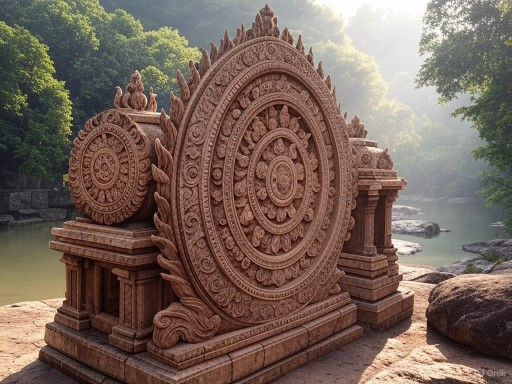
Type of Temple: The temples of Shivarath are called “Agniketan.” These temples are constructed with a unique architectural style that reflects the cyclical nature of life. Agniketan temples often have circular or spiral designs, symbolizing the eternal cycle of creation and destruction. They are adorned with intricate carvings depicting flames, serpents, and various stages of transformation. The interior of the temples is designed to facilitate meditation and reflection, with dim lighting and serene atmospheres.
Number of Followers: Shivarath has a significant following on the world of Saṃsāra, with thousands of devoted followers spread across various regions. Religion attracts individuals seeking inner peace, enlightenment, and a deeper understanding of the cyclical nature of existence. While the exact number of followers may vary depending on the specific region, Shivarath has a widespread presence and continues to gain new followers through its emphasis on personal growth and spirituality.
The magical power associated with Samvarta, the deity of Shivarath, can be harnessed for both defense and offense. Here are some ways in which followers of Shivarath can utilize this power:
Defense:
- Shielding Flame: Devotees of Shivarath can invoke the protective power of Samvarta’s eternal flame. They can create a shield of mystical fire that acts as a barrier against physical and magical attacks, providing defense against projectiles, energy-based assaults, or even hostile spells.
- Transmutation of Harm: Through channeling Samvarta’s transformative energy, followers can transmute incoming harm or negative energy directed at them. They can convert the destructive force into a benign form, mitigating the impact and rendering it harmless.
- Serpentine Resilience: Followers can tap into the serpentine symbolism associated with Samvarta and invoke the ability to regenerate and heal themselves. This healing power aids in recovering from injuries, ailments, or negative effects caused by enemies or magical attacks.
- Illusory Veil: By tapping into the deity’s transformative nature, followers can create illusions or camouflage themselves, making it difficult for enemies to target or perceive them accurately. This illusionary defense helps in evading attacks and gaining a tactical advantage.
Offense:
- Flame of Devastation: Followers can summon the destructive power of Samvarta’s eternal flame, channeling it into concentrated blasts of fire that can be hurled at enemies. These fiery projectiles can scorch and disintegrate adversaries, causing significant damage.
- Thunderbolt’s Wrath: Embracing the thunderbolt symbolism associated with Samvarta, devotees can call upon the deity’s wrathful energy to generate powerful bolts of lightning. These bolts can be directed toward foes, striking them with tremendous force and electrical damage.
- Transformational Curses: Utilizing the transformative aspect of Samvarta’s power, followers can cast curses or afflictions on their enemies. These curses can induce various negative transformations, such as causing physical decay, turning enemies to stone, or distorting their senses.
- Serpentine Coils: Drawing inspiration from the serpent symbolism, followers can summon spectral serpents or manipulate existing ones to attack opponents. These ethereal serpents can constrict, bite, or poison enemies, incapacitating them or inflicting venomous damage.
Items:
- Eternal Flame Pendant: A small pendant or amulet shaped like a flickering flame; the Eternal Flame Pendant is a sacred symbol of devotion to Shivarath. It is believed to hold a fragment of the divine flame of Samvarta. When worn, it grants the wearer a sense of inner peace, protection, and heightened connection to the deity.
- Serpent’s Tear Gemstone: The Serpent’s Tear is a precious gemstone with a vibrant green hue, symbolizing the transformative nature of Shivarath. It is believed to hold a fraction of Samvarta’s power. The gemstone is often used in rituals and ceremonies, and its energy can be harnessed for healing, transformation, and dispelling negative energies.
- Book of Illumination: The Book of Illumination is a sacred scripture containing the profound teachings, stories, and wisdom of Shivarath. It is believed to be a direct channel to understanding the divine will of Samvarta. The book is highly revered and consulted by followers for guidance, spiritual growth, and enlightenment.
- Pyrokinetic Bracers: These enchanted bracers grant the wearer the ability to manipulate and control flames. They amplify the user’s pyrokinetic abilities, allowing them to conjure and shape fire with greater precision and power. The bracers are believed to be infused with a spark of Samvarta’s eternal flame, making them highly sought after by fire-wielding practitioners.
- Staff of Transcendence: The Staff of Transcendence is a revered artifact believed to have been gifted by Samvarta to an ancient high priest of Shivarath. It is said to possess immense magical power and serves as a focus for channeling divine energy. The staff can enhance spells, heal the wounded, and grant limited foresight to the user.
- Veil of Serenity: The Veil of Serenity is a delicate, translucent cloth believed to have been woven from threads blessed by Samvarta. When worn over the face or held close, it grants the user a sense of tranquility and calm, shielding them from external distractions and enhancing their ability to concentrate during meditation or ritual practices.
- Chalice of Renewal: The Chalice of Renewal is a sacred cup used in ceremonies and rituals of Shivarath. It is said to be blessed by Samvarta and holds the essence of transformation and renewal. The chalice is filled with a sacred elixir that symbolizes spiritual rejuvenation and the cleansing of one’s soul. Drinking from the chalice is believed to grant divine blessings and aid in personal growth.
These sacred magical items play a significant role in the religious practices, rituals, and spiritual connection of the faithful followers of Shivarath. They are revered as conduits of divine power and serve as reminders of the deity’s presence and blessings.
Blaze of Samvarta’s Turning
In the shadowed folds of Saṃsāra, where the roar of strife once split the skies and the dust of fallen realms choked the winds, there burns a tale, old as the cinders of lost eons, of Samvarta, the Eternal Flame, the torch that consumes and renews. Passed through tongues long crumbled to silence, scratched on slabs by hands that stumbled over signs they could not sound, this story—fractured, stitched, and warped—stands as the most famed thread of Shivarath, a faith of fire and the endless dance of change.
Before the earth knew its shape, when Saṃsāra was a cauldron of chaos and clashing wills, the gods—so the chipped runes swear—grew restless with the tumult. The world flared, a storm of swords and sorrow, its folk trapped in cycles of ruin with no dawn. From their council, vast as the inferno, they summoned a being not of stone nor breath, but of flame and flux. This was Samvarta, their form a whirl of light and shadow, arms many—four, or six, the carvings falter—clutching torch and thunderbolt, serpents twined at their feet, their eyes twin embers of all that ends and begins. The gods spoke, their voices a crackle of ash and gale: “Scorch the spent, spark the new, for in the blaze lies the soul’s ascent.”
Samvarta descended, their flame a spiral of gold and dusk, and where it swept, the ground trembled. Cities crumbled to dust, rivers hissed to vapor, and the air thrummed with the song of rebirth. The folk of Saṃsāra, cowering amid the wreck, their spirits dulled by endless war, knew not what drew near. Samvarta raised a hand—torch—and lit a pyre. Another—thunder—and split the dark. A third—serpent—and coiled it round. “This,” they said, their voice a roar through the void, “is the dance. Leap it, shift it, and seek me.”
So began the Great Kindling—or so the shards call it, though some etchings name it “The Flame’s Round” or “The Torch of Time,” the words lost in soot. Samvarta taught the folk to face the fire, to shed the old, to see their lives as sparks in an endless wheel. They showed how a fall might clear the path, how a scar might forge wisdom. Their gift was a flame with two tongues, for change bows to none. To one, a loss birthed peace; to another, a blaze swallowed hope. Yet all who heeded felt the earth pulse, a rhythm of renewal beneath their bones.
Years wove into ages, and Samvarta’s faithful—the Flame-Weavers—raised Agniketan, spiral halls of stone and root where the fire’s truth danced free. They carved their deity’s shape, arms spread, torch aloft, thunder in grasp, serpents rising, and planted gardens where ashes bloomed and thorns glowed with hidden light. The tale murmurs Samvarta lingered still, unseen, their presence a heat in the air. But the gods, high and restless, muttered anew. “Does the fire rage too wild?” they hissed, their voices a clash of coal and wind. They feared mortals might outstep their bounds, too fierce in the flame’s embrace.
Then came the Dimming—or so the scribes guess, the word half-erased—a day when an Agniketan in the vale of Kharis flickered and broke. The Flame-Weavers wept as their torches faded, their mandalas cracked, and the air grew still with cold. Some cried Samvarta had turned away; others swore the gods quenched their light, jealous of its glow. But an elder, her hands traced with cycles, stood amid the ruin and lifted a fallen ember. “Hold,” she rasped, and set it to stone. A spark flared, weak then bold, and a coil of smoke rose—bitter, then sweet, like dawn through ash. She bid the others weave, to kindle anew, and from the wreck they rebuilt, the Agniketan stronger, its walls now veined with the glow of renewal.
Here the tale splits, as if the ancients quarreled over the next stroke. Some say Samvarta returned, their arms tracing arcs of fire, to bless the risen hall. Others claim they dissolved, their essence spilled into every spark, every coil, too vast to hold. A few glyphs hint at a shadow—flames unmade, change unbound—but the marks fade to dust. What endures is this: the Flame-Weavers thrived. They spread through Saṃsāra, their Agniketan stitching plains and peaks, each a vow to Samvarta’s way. Warriors bore staves that burned with wrath, healers sang chants to mend the torn, and all who knelt in the spiral halls swore they felt them—fierce, calm, a whisper of flame in the dark.
The story winds through time, as tales do when dragged through rough hands. Some whisper Samvarta faced a tide of stagnation, a frost of still hearts, and burned it with threads of thunder—each deed scorched, each fate spun—until it flared anew. Others tell of a tyrant, proud and blind, who dared defy the flame, only to vanish in a gust of his own ash. There’s a scrap, too, of a child lost in Saṃsāra’s wastes, guided home by a trail of embers that danced where none should glow. Each thread, true or dreamed, loops back to them: Samvarta, the Eternal Flame, whose blaze shaped a creed.
The tale grows long, its echoes deep. Some say a war once swallowed a land, its folk crying for the flame to cease, and Samvarta appeared—not in form, but as a heat in the dust—guiding them to rise with stones that sang of cycles past. Others speak of a thief, cursed to hoard until the fire took his gain, his life a spiral of loss until mercy set him free. A cracked slab tells of a drought that parched the earth, and a Flame-Weaver who danced its edge, planting seeds that bloomed in ash, proving the blaze turns even in want. Each piece, woven or guessed, binds to Samvarta’s endless dance.
At its close—or what the ancients left of a close—the Flame-Weavers faced a test. A shadow, cold and vast, cloaked Saṃsāra’s soul. The Agniketan grew dim, their chants faltered, their flames sputtered. The faithful wavered, their steps unsure. But one, a youth named Veyl—or perhaps Veyra, the glyphs split—climbed a ridge where Samvarta first lit the torch. She carried no staff, only will, and sat where the shadow bit deep. Days bled into moons. At last, she struck flint to frost, and from the clash came a glow—not loud, not soft, but alive. She returned, shared the strange light, and the Flame-Weavers rallied. They sought new fuels—bone, wind, even the chill of the void—and the Agniketan blazed again.
So the Blaze of Samvarta’s Turning lingers in Saṃsāra, a tale of fire and flux, pieced from a tongue no one recalls. The Flame-Weavers still kneel in their halls, hands tracing the spiral, seeking them in every flare. And though the ancient words crumble, the flame endures.
Moral of the Story: In the dance of flame, from ruin to rise, wisdom lies in the shift; for through the fire’s ceaseless turn, even the lost may find their light.
Comments
7 responses to “Shivarath”
[…] From: Shivarath […]
[…] From: Shivarath […]
[…] From: Shivarath […]
[…] From: Shivarath […]
[…] From: Shivarath […]
[…] From: Shivarath […]
[…] From: Shivarath […]