
From: Shifting Emporium
Description: The Artisan’s Emblem is a beautifully crafted badge made from a combination of polished metal and rare gemstones. Its design features intricate engravings that symbolize craftsmanship and adaptability. When activated, the emblem emanates a soft, pulsating glow that corresponds to the specific crafting material being temporarily imbued into the wielded tool or weapon.
Lore: The Artisan’s Emblem is a creation of Zephyr, the enigmatic proprietor of The Shifting Emporium. Zephyr is known for appreciating the value of creativity, skill, and the harmony between materials and craftsmanship. The emblem is said to carry the essence of Zephyr’s philosophy, allowing its wearer to channel the properties of specific crafting materials.
Tier One Stats:
- Rarity: Uncommon
- Tags: Magic, Crafting, Adaptation, Utility, Imbuement, Versatility, Enhancement, Tactical, Material, Artistry, Dynamic, Quest Reward
- Requires Attunement: No
- Effect: When the Artisan’s Emblem is activated, the wearer gains the ability to temporarily imbue any tool or weapon they hold with the characteristics of a specific crafting material. The emblem provides a distinct advantage related to the imbued material, enhancing the effectiveness of the wielded item for a short period.
Cost: The Artisan’s Emblem is a unique reward gifted by Zephyr, typically provided as part of the “Adaptive Artisan” quest. Its true value lies in its magical ability to temporarily enhance tools and weapons, making it a highly coveted possession among adventurers and craftsmen.
Use: The Artisan’s Emblem has several valuable uses:
- Adaptive Combat: In battle, the emblem allows the wearer to adapt their weapon to exploit the vulnerabilities of specific opponents. For example, the user can imbue their weapon with the qualities of silver to deal extra damage to creatures vulnerable to silver weapons.
- Crafting Mastery: Craftsmen can temporarily enhance their tools with the qualities of specific materials, making intricate or challenging crafting tasks more manageable and efficient during the emblem’s activation.
- Versatility in Challenges: The emblem can be used in non-combat scenarios, such as overcoming obstacles related to specific materials. For instance, if faced with a formidable wooden door, the wearer can imbue their lockpicking tools with the qualities of iron for increased strength.
- Strategic Advantage: The emblem allows the wearer to gain a strategic advantage in various situations by adapting their tools or weapons to match the unique requirements of a given task or adversary.
Additional Note: The Artisan’s Emblem is a symbol of versatility and adaptability, reflecting Zephyr’s appreciation for the balance between materials and craftsmanship. Its temporary imbuing ability adds a dynamic element to combat and utility, making it a treasured item among adventurers, craftsmen, and anyone seeking an edge in their pursuits. It’s a prized possession that showcases the importance of adaptability and mastery in various scenarios.
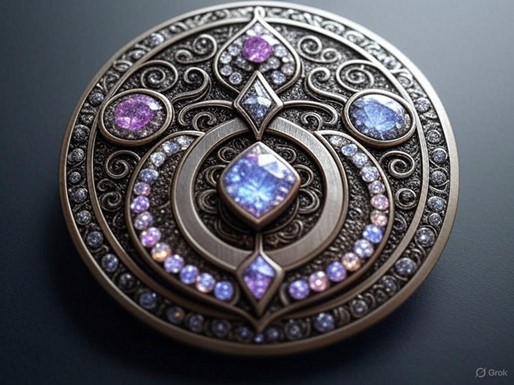
The Artisan’s Emblem, a beautifully crafted badge from the world of Saṃsāra, activates with a soft, pulsating glow that corresponds to the crafting material being temporarily imbued into a tool or weapon. Below is a detailed breakdown of its activation perception across the five senses and multiple extra-sensory perceptions, including what is perceived, descriptions, positives, and negatives for each.
- Sight
- Perceived: A soft, pulsating glow emanates from the emblem, shifting in color and intensity based on the imbued crafting material—silvery for silver, a deep gray for iron, or a warm amber for bronze, for example. The intricate engravings of craftsmanship symbols seem to shimmer as if alive.
- Description: The glow pulses rhythmically, like a heartbeat, casting faint reflections off the polished metal and rare gemstones. The engravings appear to move subtly, tracing patterns of hammers, anvils, and threads, symbolizing the essence of creation. The light is gentle but noticeable, illuminating a small area around the emblem, about a 5-foot radius.
- Positives: The glow provides a visual cue of the imbued material, allowing the user to confirm the adaptation without needing to use the Mind’s Eye, which is useful in high-stress situations like combat against silver-vulnerable creatures. The shimmering engravings can inspire allies, potentially enhancing social interactions in crafting guilds or markets by showcasing the user’s skill.
- Negatives: In unsafe or deathly areas, where armor class is halved or nullified, the glow may attract attention from foes, making stealth more difficult. The shifting light can also be distracting during precise tasks, such as intricate crafting, potentially increasing the difficulty of maintaining focus if the user is already overwhelmed by other sensory inputs.
- Sound
- Perceived: A faint, rhythmic humming emanates from the emblem, accompanied by a subtle metallic chime that echoes with each pulse of the glow.
- Description: The humming is low and resonant, akin to the sound of a tuning fork struck softly, while the chime resembles the delicate clink of a hammer on fine metal, varying slightly in pitch depending on the imbued material—higher for lighter materials like silver, deeper for heavier ones like iron. The sound is soothing but persistent, audible within a 10-foot radius.
- Positives: The rhythmic hum can help the user maintain focus during crafting, potentially reducing the time needed for intricate tasks by providing an auditory rhythm to work by. The chime can also serve as a subtle signal to allies, indicating the emblem’s activation without drawing excessive attention in somewhat safe areas where armor class is doubled.
- Negatives: The sound, though faint, can compromise stealth in quiet environments, especially in unsafe areas where the user’s armor class is halved, increasing the risk of detection by monsters or foes. In deathly areas, where every attack hits, this sound could prove particularly dangerous, as it may alert nearby threats to the user’s position.
- Touch
- Perceived: The emblem feels warm to the touch, with a gentle vibration that syncs with the pulsating glow, intensifying slightly as the imbued material’s properties take effect.
- Description: The warmth is comforting, like holding a sun-heated stone, and the vibration feels like a subtle buzz, as if the emblem is channeling the essence of the crafting material through the user’s hand. The polished metal is smooth, but the gemstones embedded in the design give a textured contrast, their edges cool despite the emblem’s warmth.
- Positives: The warmth and vibration provide tactile feedback, confirming the emblem’s activation and the successful imbuement of a material, which is useful in chaotic situations like adaptive combat. The sensation can also be grounding, helping the user focus during crafting tasks, potentially enhancing their precision when working on challenging projects.
- Negatives: For tier-1 characters with low health points, prolonged contact with the emblem’s warmth and vibration may trigger the pain mechanic if they are already injured, rolling two d4 dice to determine the interval (in minutes) and hit points lost. The vibration can also be distracting during delicate tasks, such as lockpicking, if the user is not accustomed to the sensation, potentially leading to errors.
- Smell
- Perceived: A faint, metallic scent wafts from the emblem, mixed with a subtle earthy aroma that shifts depending on the imbued material—sharp and clean for silver, rich and loamy for iron, or slightly brassy for bronze.
- Description: The metallic scent is crisp, reminiscent of a freshly forged blade, while the earthy undertone evokes the raw materials of the earth, as if the emblem is drawing forth the essence of the imbued material. The aroma is subtle, noticeable only within a 3-foot radius, and fades quickly when the emblem is not active.
- Positives: The scent can enhance the user’s connection to the crafting process, providing a sensory link to the material being imbued, which may improve their focus during crafting tasks, especially in somewhat safe areas like walled towns where armor class is doubled. The aroma can also evoke memories of past crafting successes, boosting confidence in non-combat scenarios.
- Negatives: The scent, though subtle, can be distracting in high-stress situations, such as combat against a silver-vulnerable creature, potentially contributing to the Mind’s Eye overwhelm limitation if the user is already processing multiple sensory inputs. For avatars with heightened senses, like a swarm of bees, the smell might be more pronounced, possibly causing agitation or discomfort.
- Taste
- Perceived: When near the emblem, the air carries a faint, metallic tang with a hint of mineral sharpness, reflecting the imbued material’s essence.
- Description: The metallic tang is subtle, like the aftertaste of licking a clean copper coin, while the mineral sharpness varies—crisp for silver, heavy for iron, or slightly bitter for bronze. This taste is only noticeable when breathing deeply near the emblem, such as during activation or while focusing on a crafting task.
- Positives: The taste can serve as a sensory reminder of the imbued material, reinforcing the user’s awareness of the emblem’s effect without needing to look at it, which is useful during adaptive combat or when overcoming obstacles like a wooden door with iron-imbued tools. It may also enhance the user’s connection to the crafting process, potentially improving their focus on material-specific tasks.
- Negatives: The metallic tang can be unpleasant over time, especially during prolonged use, potentially causing mild discomfort for tier-1 characters still adjusting to their avatar’s senses. For gestalt avatars, like a pack of creatures, the taste might cause discord among the group if some members find it more aversive, potentially disrupting their unity in combat.
- Extra-Sensory Perception: Material Resonance
- Perceived: A subtle wave of energy radiates from the emblem, detectable by those attuned to the magical flows of Saṃsāra, reflecting the properties of the imbued material.
- Description: The resonance feels like a gentle pressure in the user’s mind, shifting in texture based on the material—smooth and fluid for silver, heavy and grounded for iron, or warm and malleable for bronze. For those with the Mind’s Eye, this manifests as a faint aura around the emblem, with threads of energy extending to the imbued tool or weapon, highlighting its enhanced properties as “stats” (e.g., +1 damage for silver against vulnerable creatures).
- Positives: The resonance allows the user to instinctively understand the imbued material’s properties, enhancing their strategic advantage in combat or crafting without needing to actively use the Mind’s Eye, conserving mental energy. It can also help identify the best material for a task, such as choosing iron for breaking through a wooden obstacle, improving efficiency in non-combat scenarios.
- Negatives: The resonance can contribute to the Mind’s Eye overwhelm limitation if the user is already analyzing multiple items or concepts, potentially causing a temporary inability to use the Mind’s Eye. In deathly areas, where every attack hits, the resonance might attract magical creatures sensitive to such energy, increasing the risk of encounters.
- Extra-Sensory Perception: Craftsmanship Harmony
- Perceived: The emblem imparts a faint sense of balance and harmony, as if the user is momentarily aligned with the essence of craftsmanship and adaptability embodied by Zephyr’s philosophy.
- Description: This harmony feels like a quiet confidence in the user’s mind, a sense that their actions are in sync with the natural flow of creation. For tier-2 or higher characters with multiple avatars, this sense can be shared across their gestalt, allowing all avatars to feel the harmony within 20 feet, or further with certain items, enhancing their coordination in crafting or combat. For those with the Mind’s Eye, this manifests as a golden thread connecting the user to their tool or weapon, symbolizing the perfect union of material and skill.
- Positives: The harmony boosts the user’s confidence, potentially granting a small bonus to crafting tasks or combat rolls when using the imbued tool or weapon, such as a +1 to hit against a silver-vulnerable foe. It can also improve coordination among gestalt avatars, making them more effective in group tasks like crafting in a metropolis workshop or fighting in a somewhat safe area.
- Negatives: The sense of harmony can be disrupted by external distractions, such as a foe’s attack in an unsafe area, potentially causing a momentary lapse in focus that negates the bonus. For tier-1 characters still merging with their avatar, this harmony might clash with their host memories, leading to confusion and a temporary reduction in effectiveness.
- Extra-Sensory Perception: Temporal Flow Adjustment
- Perceived: The emblem creates a subtle sense of temporal alignment, as if the user’s actions are momentarily optimized for the task at hand while the material is imbued.
- Description: This feels like a slight slowing of time in the user’s perception, allowing them to focus more intently on their crafting or combat actions. Movements with the imbued tool or weapon feel more deliberate and precise, as if the emblem is guiding the user’s hands. For those with the Mind’s Eye, this manifests as a faint silver shimmer around the user’s hands, indicating the temporal adjustment.
- Positives: The temporal flow adjustment enhances precision, potentially granting a small bonus to crafting rolls or attack rolls with the imbued tool or weapon, such as a +1 to damage when striking with an iron-imbued weapon. It can also improve efficiency in time-sensitive tasks, like crafting under pressure in a metropolis workshop, by making the user’s actions feel more fluid and controlled.
- Negatives: The temporal adjustment can be disorienting in fast-paced situations, such as combat in a deathly area where every attack hits, potentially causing the user to misjudge their timing and suffer a penalty to defense rolls. For tier-1 characters, this sensation might exacerbate the confusion of merging with their avatar, leading to momentary hesitation that could prove costly in battle.
Crafting Recipe for the Artisan’s Emblem
- Materials Needed
- Polished Silver Disc: 1 disc, 3 inches in diameter, polished to a mirror-like finish, to serve as the base of the emblem.
- Rare Gemstones: 5 gemstones (such as sapphires, amethysts, or moonstones), each at least 1 carat, to enhance the emblem’s magical properties and aesthetic appeal.
- Essence of Adaptation: 1 vial of essence of adaptation, a rare alchemical substance distilled from magical flux, to enable the emblem’s material-imbuing ability.
- Moonlit Thread: 5 feet of moonlit thread, a magical filament that shimmers with a faint glow, to weave the engravings and bind the magical energy.
- Elemental Earth Shard: 1 small shard of elemental earth, to ground the emblem’s magic and connect it to the properties of crafting materials.
- Starlight Dust: 1 pinch of starlight dust, collected under a clear night sky, to infuse the emblem with a pulsating glow.
- Crafting Sigils: A set of 3 crafting sigils (hammer, anvil, and thread), carved from obsidian, to symbolize craftsmanship and adaptability.
- Tools Required
- Engraving Tools: A set of fine engraving tools to etch intricate patterns and sigils into the silver disc and gemstones.
- Alchemical Crucible: A crucible capable of withstanding magical heat, used to melt and combine the essence of adaptation with other components.
- Gem-Cutting Kit: A kit for shaping and setting the rare gemstones into the silver disc.
- Binding Rod: A magical tool used to channel energy during the enchantment process.
- Pliers and Tweezers: For handling the moonlit thread and setting the crafting sigils precisely.
- Polishing Cloth: A soft cloth to polish the silver disc and gemstones, ensuring a flawless finish.
- Starlight Collector: A small device to gather starlight dust under a clear night sky.
- Skill Requirements
- Artistry (Tier 1): Proficiency in creating intricate designs to etch the craftsmanship symbols into the emblem.
- Enchanting (Tier 1): Knowledge of magical energy flows to infuse the emblem with the ability to imbue materials.
- Gem-Cutting (Tier 1): Skill in shaping and setting gemstones to enhance the emblem’s magical and aesthetic qualities.
- Arcane Crafting (Tier 1): Understanding of magical crafting to bind the components together harmoniously.
- Alchemy (Tier 1): Ability to distill and manipulate magical essences, such as the essence of adaptation.
- Crafting Steps
- Prepare the Silver Disc: Polish the silver disc to a mirror-like finish using the polishing cloth, ensuring it is free of imperfections. This will serve as the base of the emblem, reflecting the purity of craftsmanship.
- Etch the Craftsmanship Symbols: Using the engraving tools, carefully etch the symbols of craftsmanship—hammer, anvil, and thread—into the silver disc. These symbols should form a symmetrical pattern, with the hammer at the center, the anvil and thread on either side, symbolizing adaptability and skill.
- Set the Gemstones: Use the gem-cutting kit to shape the 5 rare gemstones, then set them into the silver disc around the etched symbols. Place one gemstone at the top, one at the bottom, and three in a triangular formation around the hammer symbol, ensuring they enhance the emblem’s magical resonance.
- Weave the Moonlit Thread: With the pliers and tweezers, weave the moonlit thread into the etched patterns, following the lines of the craftsmanship symbols. Secure the thread within the grooves, ensuring it shimmers faintly when exposed to magical energy, amplifying the emblem’s glow.
- Prepare the Essence of Adaptation: In the alchemical crucible, combine the essence of adaptation with the elemental earth shard and a pinch of starlight dust. Heat the mixture until it forms a glowing, viscous liquid, stirring with the binding rod to stabilize the magical energy.
- Embed the Crafting Sigils: Place the 3 obsidian crafting sigils (hammer, anvil, thread) into the liquid essence, allowing them to absorb the magical energy. Once infused, remove them with tweezers and embed them into the silver disc, aligning each sigil with its corresponding etched symbol.
- Enchant the Emblem: Pour the prepared essence of adaptation over the silver disc, ensuring it seeps into the engravings and gemstone settings. Using the binding rod, channel magical energy into the emblem, focusing on the essence to activate its material-imbuing ability. The emblem should begin to emit a soft, pulsating glow, indicating successful enchantment.
- Final Touches: Polish the emblem one final time to enhance its aesthetic appeal, ensuring the silver shines and the gemstones sparkle. Test the emblem’s ability by imbuing a tool with the properties of silver, confirming the glow shifts to a silvery hue and the tool takes on the material’s characteristics, completing the Artisan’s Emblem.
Legend of Zephyr’s Crest of Making
Long ago, in the days when Saṃsāra’s islands were yet young and the seas whispered secrets to the winds, there lived a maker named Zephyr, a being of shadow and craft, whose hands wove magic into the very bones of the earth. Zephyr was no mortal, nor god, but a spirit of the Shifting Emporium, a place that drifted between the islands, appearing where need was greatest. The Emporium was a hall of wonders, its walls lined with tools that sang and materials that shimmered, a haven for those who sought to create. Zephyr, its keeper, was said to be born of the first spark of creation, a flame that burned in the heart of the world, and its form was ever-changing—sometimes a man, sometimes a woman, sometimes a creature of smoke and light.
In that time, the people of Saṃsāra were scattered, their hands skilled but their hearts divided. The artisans of the 73 island countries quarreled over materials, each claiming their craft superior. The smiths of the Iron Isles forged blades of unyielding steel, but their weapons broke against the enchanted hides of jungle beasts. The weavers of the Silk Reaches spun threads that shimmered like the stars, but their fabrics tore in the storms that swept the endless ocean. The carvers of the Crystal Caves shaped gems that glowed with inner fire, but their tools dulled against the hard stone of the dark cave systems. Each craft was strong in its own way, but none could adapt to the needs of another, and so the people suffered, their works incomplete, their lives at the mercy of the monsters that roamed the wilds.
Zephyr, from the Shifting Emporium, watched this strife with a heavy heart. The spirit knew the power of creation, for it had seen the first islands rise from the sea, shaped by the hands of the gods. But Zephyr believed that true craft lay not in mastery of one material, but in the harmony of all. It whispered to the winds, calling forth artisans from across Saṃsāra, those whose skills were greatest, whose hearts burned with the fire of making. Three came to the Emporium, their ships guided by the winds: Kaelra, a smith of the Iron Isles, whose hammer struck with the force of a storm; Lirien, a weaver of the Silk Reaches, whose fingers danced with the grace of the tides; and Torvyn, a carver of the Crystal Caves, whose eyes saw the hidden light in every stone.
Zephyr greeted them in the Emporium, its form a swirl of smoke and light, its voice a song of hammers and looms. It spoke of a crest, a badge that would bind their crafts into one, a symbol of adaptability that would let their tools and weapons take on the essence of any material. Kaelra offered her iron, strong and unyielding, to form the base of the crest. Lirien gave her silk, soft and shimmering, to weave the magic that would hold the essence. Torvyn brought his gems, radiant and pure, to channel the power of the earth. Zephyr took these gifts and added its own—a spark of creation, a flame that pulsed with the heartbeat of Saṃsāra, distilled from the magical flux that flowed through the world.
The crafting was a labor of days and nights, for the Emporium drifted through storms and calms, its walls echoing with the sounds of their work. Kaelra shaped the iron into a disc, her hammer singing as it struck, but the metal resisted the magic, its nature too rigid. Lirien wove her silk into the engravings, her fingers trembling as the threads burned with magical energy, but the silk frayed under the strain. Torvyn set his gems into the disc, his hands steady as he carved, but the gems cracked, their light too pure for the chaotic magic. Zephyr, seeing their struggle, took the spark of creation and placed it into the crest, its light pulsing like a living thing. The iron softened, the silk held, and the gems glowed, their energies balanced by the spirit’s touch.
But the gods, who watched from the heavens, were not pleased. They had limited the mortals of Saṃsāra, binding them to their tiers and slots, for they feared the power of creation would rival their own. The crest, named the Artisan’s Emblem by Zephyr, was a defiance of their will, for it allowed mortals to adapt beyond their limits. A storm of divine wrath descended upon the Emporium, its winds tearing at the walls, its lightning seeking the crest. Kaelra stood against the storm, her hammer raised, but the winds broke her arm, and she fell. Lirien wove a shield of silk, her fingers bleeding, but the lightning burned through, and she collapsed. Torvyn carved a ward of stone, his eyes blind from the light, but the storm shattered it, and he was lost to the sea.
Zephyr, its form now a blaze of light, held the crest aloft, its voice a cry that echoed across Saṃsāra. The spirit poured its essence into the emblem, binding the magic to the will of the artisans, ensuring its power would endure. The storm ceased, but Zephyr was diminished, its form faded to a whisper of smoke, its Emporium adrift without its keeper. The crest fell to the sea, carried by the tides to the shores of an uncharted island, where it was found by a young artisan named Sylvara, who felt its power in her hands and knew its purpose.
The Artisan’s Emblem passed from hand to hand, its glow a symbol of adaptability, its magic a gift to those who sought to create. It was said to have been gifted by Zephyr to those who completed the “Adaptive Artisan” quest, a trial of craft and skill that honored the spirit’s philosophy. But the tale, written in an ancient tongue no mortal could read, was mistranslated through the ages. Some said Zephyr was a god of the forge, others a demon of change. Some claimed Kaelra, Lirien, and Torvyn were traitors who stole the crest, others that they were heroes who defied the gods. The truth was lost, but the emblem’s power remained, a testament to the harmony of creation, a tool for those who sought to adapt in a world of endless challenges.
Moral of the Story: True mastery lies not in the strength of one, but in the unity of many, for only through harmony can creation endure the storms of fate.
Suggested conversions to other systems:
Call of Cthulhu (7th Edition) – Artisan’s Emblem
- Description: A beautifully crafted badge of polished metal and rare gemstones, etched with intricate engravings symbolizing craftsmanship and adaptability. When activated, it emits a soft, pulsating glow corresponding to the crafting material imbued into a held tool or weapon.
- Type: Artifact
- Sanity Cost: 0/1d2 (initial use); 1/1d4 if the user becomes overwhelmed by its magical resonance (see Overwhelm below).
- Effects:
- Material Imbuement: As an action, the user can activate the emblem to imbue a held tool or weapon with the properties of a specific material (e.g., silver, iron, bronze) for 10 minutes. This grants a +10% bonus to relevant skill rolls (e.g., Fighting for weapons, Repair for tools) when the material provides an advantage (e.g., silver against mythos creatures vulnerable to it, iron for breaking wooden objects). The user must specify the material upon activation.
- Crafting Mastery: When used during a crafting task, the emblem grants a +20% bonus to Art/Craft rolls for 1 hour, reflecting the enhanced tool properties. This can only be used once per day.
- Versatility: The user can use the emblem to gain a +10% bonus to a single non-combat skill roll (e.g., Lockpicking, Mechanical Repair) where the imbued material provides a logical advantage, such as iron for breaking a wooden barrier. This can be used once per session.
- Drawbacks:
- The emblem’s glow imposes a -20% penalty to Stealth rolls when active.
- Overwhelm: If the emblem is used more than twice in a single day, the user must make a POW roll (Difficulty: Regular). Failure results in being overwhelmed by the magical resonance, imposing a -10% penalty to all rolls for 1d4 hours and a Sanity loss of 1/1d4.
- Crafting Requirements: Requires an Occult skill of 50% or higher, 1 polished silver disc, 5 rare gemstones, 1 vial of essence of adaptation, and a successful Art/Craft (Jeweler) roll (Difficulty: Hard). The ritual to enchant the emblem requires a POW expenditure of 5 points and a successful Hard POW roll.
Blades in the Dark (v8.2) – Artisan’s Emblem
- Type: Arcane Item (Tier II)
- Load: 0
- Description: A finely crafted badge of polished metal and rare gemstones, etched with symbols of craftsmanship. When activated, it emits a pulsating glow, imbuing a held tool or weapon with the properties of a specific crafting material.
- Effects:
- Material Imbuement: The user can activate the emblem as a free action to imbue a held tool or weapon with the properties of a specific material (e.g., silver, iron, bronze) for the duration of a score. This increases the effect level by 1 for actions where the material provides an advantage (e.g., silver against spirits, iron for breaking barriers). The user must specify the material upon activation.
- Crafting Mastery: During downtime, the user can use the emblem to gain +1d to a Tinker roll, reflecting the enhanced tool properties. Additionally, the crew gains 1 additional coin from crafting projects when the emblem is used.
- Versatility: Once per score, the user can use the emblem to increase the effect level by 1 for a single non-combat action (e.g., Finesse for lockpicking, Tinker for repairs) where the imbued material provides a logical advantage.
- Special:
- Attune Activation: A character may spend 1 stress to Attune to the emblem, gaining a +1d bonus to a single roll where the imbued material provides a narrative advantage (e.g., silver against a supernatural foe, iron for breaking a wooden door).
- Overwhelm: If the emblem is used in a score with a desperate roll, the user must resist a consequence (Level 1 Harm: “Distracted by Resonance”) using Resolve, as the magical energy overwhelms their senses.
- Drawbacks:
- The emblem’s glow reduces the effect level of Prowl rolls by 1 when active.
- The emblem counts as an arcane item, potentially attracting the notice of the Spirit Wardens or other factions.
- Crafting: Requires a Tinker roll (Tier II quality), 5 coin worth of materials (polished metal, rare gemstones, essence of adaptation), and a successful Attune roll to bind the magical energy. The crew takes +1 heat during the crafting process due to the magical energy involved.
Dungeons & Dragons (5th Edition) – Artisan’s Emblem
- Wondrous Item, Uncommon
- Description: This badge, crafted from polished metal and rare gemstones, features engravings symbolizing craftsmanship and adaptability. When activated, it emits a pulsating glow, imbuing a held tool or weapon with the properties of a specific crafting material.
- Properties:
- Material Imbuement: As an action, you can activate the emblem to imbue a held nonmagical tool or weapon with the properties of a specific material (e.g., silver, iron, bronze) for 10 minutes. This grants a situational benefit determined by the DM, such as a +1 bonus to attack and damage rolls against creatures vulnerable to the material (e.g., silver against lycanthropes) or a +2 bonus to skill checks with the tool (e.g., iron for breaking wooden objects). You must specify the material upon activation. This can be used three times, regaining all uses at dawn.
- Crafting Mastery: When using the emblem during a crafting task, you gain advantage on ability checks made to craft an item, provided the task takes at least 1 hour and the imbued material is relevant (e.g., iron for blacksmithing, bronze for sculpting).
- Versatility: Once per long rest, you can use the emblem to gain advantage on a single ability check (e.g., Dexterity (Sleight of Hand) for lockpicking, Strength (Athletics) for breaking objects) where the imbued material provides a logical advantage.
- Drawbacks:
- The emblem’s glow imposes disadvantage on Stealth checks when active.
- Overwhelm: If you use the emblem more than three times in a single day, you must make a DC 12 Wisdom saving throw. On a failure, you gain 1 level of exhaustion as the magical resonance overwhelms your senses, lasting until your next long rest.
Knave (2nd Edition) – Artisan’s Emblem
- Item Type: Magical Gear
- Slots: 0
- Description: A polished metal badge with rare gemstones, etched with symbols of craftsmanship. When activated, it emits a pulsating glow, imbuing a held tool or weapon with the properties of a specific crafting material.
- Effects:
- Material Imbuement: As an action, the user can activate the emblem to imbue a held tool or weapon with the properties of a specific material (e.g., silver, iron, bronze) for 10 exploration turns. This grants a +2 bonus to rolls where the material provides an advantage (e.g., silver against supernatural foes, iron for breaking wooden barriers). The user must specify the material upon activation.
- Crafting Mastery: When used during a crafting task, the emblem grants a +3 bonus to Intelligence or Dexterity rolls for 1 hour, reflecting the enhanced tool properties. This can only be used once per adventure.
- Versatility: Once per adventure, the user can use the emblem to gain a +2 bonus to a single non-combat roll (e.g., Dexterity for lockpicking, Strength for breaking objects) where the imbued material provides a logical advantage.
- Drawbacks:
- The emblem’s glow imposes a -2 penalty to Dexterity rolls for stealth when active.
- Overwhelm: If the emblem is used for more than 10 consecutive exploration turns in a dangerous situation, the user must make a Wisdom save (DC 10). On a failure, they suffer a -1 penalty to all rolls for the next 1d4 hours as the magical resonance overwhelms them.
Fate (Core System) – Artisan’s Emblem
- Aspect: Symbol of Adaptive Craftsmanship
- Description: A beautifully crafted badge of polished metal and rare gemstones, etched with symbols of craftsmanship. When activated, it emits a pulsating glow, imbuing a held tool or weapon with the properties of a specific crafting material.
- Stunts:
- Material Imbuement: Once per scene, you can invoke the emblem’s aspect to create an advantage like Silver-Infused Blade or Iron-Strengthened Tool, gaining a +2 bonus to an Attack, Overcome, or Create an Advantage action where the imbued material provides a narrative benefit (e.g., silver against supernatural foes, iron for breaking barriers). The effect lasts for the scene.
- Crafting Mastery: When using the emblem during a crafting task, you gain a +2 bonus to Crafts rolls, reflecting the enhanced tool properties. Additionally, you can spend a fate point to automatically succeed on a crafting-related Overcome action, provided the imbued material is relevant.
- Trouble Aspect: Overwhelming Magical Resonance
- Drawback: When you push the emblem’s power in a high-stress situation (e.g., during a Conflict or Challenge), the GM can compel the trouble aspect, imposing a situation aspect like Distracted by Pulsating Glow with one free invoke. This reflects the emblem’s energy overwhelming your senses, potentially causing hesitation.
- Stress and Consequences: The emblem is durable (equivalent to a minor NPC with 2 stress boxes) and can be attacked or damaged (Physique 3 to resist). If “broken,” it requires a Crafts roll (Difficulty 3) to repair, using magical materials like rare gemstones.
- Notes: The emblem’s glow makes stealth difficult, allowing the GM to increase the difficulty of Stealth rolls by +2 when active. Its magical nature may attract attention from supernatural entities, which the GM can use as a compel to introduce complications.
Numenera & Cypher System (2nd Edition) – Artisan’s Emblem
- Type: Cypher
- Level: 3
- Description: A polished metal badge with rare gemstones, etched with symbols of craftsmanship. When activated, it emits a pulsating glow, imbuing a held tool or weapon with the properties of a specific crafting material.
- Effects:
- Material Imbuement: The user can activate the emblem to imbue a held tool or weapon with the properties of a specific material (e.g., silver, iron, bronze) for 10 minutes. This provides an asset on tasks where the material is advantageous (e.g., silver against supernatural creatures, iron for breaking wooden objects). The user must specify the material upon activation.
- Crafting Mastery: When used during a crafting task, the emblem provides two assets on crafting-related tasks for 1 hour, reflecting the enhanced tool properties.
- Versatility: Once per use, the user can use the emblem to gain an asset on a single non-combat task (e.g., lockpicking, breaking barriers) where the imbued material provides a logical advantage.
- Usable: Worn as a badge or held.
- Overload: If the emblem is used more than once in a single day, the user must make a Level 3 Intellect task. Failure results in the emblem overloading, imposing a Level 3 hindrance (increasing the difficulty of all tasks by one step) for 1d6 minutes as the magical resonance overwhelms the user.
- Drawbacks:
- The emblem’s glow increases the difficulty of stealth tasks by one step when active.
- The magical resonance may attract numenera-sensitive creatures, potentially triggering a GM intrusion.
- Crafting: Requires a Level 3 crafting task (Numenera crafting skill), 1 polished silver disc, 5 rare gemstones, 1 vial of essence of adaptation, and a successful Level 4 Intellect task to bind the magical energy.
Pathfinder (2nd Edition) – Artisan’s Emblem
- Item Level: 4
- Price: 80 gp (barter value, typically a quest reward)
- Hands: 1; Bulk: L
- Description: This polished metal badge, adorned with rare gemstones, features engravings symbolizing craftsmanship and adaptability. When activated, it emits a pulsating glow, imbuing a held tool or weapon with the properties of a specific crafting material.
- Type: Wondrous Item (Magical, Transmutation)
- Traits: Magical, Transmutation
- Activate: [1-action] Command (verbal); Effect: The emblem imbues a held nonmagical tool or weapon with the properties of a specific material (e.g., silver, iron, bronze) for 10 minutes. This grants a +1 item bonus to attack rolls, damage rolls, or skill checks where the material provides an advantage (e.g., silver against creatures vulnerable to it, iron for breaking wooden objects). You must specify the material upon activation. This can be used three times per day.
- Effects:
- Crafting Mastery: When using the emblem during a crafting task, you gain a +2 item bonus to Crafting checks for 1 hour, provided the imbued material is relevant (e.g., iron for blacksmithing).
- Versatility: Once per day, you can use the emblem to gain a +2 item bonus to a single skill check (e.g., Thievery for lockpicking, Athletics for breaking objects) where the imbued material provides a logical advantage.
- Drawbacks:
- The emblem’s glow imposes a -2 penalty to Stealth checks when active.
- Overwhelm: If you use the emblem more than three times in a single day, you must succeed on a DC 15 Will save or become fatigued until your next daily preparations, as the magical resonance overwhelms your senses.
- Crafting Requirements: Craft Magic Item feat, 4th-level transmutation spell, 40 gp in materials (polished metal, rare gemstones, essence of adaptation), and a successful DC 18 Crafting check.
Savage Worlds (Adventure Edition) – Artisan’s Emblem
- Type: Arcane Device
- Weight: 1
- Cost: 400 (barter value, typically a quest reward)
- Description: A polished metal badge with rare gemstones, etched with symbols of craftsmanship. When activated, it emits a pulsating glow, imbuing a held tool or weapon with the properties of a specific crafting material.
- Powers:
- Material Imbuement: As a free action, the user can activate the emblem to imbue a held tool or weapon with the properties of a specific material (e.g., silver, iron, bronze) for 10 minutes. This grants a +1 bonus to Fighting, Shooting, or skill rolls (e.g., Repair, Thievery) where the material provides an advantage (e.g., silver against supernatural foes, iron for breaking barriers). This can be used three times per day.
- Crafting Mastery: When used during a crafting task, the emblem grants a +2 bonus to Repair rolls for 1 hour, reflecting the enhanced tool properties.
- Versatility: Once per session, the user can use the emblem to gain a +2 bonus to a single non-combat skill roll (e.g., Thievery for lockpicking, Athletics for breaking objects) where the imbued material provides a logical advantage.
- Power Points: None (the emblem’s effects are innate).
- Drawbacks:
- The emblem’s glow imposes a -2 penalty to Stealth rolls when active.
- Overwhelm: If the emblem is used more than three times in a single day, the user must make a Spirit roll (TN 4). On a failure, they become Fatigued for the next 1d4 hours as the magical resonance overwhelms their senses.
- Crafting: Requires the Artificer edge, a successful Weird Science roll (TN 6), and 200 in materials (polished metal, rare gemstones, essence of adaptation). The process takes 1d4 days.
Shadowrun (6th Edition) – Artisan’s Emblem
- Type: Magical Focus (Fetish)
- Cost: 10,000 nuyen (barter value, typically a quest reward)
- Availability: 8R
- Essence: 0
- Description: A polished metal badge adorned with rare gemstones, etched with symbols of craftsmanship. When activated, it emits a pulsating glow, imbuing a held tool or weapon with the properties of a specific crafting material.
- Effects:
- Material Imbuement: As a Simple Action, the user can activate the emblem to imbue a held nonmagical tool or weapon with the properties of a specific material (e.g., silver, iron, bronze) for 10 minutes. This grants +2 dice to tests where the material provides an advantage (e.g., silver against spirits or paracritters vulnerable to it, iron for breaking barriers). The user must specify the material upon activation. This can be used three times per run.
- Crafting Mastery: When used during a crafting task, the emblem grants +3 dice to Engineering tests for 1 hour, reflecting the enhanced tool properties.
- Versatility: Once per run, the user can use the emblem to gain +2 dice on a single non-combat test (e.g., Lockpicking, Hardware) where the imbued material provides a logical advantage.
- Drawbacks:
- The emblem’s glow imposes a -2 dice pool penalty to Stealth tests when active.
- Overwhelm: If the emblem is used more than three times in a single run, the user must make a Willpower + Intuition (3) test. Failure results in the user gaining the Distracted status for 1d6 minutes as the magical resonance overwhelms their senses.
- The emblem’s magical signature may attract astral entities or corporate mages, increasing the chance of unwanted attention (GM discretion).
- Crafting: Requires Enchanting 4, 5,000 nuyen in materials (polished metal, rare gemstones, essence of adaptation), and a successful Enchanting + Magic (10, 1 day) extended test to bind the magical energy.
Starfinder (1st Edition) – Artisan’s Emblem
- Level: 4
- Price: 2,000 credits (barter value, typically a quest reward)
- Type: Technological Item (Hybrid)
- Capacity: 10 charges (self-recharging)
- Usage: 1 charge/use
- Bulk: L
- Description: A polished metal badge with rare gemstones, etched with symbols of craftsmanship. When activated, it emits a pulsating glow, imbuing a held tool or weapon with the properties of a specific crafting material using a hybrid of magic and technology.
- Effects:
- Material Imbuement: As a move action, the user can activate the emblem to imbue a held nonmagical tool or weapon with the properties of a specific material (e.g., silver, iron, bronze) for 10 minutes. This grants a +1 bonus to attack rolls, damage rolls, or skill checks where the material provides an advantage (e.g., silver against creatures vulnerable to it, iron for breaking objects). The emblem automatically recharges 1 charge per day when exposed to ambient magical energy or a technological power source. This uses 1 charge.
- Crafting Mastery: When used during a crafting task, the emblem grants a +2 insight bonus to Engineering or Mysticism checks for 1 hour, reflecting the enhanced tool properties. This uses 1 charge.
- Versatility: Once per day, the user can use the emblem to gain a +2 insight bonus to a single skill check (e.g., Engineering for crafting, Athletics for breaking objects) where the imbued material provides a logical advantage. This uses 1 charge.
- Drawbacks:
- The emblem’s glow imposes a -2 penalty to Stealth checks when active.
- Overwhelm: If the emblem is used more than three times in a single day, the user must make a Will save (DC 14). Failure results in the user becoming fatigued for 1d4 hours as the magical resonance overwhelms their senses.
- The emblem’s hybrid nature may attract technomancers or magical entities, potentially leading to complications (GM discretion).
- Crafting: Requires Craft Technological Item or Craft Magic Item, 1,000 credits in materials (polished metal, rare gemstones, essence of adaptation), and a successful Engineering or Mysticism check (DC 18).
Traveller (2nd Edition, Mongoose Publishing) – Artisan’s Emblem
- Tech Level: 7 (with magical elements)
- Cost: Cr12,000 (barter value, typically a quest reward)
- Weight: 0.5 kg
- Description: A polished metal badge with rare gemstones, etched with symbols of craftsmanship. When activated, it emits a pulsating glow, imbuing a held tool or weapon with the properties of a specific crafting material through a fusion of ancient magic and low-tech engineering.
- Effects:
- Material Imbuement: As a minor action, the user can activate the emblem to imbue a held tool or weapon with the properties of a specific material (e.g., silver, iron, bronze) for 10 minutes. This grants a +1 DM to tasks where the material provides an advantage (e.g., silver against supernatural foes, iron for breaking barriers). This can be used three times per adventure.
- Crafting Mastery: When used during a crafting task, the emblem grants a +2 DM to Mechanic or Engineer (any) checks for 1 hour, reflecting the enhanced tool properties.
- Versatility: Once per adventure, the user can use the emblem to gain a +2 DM on a single non-combat task (e.g., Mechanic for crafting, Athletics for breaking objects) where the imbued material provides a logical advantage.
- Drawbacks:
- The emblem’s glow imposes a -2 DM to Stealth checks when active.
- Overwhelm: If the emblem is used more than three times in a single adventure, the user must make an END check (8+). Failure results in a -1 DM to all mental tasks for 1d6 hours as the magical resonance overwhelms their senses.
- The emblem’s arcane signature may attract psionic or supernatural entities, potentially leading to unexpected encounters (GM discretion).
- Crafting: Requires Mechanic 2 or Science (arcane) 2, Cr6,000 in materials (polished metal, rare gemstones, essence of adaptation), and a successful Mechanic or Science (arcane) check (8+, 1d6 days).
Warhammer Fantasy Roleplay (4th Edition) – Artisan’s Emblem
- Type: Magical Artefact
- Encumbrance: 0
- Price: 40 GC (barter value, typically a quest reward)
- Availability: Rare
- Description: A polished metal badge with rare gemstones, etched with symbols of craftsmanship. When activated, it emits a pulsating glow, imbuing a held tool or weapon with the properties of a specific crafting material, a testament to the magic of adaptability.
- Effects:
- Material Imbuement: As an Action, the user can activate the emblem to imbue a held nonmagical tool or weapon with the properties of a specific material (e.g., silver, iron, bronze) for 10 minutes. This grants a +10 bonus to Weapon Skill, Ballistic Skill, or Trade tests where the material provides an advantage (e.g., silver against daemons, iron for breaking wooden objects). This can be used three times per adventure.
- Crafting Mastery: When used during a crafting task, the emblem grants a +20 bonus to Trade tests for 1 hour, reflecting the enhanced tool properties.
- Versatility: Once per adventure, the user can use the emblem to gain a +20 bonus on a single non-combat test (e.g., Dexterity for lockpicking, Strength for breaking objects) where the imbued material provides a logical advantage.
- Drawbacks:
- The emblem’s glow imposes a -20 penalty to Stealth tests when active.
- Overwhelm: If the emblem is used more than three times in a single adventure, the user must make a Willpower test (Challenging, +0). Failure results in gaining 1 Fatigued condition as the magical resonance overwhelms their senses.
- The emblem’s magical nature may attract the attention of Chaos entities or witch hunters, potentially leading to complications (GM discretion).
- Crafting: Requires Trade (Jeweler) 50+ or Channelling (any) 50+, 20 GC in materials (polished metal, rare gemstones, essence of adaptation), and a successful Trade (Jeweler) or Channelling test (Challenging, +0, 1d10 days).