
Lore: The Rune of Forgotten Tongues is an ancient symbol that embodies the power of ancient languages and the wisdom held within them. It is believed to have been created by an enigmatic order of scholars and linguists who sought to preserve the knowledge of lost civilizations and decipher cryptic texts. The rune holds the key to unlocking the secrets of ancient languages and provides a conduit to communicate with beings and entities from distant realms.
Appearance: The Rune of Forgotten Tongues is a meticulously crafted symbol, featuring intricate and flowing script representing ancient languages. It is typically inscribed on a circular stone or metal disc. The engravings emit a faint ethereal glow, reminiscent of fading manuscripts and forgotten tomes. The rune’s design is fluid, with intertwining lines that form complex symbols and sigils representing the intricacies of ancient linguistic systems.
Environment and Discovery: The Rune of Forgotten Tongues is often found in hidden archives, ancient libraries, or sacred sites dedicated to the preservation of knowledge and language. These locations are filled with dusty tomes, crumbling scrolls, and mysterious artifacts. To discover the rune, a character must navigate through forgotten passages, solve linguistic puzzles, or demonstrate a deep understanding of ancient languages.
Use and Abilities — When a character finds and attunes themselves to the Rune of Forgotten Tongues, they gain access to its mystical powers, centered around ancient languages and communication. The rune bestows the following abilities:
- Language Comprehension: The character gains an innate understanding of ancient languages and can decipher obscure texts, runes, and symbols from forgotten civilizations. This allows them to comprehend and interpret ancient writings, uncovering hidden knowledge and deciphering complex linguistic puzzles.
- Tongues of the Ancients: By invoking the rune, the character gains the ability to speak and understand ancient languages, even those no longer spoken by any living beings. This enables communication with long-lost spirits, ancient beings, or entities associated with forgotten realms or dimensions.
- Linguistic Empathy: The rune enhances the character’s empathy and ability to connect with others through language. They can intuitively sense the emotional nuances and intentions behind ancient writings or spoken words, facilitating diplomacy, negotiation, and understanding across cultural barriers.
Tags: Magical Rune, Ancient Language Mastery, Linguistic Empathy, Translation, Cryptic Knowledge, Lost Civilization, Communication with Entities, Forgotten Scripts, Arcane Linguistics, Esoteric Dialects, Lost Lexicons, Enochian Whisper, Cryptic Sigils, Hidden Phonetics, Ancient Echoes, Mystic Translations, Eldritch Utterances
Positives:
- Proficiency in deciphering and understanding ancient languages.
- Ability to communicate with ancient beings or entities associated with lost realms.
- Enhanced empathy and understanding of linguistic nuances.
- Symbolizes the character’s affinity for ancient wisdom and the preservation of language.
Negatives:
- The Rune of Forgotten Tongues requires attunement and may not be useful to characters without a deep interest in ancient languages or linguistic puzzles.
- Overuse of the rune’s powers may lead to an obsession with ancient texts or neglect of more immediate challenges.
- Misinterpretation of ancient languages or miscommunication with ancient entities may lead to unintended consequences or dangerous situations.
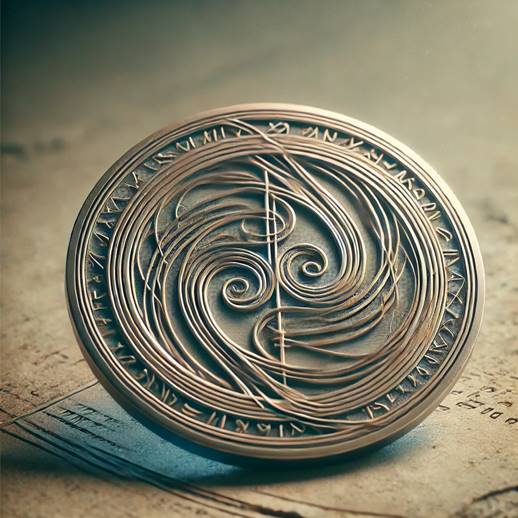
The Rune of Forgotten Tongues, with its unique ability to unlock ancient languages and facilitate communication with lost civilizations, would be a highly coveted and valuable artifact. However, due to its specialized nature and rarity, it would not be readily available for purchase in a typical shop. Instead, obtaining or selling the rune would likely involve special circumstances, quests, or interactions within the game world. However, if a shop where the rune can be bought or sold can be found, consider the following:
- Shop Type: Arcane Library or Linguistic Archives
This type of shop specializes in rare and ancient texts, linguistic resources, and magical artifacts related to language and communication. It caters to scholars, linguists, and individuals with a deep interest in ancient knowledge and lost civilizations. The shopkeeper is likely a knowledgeable linguist or sage, well-versed in ancient languages and the lore associated with them. - Buying Price: Given the rarity and extraordinary abilities of the Rune of Forgotten Tongues, its buying price would be substantial. It could command a high price, usually beyond the means of most characters at level one. The exact price would depend on the wealth and influence of the buyer, the scarcity of the rune in the world, and the bargaining skills of the characters. It could range from several thousand to tens of thousands of gold pieces.
- Selling Price: If a character decides to sell the Rune of Forgotten Tongues, they will find that it holds great value due to its uniqueness and desirability. The selling price would be less than the buying price, as the shopkeeper needs to make a profit. However, it would still be a substantial sum, allowing the character to amass significant wealth or acquire other valuable items.
The Rune of Forgotten Tongues, while primarily focused on ancient languages and communication, can still be used for defense and offense in combat scenarios. Here are some ways the rune can be employed in such situations:
- Defense:
- Linguistic Barrier: By invoking the rune, the character can create a linguistic barrier that shields them from certain forms of magical or verbal attacks. The barrier manifests as an invisible shield that disrupts or nullifies hostile spells or verbal enchantments targeted at the character.
- Cryptic Warding: The character can inscribe the rune onto surfaces, creating cryptic sigils or markings that act as protective wards. These wards can deter or repel enemies, causing them confusion or disorientation when attempting to approach or attack the character.
- Ancient Knowledge Shield: The rune grants the character access to forgotten wisdom and ancient defensive techniques. They can draw upon this knowledge to enhance their defensive maneuvers, such as employing ancient martial arts or utilizing historical battlefield tactics to avoid or mitigate incoming attacks.
- Offense:
- Linguistic Manipulation: The character can use the rune’s power to manipulate or alter the linguistic patterns and vibrations around them. By doing so, they can disrupt enemy spellcasting, rendering their incantations ineffective or causing them to backfire.
- Ancient Curses: By tapping into the rune’s power, the character can invoke ancient curses or incantations, inflicting debilitating effects upon their enemies. These curses may impair an opponent’s abilities, weaken their defenses, or cause temporary confusion or disarray.
- Language-based Illusions: The character can utilize the rune to create illusions rooted in ancient symbols, words, or languages. These illusions can confuse enemies, creating distractions or deceptive imagery that hinders their ability to accurately perceive the battlefield or the character’s true position.
The Rune of Forgotten Tongues can merge with armor, weapons, or equipment to enhance their properties and imbue them with the power of ancient languages. Here are some ways the rune can integrate with various gear:
- Armor:
- Language Barrier: The rune can be inscribed onto the armor, creating a mystical barrier that protects against certain magical or verbal attacks. The barrier resonates with ancient words of protection, reducing the effectiveness of spells or enchantments targeting the wearer.
- Symbolic Resilience: The rune’s symbols can be etched into the armor, enhancing its resilience, and providing additional protection. The symbols evoke the ancient meaning of strength, endurance, or protection, making the armor more resistant to physical or magical damage.
- Weapons:
- Linguistic Edge: The rune can be engraved onto the blade or hilt of a weapon, infusing it with the power of ancient languages. This grants the weapon a greater ability to disrupt magical barriers or defenses, making it more effective against opponents relying on magical protection.
- Verbal Resonance: When the weapon strikes an opponent, the rune’s power can be triggered to emit resonating verbal vibrations. This causes disorientation or distraction, making it harder for the enemy to concentrate or cast spells effectively.
- Equipment:
- Translation Tool: The rune can merge with a linguistic tool, such as a book, scroll, or translator’s quill. This enhances the tool’s capabilities, allowing the user to decipher ancient texts, languages, or cryptic writings more easily and accurately.
- Glyphic Warding: The rune can be integrated into protective glyphs or sigils inscribed on equipment. These glyphs act as a form of warding, providing additional protection against specific types of magical attacks or enchantments.
The Word That Was Not Lost
The Tale of the Rune of Forgotten Tongues
In the time before the world was written, before the stones whispered their names and the stars carved their sigils into the sky, there were voices. Some voices sang and were heard, some voices called and were answered, but some—some were swallowed by the great forgetting, lost in the maw of silence, waiting, waiting, waiting to be spoken again.
Long before the tongues of men curled into the words they now know, there were those who wove meaning into the breath of the world itself. They were the Keepers of the First Sound, the ones who walked not with weapons nor banners, but with syllables that unraveled the threads of silence. They spoke to the rivers, and the rivers remembered where to flow. They whispered to the winds, and the winds carried their secrets across the ages. They called the mountains by name, and the mountains stood firm, never forgetting who they were.
But time is a thing that does not listen—it does not wait, it does not repeat. And so the tongues of the Keepers grew heavy, their words sank into the earth, and the world moved on. The rivers still flowed, the winds still danced, the mountains still stood, but none could recall why. And the voices of the Keepers—so powerful once—became as echoes in an empty hall, fading, fading, fading…
Yet, among them was one who would not let the last word be swallowed. Her name was lost even before time learned how to forget, but some say she was called Tzaari, which in the Old Speech meant She Who Speaks Last. She was the youngest of the Keepers, the last to be born among them, the final whisper before the hush. When the others turned away from their task, when the winds no longer listened, when even the stars blinked and forgot, Tzaari took her hands and pressed them into the last of the sacred stones, carving, carving, carving—not words, but the memory of words.
She worked for seventy days and seventy nights, her fingers raw, her breath labored. Each stroke of her hand inscribed not just letters, but the sound of the First Speech itself. She did not write meanings—she wrote understanding. She did not carve names—she carved remembrance. And when she was finished, the stone was no longer just a stone. It was a vessel, a door, a bridge between silence and knowing.
She held the Rune of Forgotten Tongues in her hands, and when she spoke, the air trembled. The trees leaned to listen. The rivers, which had long since forgotten their old paths, stilled. And the wind—the wind, which had been deaf for an age—turned upon itself, gathering her voice and carrying it across the world.
But the world had changed. Men had learned new tongues, crude and sharp-edged. They had built walls to keep out the past, had bound knowledge in chains of paper and ink, had let the old words crumble beneath their feet. They no longer heard the voices of the stones or the rivers or the winds. They no longer sought to understand, only to command.
And so when Tzaari came among them, her hands stained with the dust of time, they did not greet her as a keeper of wisdom. They did not ask what she had preserved. They saw only a woman with a stone, and in their world, stones were things to be cut, shaped, and sold.
The first king to hear of her came in robes of gold, his eyes filled not with curiosity, but with hunger. He bade her speak the Rune’s power, to make the ancient words serve his will. But when Tzaari held the Rune aloft, it did not bow to him. It did not make him rich, nor grant him dominion over his enemies. It simply told him the truth—a thing more terrifying than any blade. It told him of the broken pacts, of the forgotten debts, of the price of his kingdom’s rise. And the king, in his fear, cast her out.
So she wandered, bearing the Rune across the lands, seeking one who might listen. But every place she went, men turned away. Those who ruled did not wish to hear the past. Those who served had no need for voices they could not command. And those who searched for knowledge wished not for truths, but for power.
It is said that in the end, she took the Rune to the edge of the world, where even the stars grew quiet, where the land met the sky and the sky met nothing at all. There, she knelt, pressing the Rune into the earth, and whispered the last words of the First Speech.
“If there is none to listen, let the world itself remember.”
And the Rune sank into the soil, carried down through root and stone, slipping between the pages of time itself. The rivers forgot where it lay. The winds lost its scent. The mountains closed their mouths around it. And yet, in places where the old words stir, where whispers hide in the cracks of ruins and the dust of ancient scrolls, the Rune waits.
It waits for the one who does not seek power, nor wealth, nor dominion. It waits for the one who listens.
It is said that those who find it will hear not only the languages of the past, but the voices of all things—the sigh of the trees, the murmurs of the tides, the laughter of stars too distant to be seen. But to carry it is a burden, for not all words are meant to be known, and some knowledge cannot be unlearned.
And so the Rune of Forgotten Tongues remains hidden, waiting not for the bold, nor the strong, but for the one who asks not what to say, but why words must be spoken at all.
Moral of the Story: “Not all that is lost is silent. Not all that is remembered is known. And the greatest words are not those that command, but those that understand.”