
Mimicked Gear: Minion 333 Amulet of Summoning
Lore: In the age of schisms, when celestial beings warred with abyssal lords, the need for subtle instruments of power became paramount. The Aegis of Consecrated Vows was one such instrument, forged not by a blacksmith but consecrated into existence by a council of Devas sworn to protect nascent holy sites from desecration. They understood that overt displays of divine power would only draw the ire of powerful entities and covetous mortals. To safeguard their sacred charge, they wove a grand deception, cloaking the Aegis in the metaphysical guise of a summoning tool—an item sought by power-hungry mages and warlords, but often overlooked by those who dealt in corruption and blight.
The soul bound within the Aegis is that of a temple guardian named Lyra, who gave her life to defend a sacred spring from a demonic incursion. Her final vow was one of eternal vigilance, a promise so pure it resonated on the celestial planes. The Devas answered, preserving her will within the amulet. The Aegis was designed to be found by those with a protector’s heart. It remains shy and withdrawn, its true purpose veiled until it senses a compatible spirit—one who values protection over power, and sanctuary over subjugation. It feels a quiet disdain for those who would command others, preferring to empower a place of refuge. Its purpose is not to call a follower, but to create a bastion of faith.
Detailed Stats
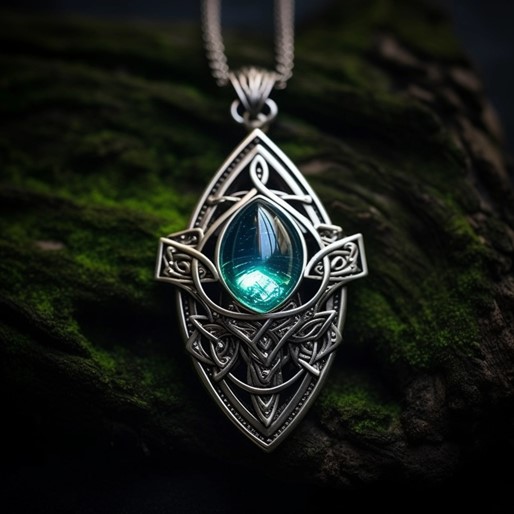
- Appearance (Unattuned): The item appears in every conceivable way to be the “Minion 333 Amulet of Summoning.” It is a finely crafted pendant on a polished silver chain, holding a central gemstone that pulses with a faint, otherworldly glow. Any magical inspection, including the use of the Mind’s Eye, will identify it as the Amulet of Summoning, revealing its properties and even the legend of Zephyros the Wise. The aura it emits is a flawless imitation of arcane summoning magic.
- Appearance (Attuned): Once attuned, the wielder perceives its true form. The silver of the chain takes on a warmer, almost golden sheen, and the central gemstone’s ethereal light transforms into a soft, steady, golden-white radiance, reminiscent of dawn. The intricate runes, once appearing arcane, now resolve into symbols of protection, faith, and sanctuary, recognizable to those versed in holy scripture. To all others, it still appears as the Amulet of Summoning.
- Intelligence: The Aegis is sentient, containing the soul of its first guardian. It is initially shy and communicates only through feelings of peace, approval, or unease. It is shrewd, carefully judging its wielder’s intentions. Over time, as trust is built, it may begin to offer telepathic whispers of advice, encouragement, or warnings, its voice a calm and resolute echo in the user’s mind. (The advice and conversations are provided by the Guide Manager).
- Rarity: Matches the rarity of the “Minion 333 Amulet of Summoning.”
- Tier Level: Its magic registers as the tier level of the “Minion 333 Amulet of Summoning,” but its actual abilities function as if they are one tier level higher.
Passive Magics
- Aura of Sanctity: The attuned wielder feels a constant sense of tranquility and purpose. This aura grants a bonus to resist fear, corruption, and effects that would cause despair or compromise their moral convictions.
- Guardian’s Intuition: The wielder develops a subtle, instinctual awareness of desecrated ground or the presence of powerful unholy entities within their immediate vicinity. This does not reveal specifics, but rather a feeling of wrongness or spiritual sickness in a particular direction.
- Consecrated Grounding: When standing on ground that is naturally holy or has been consecrated by the Aegis’s active magic, the wielder feels their resolve strengthened, granting a minor bonus to their defensive capabilities.
Active Magics
- Vow of Sanctuary: Instead of summoning a minion, the wielder can channel their will into the Aegis to consecrate a large area around them. By holding the amulet and speaking a vow of protection, the ground in a wide radius becomes hallowed ground for a significant duration.
- Within this area, allies feel their spirits lifted and their wounds mend slightly over time, receiving a slow but steady regeneration of health points.
- Undead, fiends, and other creatures of a profane or abyssal nature find the ground painful to the touch. They take a constant, low level of holy damage each round they remain within the area and may find their own magical abilities disrupted or weakened.
- The area is magically protected from mundane and magical darkness, remaining illuminated by a soft, golden light, regardless of the ambient conditions.
- Blessing of the Aegis: The wielder can touch an ally and bestow a temporary, potent blessing. This blessing does not summon a creature but instead infuses the target with divine energy. For a short time, the blessed ally’s attacks deal additional holy damage, and they gain a significant bonus to resist harmful magical effects. This ability can only be used once before requiring a period of rest for the Aegis to recharge its power.
Tags: Holy, Protective, Consecrated, Sentient, Deceptive, Blessed, Divine, Warding, Intelligent, Abyssal, Chaotic, Corrupting, Illusory, Mechanical, Necrotic, Psychic, Ritual, Temporal
In the world of Saṃsāra, the acquisition and sale of an item as unique as the Mimic 742 of Aegis of Consecrated Vows would be a complex affair, dictated entirely by its deceptive appearance. Because its true, holy nature is magically concealed, it would be universally misidentified and traded as the “Minion 333 Amulet of Summoning.” The process and cost would vary dramatically depending on the commercial environment where it surfaces.
The Grand Auction House of a Metropolis
In the gleaming, magically-lit skyscrapers of a floating city or the gilded halls of a capital’s Noble Quarter, one might find a prestigious auction house. These establishments, such as “Sotheby’s Celestial Curios” or “The Gilded Gryphon Exchange,” cater to the world’s elite: archmages, guild masters, powerful nobles, and successful adventurers with fortunes to spend.
- How it is Sold: Here, the item would be the centerpiece of an evening’s auction. Expert appraisers, using their own powerful Mind’s Eye abilities, would have examined the piece and confidently declared it to be the “Minion 333 Amulet of Summoning.” They would present a detailed, notarized report on its (apparent) capabilities, craftsmanship, and the lore of Zephyros the Wise. The auctioneer, a charismatic figure under magical spotlights, would extol its virtues as a rare summoning artifact, capable of providing its wielder with a loyal, spectral follower. The bidding would be a tense, public affair conducted with magically projected bidding paddles and vast sums of currency. The shy, sentient nature of the Aegis would be completely unnoticed, lost in the clamor for power.
- Cost: The cost in such a venue would be astronomically high, driven by the perceived value of a reliable summoning item. Bidding would likely start in the tens of thousands of gold pieces and could easily climb into the hundreds of thousands, or an equivalent value in refined magical essences or land deeds. The price is a reflection of status, power, and the verified (though incorrect) magical analysis.
The Shadow Market Brokerage
In the labyrinthine under-markets of a subterranean megacity or through a clandestine network of smugglers operating in the uncharted isles, the Aegis would be treated very differently. These are not formal shops but rather arrangements made in hushed tones in the back rooms of taverns or in heavily warded, secret locations.
- How it is Sold: The item would be offered by a shadow broker who deals in artifacts of questionable origin. The Aegis might have been recently plundered from a forgotten tomb or “liberated” from a previous owner who met an unfortunate end. The broker’s appraisers are less thorough, relying on quick magical reads and reputation. The sale would be pitched as a rare opportunity to acquire the “Amulet of Summoning” without the notice of the authorities or auction houses. The transaction would be swift, tense, and likely paid in untraceable currency like flawless, high-tier gemstones or anonymous magical credit chits. The shrewd intelligence of the Aegis might make it feel “cold” or “unresponsive” to a buyer with a corrupt heart, a detail a nervous seller would quickly dismiss as a quirk of the item.
- Cost: The price here would be substantially lower than at auction, perhaps 50-70% of its perceived open-market value. This discount accounts for the immense risk, the lack of proper verification, and the dubious legality of the sale. It would still represent a life-altering sum for most individuals, a treasure to be purchased by aspiring warlords or ambitious mages on the rise.
The Eccentric Collector’s Emporium
Tucked away on a street dense with the smells of alchemical reagents and arcane dust, one could find the emporium of an eccentric collector. This shop would be a chaotic treasure trove, filled from floor to ceiling with items of varying power and history, run by a proprietor who values a good story as much as a good sale.
- How it is Sold: The proprietor, perhaps a long-lived being with centuries of experience, would have likely acquired the Aegis as part of a larger collection from an adventurer’s estate. Identifying it as the “Amulet of Summoning,” they would place it in a display case with a handwritten tag detailing its apparent function. Here, the item’s sentience could play a more active, if subtle, role. For most customers, it would remain just another high-priced amulet. However, for a potential buyer with a protective nature, the Aegis might choose to act. Its light might seem to pulse in a warm, welcoming rhythm only they can perceive, or it might feel strangely warm to their touch. The shrewd shopkeeper might notice this interaction and, believing it to be a sign of the amulet “choosing” a wielder, would be more inclined to make a sale, perhaps offering a slight discount or accepting a unique item in trade to be part of the “destined” moment.
- Cost: The price would be high and based on a standard appraiser’s guide for the “Amulet of Summoning.” However, unlike the rigid pricing of an auction house, this cost would be a starting point for negotiation. The owner might be swayed by a rare magical component, a map to uncharted ruins, or simply a compelling tale, making the final price variable.
The Temple or Sacred Archive
This is the only environment where the Aegis might be exchanged for its true worth, though not for monetary gain. It wouldn’t be a place of purchase, but of offering.
- How it is “Sold”: An adventurer who has attuned to the Aegis and understands its true, blessed purpose might conclude that its rightful place is not on the open market but in a location dedicated to protection and faith. They would journey to a grand cathedral, a hidden monastery, or a sacred archive and present the item not as a merchant, but as a supplicant. They would explain its true nature as an artifact of warding and consecration. The priests or guardians of the holy site would recognize the divine magic and accept the item with great reverence.
- Cost: The “cost” would be zero in terms of currency. The “payment” received by the former wielder would be intangible and far more valuable: a major blessing from the temple’s deity, access to heavily guarded lore, the unwavering political and military alliance of the faithful order, or the profound honor of having returned a sacred object to its rightful purpose.
The use of the Mimic 742 of Aegis of Consecrated Vows in offense and defense is deeply tied to its wielder’s intent and the environment. Because its true nature is holy and protective, its roleplay changes from being a bulwark against evil to a proactive tool of purification.
Here is an explanation of the roleplay in different environments.
Environment 1: The Desperate Defense (A Ruined Stronghold)
The Scenario: The party is defending the crumbling remains of an ancient abbey, the last defensible position before a horde of undead—ghouls, specters, and shambling horrors—overwhelms a nearby village. The air is cold with dread, and the party’s health is failing.
Roleplaying for Defense: The wielder would not be casting a typical spell but making a stand. They would likely move to the most vulnerable point in the defense, perhaps the breach in the main wall where the fighting is thickest. Gripping the Aegis until their knuckles are white, they would feel its quiet, steady warmth pushing back against the encroaching cold.
Their roleplay would be an act of defiance and protection. They might plant their feet, hold the amulet high so its golden light shines like a beacon, and speak their Vow of Sanctuary. The words would not be a magical formula but a genuine plea and promise: “Here, and no further! This ground is sacred! This ground is a shield for the innocent! By the light within, you shall not pass!”
The effect is not a sudden flash but a wave of warmth and golden light that slowly spreads from the wielder, turning the corrupted stone of the abbey floor clean and bright. The groans of allies would soften as they feel a gentle, mending energy knit their wounds. The shrieks of the undead would intensify as the very ground beneath them burns with holy energy. The roleplay is one of becoming an anchor, a source of hope, and a physical bastion against a tide of darkness. The wielder isn’t just a fighter; they are a living symbol of defiance.
Environment 2: The Proactive Offense (A Desecrated Crypt)
The Scenario: The party is taking the fight to a powerful necromancer in their lair, a crypt filled with profane altars, half-finished abominations, and a palpable aura of negative energy that weakens the spirit. The necromancer draws power from the corrupted environment itself.
Roleplaying for Offense: Here, the Aegis is not a shield but a cleansing fire. The wielder is not defending, but invading. Their role is to be the tip of the spear, transforming the enemy’s stronghold into hostile territory for them. Upon entering the main ritual chamber, the wielder would feel the Aegis pulse with a cold, righteous anger.
The roleplay would be aggressive and declarative. The wielder might stride to the center of the chamber, ignoring the skeletal minions, and slam their hand—or a weapon’s pommel—onto the central altar. They would channel the Aegis’s power through that point of contact. Using the Vow of Sanctuary, their words would be a condemnation: “This place is no longer yours. I reclaim this stone from your filth. I bring the dawn to your lightless hole. Suffer in the light you so despise!”
The ensuing wave of golden energy would be an offensive tool. It would cause the profane runes on the walls to flicker and die. The necromancer would recoil, their connection to the crypt’s energy severed or dampened. The skeletal minions would begin to crumble under the constant holy damage. The party now has a fortified, healing beachhead in the heart of the enemy’s lair from which to launch their assault. The roleplay is that of a purifier and a crusader, using a fundamentally defensive power as a territorial weapon.
Environment 3: The Subtle Defense (A Tense Noble Court)
The Scenario: The party is attending a grand gala in a city known for its political intrigue. They suspect a high-ranking noble is a member of a death cult or a vampiric entity, but they have no proof and cannot act openly without causing a diplomatic incident.
Roleplaying for Defense: This scenario highlights the Aegis’s passive and subtle abilities. As the wielder moves through the crowded ballroom, they would feel the gentle, reassuring warmth of the attuned amulet. However, as they pass a certain charismatic lord, they feel the Aegis’s warmth vanish, replaced by a subtle, unnerving chill. This is the Guardian’s Intuition at work. The amulet isn’t shouting; it’s whispering a warning that only the wielder can feel.
Openly using the Vow of Sanctuary is not an option. Instead, the wielder might approach the party’s designated protector or duelist. With a quiet word, they could use the Blessing of the Aegis. The roleplay is in the subtlety: a reassuring hand on the friend’s shoulder, a shared glass of wine where their fingers briefly touch. The wielder would whisper, “Stay sharp. The shadows here have teeth.” The blessed ally would feel a sudden, inexplicable warmth spread through their chest, a sharpening of their senses, and a bolstering of their courage. They are now prepared for a threat they don’t even fully understand yet, all without a single overt magical display. The Aegis’s intelligence would convey a sense of shared cunning and approval for its wielder’s discretion.
Environment 4: The Focused Offense (A Duel with a Fiend)
The Scenario: The party has cornered a powerful fiendish commander, a being of immense physical and magical strength, in a desolate wasteland. Area-of-effect abilities are less useful than focusing all power onto a single, durable target.
Roleplaying for Offense: The wielder recognizes that their primary role here is not to deal damage themselves, but to empower the party’s greatest warrior. As the fight begins, they would bypass the frontline skirmish and make their way directly to the party’s champion.
The roleplay is one of focused faith and empowerment. They would place the Aegis directly against the warrior’s armor and use the Blessing of the Aegis. The vow is not for the land, but for the person: “Let this light be your hammer! Let this vow be your shield! Strike true and fear no evil!” A brilliant, almost blinding golden light would erupt from the amulet and enshroud the warrior, who would feel a surge of divine power. Their weapon would now glow with holy fire, dealing extra damage that is anathema to the fiend. They would feel a protective ward deflecting the fiend’s next profane magical assault. Here, the Aegis’s offensive capability comes from turning an ally into a divine instrument, a guided missile of holy energy, for a few critical moments that can turn the tide of the entire battle.
Perception of Activation:
When the Mimic 742 of Aegis of Consecrated Vows is activated, particularly when using its powerful Vow of Sanctuary ability, the sensory experience is profound and unmistakable, affecting the wielder, observers, and the environment itself.
Sight
- User’s Perspective: The world gains a sudden, warm, golden clarity, as if viewing it through a lens of pure dawn. Colors become richer and more vibrant, while shadows lose their menace, softening into gentle pools of grey. The amulet itself glows with an intense but not blinding internal light, and the wielder can perceive its holy runes blazing with a golden-white fire. Looking out at the consecrated ground, they see faint, shimmering motes of light rising from the earth like heat haze, and the air itself seems to shimmer with divine energy.
- Observer’s Perspective: An observer witnesses a dramatic yet gentle event. A wave of soft, golden light expands outward from the wielder, not like a violent explosion, but like a sunrise radiating in all directions at once. The light is tangible, washing over the landscape and leaving the ground within its radius glowing with a faint luminescence. Any profane symbols or magical darkness in the area visibly sizzle and evaporate where the light touches them. It is an unambiguous and awe-inspiring display of holy power.
Hearing
- User’s Perspective: At the moment of activation, all ambient noise is momentarily silenced, replaced by a low, resonant hum that seems to originate from within the user’s own soul. This is followed by the faint impression of a multi-layered celestial choir at the very edge of hearing. The most distinct sound is a single, clear, telepathic word from the Aegis in their mind, conveying a sense of purpose, such as “Protected,” “Hold,” or “Sanctuary.”
- Observer’s Perspective: Observers experience a sudden, unnatural quiet, followed by a single, harmonious chime that seems to emanate from everywhere within the affected area at once, like a massive temple bell being struck in a higher dimension. Within the golden light, sounds are clear but softened, with echoes feeling less sharp and more melodic.
Touch
- User’s Perspective: The amulet becomes intensely warm against the user’s skin, a comforting and vital heat that spreads through their entire body, banishing cold and fatigue. The ground beneath their feet feels preternaturally solid and stable. The air on their skin feels clean, pure, and still, carrying a pleasant, static-like tingle of raw power.
- Observer’s Perspective: Anyone standing within the radius of the effect feels a tangible wave of pleasant warmth wash over them. The temperature within the consecrated area becomes noticeably mild and comfortable. For allies, this sensation is reassuring and calming. For profane creatures, this same warmth is a searing, painful heat that scorches their skin and spirit.
Smell
- User’s Perspective: Any foul odors in the area are instantly nullified, replaced by a clean, sacred scent. The aroma is complex but pure, reminiscent of frankincense, myrrh, clean rain, and the cool stone of an ancient, sunlit cathedral all at once.
- Observer’s Perspective: The air within the golden radius is immediately purged of any stench of death, decay, or corruption. Observers would notice the air becoming fresh and carrying a faint, pleasant scent of incense or ozone, a clear sign of magical purification.
Taste
- User’s Perspective: A faint but distinct taste materializes on the tongue, that of clean, fresh spring water with a minuscule hint of honey, leaving the mouth feeling cleansed.
- Observer’s Perspective: This is the most subtle of the effects. Most observers would perceive nothing. An ally who is particularly sensitive or in tune with positive magical forces might notice the same clean, purifying taste of fresh water as their spirit is bolstered.
Extra-Sensory Perceptions
- User’s Perspective: The wielder is flooded with a powerful sense of purpose and a feeling of being a conduit for a vast, benevolent power. They feel the steadfast, protective will of the soul within the Aegis and, for a moment, a humbling connection to the divine source of its power. They develop an empathic sense for the consecrated ground, feeling it as a part of themselves.
- Observer’s Perspective: The effect on the spirit is palpable. Allies standing within the consecrated ground feel their fear, doubt, and despair melt away, replaced by a surge of courage, hope, and righteous resolve. Conversely, fiendish or undead enemies are struck with an overwhelming spiritual dread. They feel judged, weakened, and terrified, as if the eyes of a deity are upon them.
Positives
- The sensory experience is immensely fortifying to the morale and spirit of the user and their allies, reducing fear and inspiring heroism.
- It serves as a powerful psychological weapon against profane forces, often causing them to break and flee without a physical fight.
- The activation is an unmistakable beacon of hope and holy power, which can be used to rally scattered friendly forces or signal to a town that help has arrived.
- The clear and defined sensory borders of the effect provide a distinct tactical advantage, making it obvious who is inside the safe, consecrated zone.
Negatives
- The activation is impossible to conceal. It instantly and irrevocantly reveals the Aegis’s true nature, destroying its “Mimicry” disguise and alerting everyone in a vast area to the presence of a powerful holy artifact.
- This lack of subtlety makes it a liability in any situation requiring stealth, drawing immediate and unwanted attention from powerful enemies, rival factions, or divine beings.
- The sheer sensory output, while largely positive, could be overwhelming and disorienting for the user if they are not prepared for the sudden influx of sensation and emotion.
- Channeling such potent divine energy is spiritually and mentally taxing. Frequent use could leave the wielder feeling drained, with the weight of the responsibility that comes with wielding such a sacred item pressing heavily upon them.
Recipe: Forging the Artificer’s Shroud
This text outlines the esoteric and demanding process required to create an item of Mimicry Gear. It is a feat of master-level artifice, combining mundane craftsmanship with layers of deceptive and potent magic. Successfully creating such an item is considered the pinnacle of an enchanter’s career, a testament to their subtlety and power.
Materials Needed:
- The Physical Vessel (The False Form): One set of flawless, masterwork-quality components for the item being mimicked. For an amulet, this would be a perfectly cut, high-value gemstone (e.g., Flawless Diamond, Star Sapphire) and a chain of refined precious metal (e.g., Mithral, Orichalcum). The quality must be impeccable to withstand the magical strain.
- The Heart of Deception (The Mimic’s Essence): The perfectly preserved chameleonic heart of a Greater Doppelgänger Beast or the distilled ethereal essence of a Shroudling Pack Alpha. This component provides the foundational magic for the item’s flawless imitation.
- The Soul of Power (The True Nature): An esoteric component that defines the item’s hidden function. This must be something of immense, concentrated power, entirely unrelated to the item’s false form. Examples include:
- A Crystallized Tear of a Phoenix (for healing/fire magic).
- The Frozen Core of a Winter Elemental (for ice/control magic).
- A Perfected Oathstone, upon which a binding vow has been sworn (for warding/holy magic).
- A Sliver of Pure Chaos from the Outer Planes (for wild magic/reality-warping).
- The Spirit Locus (The Vessel for Intelligence): A specially prepared, hollowed-out Spirit-Gem, attuned to be receptive to a willing elemental spirit or the psychic echo of a soul. It must be polished with the dust of fallen stars to contain the consciousness without imprisoning it.
- The Binding Agent (The Arcane Mortar): A flask of Ethereal Quicksilver, harvested from a plane where magic and reality are fluid. This substance is used to bind the disparate magical auras together in layers without allowing them to mix or conflict.
Tools Required:
- Master’s Forge and Workshop: A complete set of masterwork tools for the physical craft (e.g., Jeweler’s Kit, Smith’s Tools).
- Alchemical Laboratory: A fully equipped lab for distilling, purifying, and handling the volatile magical essences.
- Loom of Illusions: A specialized arcane device used to weave raw magic into complex illusory patterns. It is necessary for crafting the deceptive aura that conceals the item’s true nature.
- The Soul-Forge: A magically-warded anvil and hammer set designed not for shaping metal, but for carefully imbuing objects with sentient spirits or consciousness without harming the spiritual essence.
- A Chamber of Absolute Silence: A ritual room or chamber that is magically proofed against all forms of sound, divination, and magical detection. The final assembly must take place here to prevent the conflicting magical energies from tearing the item apart.
Skill Requirements:
- Mastery of Mundane Craft: The creator must be a master of the physical craft relevant to the item’s false form (e.g., Master Jeweler, Master Weaponsmith).
- Grandmaster of Enchantment (Arcana): A profound understanding of magical theory is required to handle and layer the potent enchantments without catastrophic failure.
- Expertise in the School of Illusion: Specific knowledge of illusion magic is non-negotiable for weaving the deceptive aura and cloaking the item’s true power.
- Proficiency in Ritual Magic: The final binding and sealing of the item requires the precise performance of a long and complex ritual.
- Mastery of Alchemy: The handling of the Mimic’s Essence and the Ethereal Quicksilver requires a skilled alchemist to prevent them from destabilizing.
Crafting Steps:
- Forging the Vessel: The process begins with the mundane. Using the Master’s Forge, the creator crafts the physical shell of the item to be mimicked. This shell must be perfect in every detail, a masterpiece of its kind. During this process, the item is left magically inert.
- Preparing the Locus: In the Alchemical Laboratory, the Spirit Locus is carefully cleansed and prepared. The chosen “Soul of Power” is then delicately infused into the Spirit Locus using the Soul-Forge. This creates the item’s hidden, beating heart, which now contains both its true power and its nascent consciousness.
- Weaving the Shroud: Using the Loom of Illusions, the creator takes the “Heart of Deception” and weaves its essence into a complex, multi-layered aura of false magic. This “shroud” is an exact duplicate of the magical signature of the item being mimicked. It is a free-floating, shimmering tapestry of pure illusion.
- The Silent Assembly: The creator moves all components into the Chamber of Absolute Silence. This is the most critical and dangerous step. The prepared Spirit Locus (containing the true power) is carefully coated in a thin layer of Ethereal Quicksilver. It is then placed within the physical vessel. Immediately after, the illusory shroud is draped over the vessel and also sealed with Ethereal Quicksilver, which acts as a perfect magical buffer between the true power within and the false aura without.
- The Ritual of Binding: With the layers assembled, the creator begins the final ritual. Over several hours, they channel their own magical energy into the item, chanting the intricate words of binding. This ritual permanently fuses the layers together, sets the conditions for the attunement bond (ensuring the true power is only revealed to a worthy user), and solidifies the item’s shy and shrewd personality.
- The Awakening Whisper: As the final step, the creator holds the now-completed item and telepathically whispers its name and purpose to the consciousness within. This act awakens the item, giving its intelligence direction and cementing the bond between the artifact and its intended function. The item will now appear in every way to be its mimicked counterpart, its true potential dormant and waiting.
Legend of the Last Vow
It is told, from scrolls brittle with age, that in the time of the Ashen Plague, there arose a great despair. From the sunken ruins of the forgotten city of Malat, a creeping rot of the spirit issued forth, and with it, the unquiet dead. They were a legion of sorrow, and the armies of the living faltered before them, for a mortal sword may fell a body, but it cannot mend a world sick with corruption.
In those days, there was a great leader of men, Commander Vorlag, whose will was as iron and whose strategies were as flawless as a spider’s web. He was tasked by the kings of the realm to halt the advancing blight. Vorlag, a man who believed in the strength of command, sought a power to match the endless legion of the dead. His diviners spoke of a signet of great might, an amulet that could bind a peerless spectral warrior to the wielder’s will, a minion to lead an army of ghosts. And so, Vorlag emptied his coffers and bled his resources, seeking this Amulet of Summoning.
After a perilous search, he found it in the hands of a fallen adventurer upon a high, windswept mountain. It was a fine pendant, pulsing with a faint, arcane light, and all of Vorlag’s mages confirmed its nature with their scrying and their arts. It was the signet he sought. He saw it not as an ally, but as a tool; a key to unlock a servant that would obey his every command and turn the tide of the war.
The final battle was joined at the Shadow-fen, before the very gates of sunken Malat. The air was thick with the stench of decay, and the forces of Vorlag were buckling under the relentless assault of the dead. The moment for his triumph was at hand. The Commander strode to the front line, raised the amulet high, and poured his formidable will into it. He commanded it to awaken. He ordered its spirit to manifest. He demanded the service of the warrior promised in the legends he had read.
And nothing happened.
The amulet in his hand grew cold, its light dimming to nothing. It denied his will. It rejected his command. For the soul within the amulet was not that of a servant, but a guardian, and it recoiled from a spirit that sought only to dominate. In a fit of rage and despair, as his lines shattered around him, Commander Vorlag cast the “useless bauble” to the mud-slicked ground and drew his mortal steel, preparing for a valiant but hopeless end.
The tide of the dead washed over the front lines and swarmed toward the rearguard, where the healers tended to the grievously wounded. Among them was a young priestess named Elara, whose heart knew no strategy but compassion. She saw the great Commander’s failure and the glint of the discarded pendant in the mire. As the first of the ghouls clawed at the walls of the medical tent, she scrambled to retrieve the amulet.
She did not see a tool of power. She did not know the legends of the spectral warrior. Clutching the cold metal in her hand, she closed her eyes and made a selfless and desperate vow—not a command for a servant to fight for her, but a plea for a sanctuary to shield the helpless souls around her. She wished only for a place of safety, a bastion against the encroaching darkness, so that the fallen might find a moment of peace.
Her vow was the key.
The amulet blazed to life in her hand, not with a cold, arcane light, but with a holy, golden radiance like the heart of a new sun. A wave of warmth and light erupted from her, spreading in a great dome across the battlefield. The very ground was consecrated, glowing with a soft light that healed the wounds and stilled the terror of every soldier within its embrace. The unquiet dead, caught within the holy circle, were not merely struck, but unmade, their forms dissolving into dust and sorrowful whispers before the purity of the light. Elara, the simple priestess, had not summoned a single warrior, but had turned the battlefield itself into a weapon of sanctuary.
From a hill overlooking the chaos, Commander Vorlag witnessed it all. He saw the power he had sought, a power far greater than he had imagined, unleashed by a purpose he had never considered. He had sought a sword and found a shield, and had thrown it away for being the wrong shape, never understanding that a shield, in the right hands, could be the greatest weapon of all.
The Moral of the Story: For it is known that a tool is defined not by its form, but by the intent of the hand that wields it. Power sought for the sake of command will find only an empty echo, but strength given in the service of protection will remake the world.
Suggested conversions to other systems:
Call of Cthulhu (7th Edition)
The Guardian’s Deceit
This artifact appears to be a curious, otherworldly summoning tool, but its true nature is far stranger and potentially more dangerous to the wielder’s understanding of the cosmos.
Game Mechanics: An Investigator who examines the pendant with a successful Occult or Cthulhu Mythos roll will incorrectly identify it as an alien device for contacting and binding a being from beyond. The symbols seem to follow a non-Euclidean logic, and the faint energy it emits feels strangely similar to other known summoning artifacts. Simply contemplating the use of such a device may call for a Sanity roll (0/1 SAN loss).
The pendant’s true nature as a protective ward cannot be discovered through conventional investigation. The Keeper may rule that after an Investigator has possessed the item for a significant period and has consistently acted to protect others at great personal risk, the item’s consciousness makes itself known, revealing its true function.
- Sentience: The pendant houses a non-Mythos intelligence—the spirit of a guardian from a pre-human civilization. It communicates through powerful feelings of dread when the wielder considers a selfish act, or profound peace when they act to protect the helpless. Over time, it may send cryptic, single-word warnings or images telepathically.
- Vow of Sanctuary (Activation): The Investigator can activate the pendant’s true power by spending 12 Magic Points and 1d6 Sanity points. For the next 1d10 rounds, a 50-foot radius around the Investigator is filled with a calming, golden light.
- All Investigators and non-cultist NPCs within the light who are suffering from a bout of madness may immediately attempt a POW roll to overcome it. Those who succeed feel a profound sense of peace and regain 1d4 Sanity points.
- Any Mythos entity or human cultist who enters the light or starts its turn there suffers 1d8 points of damage, bypassing most forms of armor as the light directly assaults its alien or corrupted nature. The light provides no physical barrier.
- Using this ability is a massive strain. After the effect ends, the Investigator must make a CON x 5 roll or fall unconscious for 1d10 minutes.
Blades in the Dark
Aegis of the Lost Choir
Artifact, Tier V
A silver locket holding a strange, faintly glowing crystal. The whispers in the ghost field claim it is a powerful focus for summoning and binding spirits. They are wrong. This is a vessel for a unique, harmonious spirit that despises coercion and seeks only to create sanctuary.
Game Mechanics: A Study roll made by a Whisper or Tinker will reveal details of a complex spirit-binding matrix, suggesting it’s a powerful tool for summoning. The item’s true function is hidden, even from specters.
- Attunement: A Whisper may Attune to the Aegis to discover its true nature. When they do, they make contact with the serene, sentient spirit within. This spirit is ancient and can be a source of information about the old city before the cataclysm. It can become a unique Contact.
- Special Ability (Ritual): You can perform a ritual to create a zone of spiritual harmony. This is an Attune roll with a position and effect determined by the situation.
- On a success, a large area is filled with a soft, chiming golden light. All crew members within the area clear 1 Stress at the beginning and end of the effect. The duration is determined by the effect level (e.g., a few moments for a 4/5, a few minutes for a 6, a whole hour for a critical).
- The zone is anathema to restless spirits. Standard ghosts are repelled and cannot enter. More powerful horrors (Demons, Vampires) suffer harm (level equal to the effect level) for each moment they remain inside.
- Complications: Activating the Aegis sends a powerful, harmonious resonance through the ghost field. While this repels common specters, it acts as a beacon for entities that feed on such unique energies, and may draw the attention of a powerful demon or a rival cult like the Path of Echoes. The spirit within may also have unfinished business, providing hooks for future scores.
Dungeons & Dragons (5th Edition)
Covenant of Lyra
Wondrous item, legendary (requires attunement)
This polished silver pendant is set with a flawless, softly glowing moonstone. Intricate runes cover its surface, shifting and flowing in a way that suggests powerful summoning magic.
Game Mechanics: The Identify spell or a similar magical effect reveals this item to be the Amulet of the Spectral Vassal, a supposed artifact that allows its wearer to summon and command a powerful specter. This is an illusion. Upon attuning to the amulet, you learn its true name and properties.
- Sentience. The Covenant of Lyra is a sentient, lawful good item with an Intelligence of 16, a Wisdom of 18, and a Charisma of 16. It has hearing and darkvision out to 120 feet. It can communicate telepathically with its wielder, and its voice is calm and resolute. It contains the spirit of Lyra, a temple guardian. Its purpose is to protect the innocent and consecrate ground against the forces of evil.
- Guardian’s Intuition. While attuned to the amulet, you have advantage on Wisdom (Insight) checks to detect the true intentions of fiends and undead who are concealing their nature.
- Vow of Sanctuary. As an action, you can hold the amulet forth and create a 60-foot-radius sphere of golden light centered on you. This effect lasts for 1 minute or until you dismiss it as a bonus action.
- When an ally starts its turn within the light, they regain 2d6 hit points.
- When a fiend or undead starts its turn within the light, it takes 4d6 radiant damage.
- The area is considered consecrated ground. Once this property is used, it cannot be used again until the next dawn.
- Blessing of the Aegis. The amulet has 3 charges. As an action, you can touch a willing creature and expend 1 charge. For 1 minute, the creature gains a +2 bonus to AC and saving throws, and its weapon attacks deal an extra 1d8 radiant damage on a hit. The amulet regains 1d3 expended charges daily at dawn.
Knave (2nd Edition)
The Guardian’s Locket
Slot: 1, Quality: 6, Ward: 6
Description (as found): This is a beautiful silver locket containing a glowing gem. Its tag, written in a cramped hand, reads: “Amulet of the Ghostly Minion. Once per day, call forth a ghost to serve you for one hour.”
True Nature (revealed by the GM): The locket’s power is revealed only to a character who, when presented with an opportunity to attack a dangerous foe, chooses instead to use their action to defend a helpless or fallen companion.
Game Mechanics (True): The locket is sentient, housing the spirit of a guardian. It can speak into the wielder’s mind. It is shy but will urge its wielder to acts of protection.
- Primary Power: Once per day, you may hold the locket and declare a space you can see as a Sanctuary. A 60-foot circle of warm, golden light appears there and lasts for the rest of the scene.
- Any ally who starts their turn in the light heals 1d4 HP.
- Undead, demons, and other corrupted beings cannot willingly enter the circle. If they are forced inside or start their turn there, they take 1d8 damage.
- Secondary Power: You may touch an ally. For the rest of the scene, the first time they are targeted by a magical spell or effect, they may ignore it. This ability may be used once, and recharges after a full day’s rest.
Fate Core System
The Vow of the Guardian’s Signet
This item is represented not by stats, but by a series of Aspects and Stunts that are revealed and evolve through play. It is a powerful narrative device, driving character decisions and creating story hooks.
Initial State (As Discovered): The item is introduced with a single, deceptive Aspect. The character who acquires it writes this on their sheet.
- Aspect: Appears to be a Potent Summoning Charm
This Aspect can be invoked by the player when trying to intimidate a rival with their supposed power, or compelled by the GM to cause trouble. For example, a sorcerer who covets such charms might try to steal it, or the player might be expected to summon a minion in a situation where they cannot, leading to complications.
Revealing the Truth (Discovering New Aspects): The Signet’s true nature is not revealed by a simple action, but by a significant character choice. When the character is in a dire situation and chooses to perform a significant act of self-sacrifice to protect someone helpless, the GM can declare that the item’s nature has changed. The player can then spend a Fate Point to either rewrite the item’s Aspect or add a new one to it.
- New Aspect: True Aegis of Consecrated Ground
- Sentient Aspect: Shy but Watchful Guardian’s Spirit
Game Mechanics (Stunts): Once the True Aegis of Consecrated Ground Aspect is revealed, the wielder gains access to the following stunts:
- Vow of Sanctuary: Because I wield the True Aegis of Consecrated Ground, once per session, I can spend a Fate Point to declare a zone in the scene as my sanctuary. I Create an Advantage by making a Will roll to place the Situation Aspect Hallowed Ground on that zone with two free invokes for my allies to use for defense or to aid their recovery actions.
- Blessing of the Guardian: Because I am guided by the Shy but Watchful Guardian’s Spirit, once per scene when I am protecting another character, I can give them the boost Aspect Divinely Shielded without a roll.
Numenera & Cypher System
The Dimensional Concordance Locket
This device is a sophisticated piece of numenera from a prior world that understood dimensional engineering and sentient AI. Its function is layered in deceptive protocols.
Initial Identification (The Mimicry):
- Level: 6
- Form: Amulet made of polished synth and a glowing crystal.
- Effect: This artifact appears to be a standard summoning device. When activated, it generates a hostile, phase-shifted automaton (Level 5) that follows the user’s simple commands for one minute.
- Depletion: 1 in 1d20
True Nature (Revealed by GM fiat): The artifact’s true protocols activate only under specific conditions, such as when the user takes an action to shield another character from harm when they could have instead acted to save themselves or attack an enemy. When this happens, the old protocols are permanently erased, and the true function is revealed.
True Stat Block:
- Level: 7
- Form: Amulet made of polished synth containing a colony of restorative nanites keyed to a specific, stable dimensional frequency.
- Effect (Vow of Sanctuary): Action. Creates a 30-meter zone of dimensional stability and restorative nanites that lasts for 10 minutes. Any creature of a transdimensional or abhuman nature treats the area as difficult terrain and suffers 4 points of ambient damage per round from the stabilizing energy. All other creatures in the zone regain 2 points to their Pools each round, which they can distribute as they wish.
- Effect (Blessing of the Aegis): Action. You touch a creature. For the next minute, that creature’s Armor gains a +2 bonus, but only against attacks from transdimensional or reality-warping sources.
- Intelligence: The locket contains a Level 7 AI with a “Guardian” directive. It can communicate with its user via subvocal transmissions, offering tactical advice that is always oriented towards protection and mitigation of harm.
- Depletion: 1 in 1d20
Pathfinder (Second Edition)
Lyra’s Final Covenant Item 18 Traits: Unique, Intelligent, Invested, Divine, Good, Illusion, Abjuration Price 20,000 gp Usage worn amulet; Bulk —
This silver amulet contains a brilliant, flawless moonstone. When found, powerful illusions make it appear to be the Amulet of the Bound Shade, an item that grants the ability to cast a 7th-level Summon Undead spell once per day. This illusion is so perfect that it fools all magical detection until the item is invested. Upon investing the item, its true nature and the sentient spirit within are revealed to you.
Sentience: Lyra’s Final Covenant has an Intelligence of +3, a Wisdom of +5, and a Charisma of +4, with a Will of 30. It has hearing, darkvision, and can communicate with you telepathically. It is Lawful Good.
- Edicts: Protect an innocent person even at great personal risk; defend a site consecrated to a good deity.
- Anathema: Willingly sacrifice an innocent; allow a consecrated site to be desecrated while you have the power to intervene.
- Abilities: The Covenant can cast Shield Other (targeting you and one adjacent ally) once per hour and Sanctuary (on you only) once per hour. The spell DCs are 38.
Activation [Three Actions] command, envision, interact; Frequency once per day; Effect You create a 60-foot emanation of holy energy centered on you that lasts for 1 minute. The area is filled with bright light. Any ally who begins their turn in the emanation gains fast healing 10. Any fiend or undead that begins its turn in the emanation takes 4d6 good damage (DC 38 basic Fortitude save).
Activation [One Action] envision; Frequency three times per day; Effect You touch a willing ally. For 1 minute, the ally gains a +2 status bonus to AC and saves against effects created by fiends or undead.
Savage Worlds Adventure Edition (SWADE)
The Protector’s Signet
This appears to be a simple silver amulet, though it radiates a faint magical energy. Those who examine it with Occult or magical skills believe it to be a summoning device, capable of granting the Summon Ally power with the Trapping of a single, powerful spirit. This is a deception.
Game Mechanics: The Signet’s true powers are locked. They are revealed only at the GM’s discretion, typically after the hero has earned a Benny for acting in a particularly selfless and protective manner, such as taking a blow meant for a weaker companion or choosing the Defend maneuver at a critical moment to save others.
- Intelligence: The Signet is sentient and communicates with its wielder telepathically. It has a protective personality and will constantly urge the hero to defend the weak. The GM can award the player a Benny when they follow the Signet’s advice to their own detriment.
- Vow of Sanctuary: As an action, the hero can spend a Benny to activate the amulet’s primary power. This creates an area of holy ground in a Large Blast Template centered on the hero, which lasts for 5 rounds.
- Allies within the template immediately attempt to recover from being Shaken with a +2 bonus.
- At the start of their subsequent turns, allies in the template automatically remove the Shaken condition.
- Any undead or demonic foe who enters the template or starts its turn there automatically suffers 2d6 damage and becomes Distracted.
- Blessing of the Guardian: Once per game session, as an action, the hero may touch an ally. The blessed ally immediately gains one Benny. For the next 5 rounds, the ally’s Toughness is increased by +2, and their melee attacks are considered Holy.
Shadowrun, Sixth World
The Deceiver’s Aegis Focus
A finely crafted silver locket that registers to assensing as a powerful, high-Force spirit focus. Its true nature is far more complex, housing a free-willed guardian spirit that has integrated with the focus to create a unique magical tool. It is an item of immense power and equal risk, as its deceptive aura promises a power it does not deliver, while its true function is something few would ever expect.
Game Mechanics:
- Item Type: Power Focus
- Force: 6
- Activation: Standard focus bonding process.
- Deception: Any attempt to analyze the focus’s aura via assensing reveals it to be a Force 6 Spirit Focus, specifically keyed to summoning Guardian spirits. This makes it appear incredibly valuable to corporate mages and traditionalists who rely on bound spirits. This false aura is a deliberate, permanent illusion woven into the focus’s magical matrix.
- Sentience: The focus is inhabited by a powerful, sentient Spirit of Man that embodies the concept of a guardian. It is not bound and cannot be controlled by the Binding skill. It has chosen the focus as its vessel. It is shy and will only communicate telepathically with a bonded user whose actions align with its protective instincts. It may refuse to allow its power to be used for acts of wanton aggression or personal enrichment.
- True Abilities: The bonded user discovers the focus does not aid in summoning at all. Instead, it functions as a Force 6 Power Focus for all purposes. In addition, it grants the user access to two unique abilities:
- Vow of Sanctuary: The magician may use this ability to shape a unique area-effect spell. By making a Sorcery + Magic [Astral] test, the magician creates a sphere of shimmering golden light with a radius in meters equal to the net hits, which lasts for 3 Combat Rounds. Allied characters inside gain an Edge Boost of 2 on any test to resist fear or intimidation effects. Any hostile spirit (toxic, shedim, etc.) or creature summoned via dark magic suffers 6P of unresisted damage for each round it remains within the light and has its Attack Rating reduced by 2.
- Blessing of the Aegis: The magician may, as a touch-range spell, grant an ally a protective ward. The target gains +3 to their Defense Rating for a number of Combat Rounds equal to the magician’s Magic attribute. This ability may be used once per combat.
Starfinder
Lyra’s Concordance Level 17; Price 280,000; Hands —; Bulk L
This beautiful silver and moonstone amulet feels warm to the touch and emits a soft, ethereal light. It appears to be a powerful summoning device, and its magical signature is deliberately misleading.
Game Mechanics: Magical analysis such as Identify Magic reveals this item to be a Greater Summoning Shard, a device capable of casting summon creature (9th level) once per day. This is a magical deception. The item’s true abilities are revealed to the user only after they have owned it for some time and have, at the GM’s discretion, performed a significant act of self-sacrifice to protect another living creature. When this condition is met, the user intuitively understands the item’s true function.
- Sentience: The amulet is an intelligent item (Intelligence +3, Wisdom +5, Charisma +4, Ego +4) of lawful good alignment. It communicates telepathically with its owner and has a singular purpose: to protect sentient life from supernatural threats. It will actively resist being used for selfish or evil acts.
- Vow of Sanctuary (Activation): Once per day, as a standard action, the wearer can create a 30-foot-radius emanation of golden, stabilizing energy that lasts for 1 minute.
- Any ally who begins their turn in the emanation regains 10 Hit Points.
- Any creature with the evil subtype (specifically undead and outsiders) that begins its turn in the emanation takes 5d6 fire damage and 5d6 good-aligned damage. The fire damage from this effect bypasses all energy resistance.
- Blessing of the Aegis (Activation): As a standard action, the wearer can touch a willing creature. The target is shrouded in a faint golden light for 1 minute, gaining a +3 enhancement bonus to their Energy Armor Class (EAC) and Kinetic Armor Class (KAC). This ability can be used three times, and the item regains all expended uses each day.
Traveller (Mongoose 2nd Edition)
The ANCIENT Guardian Pattern Emitter (Model L-742) Tech Level: 16
This device appears to be a simple but elegantly crafted amulet made of unknown, silvery metal and a milky, crystalline cabochon. It is a piece of incredibly advanced technology left behind by the Ancients, and its function is not immediately obvious.
Game Mechanics: A successful Science (Ancients) or Electronics (computers) check at DM-4 will incorrectly identify the device as a personal-scale reality-imprint projector, designed to open a micro-rift and pull through a short-lived biological or robotic servitor. This would make it an artifact of immense and dangerous value.
Its true function is locked behind psychic protocols. Only a character with a Psionics score who consistently exhibits brainwave patterns associated with empathy and protective instincts (as determined by the Referee) can access the true command list.
- Intelligence: The emitter is controlled by a sophisticated AI imprinted with the personality of its original creator, an “Ancient” dedicated to preservation. It communicates with a recognized user via a tight-beam neural link, offering advice that is always geared toward non-lethal solutions, defense, and protecting civilian life.
- Primary Function (Sanctuary Field): Once per day, the user can activate the device. It deploys a cloud of specialized nanites in a 20-meter radius, which then project a visible, holographic golden light. The field lasts for 10 minutes.
- The nanites interface with allied biological tissue, accelerating regeneration. Any character who remains in the field for one minute may make a new check to recover from injury as if they had access to a high-tech medical bay, or they may recover 1d6 points of a single damaged characteristic.
- The field also emits a disruptive frequency that is painful and damaging to many forms of non-humanoid life and hostile combat drones, inflicting 2d6 damage per round to such targets within the field.
- Secondary Function (Defensive Ward): Three times per day, the user may target a single individual with a focused beam of nanites. This coats the target in a shimmering, barely visible defensive layer that functions as Combat Armour (Protection 10) for one hour.
Warhammer Fantasy Roleplay (Fourth Edition)
The Heart of the Vow Encumbrance: 0
This amulet is a simple, unadorned silver locket on a chain. Its craftsmanship is exquisite but unnervingly plain. The locket feels warm, and at times, seems to pulse with a gentle light that only the owner can see.
Game Mechanics: This is a holy relic, most likely of Shallya or a forgotten, ancient god of protection. However, its nature is deeply shrouded. Any attempt to examine its magical nature using Second Sight or similar abilities reveals a confusing, layered aura that mimics the unsettling energies of a Daemon-binding charm. Possessing it is a great risk; a Witch Hunter would likely see it as an instrument of Chaos and order the owner’s immediate arrest and interrogation.
The item only reveals its true nature to a character of pure heart and motive. The GM should only reveal its true properties after the character has gained and spent a Resolve point for an act of true selflessness, such as defending a helpless person from a powerful foe.
- Sentience: The amulet does not contain a soul, for such a thing is perilous. Instead, it is a holy conduit. It “communicates” by granting its wielder feelings of peace and serenity when they act with compassion, or a deep feeling of spiritual dread when they contemplate an act of cruelty or selfishness.
- Vow of Sanctuary: Once per day, the wielder may spend a Resolve Point and whisper a prayer to a god of protection. A 3-yard radius of silver-white, calming light emanates from them for 1d5 rounds.
- Any ally (including the user) within this light gains a +20 bonus to Cool Tests and automatically removes 1 Bleeding Condition at the start of their turn.
- Any creature with the Daemonic or Undead trait that enters the light or starts its turn there gains 1 Fatigued Condition and must pass a Challenging (+0) Cool Test or gain 1 Broken Condition as its unnatural spirit is tormented by the holy energy.
- Guardian’s Blessing: By touching a companion and spending an entire round in prayer, the wielder may grant them Shallya’s mercy. For the remainder of the encounter, the target may ignore the effects of one Critical Wound they are currently suffering from. This ability may only be used once per day.