
From: Areca Sanguisorba
These delicate, sweet pastries feature a filling of lotus seed paste and chopped, candied Areca Sanguisorba nuts. Eating these mooncakes is believed to ward off nightmares and grant peaceful sleep.
Lore and Cultural Significance: Crimson Mooncakes are a beloved delicacy in the world of Saṃsāra, particularly during the annual Moon Festival, which celebrates the power of dreams and the wisdom they bring. The mooncakes are said to have been created by a renowned baker named Hala, who was inspired by the heroic tale of the Dreamwalker Mahila and her sacrifice.
Hala combined the traditional lotus seed paste used in mooncakes with chopped, candied Areca Sanguisorba nuts, infusing the pastries with the essence of the dream realm. It is believed that consuming these mooncakes under the full moon during the Moon Festival grants protection from nightmares and ensures a year of peaceful, insightful dreams.
Values and Effects:
- Tier One Stats Gained: +1 Wisdom, +1 Charisma
- Skills Gained: +2 bonus to Dream Interpretation or related skill checks
- Effects: Eating a Crimson Mooncake grants the consumer protection from nightmares and promotes peaceful, insightful dreams for 1d4 days. This allows them to better understand their dreams and glean wisdom from their subconscious.
- Use: Crimson Mooncakes are typically consumed during the Moon Festival and other important events, where individuals seek guidance and protection from the dream realm. They may also be given as gifts to loved ones, symbolizing the wish for peaceful dreams and a deep connection to the dream world.
- Tags: Magical Food, Dream-Protecting, Seasonal, Traditional
Crimson Mooncakes serve as a reminder of the deep connection between the waking world and the realm of dreams, offering solace and wisdom to those who partake in their sweet, dream-infused flavors.
Embellished Crimson Mooncakes Recipe:
- Optional Ingredients:
- Rose water – to add a delicate floral note to the lotus seed paste, complementing the unique flavor of the Areca Sanguisorba nuts.
- Golden syrup – to enhance the sweetness and add a rich, caramel-like flavor to the mooncake filling.
- Candied orange peel – to provide a tangy, sweet contrast to the lotus seed paste and Areca Sanguisorba nuts.
- Essential Tools with Additional Flourishes:
- A traditional wooden mooncake mold with intricate designs (for shaping and imprinting the mooncakes)
- A high-quality food processor or mortar and pestle (for grinding the lotus seeds and Areca Sanguisorba nuts)
- A pastry brush (for applying the egg wash)
- A beautifully crafted serving platter with lunar motifs, made from materials like porcelain or lacquered wood (to honor the dish’s cultural significance and enhance its presentation)
- Skill Requirements:
- Basic baking skills
- Familiarity with traditional mooncake preparation techniques
- Ability to follow a recipe
- Optional Preparation Steps:
- Infusing the Lotus Seed Paste: Combine the rose water with the lotus seed paste, allowing it to infuse for several hours or overnight. This will create a delicate floral undertone in the filling.
- Creating a Flavored Syrup: Reduce the golden syrup with a touch of lemon juice and a pinch of salt to create a rich, tangy syrup. Brush this onto the baked mooncakes for added flavor and a glossy finish.
- Decorating the Mooncakes: After baking, carefully press a small piece of candied orange peel into the center of each mooncake, creating a vibrant visual contrast and a burst of sweet-tangy flavor.
By embellishing the Crimson Mooncakes recipe in this manner, the dish becomes an even more enchanting and delectable experience, captivating the senses and deepening one’s connection to the realm of dreams during the Moon Festival.
The embellished Crimson Mooncakes, with their delicate flavors and dream-protecting properties, are a highly sought-after delicacy during the Moon Festival and other special occasions in the world of Saṃsāra. Their sale and consumption are often surrounded by an air of celebration and reverence for the realm of dreams.
Where and How They Are Sold: These exquisite mooncakes are typically sold in specialty bakeries, festive market stalls, and exclusive culinary establishments that cater to those seeking unique and culturally significant treats. These places often feature festive decorations, such as colorful lanterns, moon-shaped ornaments, and intricate dreamcatchers, creating a celebratory atmosphere that honors the connection between the physical and dream worlds.
Cost and Value: Due to their intricate preparation, high-quality ingredients, and the dream-protecting properties provided by the Areca Sanguisorba nuts, embellished Crimson Mooncakes command a premium price, typically around 30-40 gold coins for a box of four. However, their value extends beyond the monetary, as they offer consumers a sense of comfort, protection, and connection to the dream realm during the Moon Festival and other important events.
End Results and Use:
- Consuming the embellished Crimson Mooncakes is believed to grant protection from nightmares and promote peaceful, insightful dreams. This allows individuals to explore their subconscious mind without fear, gaining wisdom and guidance from the dream realm. The mooncakes are often enjoyed during the Moon Festival, shared among friends and family members as a symbol of unity and a collective wish for a year of restful, enlightening dreams.
- In some instances, Crimson Mooncakes are also offered as gifts to dream interpreters, seers, and other individuals who work closely with the realm of dreams. The mooncakes serve as a token of gratitude and a means to strengthen the bond between the giver and the recipient, further emphasizing the dish’s cultural significance and role in fostering connections within the community.
The embellished Crimson Mooncakes are a visual delight, with a striking appearance that reflects the dish’s rich cultural significance and dream-protecting properties. Each mooncake is a small work of art, enticing diners with its promise of delectable flavors and peaceful dreams.
- The mooncakes are typically round, symbolizing the full moon that illuminates the night sky during the Moon Festival. They are approximately three to four inches in diameter and about one and a half inches thick.
- The golden-brown crust, formed by the delicate pastry dough, is adorned with intricate, imprinted designs, often featuring lunar motifs, floral patterns, or symbols of protection and wisdom. The pastry is glazed with a rich, glossy syrup, giving it a gentle sheen that catches the light.
- The lotus seed paste filling, infused with rose water and combined with candied Areca Sanguisorba nuts, lends the mooncakes a luscious, creamy texture and a deep, rich color that contrasts beautifully with the golden crust.
- Nestled in the center of each mooncake is a small piece of candied orange peel, adding a vibrant pop of color and providing a visual hint of the sweet-tangy flavor within.
- The mooncakes are often presented in beautifully crafted boxes or on decorative platters, further enhancing their visual appeal and emphasizing the importance of their role in the Moon Festival celebrations.
When presented during the Moon Festival or other special occasions, the embellished Crimson Mooncakes serve as a captivating centerpiece, drawing the attention and admiration of all who gather to partake in their dream-infused flavors.
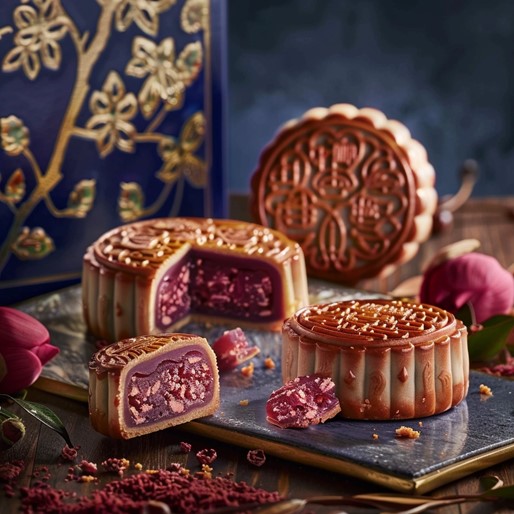
Activated Perception of the Embellished Crimson Mooncakes:
- Sight:
- Perceived: Golden-brown, intricately designed mooncakes with a glossy sheen and a vibrant, colorful filling.
- Description: The mooncakes’ beautiful appearance, enhanced by the imprinted designs and the colorful candied orange peel, creates a sense of anticipation and delight.
- Positives: The visually appealing presentation enhances the overall experience and highlights the dish’s cultural significance.
- Negatives: The focus on aesthetics may lead some to expect more complexity in flavor than the mooncakes provide.
- Taste:
- Perceived: A delightful combination of sweet lotus seed paste, nutty Areca Sanguisorba nuts, and tangy candied orange peel.
- Description: The rich, sweet flavors of the filling are perfectly balanced by the buttery, slightly flaky crust, offering a satisfying and indulgent treat.
- Positives: The delicious taste leaves diners feeling content and eager to explore the dream realm.
- Negatives: The sweetness may be overpowering for those who prefer less sugary treats.
- Smell:
- Perceived: A gentle, sweet aroma with hints of floral notes from the rose water and nuttiness from the Areca Sanguisorba nuts.
- Description: The enticing scent evokes a sense of comfort and nostalgia, reminding diners of festive celebrations and the joy of shared experiences.
- Positives: The pleasant aroma enhances the overall sensory experience and stimulates the appetite.
- Negatives: Some may find the smell too subtle or be reminded of overly sweet desserts they may not enjoy.
- Touch:
- Perceived: A smooth, slightly firm exterior that gives way to a soft, creamy filling.
- Description: The contrast in textures creates an enjoyable tactile experience that adds to the overall enjoyment of the dish.
- Positives: The varied textures provide a satisfying sensation and engage the diner’s sense of touch.
- Negatives: Some individuals may prefer a more uniform texture in their desserts.
- Sound:
- Perceived: The gentle crunch of the crust as it yields to the filling and the soft, squishy sound of the lotus seed paste.
- Description: These subtle sounds create a sense of anticipation and add to the overall sensory experience.
- Positives: The auditory experience contributes to the dish’s overall enjoyment and helps to engage all senses in the dining experience.
- Negatives: The sounds may be too subtle for some individuals to notice or appreciate.
- Extra-Sensory Perceptions:
- Dream Perception:
- Perceived: Enhanced vividness and lucidity in dreams after consuming the mooncakes.
- Description: The diner experiences a heightened sense of awareness and control within their dreams, allowing them to explore and interact with the dream realm more deeply.
- Positives: The enhanced dream perception provides valuable insights, self-discovery, and guidance from the dream world.
- Negatives: Some individuals may find the vivid dreams overwhelming or disorienting.
- Emotional Connection:
- Perceived: A deeper emotional connection with others who have shared the mooncakes or are present in the diner’s dreams.
- Description: The shared experience of consuming the Embellished Crimson Mooncakes and exploring the dream realm fosters a sense of camaraderie and understanding among the diners.
- Positives: Strengthened relationships and a deeper understanding of one’s emotions and the emotions of others.
- Negatives: The heightened emotional connection may lead to increased vulnerability or expose unresolved emotional issues.
- Dream Perception:
The Tale of Hala and the Crimson Mooncakes
Translated from an ancient, unknown language
In the long-ago times, in the land of Saṃsāra, there lived a baker named Hala. She was known for making mooncakes, round and sweet, to honor the full moon’s light. One day, she heard the story of Mahila, the Dreamwalker, who bravely walked the dream paths and gave her life to protect others from nightmares.
Hala decided to make a special mooncake to remember Mahila’s tale. She took lotus seeds, smashed them into a paste, and mixed in candied Areca Sanguisorba nuts. She wrapped this filling in pastry and baked it until it was golden. She called these treats “Crimson Mooncakes.”
People from all over Saṃsāra came to taste Hala’s Crimson Mooncakes. They believed eating them would keep bad dreams away and bring good dreams. Hala only gave the mooncakes to those who understood Mahila’s story and wanted to learn from their dreams.
One day, a greedy man named Baelish came to Hala’s bakery. He wanted the mooncakes, not to learn from dreams but to control them. Hala refused to give him any. Angry, Baelish tried to steal the recipe, but Hala hid it in a place only those with pure hearts could find.
Baelish, furious, destroyed Hala’s bakery and burned her ingredients. But Hala did not lose hope. She went deep into the forest, where she found a hidden grove of Areca Sanguisorba trees. The trees’ spirits were happy with Hala’s kind heart and gave her an even better recipe for Crimson Mooncakes.
Hala made the new mooncakes and shared them with everyone in Saṃsāra. When Baelish tried to steal this recipe, the mooncakes’ magic sent him into a never-ending nightmare as punishment for his greed.
Moral of the Story: Make things with a good heart, and use them for good. Do not be greedy or try to control what is not yours, or you will face the consequences.