
Lore: The Mark of Resilient Torment has its origins in a tragic tale of a warrior named “Alistair the Afflicted.” Alistair endured immense suffering and afflictions throughout his life, but instead of succumbing to despair, he channeled his pain into strength and resilience. To commemorate his ability to endure and rise above afflictions, Alistair created the Mark of Resilient Torment—a symbol representing the tenacity to face and conquer one’s inner and outer demons.
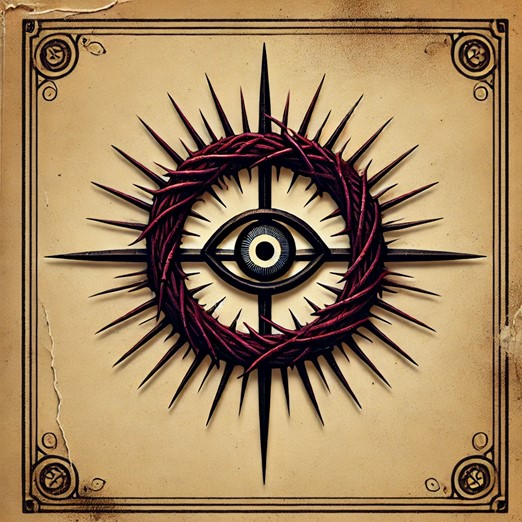
Graphic Appearance: The Mark of Resilient Torment is a rugged design featuring jagged lines resembling thorns encircling a central eye. The thorns symbolize the afflictions and challenges that surround the character, while the eye represents their unyielding determination to confront and overcome these adversities. The colors used are dark and intense, reflecting the character’s struggles and inner turmoil.
Ideas Represented: The symbol embodies the idea of “Affliction” as a powerful force that shapes and tests one’s character. It represents the character’s resilience and determination to face life’s hardships head-on.
Concept of Symbol: The Mark of Resilient Torment represents the character’s capacity to withstand and endure afflictions. It symbolizes their ability to draw strength from their suffering and use it as a catalyst for growth and empowerment.
Type of Symbol: The Mark of Resilient Torment can be displayed as a tattoo, a scar, or a branded mark on the character’s skin. It serves as a reminder of their ability to rise above afflictions and face adversity with courage.
Motivation: Alistair the Afflicted created the symbol to remind himself and others of the power that comes from persevering through afflictions. His motivation was to inspire individuals to find strength in their suffering and to embrace their scars as badges of resilience.
Use: As a level one character, displaying the Mark of Resilient Torment grants the character a heightened sense of inner strength and determination. It allows them to endure afflictions with greater resilience and to face challenges with unwavering resolve.
Tags: Affliction, Resilience, Endurance, Inner Strength, Empowerment, Determination
Positives:
- Inner Strength: The character gains a heightened sense of resilience and determination to face afflictions.
- Empowerment through Adversity: The symbol allows the character to draw strength from their suffering and use it as a catalyst for growth.
- Inspirational Aura: The character’s unwavering resolve inspires allies, encouraging them to persevere through their own challenges.
Negatives:
- Emotional Burden: The character’s past afflictions may create emotional scars and moments of vulnerability.
- Obsession with Struggle: The character may become overly focused on facing afflictions, neglecting other aspects of their life.
- Isolation: The symbol’s appearance may draw fear or apprehension from others, potentially leading to social isolation.
Story of how this symbol came about…
In the realm of warriors and tales of valor, there lived a fierce and tenacious warrior named Alistair the Afflicted. From a young age, Alistair endured immense suffering and afflictions that would have broken the spirit of most. He faced battles on the battlefield and within himself, battling inner demons that threatened to consume him. But Alistair was not one to succumb to despair. Instead, he channeled his pain into strength and resilience, determined to rise above the torment that plagued him.
As the years passed, Alistair’s reputation as a warrior grew, not just for his skill with a blade, but for his unyielding determination to face and conquer his inner and outer demons. His battles left scars, both physical and emotional, but he wore them as badges of resilience, proof of his ability to endure and overcome.
In the midst of his struggles, Alistair found solace in creating a symbol that would embody his tenacity and determination—the Mark of Resilient Torment. The emblem was rugged, with jagged lines resembling thorns encircling a central eye. The thorns represented the afflictions and challenges that surrounded Alistair, while the eye symbolized his unyielding determination to confront and overcome these adversities. The colors used were dark and intense, reflecting the character’s struggles and inner turmoil.
Alistair chose to display the Mark of Resilient Torment as a tattoo, branded permanently onto his skin. It served as a reminder of the strength he had found in his suffering and the determination that burned within him. It became a mark of pride, a testament to his ability to withstand life’s trials and emerge stronger.
As word of Alistair’s emblem spread, others were inspired by the warrior’s resilience. Those who had faced their own afflictions found courage in Alistair’s example, and some even chose to bear the Mark of Resilient Torment as a tribute to their own struggles and triumphs.
As a level one character, displaying the Mark of Resilient Torment granted Alistair a heightened sense of inner strength and determination. It allowed him to endure afflictions with greater resilience, facing challenges with unwavering resolve. The emblem became a source of empowerment through adversity, enabling Alistair to draw strength from his suffering and use it as a catalyst for growth and empowerment.
However, this resilience did not come without its challenges. Alistair’s past afflictions left emotional scars that sometimes weighed heavily on his heart, leading to moments of vulnerability. His unwavering focus on facing afflictions also meant that he had to be careful not to neglect other aspects of his life. Yet, for Alistair, the Mark of Resilient Torment remained a source of inspiration and strength, a constant reminder of the power that came from persevering through afflictions.
In the end, Alistair’s tale became one of triumph over torment, and his emblem, the Mark of Resilient Torment, stood as a symbol of hope and courage for all who faced their own battles. It became a beacon for those seeking inner strength, reminding them that even in the darkest of times, resilience and determination could lead them to emerge stronger and more empowered than ever before.