
Lore: The Verdant Circle’s roots lie in an ancient order of druids and naturalists who sought to understand the delicate balance of life within the world. Over generations, they began integrating scientific methods, herbology, and healing arts into their practices. They witnessed how progress and industry often disrupted nature’s equilibrium and now seek to find ways to harmonize those forces.
Ideology
- Harmony Through Knowledge: They believe true progress lies in a deep understanding of how living systems function and interact, from the microscopic to the ecological.
- Preservation and Restoration: The natural world is seen as sacred and worthy of protection. They strive to reverse the damage wrought by unchecked industry and restore environments to their healthy state.
- Sustainable Advancement: The Verdant Circle seeks technological and magical solutions that work in concert with nature, not at its expense. They envision inventions powered by renewable biological sources or integrated seamlessly into living systems.
- Healing the World: Their knowledge is ultimately meant to mend wounds. This applies to individual patients as well as to entire ecosystems ravaged by pollution or magical blight.
Major Concerns
- Rapid Environmental Degradation: They witness how industrial sprawl poisons the land, contaminates water sources, and disrupts the habitats of countless creatures.
- Overexploitation of Natural Resources: Mining, unchecked logging, and the overhunting of certain species threaten to irrevocably throw the balance of ecosystems out of whack.
- Magical Disasters: Unstable experiments, reckless artifact usage, or battles between powerful mages often leave scars upon the land that can take generations to heal.
Imperatives
- Document and Preserve: Meticulous research into diverse ecosystems, cataloging species, and understanding how biological systems interact are their foundation.
- Innovate with Nature: Develop new technologies, potions, and magical rituals that enhance and leverage natural processes instead of disrupting them.
- Heal and Restore: Deploy their knowledge to cleanse polluted areas, cure blights, and revitalize barren wastelands caused by both industrial and magical accidents.
- Educate and Guide: Become advisors to cities, industries, and governing bodies, demonstrating how sustainable practices are both possible and profitable in the long run.
Grand Strategy and Goals
- Establish research outposts and sanctuaries across the realm, serving as centers of biological study and havens for endangered species.
- Become the go-to consultants for city planning, aiming for sustainable infrastructure integrated with natural elements (parks, water purification gardens, etc.).
- Develop bio-magical techniques to accelerate the decomposition of pollutants and the regrowth of devastated areas.
- Ultimately, shift the mindset of society towards a greater respect for the natural world upon which all life ultimately depends.
Public Motivations and Agenda: They present themselves as experts in ecology, natural resource management, and ‘green’ technology development. They appeal to those concerned with the future, the health of populations, and seeking alternatives to destructive industrial practices.
Means and Methods:
- Field research expeditions to both pristine and damaged environments.
- Collaboration with alchemists, artificers, and even benevolent engineers seeking to create more harmonious inventions.
- Diplomatic efforts to influence policy and guide leaders, using data and research as their weapon of choice.
- Restorative magic, deploying spells and rituals that mend damaged ecosystems.
Tags: Harmony Through Knowledge, Preservation and Restoration, Sustainable Advancement, Healing the World, Environmental Degradation, Resource Overexploitation, Magical Disasters, Document and Preserve, Innovate with Nature, Heal and Restore, Educate and Guide, Research Outposts, Sanctuaries, Bio-magical Techniques, Ecological Balance
How to Join:
- Diverse Paths: The Verdant Circle welcomes those with various skills and backgrounds:
- Healers, herbalists, and naturalists with practical field knowledge.
- Scholars and researchers specializing in botany, zoology, ecology, or related fields.
- Alchemists and artificers interested in developing ‘green’ technologies.
- Diplomats and negotiators skilled in mediating conflicts between nature and industry.
- Demonstration of Commitment: Prospective members must show a genuine desire to protect the environment and a willingness to learn the ways of the Circle. This could involve completing an apprenticeship, participating in a restoration project, or successfully conducting independent research that aligns with the Circle’s goals.
Benefits of Membership:
- Access to Knowledge and Resources: The Verdant Circle possesses vast libraries and archives of biological information, as well as access to their sanctuaries and research outposts.
- Collaboration and Mentorship: Members work alongside some of the most dedicated ecological minds, sharing findings, techniques, and providing guidance to those less experienced.
- Funding and Support: The Circle backs restoration projects, research expeditions, or the development of sustainable inventions for its members.
- Influence and Recognition: As the Verdant Circle’s reputation grows, so does the respect accorded to its members, opening doors in influential circles.
Resources Controlled:
- Sanctuaries and Research Outposts: Scattered across the realm, these serve as both havens for endangered species and centers of ecological study.
- Herbal and Alchemical Gardens: They cultivate rare plants, fungi, and other ingredients used for potions and restorative rituals.
- Detailed Maps and Records: Meticulous documentation of ecosystems, species interactions, and the effects of both magical and industrial pollution.
- Network of Sympathizers: Contacts within rural communities, sympathetic nobles, and other factions who support their cause.
Limitations of the Faction:
- Limited Enforcement Power: The Verdant Circle relies on knowledge, persuasion, and diplomacy. They have little direct ability to stop those who willfully damage the environment aside from appealing to authorities.
- Slow Pace of Change: Ecological restoration and societal shifts take time and patience. Members might become frustrated by the pace of progress.
- Funding and Political Influence: Compared to wealthy industrialists or established magical orders, the Verdant Circle might struggle to secure resources and sway decision-makers.
- Targets for Sabotage: Those profiting from unchecked industry might view the Circle as a threat and resort to intimidation, theft of research, or even direct attacks.
Leadership Worries
- Apathy and Greed: The greatest enemy might be the widespread indifference of those in power and the relentless drive for profit that puts the natural world at risk.
- Internal Radicalization: Some members might become disillusioned with peaceful methods and turn towards eco-terrorism, damaging the Circle’s reputation.
- Misguided Zeal: The pursuit of restoring “natural balance” could become twisted, leading to the destruction of settlements or targeting those deemed ‘unnatural’.
- Losing Sight of the Big Picture: Becoming so focused on specific ecosystems or species that they miss emerging threats to the overall health of the world.
Secret Motivations and Hidden Agendas:
- While generally well-intentioned, some leaders in the Verdant Circle might harbor the belief that nature is ultimately better off without human interference, subtly working to undermine ‘artificial’ ways of life.
- A small, secretive sect within the Circle might be researching ways to weaponize natural forces or create bio-magical guardians to actively fight back against ecological destruction.
Passphrases, Codes, and Gestures
- Specific knowledge of a rare plant or animal’s life cycle to signal membership.
- A subtle hand gesture mimicking a tree’s roots or a blooming flower for discreet identification.
Friendly Groups
- Rural Communities: Farmers, hunters, and those who live in closer harmony with nature.
- Benevolent Druids and Nature Spirits: Potential sources of ancient wisdom and magical aid.
- Reform-Minded Politicians: Those seeking long-term sustainable solutions and receptive to the Circle’s advice.
Ranks and Jobs
- Acolyte: New members who begin their training and serve in support roles. They assist in fieldwork, maintain gardens, catalog specimens, and learn the foundational principles of the Circle.
- Field Researcher: Specialize in gathering data, studying ecosystems, and documenting the effects of pollution or magical disturbances. They are the eyes and ears of the Circle in the wider world.
- Restorative Practitioner: Focus on healing. They learn to mend damaged flora and fauna, cleanse polluted areas, and utilize restorative herbs and potions.
- Innovator: Alchemists, artificers, and mages who develop new technologies, rituals, or bio-magical enhancements in harmony with nature. They create the tools the Circle uses to reshape the world.
- Advisor: Experienced members who act as liaisons to communities, industries, and political bodies. They present findings, offer guidance, and use diplomacy to further the Circle’s goals.
- Circle Leader: Individuals who oversee entire outposts or sanctuaries, manage research initiatives, and guide the long-term strategy of the faction. They are both scholars and inspiring figures.
Advancement:
- Practical Results and Knowledge: Theoretical learning is important, but demonstrating its application in the real world is key. Successfully restoring an area or developing a useful invention are major advancement factors.
- Mentorship and Collaboration: Teaching others and contributing to a team effort reflects the Circle’s ethos.
- Initiative and Leadership: Those who proactively propose new projects, manage expeditions, or successfully negotiate with outside forces gain recognition.
- Alignment with Core Values: Deeply understanding and embodying the Circle’s philosophy of harmony and protection is essential for the highest ranks.
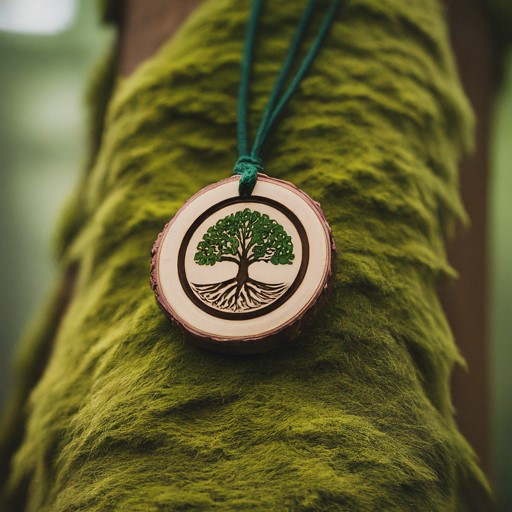
The Faction Badge
- Material: Crafted from sustainably sourced wood, polished stone, or even living plant matter imbued with magic to stay perpetually fresh.
- Symbol: A stylized tree with its roots intertwined with a flowing stream, symbolizing the interconnectedness of all life and the flow of restorative energy.
- Rank Indication: Subtle variations in the design, such as the number of leaves, the type of stone, or intricate carvings, would subtly mark the wearer’s rank.
Additional Notes
- Lower ranks might have access only to specific areas within an outpost or sanctuary.
- The highest-ranked members hold a voice in the Circle’s overall direction and have the most influence over resource allocation.
- In rare cases, an outsider with outstanding achievements directly in line with the Circle’s mission might be granted an accelerated entry and higher initial rank.
Enemies
- Exploitative Industries: Mining consortiums that strip the land bare, logging companies engaged in mass deforestation, or fisheries depleting the seas.
- Conflict: The Circle directly opposes their practices, which cause immense ecological damage. They seek to expose these harmful activities and fight for stricter regulations.
- Interactions: Protests, sabotage of industrial machinery (carefully executed to avoid harm to individuals), legal battles, and lobbying against industry-backed politicians.
- Consequences: Industries paint them as radical saboteurs hurting the economy. They might hire mercenaries against the Circle or bribe government officials to turn a blind eye.
- Corrupt Mages: Those using potent magic recklessly, causing environmental catastrophes or exploiting magical creatures for power without regard for consequences.
- Conflict: The Circle sees this as a perversion of magic’s true potential. They seek to expose the damage done and contain threats mages pose to the natural order.
- Interactions: Attempts to sway public opinion against destructive mages, aiding communities affected by magical disasters, and potentially researching counter-spells or protective wards.
- Consequences: Powerful mages might retaliate directly, deeming the Circle a meddling hindrance. This could lead to open magical confrontations, with the potential for civilian casualties.
Rivals
- Traditional Druids: Some more reclusive druidic orders might view the Verdant Circle as too willing to integrate science and technology into their practices, diluting their connection to ancient natural ways.
- Conflict: Philosophical debates about the proper balance between tradition and innovation, with both vying for legitimacy in the eyes of rural communities.
- Interactions: Heated discussions, attempts to outdo each other with ecological restoration projects, and competition for resources or access to sacred natural sites.
- Consequences: While not overtly hostile, this rivalry might lead to miscommunication and missed opportunities for collaboration, slowing down overall progress.
- Techno-Optimist Factions: Groups who believe the solution to all problems lies in technological advancement, even if it means further disrupting the natural world.
- Conflict: A fundamental disagreement about the relationship between progress and nature. They see the Circle as holding society back with their cautious approach.
- Interactions: Public debates, campaigns to discredit the Circle as ‘anti-progress’, and competing to secure funding or gain political favor with promises of swift solutions.
- Consequences: This rivalry could polarize society on environmental issues, with people forced to choose between seemingly incompatible extremes, hindering positive change.
Additional Considerations
- Internal Radicals: A possible danger within the Circle, where some members grow so disillusioned by the slow pace of change that they turn to eco-terrorism, damaging the Circle’s reputation and alienating potential allies.
- Public Misunderstanding: The Circle’s message might be twisted by enemies, framing them as nature zealots opposed to any form of civilization, making it harder for them to build bridges.
Legend of the Emerald Grove
In the ancient land of Saṃsāra, there is a story passed down through the ages about the Verdant Circle. This is known as “The Legend of the Emerald Grove.”
Long ago, when the world was still young and full of wild, untamed magic, the land was vibrant and full of life. However, as time passed, the people of Saṃsāra began to expand their towns and cities, often at the expense of the natural world. Forests were felled, rivers were diverted, and the balance of nature was thrown into chaos.
Amid this turmoil, a small group of druids and naturalists formed a secret society known as the Verdant Circle. They were dedicated to understanding the delicate balance of life and sought to harmonize the forces of nature and civilization. The leader of this group was an ancient druid named Elowen, who was said to possess the wisdom of the ages and a deep connection to the spirit of the earth.
One day, Elowen received a vision of a sacred grove known as the Emerald Grove, a place where the power of nature was at its strongest and where the balance of the world could be restored. The grove was hidden deep within the heart of a vast, enchanted forest, protected by powerful magic that only those pure of heart could pass through.
Elowen and a select group of her most trusted followers set out on a perilous journey to find the Emerald Grove. They traveled through treacherous terrain, faced fierce beasts, and overcame numerous trials. Along the way, they used their knowledge of herbology, healing arts, and scientific methods to overcome the challenges they encountered, always mindful of the natural balance they sought to protect.
After many hardships, they finally reached the heart of the enchanted forest. There, they found the Emerald Grove, a place of unparalleled beauty and power. The trees were tall and ancient, their leaves shimmering with an emerald glow. The air was filled with the sweet scent of blooming flowers, and the ground was carpeted with soft, vibrant moss.
Elowen and her followers performed a sacred ritual to connect with the spirit of the grove, calling upon the ancient magic of the land to restore balance to Saṃsāra. The power of the grove surged through them, and they felt a profound connection to the natural world. With this newfound strength, they began to heal the land, restoring forests, cleansing rivers, and bringing life back to barren wastelands.
The Verdant Circle’s actions did not go unnoticed. The people of Saṃsāra saw the miraculous changes and began to understand the importance of living in harmony with nature. They sought the guidance of the Verdant Circle, learning how to integrate sustainable practices into their daily lives and respecting the natural world around them.
As the years passed, the teachings of the Verdant Circle spread far and wide, and the Emerald Grove became a symbol of hope and renewal. The members of the Circle continued their work, always striving to protect and preserve the balance of nature. Elowen, the wise druid, became a legend, her name synonymous with wisdom and harmony.
Moral of the Story: The Legend of the Emerald Grove teaches that true harmony and progress can only be achieved by respecting and protecting the natural world. By understanding the delicate balance of life and working in concert with nature, we can create a sustainable and thriving future for all.