
Lore: In the diverse and culturally rich world of Saṃsāra, the Ethnos Explorers have emerged as a unique faction dedicated to unraveling the tapestry of civilizations and cultures that shape the realm. Founded by a renowned anthropologist named Draven Aelar, the faction seeks to document, preserve, and celebrate the myriad societies that coexist in Saṃsāra.
Ideology: The Ethnos Explorers are driven by the belief that understanding and respecting diverse cultures is essential for maintaining harmony and cooperation in Saṃsāra. They view each culture as a precious thread in the fabric of the world, and their ideology centers on promoting cultural exchange, empathy, and cooperation.
Major Concerns: The faction is deeply concerned about cultural misunderstandings, conflicts arising from differences, and the potential for ancient traditions and knowledge to be lost in the face of modernization and conflict.
Imperatives:
- Cultural Documentation: The Ethnos Explorers are dedicated to meticulously documenting the customs, traditions, rituals, and histories of various cultures across Saṃsāra.
- Cultural Preservation: They prioritize the preservation of cultural artifacts, oral histories, and traditions, ensuring that future generations can learn from and appreciate the rich tapestry of the world.
- Cultural Exchange: The faction promotes cultural exchange programs, festivals, and events to foster understanding and appreciation between different communities.
Grand Strategy and Goals: The Ethnos Explorers’ grand strategy revolves around fostering cross-cultural understanding and celebrating the uniqueness of each society. Their goals include:
- Cultural Diplomacy: They aim to use their understanding of different cultures to facilitate peaceful negotiations, mediate conflicts, and promote collaboration among factions.
- Archival Preservation: The faction works to create a comprehensive archive of cultural knowledge, safeguarding it from destruction or obscurity.
- Cultural Heritage Sites: Ethnos Explorers strive to identify and protect significant cultural heritage sites, ensuring they are respected and preserved.
Public Motivations and Agenda: Publicly, the Ethnos Explorers present themselves as scholars and ambassadors of cultural diversity. They organize international events, publish educational materials, and advocate for peaceful coexistence and cooperation among all factions.
Means and Methods: The Ethnos Explorers employ a variety of methods to achieve their goals:
- Field Expeditions: Members embark on field expeditions to different regions of Saṃsāra to study cultures firsthand, interact with locals, and gather valuable information.
- Cultural Festivals: The faction organizes cultural festivals and events that allow different groups to showcase their traditions, fostering mutual appreciation and understanding.
- Diplomatic Mediation: Ethnos Explorers act as impartial mediators in conflicts, leveraging their understanding of cultural dynamics to find common ground and peaceful resolutions.
In the world of Saṃsāra, the Ethnos Explorers stand as advocates for unity through diversity, valuing the richness of cultures as essential components of a harmonious world.
Tags: Ethnos Explorers, Cultural Documentation, Preservation, Exchange, Field Expeditions, Festivals, Diplomatic Mediation, Cultural Harmony, Archival Preservation, Heritage Sites, Cross-Cultural Understanding, Unity Through Diversity, Conflict Resolution
Joining the Faction: To join the Ethnos Explorers, individuals must display a deep respect for diverse cultures, a passion for understanding different societies, and a commitment to fostering harmony. Prospective members are often scouted through their involvement in academic or cultural fields. They undergo an interview process to assess their motivations, empathy, and dedication to the faction’s principles.
Benefits: Members of the Ethnos Explorers gain access to a network of scholars, diplomats, and cultural experts. They have the opportunity to travel to various regions of Saṃsāra, engage with diverse communities, and contribute to the documentation and preservation of cultures. They also receive training in diplomacy, cultural studies, and conflict resolution.
Controlled Resources: The faction maintains a vast repository of recorded interviews, written accounts, artifacts, and images from their field expeditions. They also possess a well-equipped research center that houses their archives, providing a wealth of information about Saṃsāra’s cultures.
Limitations: The Ethnos Explorers face challenges related to cultural biases, diplomatic intricacies, and the potential for information to be misused or misunderstood. They must also navigate the delicate balance between respecting cultures and sharing their findings.
Leadership Concerns: The leadership worries about the exploitation of cultural knowledge for political or economic gain, as well as the misinterpretation of their intentions. They fear that conflicts arising from cultural misunderstandings could escalate into violence and destabilize Saṃsāra.
Secret Motivations and Hidden Agendas: Secretly, some within the leadership believe that the accumulated cultural knowledge gives them a form of soft power. They see the potential to shape international relations, influence faction decisions, and promote their values of unity and cooperation.
Pass Phrases, Codes, and Identifying Gestures: Members of the Ethnos Explorers use a discreet hand gesture involving tapping their heart and then extending their hand toward the person they are greeting. This gesture signifies a connection to the heart and the extending of friendship across cultural boundaries.
Friendly Groups: The Ethnos Explorers share amicable relationships with factions that value diplomacy, cultural understanding, and peace. They have particularly close ties with the Society of Scholars, who appreciate their commitment to knowledge preservation, and the Council of Unity, a faction focused on cross-faction collaboration and harmony. These factions often collaborate on events, projects, and initiatives that align with their shared values.
Ranks and Jobs:
- Cultural Apprentice:
- Job: Cultural Apprentices are newcomers to the Ethnos Explorers, learning the ropes of cultural documentation and understanding.
- Responsibilities: Assisting in field expeditions, conducting interviews, and contributing to the faction’s archive of cultural knowledge.
- Advancement: Cultural Apprentices advance to the next rank by demonstrating proficiency in cultural documentation, showing empathy, and actively participating in cross-cultural events.
- Cultural Scholar:
- Job: Cultural Scholars are the heart of the Ethnos Explorers, delving deep into cultural research and fostering connections with various communities.
- Responsibilities: Leading field expeditions, conducting in-depth studies, organizing cultural events, and mentoring Cultural Apprentices.
- Advancement: Cultural Scholars progress by contributing significant research, organizing successful cross-cultural events, and demonstrating leadership skills.
- Diplomatic Envoy:
- Job: Diplomatic Envoys specialize in using their cultural understanding to mediate conflicts and build bridges between factions.
- Responsibilities: Participating in diplomatic negotiations, resolving cultural disputes, and acting as ambassadors during inter-factional discussions.
- Advancement: Diplomatic Envoys advance by successfully mediating conflicts, facilitating positive interactions, and earning the respect of various factions.
- Cultural Luminary:
- Job: Cultural Luminaries are the highest-ranking members, revered for their profound insights and ability to foster global harmony.
- Responsibilities: Leading diplomatic initiatives, overseeing major cross-cultural events, mentoring Diplomatic Envoys, and contributing to high-level policy decisions.
- Advancement: Cultural Luminaries rise through their significant contributions to fostering cross-cultural understanding, their role in international diplomacy, and their ability to inspire positive change.
Badge and Symbol: The badge worn by members of the Ethnos Explorers is an elegant pin made of intertwined silver and gold, forming a circular shape. The emblem at its center depicts a stylized, interconnected labyrinth, symbolizing the intricate paths of cultural exploration and understanding. The labyrinth represents the journey of discovery, learning, and empathy as members traverse the complex landscape of Saṃsāra’s cultures.
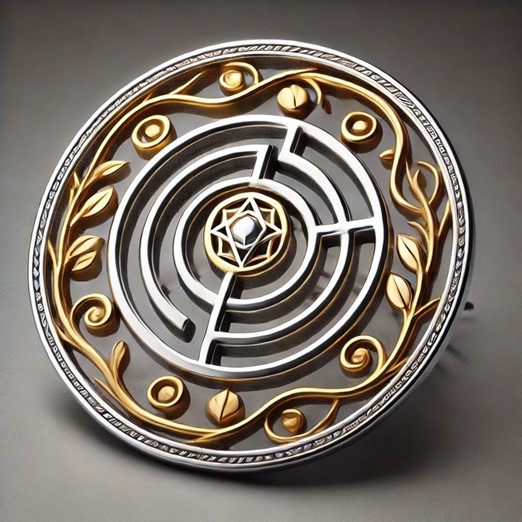
Rank Insignia: Each rank within the faction is denoted by a subtle variation in the badge’s design:
- Cultural Apprentice: The emblem is encircled by delicate vines, symbolizing the growth and development of newcomers as they begin their journey.
- Cultural Scholar: The emblem gains additional intricate patterns, showcasing the Scholar’s deepening knowledge and interconnectedness with various cultures.
- Diplomatic Envoy: The emblem’s center is inset with a gemstone, representing the Envoy’s role in mediating conflicts and fostering connections.
- Cultural Luminary: The badge’s outer rim is adorned with multiple gemstones and intricate engravings, symbolizing the Luminary’s profound insights and influence in global diplomacy.
As members ascend in rank, they replace their badge with the corresponding emblem, proudly displaying their dedication to cultural understanding and their contributions to fostering a harmonious Saṃsāra.
Enemies and Rivals:
- The Dominion of Conformity:
- Conflict: The Dominion seeks to homogenize cultures and impose a singular worldview. They view the Ethnos Explorers’ celebration of diversity as a threat to their goals of control and uniformity.
- Interactions: The Dominion actively suppresses cultural events and tries to undermine the Ethnos Explorers’ efforts to promote cross-cultural understanding.
- Consequences: Conflicts result in cultural oppression, destruction of artifacts, and attempts to rewrite histories. The Dominion’s actions endanger Saṃsāra’s cultural heritage and drive wedges between factions.
- The Order of Tradition:
- Conflict: The Order clings to ancient customs and resists outside influence. They see the Ethnos Explorers as intruders interfering with their sacred traditions.
- Interactions: The Order obstructs cultural exchange, sabotages cross-cultural events, and sometimes engages in verbal or physical confrontations with Ethnos Explorers.
- Consequences: Conflicts lead to disruptions of cross-cultural initiatives, cultural misunderstandings, and, in extreme cases, violent clashes that heighten tensions among factions.
Consequences of Conflicts: The conflicts between the Ethnos Explorers and their enemies have profound consequences for Saṃsāra:
- Cultural Suppression: The clashes result in the suppression of cultural expressions, eroding the richness of Saṃsāra’s diverse communities.
- Cultural Erosion: The enemies’ efforts to rewrite history and alter traditions can lead to the loss of ancient knowledge and traditions, causing irreversible damage to cultural heritage.
- Factional Division: Conflicts highlight the ideological divides within Saṃsāra, polarizing factions and causing rifts that impact international relations and cooperation.
- Heightened Tensions: Conflicts create an atmosphere of distrust and animosity, making it challenging for factions to collaborate on larger issues that require unity.
As the Ethnos Explorers strive to bridge cultural gaps and celebrate diversity, they must navigate these challenges while working to protect and preserve the cultural fabric of Saṃsāra.
Saga of the Ethnos Explorers
In the olden world of Saṃsāra, within the realms of many peoples and lands, there came forth a faction known by the name Ethnos Explorers. Founded by the wise sage Draven Aelar, who with eyes of knowledge sought the tapestry of life woven by diverse hands. They gathered with purpose to preserve, to cherish, and to understand the myriad cultures and customs of the world.
Once upon a time, in the heart of Saṃsāra, a village of the quiet folk lived by the river that sang sweet melodies. In this village came the Ethnos Explorers, with their scrolls and inks, to record the stories of old. Led by Draven, they sat with the elders, listened to tales of heroes, and learned the dances that echoed the rhythm of the earth.
But not all welcomed the Explorers. In the shadows lurked the Dominion of Conformity, who desired all to be of one thought, one voice. They whispered to the people, “Why do you share your secrets? Why do you trust these strangers?” Suspicion grew like a dark vine. The village began to turn away, fearing the loss of their essence.
Yet, amidst this turmoil, there arose a young villager named Elara. She, with heart pure and curious mind, sought the truth. She approached Draven and asked, “Why do you seek our stories?” Draven, with gentle voice, spoke of the beauty in diversity, the strength in understanding, and the wisdom in unity.
Moved by his words, Elara convinced the villagers to share once more, not with fear, but with pride. The Ethnos Explorers documented their heritage, celebrated their rituals, and promised to keep their culture alive for generations to come. They held a grand festival, where songs of old mingled with the laughter of young, and the village danced under the stars, united in spirit.
The Dominion of Conformity, seeing their ploys fail, retreated to the shadows. The Ethnos Explorers, with Elara by their side, continued their journey across Saṃsāra, bridging hearts and minds. They left behind not just records and artifacts, but a legacy of respect and harmony.
Moral of the Story: In the embrace of diversity and the quest for understanding, lies the true strength of unity and harmony, where the wisdom of many threads weaves a stronger tapestry of life.