
Definition: The Nautical Guild is a society or association formed by shipwrights, seafarers, dock hands, and ship workers who share a common interest and purpose in the maritime industry, shipbuilding, and the exploration of the seas. This guild serves as a platform for collaboration, skill development, and the advancement of nautical expertise and knowledge.
The Nautical Guild brings together individuals from various backgrounds within the maritime industry, including shipwrights, sailors, navigators, dock workers, and other ship-related professionals. Members within the guild contribute their skills, experience, and passion for the sea to foster excellence in shipbuilding, seafaring, and maritime trade.
Within the Nautical Guild, members engage in regular meetings, workshops, and training programs to enhance their skills, share knowledge, and stay updated on industry advancements. They collaborate on projects aimed at building seaworthy vessels, improving navigation techniques, and promoting safe maritime practices.
The Nautical Guild places a strong emphasis on shipbuilding craftsmanship, the preservation of nautical traditions, and the exploration of new horizons. Members work together to ensure the construction of sturdy and efficient vessels that can withstand the challenges of the sea. They share expertise in navigation, weather patterns, and seamanship to promote safe and successful voyages.
Additionally, the Nautical Guild provides support and resources to its members, including access to specialized tools, training facilities, and educational programs. The guild offers apprenticeships and mentorship opportunities to develop the next generation of skilled shipwrights, seafarers, and dock workers.
The guild also acts as a collective voice for its members, advocating for fair labor practices, safe working conditions, and the recognition of the vital role they play in maritime trade and exploration. Members work closely with maritime authorities, port administrations, and shipbuilding regulatory bodies to shape policies and regulations that support the growth and sustainability of the nautical industry.
In summary, the Nautical Guild is an association formed by shipwrights, seafarers, dock hands, and ship workers who come together to advance the maritime industry, promote nautical craftsmanship, and explore the seas. Through collaboration, skill development, and advocacy, the guild strives to ensure the construction of seaworthy vessels, promote safe maritime practices, and provide a supportive community for individuals dedicated to the art and science of sailing the open waters.
Tags: Maritime Industry, Shipbuilding, Seafaring, Navigation, Nautical Traditions
Joining Process:
- Application: Prospective members must submit an application detailing their experience and interest in the maritime industry, including shipbuilding, seafaring, or dock work.
- Assessment: Candidates undergo an assessment of their skills in shipbuilding, navigation, seamanship, or other relevant areas.
- Mentorship: New members are paired with experienced mentors who guide them through the initial stages of their membership.
- Induction: Successful candidates attend an induction ceremony where they pledge to uphold the values and traditions of the Nautical Guild.
Benefits of Membership:
- Skill Development: Access to training programs, workshops, and seminars to enhance maritime skills and stay updated on industry advancements.
- Resource Access: Use of specialized tools, shipbuilding materials, training facilities, and educational programs.
- Networking: Opportunities to connect with other shipwrights, seafarers, and maritime professionals for collaboration and knowledge exchange.
- Mentorship: Guidance from experienced members to help new recruits develop their skills and understanding of nautical practices.
- Advocacy Support: Representation in discussions with maritime authorities, port administrations, and regulatory bodies to promote fair labor practices and safe working conditions.
Resources Controlled:
- Shipyards: Facilities for building and repairing ships, equipped with the necessary tools and materials.
- Training Facilities: Dedicated spaces for workshops, training sessions, and skill development.
- Knowledge Base: A repository of information on shipbuilding techniques, navigation methods, weather patterns, and seamanship.
- Mentorship Programs: Structured programs to develop skills and transfer traditional knowledge to the next generation of maritime professionals.
Limitations of the Faction:
- Resource Availability: Dependence on access to shipbuilding materials and resources, which can be affected by market fluctuations and supply chain issues.
- Regulatory Compliance: Adherence to strict maritime regulations and safety standards, which can limit operational flexibility.
- Environmental Impact: Managing the environmental impact of shipbuilding and maritime activities, ensuring sustainability practices are followed.
- Market Fluctuations: Vulnerability to changes in the demand for maritime trade and shipbuilding services.
Leadership Concerns:
- Safety Standards: Ensuring all members adhere to rigorous safety protocols to prevent accidents and injuries.
- Environmental Impact: Minimizing the ecological footprint of shipbuilding and maritime activities, promoting sustainable practices.
- Worker Welfare: Protecting the rights and well-being of maritime workers, including fair wages and safe working conditions.
- Regulatory Compliance: Navigating complex maritime regulations and maintaining good relationships with authorities and regulatory bodies.
Secret Motivations and Hidden Agendas:
- Exclusive Trade Routes: Securing control over valuable trade routes and strategic maritime locations.
- Technological Advancements: Developing proprietary shipbuilding technologies and navigation techniques to stay ahead of competitors.
- Influence and Power: Using the guild’s influence to shape maritime policies and regulations in favor of their operations.
- Resource Control: Ensuring access to rare and valuable shipbuilding materials, sometimes at the expense of competitors.
Pass Phrases, Codes, and Identifying Gestures:
- Pass Phrase: “The sea is our guide.”
- Code: Members may use a subtle emblem, such as an anchor intertwined with a ship’s wheel, often worn as a pin or engraved on tools.
- Gesture: A simple gesture, such as touching the forehead with two fingers (mimicking a sailor’s salute), to signify membership and solidarity.
Friendly Groups:
- Dockworkers’ Union: Collaborate on ensuring fair labor practices and safe working conditions at ports and shipyards.
- Merchants’ Guild: Work together on maritime trade and the transportation of goods across seas.
- Naval Fleet: Partner with naval authorities for safe navigation, defense, and protection of maritime routes.
- Environmental Organizations: Collaborate on projects to minimize the environmental impact of shipbuilding and promote sustainable maritime practices.
These elements define the Nautical Guild, highlighting their commitment to advancing the maritime industry, promoting nautical craftsmanship, and ensuring the well-being of their members and the seas they sail.
Ranks and Jobs in the Nautical Guild
- Deckhand:
- Role: Entry-level position for new members learning the basics of seafaring and maritime work.
- Responsibilities: Assisting with ship maintenance, learning navigation basics, and helping with loading and unloading cargo.
- Advancement: Promotion to Sailor after completing basic training and demonstrating proficiency in essential seafaring tasks.
- Sailor:
- Role: Skilled seafarers who are proficient in navigation, seamanship, and ship maintenance.
- Responsibilities: Managing day-to-day operations on the ship, handling navigation duties, and maintaining ship equipment.
- Advancement: Promotion to Boatswain after gaining significant experience, participating in advanced training, and showing leadership potential.
- Boatswain:
- Role: Experienced sailors responsible for supervising the deck crew and ensuring the ship’s equipment is in good working order.
- Responsibilities: Leading deck operations, overseeing maintenance tasks, and training junior crew members.
- Advancement: Promotion to First Mate through demonstrated leadership, successful project management, and extensive contributions to ship operations.
- First Mate:
- Role: Second-in-command on the ship, responsible for assisting the captain and overseeing all ship operations.
- Responsibilities: Managing the crew, coordinating navigation and logistics, and ensuring adherence to safety protocols.
- Advancement: Promotion to Ship Captain through exceptional leadership, successful voyage management, and extensive maritime experience.
- Ship Captain:
- Role: The highest-ranking officer on the ship, responsible for the overall direction and safety of the vessel and its crew.
- Responsibilities: Setting strategic goals, leading the ship and crew, and representing the guild in maritime affairs.
- Advancement: Appointment to Guild Elder through unanimous selection by current Guild Elders, recognizing outstanding leadership and dedication.
- Guild Elder:
- Role: Senior leaders who shape the guild’s strategy and policies.
- Responsibilities: Overseeing guild operations, representing the guild in external affairs, and mentoring the next generation of leaders.
- Advancement: Elected by peers based on extensive experience, leadership qualities, and significant contributions to the guild.
Badge and Rank Insignia
Symbol: The badge of the Nautical Guild features an anchor intertwined with a ship’s wheel, symbolizing the stability and direction of seafaring life. Behind them is a compass rose, representing navigation and exploration. A rope encircles the emblem, symbolizing unity and strength.
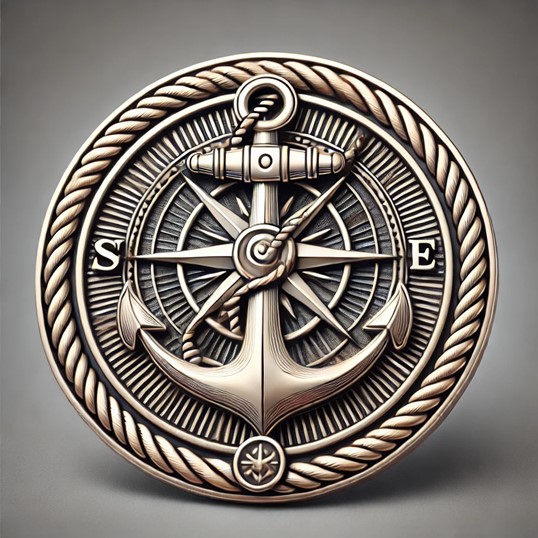
Rank Insignia:
- Deckhand: The badge is made of bronze with the basic anchor and ship’s wheel symbol.
- Sailor: The badge is silver, with the addition of a small compass rose behind the anchor and ship’s wheel.
- Boatswain: The badge is gold, featuring a detailed compass rose and a rope encircling the anchor and ship’s wheel.
- First Mate: The badge is platinum, with the compass rose and rope in intricate detail and a laurel wreath surrounding the symbol.
- Ship Captain: The badge is a mix of platinum and gold, with ornate designs, featuring all elements prominently and a star above the compass rose.
- Guild Elder: The badge is entirely platinum with gold accents, featuring an elaborate design with the anchor, ship’s wheel, detailed compass rose, rope, laurel wreath, and a crown above the star.
Wearable: Members wear the badge as a brooch or pin on their attire, often on the chest or hat. The badge serves as a visual testament to their rank, expertise, and dedication to the Nautical Guild.
Advancement within the Faction
Advancement in the Nautical Guild is based on skill mastery, contributions to the guild, and leadership abilities. Members progress through the ranks by:
- Skill Development: Demonstrating proficiency in navigation, seamanship, and ship maintenance through assessments and practical applications.
- Active Participation: Engaging in guild activities, workshops, and projects.
- Mentorship: Guiding and training lower-ranked members to ensure knowledge transfer and skill development.
- Leadership: Taking on leadership roles in projects and demonstrating the ability to manage crews and resources effectively.
- Peer Recognition: Gaining respect and recognition from fellow members for their contributions, ethical conduct, and dedication to the guild’s values.
Through their journey in the Nautical Guild, members strive to enhance their maritime skills, uphold safety standards, and contribute to the guild’s mission of advancing the maritime industry and exploring the seas. The badge becomes a symbol of their commitment and achievements within the guild.
Enemies and Rivals of the Nautical Guild
- Pirate Fleets:
- Motivation: Engage in illegal activities such as smuggling, robbery, and attacking merchant ships.
- Conflict: Pirates view the Nautical Guild as a threat to their operations, while the guild seeks to protect maritime trade and maintain safe sea routes.
- Interaction: Frequent clashes on the open sea, with guild ships often patrolling and defending against pirate attacks.
- Consequences: These conflicts can lead to loss of cargo, damaged vessels, and increased danger for seafarers. They also necessitate alliances with naval authorities for protection and enforcement.
- Environmental Extremists:
- Motivation: Advocate for the preservation of marine environments, sometimes opposing any form of maritime activity.
- Conflict: Extremists accuse the Nautical Guild of contributing to marine pollution and overfishing, while the guild argues for responsible and sustainable maritime practices.
- Interaction: Public protests, lobbying efforts, and legal battles over maritime regulations and practices.
- Consequences: Heightened scrutiny of the guild’s activities, potential regulatory changes, and increased pressure to adopt more stringent environmental practices.
- Corporate Shipping Conglomerates:
- Motivation: Large-scale corporations focused on maximizing profits from maritime trade.
- Conflict: The conglomerates often prioritize cost-cutting measures that may compromise safety and ethical standards, clashing with the guild’s emphasis on quality and safety.
- Interaction: Competition for contracts, market share, and influence over maritime policies and regulations.
- Consequences: Market volatility, potential compromises on safety and environmental standards, and the need for the guild to advocate for fair competition and ethical practices.
- Rival Maritime Guilds:
- Motivation: Compete for dominance in the maritime industry, often differing in their methods and philosophies.
- Conflict: Rival guilds may challenge the Nautical Guild’s influence and seek to attract members and contracts away from them.
- Interaction: Competitive bidding for contracts, public debates, and efforts to outmaneuver each other in maritime ventures.
- Consequences: Increased competition can drive innovation but also lead to divisions within the maritime community and potential conflicts over resources and market positions.
Consequences of the Conflicts
- Enhanced Security Measures: Continuous threats from pirates necessitate better security protocols, alliances with naval forces, and increased vigilance.
- Regulatory Changes: Conflicts with environmental groups can result in stricter environmental regulations and the need for more sustainable practices.
- Market Competition: Rivalries with corporate conglomerates and other maritime guilds create a competitive market environment, pushing for innovation but also risking ethical compromises.
- Public Perception: Ongoing conflicts impact the public’s view of the maritime industry, necessitating efforts to maintain a positive image and demonstrate commitment to ethical and sustainable practices.
Interaction Dynamics
- Sea Patrols and Naval Alliances: The guild often collaborates with naval forces to patrol and protect trade routes from pirate attacks.
- Public Campaigns and Legal Battles: Engagement in public campaigns and legal actions to defend maritime practices against environmental extremists and to advocate for sustainable practices.
- Market Strategies and Negotiations: Competitive strategies and negotiations with corporate shipping conglomerates and rival guilds to secure contracts and influence maritime policies.
- Collaborative Efforts: Despite conflicts, the guild sometimes collaborates with environmental organizations and other maritime entities on projects aimed at promoting sustainability and safety in the industry.
Through these interactions, the Nautical Guild strives to uphold its values of excellence in shipbuilding, seafaring, and maritime trade, while navigating the complex landscape of threats and competition in the maritime world.
Legend of the Nautical Guild
In the olden times, when the winds whispered secrets of the deep blue and the waves sang songs of forgotten lands, there was a brotherhood known as the Nautical Guild. These were the men and women of the sea, shipwrights and sailors, who tamed the wild oceans and built vessels sturdy and swift.
From the dawn of the first ship, they gathered in the great halls by the docks, sharing tales of voyages and craftsmanship. Their hands shaped wood and metal, their eyes charted the stars, and their hearts beat in rhythm with the tides. They sailed the seas, trading goods, exploring new horizons, and defending the maritime routes.
But not all were friends of the sea’s children. From the shadowy coves and hidden bays came the Pirate Fleets, plunderers of the high seas. They struck fear into the hearts of merchants, their black sails a symbol of chaos and theft. The Nautical Guild stood against them, their ships patrolling the waters, battling the marauders with courage and skill.
On the shores, voices rose from the Environmental Extremists, guardians of the marine world who saw the guild as despoilers of the deep. They clashed with words and laws, accusing the guild of harming the ocean’s delicate balance. The guild, with its knowledge and respect for the sea, argued for responsible sailing and sustainable practices, striving to find harmony.
In the bustling ports, the Corporate Shipping Conglomerates, driven by gold and greed, sought to dominate the waves. They cut corners and flouted safety, challenging the guild’s standards. The Nautical Guild, with its commitment to quality and safety, fought to uphold the honor of the maritime profession, ensuring that their ways were not lost to profit.
And among them all were the Rival Maritime Guilds, competitors in the dance of trade and exploration. Each sought to outdo the other, pushing for better ships, faster routes, and grander discoveries. The Nautical Guild faced them with pride and skill, forging ahead while honoring the traditions of the sea.
Through storm and strife, the Nautical Guild endured. They built ships that sailed to the edge of the world, navigated by stars and whispers of the wind. They protected the waters from pirates, respected the balance of nature, and upheld the honor of the maritime trade. Their legacy was written in the waves and carried by the winds, a testament to the spirit of those who live by the sea.
Moral of the Story: “In the embrace of the sea, honor and skill must guide; for only with respect and courage can the waves be tamed and the treasures of the deep revealed.”