
Original Life Forms
- Ursus arctos (Mammalia: Brown bear)
- Chelonia mydas (Reptilia: Green sea turtle)
- Actinia equina (Anthozoa: Beadlet anemone)
- Carcinus maenas (Crustacea: European green crab)
Appearance
The Ursochelonactacaris 305 is a formidable and surreal hybrid, blending the robust features of its diverse origins into a single feral entity. Its body is bear-like, with a thick, shaggy coat of dark brown fur covering a muscular frame, transitioning into a hard, turtle-like shell along its back and sides, etched with intricate patterns reminiscent of a sea turtle’s scutes. From this shell extend retractable, anemone-inspired tentacles, tipped with stinging cells that glow faintly with bioluminescent hues. Its head retains a bear’s powerful jaws and snout, but its eyes are compound like those of a crab, granting it a wide field of vision. The creature’s limbs are sturdy, with clawed bear paws on the front and crab-like pincers on the rear, while a broad, paddle-like tail aids in aquatic movement.
Size
The Ursochelonactacaris 305 measures approximately 6 feet in length from nose to tail base, with an additional 3-foot tail. It stands 3.5 feet tall at the shoulder and weighs around 400 pounds, combining the bear’s bulk with the turtle’s armored mass, adjusted for its aquatic adaptations.
Speed
This creature is a versatile mover, capable of lumbering at 20 mph on land for short bursts (up to 100 yards), drawing on the bear’s strength. In water, it swims at 15 mph, propelled by its paddle tail and webbed limbs, covering distances up to 300 yards. It can crawl along rocky shores at 10 mph, using its pincers for grip, and leap up to 8 feet horizontally or 4 feet vertically.
Stat Modifiers
- Strength: +4 (Enhanced by bear-like musculature and pincer power)
- Dexterity: +1 (Moderate agility due to armored bulk)
- Constitution: +3 (Highly resilient from shell and fur)
- Intelligence: 0 (Instinct-driven with minimal reasoning)
- Wisdom: +2 (Keen senses for hunting and survival)
- Charisma: -1 (Intimidating but lacking social charm)
Skills
- Athletics: Proficient in swimming, climbing, and leaping across diverse terrains with its powerful limbs and tail.
- Perception: Acute compound vision and scent detection, allowing it to spot prey or threats from a distance.
- Intimidation: Uses its size, glowing tentacles, and roars to deter rivals or predators.
- Stealth: Capable of blending into coastal waters or rocky shores using its shell’s camouflage.
- Survival: Skilled at foraging and tracking in aquatic and terrestrial environments.
Behavior
The Ursochelonactacaris 305 is a solitary wanderer that patrols its territory with deliberate caution. It prefers to ambush prey from the water’s edge, using its tentacles to stun before closing with its jaws or pincers. When threatened, it retracts its tentacles, lowers its shell, and emits a deep roar to ward off intruders. It is primarily nocturnal, hunting under the cover of darkness, though it may bask on sun-warmed rocks during the day. Mating occurs infrequently, with brief encounters marked by tentacle displays and vocalizations, after which the female lays eggs in coastal nests.
Diet
This creature is a carnivorous opportunist, preying on fish, crustaceans, small mammals, and seabirds. Its bear-like jaws crush shells and bones, while its anemone tentacles inject a mild paralyzing toxin to subdue prey. It consumes approximately 10 pounds of food daily, scavenging carrion or algae when fresh meat is unavailable, digesting them with a robust stomach adapted from its varied ancestry.
Emotions
The Ursochelonactacaris 305 exhibits a limited emotional spectrum driven by instinct. It shows heightened alertness when hunting, with raised tentacles and focused eyes. Contentment is displayed after feeding, with a relaxed posture and retracted spines. Fear manifests as a defensive shell-lowering and retreat into water. Curiosity may lead it to investigate unfamiliar objects or sounds, though it quickly retreats if the stimulus escalates.
Environment Where Found
This creature inhabits the rocky shores, coastal caves, and shallow seas of Saṃsāra’s island nations, thriving in areas where land and water intersect. It is commonly found near tidal pools, kelp forests, or submerged ruins, using rocky outcrops and cave entrances for shelter. It avoids deep oceans and dense inland jungles, preferring environments that support its amphibious lifestyle.
Tags: Feral, Predator, Amphibious, Armored, Tentacled, Nocturnal, Territorial, Bioluminescent, Robust, Aquatic, Pincer, Solitary, Nocturnal, Defensive, Coastal, Opportunistic
Age
- Lifespan: The Ursochelonactacaris 305 typically lives for 20 to 25 years in the wild, with individuals in sheltered coastal caves occasionally reaching 30 years.
- Maturity: It reaches sexual maturity at around 5 years, beginning to establish its territory with scent markings and tentacle displays. Juveniles remain with their mother for the first 8 months, learning to hunt and swim before dispersing.
- Aging: As it ages, its shell develops deeper cracks, and its bioluminescent tentacles dim, reducing its ambush effectiveness. Older individuals rely more on their armored bulk and pincer strength rather than speed.
Speed
- Ground Lumber: Capable of bursts up to 20 mph for 100 yards, drawing on the bear’s power for short chases. Sustained movement is limited to 10 mph for 3-4 minutes.
- Swimming: Moves through water at 15 mph, propelled by its paddle tail and webbed limbs, covering up to 300 yards in a single effort.
- Crawling: Navigates rocky shores at 10 mph, using its crab-like pincers for grip and stability.
- Leaping: Leaps 8 feet horizontally or 4 feet vertically, aided by its muscular legs, often to reach prey or escape threats.
- Reaction Speed: Reflexes are moderately quick, allowing it to strike or dodge within a couple of seconds, enhanced by its compound eyes.
Tactics
- Ambush Hunting: Lurks at the water’s edge or in coastal caves, using its bioluminescent tentacles to stun prey before lunging with jaws or pincers.
- Territorial Defense: Lowers its shell and retracts tentacles, emitting a deep roar to intimidate intruders. If challenged, it uses its bulk to charge or swipe with pincers.
- Evasion: Retreats into water or under rocky overhangs when outmatched, relying on its amphibious nature and shell armor.
- Foraging Strategy: Scavenges carrion or algae during low tides, supplementing its diet with active hunting of fish and crustaceans.
- Environmental Use: Utilizes tidal currents to extend swimming range or cave shadows to conceal its bioluminescent glow during ambushes.
Actions
- Tentacle Sting: Extends its glowing tentacles to deliver a paralyzing toxin with a successful melee attack, requiring a target to resist or be stunned for 1-2 minutes. Damage is minor (stinging welts), aiding capture.
- Bite: Uses its bear-like jaws to inflict a crushing bite, capable of shattering shells or bones, followed by a shake to subdue prey.
- Pincer Clamp: Employs crab-like pincers for a powerful grip, dealing significant damage and holding prey or foes in place.
- Shell Defense: Lowers its head and retracts tentacles, increasing its armor value temporarily and deterring attacks.
- Tail Sweep: Uses its broad tail to knock over small obstacles or distract opponents, occasionally using it to stabilize during leaps.
Other Interesting Information
- Bioluminescence Cycle: The tentacles’ glow intensifies during nocturnal hunts or mating season, possibly linked to Saṃsāra’s magical currents, making it a beacon in dark waters.
- Shell Regeneration: Its turtle-derived shell repairs minor cracks over months, with new growth exhibiting faint magical runes, a trait tied to the high-magic environment.
- Toxin Variation: The paralyzing toxin in its tentacles varies by region, with coastal versions effective against fish and inland ones targeting mammals or birds.
- Cultural Significance: In some island nations, its shed shell fragments are carved into shields believed to enhance constitution when worn as gear, traded in coastal markets.
- Reincarnation Echoes: Some individuals show bear-like hibernation tendencies or crab-like burrowing, hinting at multiverse soul influences from past lives.
- Predator Interactions: It is preyed upon by larger sea serpents and competes with griffons for coastal territory, using its armor and tentacles to fend off attacks.
- Reproductive Habits: Mating occurs triennially, with females laying 4-6 eggs in shallow coastal nests protected by tentacle barriers. Typically, only 1-2 offspring survive due to predation.
- Magical Gear Synergy: Avatars with gear enchanted for strength or water resistance find it easier to confront or evade this creature, as its magical nature resonates with such enhancements.
- Tidal Influence: Its activity peaks during low tides, when it forages more aggressively, possibly due to heightened magical flow affecting its senses.
- Pincer Strength: The crab-like pincers can crush small rocks or shellfish, a skill passed to juveniles, making them adept at opening hard-shelled prey from an early age.
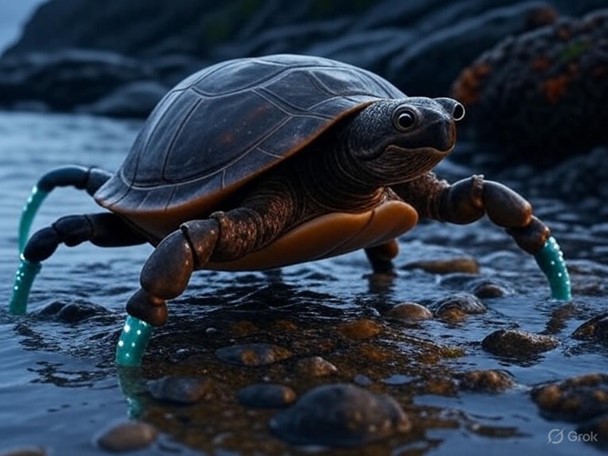
A party of adventurers on the world of Saṃsāra might encounter or actively search for an Ursochelonactacaris 305 due to a range of practical, magical, and cultural reasons tied to its unique characteristics and the environments it inhabits. The creature’s presence along rocky shores and shallow seas, combined with its valuable resources, makes it a significant point of interest for both unplanned meetings and deliberate pursuits.
One reason for an encounter could stem from the creature’s territorial behavior. As the Ursochelonactacaris 305 patrols coastal caves and tidal pools, it may cross paths with adventurers traveling trade routes or exploring submerged ruins. Parties navigating ships or airships near these shores might inadvertently enter its territory, triggering a defensive response. The creature’s habit of lowering its shell and emitting a deep roar, accompanied by its glowing tentacles, could lead to an ambush or a tense confrontation, requiring the adventurers to either fight back or find a way to retreat safely.
Another motivation for seeking the Ursochelonactacaris 305 could be the pursuit of its magical properties. The bioluminescent tentacles, with their paralyzing toxin, are highly valued by alchemists and gear crafters. These tentacles are believed to enhance strength or water resistance when incorporated into talismans or armor, making them a sought-after resource. Adventurers might be commissioned by a coastal guild or a steam-powered factory to harvest intact tentacles, necessitating careful tracking through its nocturnal habitat and strategies to subdue it without damaging the magical components.
The creature’s hard, turtle-like shell, etched with intricate patterns, could also drive a quest. The shell fragments are prized for their durability and magical resonance, used by artisans to create shields or armor that bolster constitution when enchanted as gear. A noble from a megacity skyscraper or a trade council might hire the party to collect these fragments, offering a reward for their rarity and craftsmanship. This mission could involve navigating treacherous tidal currents or competing with rival factions, adding complexity and risk.
The paralyzing toxin in its tentacles presents another reason for pursuit. Healers in underwater population centers or dark cave systems might seek the toxin for medicinal purposes, such as crafting salves to treat muscle injuries or potions to induce controlled rest during long voyages. An apothecary could enlist adventurers to extract the toxin safely, requiring knowledge of the creature’s nocturnal habits and the ability to handle its aquatic defenses, making it a specialized and potentially lucrative endeavor.
Furthermore, the Ursochelonactacaris 305’s sensitivity to magical currents and its presence near submerged ruins could connect it to Saṃsāra’s ancient history. Adventurers investigating forgotten civilizations might follow its movements to uncover hidden sites rich in magical artifacts or lost knowledge, as its activity peaks during low tides when magical flow is strongest. Mystics within the party might be intrigued by its reincarnation echoes—behaviors like hibernation or burrowing—prompting them to study the creature for insights into the multiverse souls that shape the world.
Trade and political intrigue could also spur a search. In some island nations, the creature’s shed shell fragments and tentacles are symbols of power, collected by merchants or factions to enhance their influence. A party might be tasked by a trade leader to secure these items, either to strengthen their patron’s position or to undermine a competitor’s prestige. This could involve sailing ships along endless oceans or using hot air balloons to reach remote coastal territories, adding a strategic layer to the quest.
Lastly, the creature’s nocturnal nature and bioluminescent glow might lead to an encounter during night travel or exploration. Adventurers journeying at dusk, perhaps in zeppelins or on griffons, could spot its glow in the shallows, drawing them toward its location. This might result in an unplanned encounter, either as a hazard to navigate or an opportunity to observe its behavior, potentially revealing clues about its habitat or resources.
These scenarios underscore the Ursochelonactacaris 305’s integration into Saṃsāra’s ecosystem and culture, providing adventurers with diverse reasons—ranging from survival needs to scholarly pursuits—to cross its path or seek it out with intent.
The Ursochelonactacaris 305, with its unique fusion of mammalian, reptilian, anthozoan, and crustacean traits enhanced by Saṃsāra’s high magic, yields a variety of valuable items and ingredients when harvested from its corpse. These resources are highly sought after across the island nations for their practical applications, magical properties, and cultural significance, drawing the attention of adventurers, artisans, and healers.
One of the primary items is its bioluminescent tentacles. These glowing, anemone-inspired appendages are carefully severed to preserve their stinging cells and magical luminescence. The tentacles’ mild paralyzing toxin is extracted for alchemical use, creating potions that induce temporary paralysis for medical procedures or hunting aids. Artisans weave the tentacles into gear worn by avatars, enhancing strength or water resistance when enchanted, while the bioluminescent fluid is distilled into inks for scribing night-vision wards or crafting glow-in-the-dark ornaments traded in coastal markets.
Another valuable harvest is the turtle-like shell. The hard, intricately patterned shell is broken into fragments or left whole for processing. These fragments are crafted into shields or armor that bolster constitution when imbued with magic, prized by warriors navigating steam-powered factories or underwater population centers. Artisans grind the shell into a powder to reinforce mechanical components, such as gears or pulleys in steam engines, adding durability to the industrial infrastructure. In some cultures, polished shell pieces are used as decorative tiles in megacity skyscrapers, symbolizing resilience.
The paralytic toxin sacs, located within the tentacle bases, are a critical alchemical resource. Extracted with precision to avoid contamination, the sacs contain a toxin that varies by region—coastal versions target fish, while inland ones affect mammals. Alchemists distill this into antidotes for venomous stings or salves to relieve muscle tension, highly valued by laborers and sailors. Some rogue traders seek the toxin for illicit weapons, though its use is regulated, adding a layer of caution to its harvest.
The dark brown fur coat, inherited from the bear, is skinned and tanned into a thick leather. This leather is fashioned into cloaks or boots that enhance physical endurance, ideal for adventurers traversing rugged shores or caves. The fur is also sheared for insulation in airships or floating cities, where its magical sheen repels minor magical disturbances. Traders dye it with natural pigments to create trade goods for inland regions, broadening its market appeal.
The clawed paws and crab-like pincers, robust and versatile, are removed and cleaned. The claws are forged into daggers or spear tips, their natural edge enhanced by magical techniques to retain sharpness for combat or fishing. The paw and pincer muscles are boiled down to produce a tough binding material for steam-powered machinery, such as belts or chains. Hunters display the claws as trophies, signifying skill in confronting this formidable creature.
The internal organs, particularly the stomach and heart, are harvested for their magical potency. The stomach, adapted to digest shells and algae, is dried and powdered to create a reagent that stabilizes magic storage devices, essential for maintaining airship engines or factory operations. The heart, pulsating with a faint magical glow, is used in rituals to commune with multiverse souls, sought by mystics exploring reincarnation echoes. Some alchemists extract a rare essence from the organs, rumored to grant temporary resistance to underwater magical surges.
The blood, collected in vials, carries a subtle magical charge that fades unless preserved with specific methods. It is mixed with other ingredients to create inks for scribing protective wards against aquatic threats or consumed in diluted form by shamans to heighten their sensitivity to magical currents during divination. Glassblowers use the blood’s bioluminescent tint to craft magical lanterns or jewelry, traded in coastal hubs.
The bones, sturdy yet lightweight, are cleaned and carved into flutes or structural supports for small steam devices. The hollow bones, influenced by the crab’s exoskeleton, are valued for their acoustic properties, used by musicians in floating cities to craft instruments that resonate with magical frequencies. Artisans also grind them into a paste for reinforcing gear, adding durability without sacrificing flexibility.
The paddle-like tail, broad and muscular, is severed and processed. The muscle tissue is boiled down to produce a flexible leather, ideal for crafting straps or harnesses that withstand aquatic travel. The tail’s outer layer is scraped for a gelatinous substance, used by apothecaries to create ointments that improve swimming endurance, beneficial for divers in underwater population centers.
These harvested items and ingredients reflect the Ursochelonactacaris 305’s deep integration into Saṃsāra’s magical and industrial landscape, motivating adventurers to seek it out for economic gain, survival, or cultural enrichment. The process requires skill and respect for its habitat, as overharvesting could disrupt coastal ecosystems or provoke retaliation from territorial kin.
Glowing Tentacle of the Sea-Bear
In times when Saṃsāra did emerge from the endless waters, and souls from beyond the void did walk its shores, there came a legend of the Sea-Bear, a beast born of earth and ocean, its form clad in shell and glowing arms. From an ancient tongue lost to the tides, etched in coral by hands turned to dust, the tale speaks of its most sacred prize, the Glowing Tentacle, a limb said to hold the power of the deeps and the magic flow.
Long ago, when the islands did sway like reeds in the current, there lived a voyager named Tharok, whose eyes saw the paths of many worlds and whose heart burned with the fire of discovery. Tharok, ripped from a land where the winds carved stone and the seas roared with life, found himself cast upon a rocky shore where the caves hummed with magic. The people of that place, wrapped in steam-woven garb, spoke of the Sea-Bear, a creature of fur and claw, its tentacles a gift from the ocean-gods to guard the tides. They said the Glowing Tentacle could light the dark waters and calm the wild magic storms.
Tharok, driven by a thirst to know the world’s hidden truths, gathered a band of three companions—each marked by the scars of other lives. There was Ryn, a builder of steam-wheels whose hands shaped power from water and flame; Selka, a healer whose magic drew life from the tides; and Vex, a rider of zeppelins whose voice carried the songs of forgotten skies. Together, they ventured into the coastal wilds, where the rocks held secrets and the ruins of old stood as silent guardians.
For many cycles of moon and tide, they journeyed, their path lit by lanterns fueled by magic steam. They faced beasts of scale and sting, their forms twisted by the world’s ancient rebirths, yet none rivaled the tales of the Sea-Bear. At last, within a cave where the water met the stone, they beheld it—the Ursochelonactacaris, its fur matted with sea salt, its shell gleaming, its tentacles aglow as it lurked in the shallows. Its roar echoed, a warning from the deep.
Tharok, bold with the fire of youth, did raise a spear carved from magic wood, seeking to claim the Glowing Tentacle. But Ryn, wise in the ways of the forge, stayed his hand, saying, “The beast is not ours to steal, but to beseech. Let us seek its favor with respect.” Selka nodded, her hands weaving a spell of peace, while Vex sang a melody to quiet the waves. The Sea-Bear, sensing their intent, did retract its tentacles and approach, its compound eyes holding an ancient wisdom.
In a moment of stillness, the creature shed a single tentacle, the Glowing Tentacle, which fell into Tharok’s hands like a wave’s offering. It pulsed with light, and a voice, soft as the ocean’s breath, spoke in the voyager’s mind: “Use this not for might, but for the good of all.” The companions marveled, for the tentacle did guide them through the cave, its glow revealing paths hidden by the sea’s will. They returned to their village, where the tentacle was placed in a shrine of steam-carved stone, its light a beacon for sailors and a source of magic flow for the community’s engines.
Yet, not all were at ease. A warlord named Korgath, whose soul bore the mark of a ruler from a drowned kingdom, heard of the tentacle’s power. With greed in his heart, he sailed with a steam-powered barge, its paddles churning the tides. The villagers fought with magic and blade, but Korgath’s might was great. Tharok, clutching the Glowing Tentacle, stood before the warlord, its light flaring bright. The tentacle’s magic turned the barge’s gears to rust and bound Korgath’s crew with kelp grown from the water’s magic. Defeated, Korgath fled, his ambition sunk.
The tale spread across the islands, carried by airships and griffon riders, its words twisted by time and tongue. Some say the Sea-Bear still watches the shores, its tentacles a gift to those who honor the deeps. Others whisper that Tharok ascended to the ocean-gods, his spirit woven into the magic currents. The Glowing Tentacle remains in the village, a relic of harmony, guarded by the descendants of Ryn, Selka, and Vex.
Moral of the story: Respect the gifts of the deep, for they bring light when used with a pure heart, but darkness when seized with greed.
Suggested conversions to other systems:
Call of Cthulhu – Sea-Bear Sentinel
Stat Block
- STR: 90
- CON: 70
- SIZ: 60
- DEX: 50
- INT: 20
- POW: 40
- HP: 15 (average of CON and SIZ)
- DB: +1D6 (based on STR and SIZ)
- Move: 8 (land), 10 (water), 12 (glide)
- Armor: 4 points (shell and fur)
- Sanity Loss: 0/1D4 (seeing its glowing tentacles or roar)
Game Mechanics
- Tentacle Sting: Requires a successful attack roll (50% base chance, adjusted by DEX). On a success, deals 1D8 damage and requires a CON roll at difficulty Regular to avoid -20% to all actions for 1D6 rounds due to paralysis.
- Glide Ambush: Uses DEX to initiate a surprise attack from a leap or glide, granting a +15% bonus to the first attack roll if the target fails a Spot Hidden roll.
- Magic Sensitivity: Gains a +10% bonus to Listen and Spot Hidden rolls when near magical tidal surges, reflecting its attunement to Saṃsāra’s currents.
- Glowing Tentacle Harvest: Upon defeat, a successful Medicine or Natural World roll (difficulty Regular) yields 1D3 Glowing Tentacles, usable as a +5% bonus item for Swim or Perception skills when crafted into gear.
Balance Adjustments
- Reduced INT to emphasize its instinctual nature, ensuring it remains a manageable threat for investigators.
- Paralysis duration is moderated to maintain investigative pacing without halting progress.
Blades in the Dark – Tentacled Tide Guardian
Stat Block
- Tier: 2 (wild creature)
- Quality: 3 (tentacles and armor)
- Stress: 8
- Harm: Light (2), Moderate (4), Severe (6)
- Resistance: Skirmish (2), Prowl (1)
- Special Abilities:
- Paralytic Tentacles: Deals Level 3 harm on a successful Skirmish roll, with a follow-up Resistance roll (Fortitude) to avoid being Taken Out for the scene.
- Shell Defense: Grants +1d to resist physical harm when stationary, reflecting its armored shell.
Game Mechanics
- Loadout: None (natural weapons only)
- Clocks:
- Territorial Roar (6 segments): Tracks its escalating aggression if intruders linger, triggering a full attack when filled.
- Paralysis Effect (4 segments): Measures the spread of toxin; filling it requires a Resistance roll to shake off.
- Insight: Can use its magic sensitivity to add +1d to Prowl or Study actions in tidal or magical environments.
- Harvest: A successful Hunt roll (difficulty 3) post-combat yields 1d3 Glowing Tentacles, tradable for 3 Coin each or usable to craft a +1 Strength item.
Balance Adjustments
- Tier 2 reflects its increased durability and threat, balanced for a slightly experienced crew.
- Harm and Resistance levels ensure it challenges without overwhelming group tactics.
Dungeons & Dragons 5th Edition – Ursochelonactacaris Brute
Stat Block
- Size/Type: Large Monstrosity (Magical), Unaligned
- Armor Class: 16 (natural armor)
- Hit Points: 76 (8d10 + 32)
- Speed: 30 ft., swim 30 ft., glide 60 ft. (no upward movement)
- STR: 18 (+4), DEX: 12 (+1), CON: 18 (+4), INT: 4 (-3), WIS: 12 (+1), CHA: 7 (-2)
- Skills: Perception +3, Athletics +6
- Senses: Darkvision 60 ft., passive Perception 13
- Damage Resistances: Poison
- Challenge: 3 (700 XP)
Game Mechanics
- Tentacle Sting: Melee Weapon Attack: +6 to hit, reach 10 ft., one target. Hit: 11 (2d6 + 4) piercing damage plus 10 (3d6) poison damage, and the target must succeed on a DC 14 Constitution saving throw or be poisoned for 1 minute. A poisoned creature can repeat the saving throw at the end of each of its turns, ending the effect on a success.
- Glide Ambush: If the Ursochelonactacaris Brute moves at least 20 feet straight toward a target and then hits with a melee attack on the same turn, the attack deals an extra 7 (2d6) damage.
- Magic Sensitivity: Gains advantage on Wisdom (Perception) checks to detect magical effects within 30 feet.
- Glowing Tentacle: On a successful DC 15 Nature or Medicine check after combat, 1d3 Glowing Tentacles can be harvested, granting a +1 bonus to Strength checks when crafted into armor (requires a DC 15 Arcana check and 1 day).
Balance Adjustments
- Challenge 3 aligns with a moderate encounter, with poison duration balanced to avoid total party incapacitation.
- Glide mechanics limit vertical ascent to maintain ecological realism.
Knave – Sea-Bear Ravager
Stat Block
- HD: 4 (18 HP)
- AC: 16 (shell)
- Attack: +6 to hit, 1d10+4 (tentacle sting) or 1d8+4 (bite)
- Move: 30 ft. (land), 30 ft. (swim), 60 ft. (glide)
- Morale: 8
- Save: 12+
- Special: Paralytic Toxin (save or paralyzed for 1d4 rounds), Camouflage (+2 to stealth in coastal areas)
Game Mechanics
- Paralytic Toxin: On a successful tentacle sting attack, the target must make a save vs. poison or be paralyzed for 1d4 rounds.
- Glide Attack: Adds +2 to the first attack roll when ambushing from a glide, if the target fails a Perception check (TN 13).
- Magic Sense: Roll with advantage on Perception checks to detect magical items or effects within 30 feet.
- Harvest: A successful Survival check (TN 15) yields 1d3 Glowing Tentacles or 1 Shell Fragment, usable as a +1 item slot for Strength or Swim when crafted (requires a Tinker check, TN 13).
Balance Adjustments
- HD 4 and higher HP reflect its larger size and durability, balanced for a small party.
- Paralysis duration and harvest difficulty are tuned to Knave’s lightweight mechanics.
Fate – Oceanic Shell Guardian
Stat Block
- Aspects: Oceanic Shell Guardian, Glowing Tentacle Ambush, Armored Bulk, Tide-Magic Attuned
- Skills: Athletics: Great (+4), Fight: Good (+3), Physique: Fair (+2), Notice: Fair (+2), Stealth: Average (+1)
- Stunts:
- Tentacle Sting: Gain +2 to Fight when using paralytic tentacles in an ambush.
- Paralytic Toxin: Once per scene, on a successful Fight attack, inflict a Mild Consequence (Paralyzed) that lasts until the target succeeds on a Physique roll against a Fair (+2) difficulty.
- Tide Sense: Gain +2 to Notice rolls to detect magical tidal surges or hidden caves.
- Stress: 4 boxes
- Consequences: 2 Mild (2), 1 Moderate (4)
- Refresh: 3
Game Mechanics
- Create Advantage: Use Athletics to create an aspect like “Anchored in the Tide” with a +2 bonus when in water or using its shell defense.
- Attack: Uses Fight for tentacle stings or bites, with the Paralytic Toxin stunt adding a paralysis effect.
- Harvest: After defeat, a successful Crafts or Lore roll (Good difficulty) yields 1d3 Glowing Tentacles, which can be used to create a +1 Strength aspect when crafted into gear.
- Fate Points: The creature may spend Fate points to invoke its aspects for rerolls or bonuses, reflecting its adaptability.
Balance Adjustments
- Skill levels and stunts are calibrated to provide a challenging yet narratively flexible encounter, avoiding overpowering a Fate party.
- Increased stress reflects its larger size, balanced by moderate consequences.
Numenera & Cypher System – Tide-Shell Stalker
Stat Block
- Level: 4
- Health: 16 (4d6)
- Armor: 3 (shell and fur)
- Movement: Short (land), Short (water), Long (glide)
- Modifications: Might defense +2 (resilience), Speed defense +1 (agility)
- Attacks:
- Tentacle Sting: 5 damage, inflicts 1 Intellect damage (toxin) and requires a Might defense roll (difficulty 4) or be paralyzed for 1 minute.
- Bite: 4 damage
- Abilities:
- Glide Ambush: Adds +1 to the next attack roll if attacking from a glide, if the target fails a perception task (difficulty 4).
- Tide Resonance: Reduces difficulty of perception tasks to detect cyphers or oddities by 1 within immediate range during high tides.
Game Mechanics
- Depletion: No equipment, relies on natural abilities.
- Experience: Defeating it grants 4 XP to the group.
- Loot: A successful Numenera or Survival task (difficulty 5) post-combat yields 1d3 Glowing Tentacles or 1 Shell Fragment, usable as a +1 asset for Strength or Swim tasks when crafted.
- GM Intrusion: The creature’s tide sensitivity triggers a sudden undertow, imposing a +1 difficulty on all tasks for one round unless mitigated.
Balance Adjustments
- Level 4 reflects its increased challenge, with health and damage balanced for a slightly larger party.
- Paralysis duration is adjusted to maintain pacing in Cypher’s fluid combat.
Pathfinder 2nd Edition – Ursochelonactacaris Tidewarden
Stat Block
- Creature: Ursochelonactacaris Tidewarden
- Level: 4
- Perception: +9 (darkvision, scent 30 ft.)
- Languages: None
- Skills: Athletics +11, Stealth +9, Survival +9
- Str: +4, Dex: +2, Con: +3, Int: -2, Wis: +2, Cha: -1
- AC: 20 (natural armor)
- HP: 70
- Fort: +11, Ref: +8, Will: +8
- Speed: 30 ft., swim 30 ft., glide 60 ft.
- Melee: [1] Tentacle Sting +12 (reach 10 ft., poison), Damage 1d10+4 piercing plus Ursochelonactacaris Toxin
- Melee: [1] Bite +12, Damage 1d8+4 piercing
Game Mechanics
- Ursochelonactacaris Toxin (poison): Saving Throw DC 20 Fortitude; Maximum Duration 6 rounds; Stage 1 1d8 poison damage and flat-footed (1 round); Stage 2 1d8 poison damage and slowed 1 (1 round); Stage 3 1d8 poison damage and paralyzed (1 round).
- Glide Ambush: On a successful Stealth check to Hide, gains a +2 circumstance bonus to its first attack roll against a flat-footed target.
- Tide Sensitivity: Gains a +2 circumstance bonus to Perception checks to detect magical effects within 30 feet during low tides.
- Harvest: A successful Nature or Medicine check (DC 22) yields 1d3 Glowing Tentacles, which can be crafted into +1 strength armor (Craft DC 18, 1 day).
Balance Adjustments
- Level 4 and higher HP suit a mid-tier encounter, with toxin stages balanced to allow saves.
- Glide mechanics enhance tactical options without disrupting encounter balance.
Savage Worlds Adventure Edition – Shell-Tentacle Bruiser
Stat Block
- Attributes: Agility d8, Smarts d4 (A), Spirit d6, Strength d10, Vigor d10
- Skills: Fighting d10, Stealth d8, Notice d8, Swimming d8
- Pace: 6, Parry: 7, Toughness: 10 (4 armor from shell)
- Special Abilities:
- Tentacle Sting: Str+d8, Toxin (see below)
- Bite: Str+d6
- Glide: Move up to 12” horizontally with a successful Athletics roll, no vertical ascent.
- Toxin: On a successful tentacle sting, target makes a Vigor roll (-2) or is Shaken and suffers Fatigue; second failure causes Paralysis for 2d6 rounds.
- Camouflage: +2 to Stealth rolls in coastal or cave terrain.
- Tide Sense: +2 to Notice rolls to detect magical effects within 10” during low tides.
- Special Abilities: Amphibious (no penalty in water)
Game Mechanics
- Wild Card: No (extra)
- Edges: None
- Hindrances: None
- Harvest: A successful Survival roll (-2) post-combat yields 1d3 Glowing Tentacles or 1 Shell Fragment, usable to craft a +1 Strength item (Repair roll, -1 difficulty).
- Bennies: Uses 1 Benny per encounter to soak damage or reroll critical failures, reflecting its resilience.
Balance Adjustments
- Attributes and skills are tuned for a Wild Card-level threat, with toxin effects balanced to allow recovery.
- Glide range and Benny use prevent it from dominating aerial or aquatic combat.
Shadowrun 6th Edition – Luminescent Sea-Bear
Stat Block
- B/R: 4
- Initiative: 9 + 2d6 (Reaction 4, Intuition 5)
- Movement: 10/20 (walk/run), 15 (swim), 18 (glide)
- Physical Attributes: Body 6, Agility 5, Reaction 4, Strength 7
- Mental Attributes: Charisma 2, Willpower 4, Edge 3, Essence 6, Magic 3
- Skills: Stealth 6, Perception 5, Unarmed Combat 7
- Powers: Natural Weapon (Tentacle Sting: DV 7P, AP -2; Bite: DV 6P), Toxin, Enhanced Senses (Low-Light Vision, Thermographic Vision)
- Armor: 6 (shell and fur)
- Weaknesses: Allergy (Moderate, Fresh Water)
Game Mechanics
- Toxin: On a successful Unarmed Combat (Tentacle Sting) attack, deals an additional 6P damage and requires a Body + Willpower (5) test to avoid -2 to all actions for 1 minute due to paralysis.
- Glide Ambush: Gain +2 dice pool to Stealth tests when attacking from a glide, if the target fails a Perception + Intuition (4) test.
- Tide Sensitivity: Add +2 dice to Perception tests to detect magical tidal surges within 15 meters.
- Harvest: A successful Biotech or Survival test (Threshold 4) yields 1d3 Glowing Tentacles, usable to craft +1 Strength armor modification (Armorer + Alchemy, 10 hours).
Balance Adjustments
- Magic 3 and higher attributes reflect its robust nature, with toxin balanced to avoid instant incapacitation.
- Glide bonus is situational to fit coastal or aquatic settings.
Starfinder 2nd Edition – Tide-Shell Marauder
Stat Block
- Level: 5
- HP: 75
- EAC: 18
- KAC: 20
- Fort: +9, Ref: +7, Will: +5
- Speed: 30 ft., swim 30 ft., glide 60 ft.
- Ability Scores: Str +5, Dex +2, Con +3, Int -2, Wis +1, Cha -1
- Skills: Athletics +14, Stealth +12, Survival +10
- Attacks:
- Tentacle Sting: +13 (1d10+7 P plus toxin)
- Bite: +13 (1d8+7 P)
- Special Abilities:
- Toxin: On a hit with Tentacle Sting, target must succeed on a Fortitude save (DC 18) or be paralyzed for 1 round; second failure extends to 1 minute.
- Glide Ambush: +2 to attack rolls on the first strike from a glide if the target fails a Perception check (DC 20).
- Tide Sense: +2 to Perception to detect magical effects within 30 feet during low tides.
Game Mechanics
- Immunities: None
- Weaknesses: None
- Harvest: A successful Survival or Medicine check (DC 22) yields 1d3 Glowing Tentacles, usable to craft a +1 item level Strength upgrade (Engineering, 6 hours).
- Experience: 160 XP
Balance Adjustments
- Level 5 aligns with a moderate-to-high challenge, with toxin effects limited to prevent party wipes.
- Glide mechanics enhance tactics without unbalancing encounters.
Traveller (Mongoose 2nd Edition) – Ursochelonactacaris Behemoth
Stat Block
- Animal Type: Very Dangerous
- Characteristics: Strength 10, Dexterity 7, Endurance 9, Intelligence 2, Education 0, Social 0
- Skills: Stealth 2, Recon 1, Athletics (strength) 3, Melee (natural weapons) 3
- Attacks:
- Tentacle Sting: 3D damage, AP 2, Toxin (see below)
- Bite: 2D damage
- Traits: Armour 6 (shell and fur), Glide (12m horizontal per 2m drop), Amphibious, Camouflage (+2 DM to Stealth)
- Behaviour: Carnivore, Pouncer
- Number Encountered: 1D
Game Mechanics
- Toxin: On a successful Tentacle Sting attack, target must make an ENDURANCE check (DM-2) or be paralyzed for 1D rounds.
- Glide Ambush: Gain +1D to the first Melee attack from a glide if the target fails a Recon check (DM-1).
- Tide Sensitivity: +1 DM to Recon checks to detect magical anomalies within 10m during low tides.
- Harvest: A successful Survival check (DM 0) yields 1d3 Glowing Tentacles, craftable into +1 DM Strength gear (Mechanic or Survival, 8 hours).
Balance Adjustments
- Very Dangerous rating and higher stats suit a solo threat, with toxin duration balanced for Traveller’s lethality.
- Glide range limits vertical movement to fit coastal ecology.
Warhammer Fantasy Roleplay 4th Edition – Tide-Tentacle Brute
Stat Block
- M: 6, WS: 50, BS: -, S: 40, T: 45, I: 40, Ag: 35, Dex: 30, Int: 15, WP: 35, Fel: 10
- Wounds: 16
- Skills: Stealth (Ag) +10, Perception (Int) +10, Swim (S) +10
- Talents: Acute Sense (Sight), Night Vision, Rover
- Traits: Armour 4, Glide (6 yards horizontally per 2 yards drop), Toxin, Territorial
- Weapons: Tentacle Sting (Damage 7, Toxin), Bite (Damage 6)
Game Mechanics
- Toxin: On a successful Tentacle Sting attack, target must pass a Toughness test (Hard, -20) or be paralyzed for 1 round; failure by 2+ degrees extends to 1d10 minutes.
- Glide Ambush: +10 to the first attack roll when ambushing from a glide, if the target fails an Perception test (Average).
- Tide Sensitivity: +10 to Perception tests to detect magical phenomena within 8 yards during low tides.
- Harvest: A successful Trade (Tanner) or Heal test (Challenging) yields 1d3 Glowing Tentacles, usable to craft +5% Strength gear (Trade or Lore, 1 day).
Balance Adjustments
- Higher WS and Wounds reflect its robust challenge, with toxin effects balanced for WFRP’s gritty combat.
- Glide range and ambush bonus fit the tactical combat style.