
From: Aquilscalyfinfur 837
A unique double-ended weapon that combines a spear and a sword, designed for both close combat and throwing. One end features a broadsword blade for slashing, while the other has a spear tip for piercing. The weapon’s core is enchanted to balance perfectly in flight, ensuring accurate throws.
Lore
- Origin: The genesis of the Twinblade of the Horizon is attributed to the nomadic tribes of the Great Steppes. These skilled warriors, renowned for their mounted archery and lightning-fast raids, sought a weapon that would complement their versatile combat style.
- Masterful Craftsmanship: The first Twinblades were likely born from necessity – combining broken swords and spearheads into a single, desperate weapon. But over time, dedicated smiths perfected its design, infusing it with enchantments for balance and durability.
- Symbol of the Steppes: While its use has spread beyond the nomads, the Twinblade of the Horizon remains a potent symbol of the Steppes people. It represents their adaptability, their mastery over both close combat and ranged tactics, and their enduring spirit of survival.
Use
- Close Combat Versatility: In close quarters, the Twinblade offers a multitude of options:
- Sword End: The broadsword blade allows for sweeping slashes, quick parries, and disarming maneuvers.
- Spear End: The spear tip is ideal for precise thrusts, targeting gaps in armor, or keeping larger opponents at bay.
- Fluid Transitions: Skilled wielders excel in seamlessly shifting from one fighting style to the other, confusing their enemies and exploiting momentary openings..
- Thrown Weapon: The core enchantment is essential for its use as a thrown weapon. It ensures the Twinblade spins true, flies straight, and impacts with devastating force.
- Mid-Range Combat: A skilled throw can take down an enemy from a moderate distance or disrupt enemy formations.
- Element of Surprise: The ability to seamlessly transition between melee and ranged combat can catch opponents off guard.
- Retrieval: Some Twinblades are imbued with additional enchantments, allowing them to ‘return’ to the wielder’s hand after the throw. (Automatically acquired at tier 2)
Tier 1 Stats, Skills, Cost, Requirements, Tags
- Stats:
- Melee: +2 Attack; +2 Damage (Slashing) or +1 Damage (Piercing)
- Thrown: +1 Attack; +3 Damage (can be either Slashing or Piercing depending on the end used)
- Special: Balanced Flight (Advantage on thrown attacks)
- Skills:
- Two-Weapon Fighting: Proficiency in using both ends simultaneously in melee.
- Thrown Weapon Mastery: Accuracy and distance with thrown weapons
- Cost:
- Moderately Expensive: Requires specialized skills to forge and enchant.
- Requirements:
- Strength and Dexterity: Wielding the Twinblade effectively requires both strength and agility.
- Training: Expertise in this unique weapon doesn’t come naturally, requiring dedicated training
- Tags: Two-handed, Versatile, Thrown, Finesse, Tier 1
Additional Notes
- Cultural Significance: Among the Steppes people, owning a Twinblade is a sign of prowess as a warrior.
- Variants: While the core concept remains the same, specific designs could vary between tribes or renowned weapon smiths.
- Potential for Growth: Higher tier versions could have the ability to return after a throw, deal additional elemental damage types, or have enchantments boosting their effectiveness in specific combat scenarios.
Where and How It’s Sold
- Nomadic Caravans: The primary source of Twinblades would be the traveling caravans of the Steppes people. These caravans not only offer the weapons for sale but also carry the knowledge of their use and maintenance. Finding a skilled caravan smith who can craft or repair a Twinblade could be part of an adventure hook.
- Frontier Trading Posts: In towns and outposts bordering the Great Steppes, Twinblades might occasionally find their way into the hands of traders. These would likely be more basic variants, lacking advanced enchantments, and their sellers would have limited knowledge about their ideal usage.
- Battlefields and Ruins: In the aftermath of conflicts, particularly those involving the Steppes tribes, scavengers might recover Twinblades. These could be damaged and possess fading enchantments but might attract adventurers seeking unique weapons or those desperate for any fighting edge.
- Specialized Collectors: For wealthy nobles or elite warriors far from the Steppes, possessing a Twinblade is an exotic status symbol. They might acquire them through shady merchants who make perilous journeys to obtain these unique weapons.
Environments and End Results
- The Great Steppes: In their homeland, Twinblades are indispensable tools of survival for the nomads. Uses include:
- Mounted Combat: Striking from horseback or fending off wild beasts.
- Hunting: Bringing down swift prey from a distance or defending against predators.
- Tribal Warfare: The weapon’s versatility is crucial in the fast-paced skirmishes and raids common amongst the Steppes tribes.
- Beyond the Steppes: Outside its traditional context, the Twinblade’s uses adapt:
- Urban Skirmishers: In cities, a skilled wielder could use the Twinblade for surprise attacks, rooftop chases, or close-quarters combat in tight alleyways.
- Specialized Mercenaries: Companies may hire those trained with the Twinblade for unconventional tactics, ambushes, or for protection of caravans against bandit raids.
- Monster Hunters: Against creatures vulnerable to surprise, or ones that alternate between ranged and close combat, the Twinblade’s adaptability offers a distinct advantage.
Additional Considerations
- Practical Concerns: Outside the open plains, the practicality of throwing a large weapon in enclosed environments must be considered.
- Cultural Misunderstanding: Those who acquire a Twinblade without respect for its origins and intended uses might wield it clumsily, failing to grasp its full potential.
- The Black Market: Due to their rarity and effectiveness, Twinblades could be sought after by the underworld – assassins who prize their versatility, or crime lords who equip their enforcers with intimidating, unique weapons.
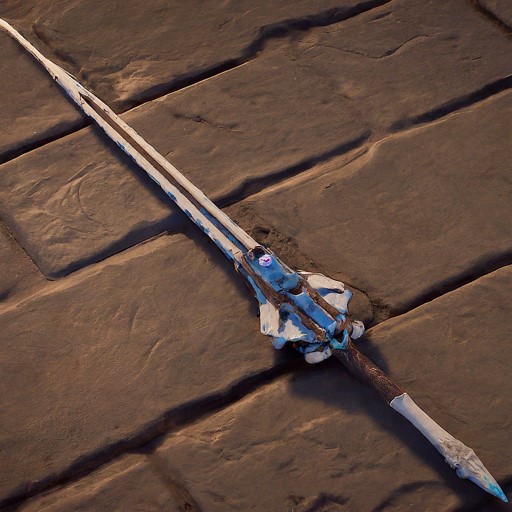
Activation perceptions of the Twinblade of the Horizon, covering the five traditional senses and exploring potential extra-sensory effects:
- Sense: Sight
- Perceived: A subtle shimmer of magical energy outlines the Twinblade when thrown, most noticeable in low-light conditions.
- Description: This aura represents the flow of magic within the weapon’s enchantment, ensuring its balance in flight.
- Positive: Provides visual confirmation that the enchantment is active and assists in tracking a thrown Twinblade.
- Negative: The aura, though faint, could give away the weapon’s trajectory to a keen eye.
- Sense: Touch
- Perceived: A faint warmth radiates from the core of the Twinblade, focusing at the midpoint where the two ends meet. This warmth is most noticeable when the weapon is thrown.
- Description: This warmth is a manifestation of the weapon’s flight-stabilizing enchantment.
- Positive: Serves as a constant, subtle reminder of the weapon’s magical properties.
- Negative: The warmth could be slightly distracting in extremely cold conditions.
- Sense: Sound
- Perceived: When thrown, the Twinblade emits a soft, almost musical hum as it cuts through the air.
- Description: This sound is caused by the weapon’s perfect balance and the subtle interactions of the enchantment with the surrounding air.
- Positive: Provides a satisfying and unique auditory cue indicating a precise throw.
- Negative: Could potentially give away the user’s position in complete silence, although the sound is faint.
- Sense: Smell
- Perceived: A very faint metallic scent, tinged with an ozonic tang, lingers around the Twinblade. This is more noticeable after it has been thrown.
- Description: This scent is likely a residual effect of the enchanting process or the interaction of the weapon with the air when in flight.
- Positive: Could serve as an additional way to track a thrown Twinblade.
- Negative: Creatures with exceptional smell might sense it, though the scent is subtle.
- Sense: Taste
- Perceived: While not directly linked to the weapon’s use, if the Twinblade were to brush against a wielder’s lips, they might detect a faint taste of metal with a hint of ozone.
- Description: This is likely residual energy from the enchantment.
- Positive: Might serve as a warning against placing the weapon near one’s mouth.
- Negative: The taste could be slightly unpleasant.
- Extra-Sensory Perception
- Perceived: A wielder attuned to their environment might feel a subtle ‘pull’ from the Twinblade in the direction of open areas or vast distances.
- Description: This echoes the weapon’s design purpose for the open landscapes of the Great Steppes, a faint instinctual pull towards its ideal environment.
- Positive: Could guide the wielder towards areas where the Twinblade’s advantages would be most effective.
- Negative: Might create a faint sense of unease when used exclusively in enclosed areas.
- Important Note: The intensity of these perceptions likely depends on the wielder’s own sensitivity to magic and the strength of the Twinblade’s enchantments.
Recipe: The Twinblade of the Horizon
- Materials Needed:
- Base Components:
- Forged Sword Blade: A medium-sized broadsword blade crafted for durability and balance.
- Spearhead: A sturdy spearhead, designed with a focus on piercing power.
- Shaft Core: A length of lightweight but exceptionally strong wood, carved to the desired length of the finished weapon. This could be a rare type of wood from the Steppes or similarly durable material.
- Binding and Balancing Materials:
- Wind-Treated Leather: Sturdy leather strips cured with techniques passed down by the Steppes people, designed to be both supple and resistant to the elements.
- Balancing Weights: Small, strategically placed weights (perhaps silver or an alloy with mild magical properties) are needed to achieve perfect balance.
- Enchanting Reagents:
- Flightfeather Essence: Essence extracted from the feathers of a creature known for its swift flight and aerial maneuvers.
- Stabilizing Dust: A powdered reagent used to enhance the longevity and consistency of the enchantment.
- Base Components:
- Tools Required:
- Forge and Smithing Tools: Standard tools for heating, shaping, and sharpening the metal components of the Twinblade.
- Leatherworking Tools: Tools for cutting, treating, and stitching the leather bindings.
- Enchanting Station: A secure location with the necessary tools for magical enchantments, potentially with elements inspired by the natural forces of the Steppes (winds, open sky).
- Skill Requirements:
- Blacksmithing (Intermediate): Forging and shaping the initial components of the Twinblade requires a solid understanding of the craft.
- Leatherworking (Basic): Ability to cut, shape, and secure the leather bindings that hold the weapon together.
- Enchanting (Advanced): The core enchantment ensuring the Twinblade’s balanced flight is highly specialized.
- Crafting Steps:
- Forging and Assembly:
- Forge the sword blade and spearhead to the desired specifications, ensuring the highest quality and balance.
- Carefully carve the shaft core, creating intricate channels designed to hold the metal components and the balancing weights.
- Securely attach the blade and spearhead to the core, ensuring the midpoint of the weapon is perfectly balanced.
- Leather Binding:
- Treat the leather according to the traditional techniques of the Steppes for resilience and flexibility.
- Meticulously wrap the treated leather around the haft of the weapon, focusing on the transition points where the metal components join the core. This enhances both grip and durability.
- Balance Calibration:
- Experiment and adjust the placement of the internal balancing weights until perfectly balanced flight is achieved. This step requires an exceptional understanding of physics and balance.
- Flight Enchantment:
- At the enchanting station, prepare your reagents and focus on the concepts of flight, precision, and balance.
- Carefully channel the Flightfeather Essence into the shaft, guided by intricate patterns and stabilizing elements.
- Fully infuse the weapon with the stabilizing dust, ensuring the enchantment’s longevity.
- Testing and Refinement:
- In a safe and open area, test throws of the Twinblade to observe its flight trajectory and adjust if necessary.
- Make any minor refinements to balance or weight distribution.
- Forging and Assembly:
- Important Notes
- This recipe represents a general overview; specific methods and enchantments could be closely guarded secrets within the Steppes tribes.
- Collaboration between a skilled smith, leatherworker, and a Steppes-trained enchanter might be necessary to achieve the perfect result.
- The strength of the enchantment and quality of the Twinblade could vary depending on the materials used and the expertise of the crafters.
Legend of the Soaring Steel
Whispered on the windswept plains, where nomads traced constellations across the endless night, a tale unfolds. It speaks of a weapon unlike any other, forged in a time when the heavens and the earth sang in unison – the Soaring Steel.
Legends claim the Soaring Steel was born not from a single hand, but from the combined ingenuity of a scattered people. A cunning blacksmith, driven by the need to protect his tribe from encroaching raiders, crafted a blade that split the wind – a broadsword for sweeping fury. A wise elder, her prayers woven into the fabric of reality, carved a spearhead that pierced the veil of storms. And finally, a young rider, swift as the desert wind, dreamt of a weapon that could conquer the boundless sky.
Their creation, a marvel of steel and magic, was a marvel of unity. The Soaring Steel, seamlessly fused at its heart, was both sword and spear. But its true power lay within – an enchantment whispered by the elder, channeling the spirit of the great birds that soared above. When thrown, the blade spun true, a streak of silver against the endless blue.
For generations, the Soaring Steel served as a symbol of the nomads’ prowess. It defended their herds, repelled invaders, and even felled monstrous creatures that dared to stalk the plains. But with time, as whispers turn to boasts and unity frays, the weapon became a prize. Rival chieftains coveted its power, leading to internal strife and bloodshed.
In a fateful battle, bathed in the crimson twilight, the Soaring Steel changed hands one last time. A young warrior, blinded by ambition, used it to strike down his own chieftain. But as the victor raised the weapon in triumph, a bolt of celestial fury ripped from the heavens, shattering the Soaring Steel into a thousand fragments. The weapon, born of unity, could not exist in a heart filled with discord.
The scattered fragments, some say, still lie hidden across the steppes, a silent reminder of the nomads’ past glory. The legend of the Soaring Steel serves as a harsh lesson – true power lies not in a weapon alone, but in the hearts of those who wield it. Only unity, not ambition, can harness the heavens and conquer the sky.
Moral: True strength is a tapestry woven from unity and purpose. Ambition, when it unravels this tapestry, leads only to ruin.
Suggested conversions to other systems:
Call of Cthulhu
- Emphasis: Sanity cost, hubris, the lure of forbidden knowledge.
- Stat Block:
- Melee: +1 to Combat (Slashing) or Combat (Piercing)
- Thrown: +1 to Ranged Attacks
- Sanity Cost: Each use of the weapon’s flight enchantment takes a toll, representing the allure of its power and the potential hubris of the wielder.
- Artifact Lore: Understanding the origins and rituals used in its creation is likely dangerous, involving forbidden knowledge tied to older civilizations or forgotten sky deities.
- Mechanics:
- Sanity Checks: Utilizing the enchantment to its full potential may trigger Sanity checks. Failure could lead to a sense of superiority, or an obsession with pushing the weapon’s limits.
- Rituals: The Twinblade may be linked to forgotten rituals with unpredictable effects.
- Unsettling Presence: The weapon might exude a subtle aura of unease, faintly alien, subtly affecting those around the wielder.
Blades in the Dark
- Emphasis: Faction conflict, risky gambits, desperation in dark times
- Mechanics:
- Faction Asset: The Twinblade could be a unique asset of a faction resembling the Steppes nomads (sky-worshippers, smugglers, or even monstrous raiders from a dangerous region).
- Desperate Actions: When thrown, there’s high risk but the potential for significant rewards, embodying the desperate gambits Blades in the Dark is known for.
- Resistance Rolls: Using the enchantment might represent a strain on the wielder’s physical or spiritual prowess, requiring Resistance Rolls to avoid exhaustion or long-term consequences.
- Story Hooks:
- Turf War: Factions may clash over the Twinblade, seeking to use it to gain a tactical edge.
- Supernatural Debt: The weapon could be tied to an old bargain with strange entities or spirits of the sky, with the wielder now beholden to them.
Dungeons & Dragons (5th Edition)
- Emphasis: Scaling power, potential for a heroic legacy, connection to its origins.
- Stat Block:
- Rarity: Rare or Very Rare
- Requires Attunement
- Melee: +1 to Attack and Damage (Slashing) or +1 to Damage (Piercing)
- Thrown: +1 to Attack; 2d6 Damage on a hit (can be Slashing or Piercing depending on the end used)
- Flight Enchantment: As a bonus action, you can focus on the Twinblade, enhancing its flight for a limited number of throws per day. While enchanted, it has advantage on ranged attacks, and returns to your hand after being thrown.
- Mechanics:
- Scaling Power: As the wielder levels, they might discover ways to boost the flight enchantment, increasing its uses or even adding elemental effects.
- Lore and Legacy: The Twinblade likely carries a rich history tied to the Steppes tribes or ancient traditions focused on sky deities.
- Exhaustion: Consider a limited number of uses of the enchantment per day, reflecting the strain of channeling its magic,
Knave
- Emphasis: Simple, dangerous, potential for weird side effects
- Stat Block:
- +2 to Attack rolls, either melee or ranged
- Thrown Property: Returns to the wielder’s hand after being thrown.
- Weirdness: Using the Twinblade’s magic might draw the attention of strange denizens of the sky or temporarily affect the weather conditions in the immediate area.
- Mechanics:
- Simple Saves: Knave favors flat saving throws against your relevant ability scores to avoid negative consequences or complications.
- Weird Consequences: Introduce strange happenings as a side effect – sudden localized gusts of wind, attracting a curious flock of birds, or temporarily inverting gravity in a small radius upon its return.
Fate
- Emphasis: Narrative power, invoking Aspects for advantage, potential compels.
- Aspects:
- Twinblade of the Steppes: Provides a bonus when fighting in open spaces or using tactics inspired by the Steppes nomads.
- Flight-Borne Weapon: Can be invoked for dramatic thrown attacks, to strike from unexpected angles, or to create environmental effects (dislodging debris, etc.).
- Legacy of Discord: Represents the weapon’s troubled history – a source of narrative power but also a potential source of compels relating to ambition and conflict.
- Mechanics:
- Invokes: Players can creatively invoke Aspects to enhance attacks, increase mobility, or pull off cinematic stunts with the Twinblade.
- Compels: Aspects can be used against the character, prompting reckless throws, internal conflict regarding the weapon’s use, or drawing unwanted attention due to its history.
Numenera & Cypher System
- Emphasis: Unpredictable effects, the weirdness of the prior worlds, depletion of abilities
- Descriptors & Foci:
- Descriptors: Could be “Experienced” and “Steppes-Forged”
- Foci: Possibilities include “Wields Both Spear and Sword” or “Flies With Unerring Aim”
- Mechanics:
- Difficulty Easements: Descriptors and Foci can decrease the difficulty of tasks related to the Steppes culture, combat tactics, or aiming thrown weapons.
- Cyphers: One-use Cyphers could grant powerful single-throw bonuses, temporary flight to the wielder, or have a localized effect on weather patterns.
- Depletion: Each use of the flight enchantment could deplete a stat pool (perhaps Might), requiring recovery before subsequent throws are fully accurate.
- GM Intrusions: Could introduce sudden environmental changes during combat, temporary malfunctions of the enchantment, or attract creatures fascinated by the Twinblade’s unusual nature.
Pathfinder (2nd Edition)
- Emphasis: Tactical combat options, critical specialization effects, character build synergy.
- Stat Block:
- Rarity: Unique
- +1 Item Bonus to Attack Rolls (Versatile: S or P)
- Thrown (10ft)
- Critical Specialization: Expand the critical hit effects depending on whether the sword end or spear end was used, offering unique effects.
- Flight Enchantment: As a single action, can be imbued with magic for a number of throws, returning to the wielder’s hand after each throw.
- Mechanics:
- Signature Weapon: Synergize with feats focused on specific武器グループs (perhaps both polearms and swords) or feats allowing for disarming or cleaving maneuvers.
- Limited Resource: Keep the number of “magical throws” per combat limited to emphasize tactical choices.
Savage Worlds
- Emphasis: Cinematics, Wild Cards vs. Extras, flavorful Hindrances.
- Stat Block:
- Melee: Fighting d8 (choose slashing or piercing each strike)
- Thrown: Range 12/24/48, Damage 2d6 (spear tip) or 2d8 (sword blade)
- Flight Enchantment: Requires a separate roll (perhaps Agility) to activate. While enchanted, the Twinblade returns automatically and gains +2 to ranged attack rolls.
- Mechanics:
- Bennies: Bennies can power spectacular throws, soak damage caused by the enchantment’s strain, or narratively create advantageous conditions (dislodging overhead items, etc.).
- Wild Card vs. Extras: Important enemies might shake off the Twinblade’s impact or counter surprise attacks made with the weapon’s thrown property.
- Hindrances: Introduce Hindrances like “Bound by Legacy” (compelled by the weapon’s history) or “Reckless” (encouraging risky throws).
Shadowrun
- Emphasis: Tech vs. magic, black market dealings, potential for essence drain.
- Stat Block:
- Melee Weapon: Moderate Accuracy, Damage (can be either Slashing or Piercing)
- Thrown Weapon: Accuracy based on skill, Damage slightly increased.
- Enchanted Weapon: Can be used to target spirits and beings on the astral plane.
- Essence Drain: Each use of the flight enchantment could drain a small amount of the wielder’s Essence, representing the strain of channeling its magic.
- Mechanics:
- Astral Signature: The Twinblade leaves a distinct astral signature when the enchantment is used, potentially drawing unwanted attention from magical entities or astral patrollers.
- Unique Mod Potential: Consider custom modifications – gyrojet projectiles for added ranged damage, retractable monofilament wires for surprise attacks, or neural enhancement integration for improved aim.
- The Black Market: An intact Twinblade would be a valuable prize on the black market, likely sought after by collectors, mages, and those seeking exotic weapons.
Starfinder
- Emphasis: High-tech integration, exotic origins, scaling with levels
- Stat Block:
- Item Level: Determines its base accuracy, damage, and strength of the flight enchantment.
- Weapon Type: Kinetic (for the base form) and Special (for the thrown property)
- Special Properties: Versatile: S or P, Thrown (10ft Range increment); Flight Enchantment (scaling accuracy bonus, returns to hand),
- Origin: Tie it to a vanished precursor race associated with open skies or nomadic cultures, leading to intriguing side quests or unique potential upgrades.
- Mechanics:
- Power Source: Consider a rechargeable energy source for the enchantment, requiring occasional hunts for rare energy cells or maintenance from a specialized technician.
- Environmental Interaction: The flight enchantment might get a boost near powerful magnetic fields, while being severely limited in low-gravity environments.
- Knowledge (Arcana) or (Engineering): Required to fully understand and potentially upgrade the Twinblade’s features.
Traveller
- Emphasis: Gritty realism, limited resources, potential for long-term consequences.
- Stat Block:
- TL (Tech Level): Depends on campaign setting. It could be a high TL artifact of a lost civilization, or even a weapon jury-rigged with salvaged tech in a low TL setting.
- Melee Weapon: Well-crafted with sturdy materials (+1 Damage)
- Ranged Properties: Throwing accuracy relies on character skills, damage output is moderate.
- “Enchantment”: Instead of overt magic, posit a form of lost or poorly-understood tech – gyroscopic stabilizers, magnetic repulsor for the return effect, etc.
- Mechanics:
- Rare Maintenance: Finding materials or individuals capable of maintaining the Twinblade’s unique systems would pose a challenge, particularly in low-TL settings.
- Reputation: Using an obviously advanced technological weapon could grant unique social status or suspicion, depending on the culture and its views on technology.
- Malfunction Potential: Especially in a low TL setting, the jury-rigged tech may be unreliable, with occasional misfires or short-circuiting of the flight systems.
Warhammer (Fantasy or 40K)
- Emphasis: The corrupting influence of forbidden power, suspicion of the unfamiliar.
- Stat Block:
- Melee Weapon: Fine craftsmanship (+1 to hit) – choose either a sword or spear profile
- Thrown Weapon: Limited range, gains a bonus to hit if the wielder has the proper skills
- Mark of the Unknown: Grants the ability to enchant the Twinblade for balanced throws, but carries a risk of gaining a Corruption Point or Mutation each time.
- Heretical Lore: Understanding the weapon’s origin would involve delving into dangerous, likely forbidden knowledge of lost civilizations or the influence of Chaos/Xenos.
- Mechanics:
- Perils of the Warp/Insanity: In Fantasy Warhammer, utilizing the power of the enchantment might risk mental contamination or warp-inflicted mutations. In 40k, it could lead to latent psyker abilities manifesting.
- Heretic’s Brand: Overt use of the Twinblade would certainly brand someone as a dangerous anomaly, pursued by organizations like Witch Hunters or the Inquisition.
- Ancient Relic: The Twinblade may be a heavily sought-after relic, fought over by Inquisitors, Chaos cults seeking to corrupt it, or even Xenos factions analyzing its potential.